Sold
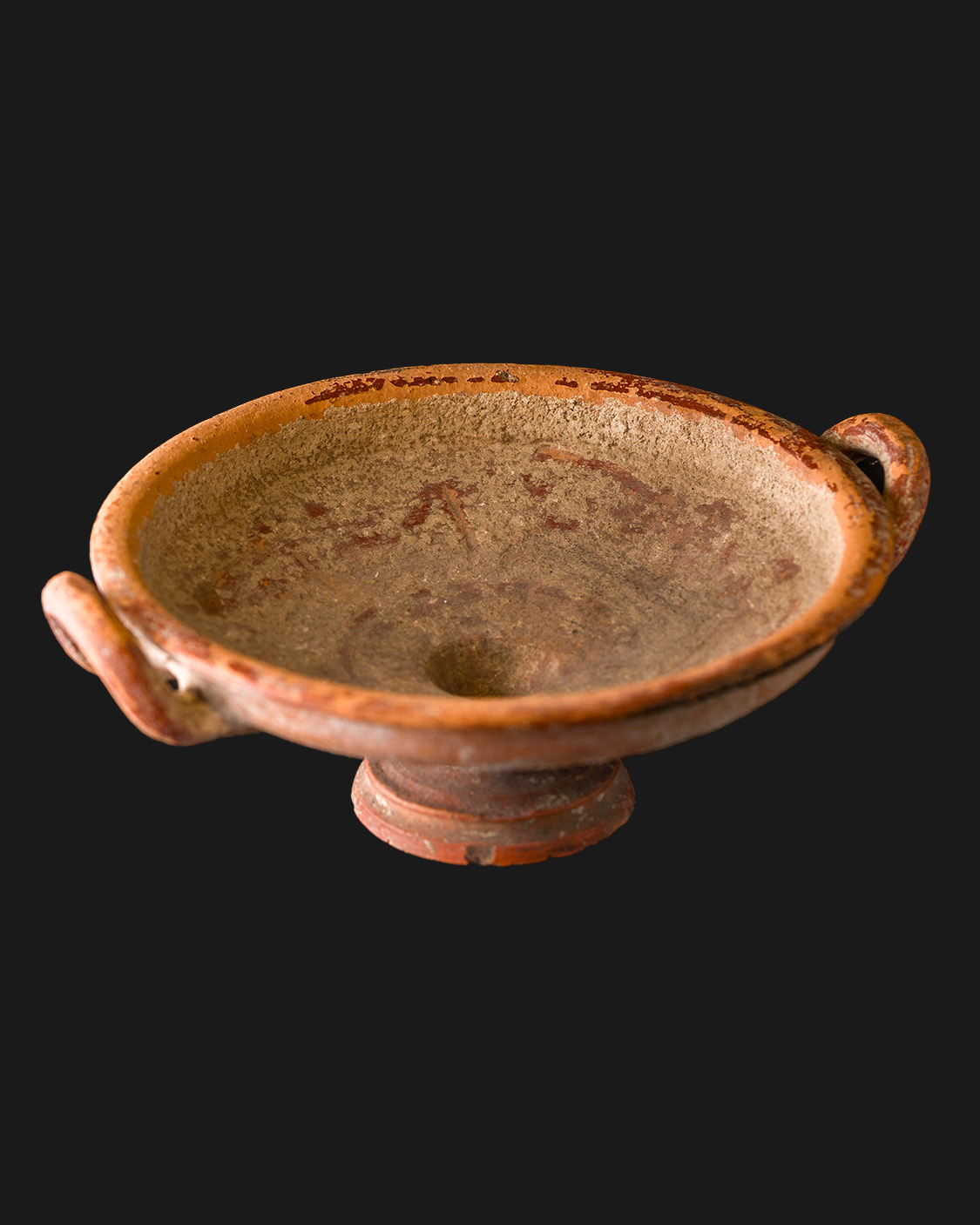

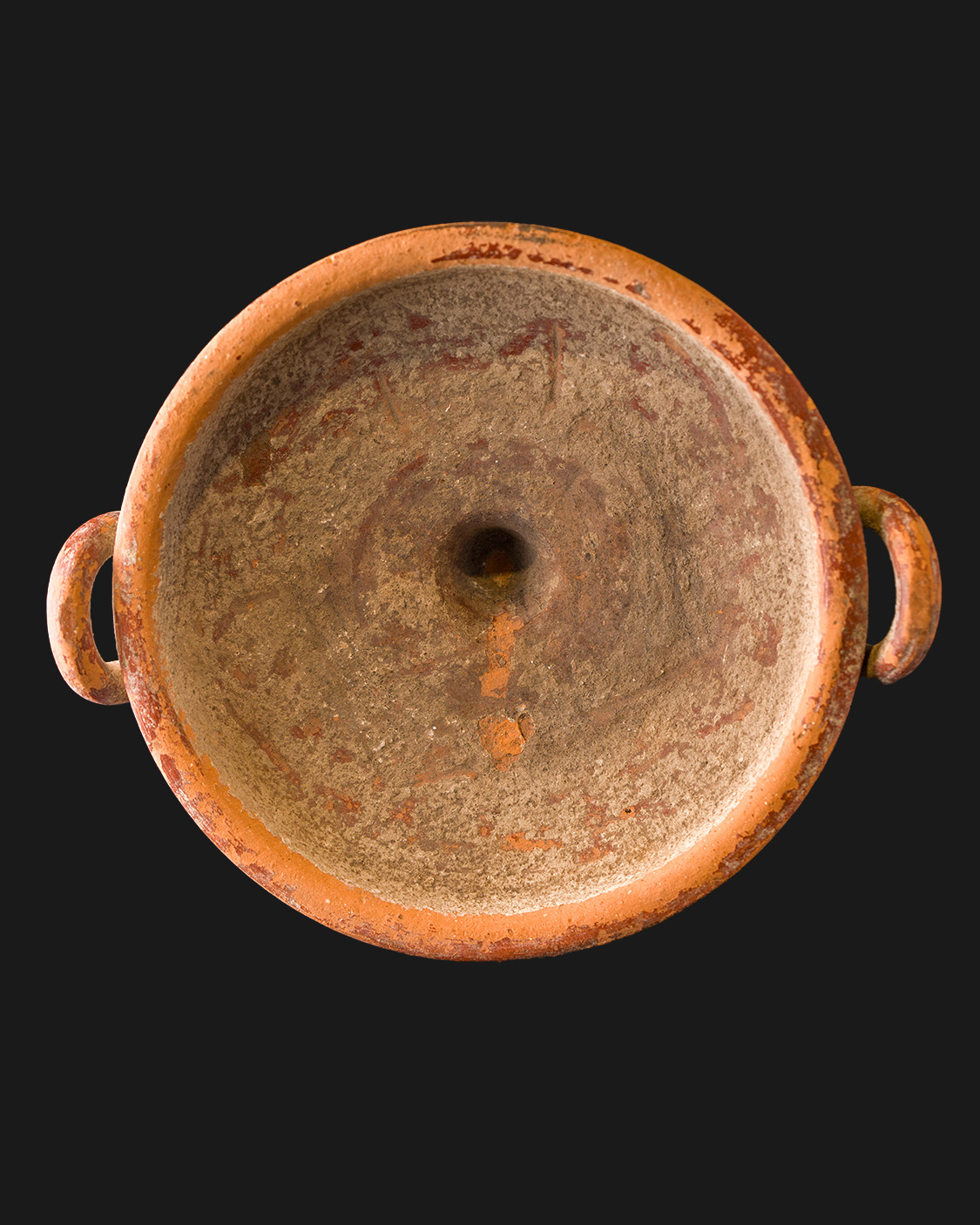
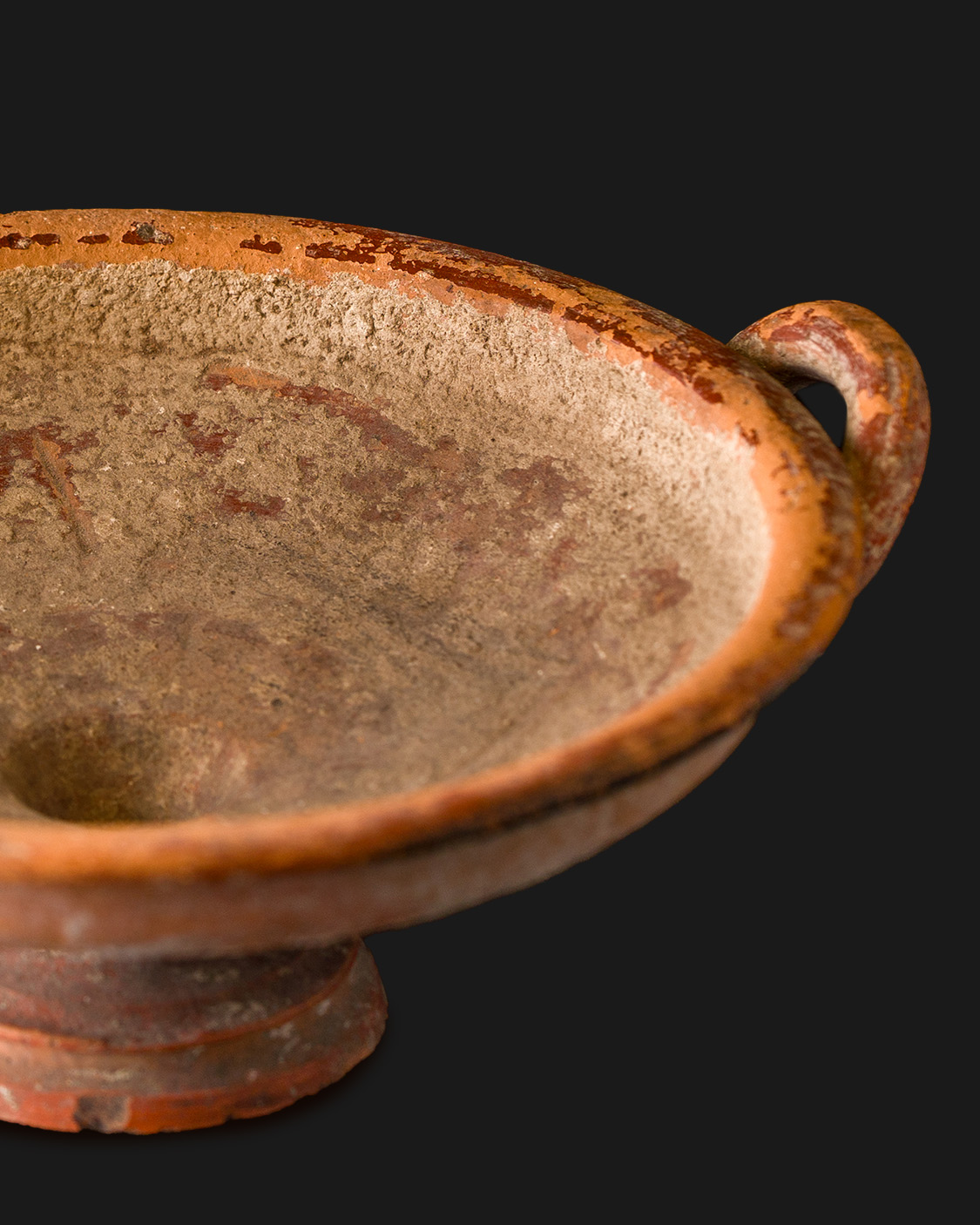
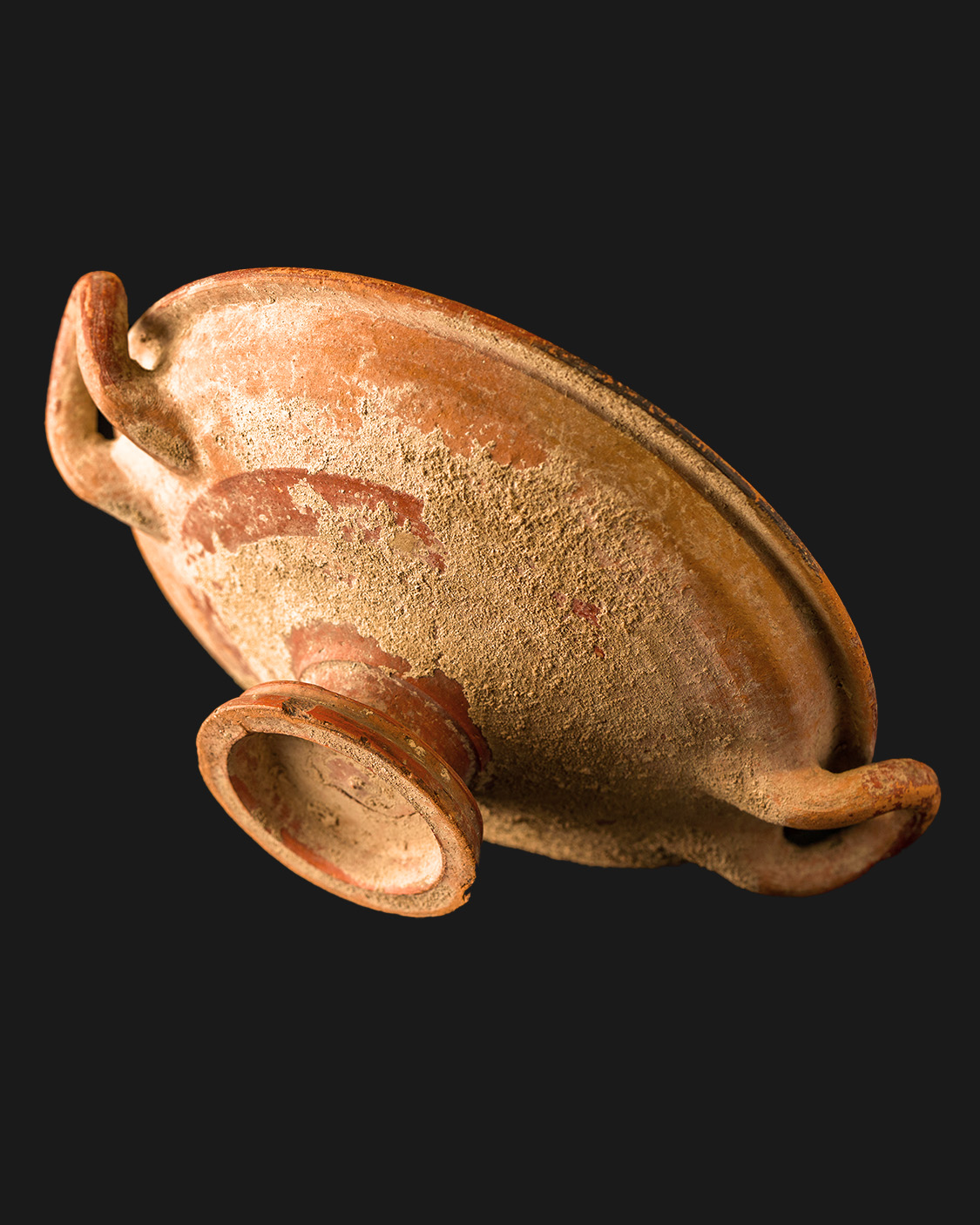
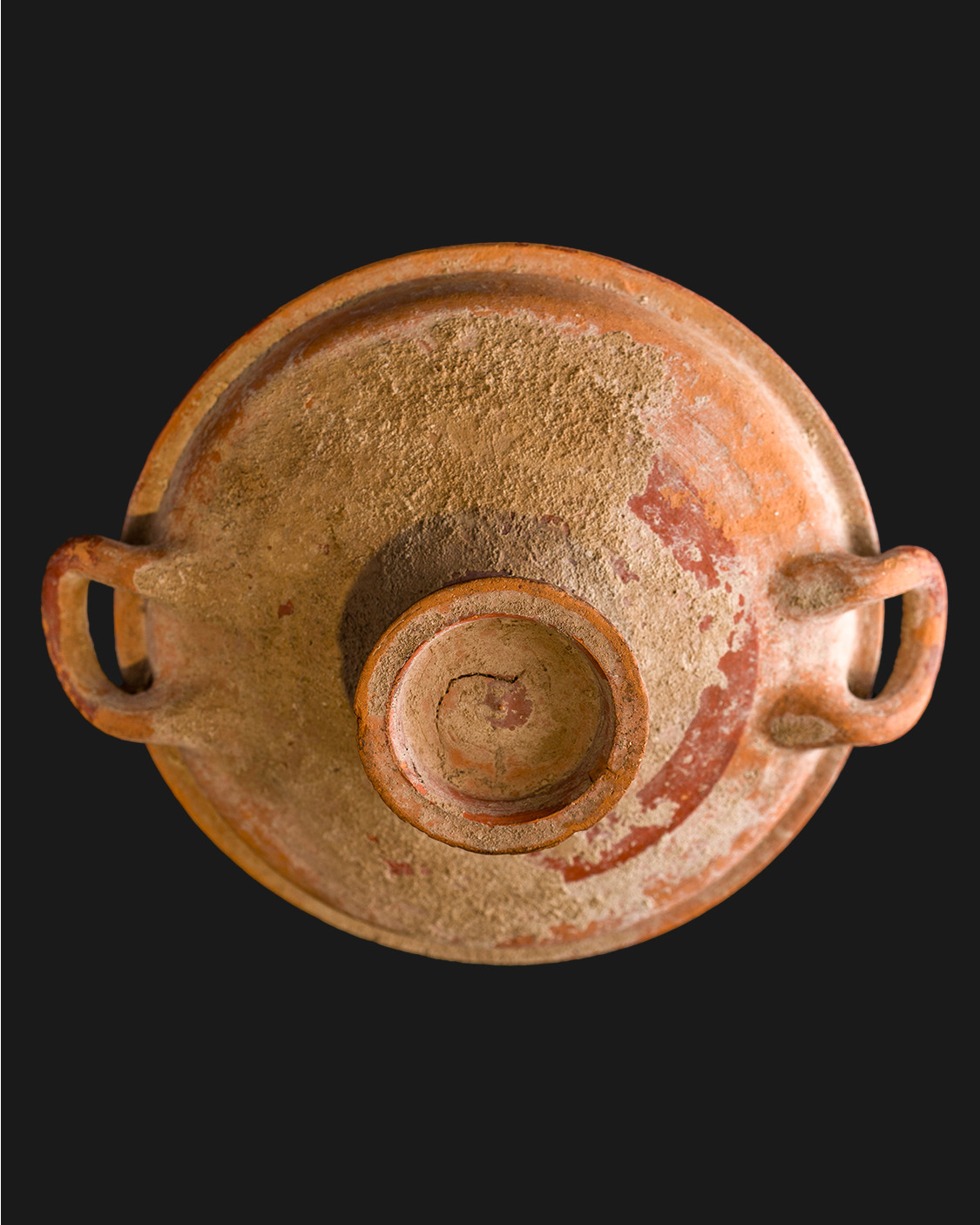

Kyliks (wine drinking vessel), pottery, Ancient Greece, ca. mid-4th century B.C.
A Greek kylix, most likely made in Apulia, dated to approximately the mid-4th century BC. A classic example of utilitarian pottery – a goblet used for drinking wine. The vessel is preserved in very good condition, without cracks or structural damage, with visible signs of age, losses to the varnish layer, and calcareous deposits inside. Found in the south of France.
The form of the kylix symbolized communal feasting. This two-handled vessel was used for the ritual serving and drinking of wine during Greek symposia – gatherings dominated by conversation, singing, and shared reflection. The kylix embodied the unity of participants, equal access to the drink, and the aesthetic experience derived from its form and decoration.
| Age | 4th century BC |
|---|---|
| Country of origin | Ancient Greece |
| Material | Terracotta |
| Technique | Hand forming, wheel throwing |
|---|---|
| Size | 18 cm × 7 cm |
| Weight | 417 g |