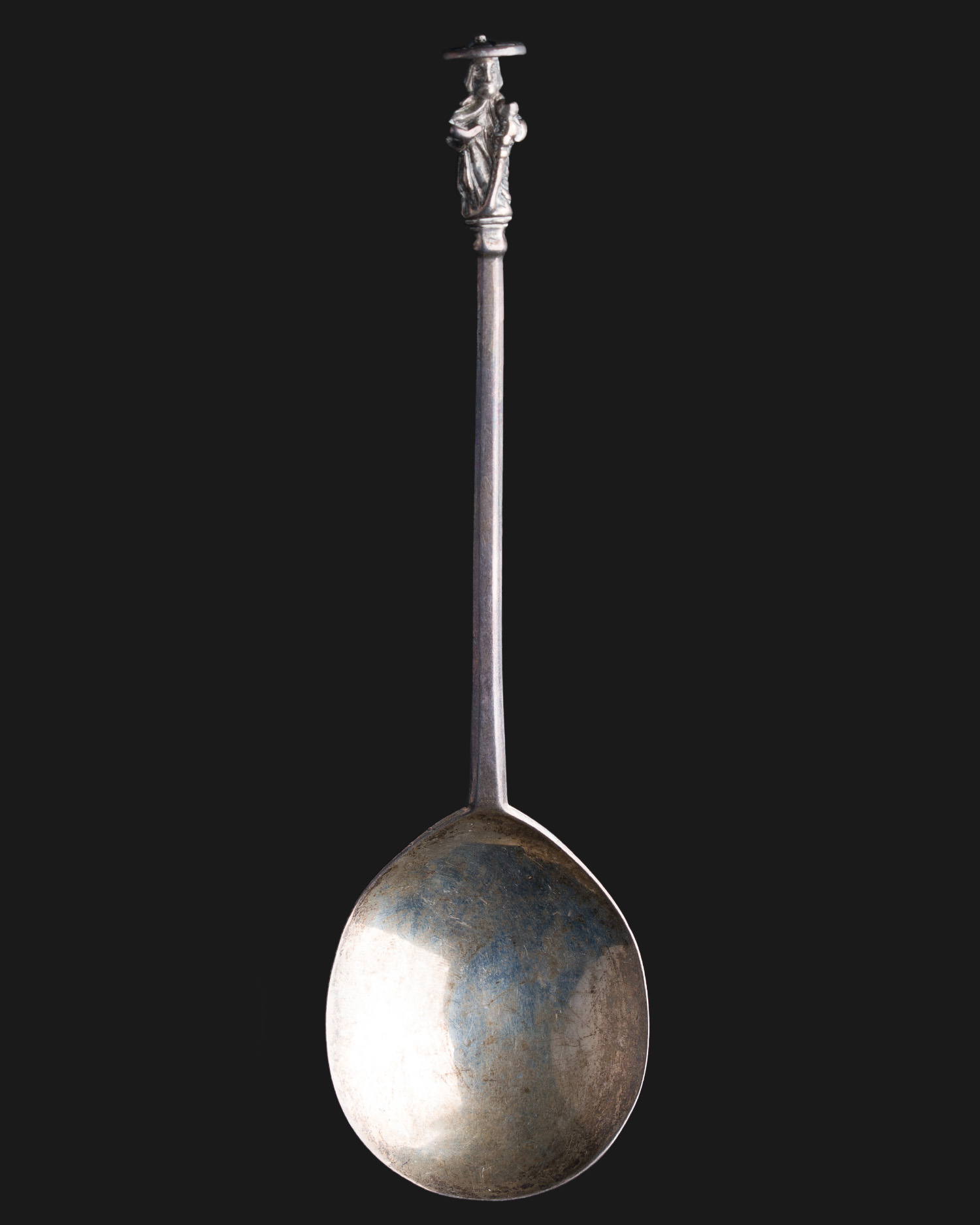
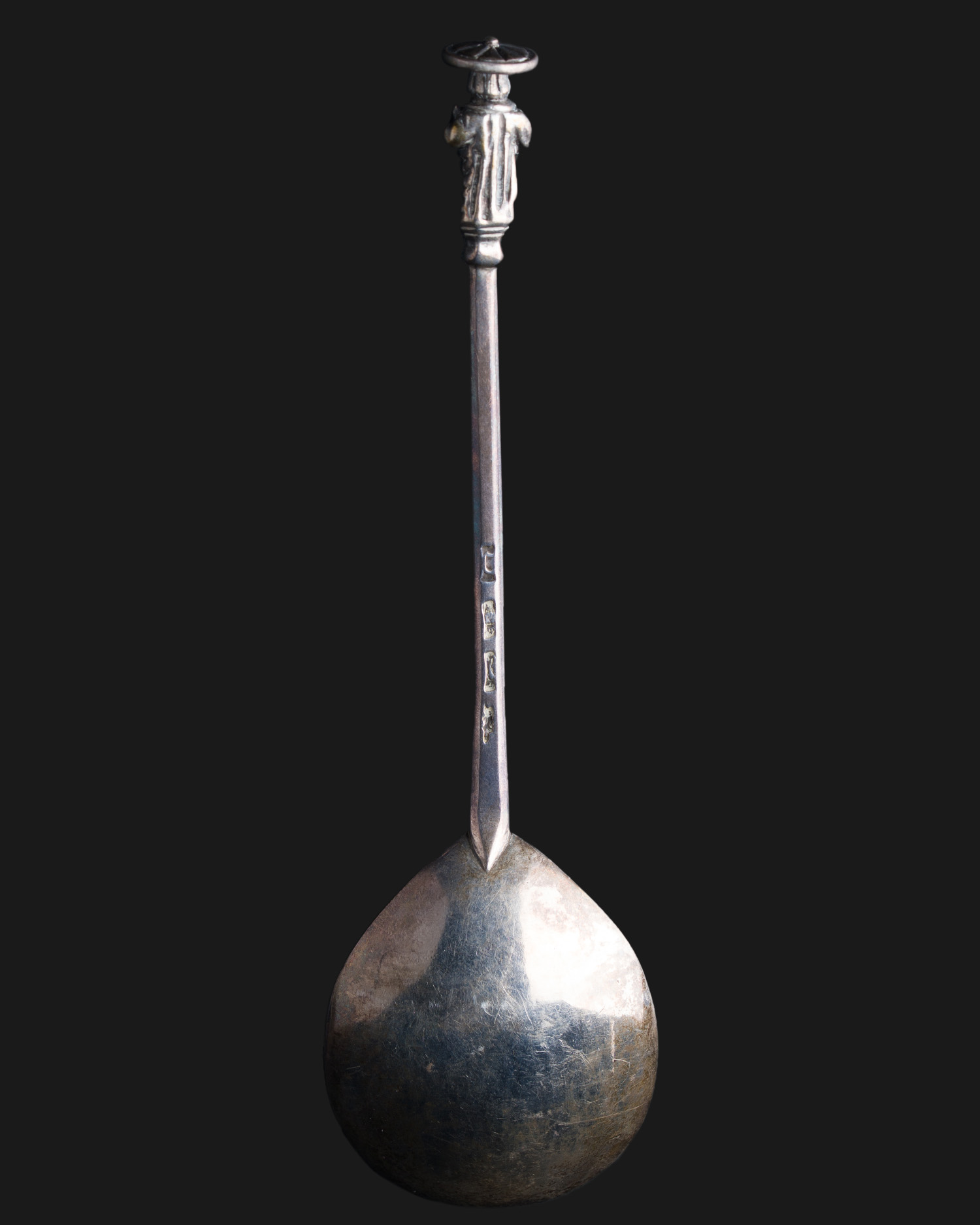
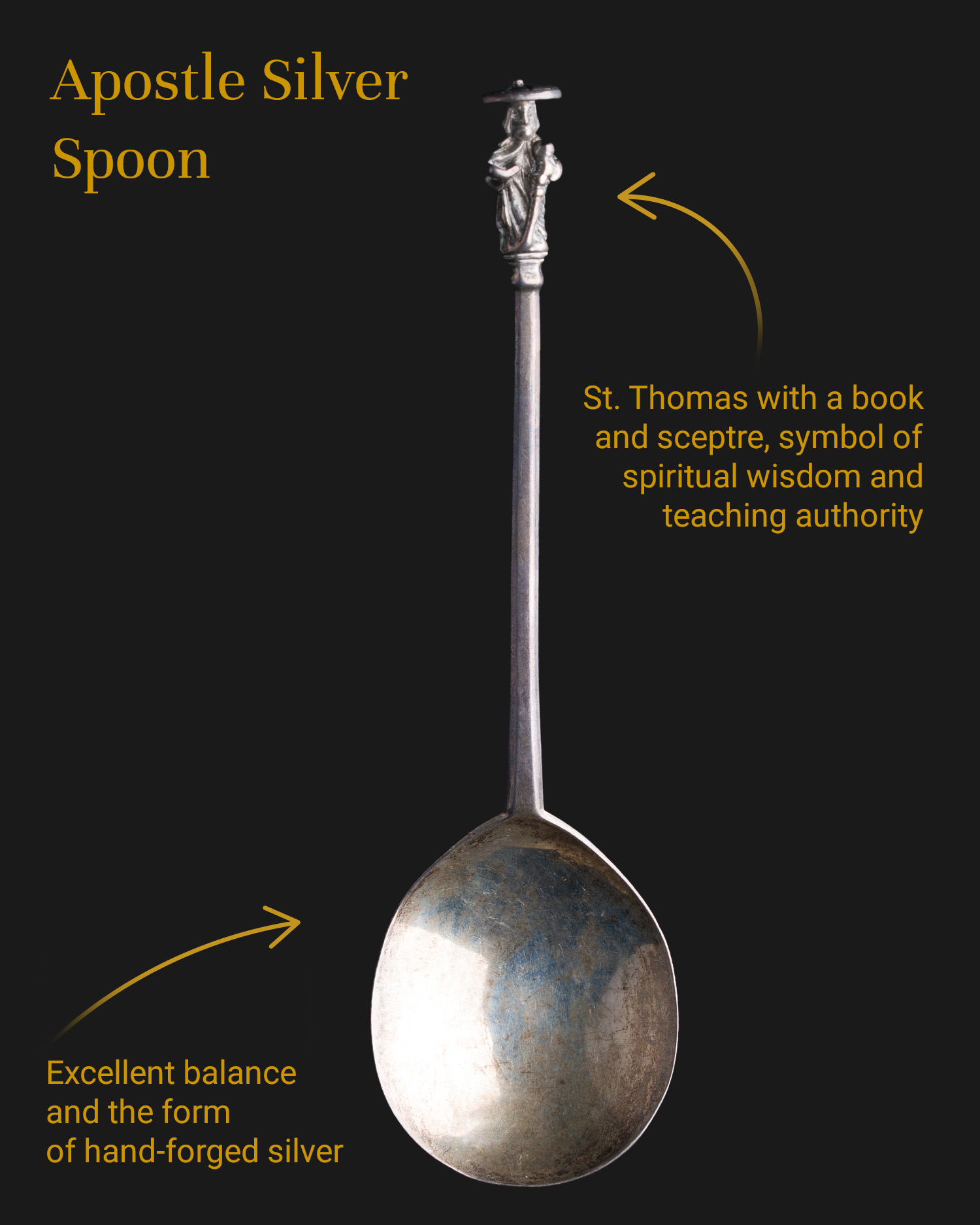
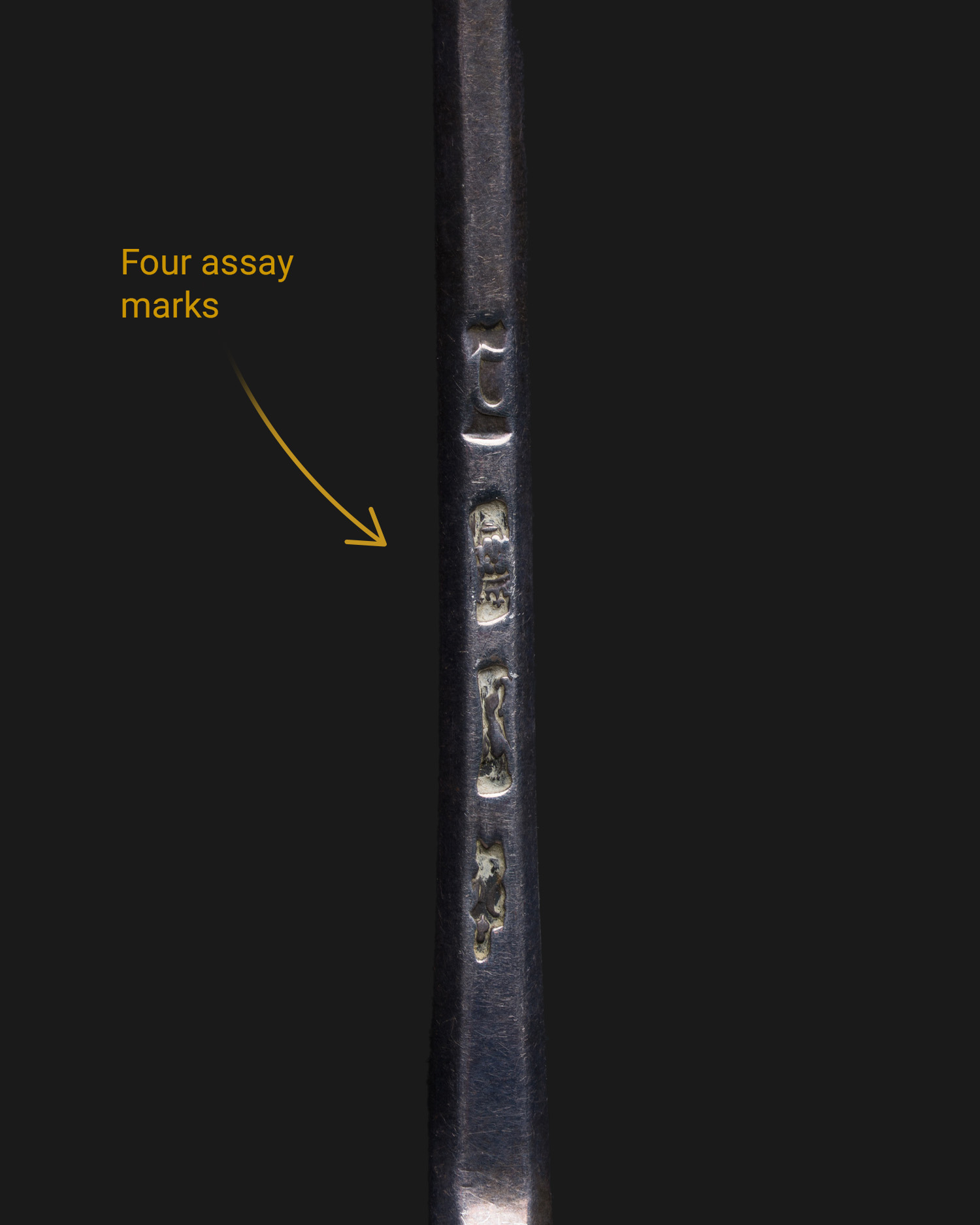

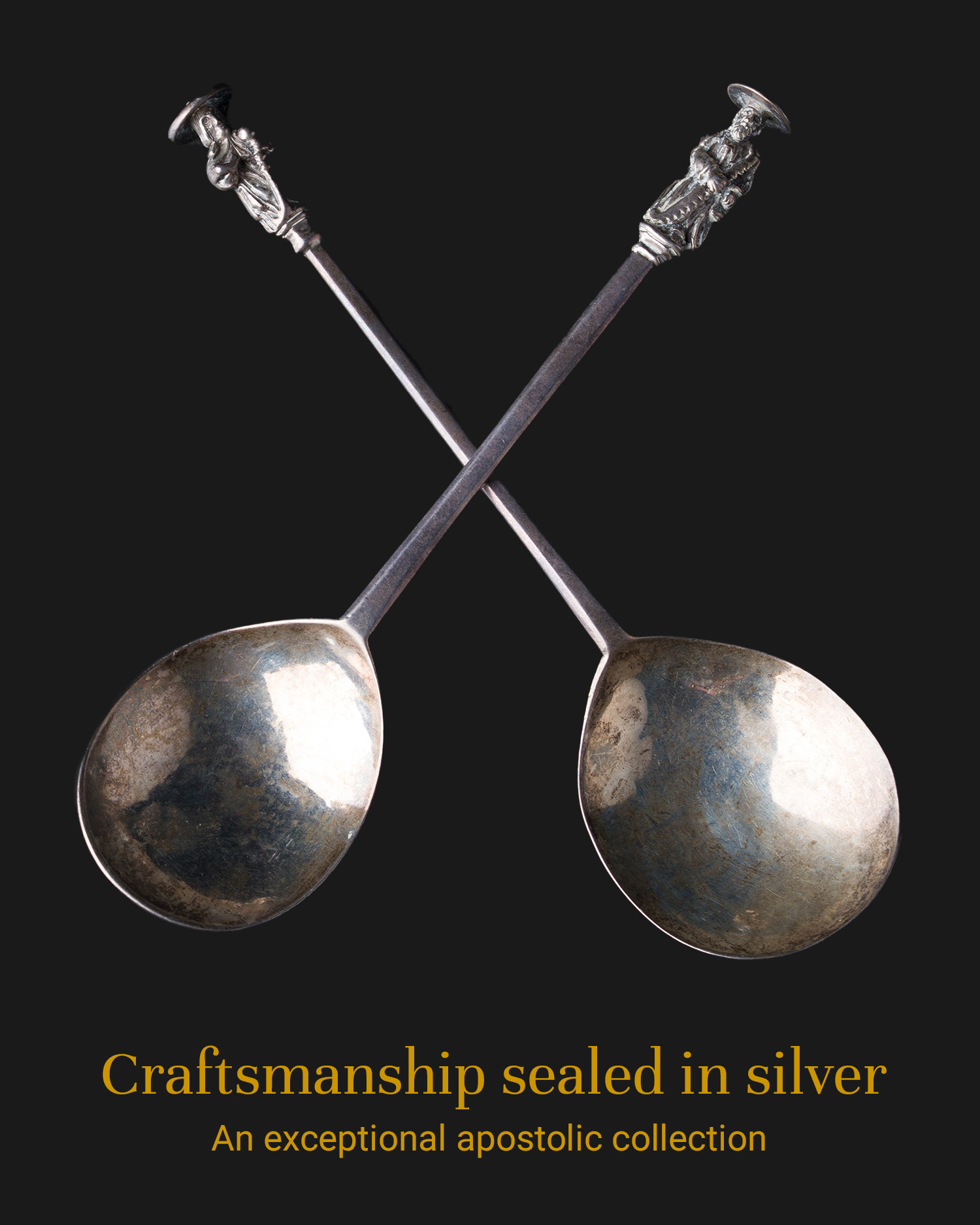
A spoonful of so-called. “Apostolic” with St. St. Thomas, silver, England, 18th century.
2100,00 zł
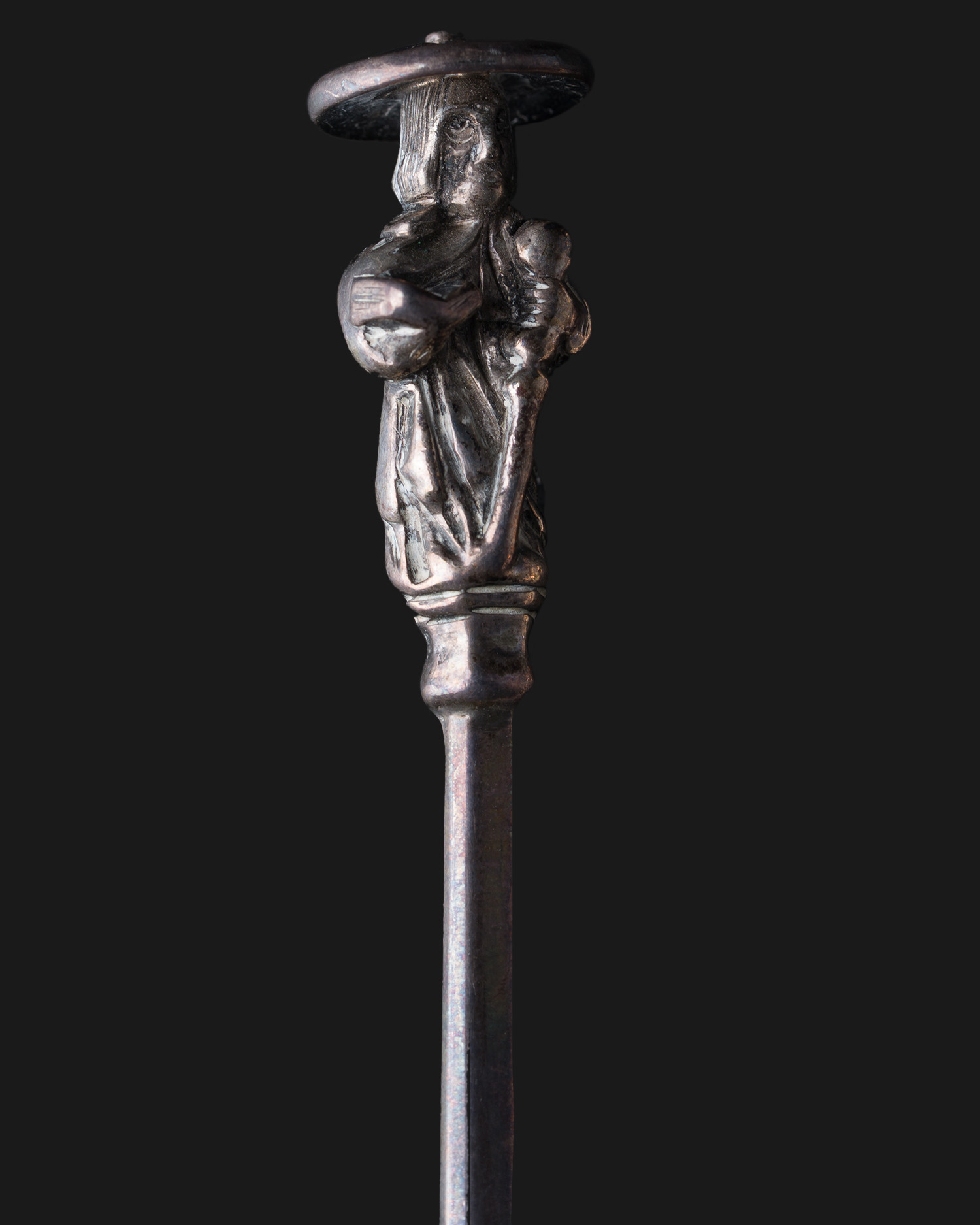
Apostolic spoon with a full-figure figure of an apostle holding a book and a scepter. The saint’s head surmounted by a circular shield with a representation of a bachelor’s cross with a ball in the center. The design is typical of English liturgical silver of the 18th century.
1 in stock
St. Thomas - patron saint of doubters, architects and builders
The apostle depicted with a book and scepter symbolizes spiritual wisdom and teaching authority. St. Thomas is the one who initially doubted the resurrection, but was convinced by the touch of Christ's wounds. Through this, he became a model of faith from experience and the patron saint of those who seek the truth. The bachelor's cross with a ball can be a sign of chivalrous devotion or Eucharistic symbolism.
Historical context
In 18th-century England, despite the official dominance of Anglicanism, there were workshops making devotional silverware for Catholic families or export markets. Birmingham and Sheffield were centers of liturgical and decorative silverware making. Apostolic spoons were often created as a set of twelve, with each apostle depicted with a unique attribute.
Collector's value
Rare iconography and complete form make this spoon an attractive object for collectors of antique silver and sacred art. An object ready for museum or private display.
The precise form of the figurine, proportions and details testify to the high class of the workshop. The bachelor's cross and delicate chiseling add character and individual expression.
Application (Utility)
An object for a collector's or museum display or as a patronage item. It can serve as a religious memento, an altar piece or a symbolic gift.
Curiosity
According to tradition, apostolic spoons with figures of saints were sometimes used as "baptismal spoons" in Catholic and Anglican homes, and the bachelor's cross on their top symbolized spiritual protection over the child.
Looking for unique sacred crafts?
Apostolic Spoon with St. Thomas is an unusual combination of Baroque craftsmanship and rich apostolic symbolism. Perfect for a collection, patron gift or as a museum exhibit. Check out our full range Sacred silver and artistic objects from the 18th century.
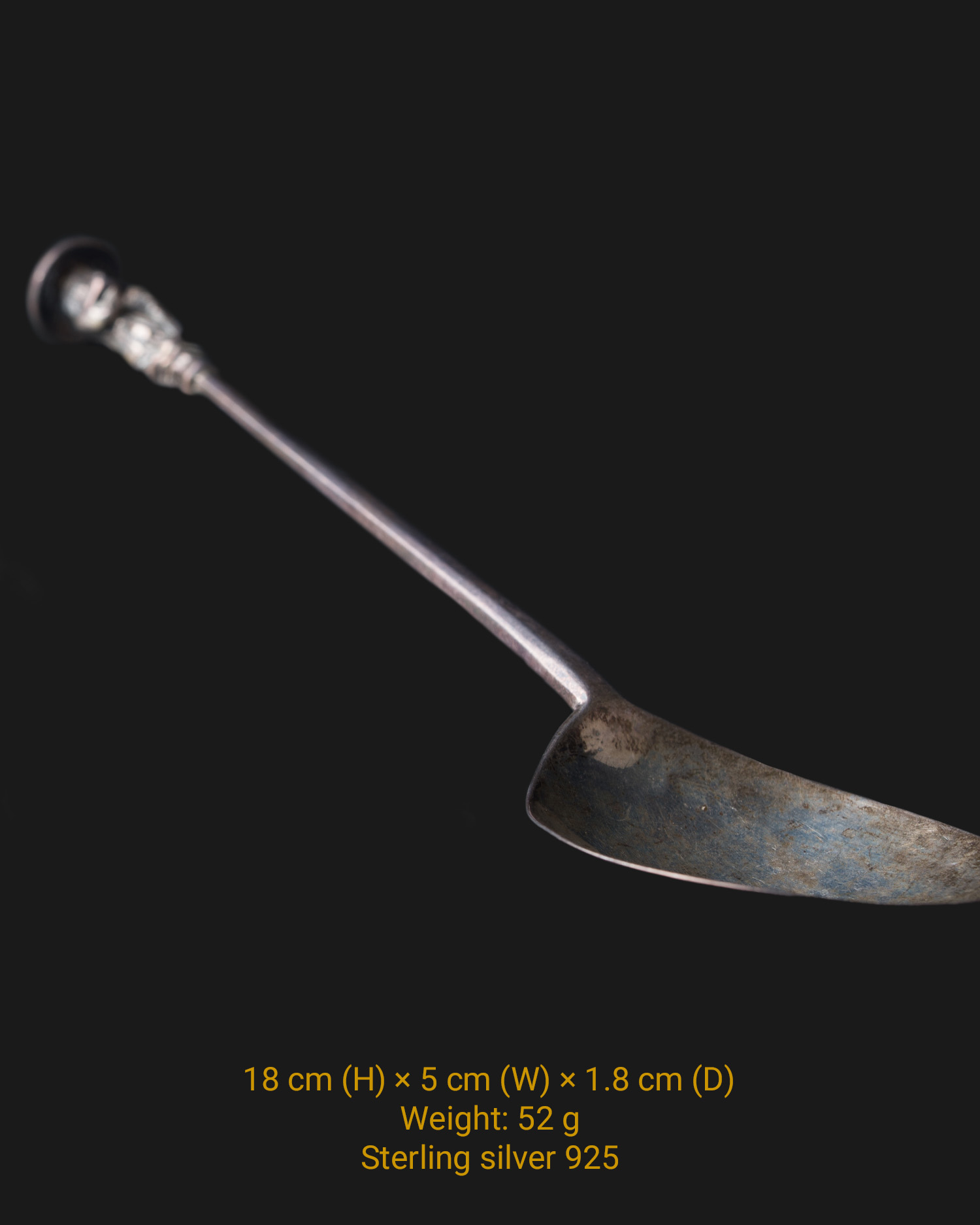
| Weight | 0,52 kg |
|---|---|
| Dimensions | 18 × 5 × 1,8 cm |
| Type |
Sacred object / part of a liturgical set |
| Form |
Spoon with a figure of a saint on the handle |
| Materiał |
Sterling silver pr. 925 |
| Kolorystyka |
Silver |
| Technika |
Casting ,Chiseling ,Forging |
| Czas powstania |
18th century (1701-1800) |
| Era |
Baroque |
| Kraj pochodzenia |
England |
| Autor |
Unknown |
| State of preservation |
Very good. |
Related products
Baroque spoon, silver, Poland, ca. 1650
Baroque spoon, silver, Wroclaw, early 18th century.
Chapel with Our Lady of Czestochowa and Eagle, Poland, 19th century.
Charles Julius Minter (1812 – 1892), Casket with lid in the form of a tombstone of King Stefan Batory, tin
Ivan Khlebnikov, Kovsh with horse’s head, silver, enamel, gilt, Moscow, 1860-1918
So-called “apostle” spoon with St. Simon, silver, England, 18th century.
Stepping lion, gilt silver, Western Europe, 17th-18th century.
Wooden spoon with initial “V”, Poland, 19th century.
Hand-carved wooden spoon, 23 cm long, from Poland, dating to the 19th century or earlier. The bowl is deep, clearly utilitarian, with traces of use. The handle decorated with serrated line engravings and an initial "V", acting as identification of the owner. At the end a preserved thong with an old paper collector's tag attached.
In the 19th century in Poland, spoons of this type were among the basic items of everyday use on rural and pastoral farms. They were made by hand from a single piece of wood, which was part of the tradition of Polish folk craftsmanship, based on simple, durable materials.
Copies with preserved markings are rare today, documenting the development of Polish material culture and everyday practices of village life.
