


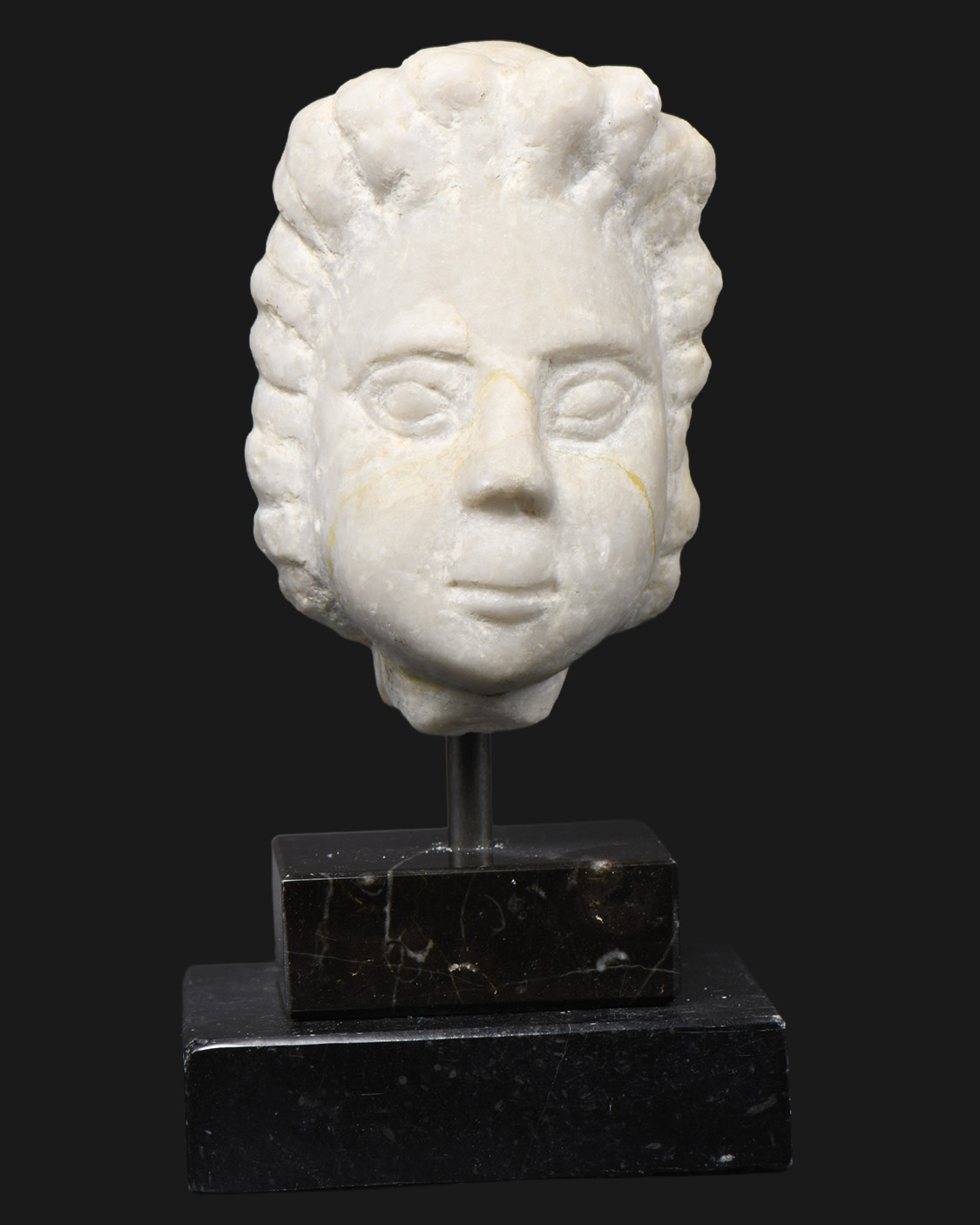
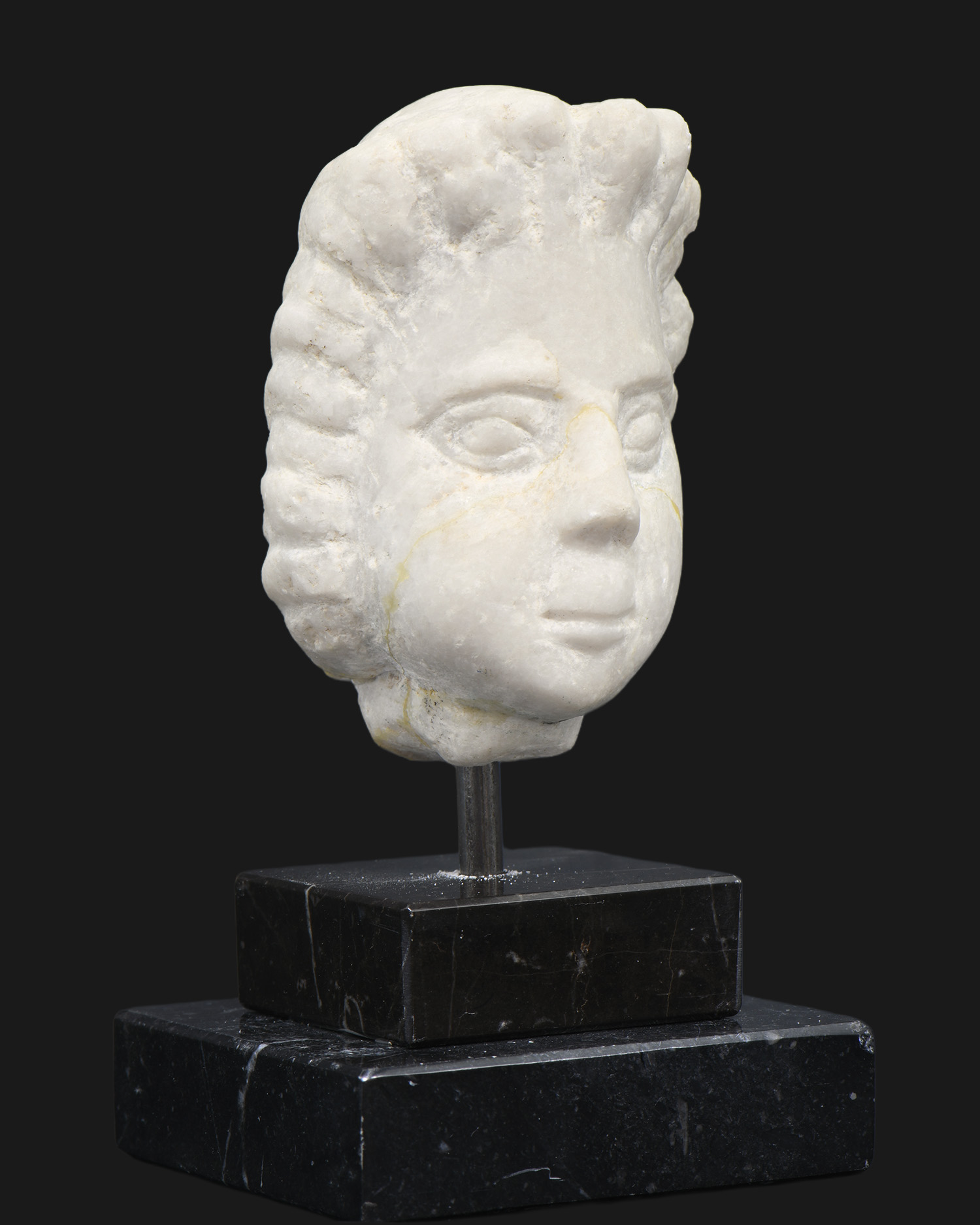
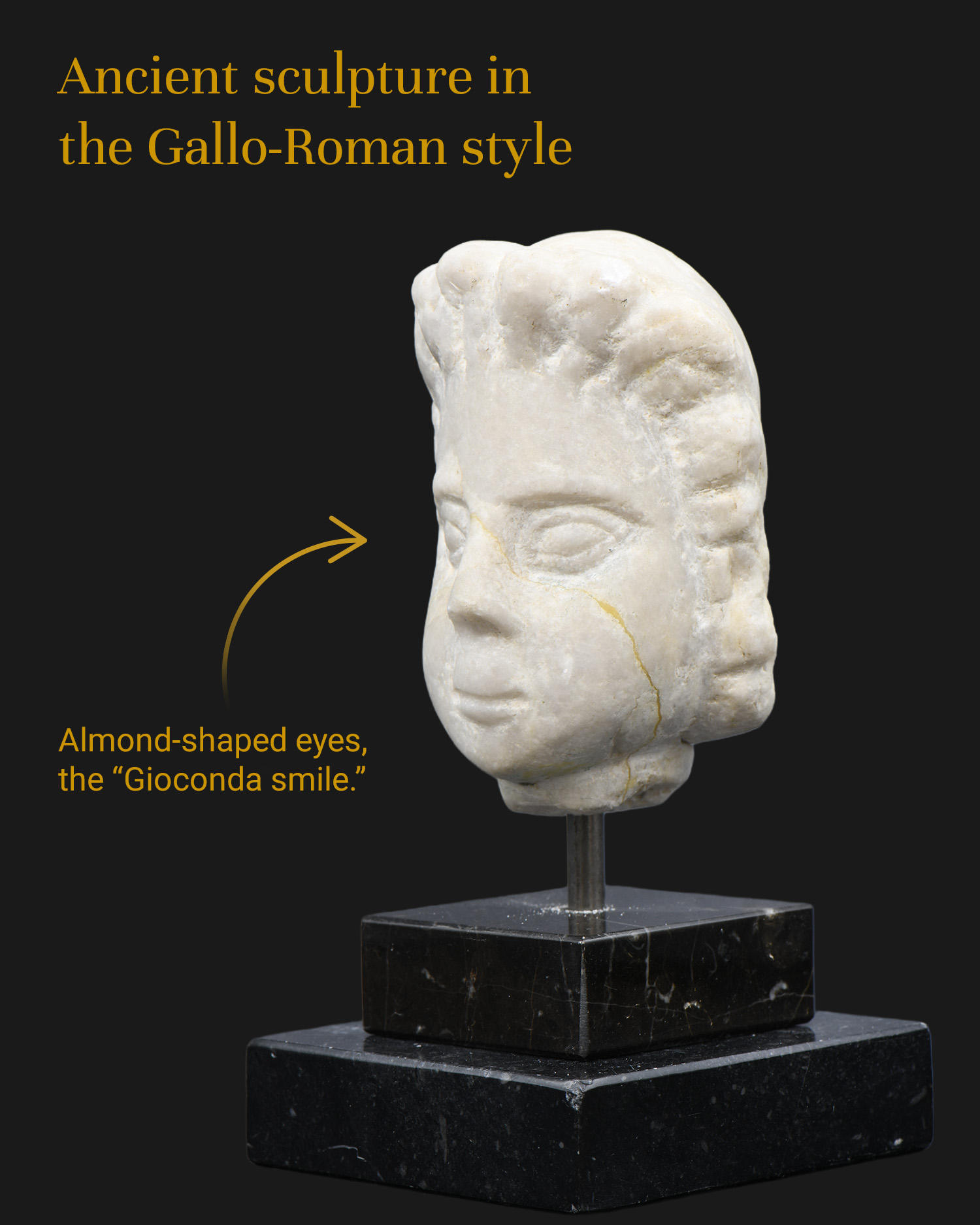
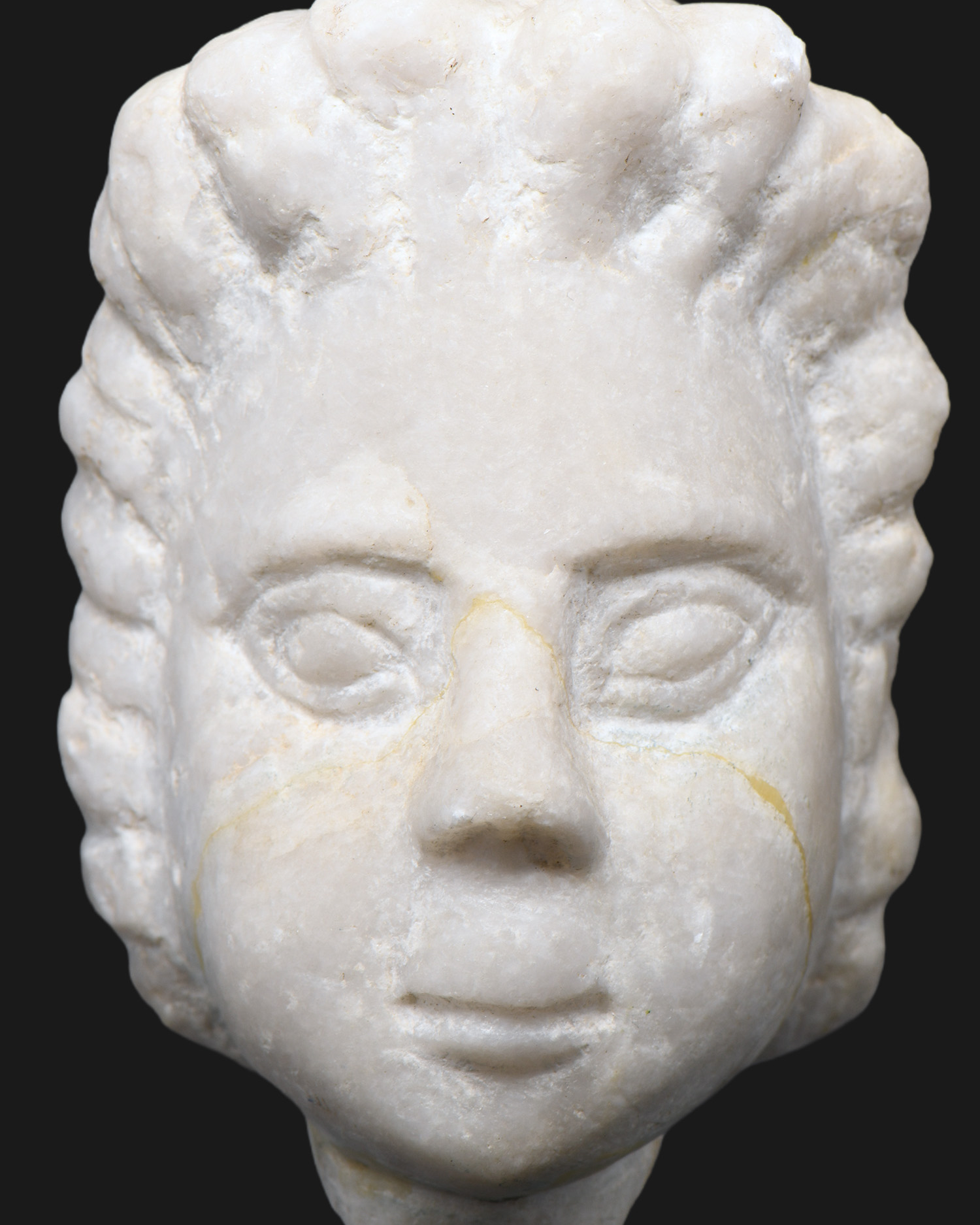
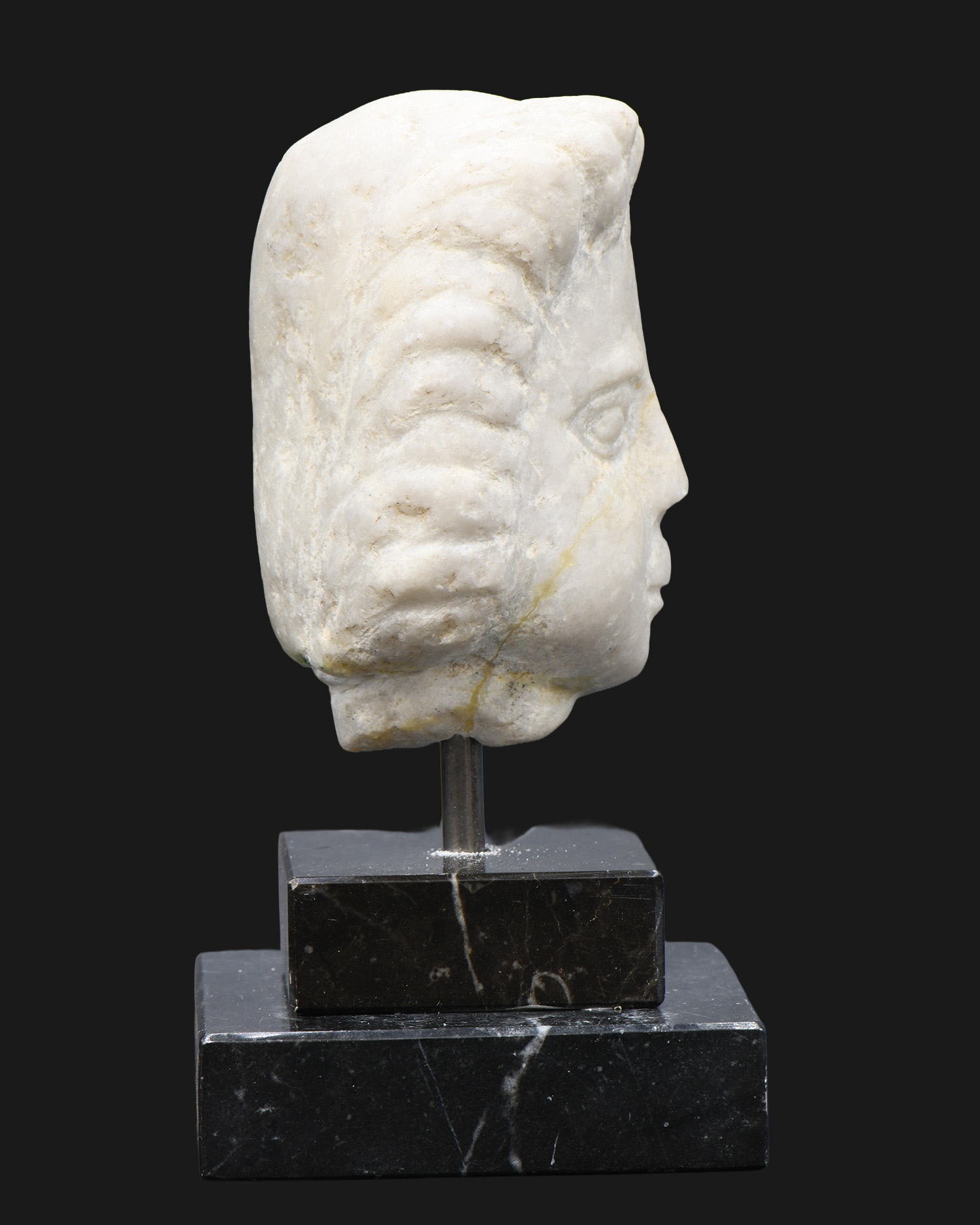
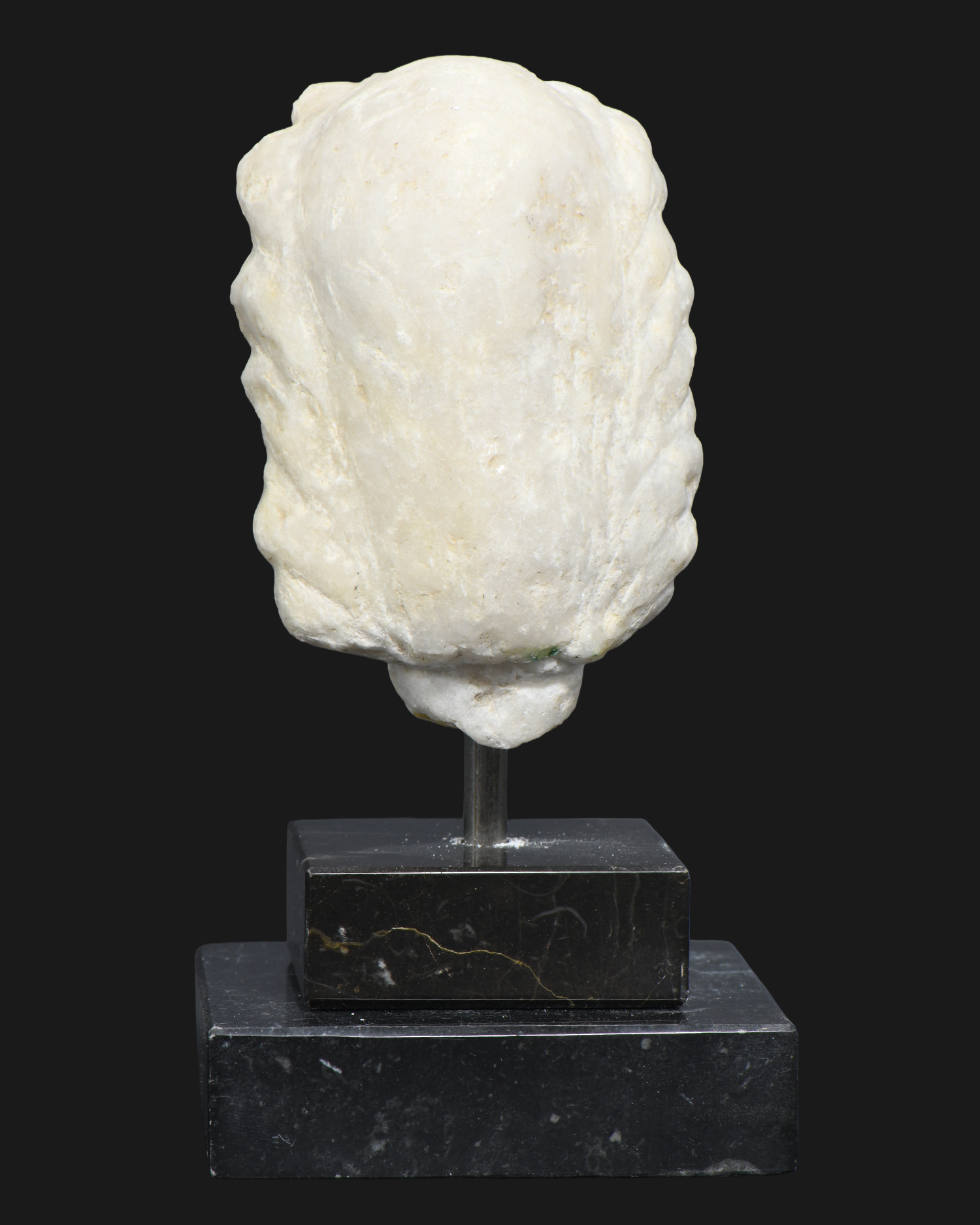
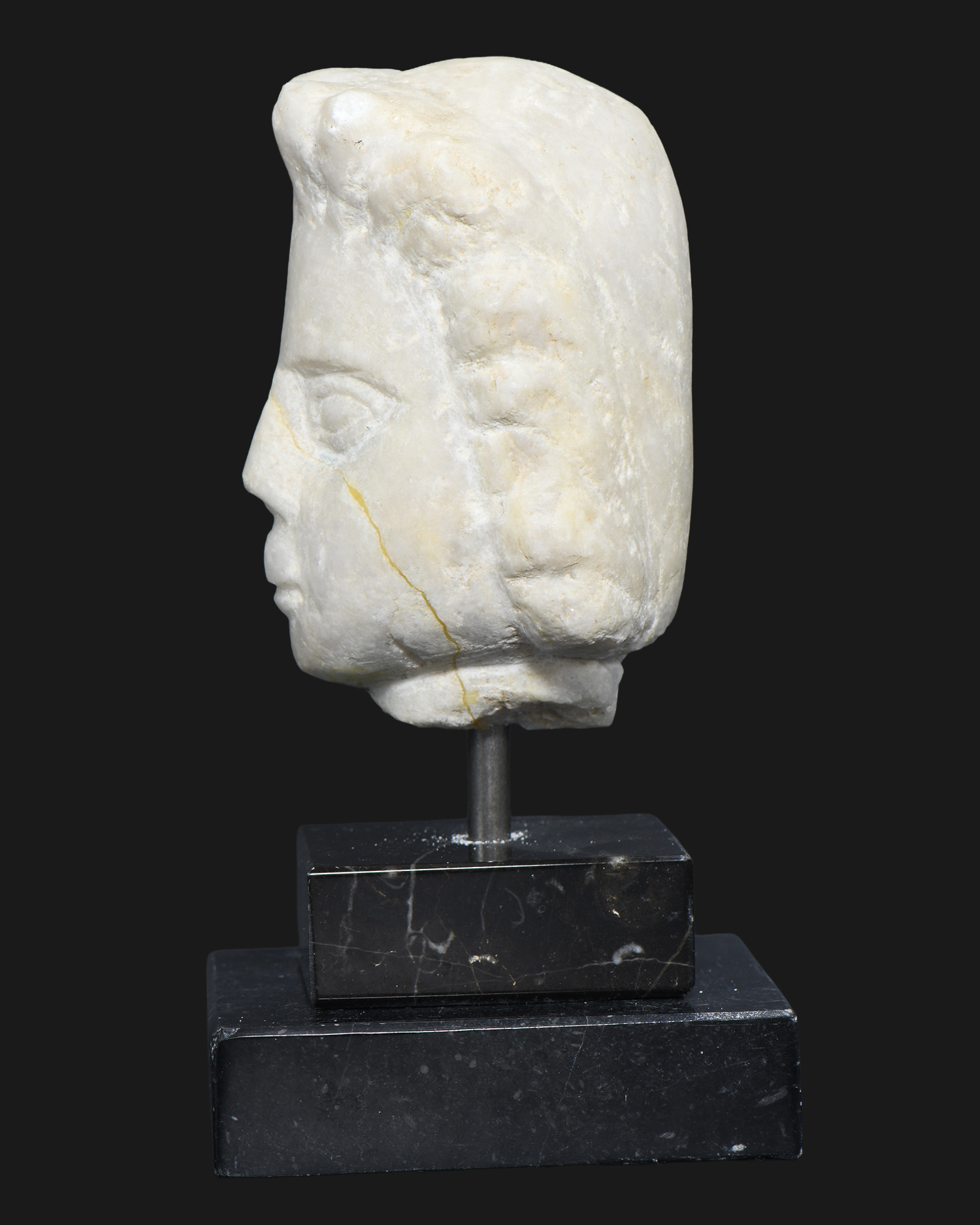
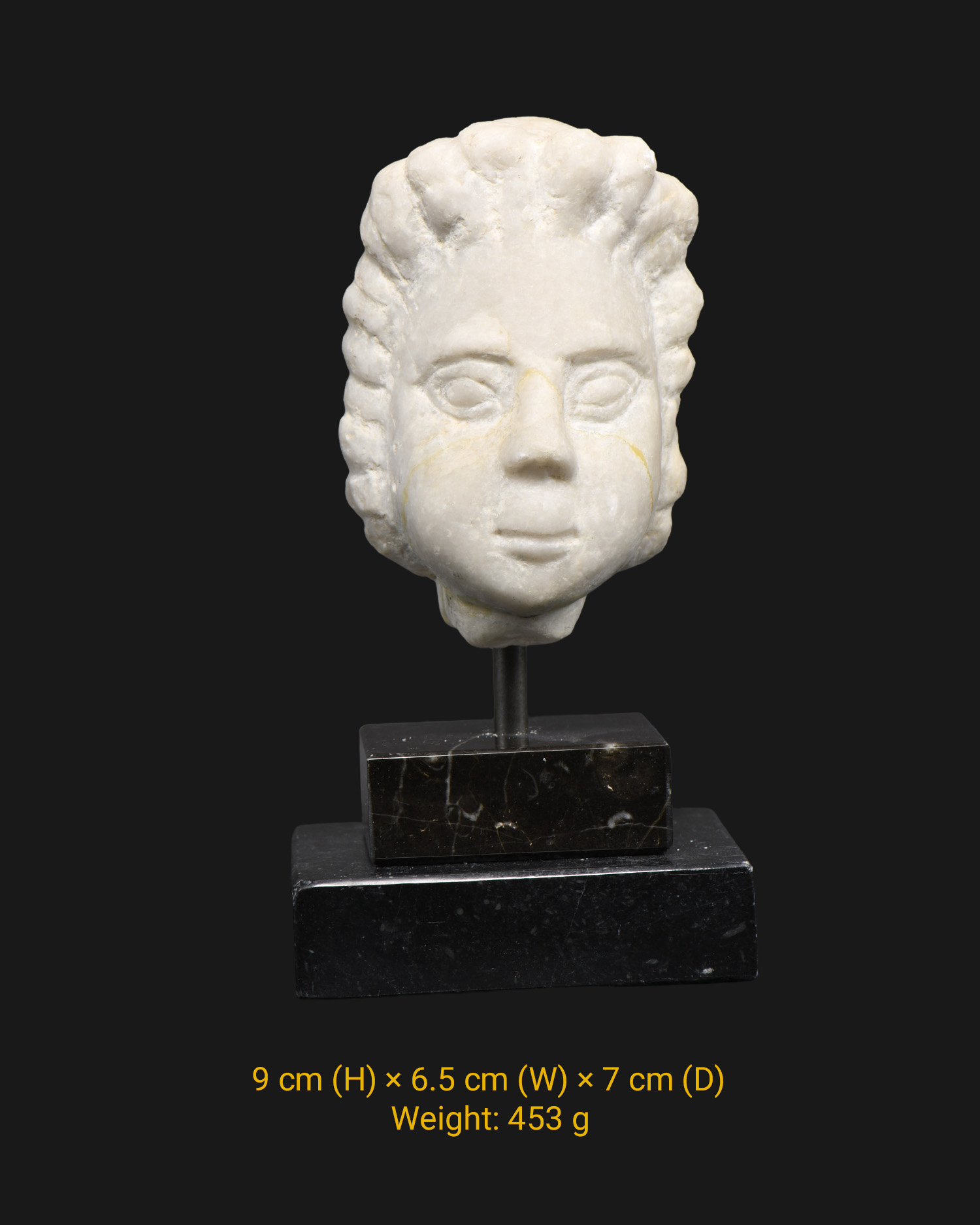

Gallo-Roman sculpture of the head of Eros (?), marble, 1st-3rd century A.D.
2400,00 zł
Full-plastic head sculpture made of white marble, facial features treated quite schematically except for the characteristic almond-shaped eyes and “Gioconda’s smile.” The nose is flat, the hair reaching the neck, wavy around the line of the face, at the back the hairstyle treated schematically. The shape of the neck from underneath allows us to conclude that the head was originally part of a larger composition. The sculpture is placed on a custom-made, two-stage pedestal of black marble.
1 in stock
| Weight | 0,453 kg |
|---|---|
| Dimensions | 9 × 6,5 × 15 cm |
| Type |
Sculpture |
| Form |
Full-frame representation of the human head |
| Materiał |
White marble |
| Kolorystyka |
Beige-gray ,Black ,White |
| Technika |
Hand carving |
| Czas powstania |
1st – 3rd century after Chr. |
| Era |
Roman Period |
| Style |
Gallo-Roman, a subtle combination of Roman naturalism and Celtic symbolism, with touches that give a simultaneously realistic and stylized effect. One of its distinctive features is the almond-shaped eyes, which were often disproportionately large in relation to the rest of the face. |
| Kraj pochodzenia |
Roman Empire |
| Autor |
Anonymous sculptor with Celtic roots |
| State of preservation |
A faint trace of repair, consisting of gluing the lower part of the face, but otherwise very good – no losses or restorations. Traces of surface oxidation of the marble in the form of lighter discoloration in places. |
Related products
Balmamarium, terracotta, Ancient Rome, ca. 1st-2nd century A.D.
Capital with Figural Decoration, Sandstone, France, 12th-14th Century
Christ Salvator Mundi, polychrome wood, Poland, 19th century.
Kyliks (wine drinking vessel), pottery, Ancient Greece, ca. mid-4th century B.C.
Lekanis with lid, terracotta, Ancient Greece (probably Beotia), 5th century BC.
Rama, marble, India, 19th century.
A sculpture depicting Rama, one of the most important deities of Hinduism, considered the seventh avatar of Vishnu. The object was hand-carved in white marble in India, probably in the 19th century.
The figure is depicted standing, facing forward. The face has a gentle expression with a soft smile and slightly closed eyes. The head is crowned with a decorative crown, and long necklaces are visible on the chest.
The figure is dressed in a draped robe with clearly marked folds. On its back is a quiver with arrows, characteristic of Rama's depictions.
The hands of the sculpture are not preserved, originally in one of them the figure held a bow - a characteristic element of representations of this deity. Further about these cavities do not write that they are consistent.
Rama is the hero of the epic Ramayana and in the Hindu tradition symbolizes righteousness and fidelity to the principle of dharma. His images occupy an important place in Indian sacred art, although full-figure marble sculptures of this scale are less common.
The object is preserved in good condition, with clear legibility of form and detail.