



Mask of Shame – “Schandmaske,” Central Europe (Germany?), ca. 1550-1700
6660,00 zł
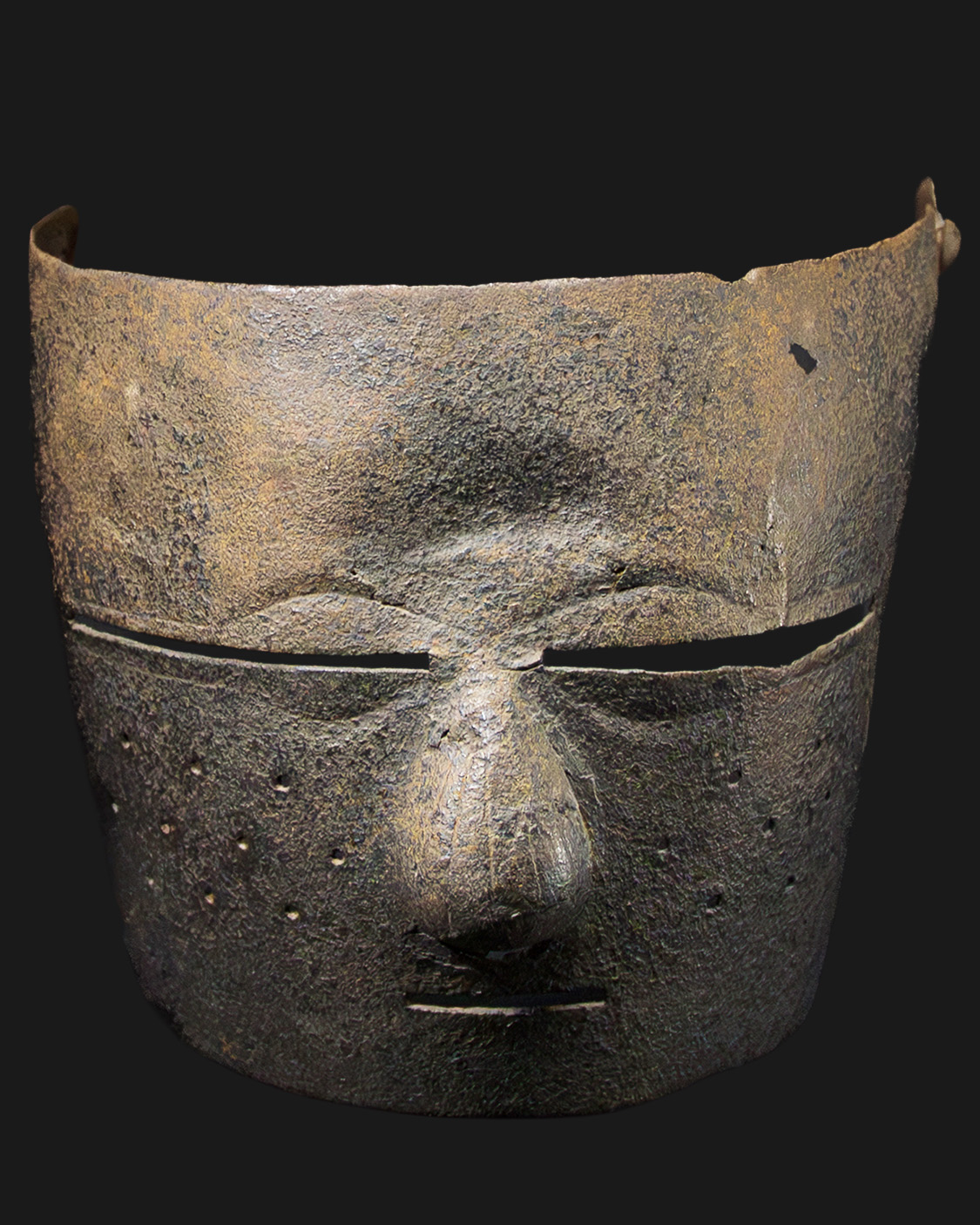
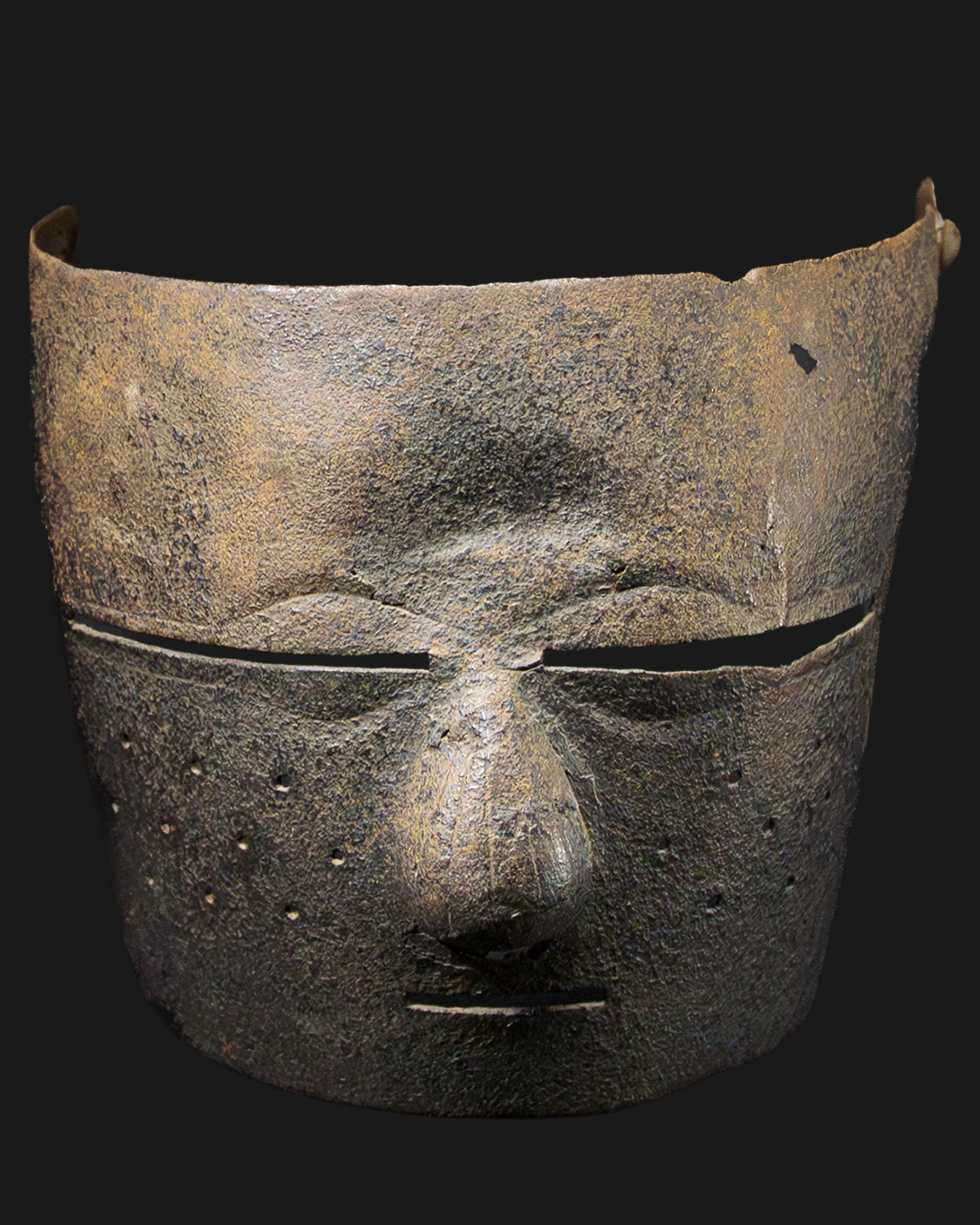
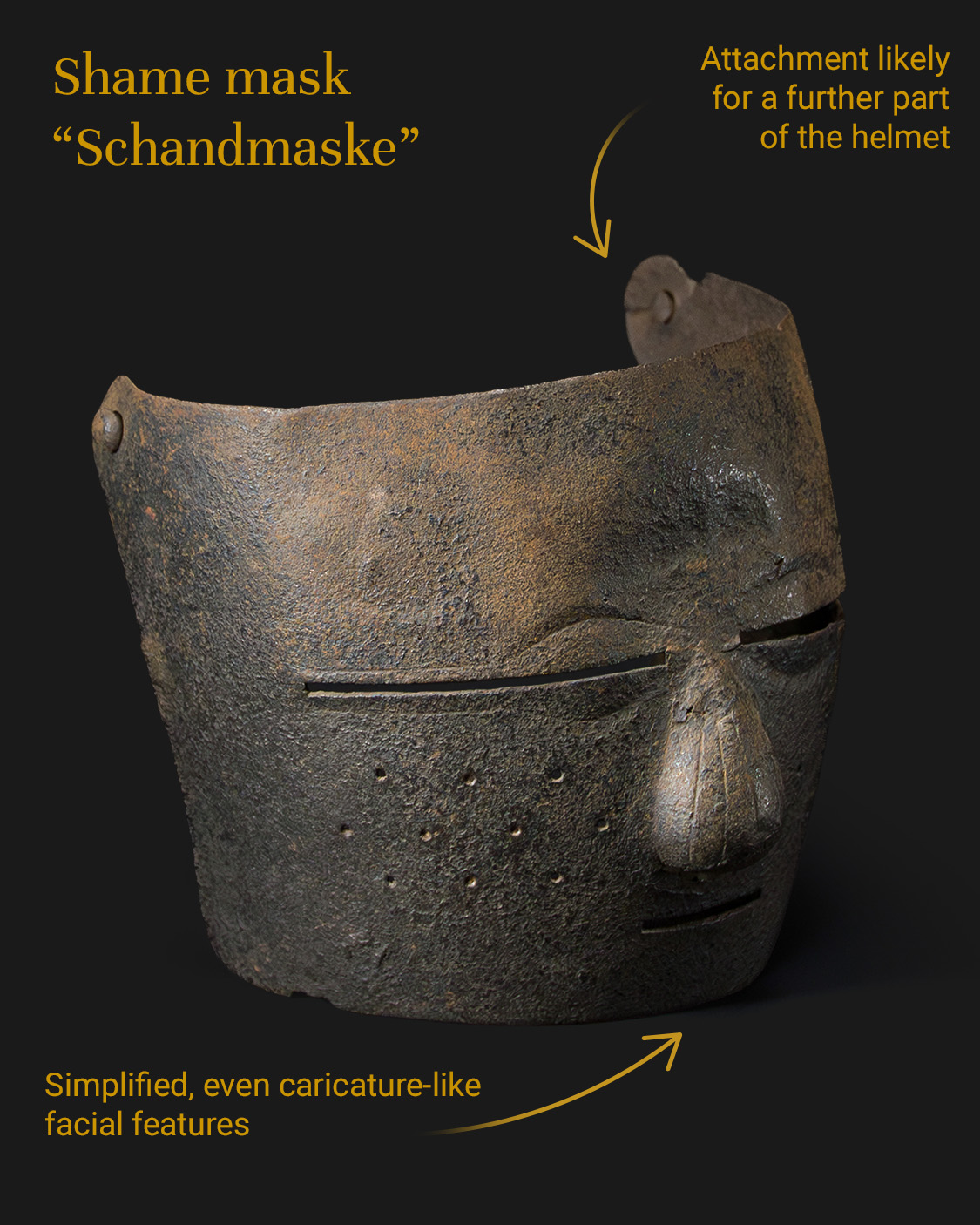
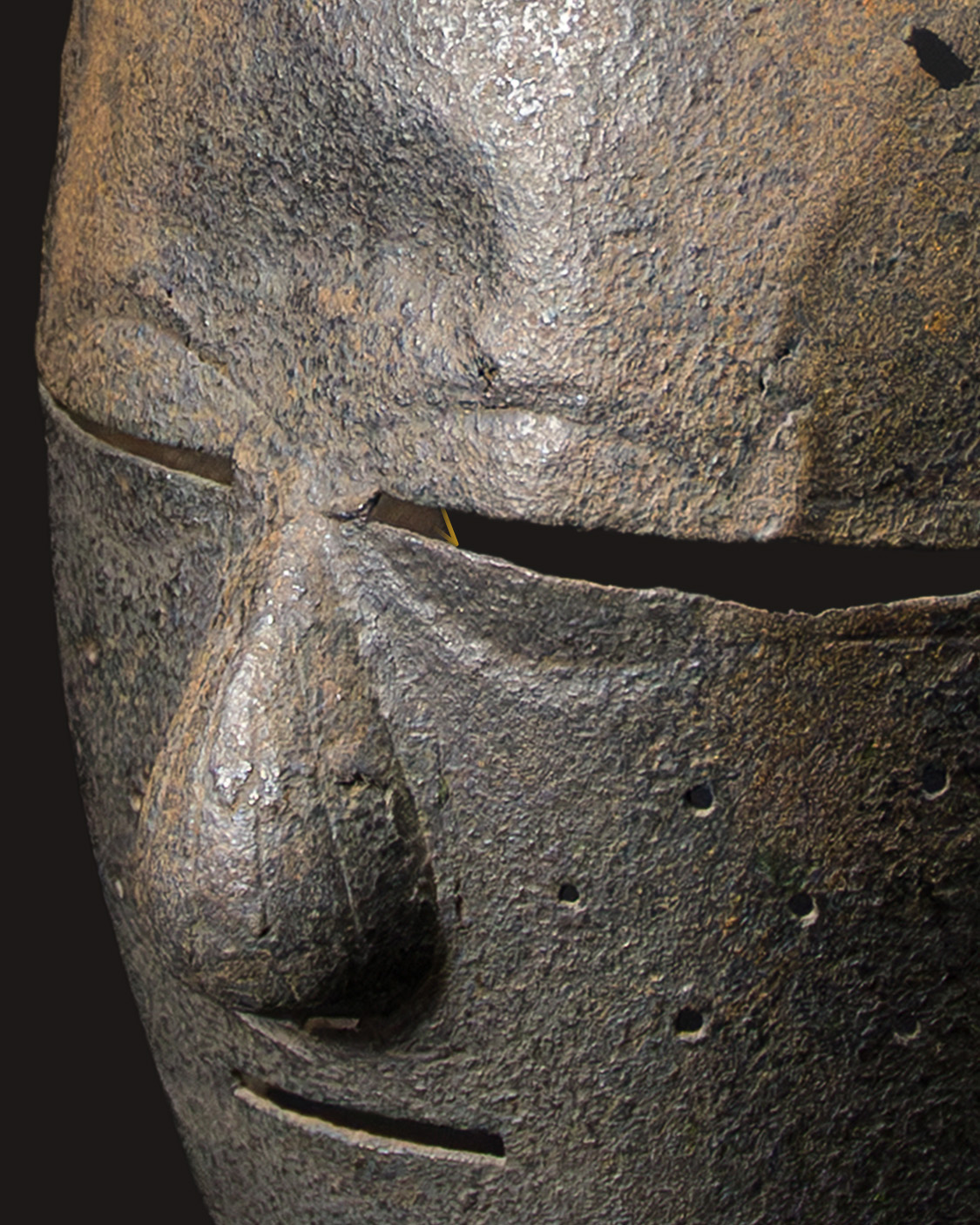
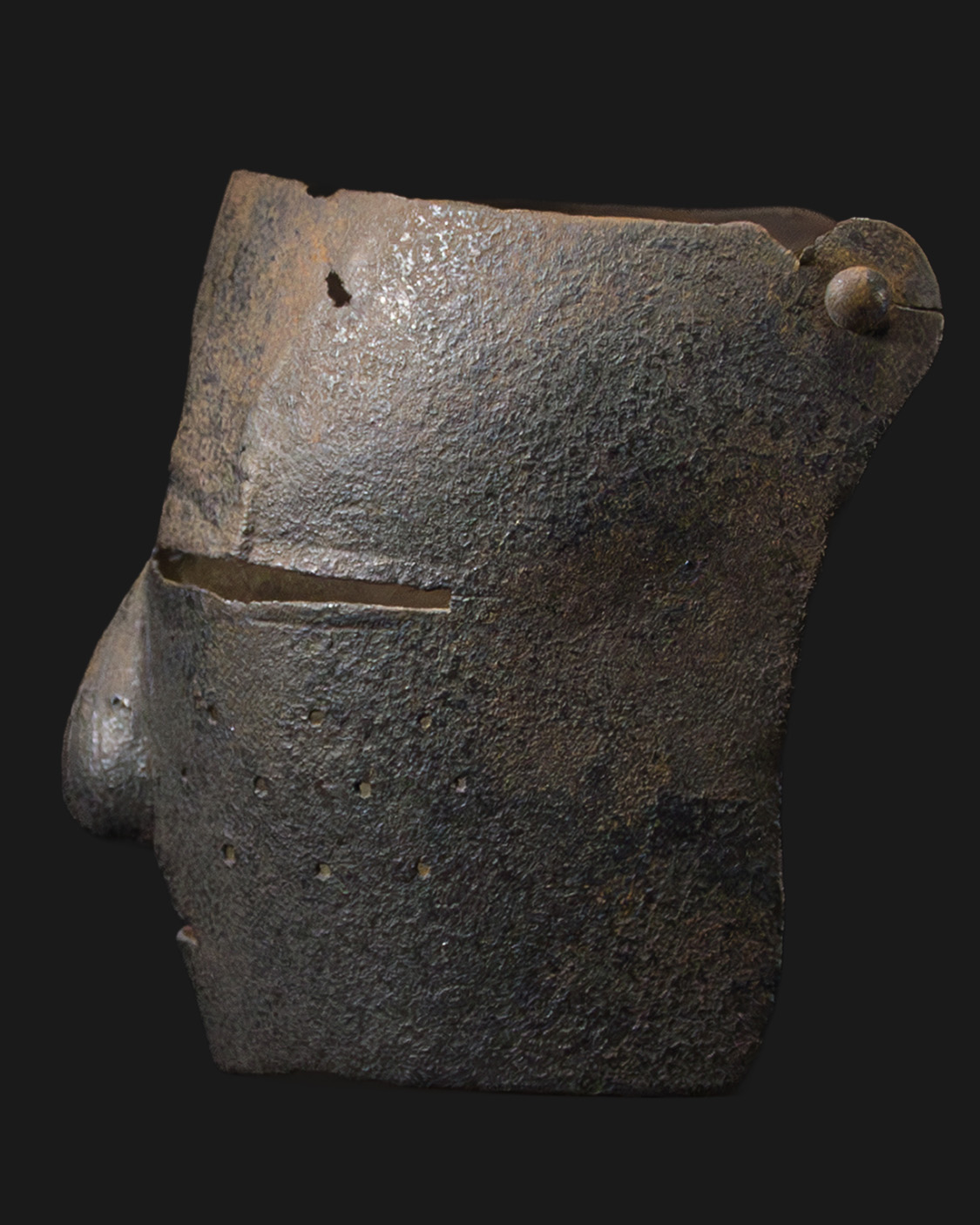
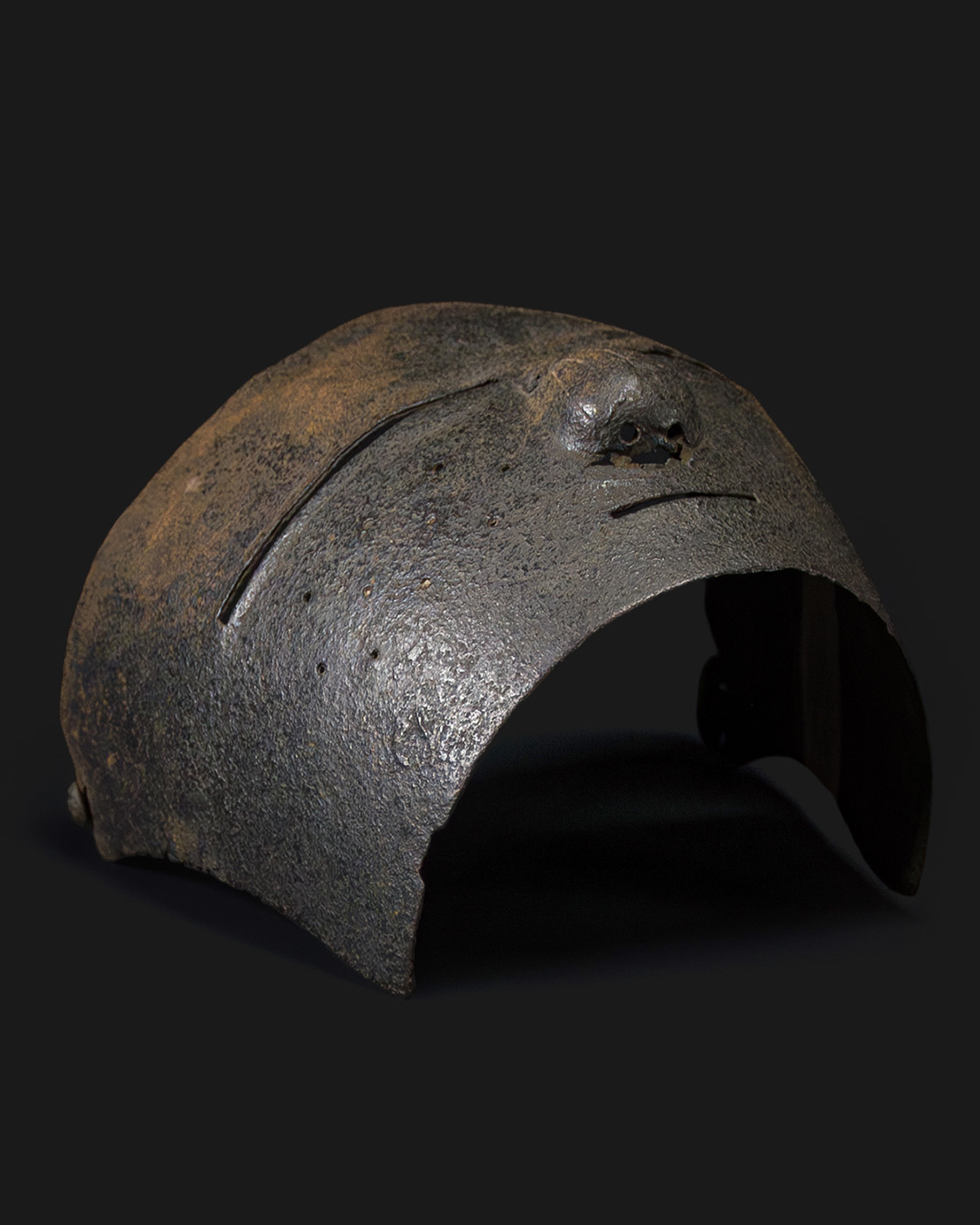
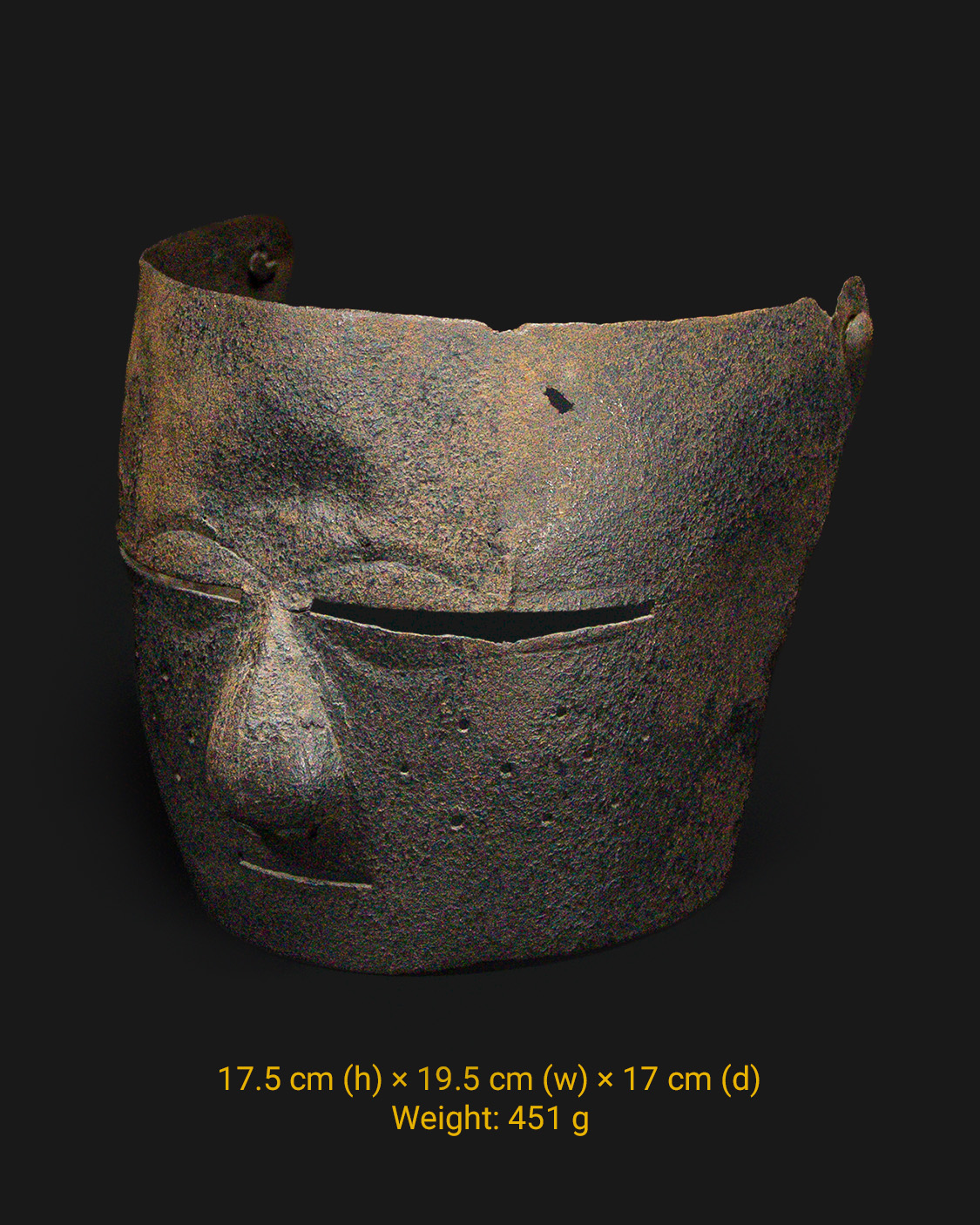
A rare and authentic example of the so-called mask of shame ( Schandmaske), forged from a single piece of iron. It resembles the face shield used in German-type Salada helmets with a movable shield. Like the shields in Salada helmets, it was a movable piece, fixed on two rivets, retained at temple level. Unlike helmet shields, the mask was made of thin sheet metal, with narrow eye openings that significantly limited the field of vision. The features that distinguish it from helmet shields are also the grotesquely depicted nose and the rather careless manner in which it was made. These features were related to its functionality – the mask was intended to attract attention and arouse pejorative associations with the person who wore it, rather than serve as protection during battle.
A rare and authentic example of the so-called mask of shame ( Schandmaske), forged from a single piece of iron. It resembles the face shield used in German-type Salada helmets with a movable shield. Like the shields in Salada helmets, it was a movable piece, fixed on two rivets, retained at temple level. Unlike helmet shields, the mask was made of thin sheet metal, with narrow eye openings that significantly limited the field of vision. The features that distinguish it from helmet shields are also the grotesquely depicted nose and the rather careless manner in which it was made. These features were related to its functionality – the mask was intended to attract attention and arouse pejorative associations with the person who wore it, rather than serve as protection during battle.
| Weight | 0,451 kg |
|---|---|
| Dimensions | 17,5 × 19,5 × 17 cm |
| Type |
Mask of Shame (German: Schandmaske) |
| Form |
Face cover with schematic features and narrow crevices at the level of eyes, nose and mouth, and round cheek openings |
| Style |
Grotesque functionalism, morality play in visual form |
| State of preservation |
Good museum condition, sheet metal crack under and over the nose, small dent and minor perforation on the forehead, but form complete, rivets preserved, corrosion stabilized, patina |
Related products
Afrika Korps tropical helmet, cork and canvas, Germany (North Africa), 1941
A tropical cork helmet (Tropenhelm) used by soldiers of the German Afrika Korps (Deutsches Afrikakorps, DAK) during the North African campaign of 1941-1943. Made of lightweight, hardened cork covered with beige canvas. On the sides are metal insignia: on one side a tricolor national shield (black-white-red), on the other a Wehrmacht eagle holding a swastika. The inside of the helmet is lined with red lining, with a preserved leather potnik and a fragment of the chin strap. The potnik bears the manufacturer's stamp HR41 (Heinrich Radecke, Hamburg, 1941).
All in very good state of preservation, with natural wear to the fabric at the edges of the brim and minor rubbing. Despite the broken chin strap, the structure remains fully stable. The helmet is preserved in its original condition, without conservation interference.
Crucifix base in the form of a skull topped with a stylized tree trunk, wood, Germany (?), 18th-19th century.
Luftwaffe non-commissioned officer’s cap, wool fabric, Germany, ca. 1939-1945
Moneybox in the form of a skull, wood, iron, Central Europe (Germany?), 18th century.
Pair of skulls joined by occiputs, wood, Germany, 1635
Plaque with Suchekomnaty coat of arms and panoplies, silver and silk, Poland, 18th century.
A unique heraldic-votive plaque, centered around an oval silver plaque dating from the late 18th century. It is engraved with the Suchekomnaty coat of arms featuring panoply motifs (knightly armament), mantling, a helmet, and a hunting horn, crowned with a noble coronet and the monogram "P.J.". The plaque was in the 1920s-1930s sewn onto an ornate, soft textile backing made of alternating panels of amaranth and ecru silk fabrics. The background is adorned with hand embroidery crafted from silver purl, sequins, and metal applications forming floral compositions. Two original red wax seals remain on the reverse.