


Mask of Shame – “Schandmaske,” Central Europe (Germany?), ca. 1550-1700
6660,00 zł
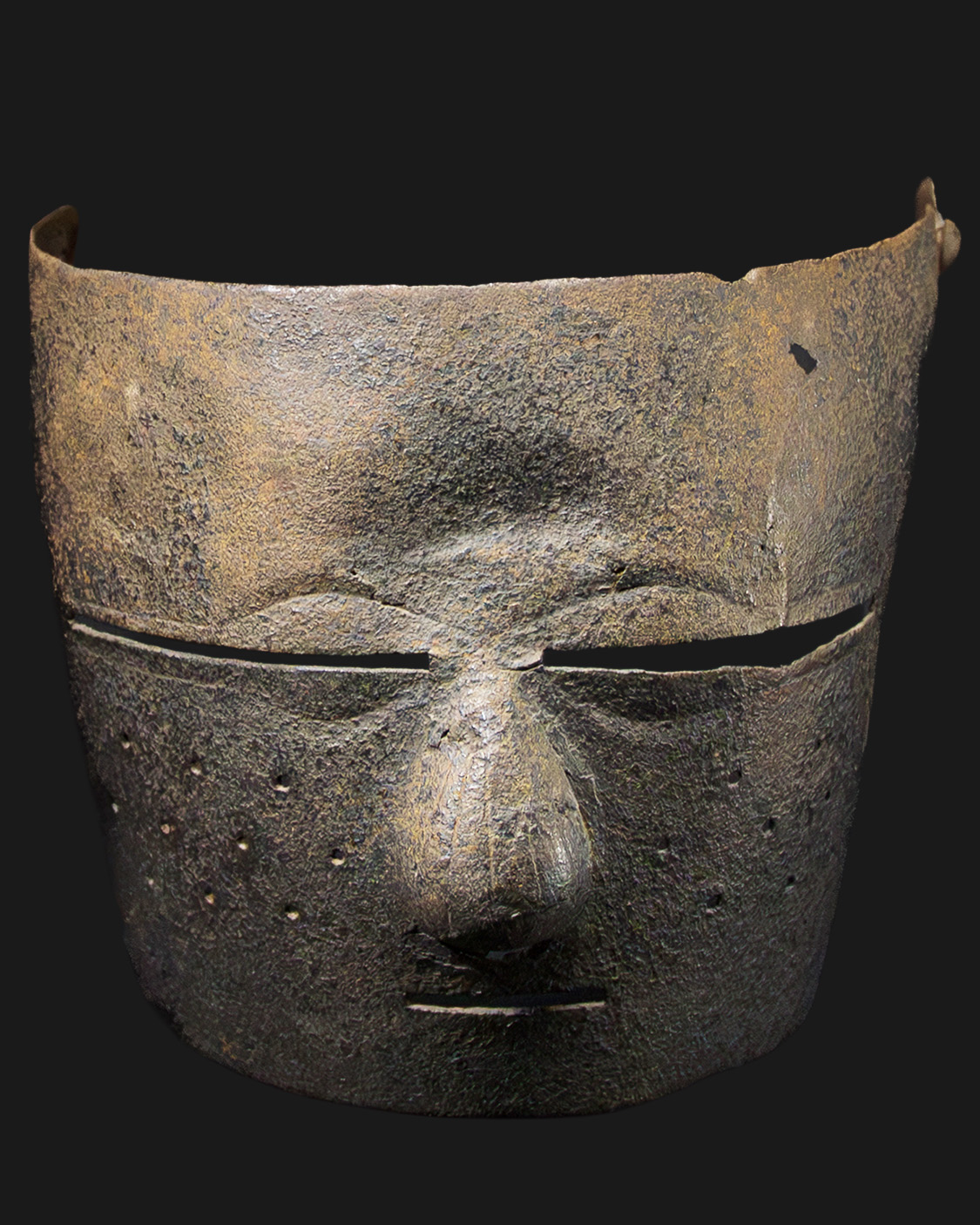
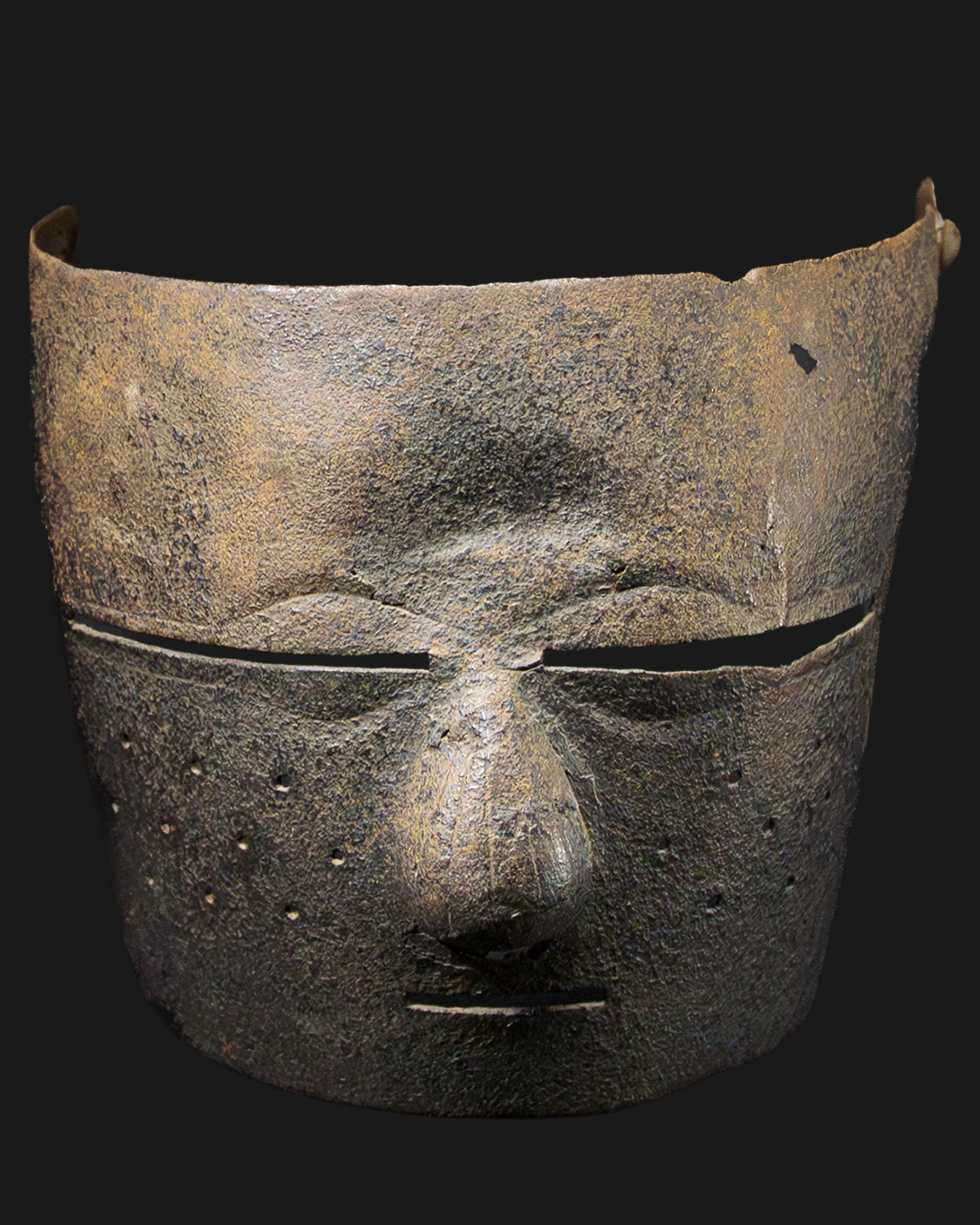
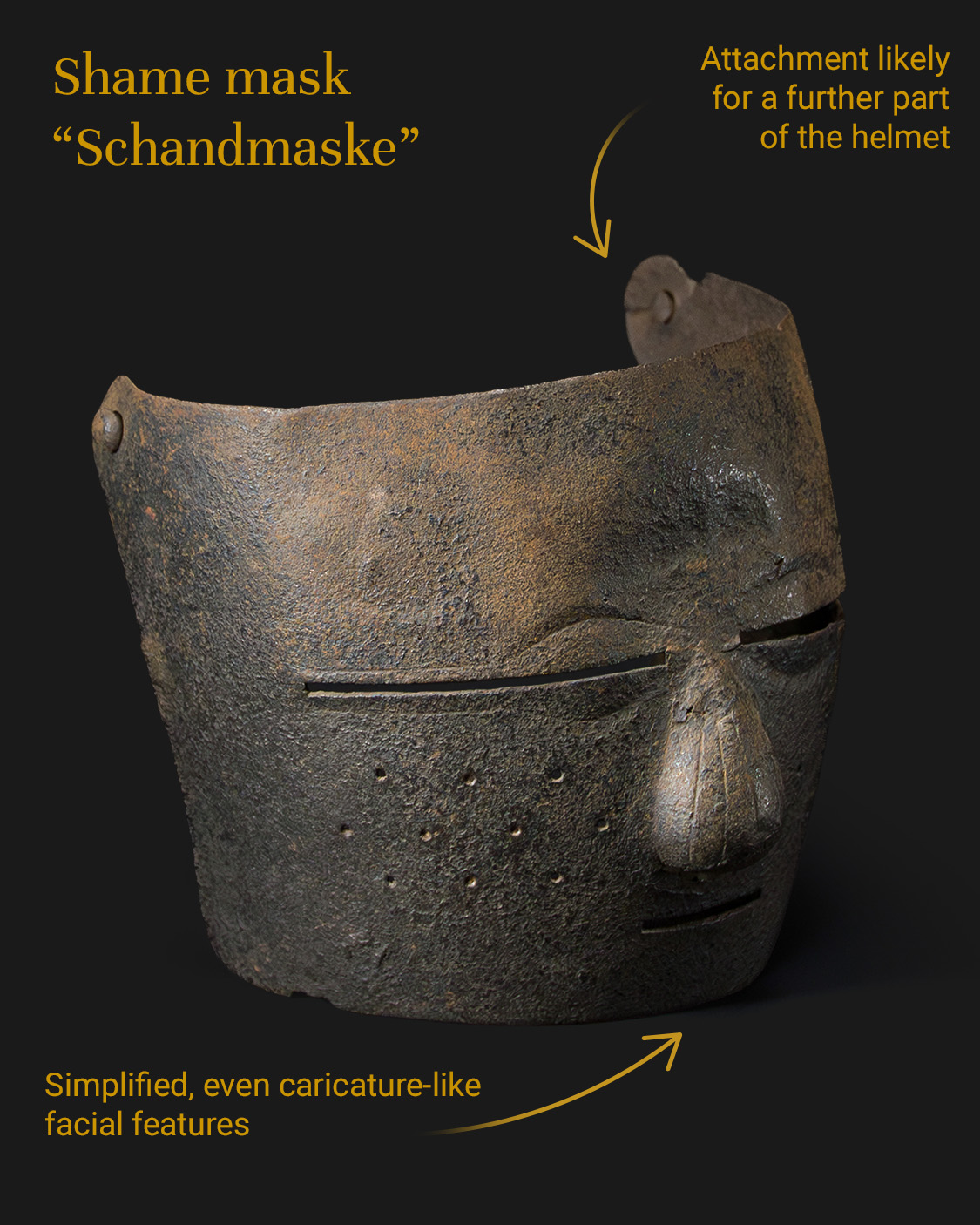
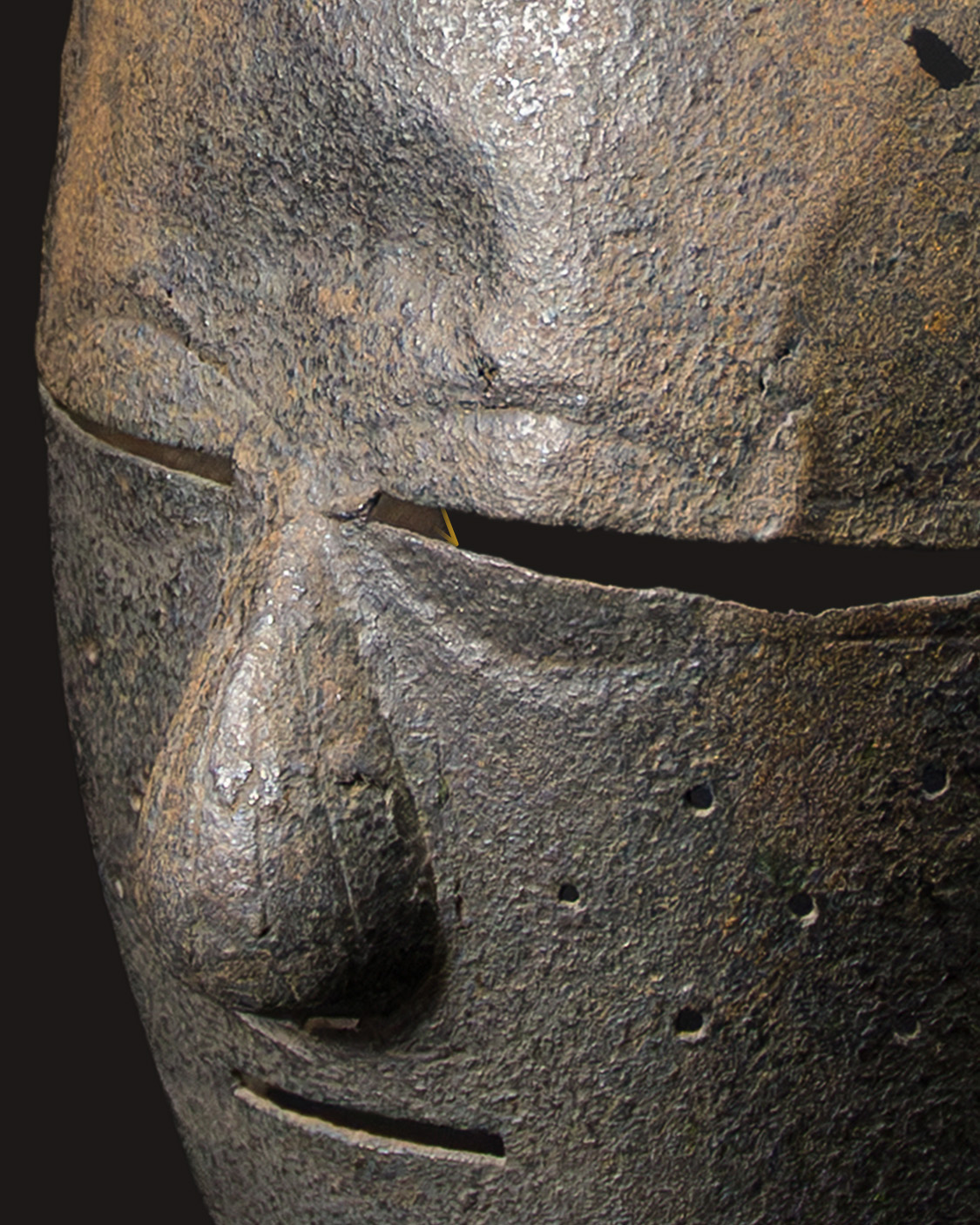
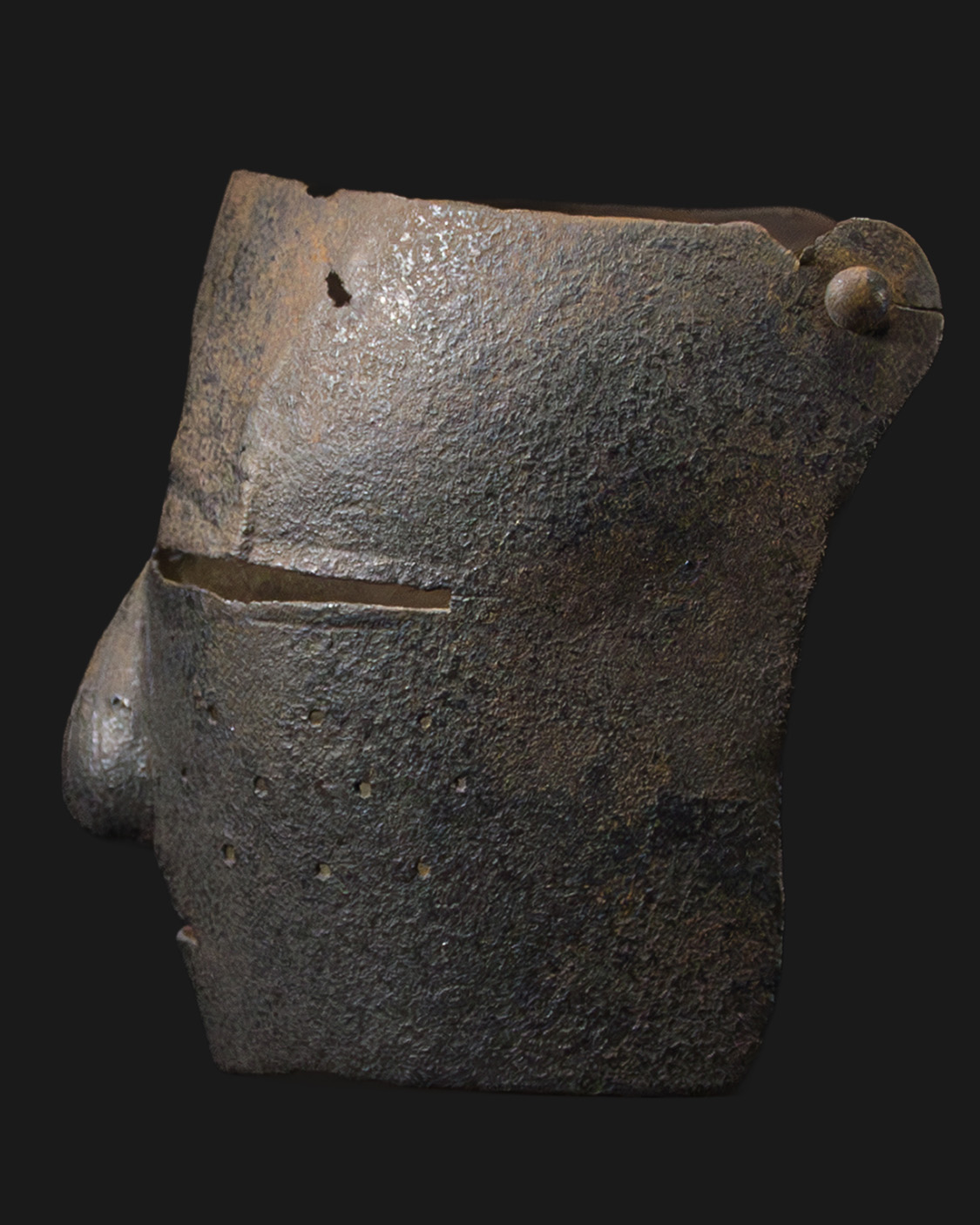
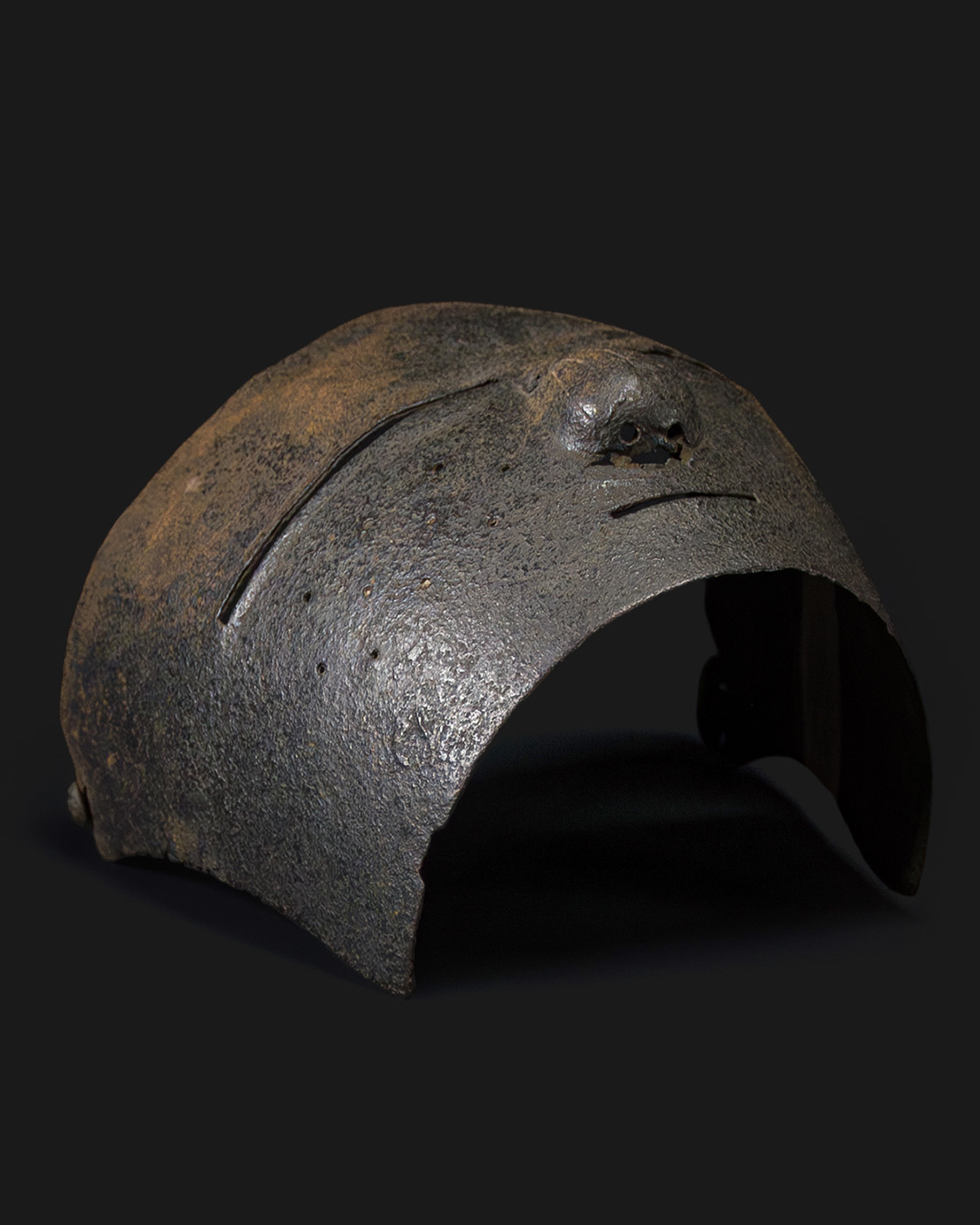
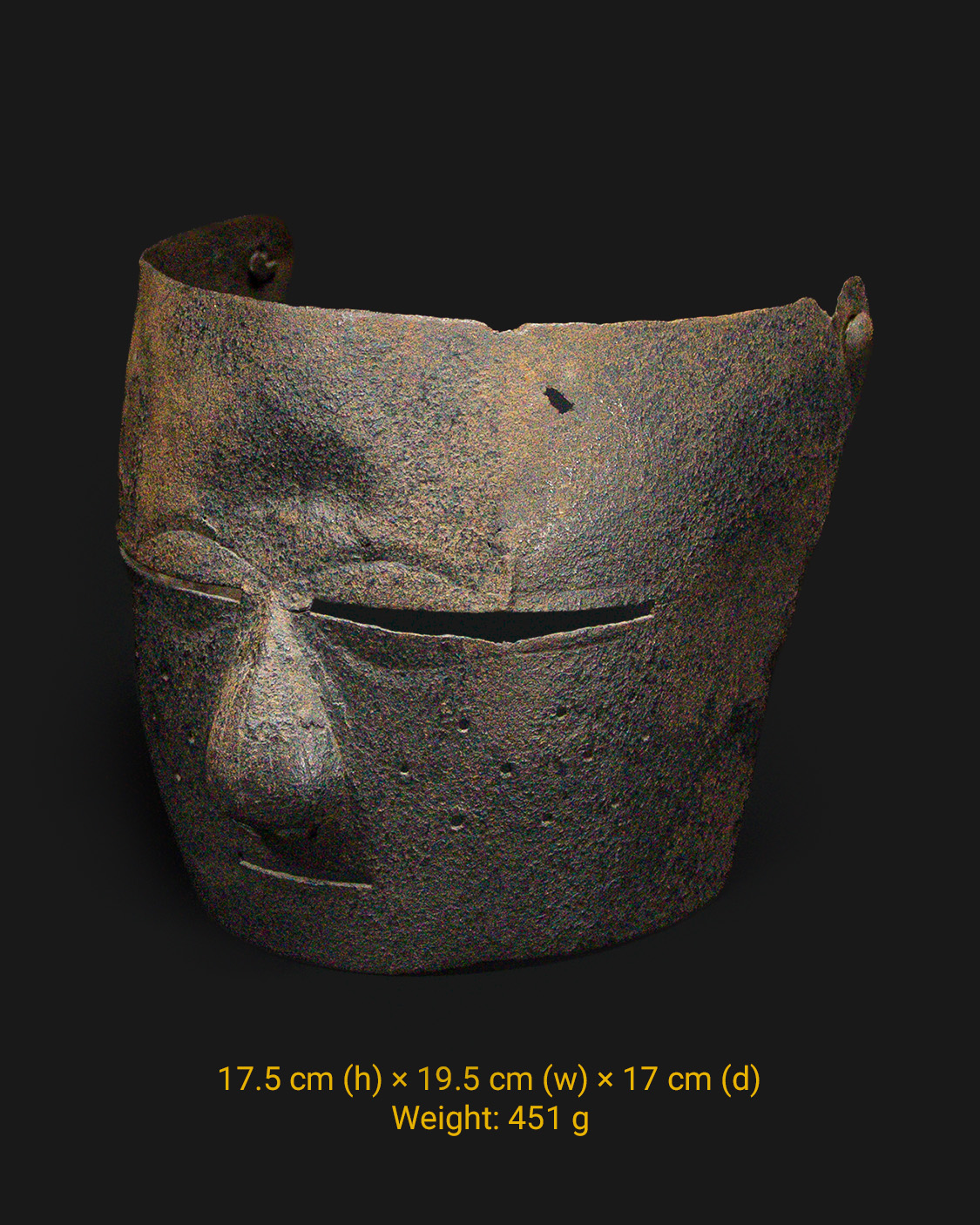
A rare and authentic example of the so-called mask of shame ( Schandmaske), forged from a single piece of iron. It resembles the face shield used in German-type Salada helmets with a movable shield. Like the shields in Salada helmets, it was a movable piece, fixed on two rivets, retained at temple level. Unlike helmet shields, the mask was made of thin sheet metal, with narrow eye openings that significantly limited the field of vision. The features that distinguish it from helmet shields are also the grotesquely depicted nose and the rather careless manner in which it was made. These features were related to its functionality – the mask was intended to attract attention and arouse pejorative associations with the person who wore it, rather than serve as protection during battle.
A rare and authentic example of the so-called mask of shame ( Schandmaske), forged from a single piece of iron. It resembles the face shield used in German-type Salada helmets with a movable shield. Like the shields in Salada helmets, it was a movable piece, fixed on two rivets, retained at temple level. Unlike helmet shields, the mask was made of thin sheet metal, with narrow eye openings that significantly limited the field of vision. The features that distinguish it from helmet shields are also the grotesquely depicted nose and the rather careless manner in which it was made. These features were related to its functionality – the mask was intended to attract attention and arouse pejorative associations with the person who wore it, rather than serve as protection during battle.
| Weight | 0,451 kg |
|---|---|
| Dimensions | 17,5 × 19,5 × 17 cm |
| Type |
Mask of Shame (German: Schandmaske) |
| Form |
Face cover with schematic features and narrow crevices at the level of eyes, nose and mouth, and round cheek openings |
| Materiał |
Wrought iron |
| Kolorystyka |
Dark brown |
| Kraj pochodzenia |
Central Europe |
| Czas powstania |
approximately 1550-1700 |
| Era |
Baroque ,Renaissance |
| Style |
Grotesque functionalism, morality play in visual form |
| State of preservation |
Good museum condition, sheet metal crack under and over the nose, small dent and minor perforation on the forehead, but form complete, rivets preserved, corrosion stabilized, patina |
| Technika |
Hand forging ,Perforation ,Riveting |
Related products
Bell fragment from the garrison church in Zamość, bronze, Poland, 1915.
Commemorative fragment of a church bell (so-called Kriegsandenken / Grabenschmuck), an irregular bronze shard from the mantle with distinct, sharp edges, typical of a mechanical fracture.
On the outer surface of the bronze, a fragment of rich, plastic relief decoration in the Byzantine-Russian style has been preserved. It depicts a distinct bust/face of a bearded saint wearing a dignified, ceremonial headdress (a bishop's miter or an Eastern princely crown). The anatomical features of the figure and the details of the vestments indicate the high sculptural artistry of the Tsarist manufacture. Most likely, this is an image of Saint Nicholas the Wonderworker or Saint Prince Vladimir. Above the figure's head, the outline of a decorative frieze (vegetal ornament or cherub's wings) is visible.
A rectangular metal plate with an engraved, German-language inscription in decorative cursive has been attached to the fragment with two rivets:
a. d. Zarenglocke d. Garnison Kirche Don Kosaken Zamosc, 27.8.1915
Crucifix base in the form of a skull topped with a stylized tree trunk, wood, Germany (?), 18th-19th century
Heraldic Plaque with Knut and Ślepowron Coats of Arms, Silver, Poland, 17th Century.
Pair of skulls joined by occiputs, wood, Germany, 1635
Plaque with Suchekomnaty coat of arms and panoplies, silver and silk, Poland, 18th century.
Oval plaque made of forged silver sheet, from the second half of the 18th century, with an engraved Suchekomnaty coat of arms on a shield surrounded by panoplies, surmounted by a crown, and a monogram “P. J.” . In the 1820s–1830s the plaque was sewn onto an ornate, soft textile backing made of alternating layers of amaranth and ecru silk fabrics. The background is adorned with hand embroidery crafted from silver purl, sequins, and sheet metal appliqués forming floral compositions. Two wax seals are preserved on the reverse.
Originally, the plaque may have served a sepulchral function, placed on a coffin or above an epitaph. Its placement on a silk cushion and the presence of seals likely indicate a family and sentimental character. The panoplies resemble compositions known from gorgets of the Bar Confederation era. This may suggest that the person with the initials “P. J.” was a participant. Little is known about the object's origin; it was reportedly owned by a monk from Greater Poland.
Skull (Memento Mori), marble, Italy, 18th-19th century
Elegant, decorative skull made of natural gray marble, maintained in a realistic style: the eye sockets, cranial seam lines and zygomatic arches are clearly formed. The faded dentition alludes to the concept of Vanitas.
The characteristic feature of the stone used for the sculpture is irregular veining in shades of beige, cream and gray, which gives it a unique character. The surface is polished, with natural discolorations and small marks due to the properties of the material, which emphasizes the authenticity and nobility of the marble. The skull is provided with a lead pin underneath, set on a minimalist, contemporary base in black, which exposes the sculpture and gives it a museum-like character.
The object is ideal for collectors of curiosities, lovers of the art of Vanitas - Memento Mori, cabinets of curiosities and as an expressive element of interior design in classical, industrial or eclectic style. An object with a strong aesthetic and symbolic expression, which is difficult to pass by indifferently.