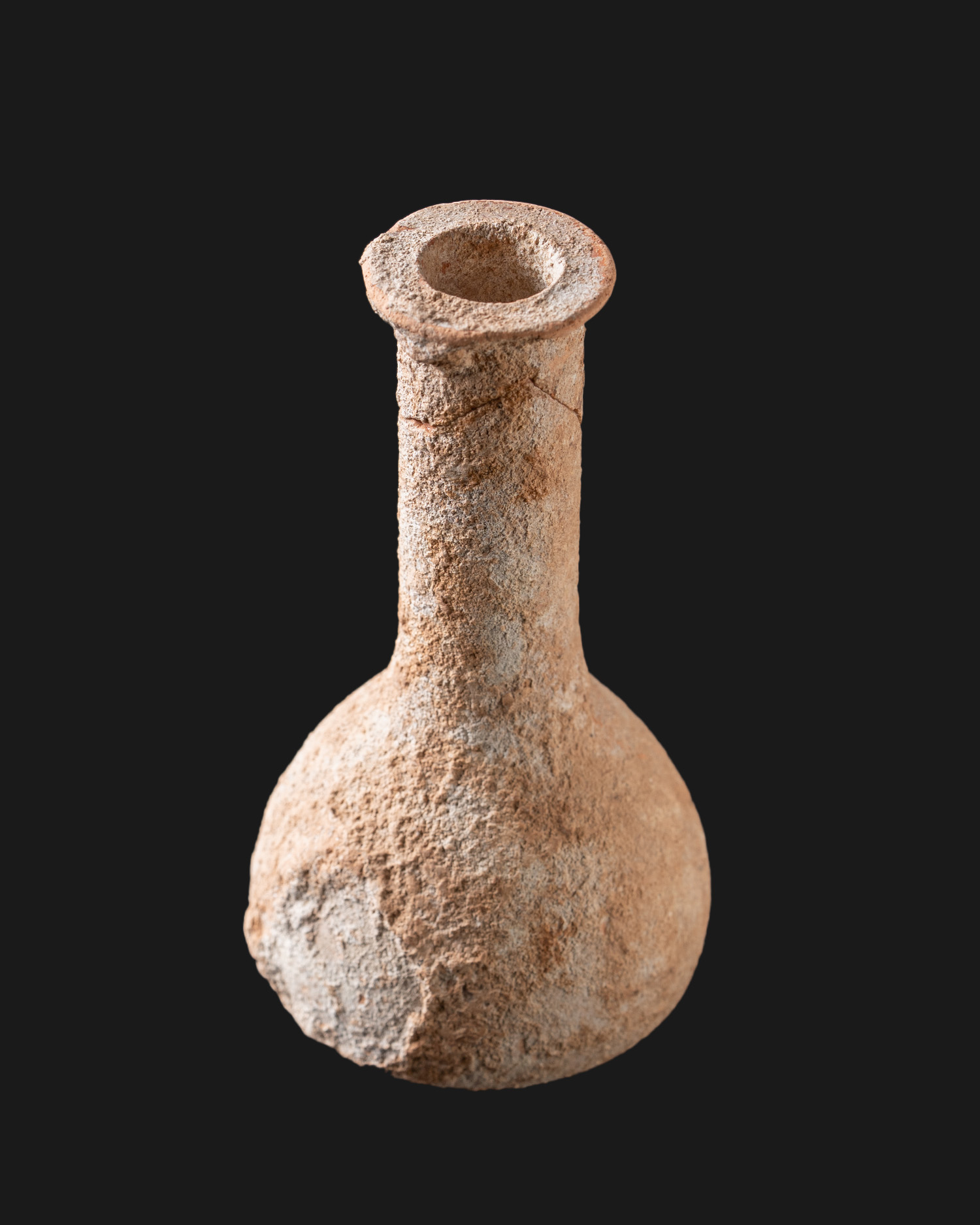
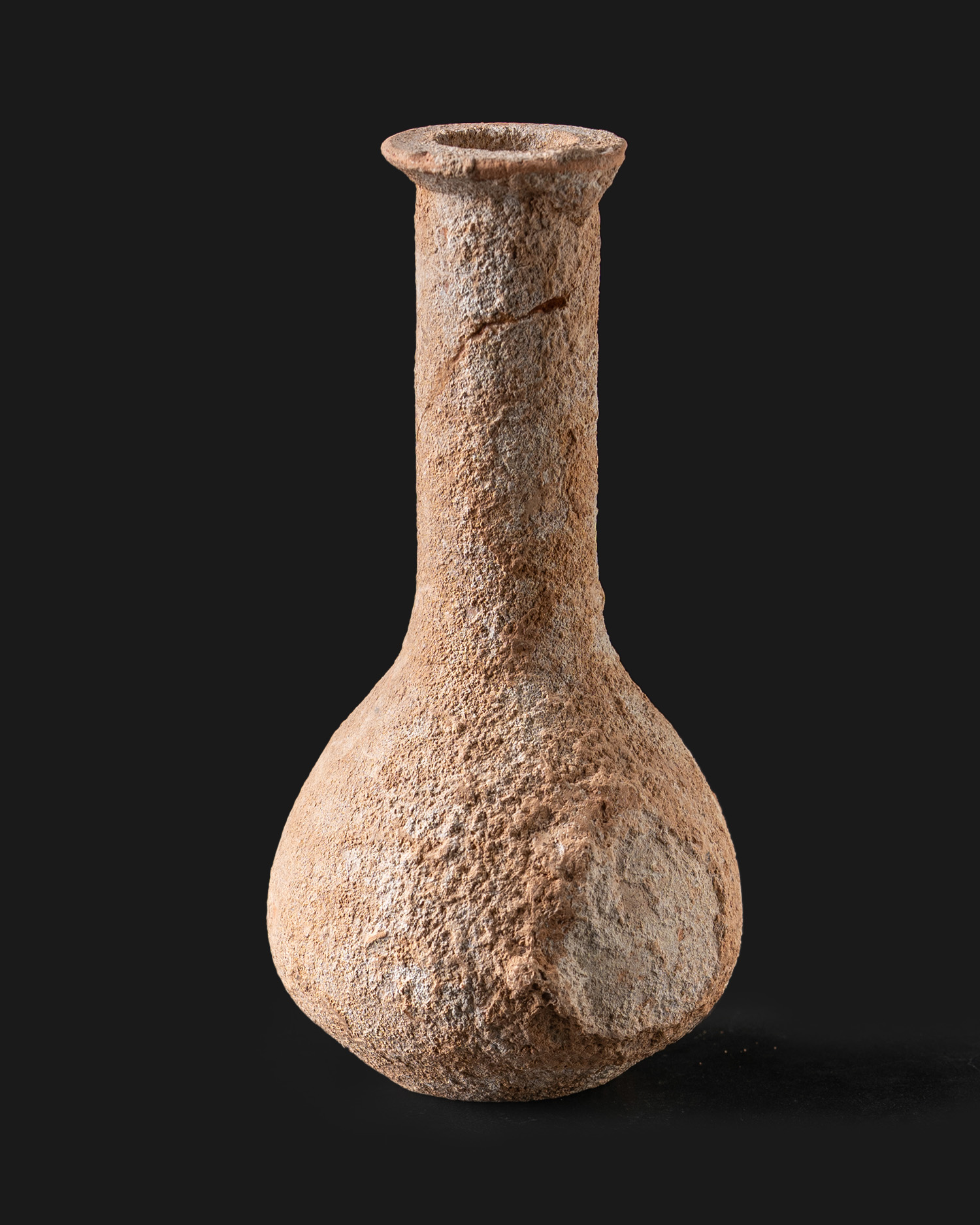
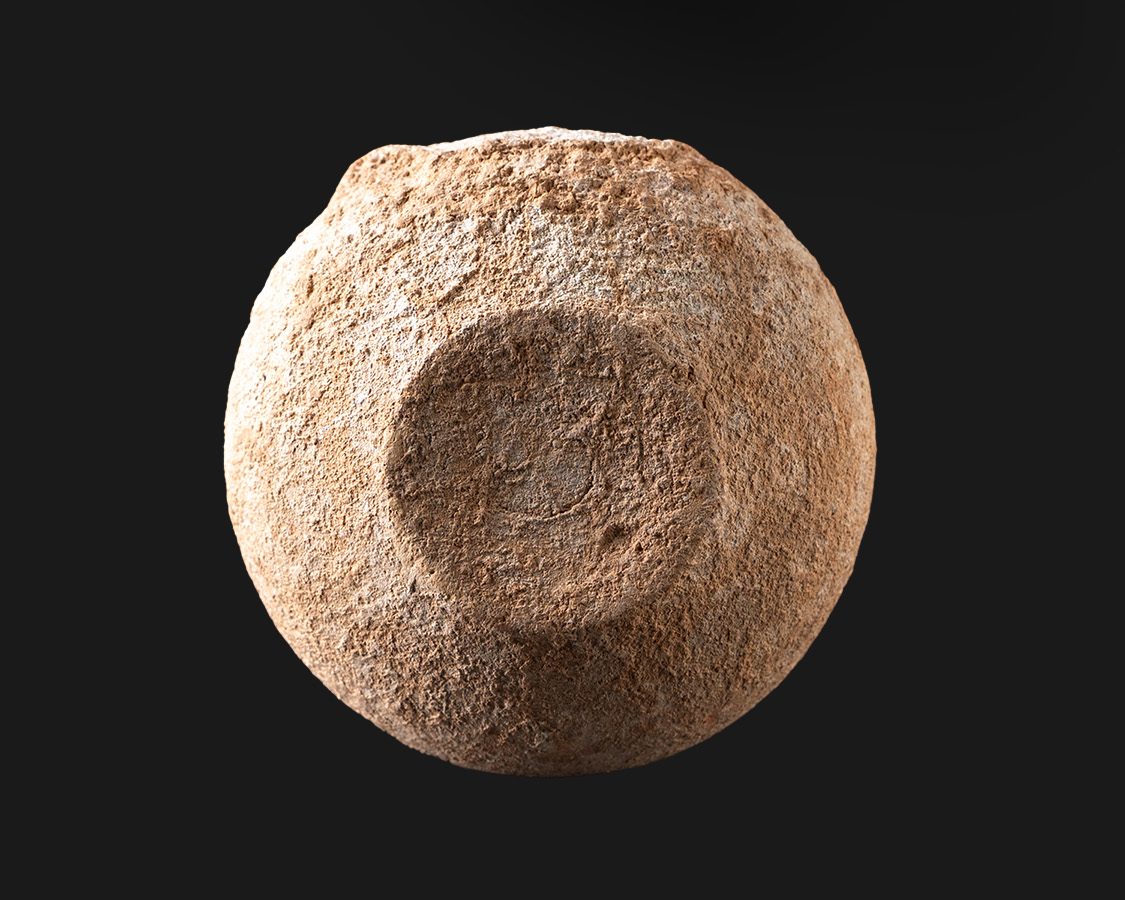
An authentic Roman balsamarium (unguentarium) from the 1st–2nd century AD, crafted from clay using a potter's wheel. The vessel, characterized by its bulbous body, slender neck, and wide, flanged rim, was used to store liquid fragrances and toilet perfumes. It often formed part of the deceased's grave goods. It was formerly believed that balsamaria were used to collect mourners' tears during funeral ceremonies – hence the erroneous name lacrimatorium (from lacrima – tear).
This authentic Roman embalmer from the 1st-2nd century A.D. is not only an object of daily use, but also a symbol of remembrance of the dead. Used as a grave gift, it was meant to protect and beautify the body of the deceased according to beliefs about life after death.
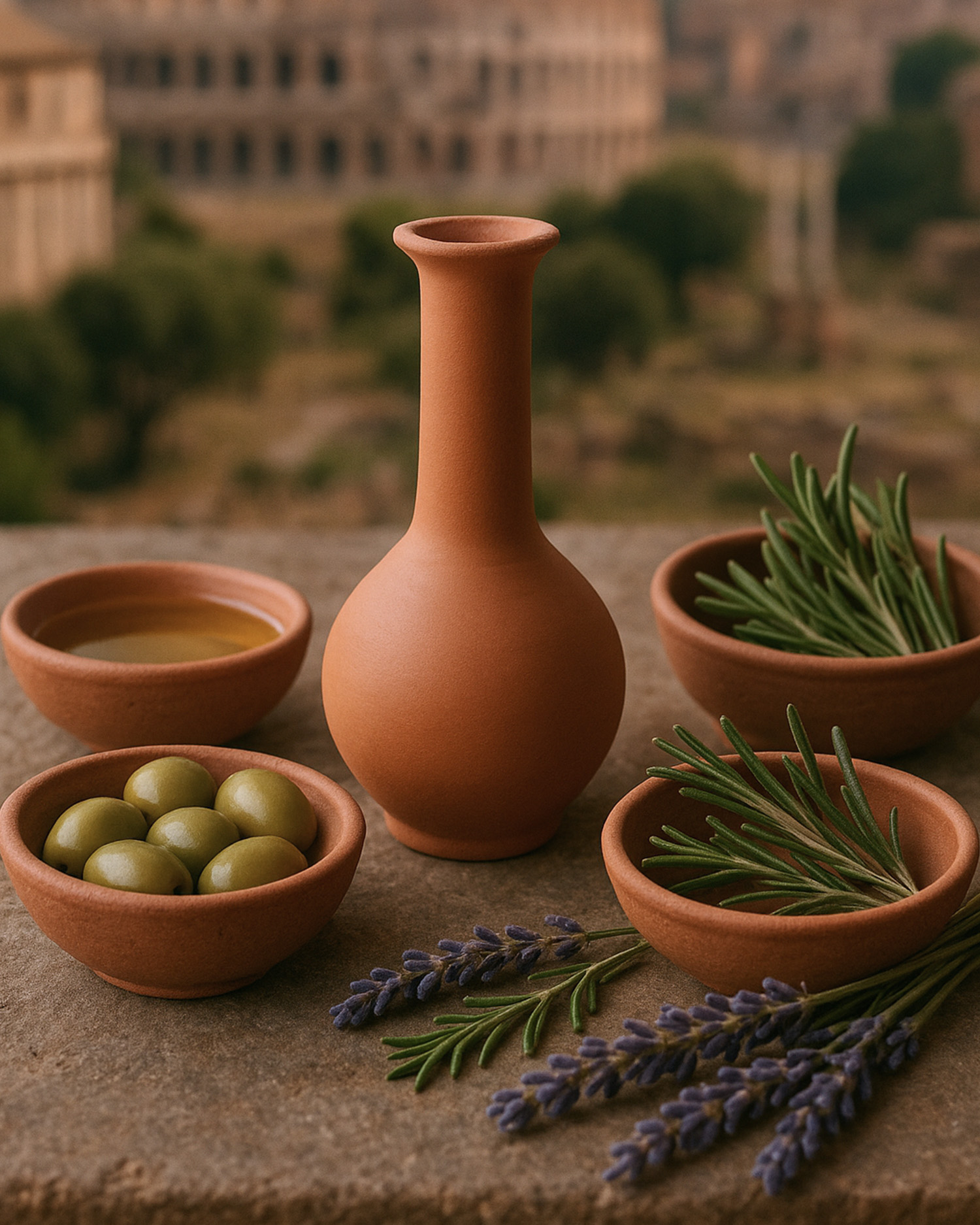
For a long time, balsamaria were erroneously called lacrimatoria (from the Latin lacrima lacrima - tear). It was believed that they were used to collect tears during mourning ceremonies. Though romanticized, this theory has been disproved; the vessels stored cosmetic oils and perfumes, not the tears of mourners. Modern analyses of organic residues found in the embalming vessels conducted by gas chromatography and mass spectrometry have revealed the presence of oils, vegetable fats, resins and fragrances, rather than compounds present in human tears (e.g., salts, enzymes)