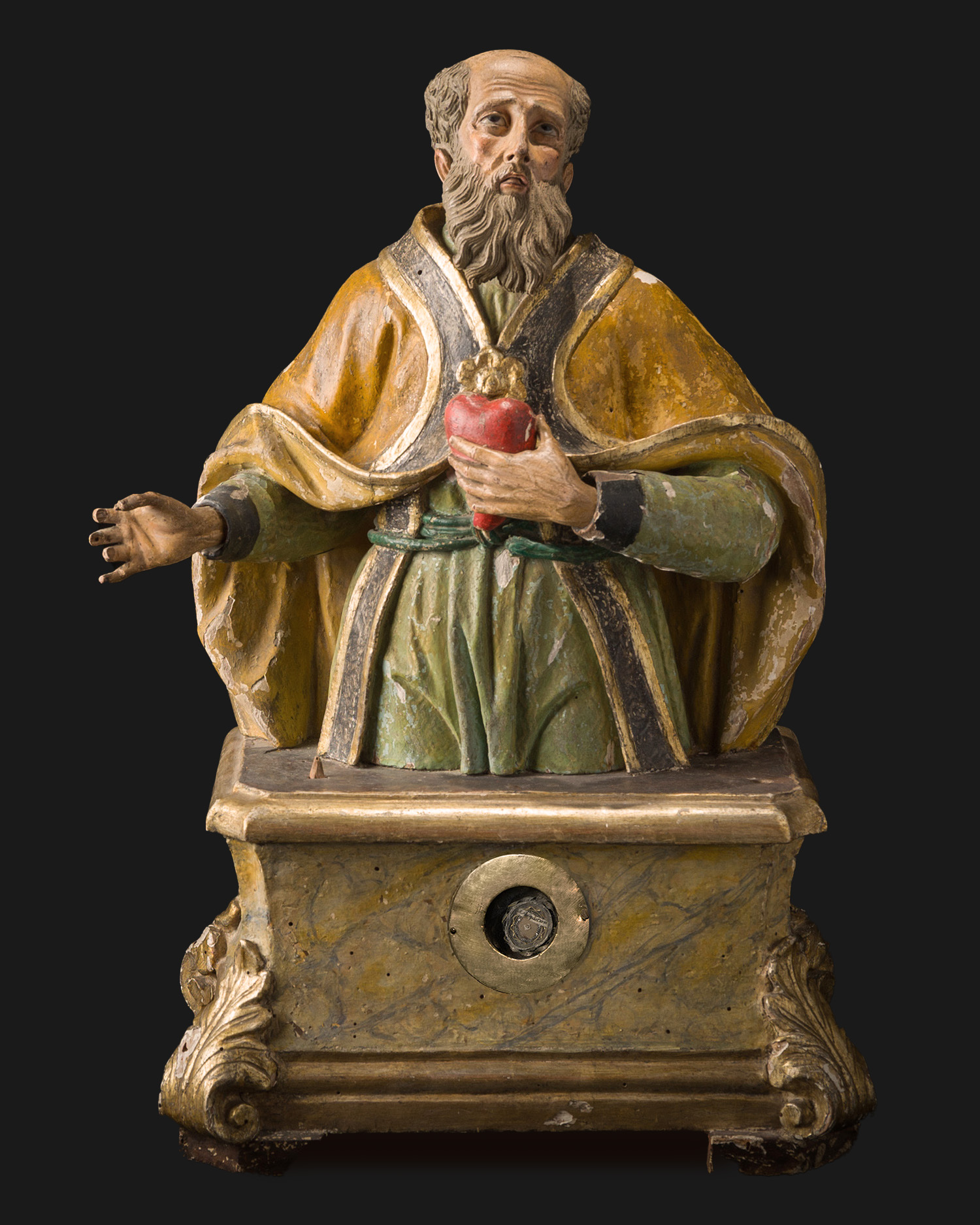
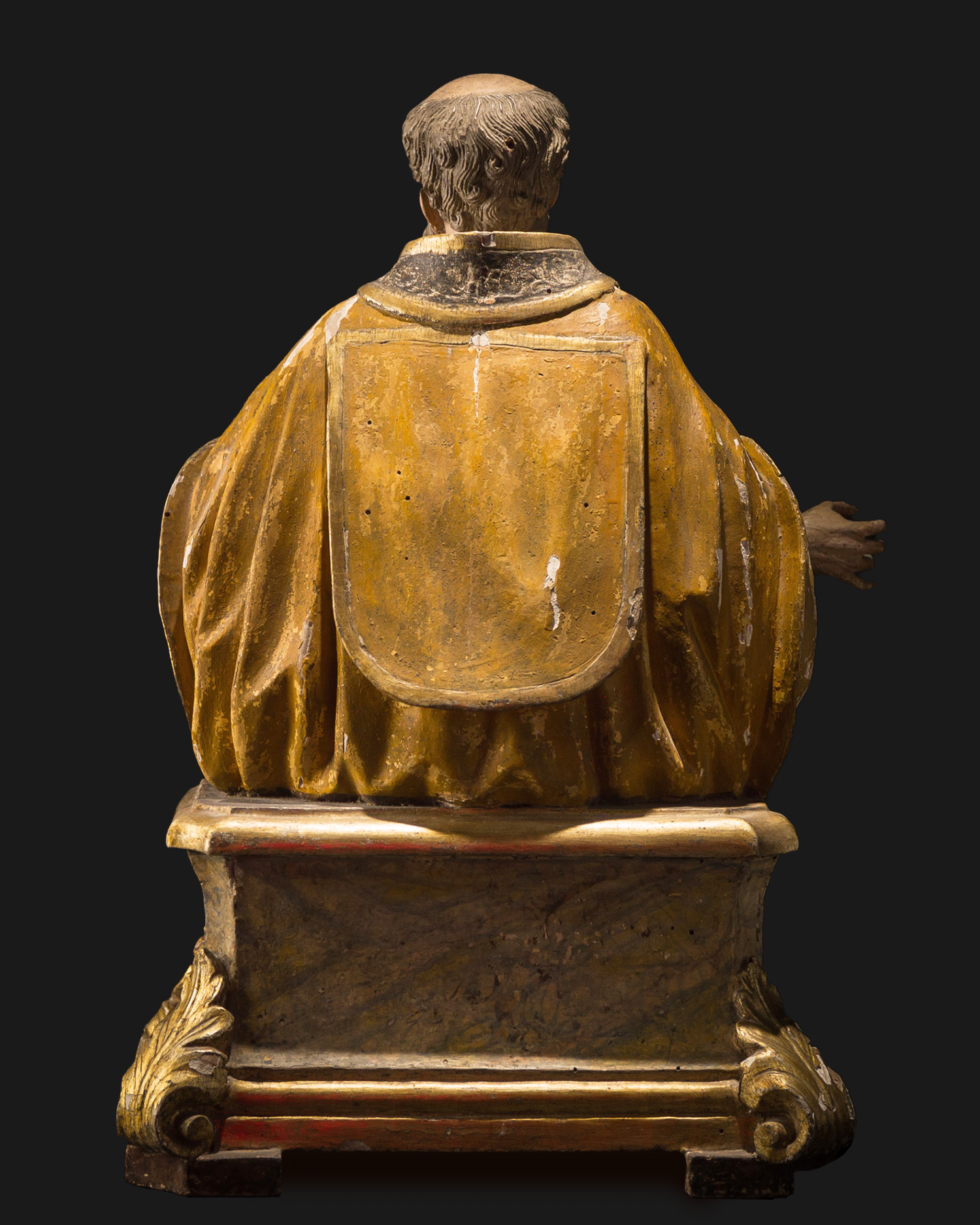
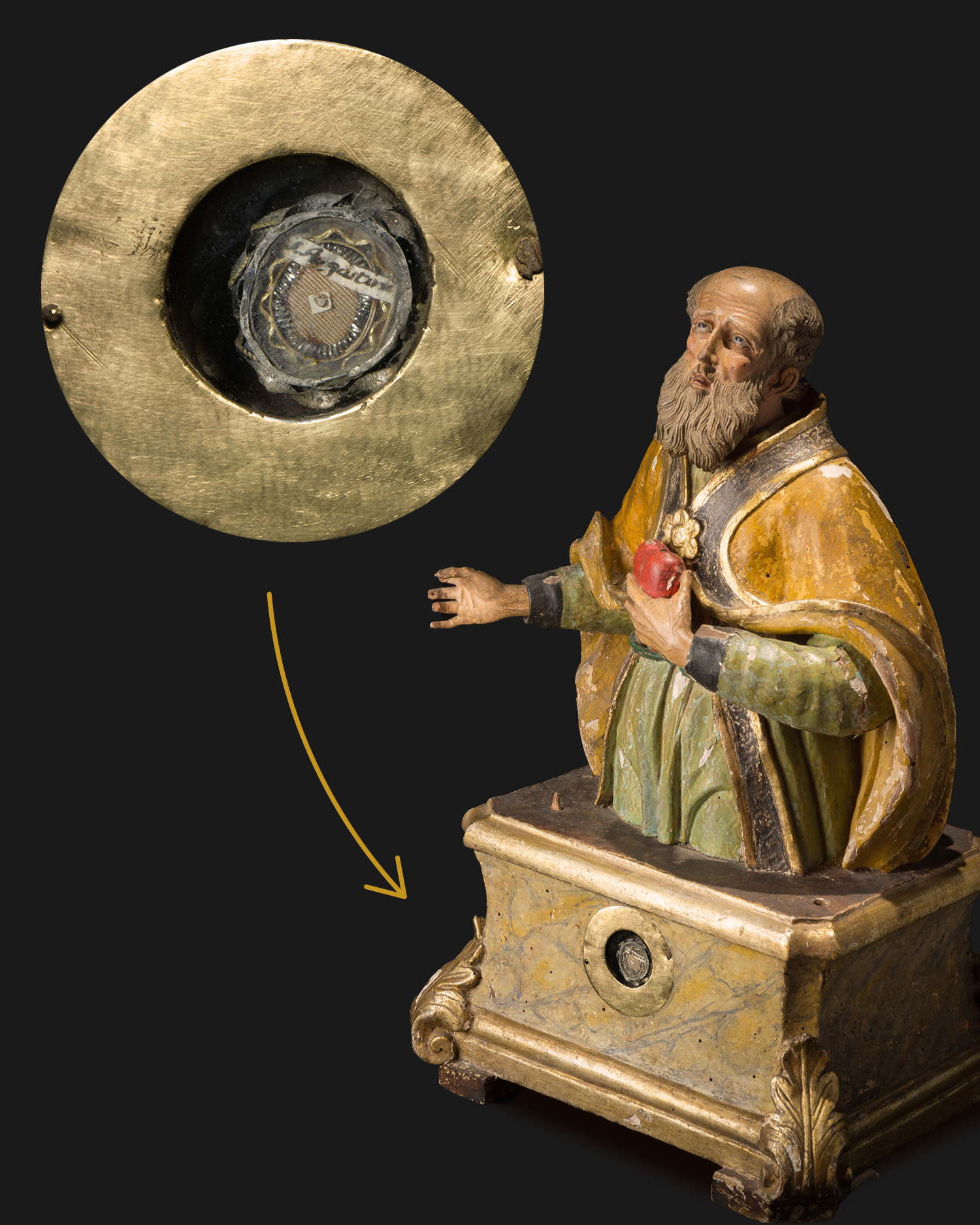
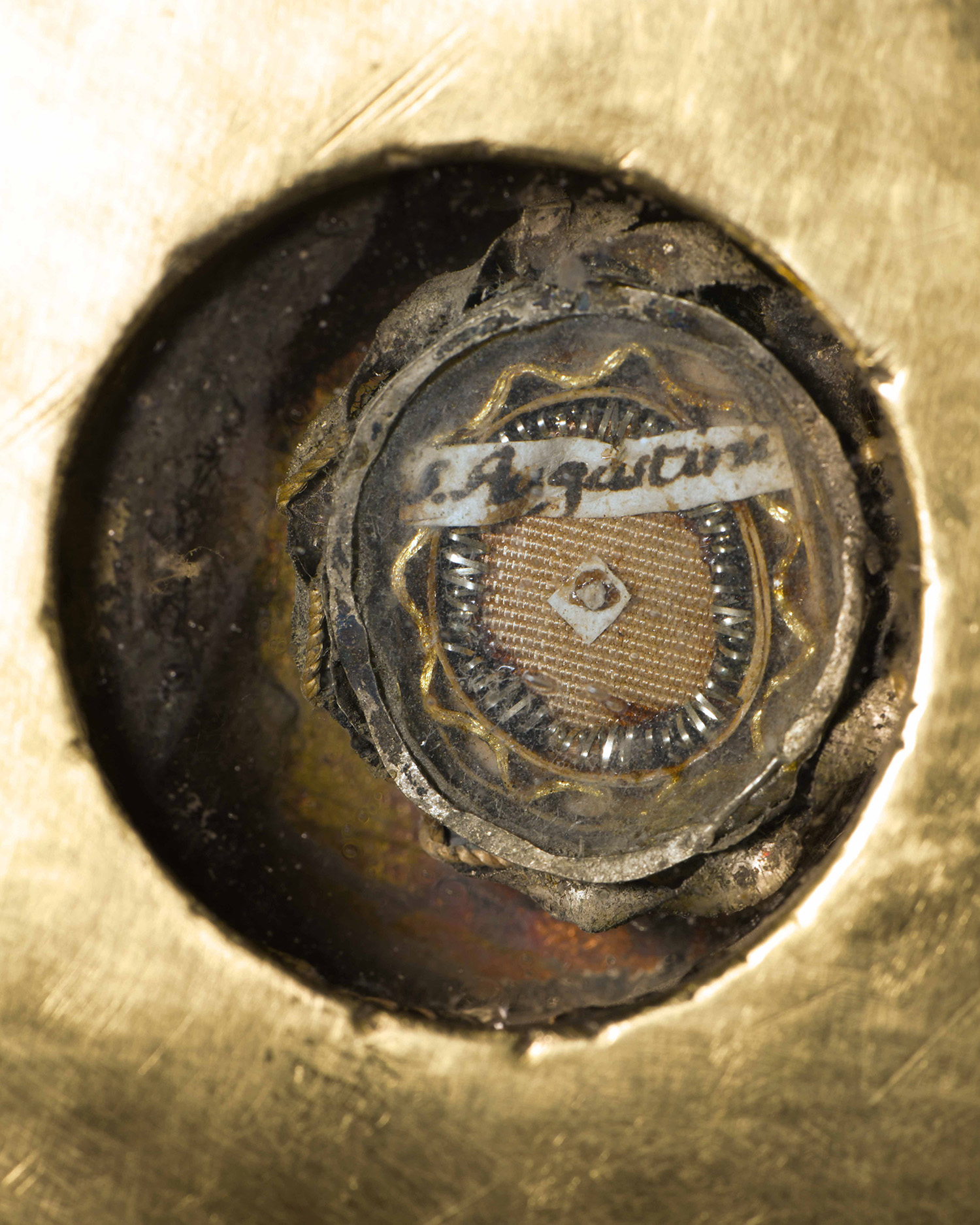
An expressive figural sculpture depicting a half-figure of St. Augustine in episcopal vestments, with a heart in his hand. The sculpture is the finial of a console in which was placed a relic of the first class (Ex Ossibus), described "S. Augustini", protected by an intact church seal. The work of polychrome and gilded wood, made in the 18th century, in an Italian workshop, representing a good artistic level.
St. Augustine of Hippo (354-430) is one of the most important figures in the history of the Church - philosopher, theologian, bishop and author of works that shaped the foundations of Christian doctrine and spirituality. His writings, such as "Confessions" and "On the State of God," combined deep introspection with intellectual reflection on the human destiny, sin and grace.
As a Church Father and Doctor of the Western Church, Augustine had a profound influence on medieval theology, philosophy and liturgy. In iconography, he was often depicted as an old man in episcopal robes, with a book or a heart - symbols of knowledge and spiritual fervor.
In the Baroque era, his figure returned as an emblem of scholarly holiness and spiritual warfare, fitting perfectly with the Counter-Reformation's need for a deeper experience of faith. Sculptures such as this one combined intellectual and emotional messages, making Augustine not just a saint, but a spiritual guide for entire generations.