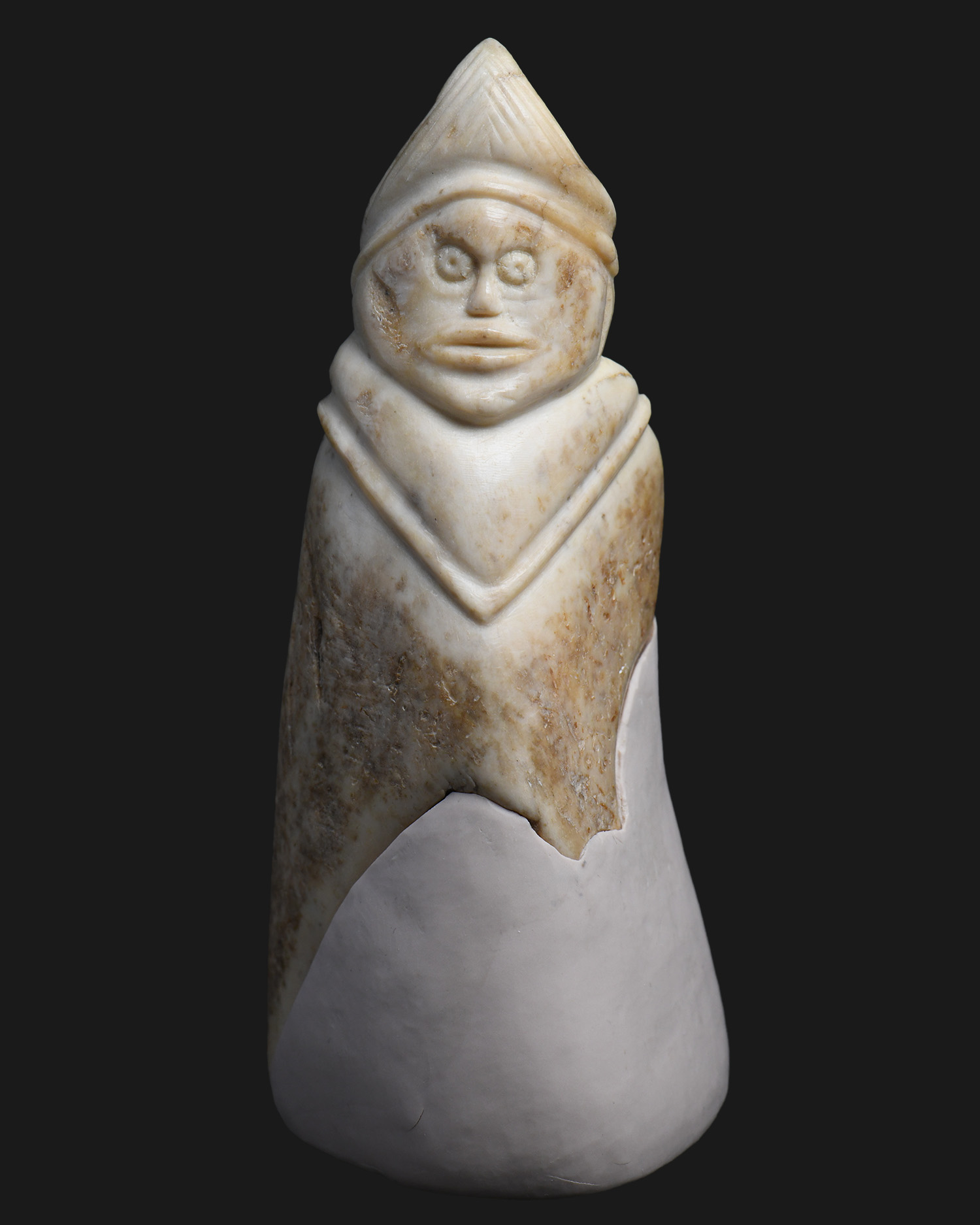
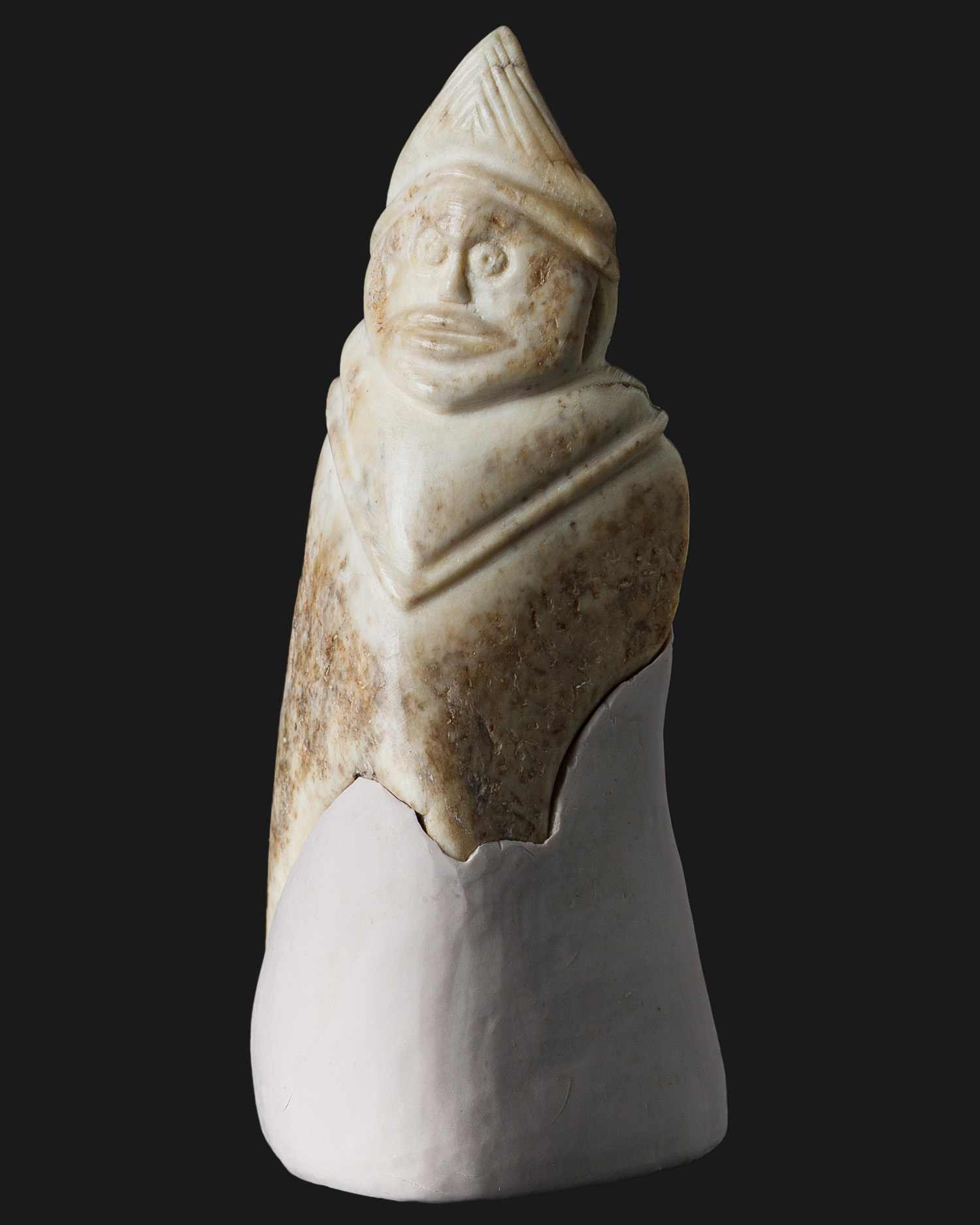
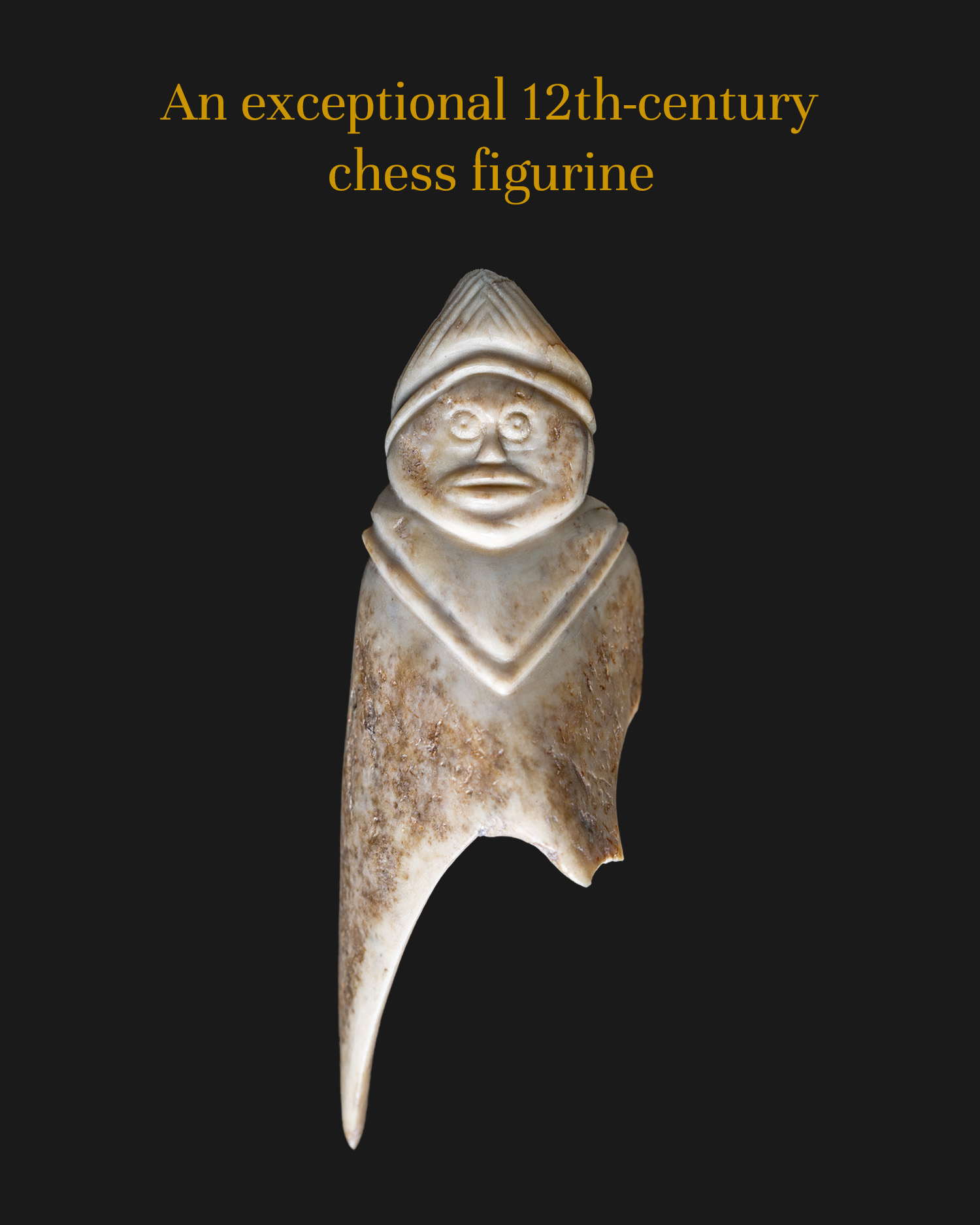
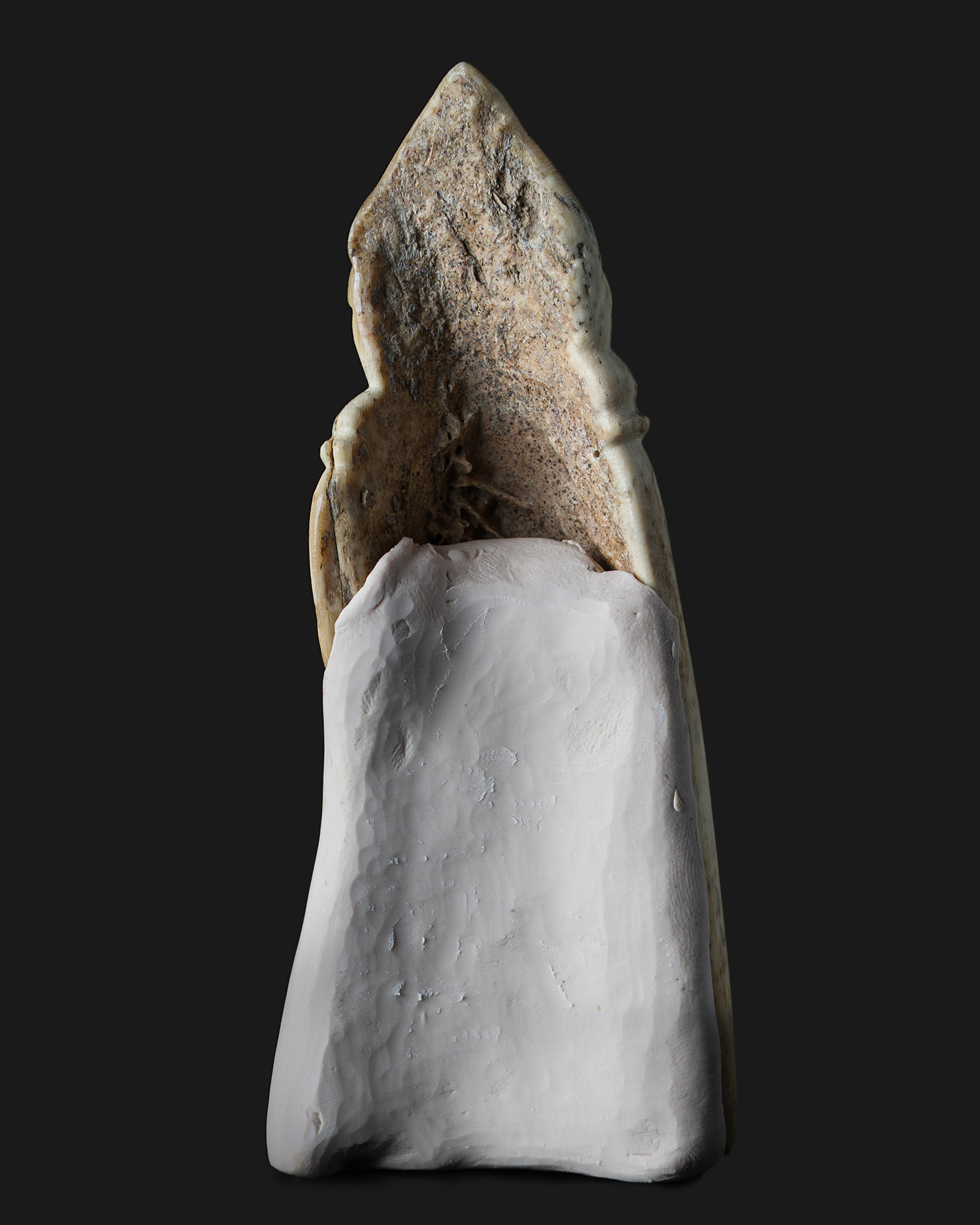
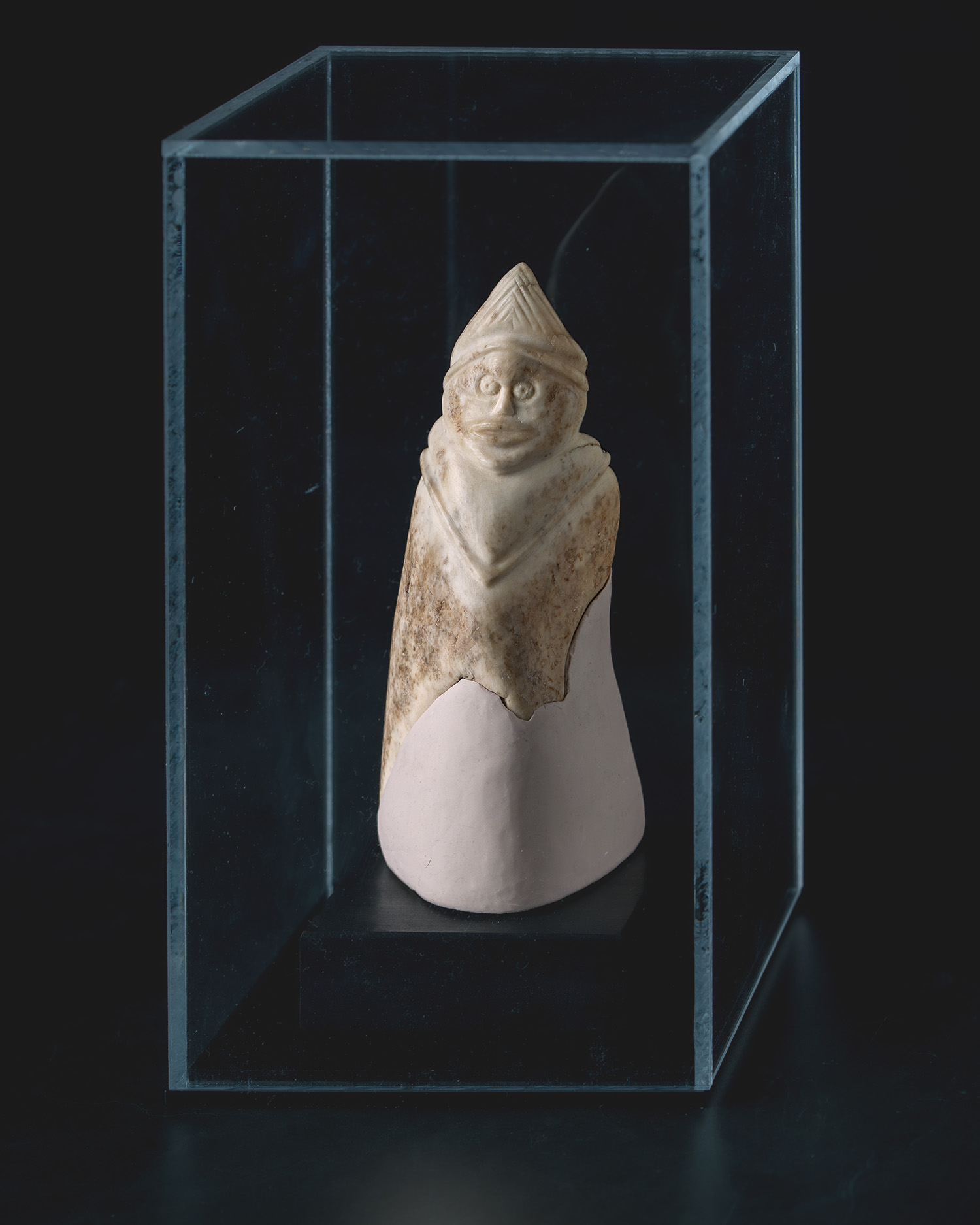
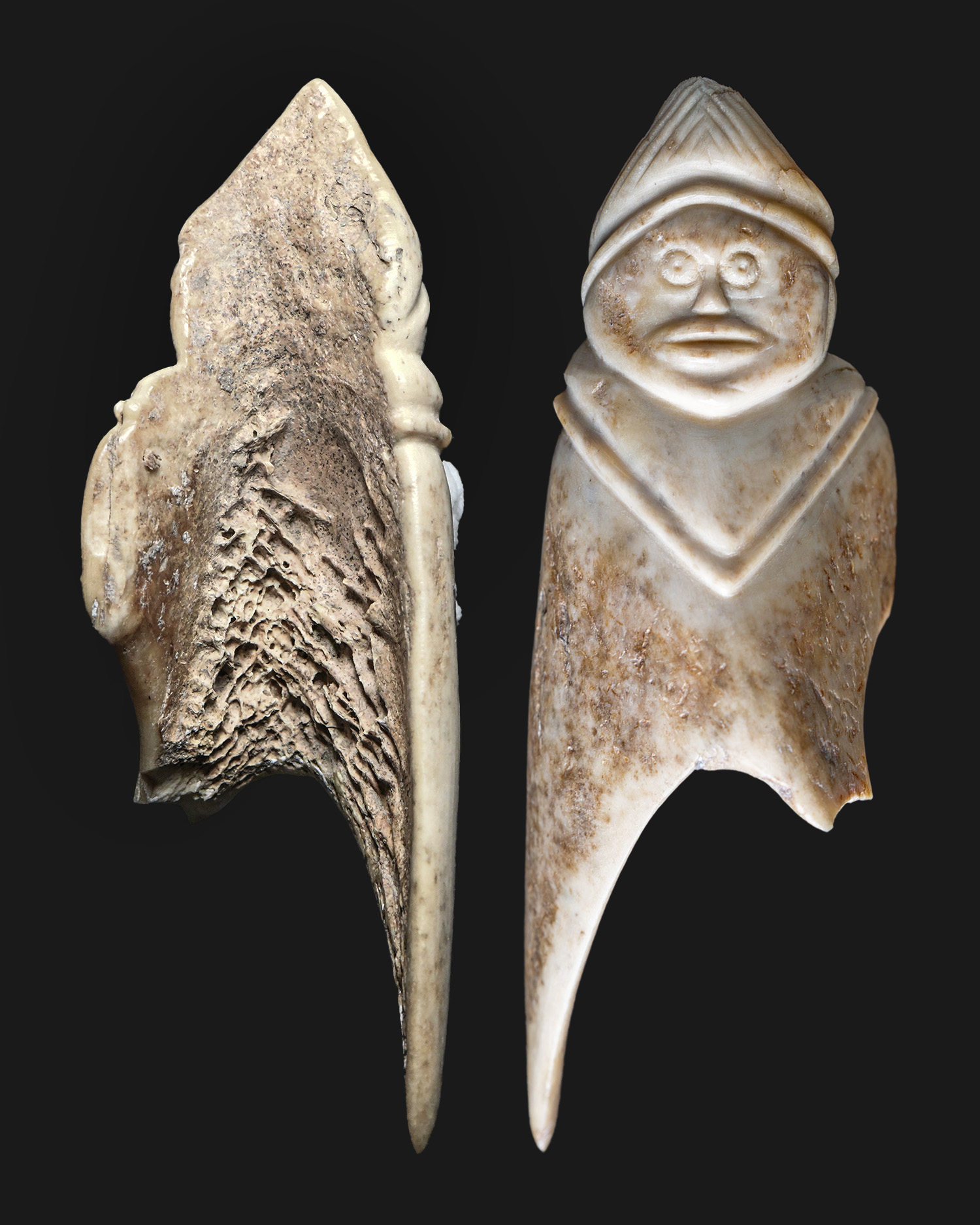
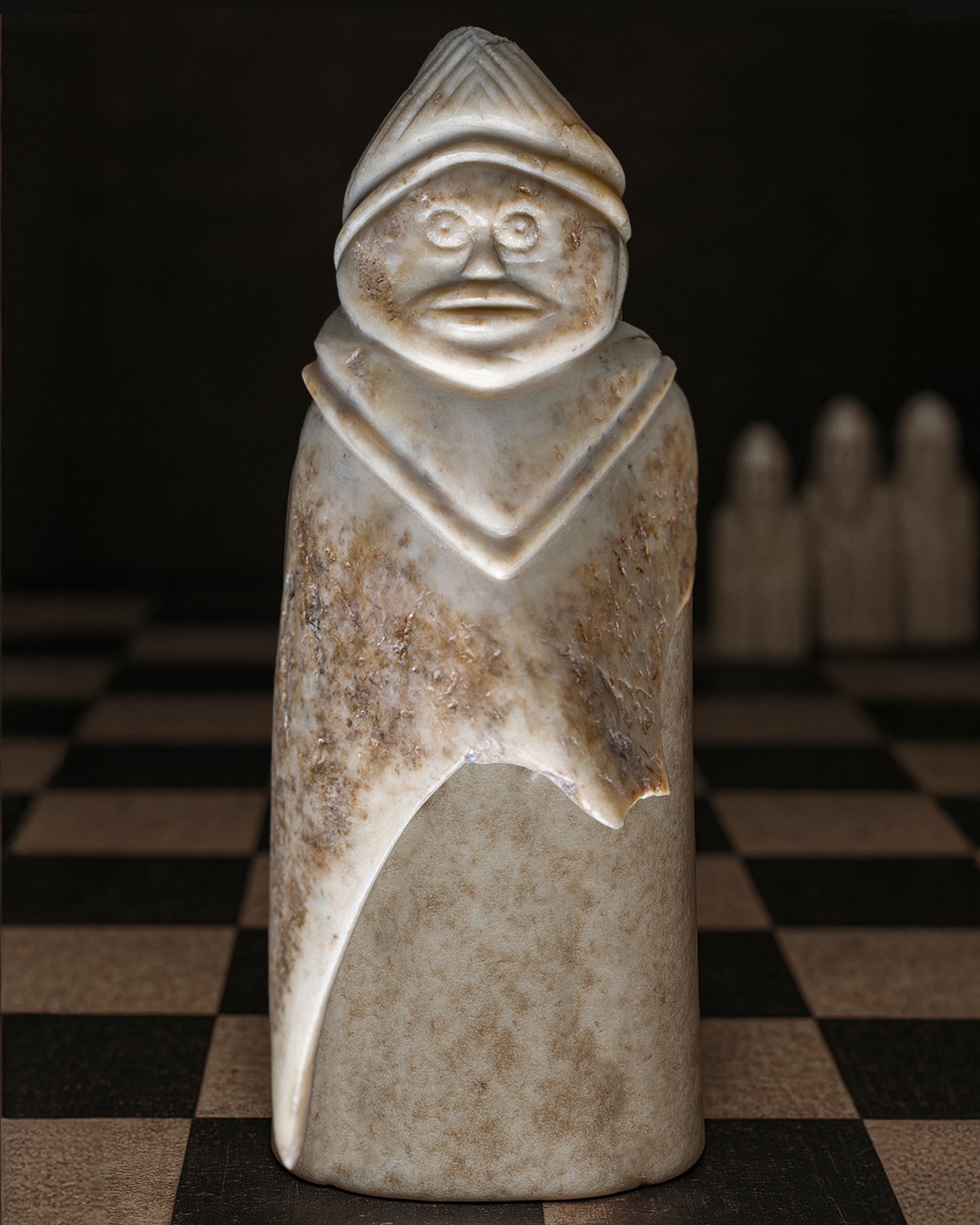
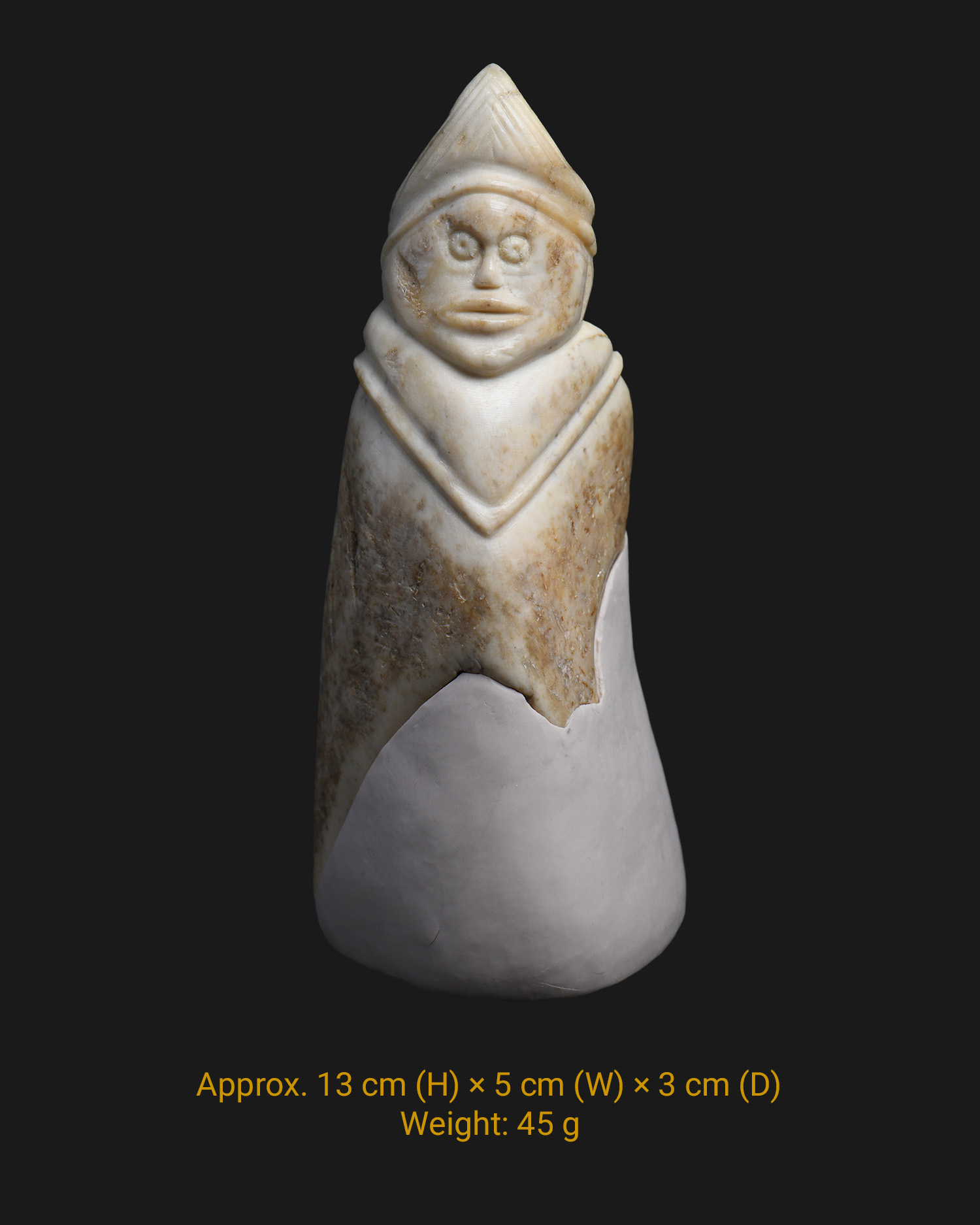
Medieval chess figure (chaser), bone, Scandinavia (?), 12th century.
7600,00 zł
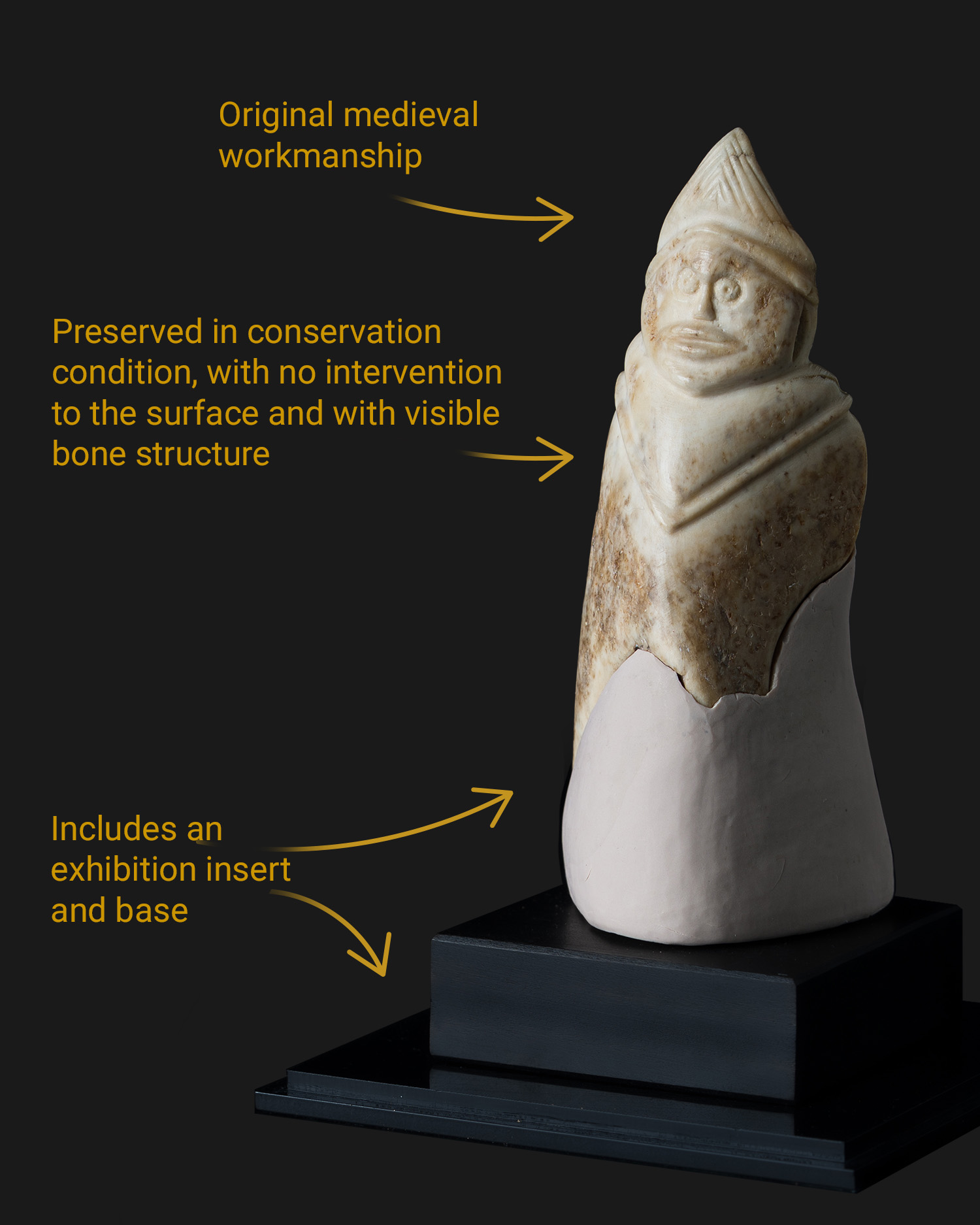
A fragment of a medieval long bone figurine of an unspecified animal (probably a land mammal) in the form of a semi-plastic human figure. The head covered with a mitre was depicted in quite a detailed manner. On the chest there is a relief, pointed downward, which can be interpreted as an image of an ornamental belt constituting the hem of a chasuble. The lower part of the body (partially preserved) was probably entirely unornamented – smooth. At the back of the figure, the bone was heavily transformed: edges rounded, spongy structure preserved residually.
The figure is placed in a Plexiglas display on a base that is a reconstruction of its lower part.
1 in stock
Symbolism
The depiction of a human figure wearing a distinctive headdress may indicate a clerical person, probably a bishop. Figures of this type in chess games usually represented goons, although the form here is simplified and stylized in accordance with Nordic aesthetics.
Historical context
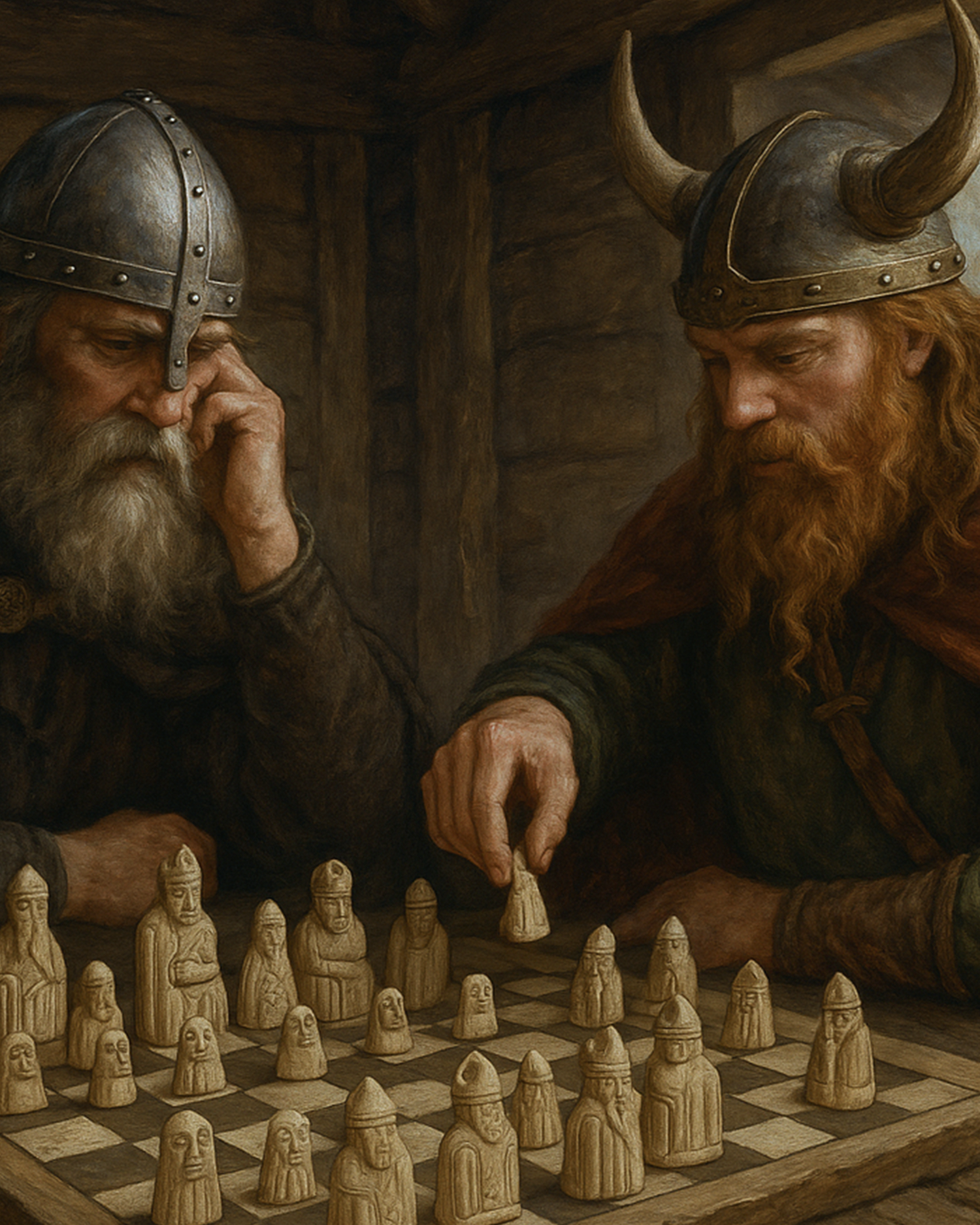
In the 12th century, chess began to gain popularity among the European elite, including the Viking culture, which integrated Christian and Byzantine influences. Chess figures were a symbol of prestige, and their manufacture from materials such as bone or walrus fang indicated the high status of the owner. An example of this type of heritage is the famous Chessmen of Lewis, whose aesthetics and function show similarities to the figurine on display.
Collector's value
Original chess figures from the 12th century are among great rarities and are sought after by both museums and private collectors. Objects of this type not only document the development of the game of chess in Europe, but also bear witness to the craftsmanship and spiritual culture of the era.
Artistic qualities
The figurine is characterized by expressive styling, geometric and narrative, which is typical of Romanesque-Nordic applied sculpture. Despite losses, the head with mitre and the relief motif on the chest remain legible and fully expressive.
Destination
It was probably part of a chess set intended for the clerical or aristocratic elite. Today, it may serve as a museum exhibit, a research object or a unique piece in a private collection.
Chess with Lewis
The best-known example of Nordic chess figures is the Chessmen of Lewis, discovered in the Hebrides in the 19th century. One of the figures, depicting a warrior biting a shield, is interpreted as a symbolic representation of a berserker, a warrior in a battle trance. They remain an inspiration to this day.
Discover a unique piece of European medieval history.
This unique medieval chess figure can become the centerpiece of your collection of historical curiosities. Get inspired by chess pieces from Lewis and join the ranks of collectors of medieval items. Also check out other sculptures and period items in our Sybaris collection.
| Weight | 0,45 kg |
|---|---|
| Dimensions | 13 × 5 × 3 cm |
| Type |
Chess figure (chaser) |
| Form |
Figure in mitre, simplified styling |
| Materiał |
Bone |
| Kolorystyka |
Beige |
| Technika |
Hand carving (chiseling) |
| Czas powstania |
12th Century (1101-1200) |
| Kraj pochodzenia |
North Sea Basin |
| Era |
The Middle Ages |
| Style |
Late Viking ,Romanesque |
| Autor |
Unknown |
| State of preservation |
Very good for age. |
Related products
“Apostle” spoon with St. Simon, silver, England, 18th century.
Baroque votive plaque depicting a nobleman, repoussé silver, Poland, 17th–18th century.
Coin Necklace, Silver, Rock Crystal, Bronze, Poland, 17th Century
Devotional Ring, Silver, Lviv, 1872-1920
Nuremberg basin (Beckenschlägerschüssel) with memento mori decoration, brass, Germany (Nuremberg), 15th-16th century
Round basin, deep; the surface of the mirror slightly convex, passing with an oblique fold into the side wall; in the center of the mirror a repoussed, stylized human skull above crossed tibias, all around a bordure of fleur-de-lis punched with punctures; a narrow, slightly oblique collar with the same ornament at the edge. Edge curled outward, probably reinforced with wire. In places, especially in the recesses, visible remnants of a coating of white metal - most likely tin.
Spoon, silver, Poland, c. mid-17th century
Table spoon, silver, Wrocław, early 18th century
Wooden Spoon with ‘V’ Initial, Germany, 19th Century.
This hand-carved wooden spoon, 23 cm long, originates from Poland and is dated to the 19th century or earlier. The deep, functional bowl shows clear signs of use. The handle is adorned with serrated line carvings and a 'V' initial, likely for owner identification. A leather strap with an old collector's paper tag remains attached to the end.
In the 19th century in Poland, spoons of this type were among the basic items of everyday use on rural and pastoral farms. They were made by hand from a single piece of wood, which was part of the tradition of Polish folk craftsmanship, based on simple, durable materials.
Copies with preserved markings are rare today, documenting the development of Polish material culture and everyday practices of village life.