


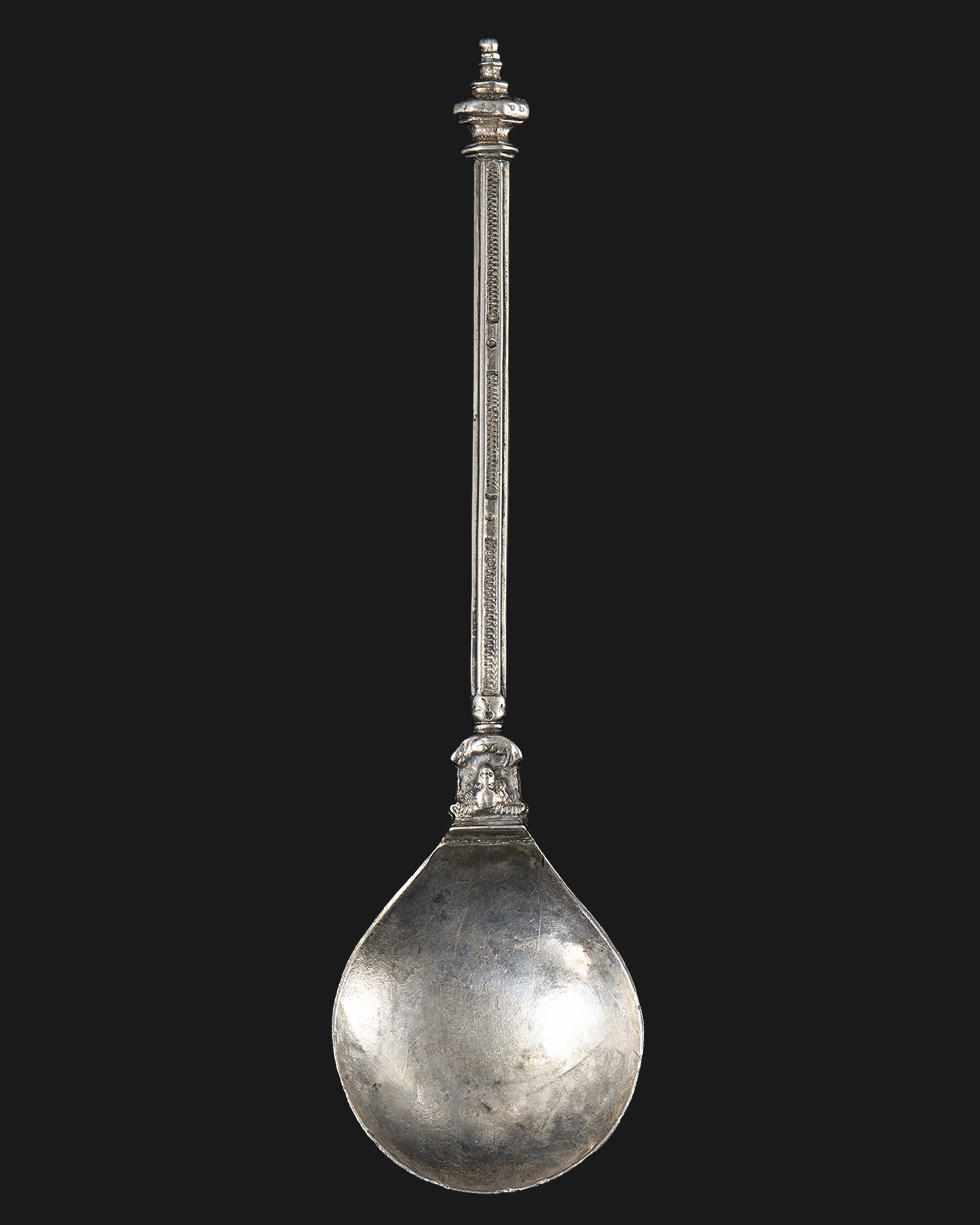
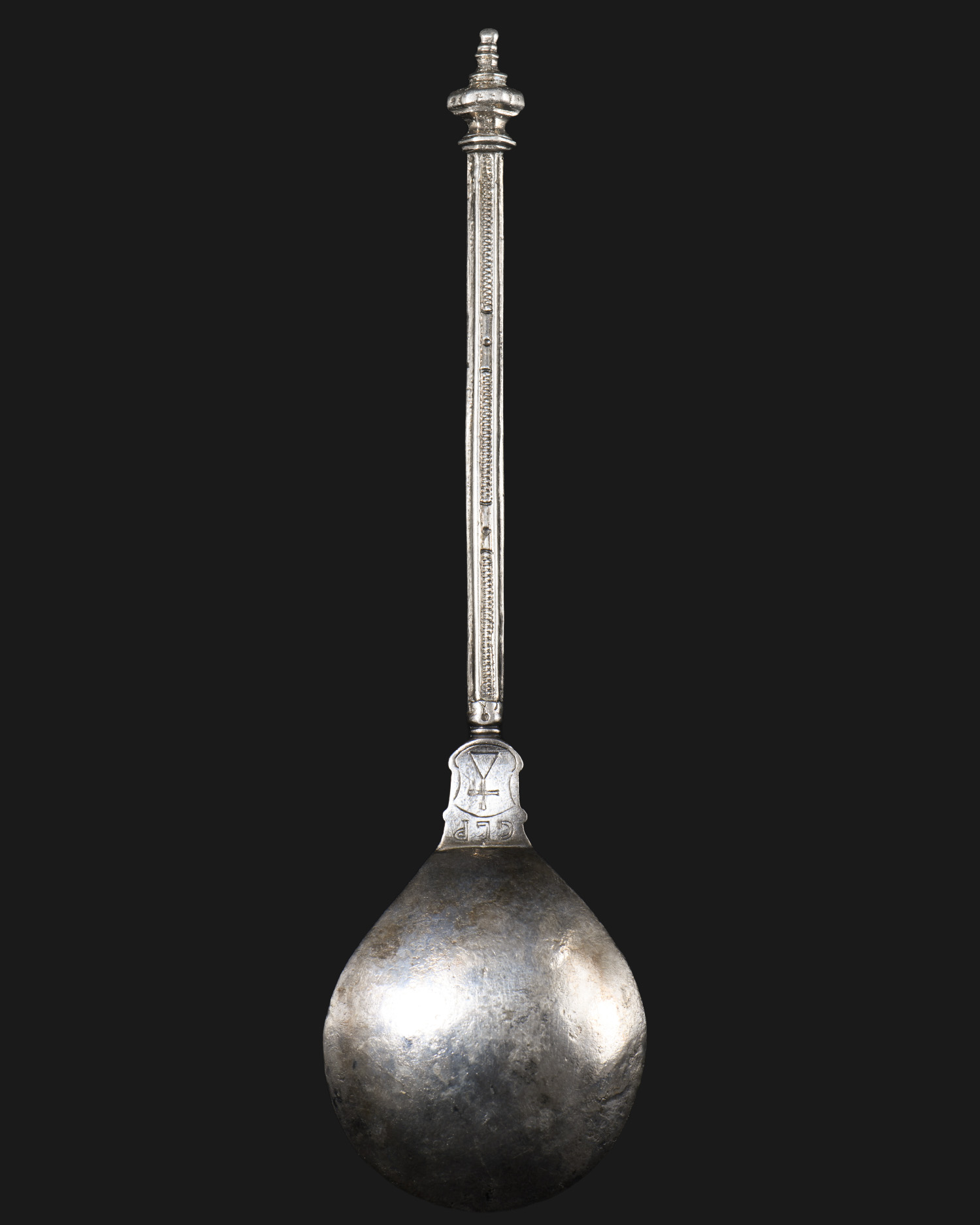

Spoon, silver, Poland, c. mid-17th century
5400,00 zł
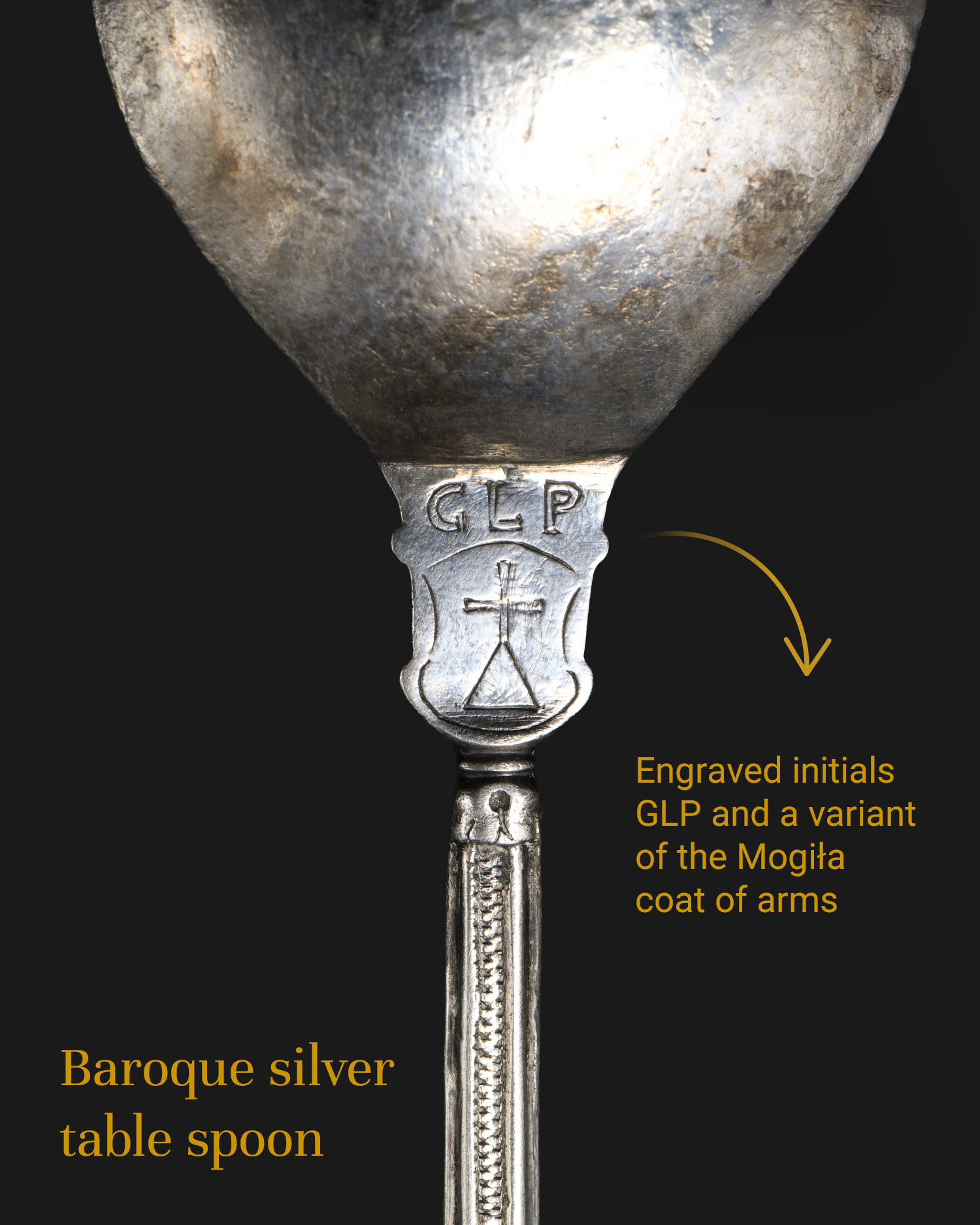
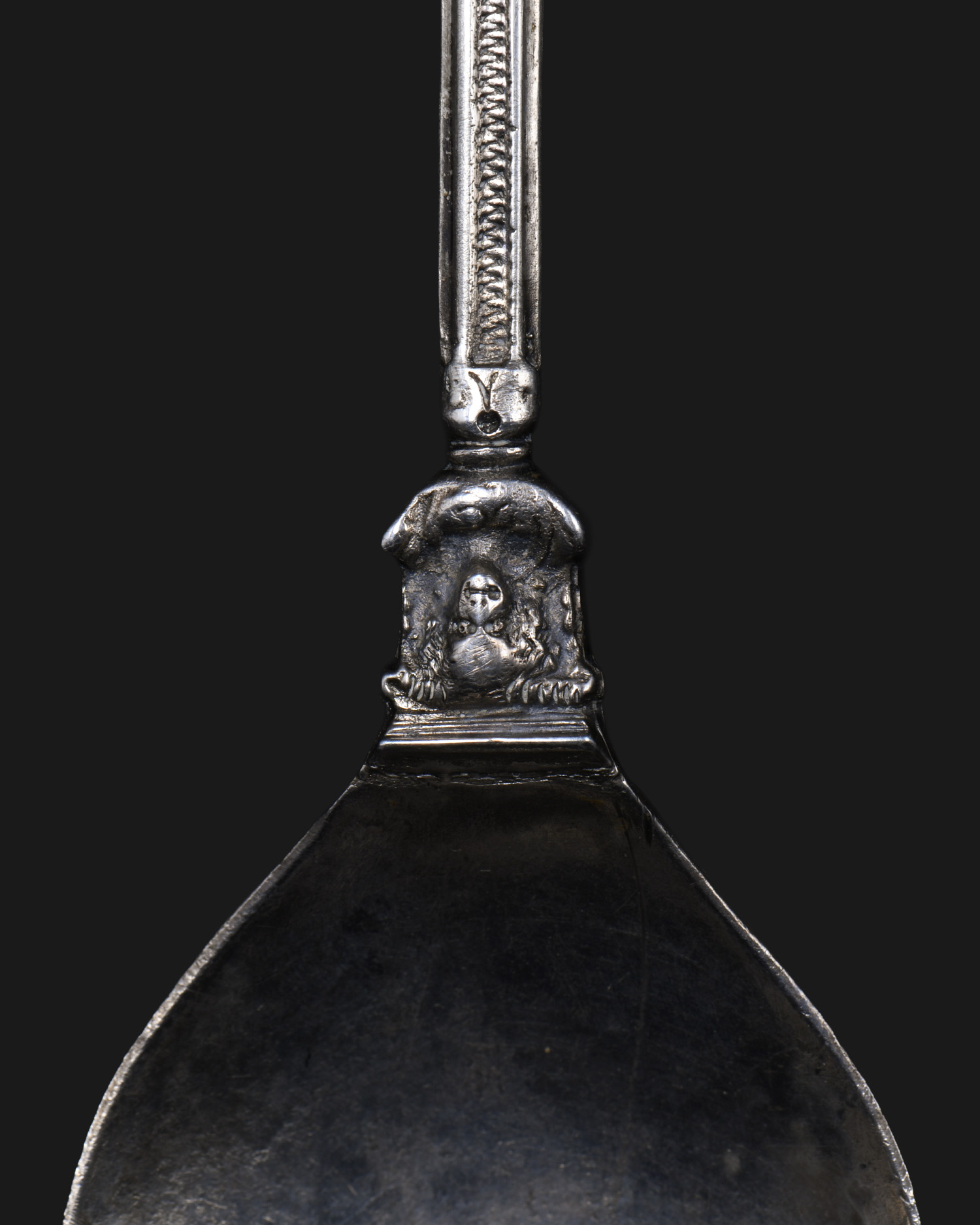
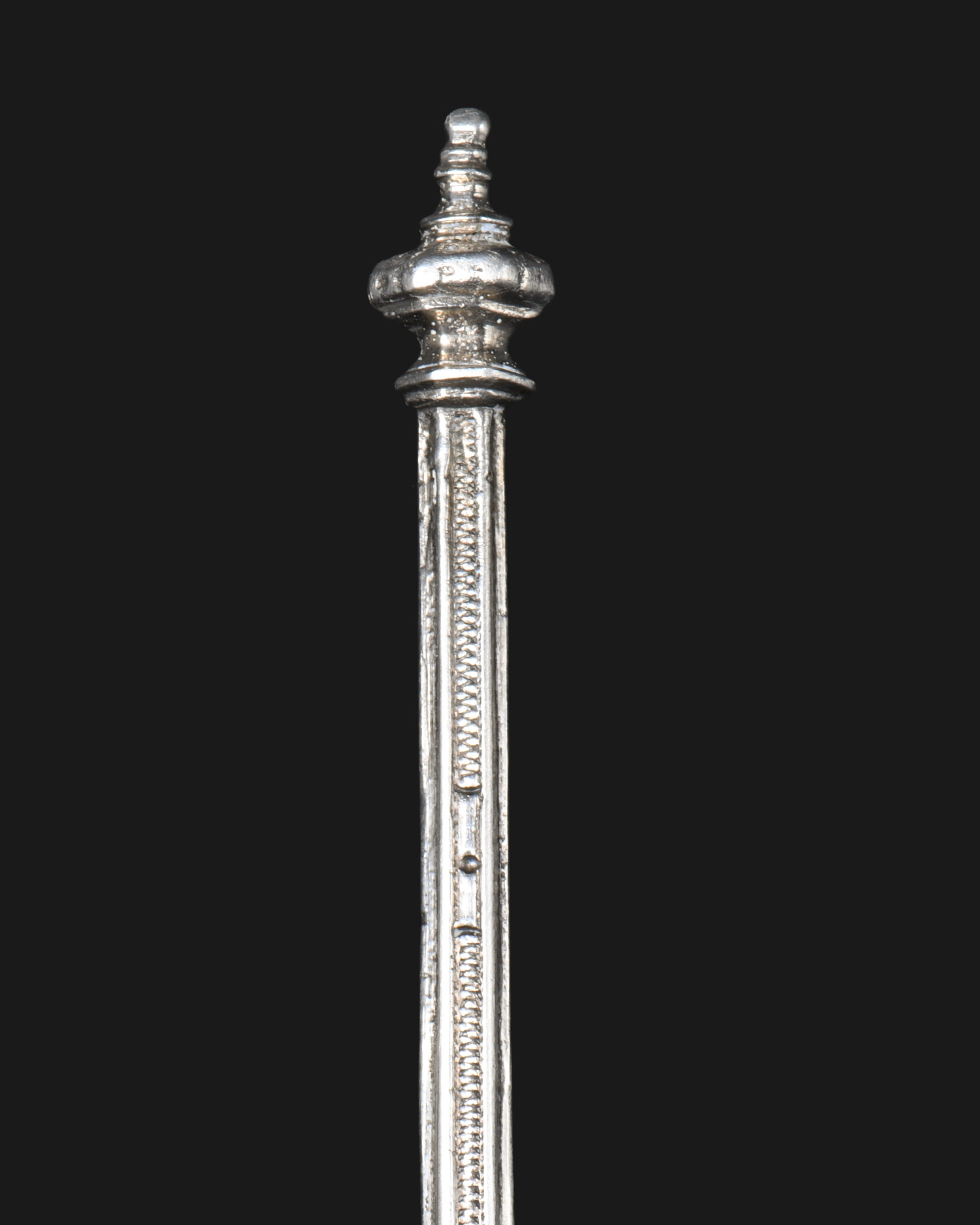
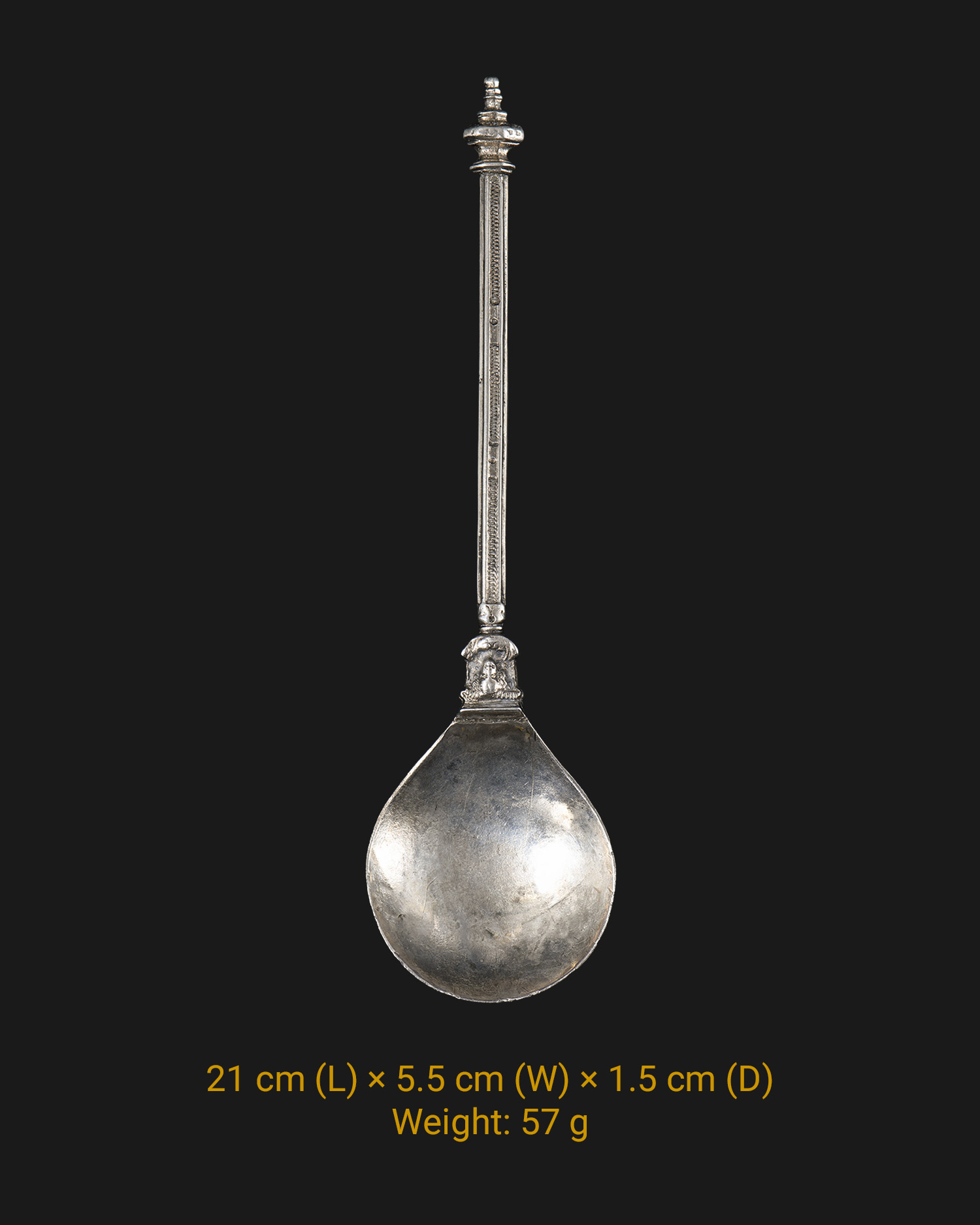
A Baroque tablespoon, c. mid-17th century. Features a smooth, ovoid bowl. The bar-shaped handle is hexagonal in cross-section, profiled, and terminates in a finial. Both upper and lower sides are adorned with an engraved serpentine motif, divided into three zones. The handle’s junction with the bowl forms a cartouche, embellished with a sculptural mascaron. The underside of the cartouche bears engraved initials ‘GLP’ and a variant of the Mogiła coat of arms.
1 in stock
Related products
Belt link, gilded silver, Poland, 17th century
Charles Julius Minter (1812 – 1892), Casket with lid in the form of a tombstone of King Stefan Batory, tin
Coin Necklace, Silver, Rock Crystal, Bronze, Poland, 17th Century
Cup, silver, Poland (?), 17th-18th century
Devotional Ring, Silver, Lviv, 1872-1920
Medieval chess figure (chaser), bone, Scandinavia (?), 12th century.
Nuremberg basin (Beckenschlägerschüssel) with memento mori decoration, brass, Germany (Nuremberg), 15th-16th century
Round basin, deep; the surface of the mirror slightly convex, passing with an oblique fold into the side wall; in the center of the mirror a repoussed, stylized human skull above crossed tibias, all around a bordure of fleur-de-lis punched with punctures; a narrow, slightly oblique collar with the same ornament at the edge. Edge curled outward, probably reinforced with wire. In places, especially in the recesses, visible remnants of a coating of white metal - most likely tin.