


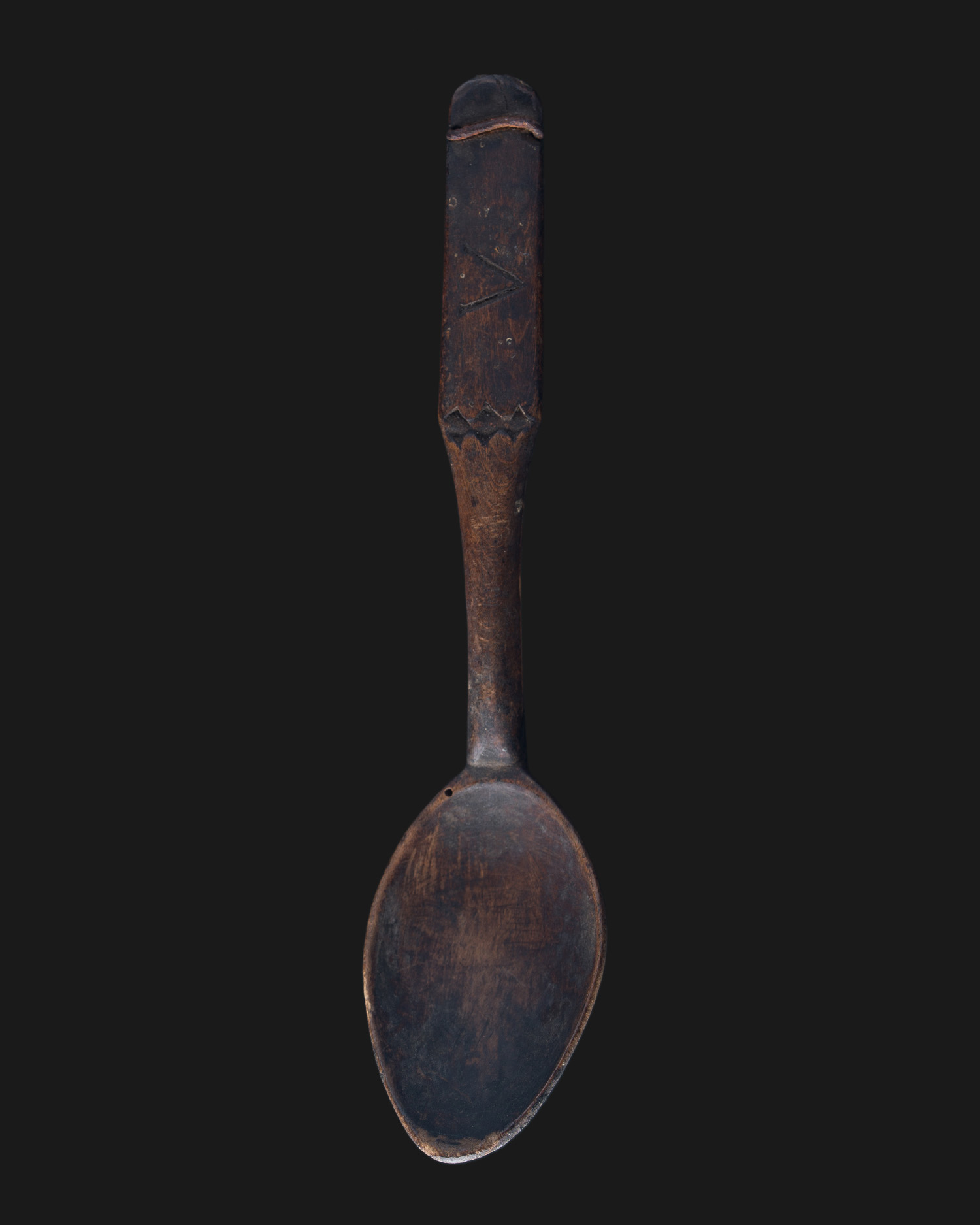

Wooden Spoon with ‘V’ Initial, Germany, 19th Century.
520,00 zł
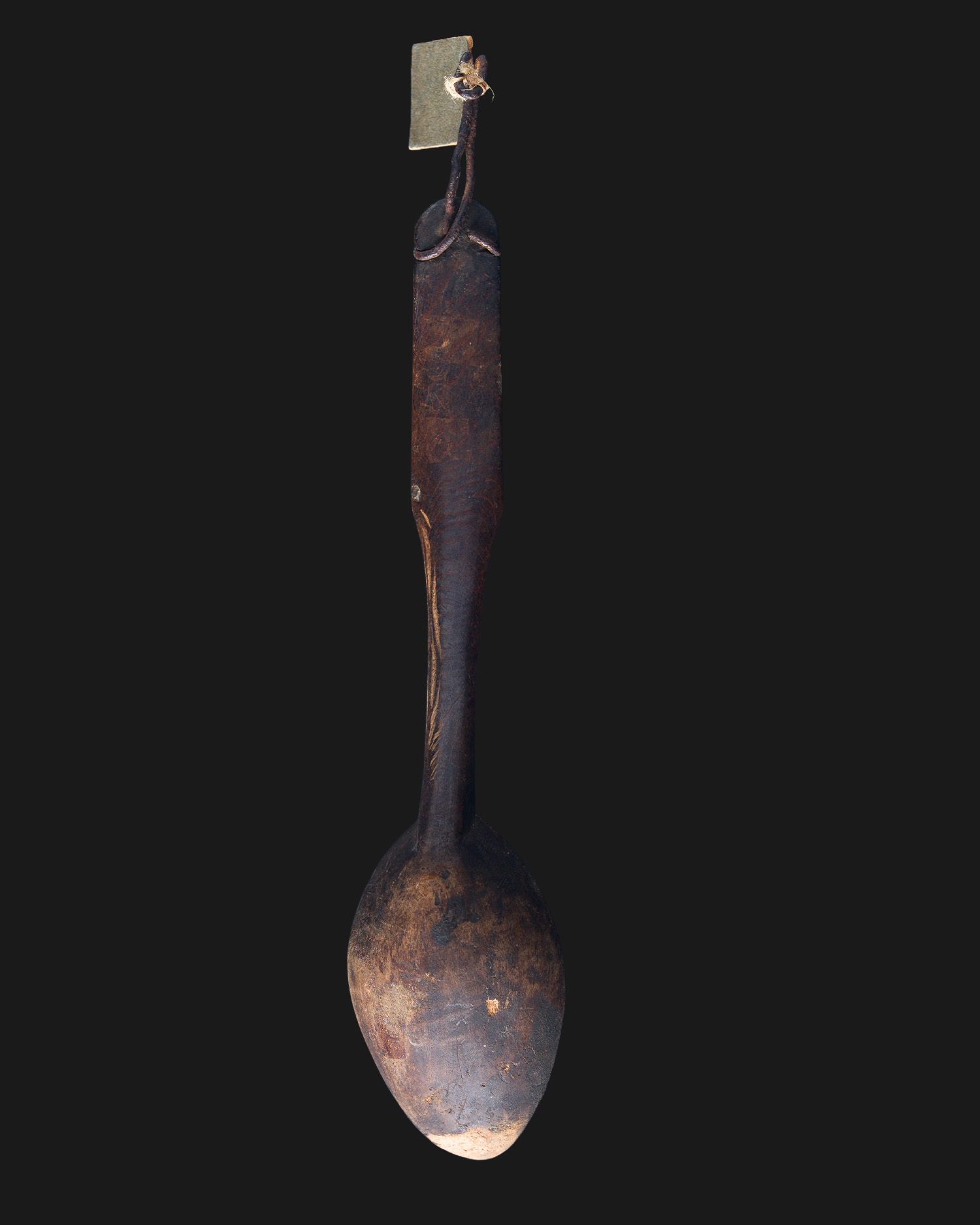
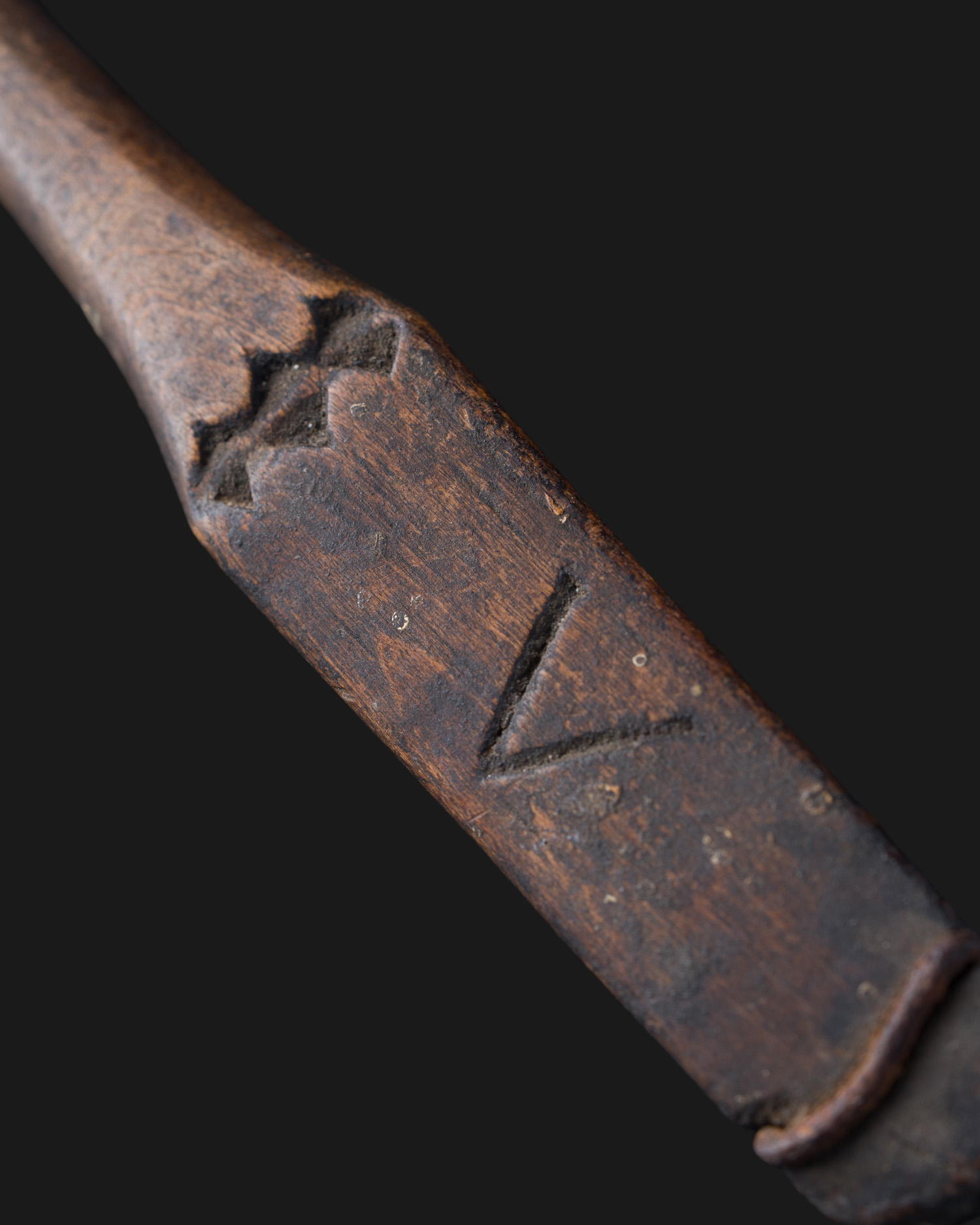
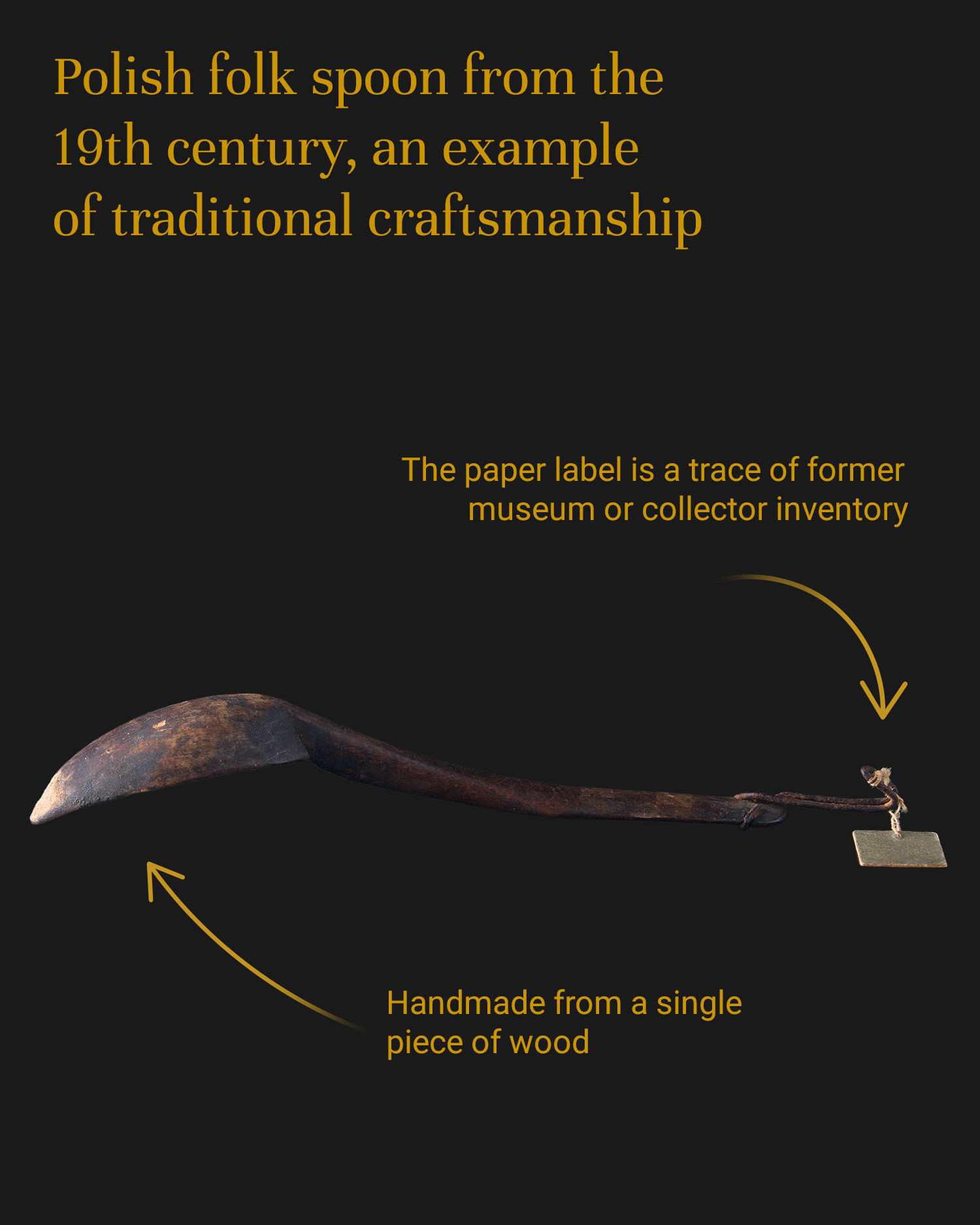
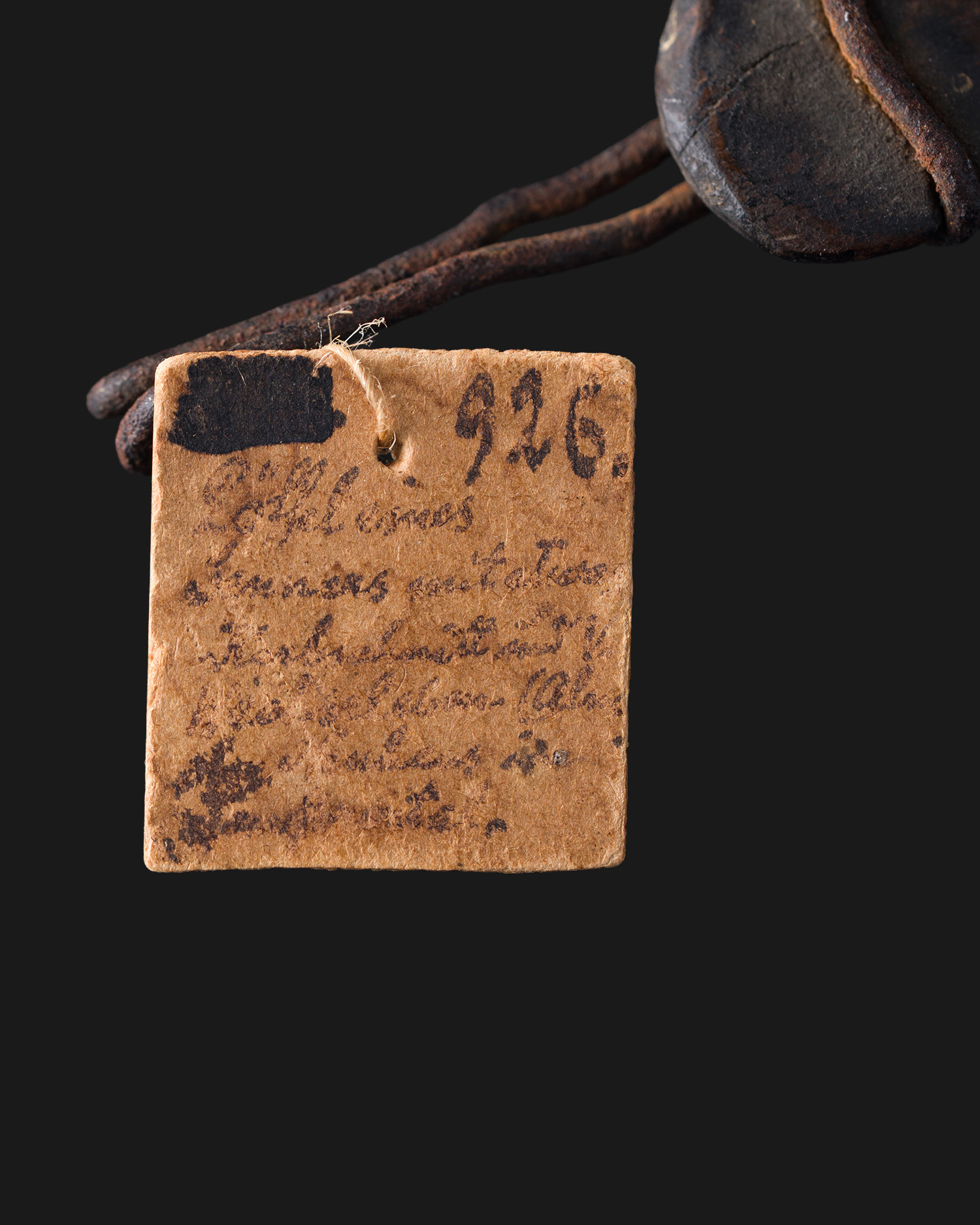
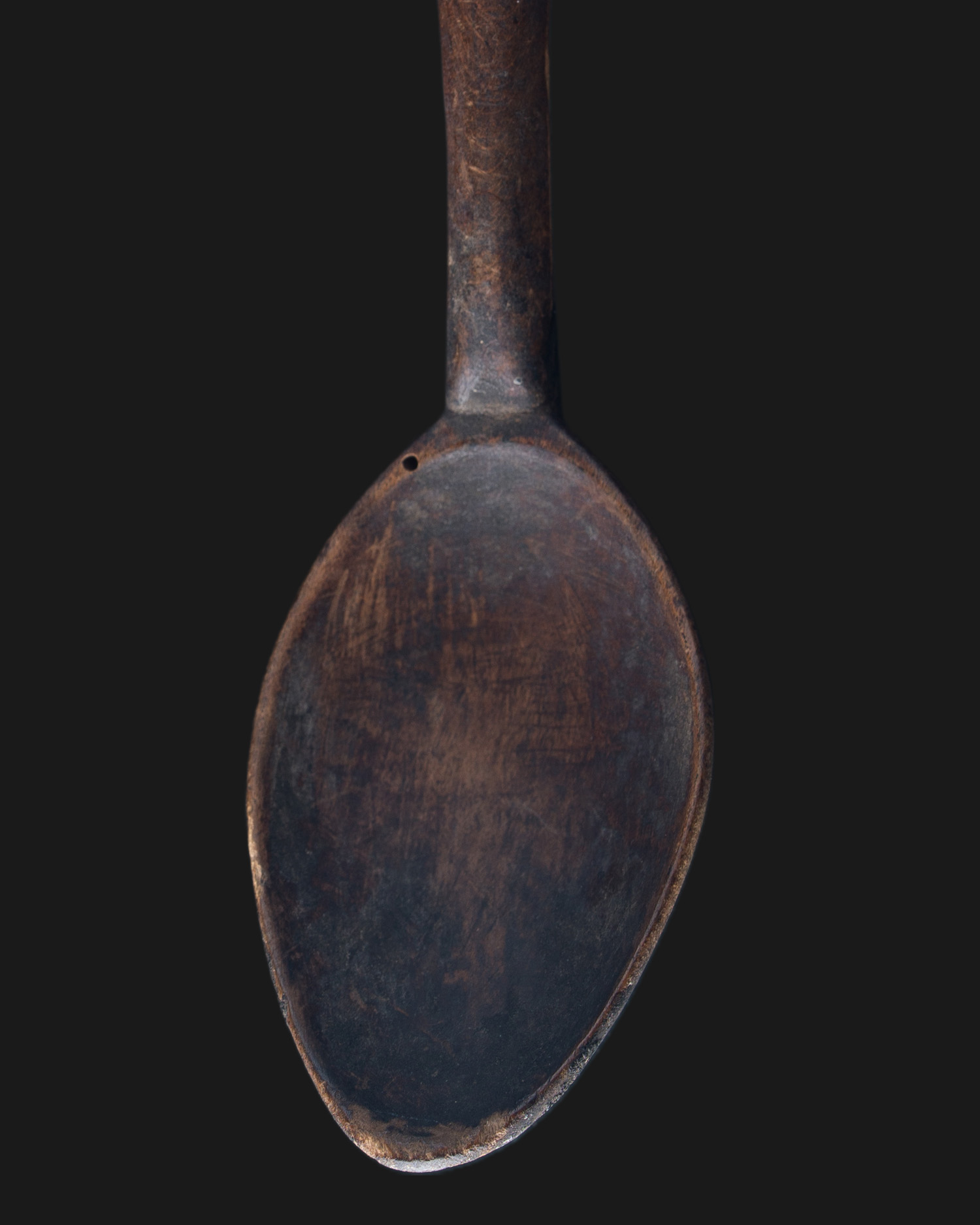
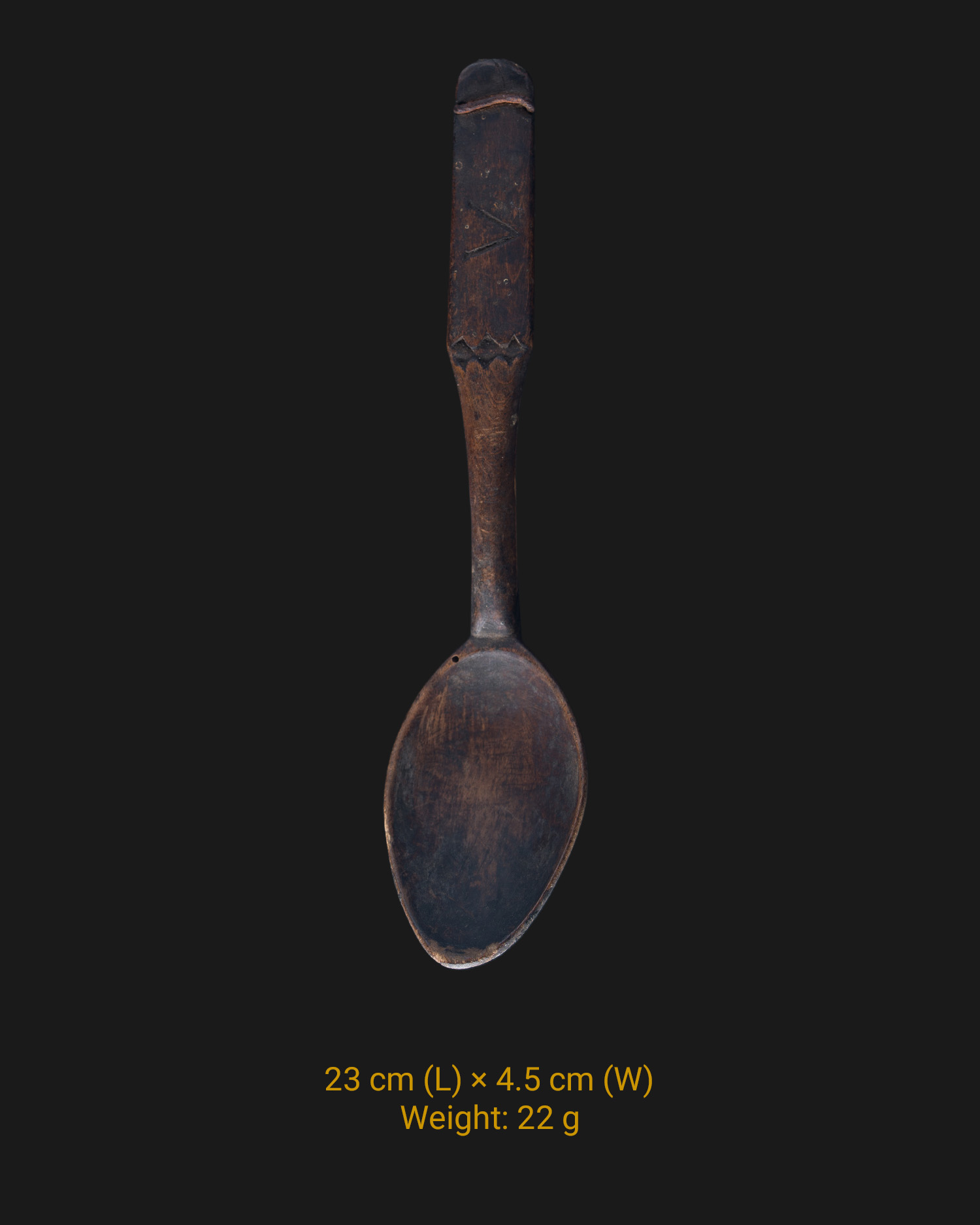
This hand-carved wooden spoon, 23 cm long, originates from Poland and is dated to the 19th century or earlier. The deep, functional bowl shows clear signs of use. The handle is adorned with serrated line carvings and a ‘V’ initial, likely for owner identification. A leather strap with an old collector’s paper tag remains attached to the end.
In the 19th century in Poland, spoons of this type were among the basic items of everyday use on rural and pastoral farms. They were made by hand from a single piece of wood, which was part of the tradition of Polish folk craftsmanship, based on simple, durable materials.
Copies with preserved markings are rare today, documenting the development of Polish material culture and everyday practices of village life.
| Weight | 0,022 kg |
|---|---|
| Dimensions | 23 × 4,5 cm |
| Type |
Utility item (spoon) |
| Form |
Deep teapot, molded handle with rhytids and letter V |
| Kolorystyka |
Brown |
| Materiał |
Wood |
| Technika |
Hand carving |
| Kraj pochodzenia |
Poland |
| Czas powstania |
19th century (1801-1900) |
| State of preservation |
Good; natural surface wear, slight discoloration, minor losses, retained collector's tag |
Related products
“Apostle” spoon with St. Simon, silver, England, 18th century.
Belt link, gilded silver, Poland, 17th century
Medieval chess figure (chaser), bone, Scandinavia (?), 12th century.
Przeworsk belt buckle, gilt silver, Poland, 17th century.
Przeworsk belt buckle, silver, Poland, 17th century.