


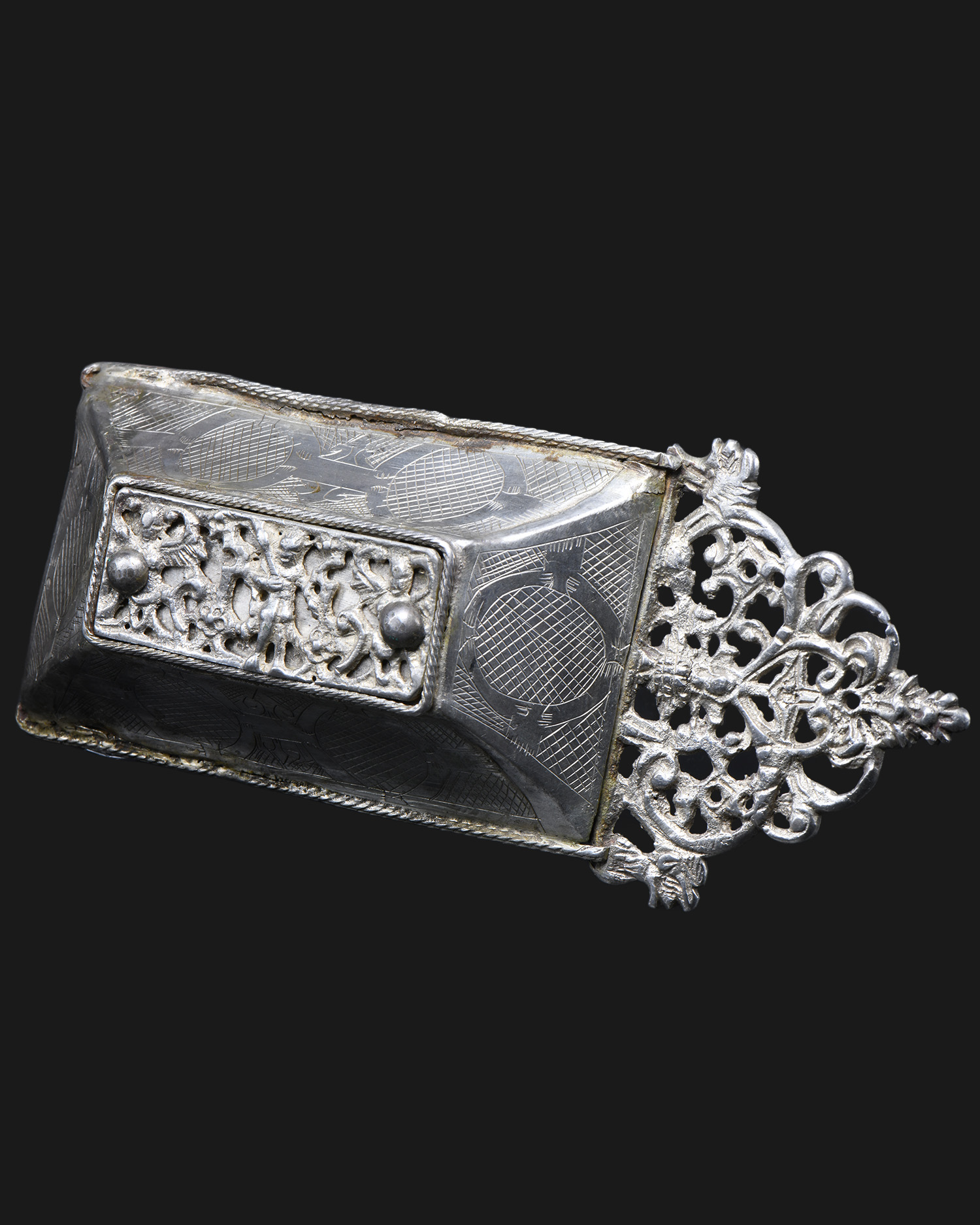
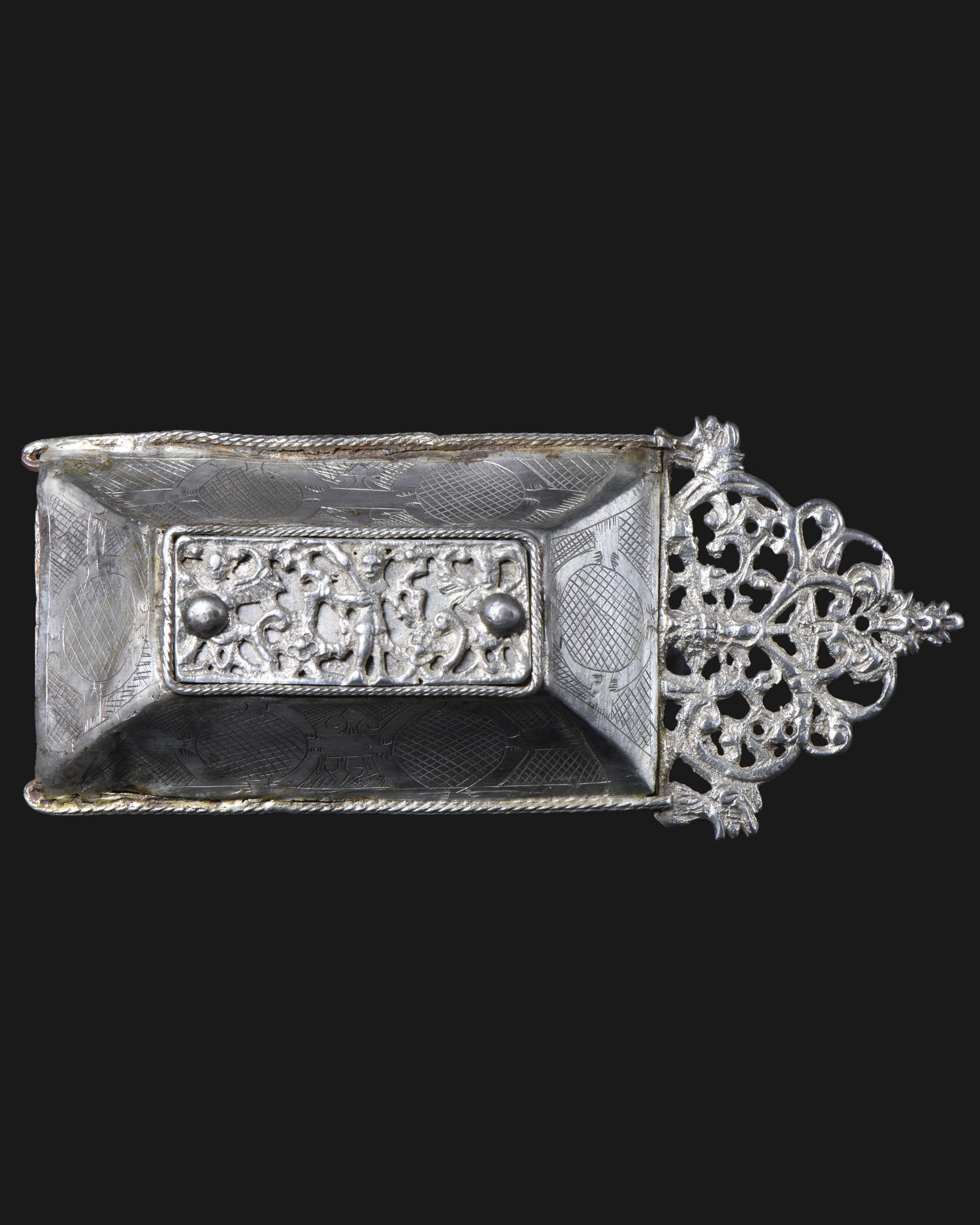
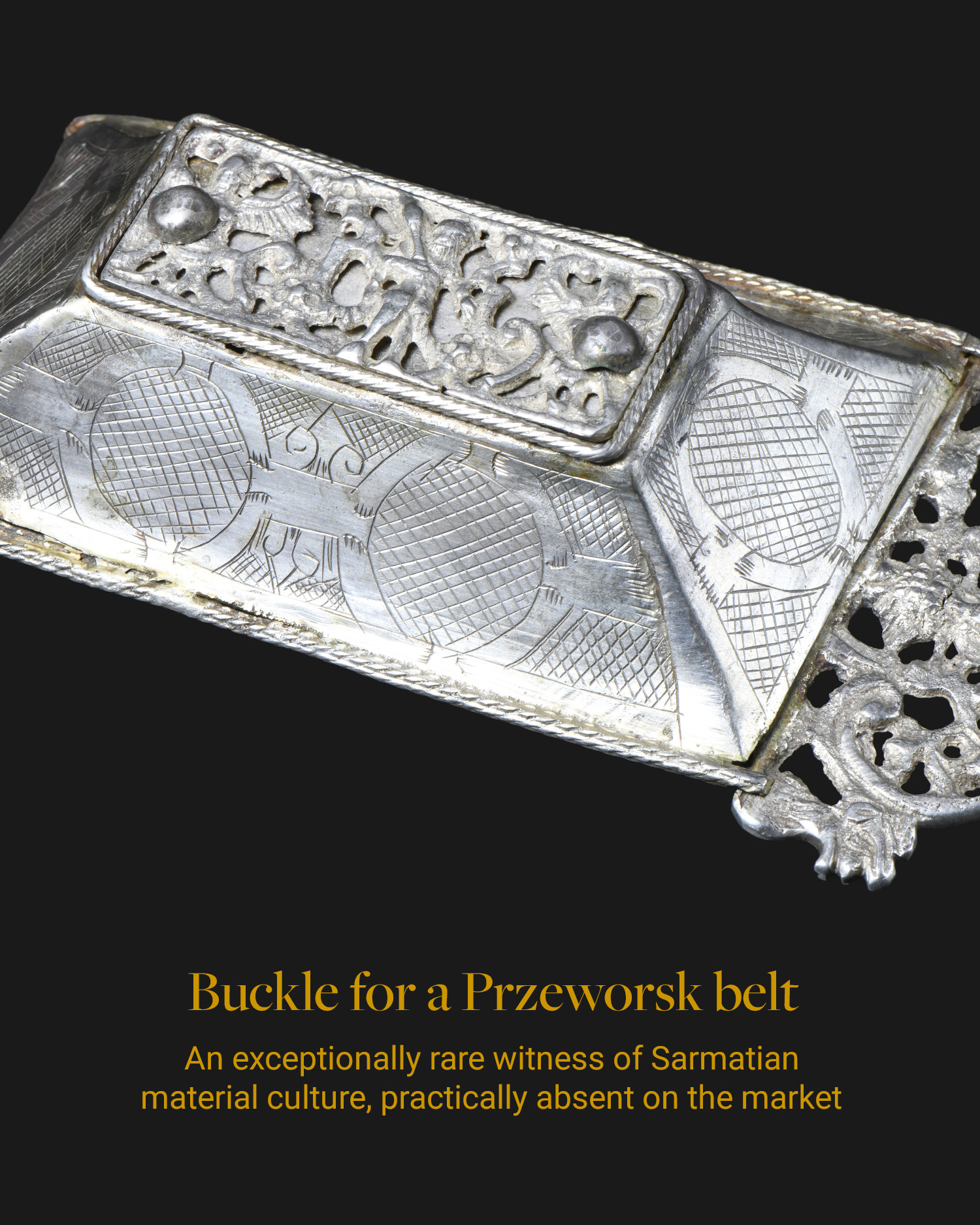
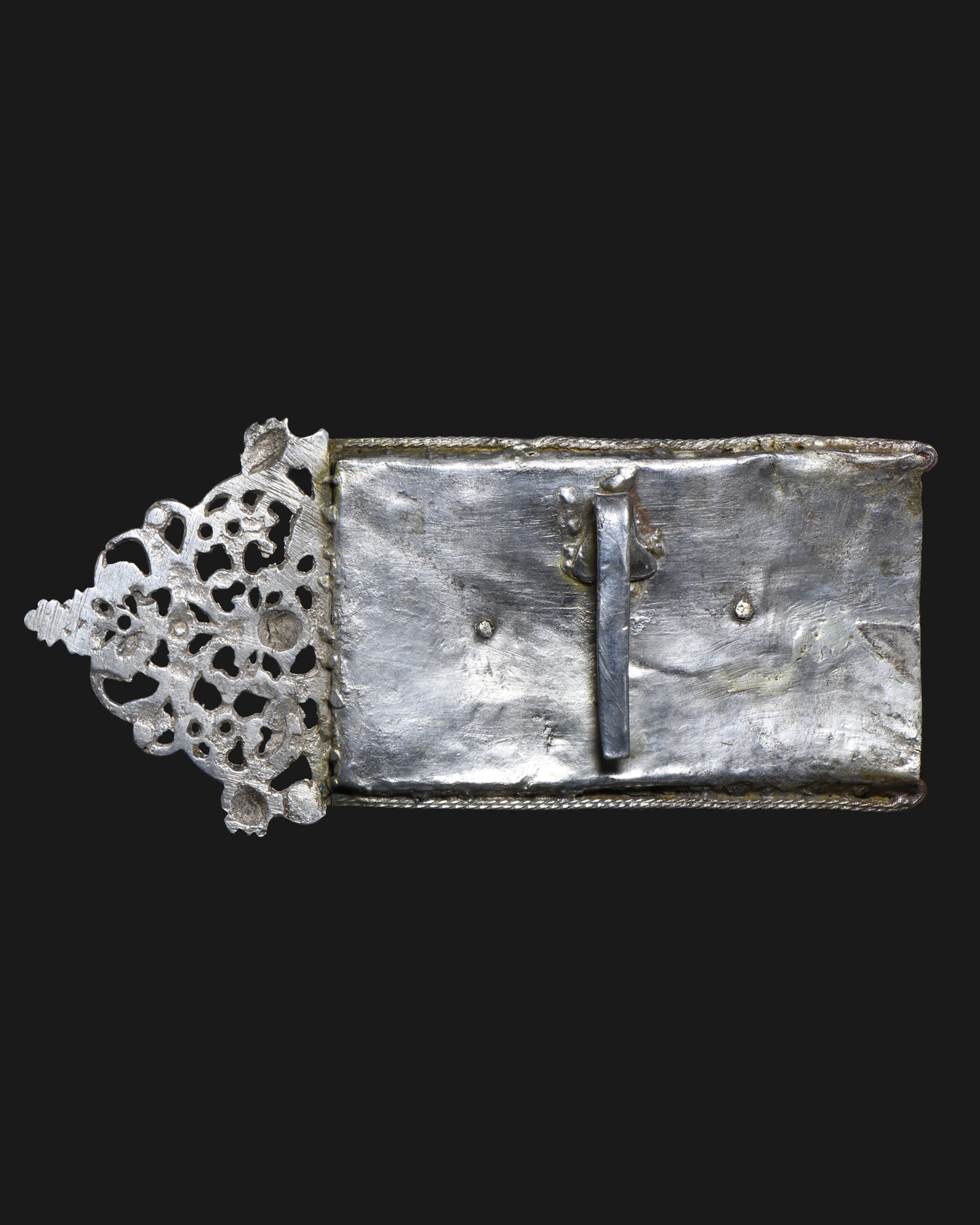
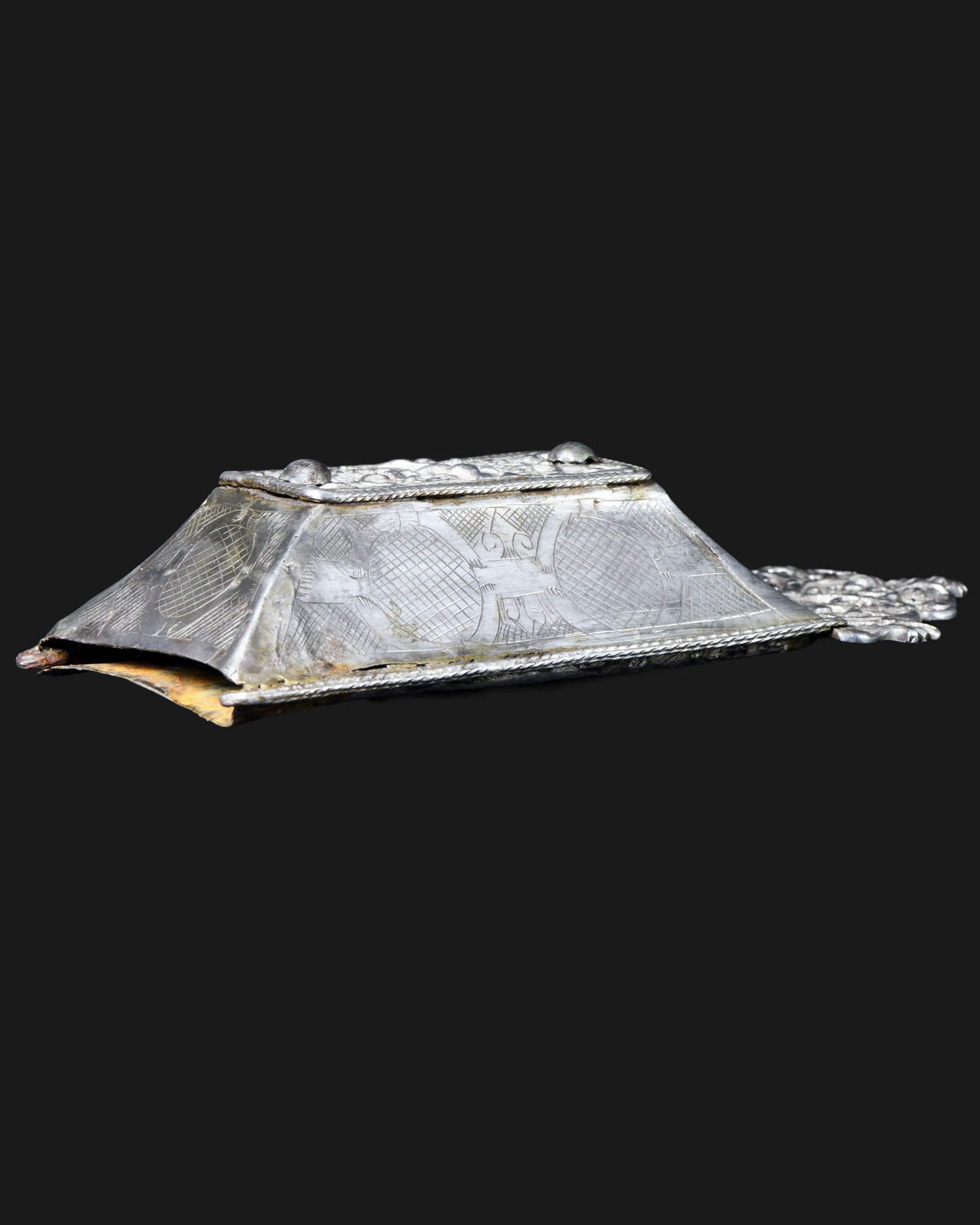
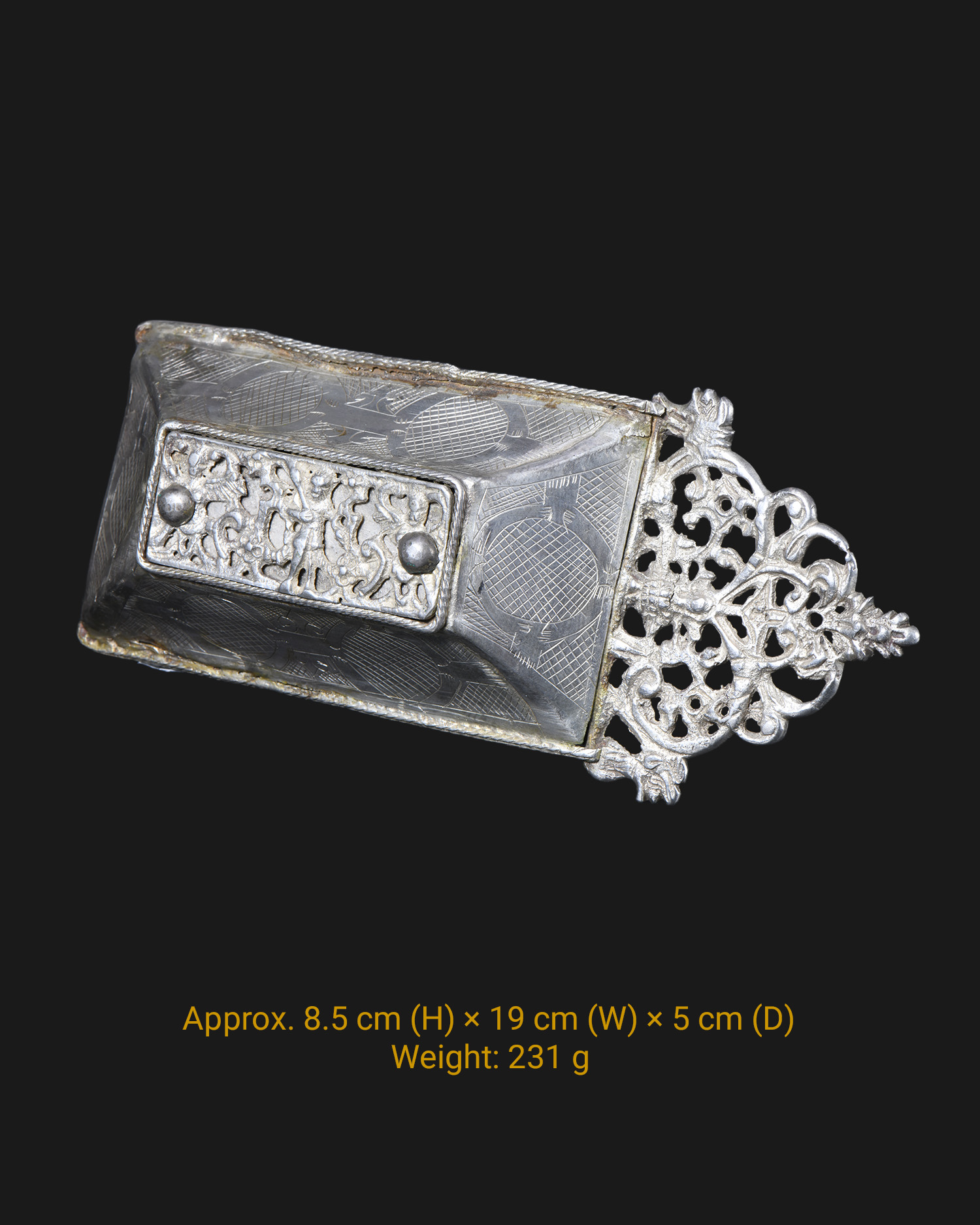

Przeworsk belt buckle, silver, Poland, 17th century.
6000,00 zł
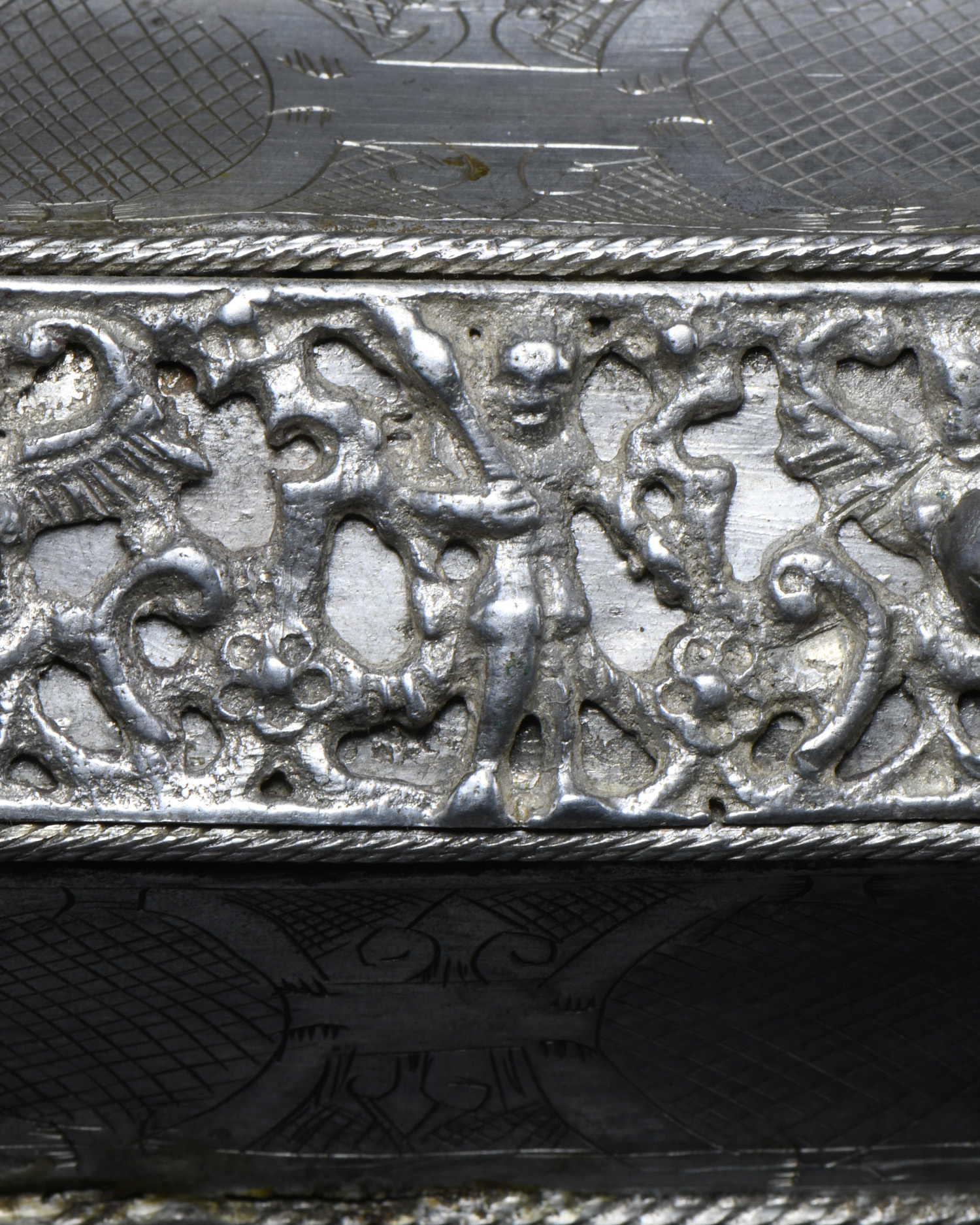
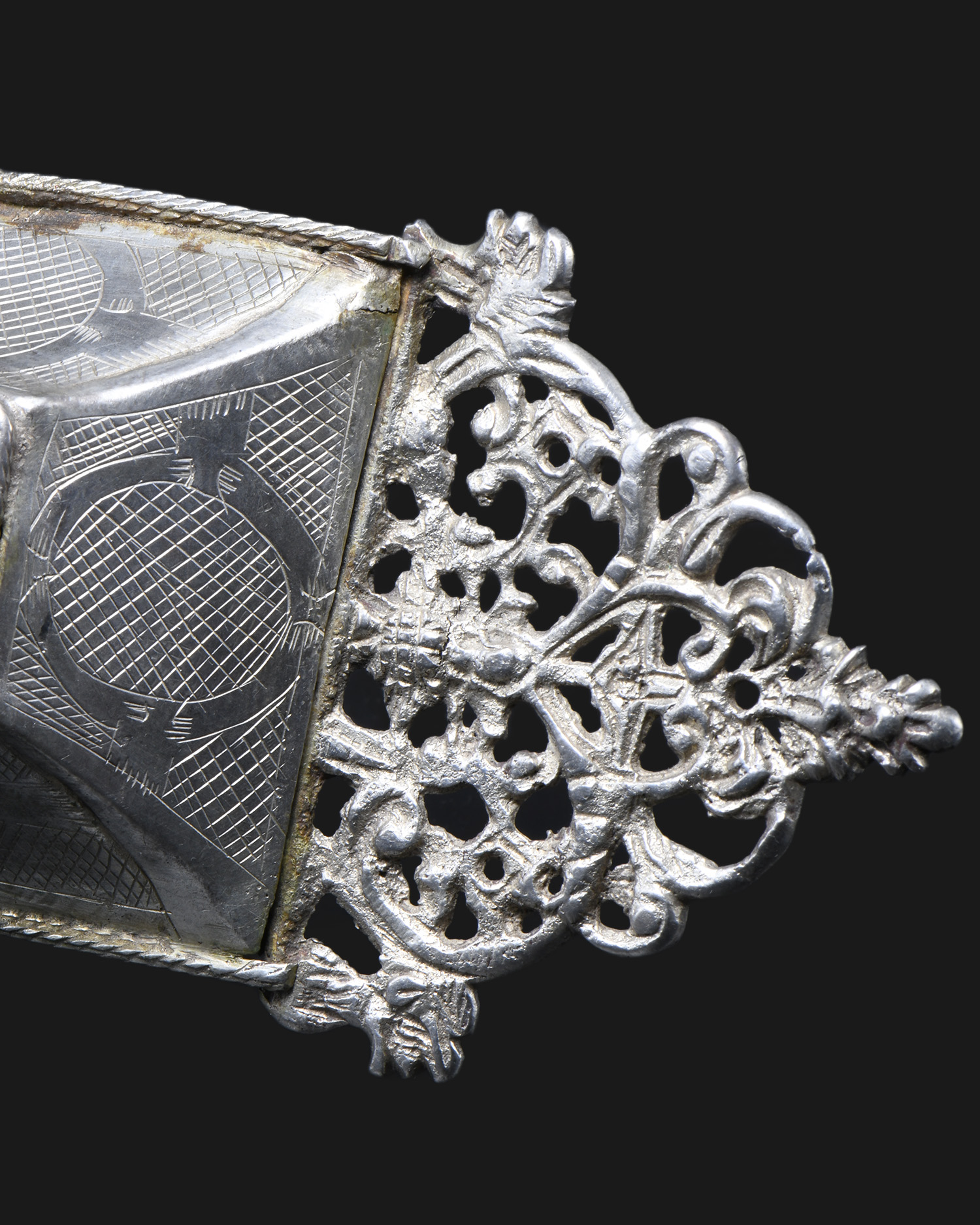
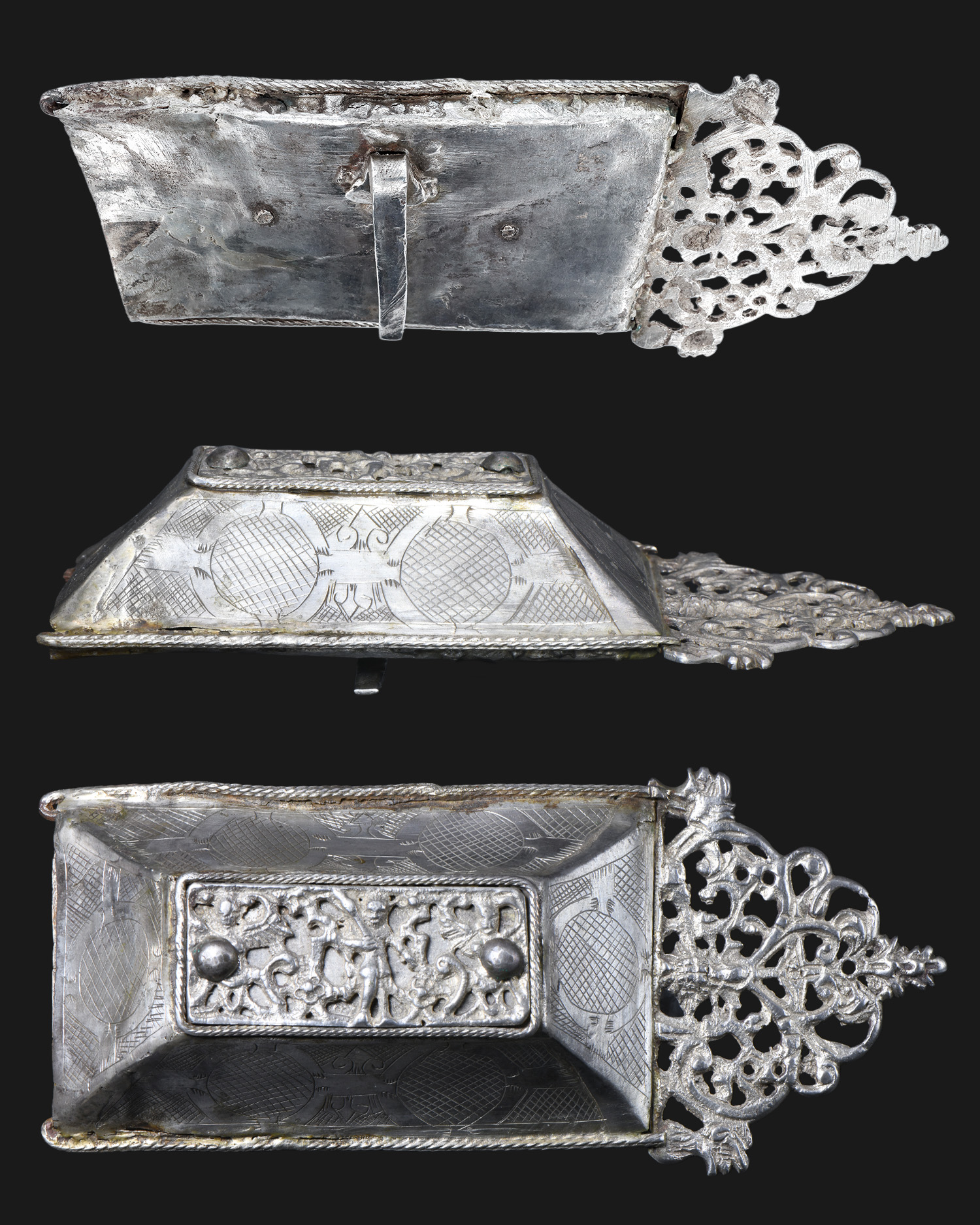
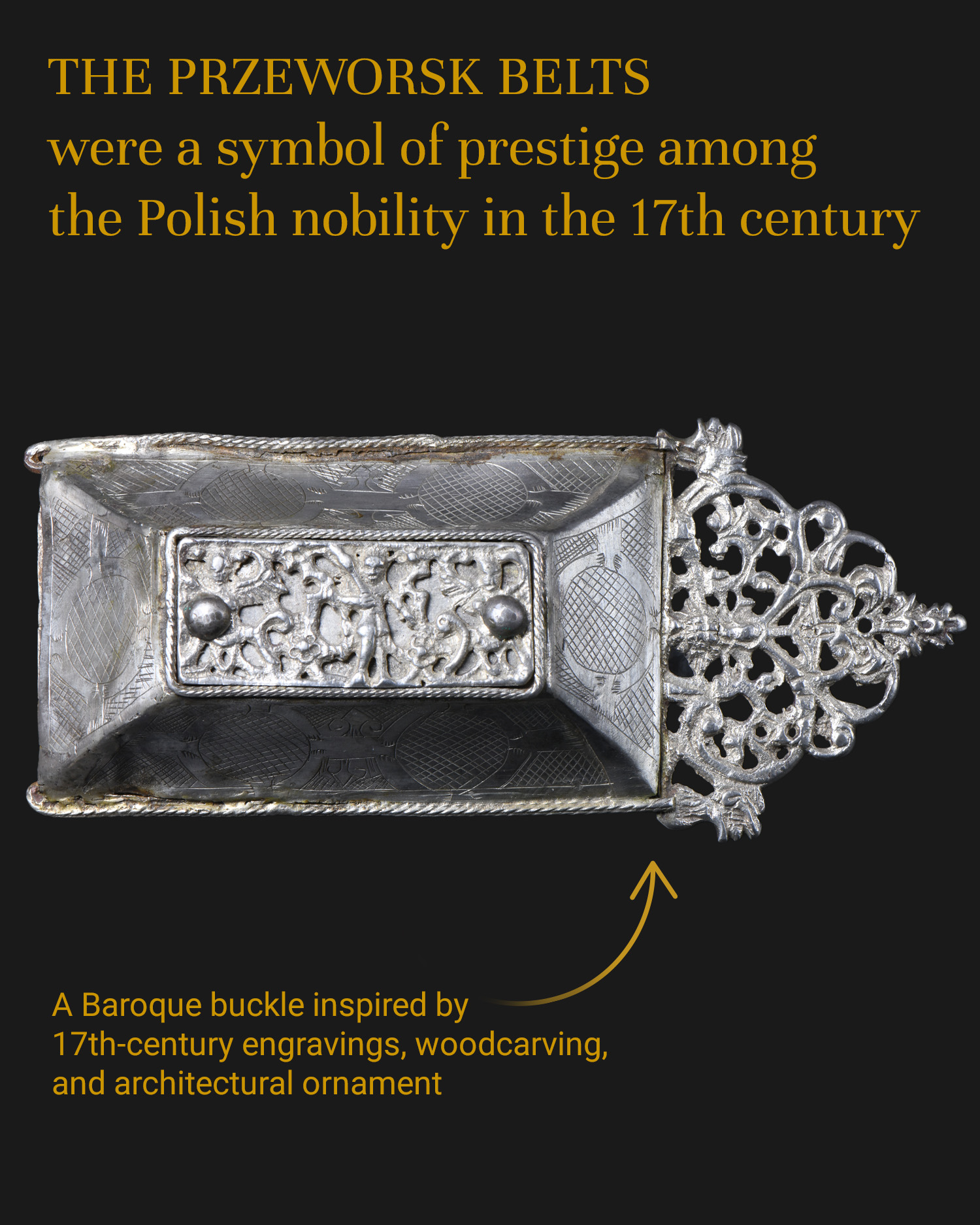
The buckle is a part of the fastener of the Przeworsk belt, was made of silver and dates back to the 17th century. Przeworsk belts were part of the representative attire of the Polish nobility, so the buckles were decorated with striking scenes and rich ornamentation. This is a larger, massive piece, rather intended for a man. The central part of the buckle is filled with a figural scene showing a man holding a scepter or torch, depicted between two standing griffins. The spaces between the figures are filled with single swirls and flowers typical of Baroque design. An engraved geometric pattern is placed on the slanted sides of the buckle. At the edges of the scene the heads of the fastening rivets are visible, and on the side of the buckle there is a cast openwork application, the so-called “tongue”.
1 in stock
| Weight | 0,231 kg |
|---|---|
| Dimensions | 19 × 8,5 × 5 cm |
| Type |
Conductor belt buckle |
| Form |
Base of a truncated pyramid with a relief scene and an openwork "tongue" on the side |
| Materiał |
Silver |
| Kolorystyka |
Silver |
| Technika |
Casting ,Chiseling ,Forging ,Riting |
| Czas powstania |
17th century |
| Era |
Baroque |
| Kraj pochodzenia |
Poland |
| State of preservation |
Very good, rubbed out relief scene details |
Related products
Belt link, gilded silver, Poland, 17th century
Coin Necklace, Silver, Rock Crystal, Bronze, Poland, 17th Century
Epitaph portrait of Jan Czapski (1699-1742), oil on copper, Poland, 1740s.
Medieval chess figure (chaser), bone, Scandinavia (?), 12th century.
Portrait of a nobleman (Sarmacki portrait), oil on canvas, Poland, 18th century.
The portrait, originally rectangular and later cut down to an oval and relined, depicts an elderly man in noble (szlachecki) attire characteristic of the 18th century. The figure is shown half-length, facing frontally with a slight turn of the torso and one hand resting on the hip, which lends the composition a sense of dignity and static elegance.
The face, with mature features such as a high forehead, short, thinning grey hair, and subtle wrinkles — is rendered realistically, with attention to individual physiognomic traits. The gaze is calm and restrained, conveying charisma and composure, as well as an established social standing. This is further emphasized by the impressive noble (szlachecki) attire: a żupan embroidered with gold thread, a dark blue kontusz lined with red fabric, fastened with large gold buttons, and a wide, light-colored sash tied around the hips.
The painting is an excellent example of the so-called “Sarmacki portrait”, emphasizing social class affiliation, wealth, and official position. It stands out for its solid artistic craftsmanship, naturalistic treatment, and the mature age of the sitter.
Table spoon, silver, Poland, ca. 1650
Wooden Spoon with ‘V’ Initial, Germany, 19th Century.
This hand-carved wooden spoon, 23 cm long, originates from Poland and is dated to the 19th century or earlier. The deep, functional bowl shows clear signs of use. The handle is adorned with serrated line carvings and a 'V' initial, likely for owner identification. A leather strap with an old collector's paper tag remains attached to the end.
In the 19th century in Poland, spoons of this type were among the basic items of everyday use on rural and pastoral farms. They were made by hand from a single piece of wood, which was part of the tradition of Polish folk craftsmanship, based on simple, durable materials.
Copies with preserved markings are rare today, documenting the development of Polish material culture and everyday practices of village life.