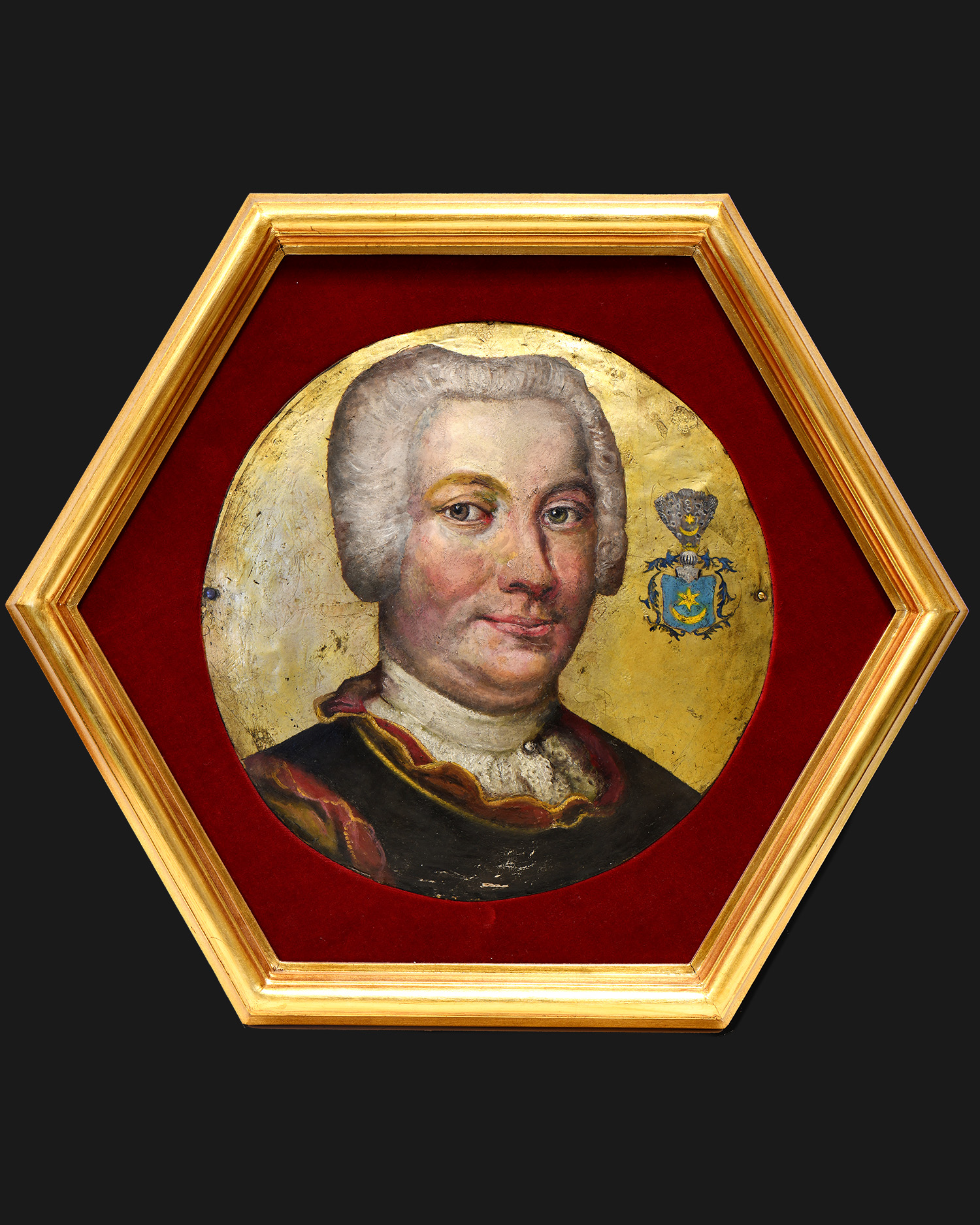
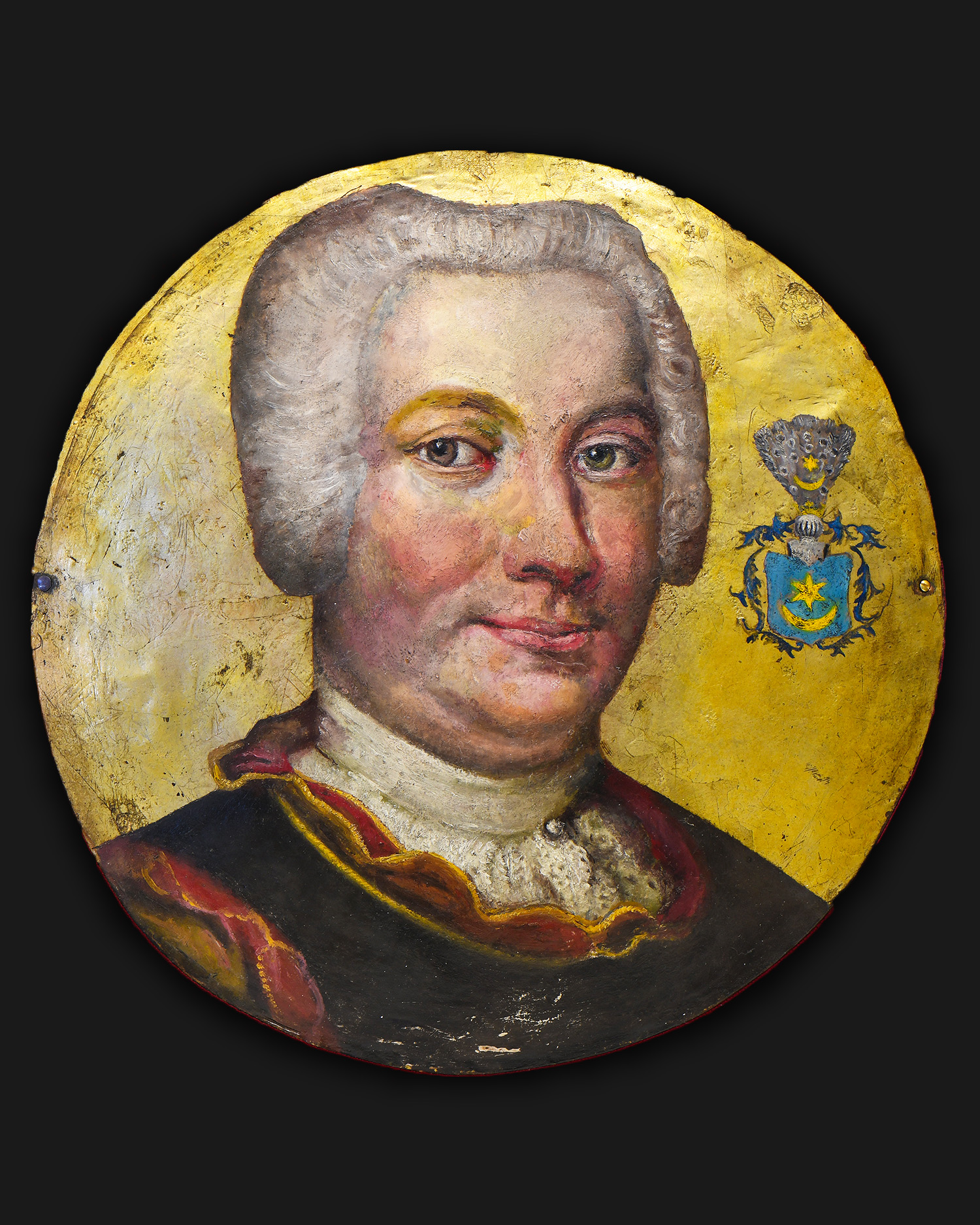
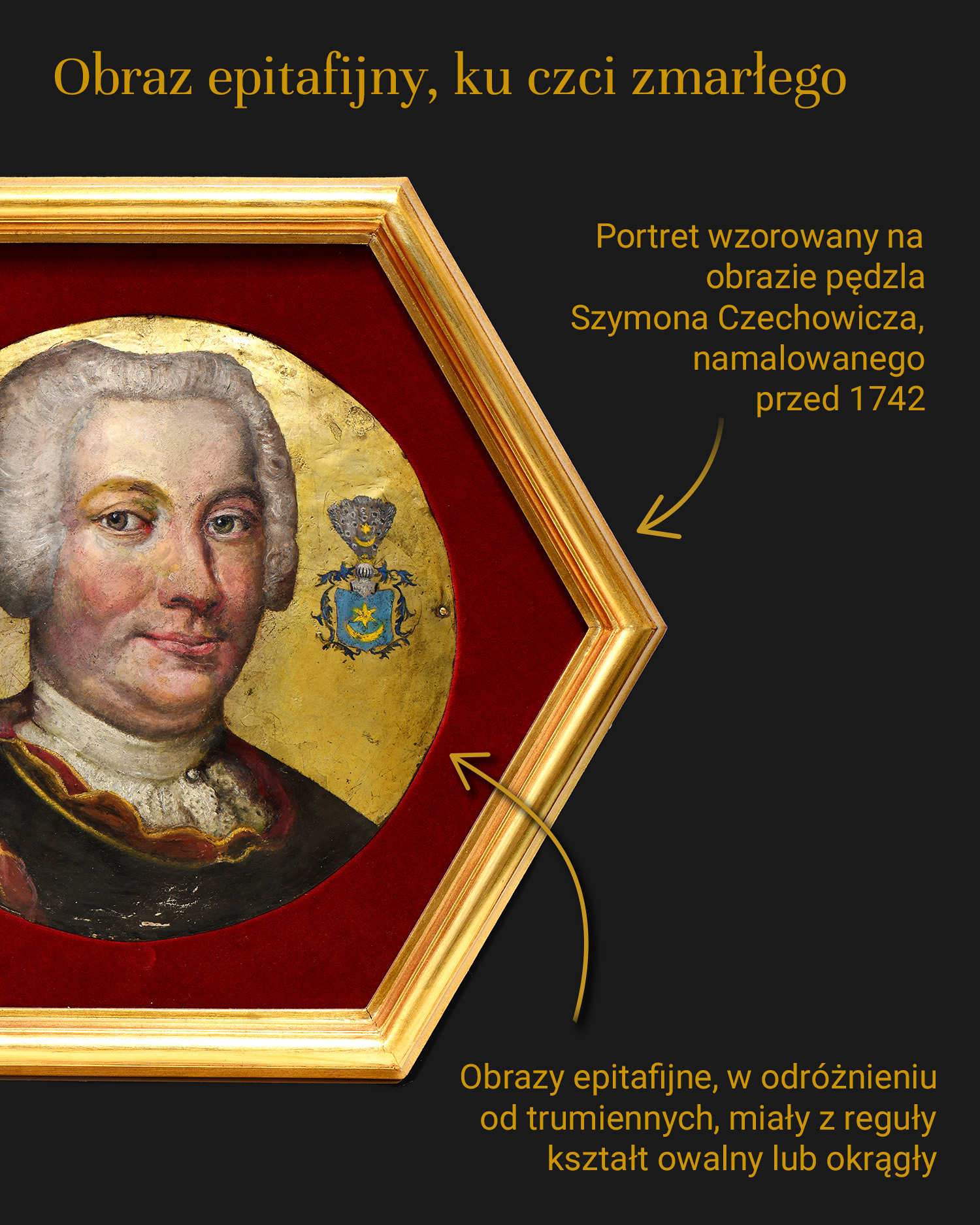
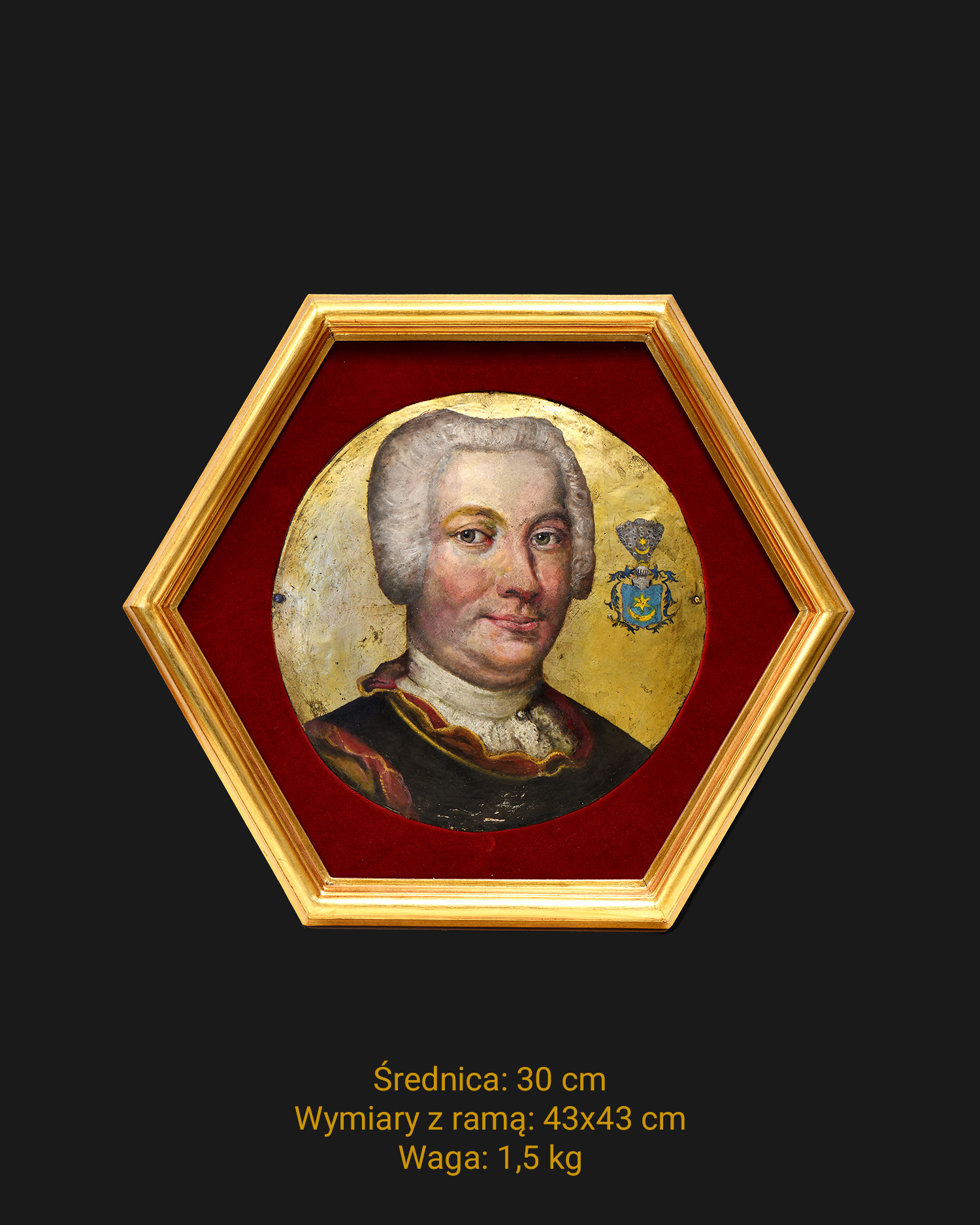
Epitaph portrait of Jan Czapski (1699-1742), oil on copper, Poland, 1740s.
20000,00 zł
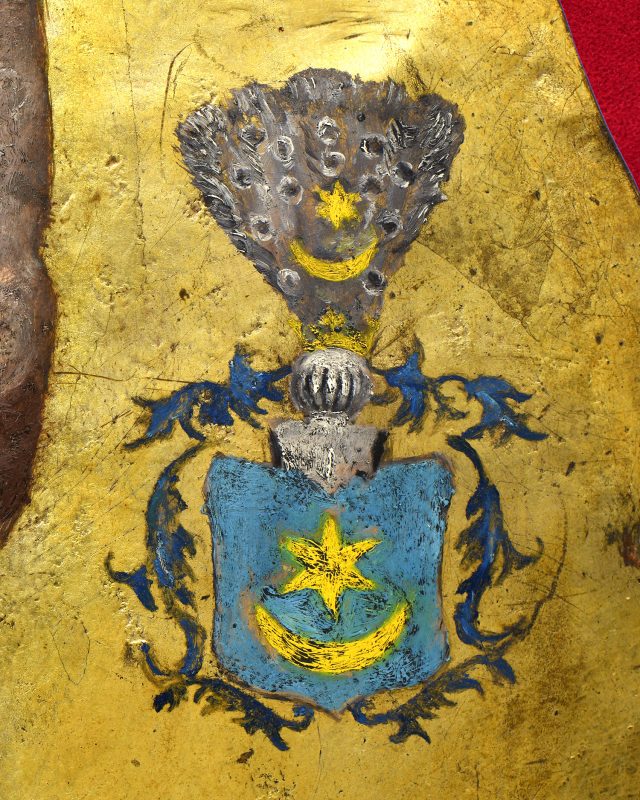
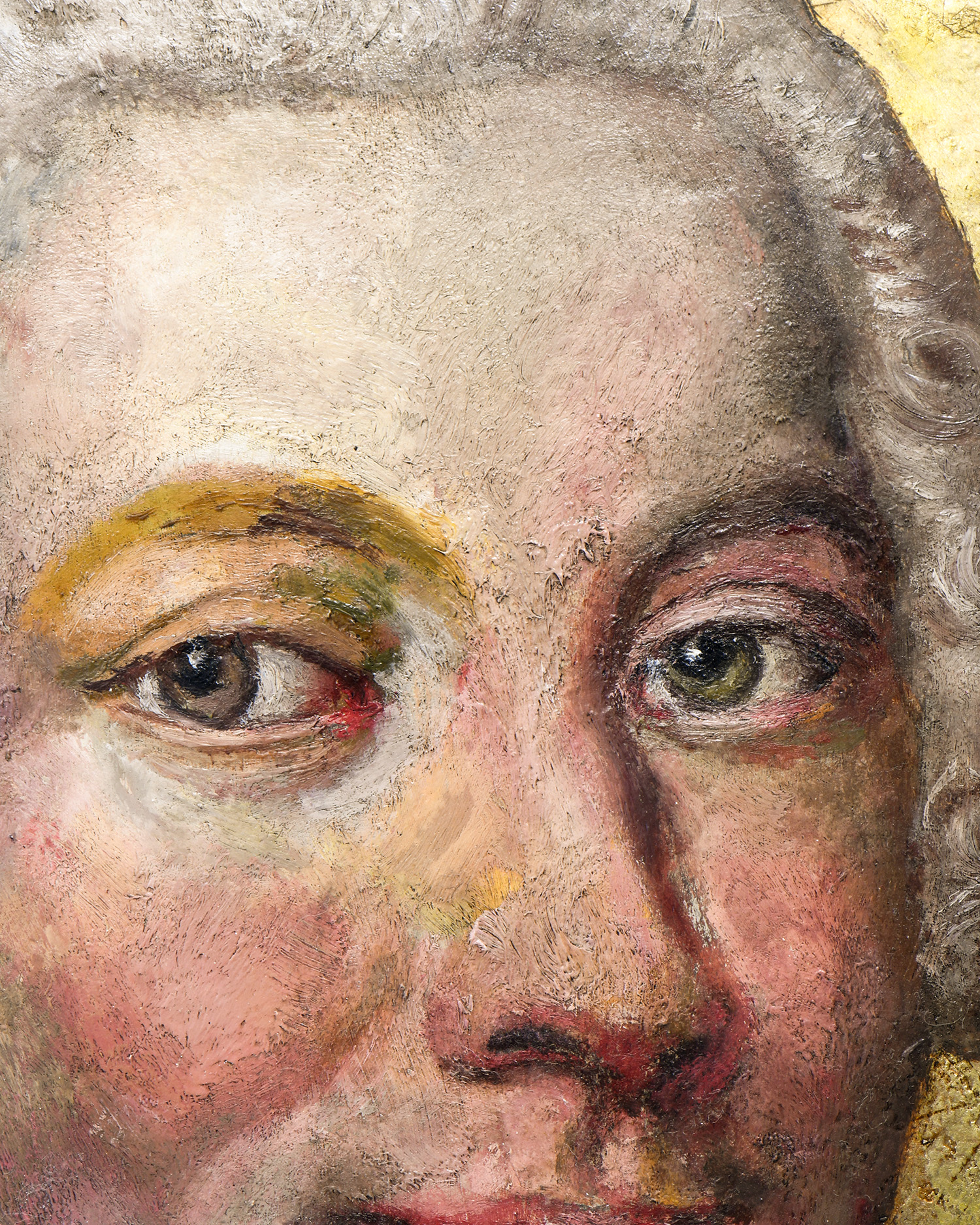
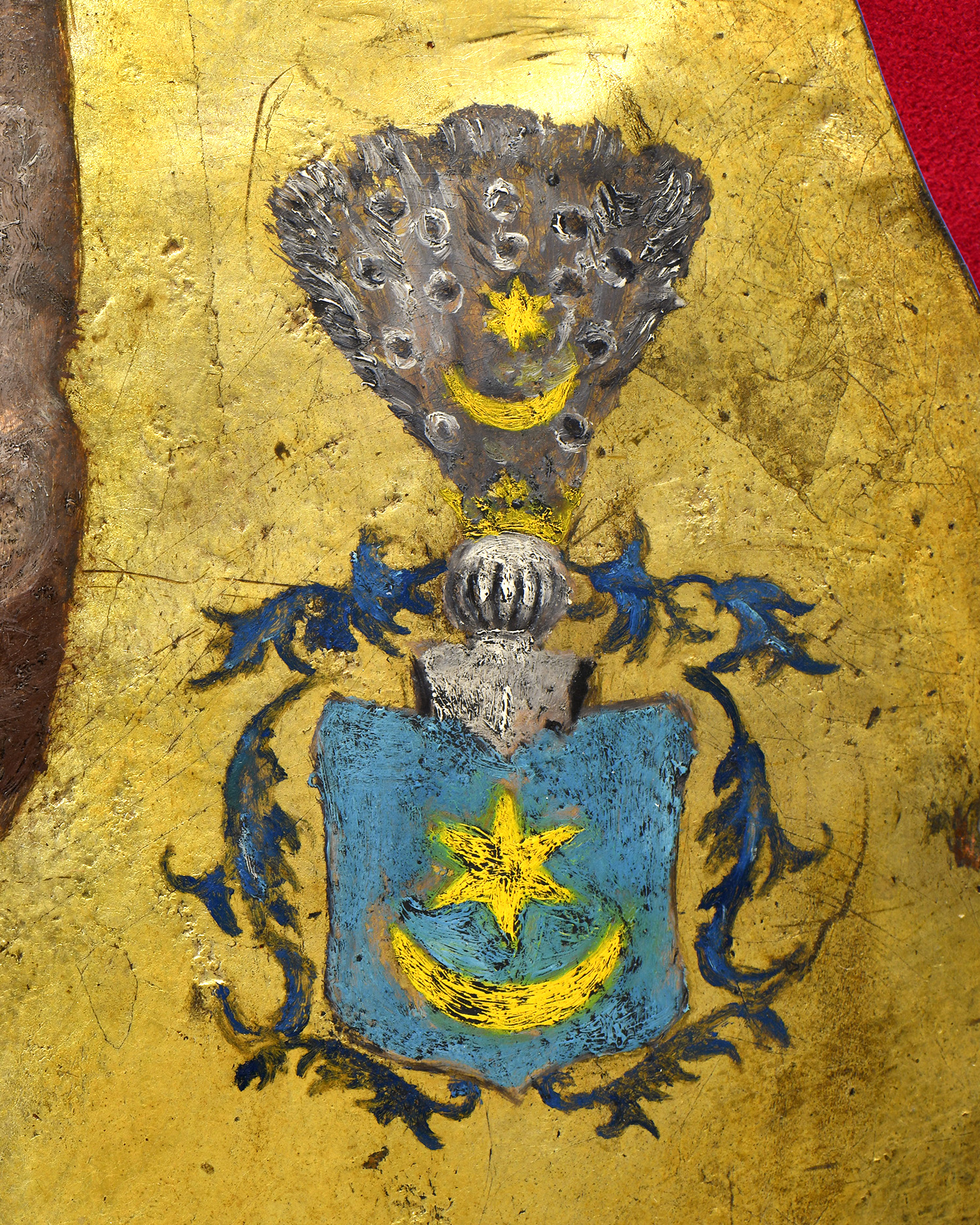
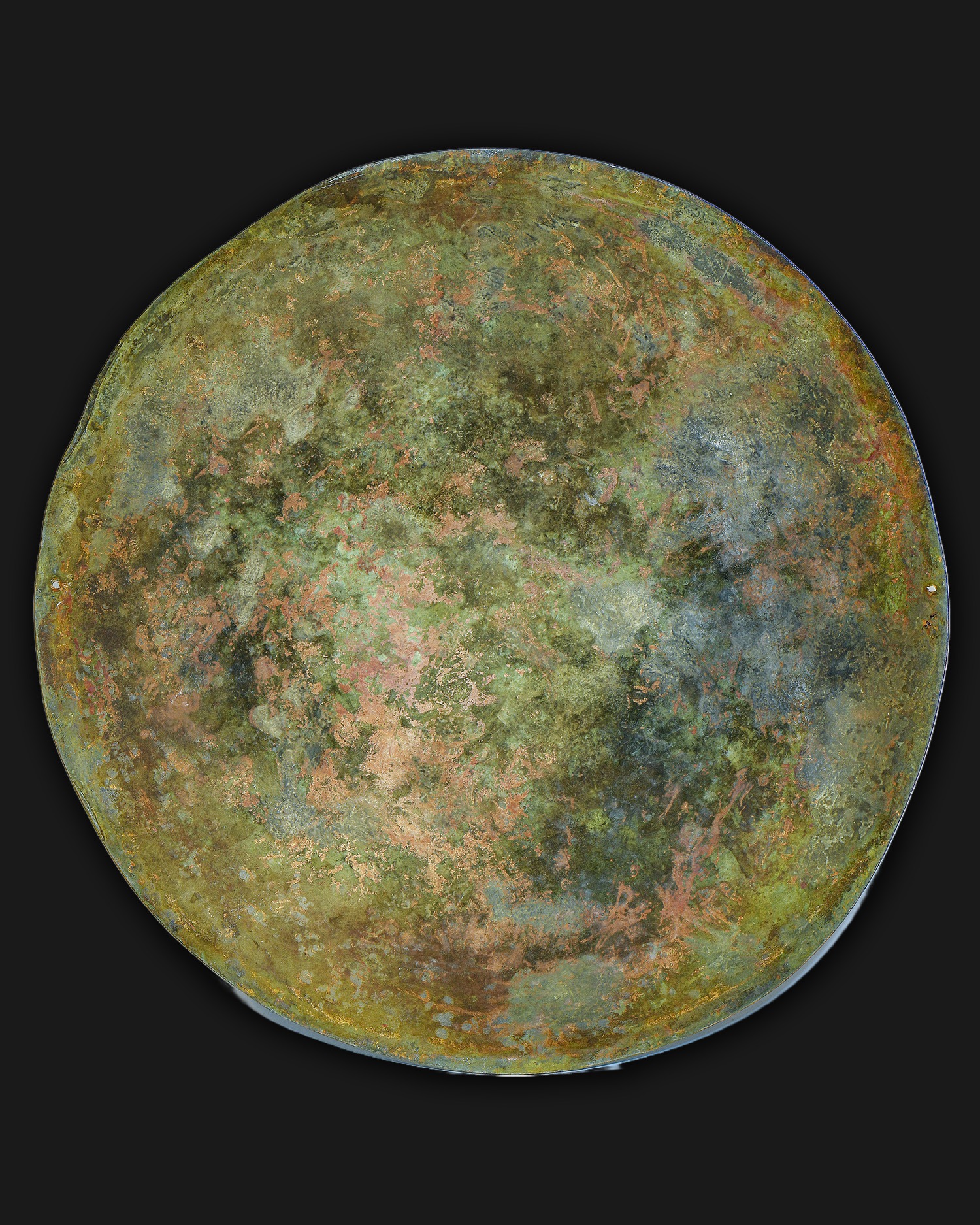
The circular-shaped painting was executed in oil technique on a forged, convex copper sheet, fire-gilded. The portrait shows a middle-aged man framed in bust, en trois quarts to the left. Oval, plump face with high forehead and second chin. On his head is a white powdered curly wig. The costume is a steel breastplate, from under which parts of the garment, including a white shirt collar, protrude. To the right of the portrait is the Leliwa coat of arms in an ornamental shield topped by a knight’s helmet with peacock feathers, on which the emblem of the Leliwa coat of arms is repeated. Around the shield is a floral ornament. The portrait is modeled on a painting by the brush of Szymon Czechowicz, painted before 1742.
Epitaph images, unlike coffin images, were generally oval or circular in shape. They were part of pictorial epitaphs – memorials in honor of the deceased or deceased (e.g. family), usually placed not at the burial site, but in another place associated with the person, most often in a church – on a wall or pillar. They consisted of the epitaph proper, i.e. a slab with an inscription, and a picture or pictures, most often painted or carved, less often made in other artistic techniques. A pictorial epitaph usually shows a portrait of the deceased or deceased, sometimes accompanied by his patron saint or patrons.
Diameter: 30 cm
Dimensions with frame: 43×43 cm
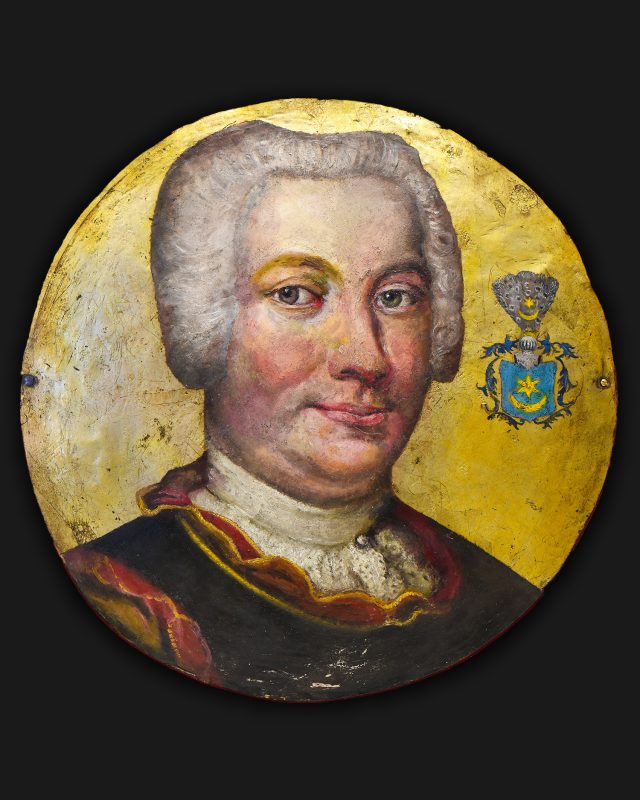
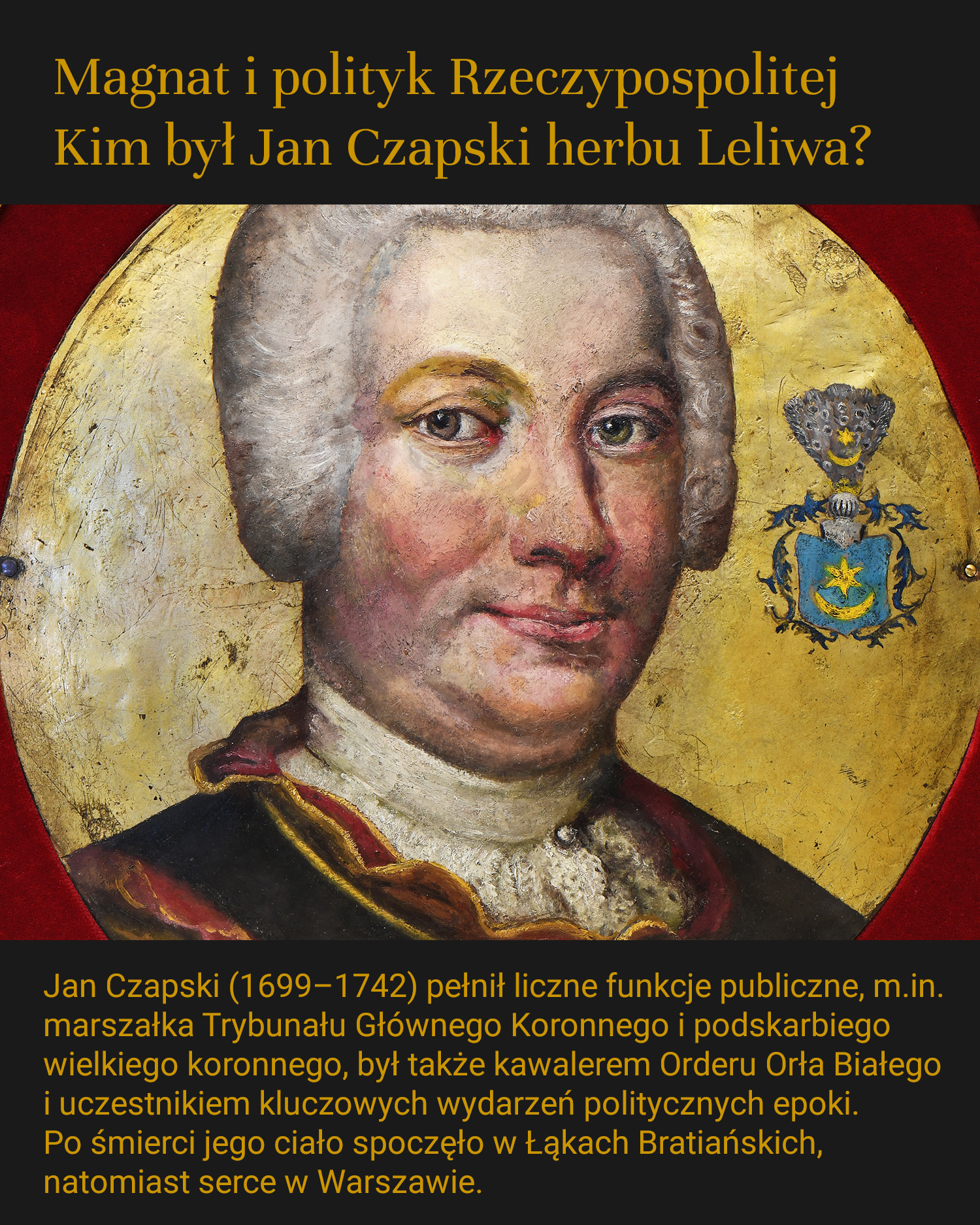
Jan Ansgary Czapski of the Leliwa coat of arms (born in 1699, died October 7, 1742 in Warsaw).
One of the largest magnates in Royal Prussia. He began his political activity in 1720, when he was elected commissioner from the Chelmno province to the Tax Tribunal in Radom. A deputy from the Ciechanow region to the 1730 Sejm, he was a member of the general confederation formed at the Convocation Sejm on April 27, 1733. As a deputy from the Senate, he signed the pacta conventa Augusta III Sasa in 1733.
He became a knight of the Order of the White Eagle. As a royal legate, on September 19, 1734, he received the tribute from the city of Toruń to King August III. At that time he guaranteed that under the rule of the representative of the Saxon dynasty, Toruń and its residents need not worry about successful development and municipal rights. He tried to look after the interests of the cities, including Toruń, which, as a nobleman, he even favored. This was almost an exception against the backdrop of the nobility's considerable general dislike of the large Prussian cities. Czapski also took care of the church and the Jesuit college in Grudziadz. His support was evidenced by the fact that there was a portrait of him in the church there, which hung next to portraits of other benefactors and founders of this Jesuit edifice.
In 1735 he signed the resolution of the General Council of the Warsaw Confederation. In 1735-1736 he served as Marshal of the Crown Chief Tribunal. In 1738 he became Grand Treasurer of the Crown. He began efforts to increase the number of the Republic's army. He built a palace in Gzin and expanded the palace in Nowa Wieś Szlachecka. In 1736 he acquired from Piotr Riaucour the palace in Warsaw on Krakowskie Przedmieście, known today as the Czapski Palace. He died in Warsaw and was buried in the Bratian Meadows, while his heart was buried in the Reformati Church in the capital.
Coat of arms Leliwa
The Leliwa coat of arms is one of the oldest and most recognizable Polish noble coats of arms, used by many families, including the Czapski family. It depicts a golden six-rayed star over a golden crescent on a blue background, and the same motif is repeated in the jewel above the helmet. The symbolism of the coat of arms is sometimes interpreted as a sign of harmony, light and chivalrous virtues, and its origins date back to the Middle Ages.
| Weight | 1,5 kg |
|---|---|
| Dimensions | 43 × 43 cm |
| Type |
Epitaph painting |
| Form |
Portrait |
| Materiał |
Oil on copper sheet, gilded |
| Kolorystyka |
Beige-gray ,Gold ,Red |
| Czas powstania |
1840s |
| Era |
Baroque |
| Kraj pochodzenia |
Poland |
| Autor |
Unknown |
| State of preservation |
Very good |