

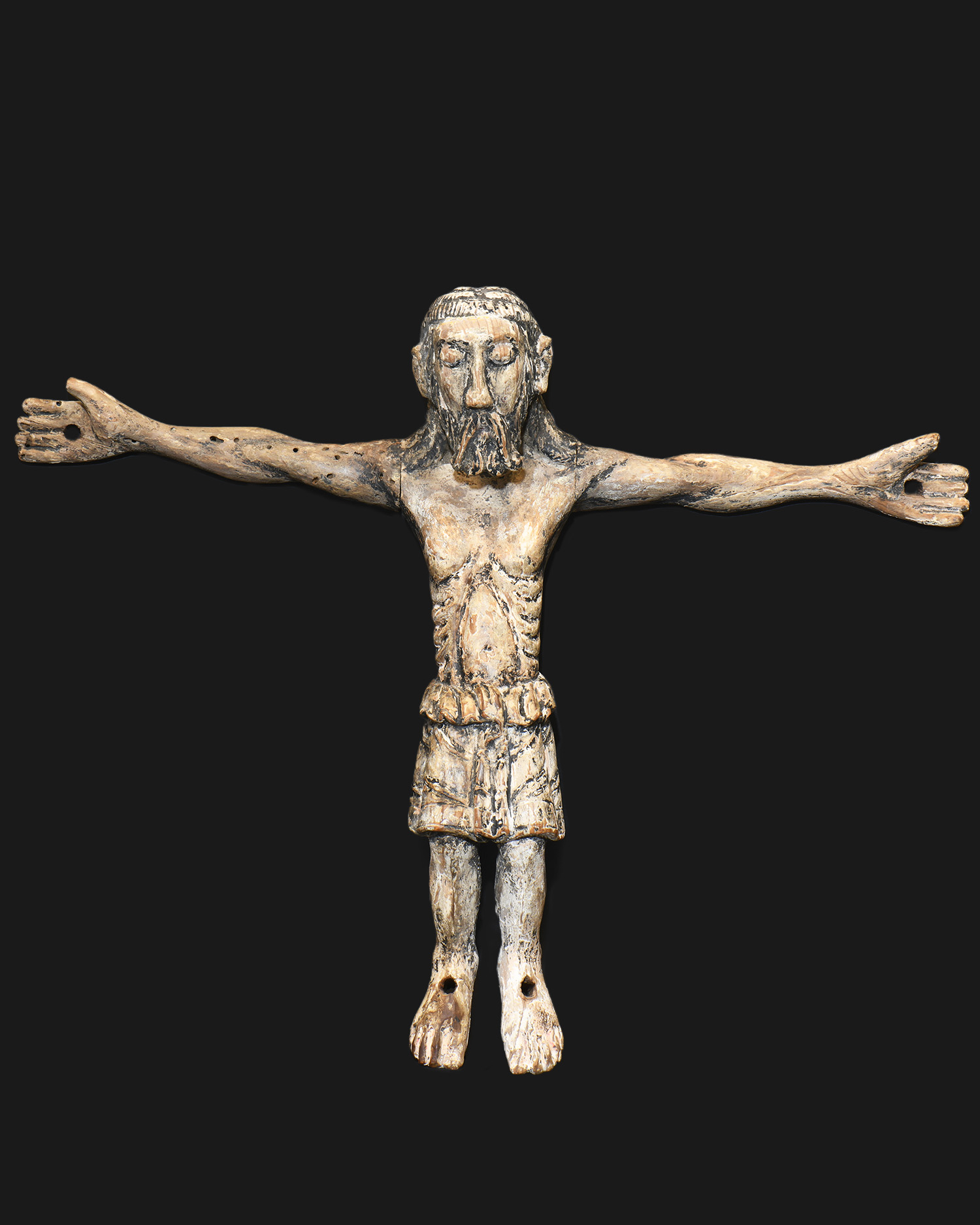
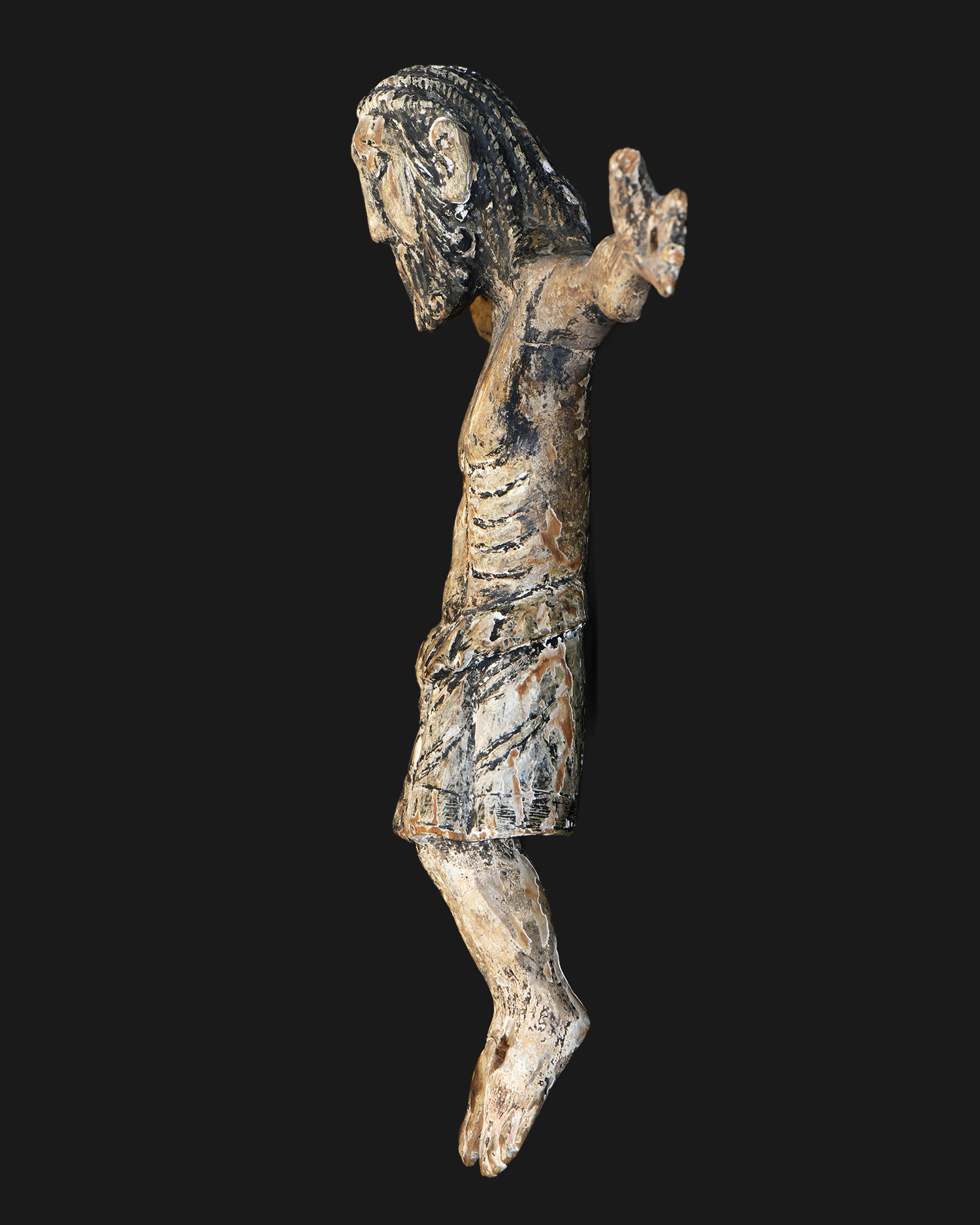
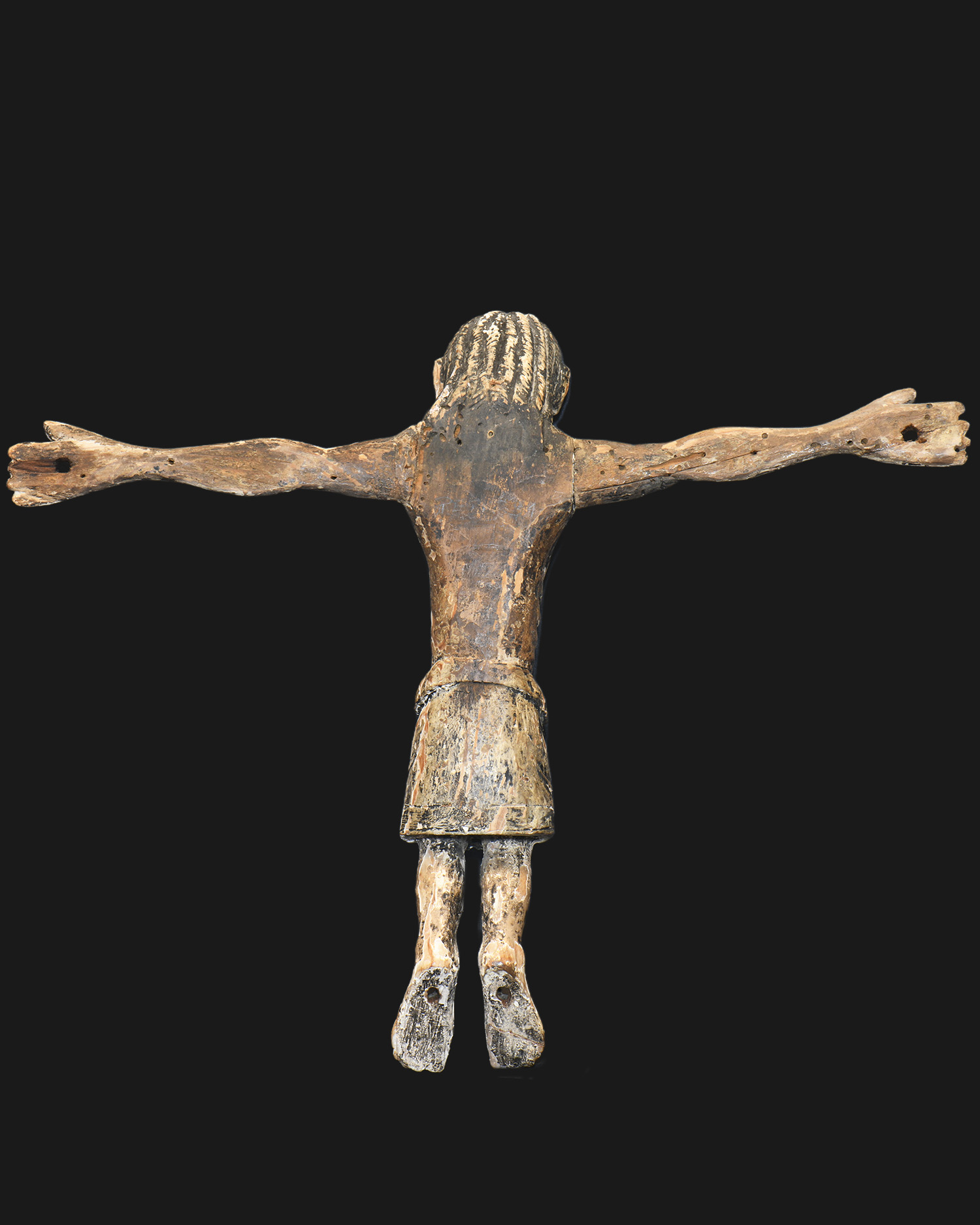
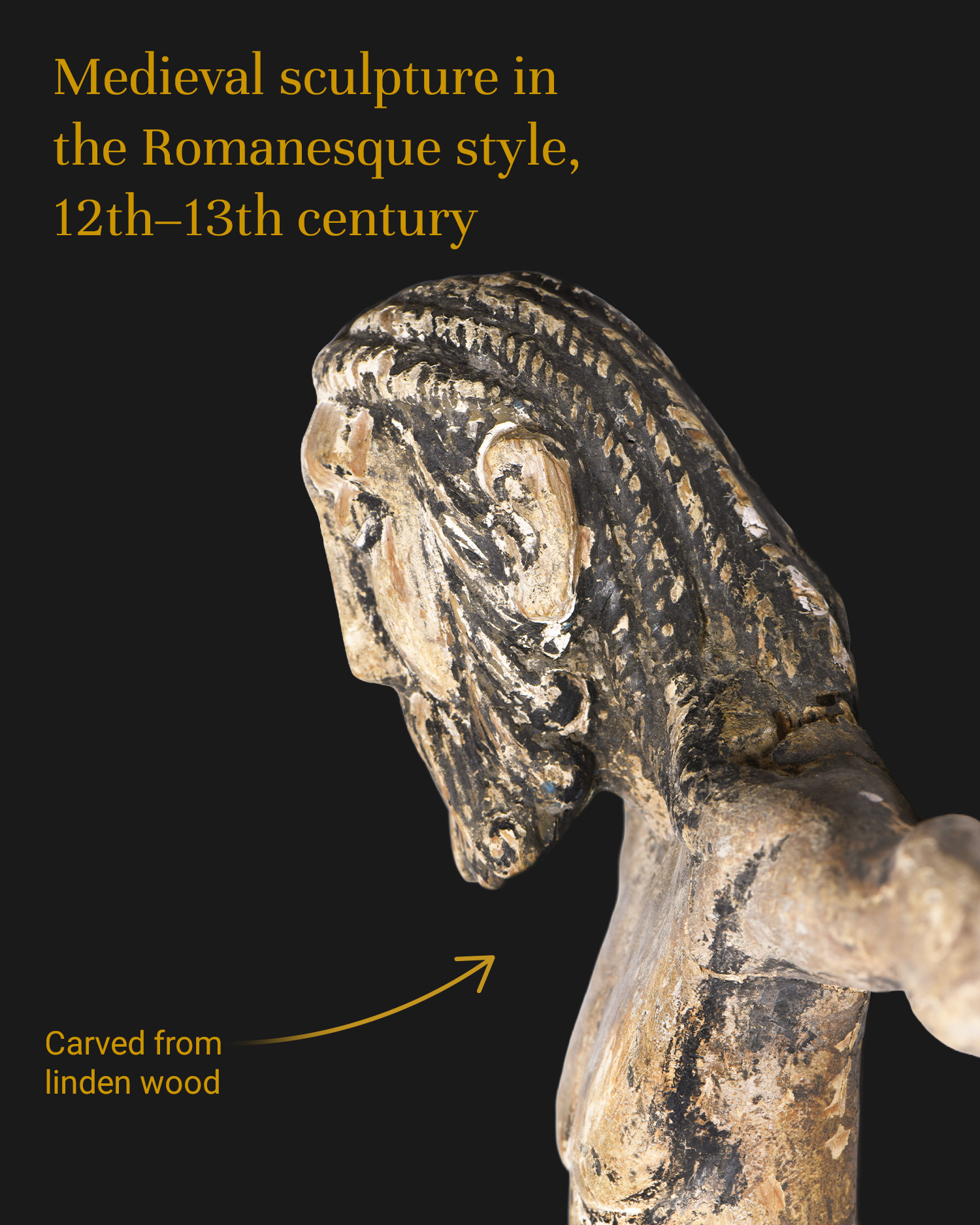

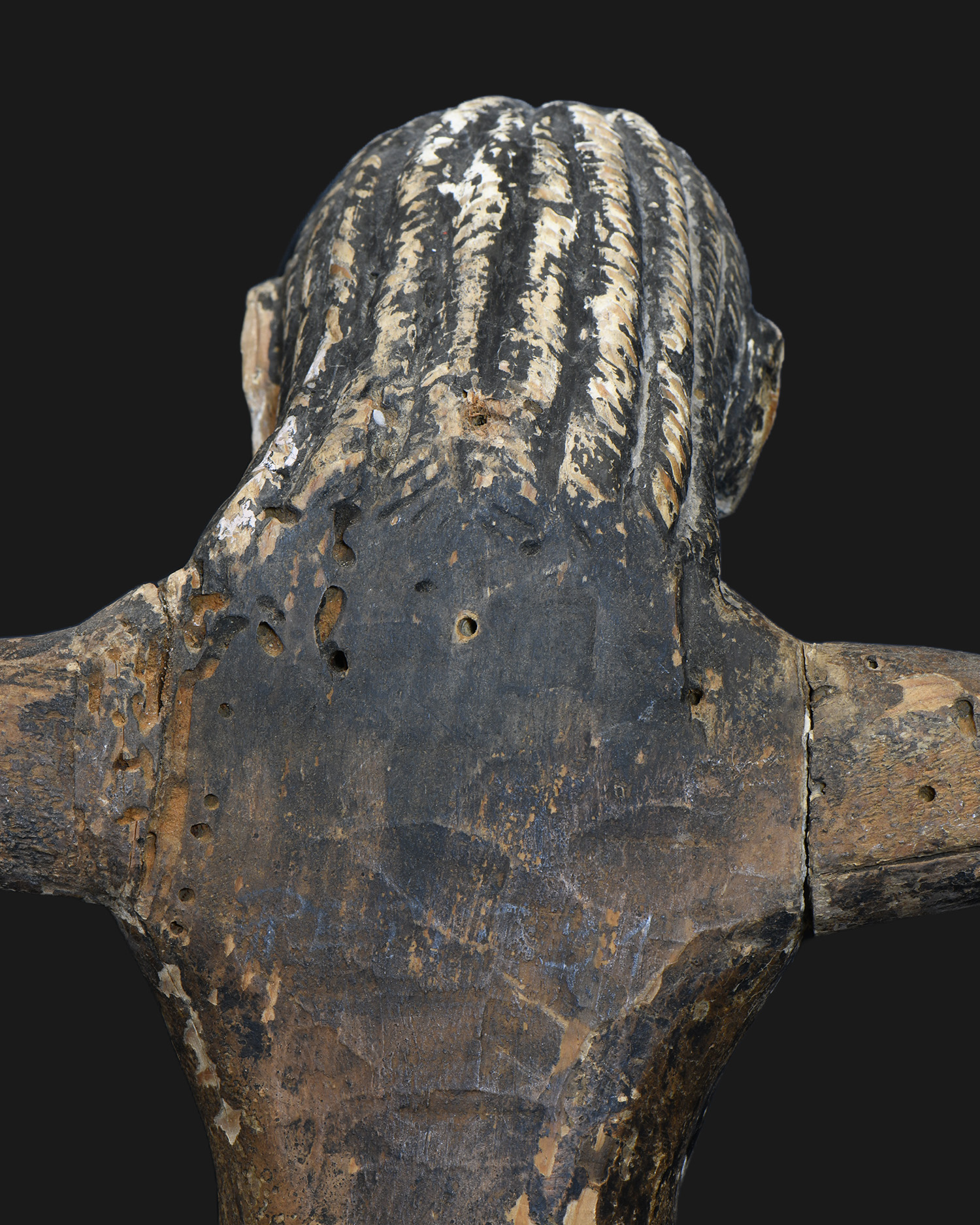
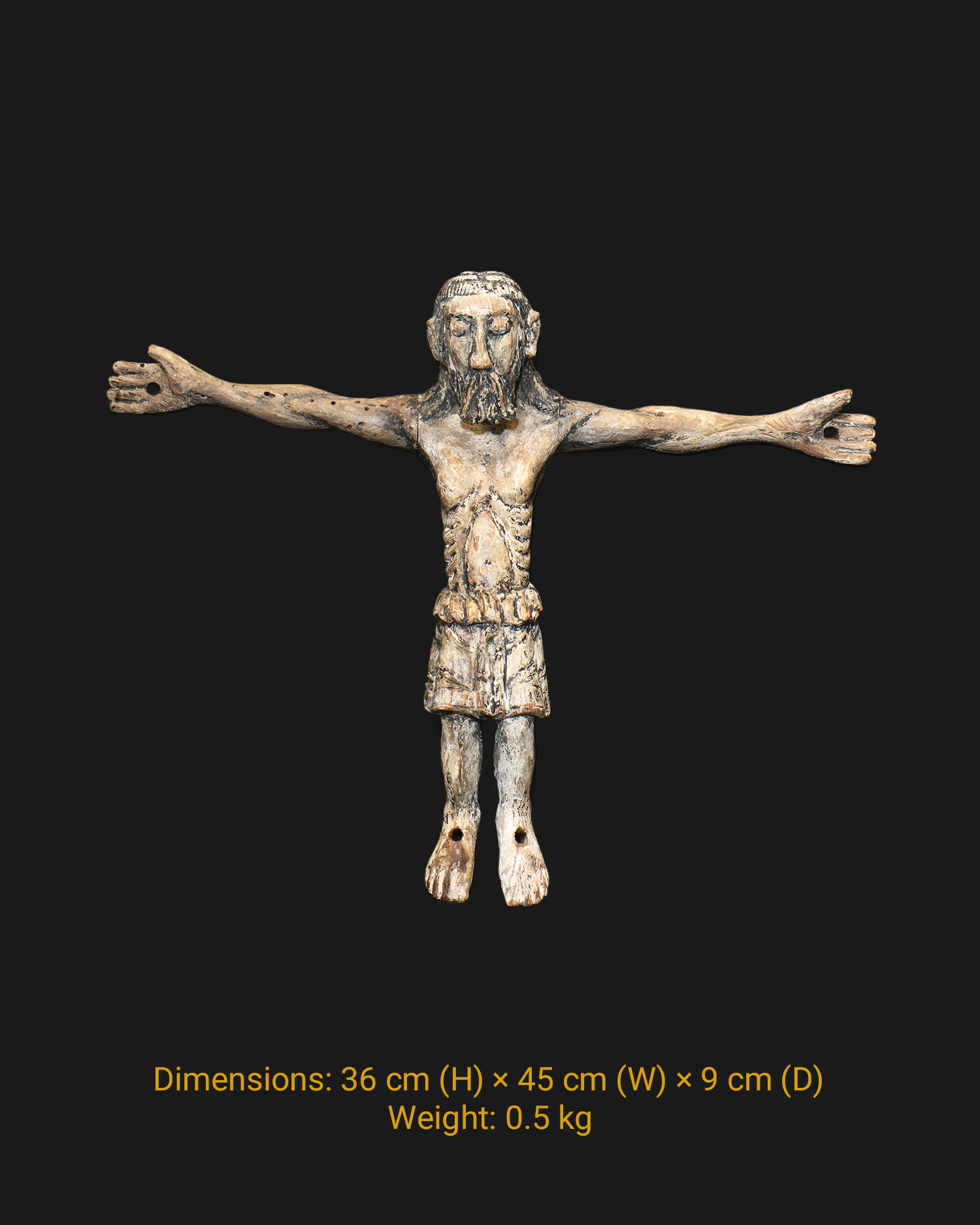
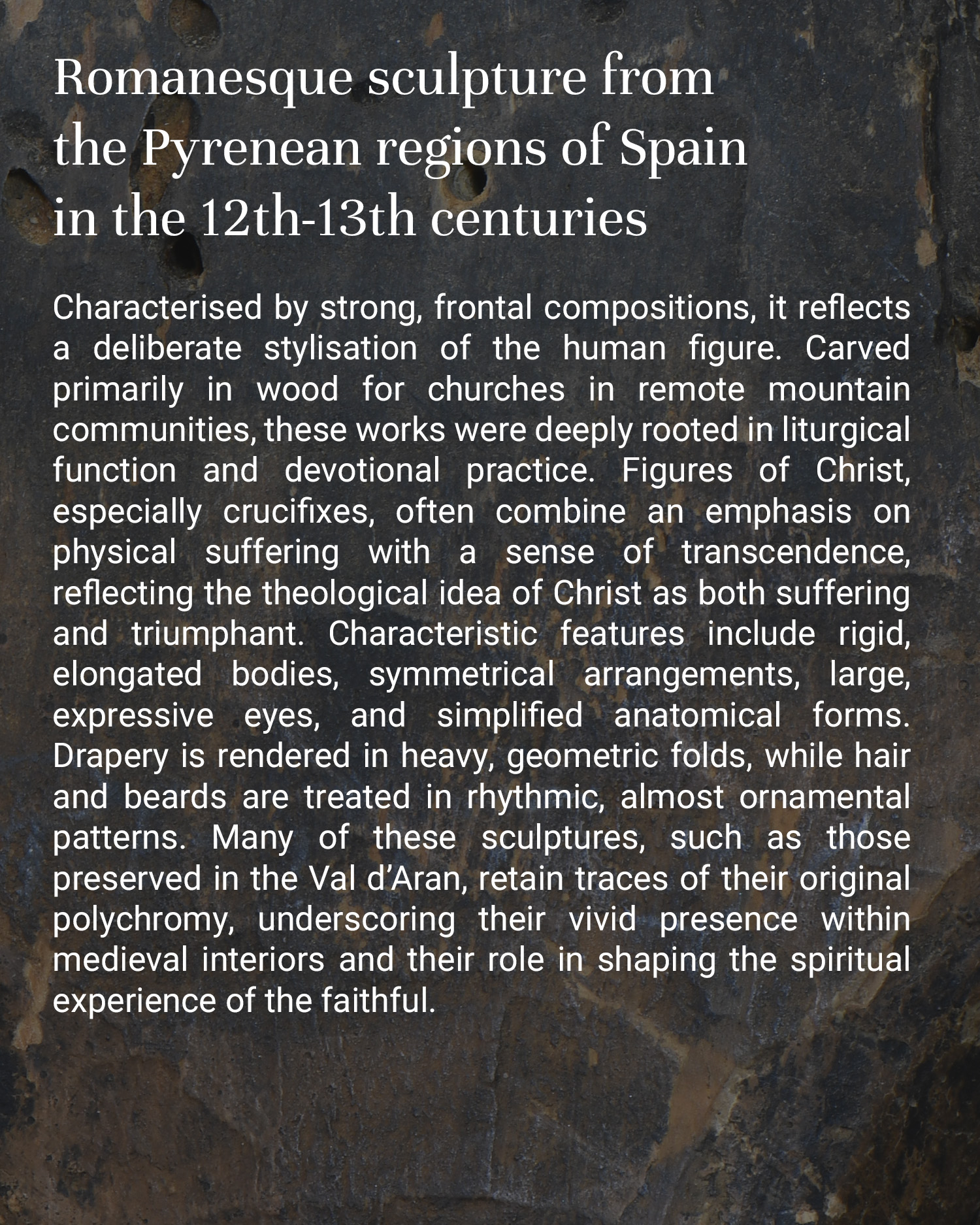

Christ Crucified, wood, Spain (Pyrenees?), 12th-13th century.
3600,00 zł
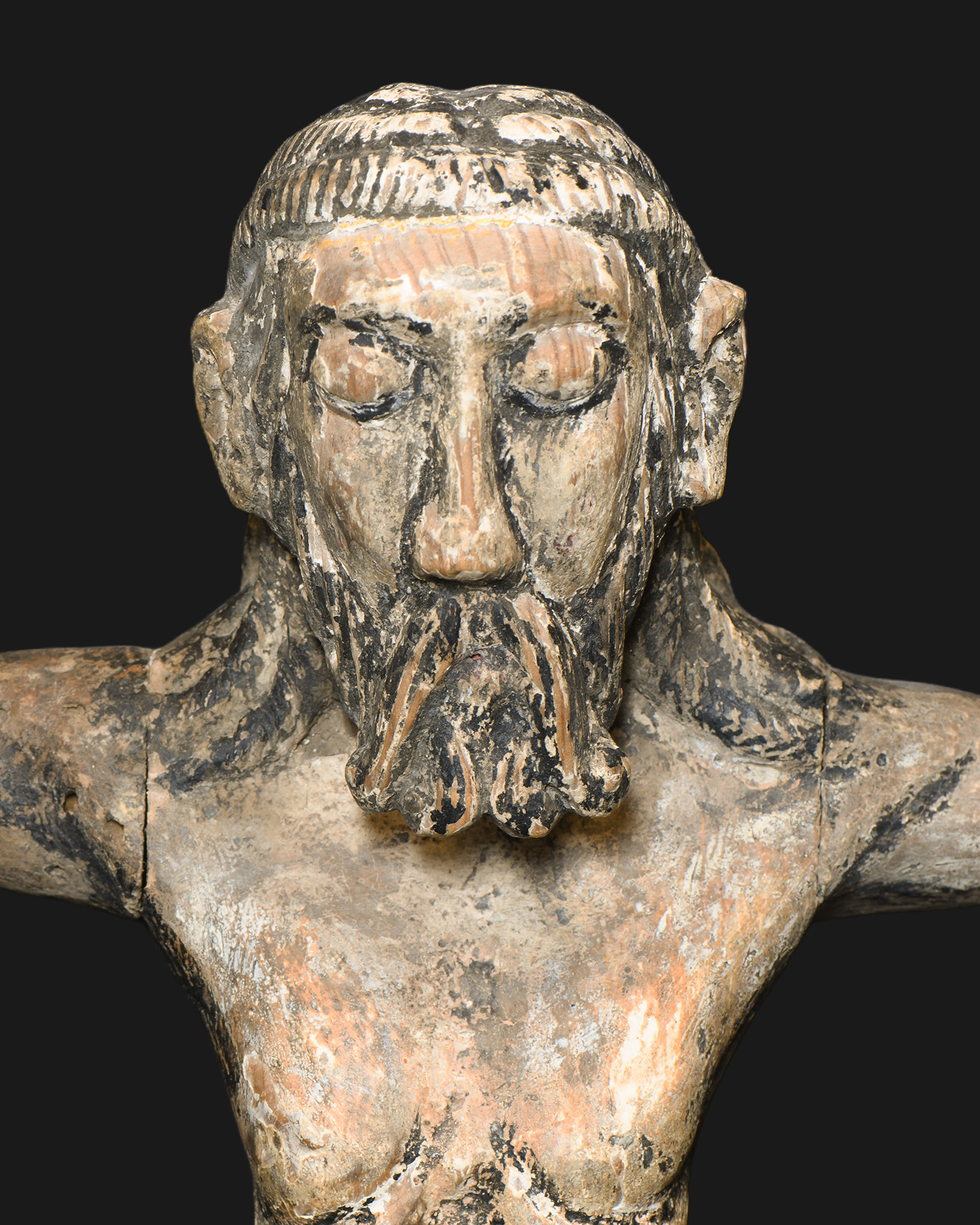
The sculpture impresses with the pronounced rigidity of the body, typical of early Roman depictions. The calm yet poignant expression of Christ’s face is emphasized by huge, forward-facing eyes set in deep eye sockets.
His gaze, however, is slightly lowered, emphasized by a prominent nose and large, spreading ears that frame his face. His hair falls symmetrically on his shoulders; a peculiar hairstyle draws attention – the hair, separated by a parting on top of the head, is arranged in rollers covered with densely diagonal cuts. Very similarly arranged hair, resembling braids, has the famous statue of Christ of Mig Aran, located in the church of Sant Miquèu de Vielha (Val d’Aran valley). The beard and mustache end in artificial, volute curls.
Related products
Deity or bodhisattva, marble, India, 19th century.
Head of an angel (?), sandstone, France, ca. 1300
Head of an Angel (Putta), gilded linden wood, Poland, 1st half of the 18th century.
Hercules, bronze, marble, northern Italy (?), 16th century (?).
Rama, marble, India, 19th century.
A sculpture depicting Rama, one of the most important deities of Hinduism, considered the seventh avatar of Vishnu. The object was hand-carved in white marble in India, probably in the 19th century.
The figure is depicted standing, facing forward. The face has a gentle expression with a soft smile and slightly closed eyes. The head is crowned with a decorative crown, and long necklaces are visible on the chest.
The figure is dressed in a draped robe with clearly marked folds. On its back is a quiver with arrows, characteristic of Rama's depictions.
The hands of the sculpture are not preserved, originally in one of them the figure held a bow - a characteristic element of representations of this deity. Further about these cavities do not write that they are consistent.
Rama is the hero of the epic Ramayana and in the Hindu tradition symbolizes righteousness and fidelity to the principle of dharma. His images occupy an important place in Indian sacred art, although full-figure marble sculptures of this scale are less common.
The object is preserved in good condition, with clear legibility of form and detail.
Samuel Lipszyc (1880 – 1943), Naked ballerina, patinated bronze, ca. 1920
Singa Barong, polychrome wood, Indonesia, 19th century.