

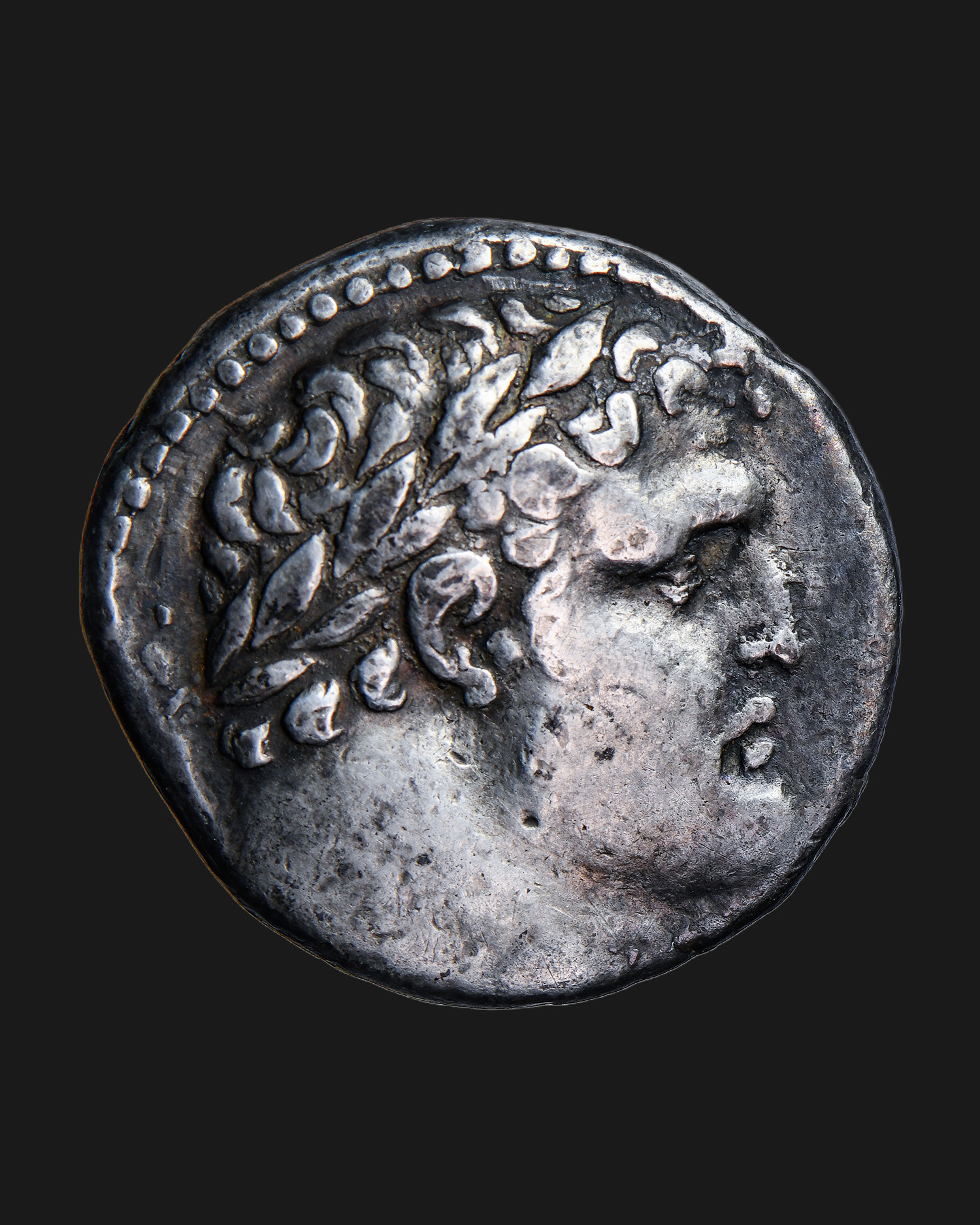
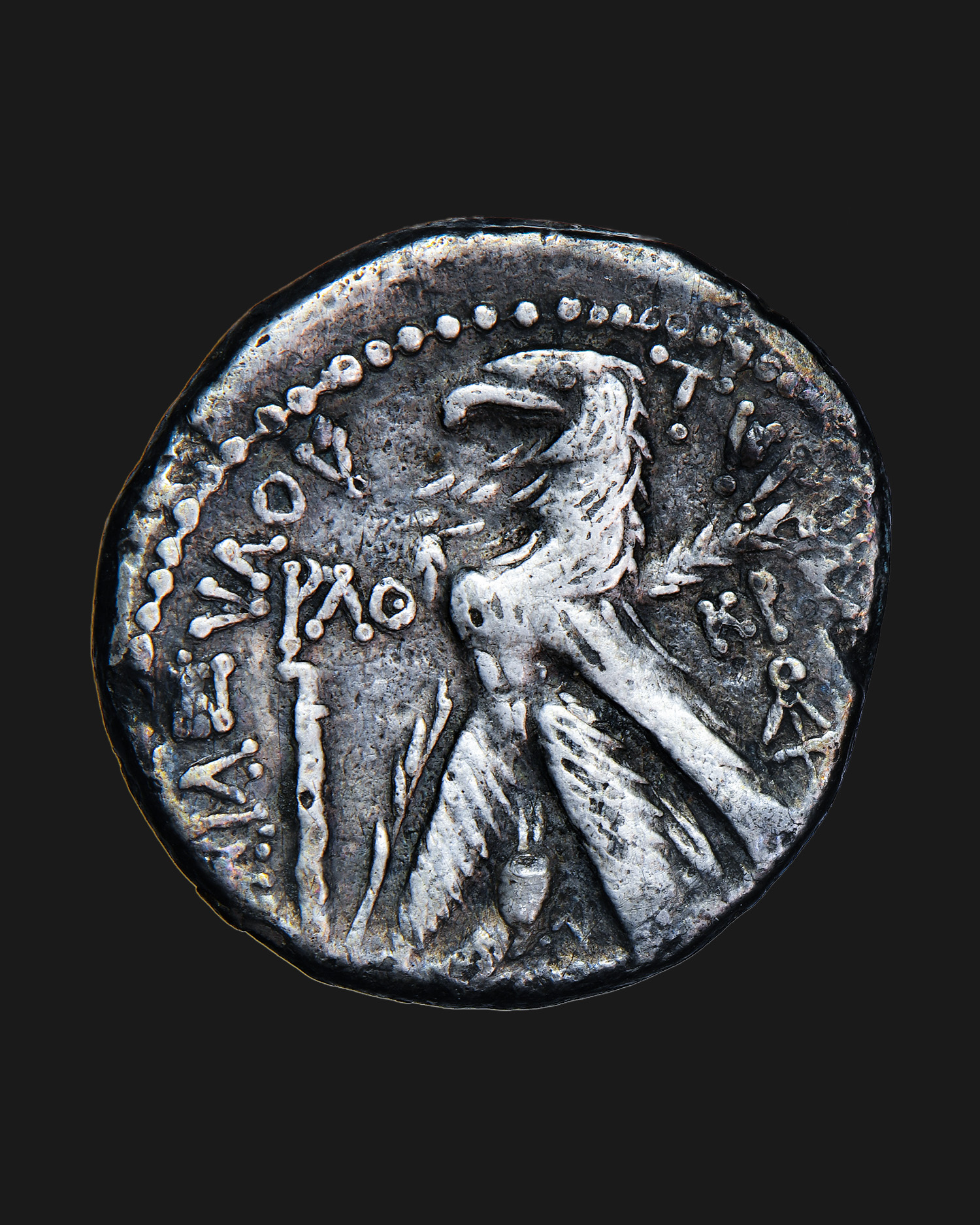
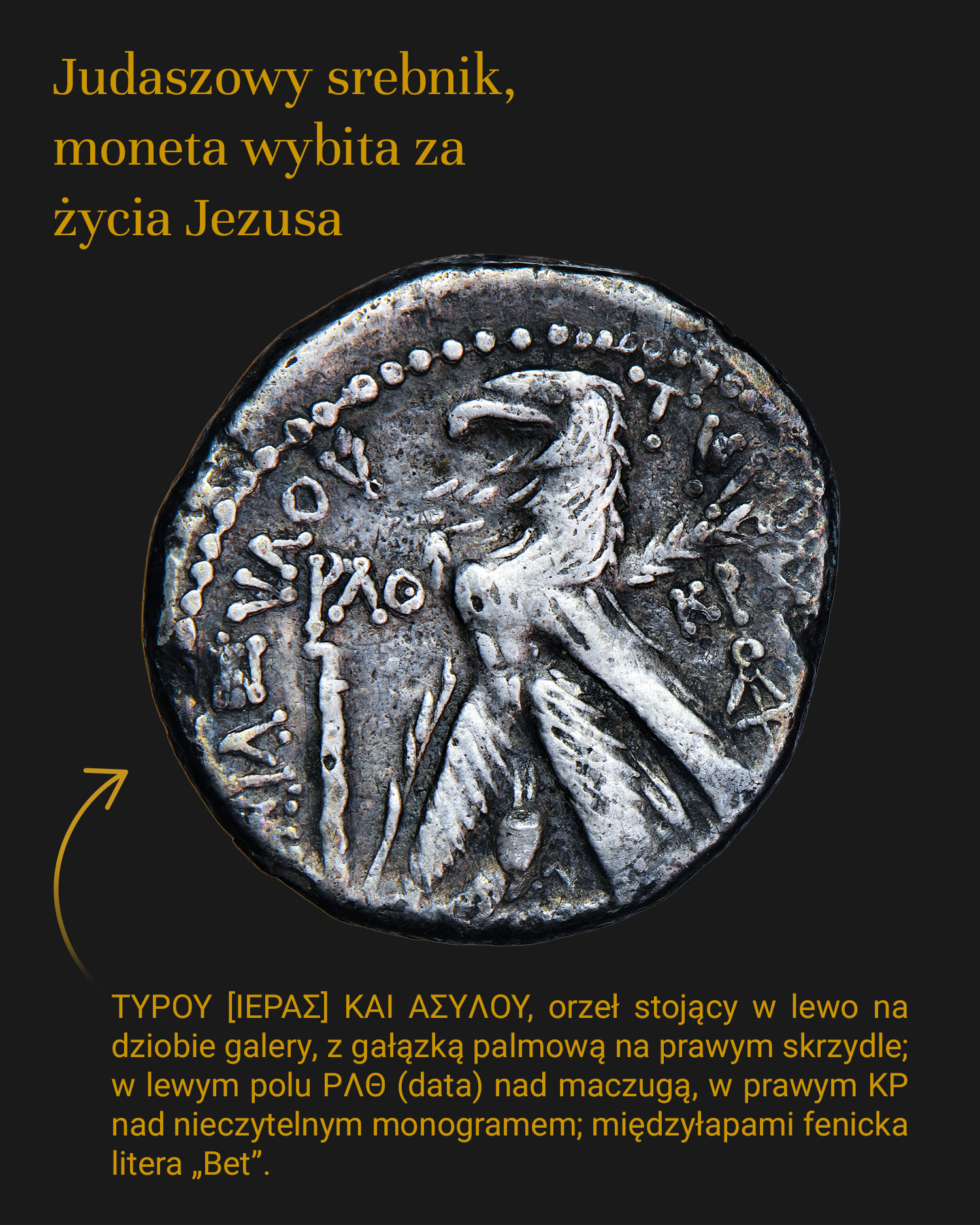
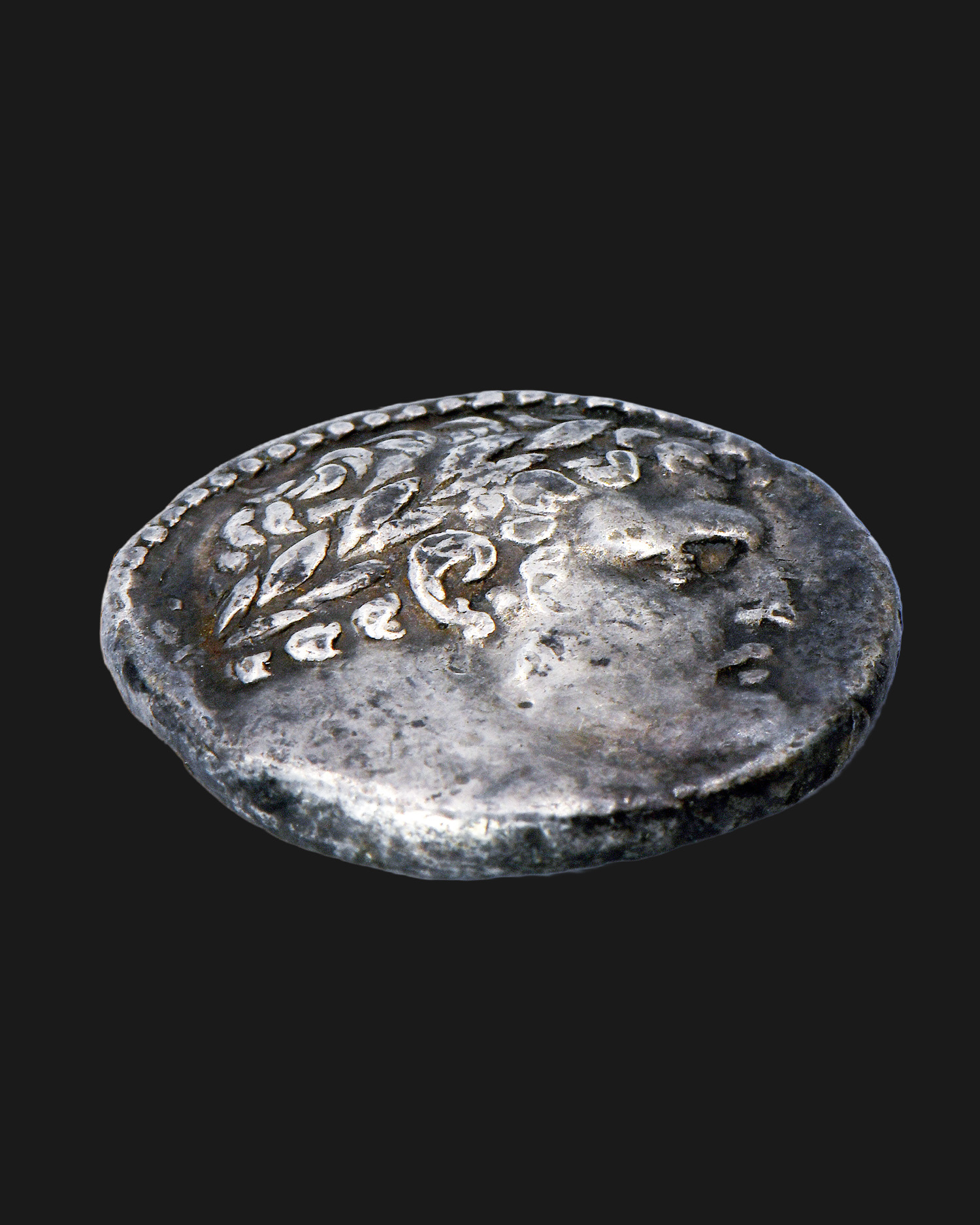
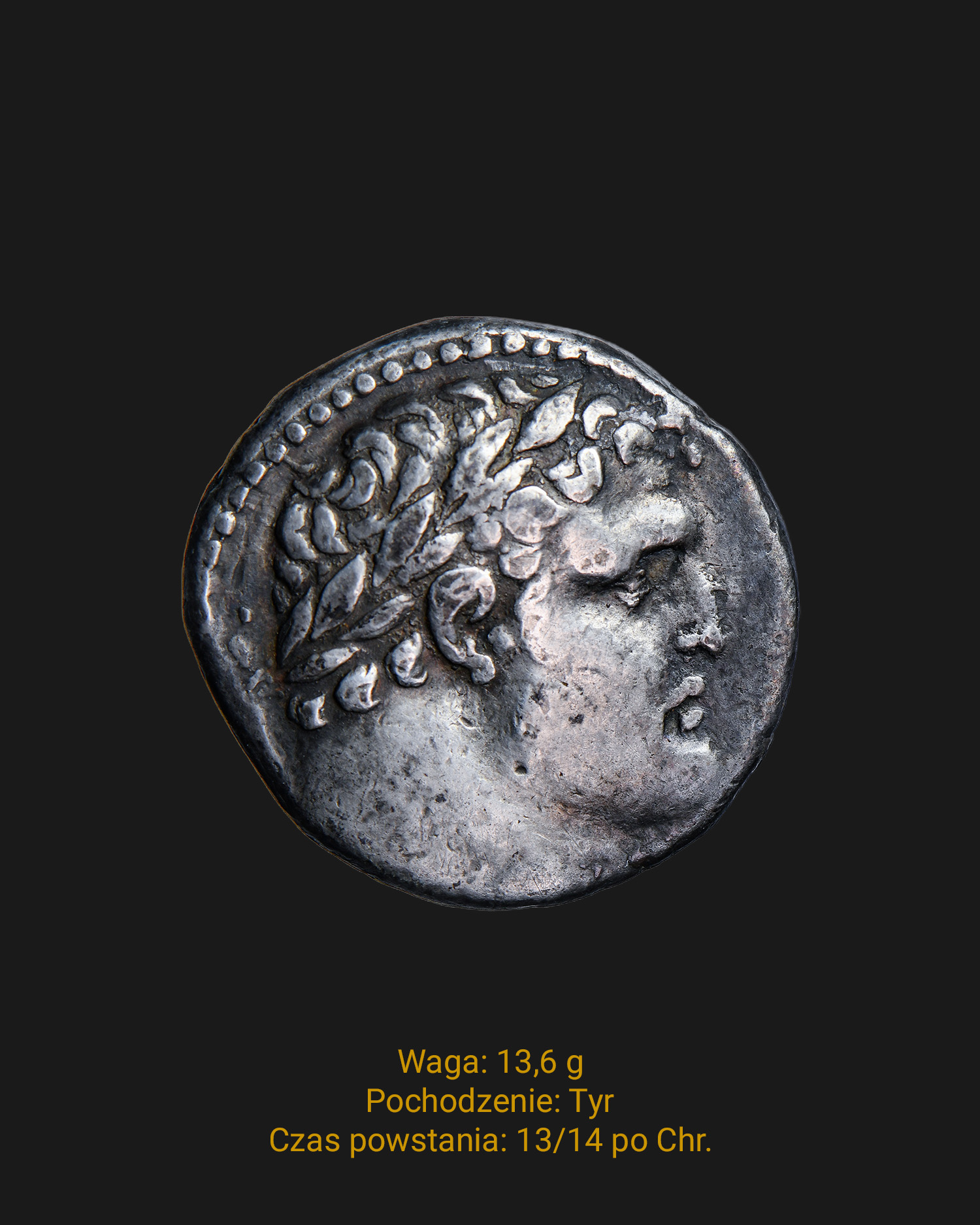

Shekel (Judas silver), Tyre, 139 local era = 13/14 after Chr.
5200,00 zł
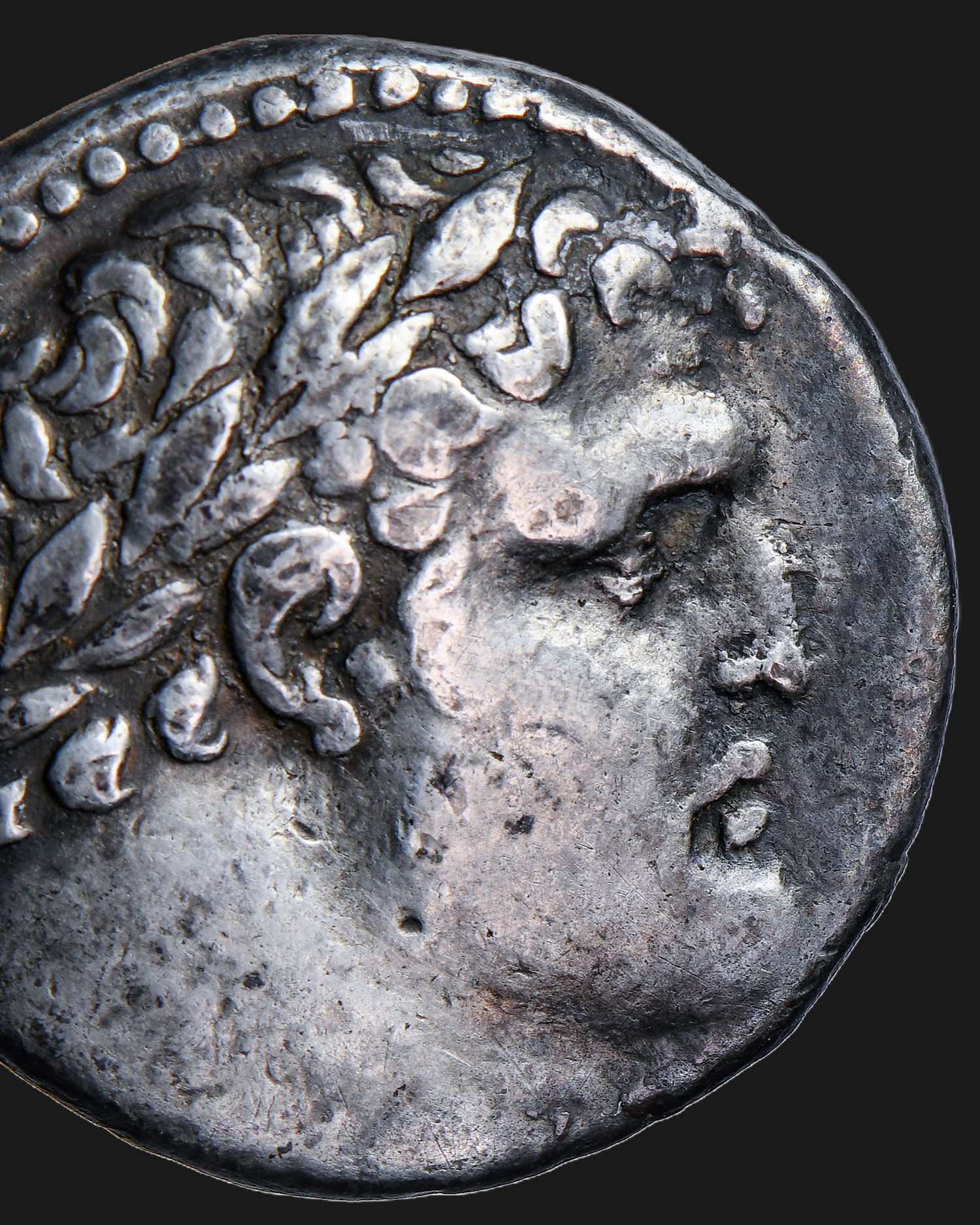
Av. Melkart’s head in laurel wreath to the right.
Rv. TYPOY [IEPAΣ] KAI AΣYΛOY, eagle standing left on prow of galley, palm branch on right wing, in left field letters PΛΘ (date) over mace, in right KP over monogram, Phoenician letter “Bet” between eagle’s paws.
Silver, 13.6 g, 25.4 mm. Literature: DCA 920; HGC 10, 357.
Condition III+, rare and nicely preserved coin minted during Jesus’ lifetime.
Sprzedane
Related products
Balmamarium, terracotta, Ancient Rome, ca. 1st-2nd century A.D.
Balsamarium / Scatozza 49 Type Toilet Flask, glass, Roman Empire, 1st/2nd century AD.
A complete, ancient Roman unguentarium (balsamarium), this piece is a classic example of a luxurious toilet vessel with rare and highly specialized morphology. In the rigorous archaeological classification of glass from the Vesuvius region, this vessel represents the Scatozza 49 form (the Italian equivalent of the De Tommaso 14 type). In Clasina Isings' classic, pan-European classification, this object is positioned as an early transitional variant of the Isings 82 form (displaying evolutionary characteristics between Isings 28 and 65 types), making it exceptionally interesting from the perspective of Roman glass craftsmanship development. The artifact dates from the early Imperial period and exhibits workshop characteristics typical of manufactories operating in Italy and the western provinces of the empire during the second half of the 1st and early 2nd century AD (Flavian period).
Height: 14.2 cm Rim diameter: 4.8 cm Maximum body diameter: 7.8 cm Weight: 54.0 g (wall thickness approx. 1 mm)
Gallo-Roman male portrait head, marble, Roman Empire, Province of Gaul (area of modern France), 1st-3rd century after Chr.
Gallo-Roman sculpture of the head of Eros (?), marble, 1st-3rd century A.D.
Glass vessel (ollula) of Isings 68 type, glass, Roman Empire, 1st-3rd century AD.
This bulbous glass flacon, dating from the Imperial period, 1st-3rd century AD, was crafted using the free-blowing technique from soda-lime glass. Its exceptionally low weight relative to its size indicates very thin walls (measuring approximately 1 millimeter), demonstrating the ancient artisan's supreme skill. Morphologically, the flacon represents a classic Roman form known as ollula (miniature jar), classified in scientific literature as type Isings 68. It features excellent proportions and a bulbous, almost perfectly spherical body with a slightly concave base. The body tapers sharply upwards, transitioning into a short, cylindrical neck, which is crowned by a wide, dish-shaped rim. The broad collar was precisely everted and folded under while hot, and its significant width facilitated the insertion of ancient medical or cosmetic spatulas.
Height: 9.6 cm Maximum body diameter: 9.1 cm Rim diameter (edge): 7.5 cm Weight: 68 g Estimated capacity: 200–250 ml