


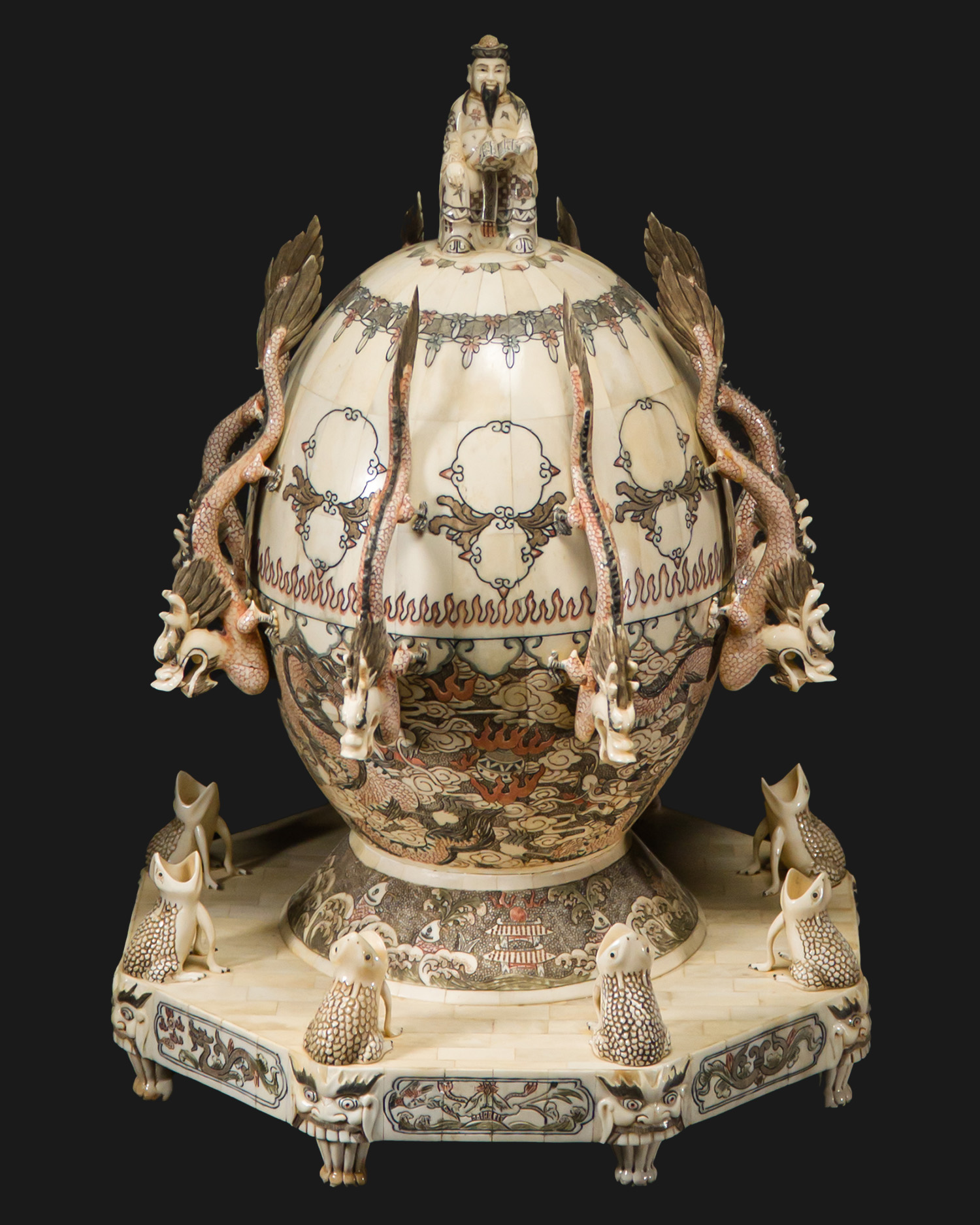
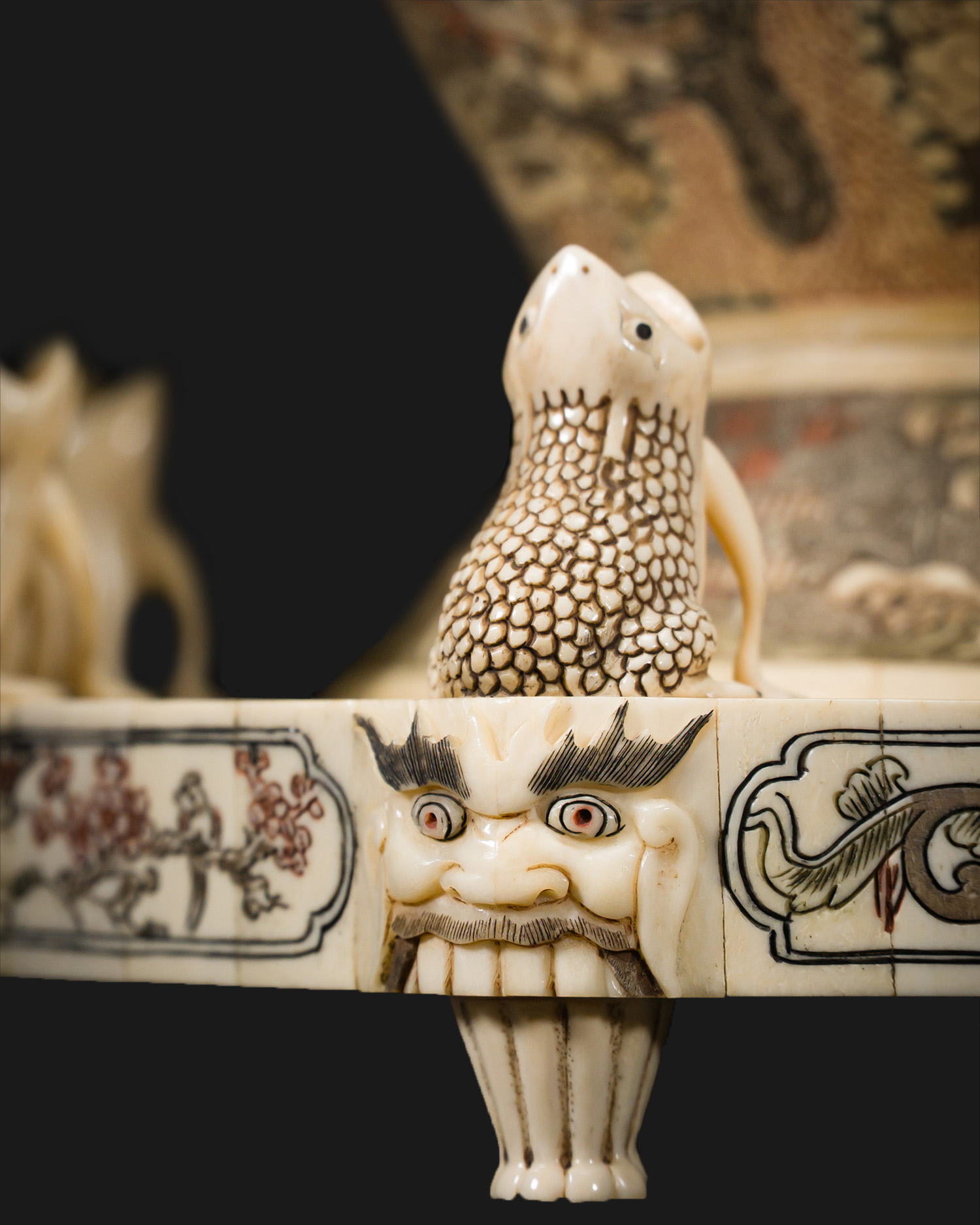
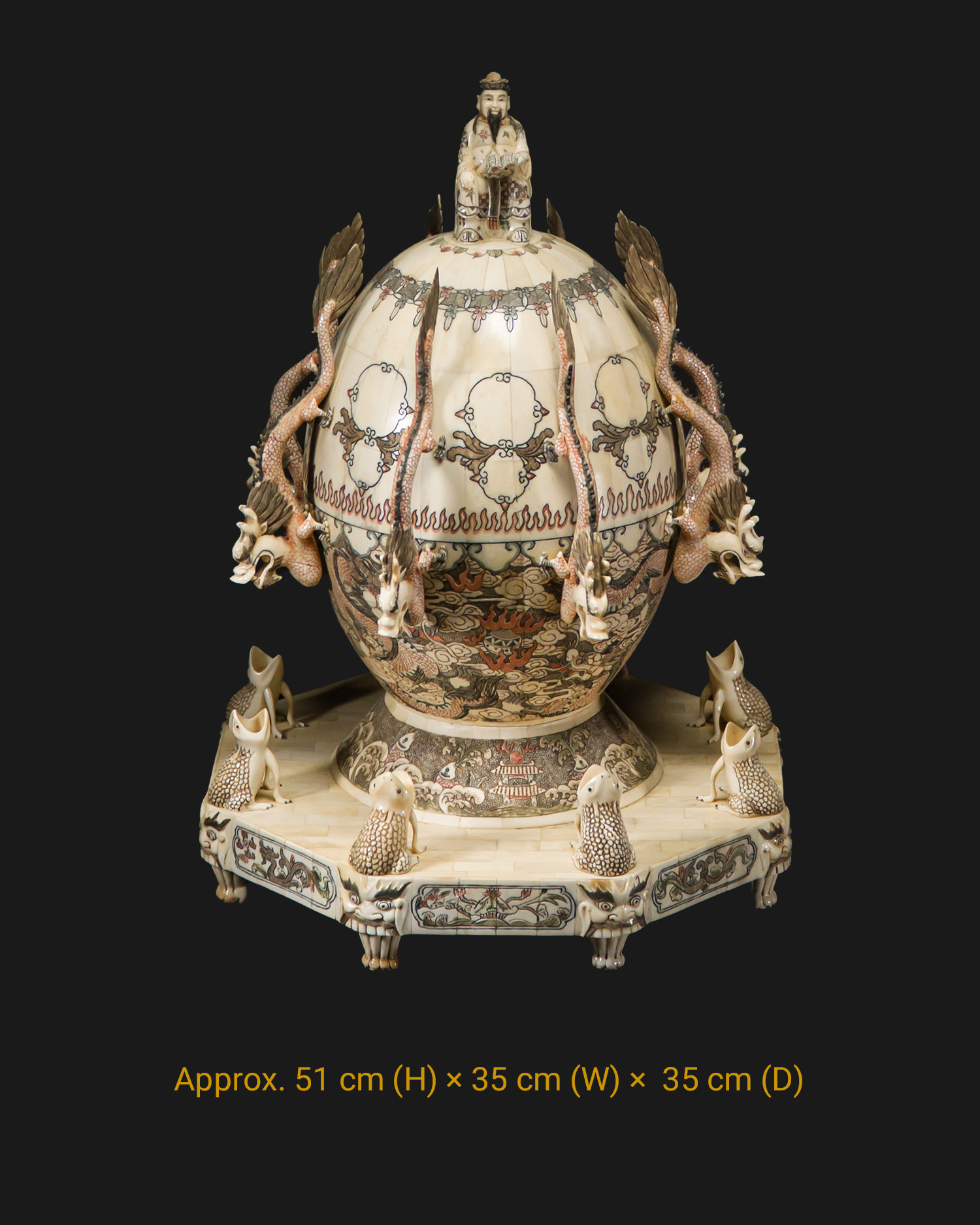

Zhang Heng seismograph model, stained bone, China, circa late 19th/early 20th century.
6800,00 zł
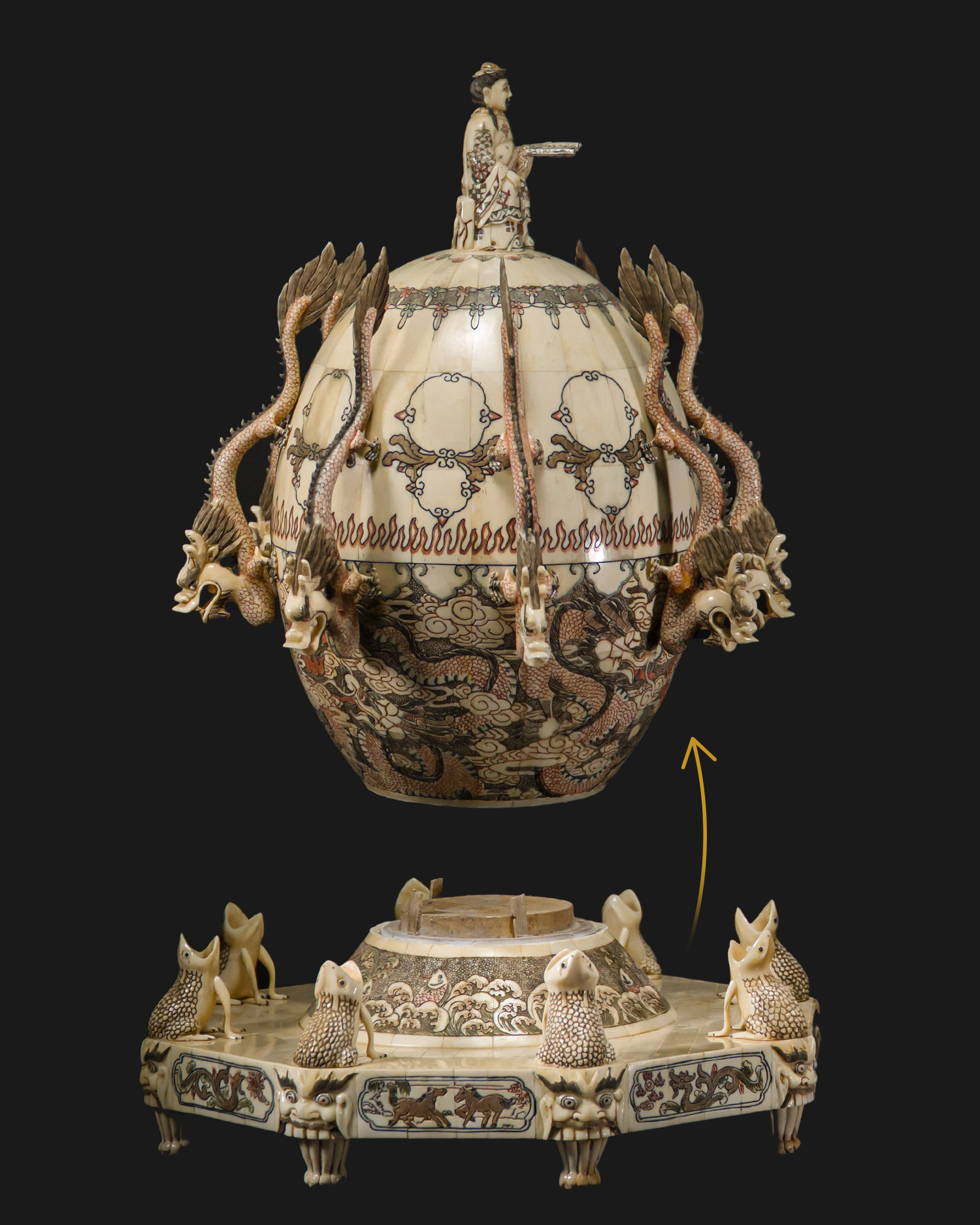
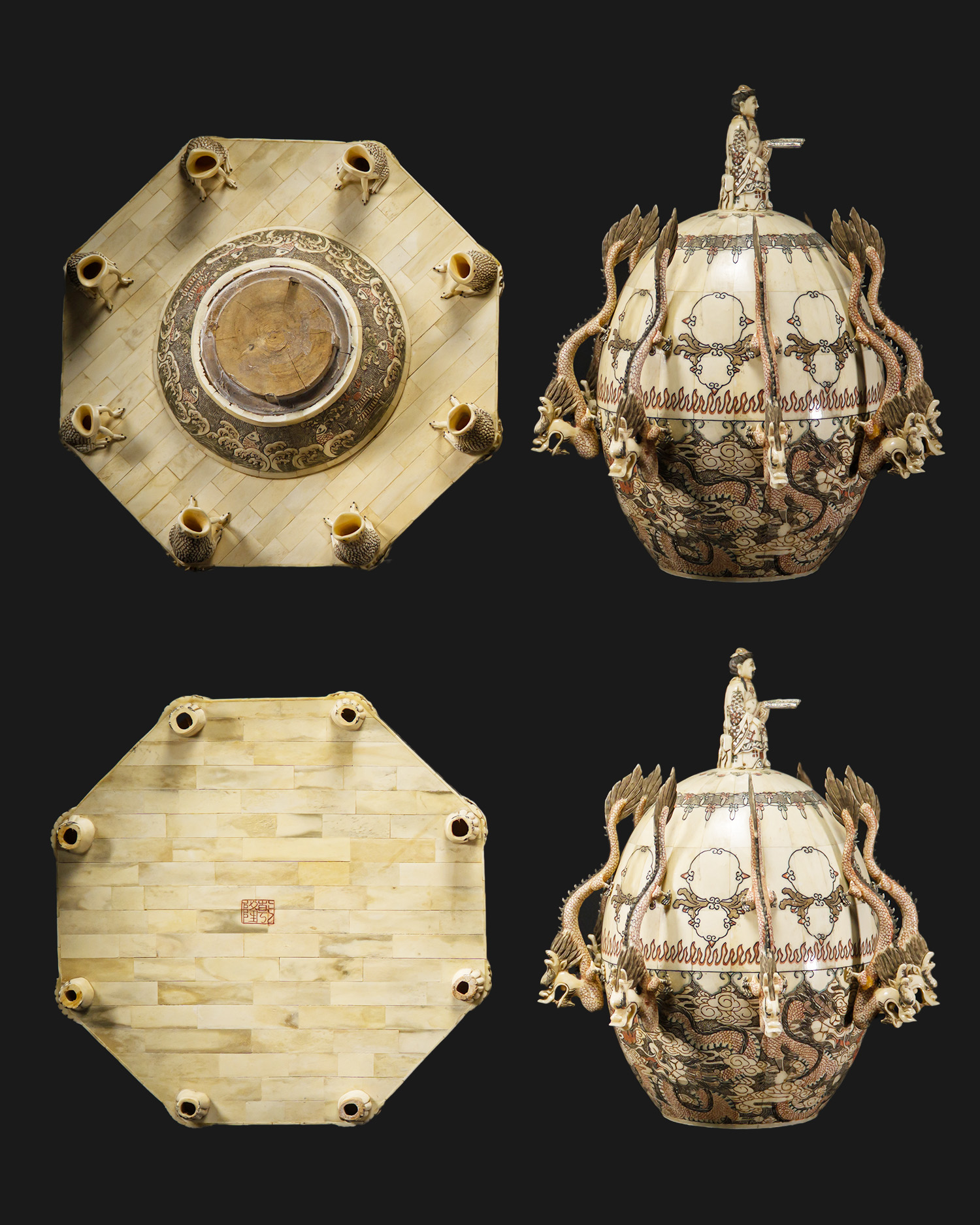
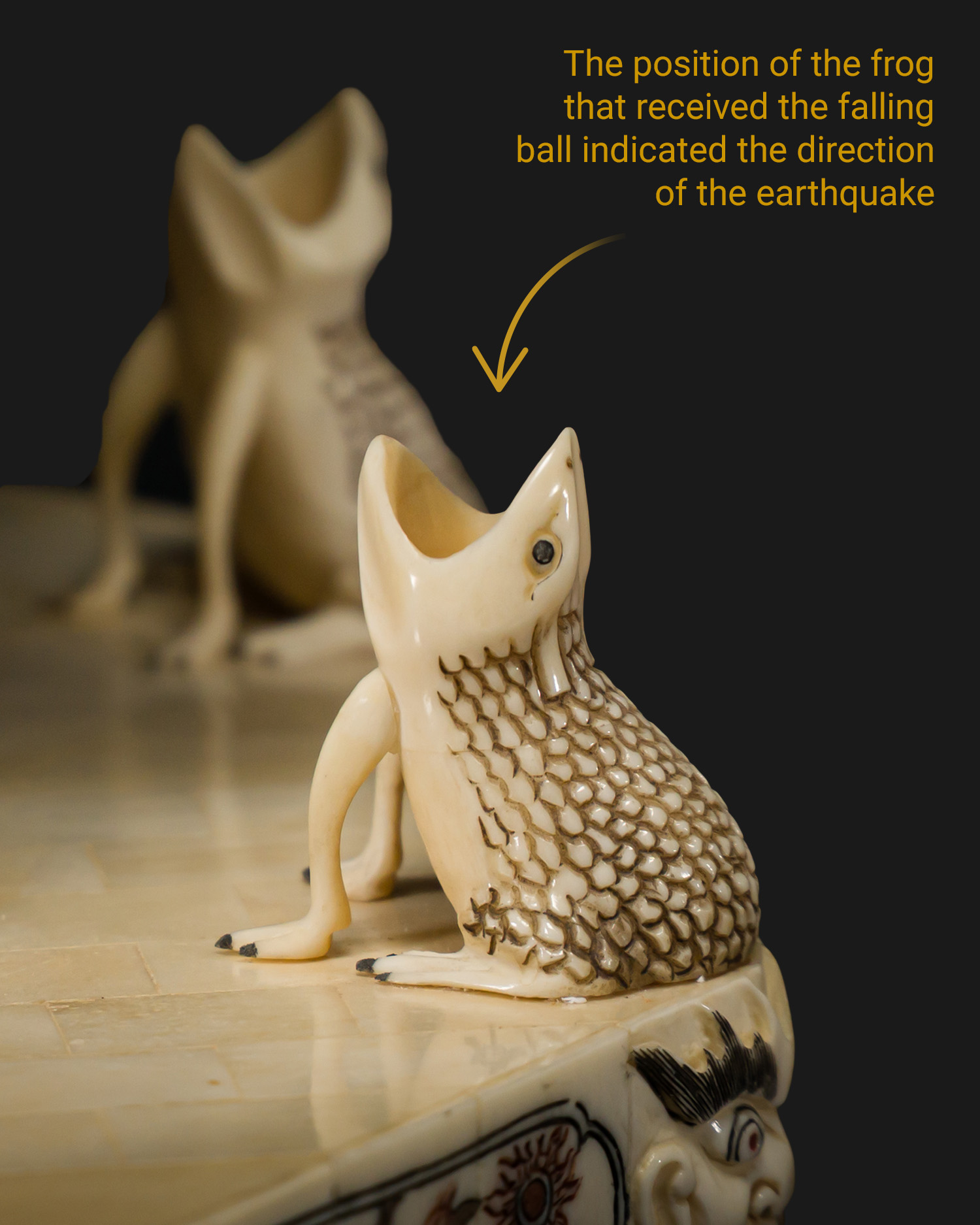
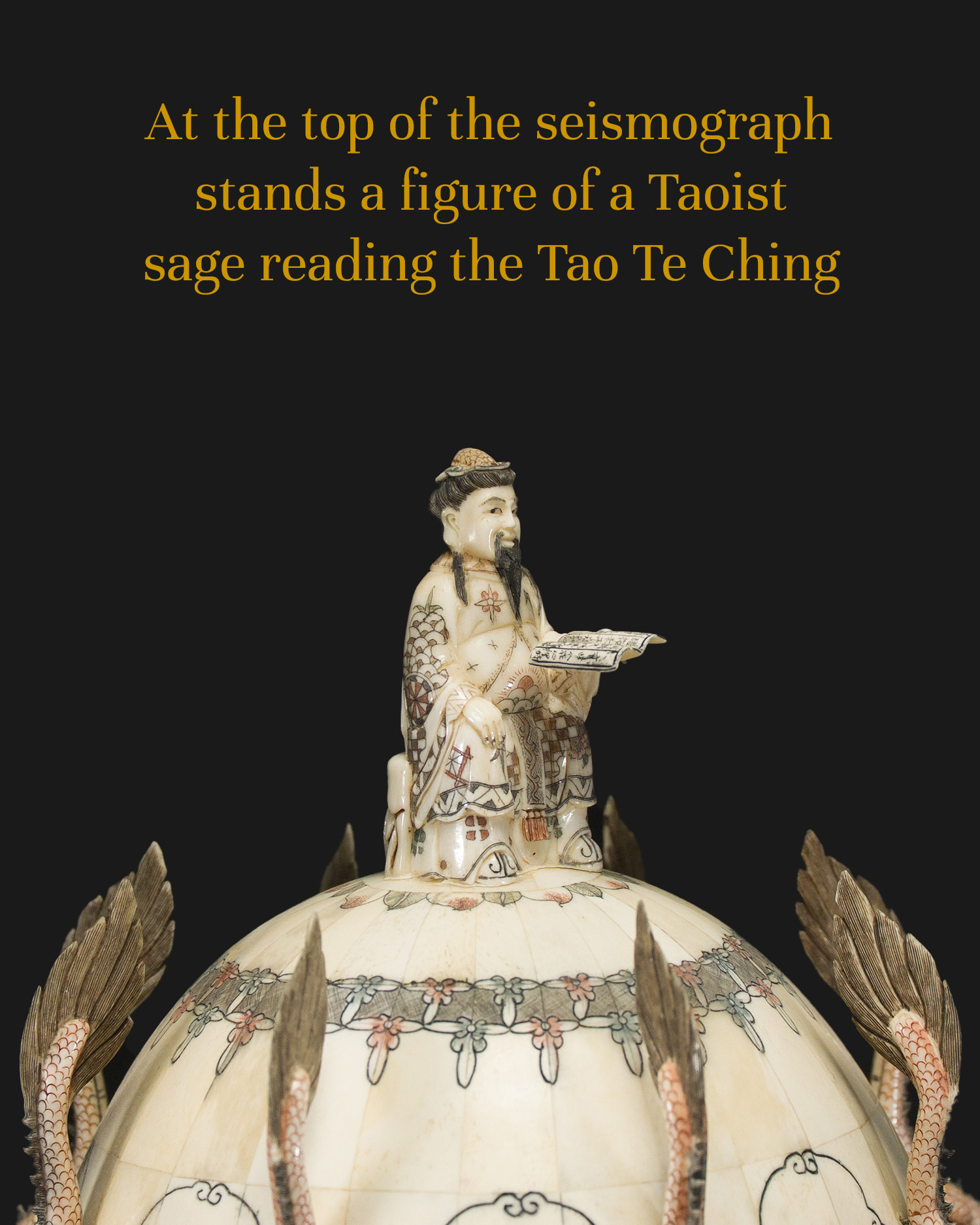
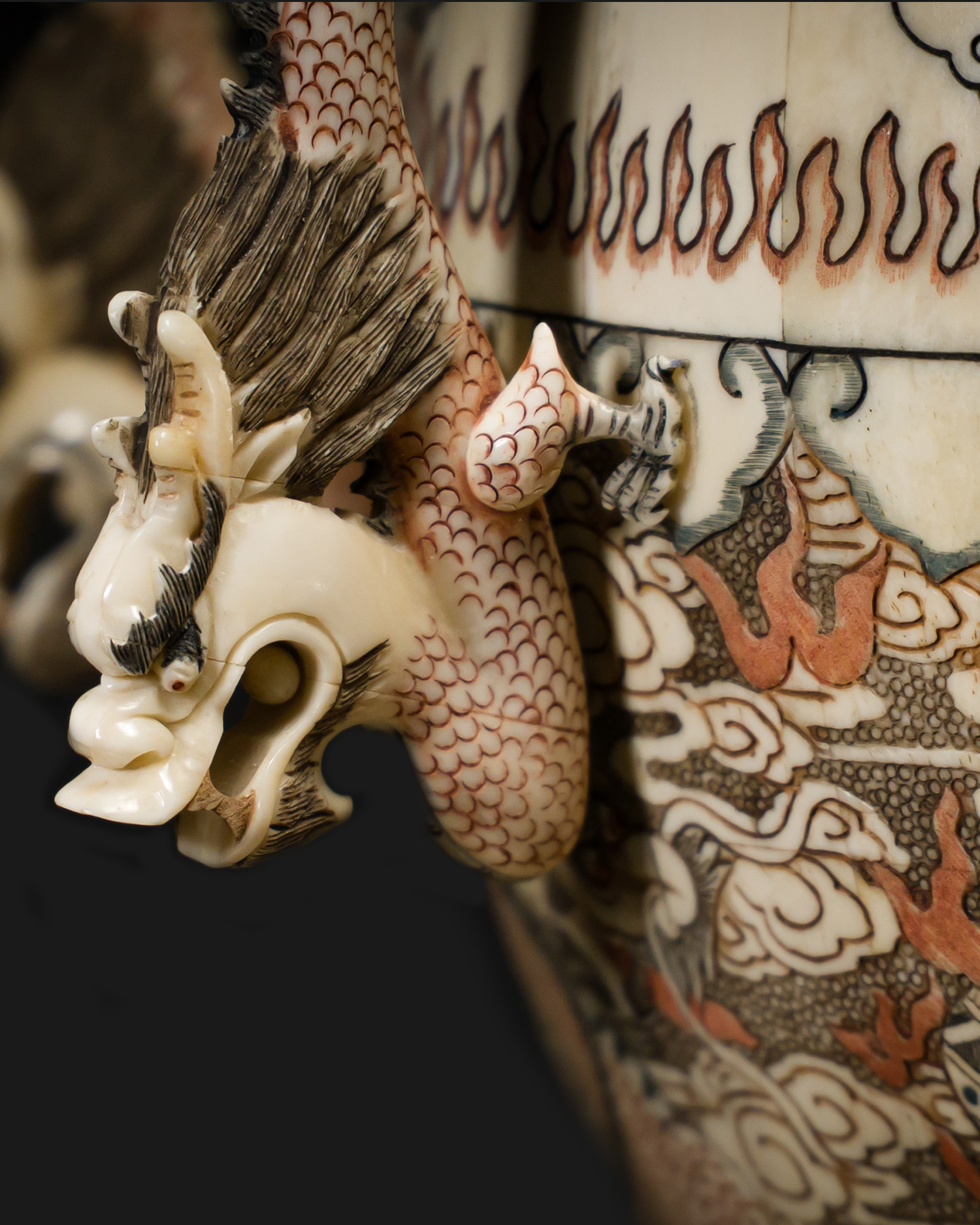
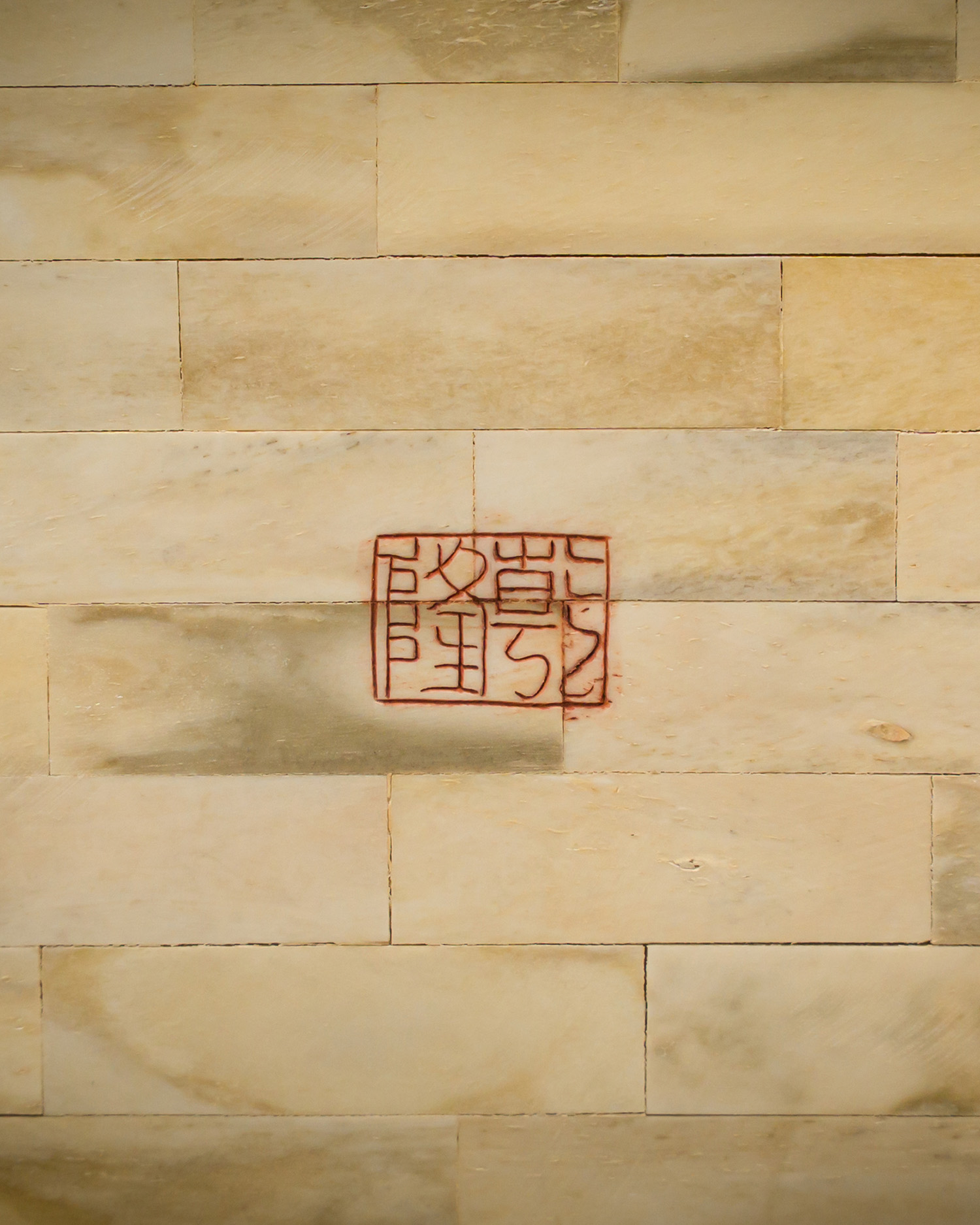
Seismograph model made of natural animal bone (imitating ivory), engraved and stained. The surfaces are covered with rich ornamentation, consisting of floral and animal motifs (dragons, horses, fish) and a thread of flames. The egg-shaped body features eight figures of intricately carved dragons, to which eight toads correspond, sitting with open mouths on an octagonal base. The seismograph is topped by a figure of Tao reading the Tao Te Ching. The work is signed on the underside.
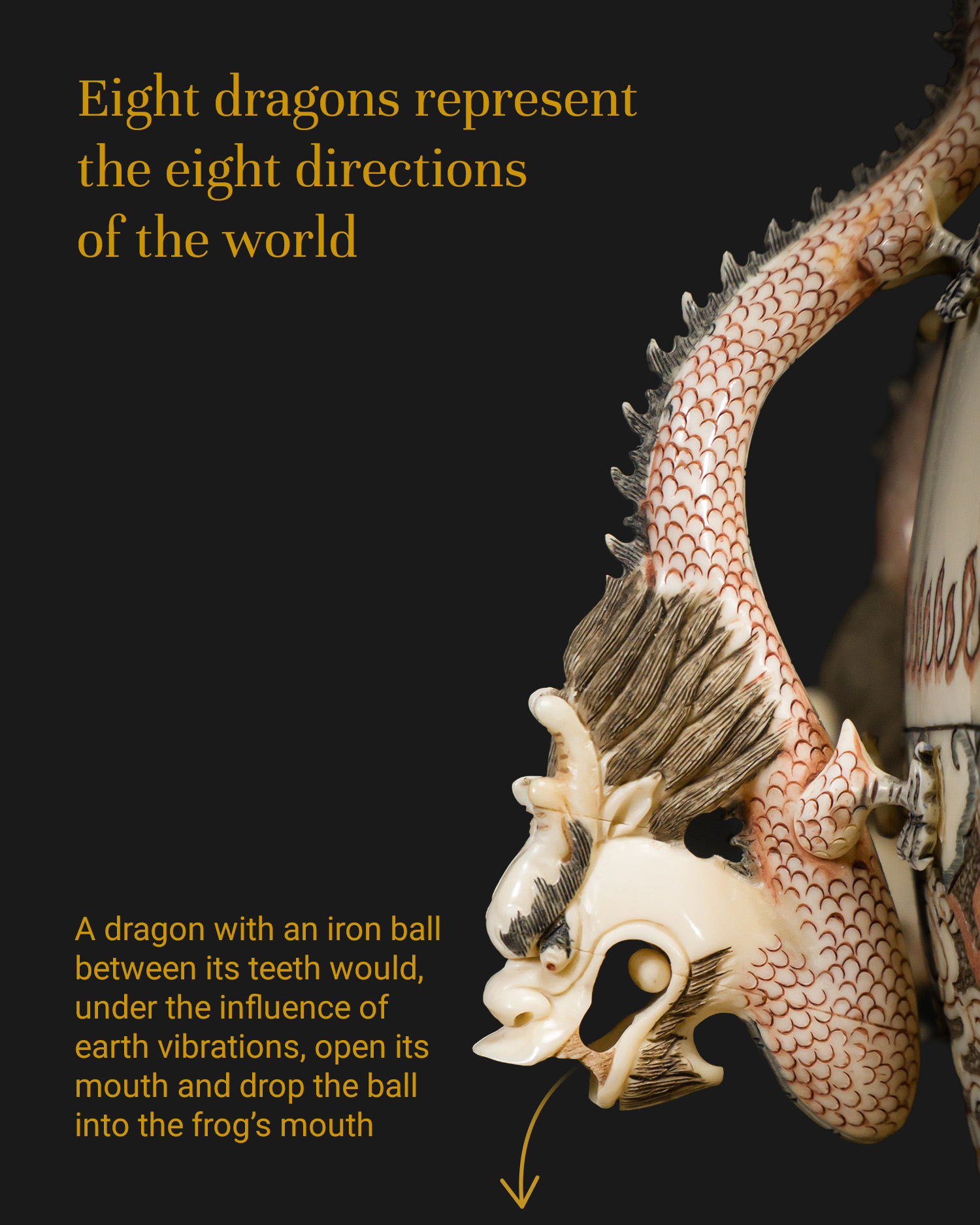
The prototype of the model is the world’s first seismometer, constructed in 132 by Chinese scientist Zhang Heng. The device indicated the direction from which an earthquake came, even if the phenomenon took place hundreds of kilometers from Luoyang – the capital of China at the time. The device was about 2.5 meters high and made of bronze. In the mouth of each of the eight dragons was a small iron ball, balancing between the teeth. Inside the body of the device was a metal pendulum, set in motion by the vibrations of the earth. A lever system activated by the pendulum opened the dragon’s mouth, and the falling ball fell into the frog’s mouth. The position of the frog, into which the ball fell, indicated the direction of the earthquake.
| Dimensions | 51 × 35 × 35 cm |
|---|---|
| Type |
Decorative sculpture |
| Form |
Seismograph model with eight dragons and corresponding toads |
| Czas powstania |
late 19th/early 20th century |
| Materiał |
Natural stained and engraved bone |
| Kolorystyka |
Black ,Ivory shades ,Red |
| Kraj pochodzenia |
China |
| Style |
Oriental style inspired by Han dynasty iconography |
| Era |
Modernity |
| Autor |
Unknown |
| State of preservation |
Minor traces of repairs (gluing), otherwise excellent condition, no losses |
Related products
Capital with Figural Decoration, Sandstone, France, 12th-14th Century
Gallo-Roman sculpture of the head of Eros (?), marble, 1st-3rd century A.D.
Madonna and Child, polychrome wood, gilded, Central Europe, 18th/19th century.
Rama, marble, India, 19th century.
A sculpture depicting Rama, one of the most important deities of Hinduism, considered the seventh avatar of Vishnu. The object was hand-carved in white marble in India, probably in the 19th century.
The figure is depicted standing, facing forward. The face has a gentle expression with a soft smile and slightly closed eyes. The head is crowned with a decorative crown, and long necklaces are visible on the chest.
The figure is dressed in a draped robe with clearly marked folds. On its back is a quiver with arrows, characteristic of Rama's depictions.
The hands of the sculpture are not preserved, originally in one of them the figure held a bow - a characteristic element of representations of this deity. Further about these cavities do not write that they are consistent.
Rama is the hero of the epic Ramayana and in the Hindu tradition symbolizes righteousness and fidelity to the principle of dharma. His images occupy an important place in Indian sacred art, although full-figure marble sculptures of this scale are less common.
The object is preserved in good condition, with clear legibility of form and detail.
Sculpture of a god’s head (Zeus or Hercules), marble, Mediterranean basin, Hellenistic period
Singa Barong, polychrome wood, Indonesia, 19th century.