

Sold out
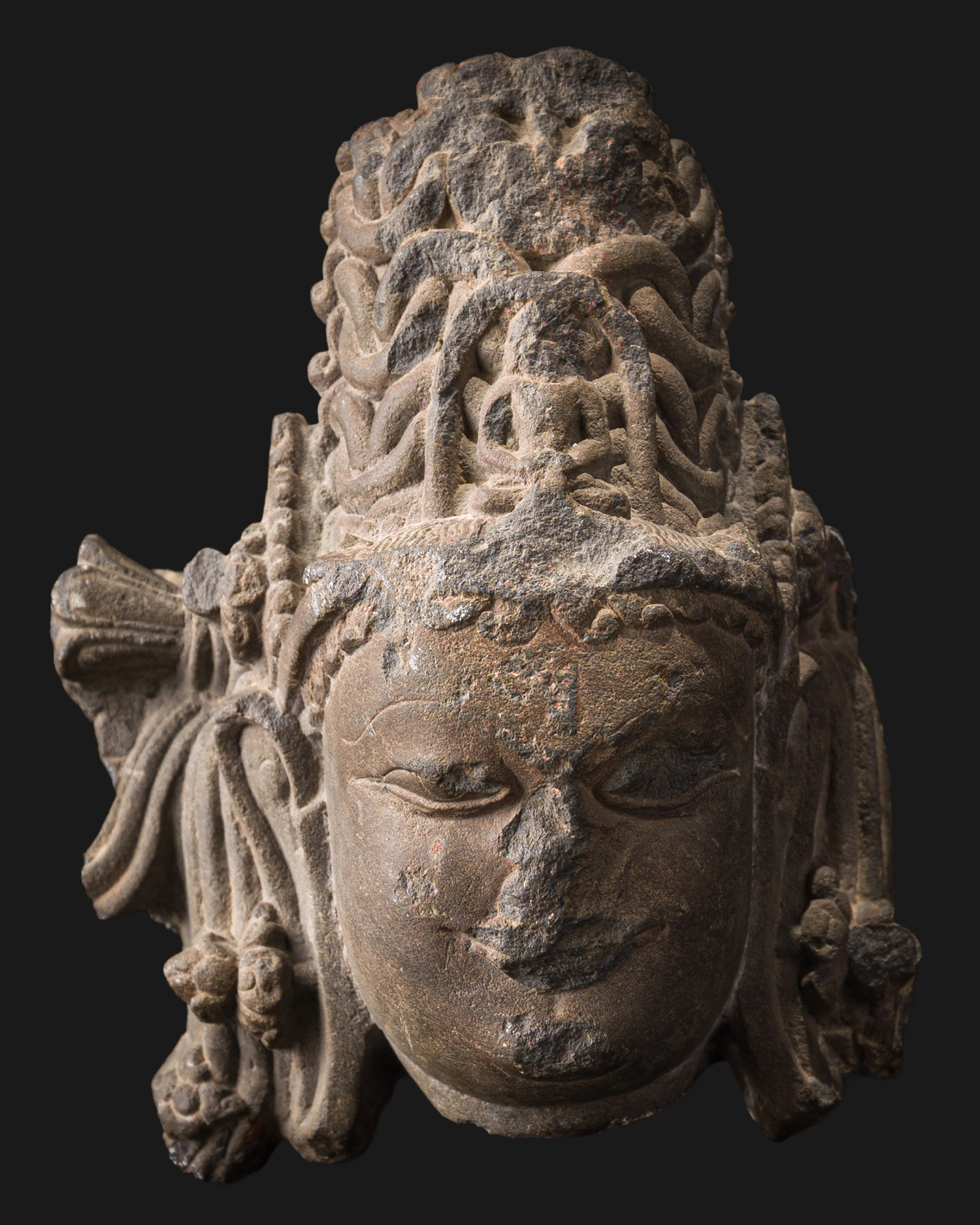
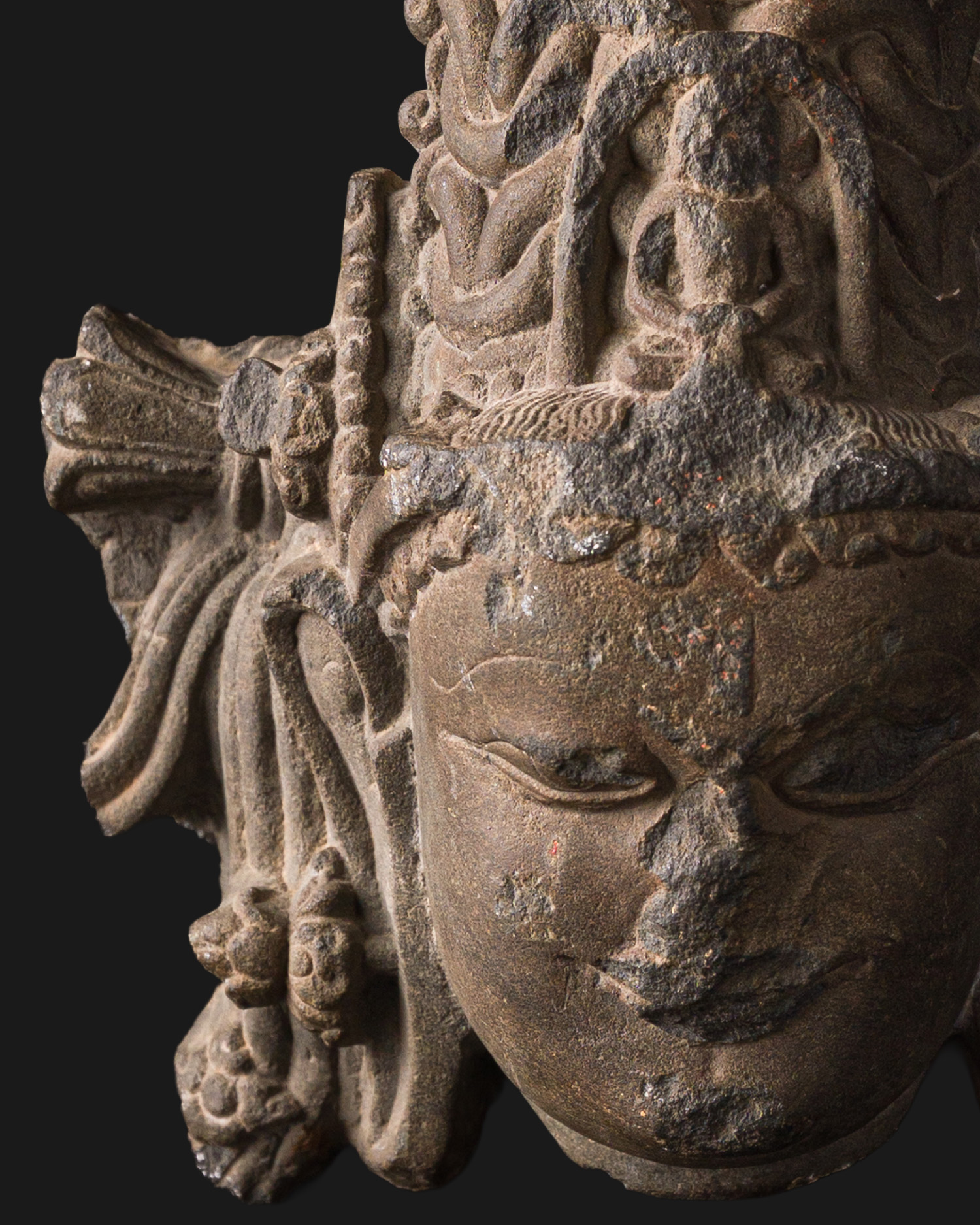
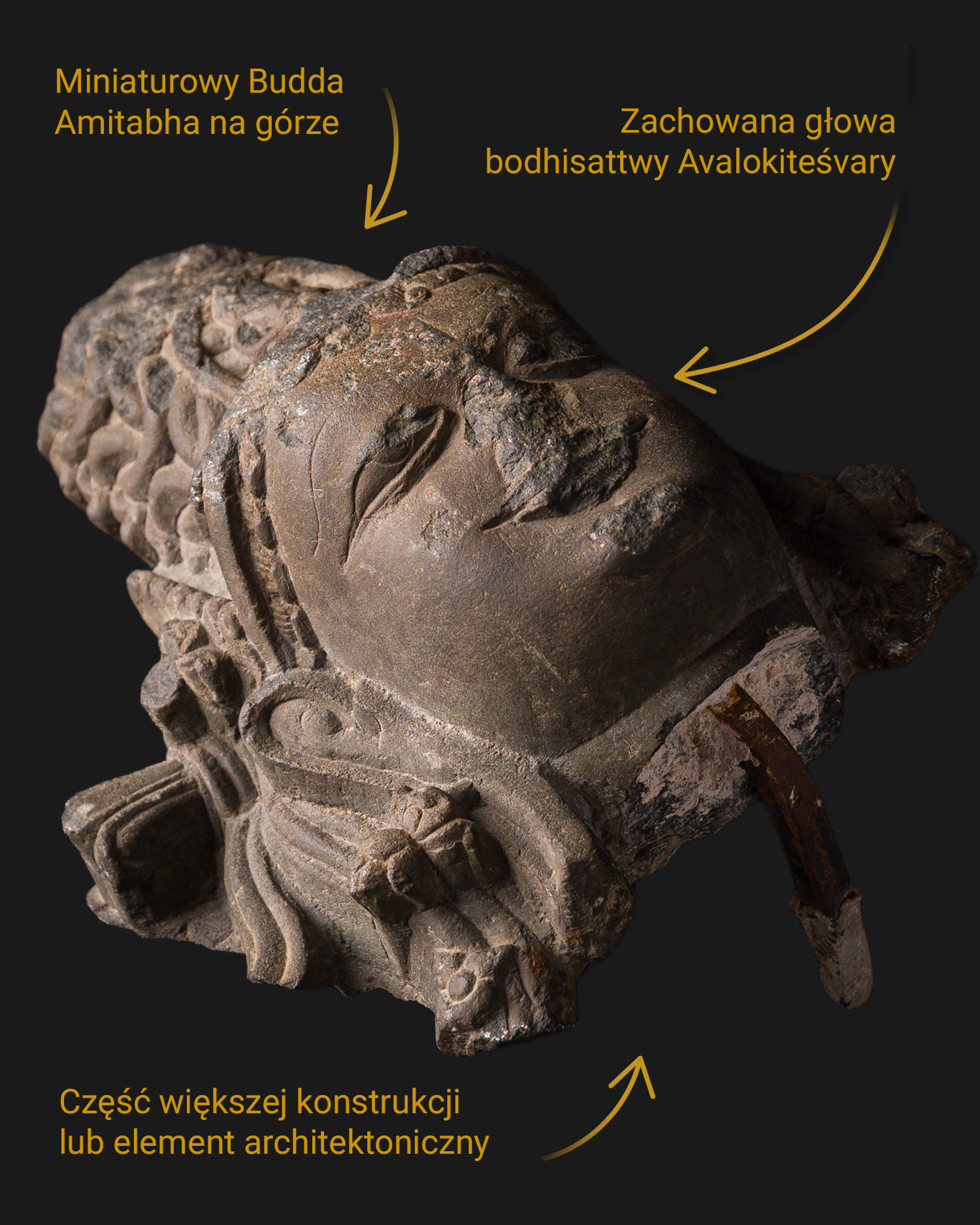

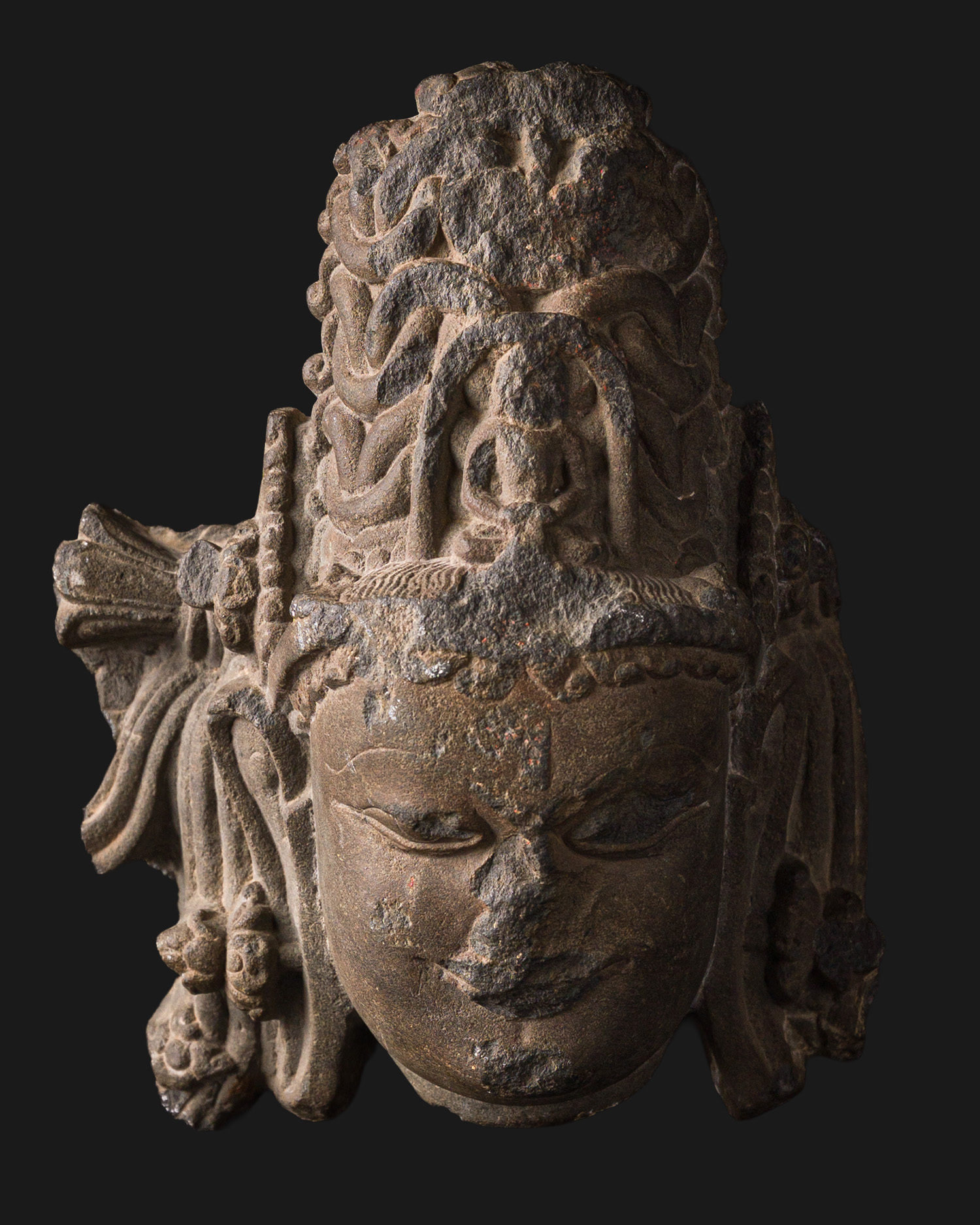
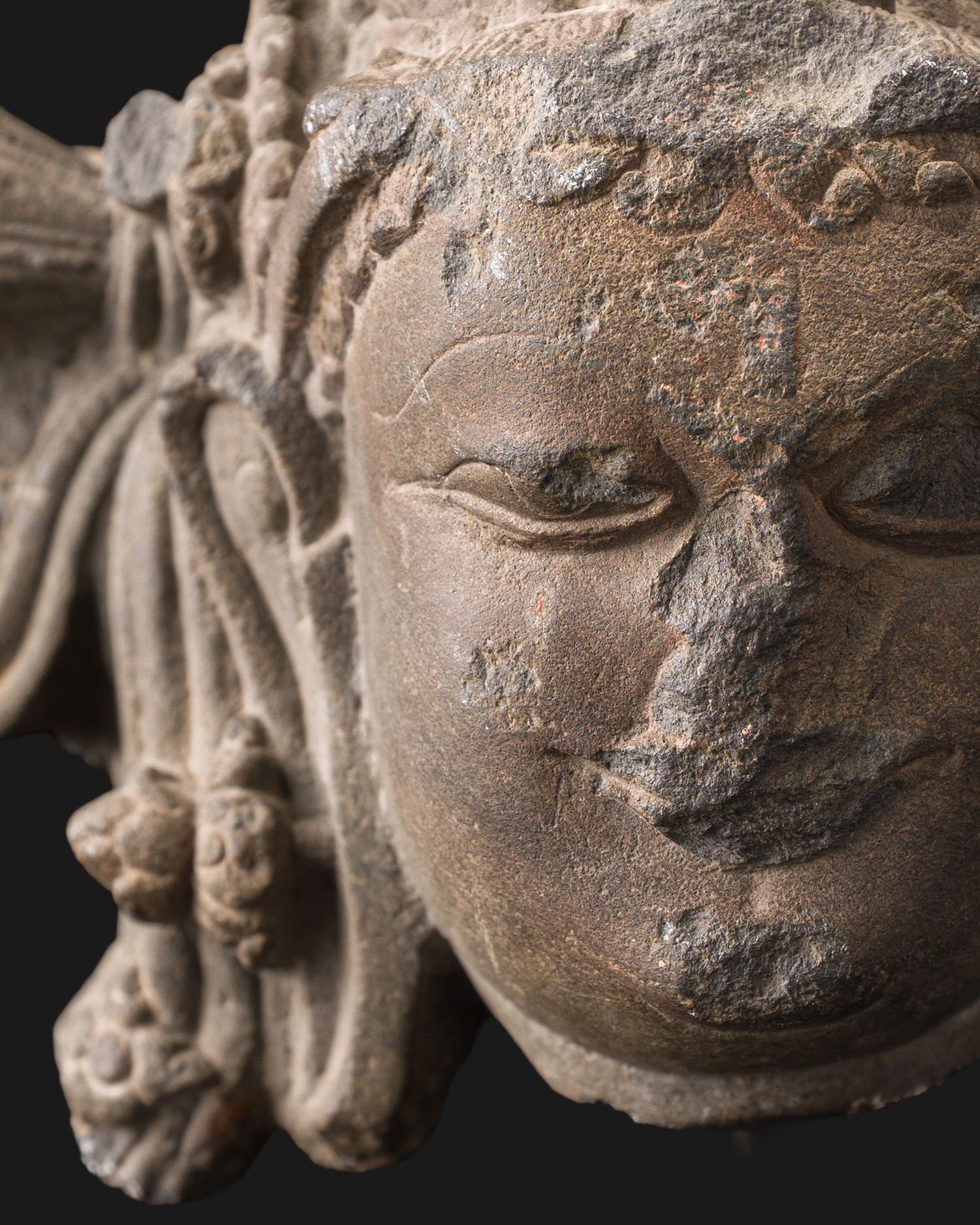
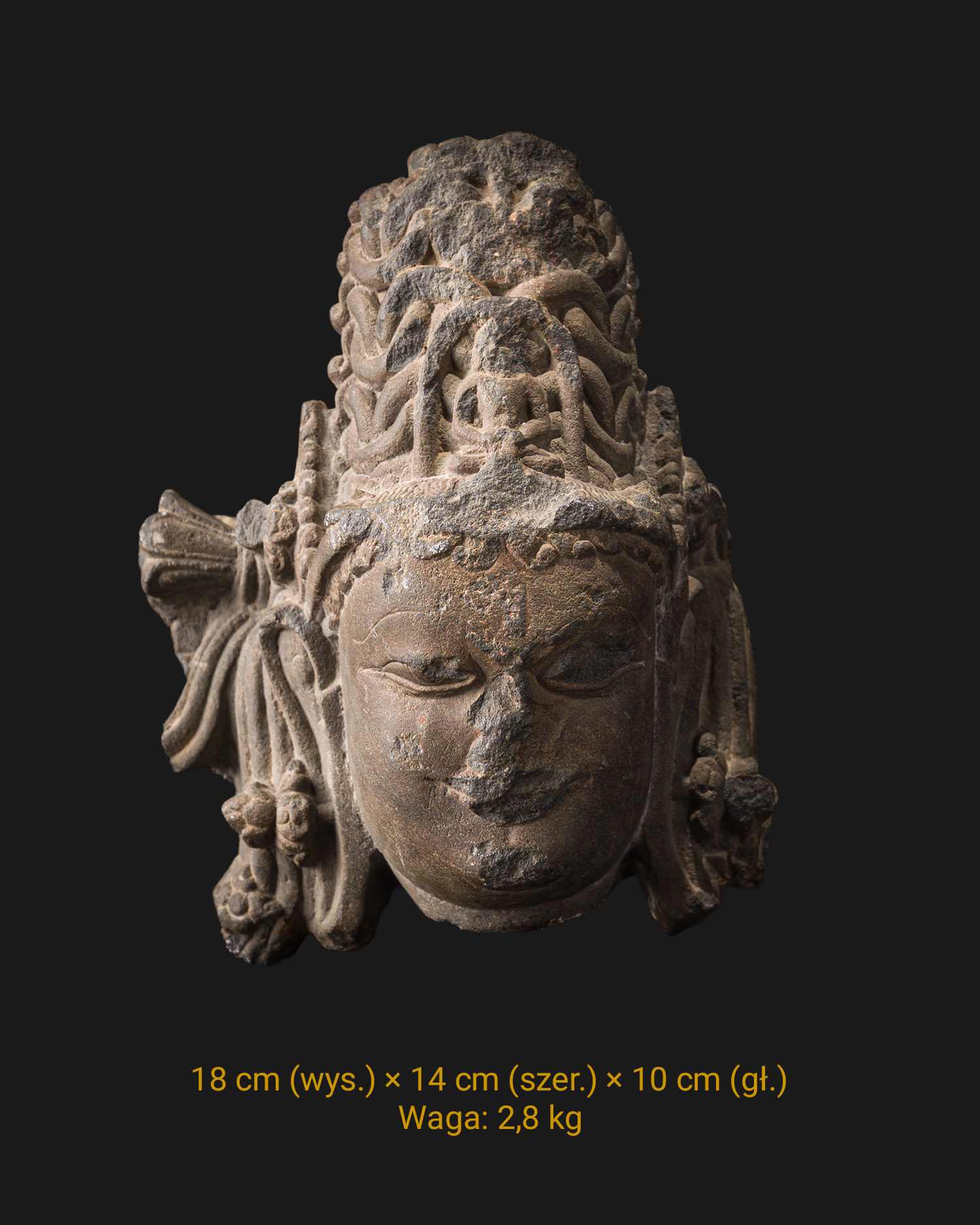

Head of bodhisattva Avalokitesvara, stone, East India, ca. 10th-12th century.
4300,00 zł
Description
Sprzedane
Additional information
| Weight | 2,8 kg |
|---|---|
| Dimensions | 18 × 14 × 10 cm |
| Materiał |
Basalt ,Slate |
| Kolorystyka |
Brown ,Greys |
| Czas powstania |
10th-12th century |
| Era |
Pāla period (ca. 10th-12th centuries). |
| Kraj pochodzenia |
India |
| Autor |
Unknown |
| State of preservation |
Good, with visible losses due to age (including a broken nose) |
Related products
Brahma, marble, India, 19th (?) century.
A marble sculpture depicting Brahma, the Hindu creator god and personification of cosmic wisdom, belonging to the Trimurti trinity alongside Vishnu and Shiva. The object was hand-carved in gray marble and represents a simplified iconographic form in which Brahma is shown with three faces, instead of the traditional four .
The figure is depicted seated, with a sphere held in his hand, interpreted as a symbol of the earth or the entire cosmos, and refer to the act of creation and the order of the world.
Due to the limited worship of Brahma in India and the small number of temples dedicated to him, sculptural representations of this deity are rare, making the object particularly interesting. The sculpture is in very good condition.
Brahma, marble, India, 19th century.
Marble sculpture depicting Brahma - the Hindu creator god and personification of cosmic wisdom, belonging to the Trimurti trinity alongside Vishnu and Shiva. The deity has four faces (Caturmukha), which, according to iconography, should face the four sides of the world. In the case of the sculpture on offer, the representation is simplified and the faces are laid out in an arc against a smooth, semicircular wall (stele) from which the figure emerges - two to the left of the central face and one to the right. They symbolize omniscience and the four Vedas, the oldest sacred texts of Hinduism. The figure is depicted in a seated position with one leg on the ground and the other placed on the seat, perpendicular to the body. Brahma has two pairs of hands, in keeping with classical iconography. One pair of hands rests on his knees. In his hand, the deity holds a sphere, interpreted as a symbol of the earth or the entire cosmos and referring to the act of creation and the order of the world. The other pair of hands is raised to shoulder height and holds other attributes, but due to the simplified form their identification is uncertain. The whole work is characterized by a compact body and simplicity of form, sparing details, which gives the work an austere character.
Dimensions: 24 cm (height) x 15 cm (width) x 7 cm (depth)
Weight: 4.75 kg
Bust of Krishna, marble, India, 19th century.
The sculpture depicts a bust of the deity, identified as Krishna - one of the most popular incarnations of the god Vishnu. The figure is characterized by idealized facial features with a gentle, meditative expression. The delicate, barely defined smile (so-called archaic) and wide, almond-shaped eyes with well-defined eyebrows are typical of Rajasthani art. The proportions convey the youthful grace of the deity (bala-rupa). The deity's head is adorned with a tall, richly carved Kiritamukuta-type crown. It consists of several tiers: a lower band imitating a string of pearls or beads, a middle band with a braided motif, and a finial with floral, rosette-like decorations. On the left profile of the crown (just above the ear) a vertical carved element is visible. It is a stylized peacock feather (Mayur Pankh) - a key and unique attribute of Krishna, symbolizing the beauty of creation and divine royalty. The figure's neck is adorned with a wide, close-fitting necklace (kanthamala). Thick, stylized strands of hair fall from the sides of the head, and traditional large earrings (kundala) are visible in the ears.
Dimensions: 23 cm (height) x 13 cm (width) x 12 cm (depth)
Weight: 5 kg
Head of an angel (?), sandstone, France, ca. 1300
The Gothic full-figure sculpture depicting a head, most likely an angel, was created in the circle of Parisian sculpture around 1300. The face with a calm expression and idealized features, surrounded by curls supported by a band, fits the type of depictions characteristic of French sculpture of the time of Philippe the Beautiful (1285-1314). The style, which spread in the 14th century, is sometimes referred to as "court style." Sculpture with traces of polychromy, damage and traces of surface erosion. Made of sandstone, it was originally most likely part of a full-figure representation. It most likely had a sacred function.
Irish (Celtic) cross, stone sculpture, Ireland, 19th century.
The sculpture in the form of an Irish cross, 24 cm high, made of a single piece of gray stone (slate). Like the medieval prototypes, it consists of a base (pedestal) with chamfered sides, a high shaft topped by a crossbar merged with a circle (nimbus). In the upper section, partially enclosed within the ring, is a semi-relief depiction of the Crucified Christ. The shaft below is decorated with incised “X” marks, simple geometric ornamentation, and the inscription INCX. The sides of the shaft feature carved rosettes and zigzag motifs. Additionally, the right side bears the inscription IXC, while the left side contains an unclear word, most likely in the Irish (Gaelic) language. On the reverse of the shaft appears another “X” mark, with a triangular shield motif below. The ends of the cross arms are decorated with four-pointed rosettes.
Krishna, marble, India, 19th century.
The sculpture depicts a full-figure image of the god Krishna in his most iconic, pastoral manifestation as Wenu-Gopal (playing the flute). The figure of the deity is framed in the classical Indian beauty canon of Tribhanga (triple bend of the body axis). The lines of the hips, chest and neck form a dynamic sigmoidal line. Krishna stands with her legs crossed at the ankles, resting her body weight on her left foot, while her right foot supports herself on her toes, giving the composition lightness and grace. The front and sides of the figure were developed with attention to the spatiality of pleats and jewelry. The back of the figure, the buttocks and the back of the halo are flat, crude and developed synthetically. This indicates that the object was intended to be placed directly against the altar wall or in a wall niche. The deity's face exudes serenity, with characteristic almond-shaped eyes and a gentle smile. The head is crowned with a high crown, which in the front part has preserved fragments of the original thick flake gilding. A tall peacock feather (Mayur Pankh) is carved on the left side of the crown. The head is surrounded by a monolithic, serrated nimbus. The deity is clad in a traditional, thickly creased dhoti, fastened at the hips with an ornamental belt with floral rosette motifs. A long, carved sash is slung across her back and shoulders.
Dimensions: 44 cm (height) x 14 cm (width) x 8 cm (depth)
Weight: 4.75 kg
Saint John the Evangelist, late Gothic wooden sculpture, ca. 1500
Full-plastic sculpture depicting St. John the Evangelist , made of wood, dated around 1500. The figure is shown in counterpoint, with a slightly bowed head and entwined hands holding a book - an attribute of the Evangelist. The sculpture is preserved in its original polychrome, with a visible structure of pigment layers and natural cracking of the wood.
The work may have been part of a winged altarpiece (retabulum), most likely in the Crucifixion group.
The work may have been part of a winged altarpiece (retabulum), most likely in the Crucifixion group.
Samuel Lipszyc (1880 – 1943), Naked ballerina, patinated bronze, ca. 1920
Sculpture by Samuel Lipszyc in the Art Déco style depicting a nude ballerina in a dynamic pose, balancing on one foot. The sculpture is made of green patinated bronze, set on a marble pedestal with decorative contrasting veining. The dancer's dynamic silhouette and streamlined lines are characteristic of the modernist aesthetic of the 1920s. The figure exudes lightness, grace and modern elegance, capturing the spirit of the Art Déco era. The work is signed "Lipchytz" on the left foot.