


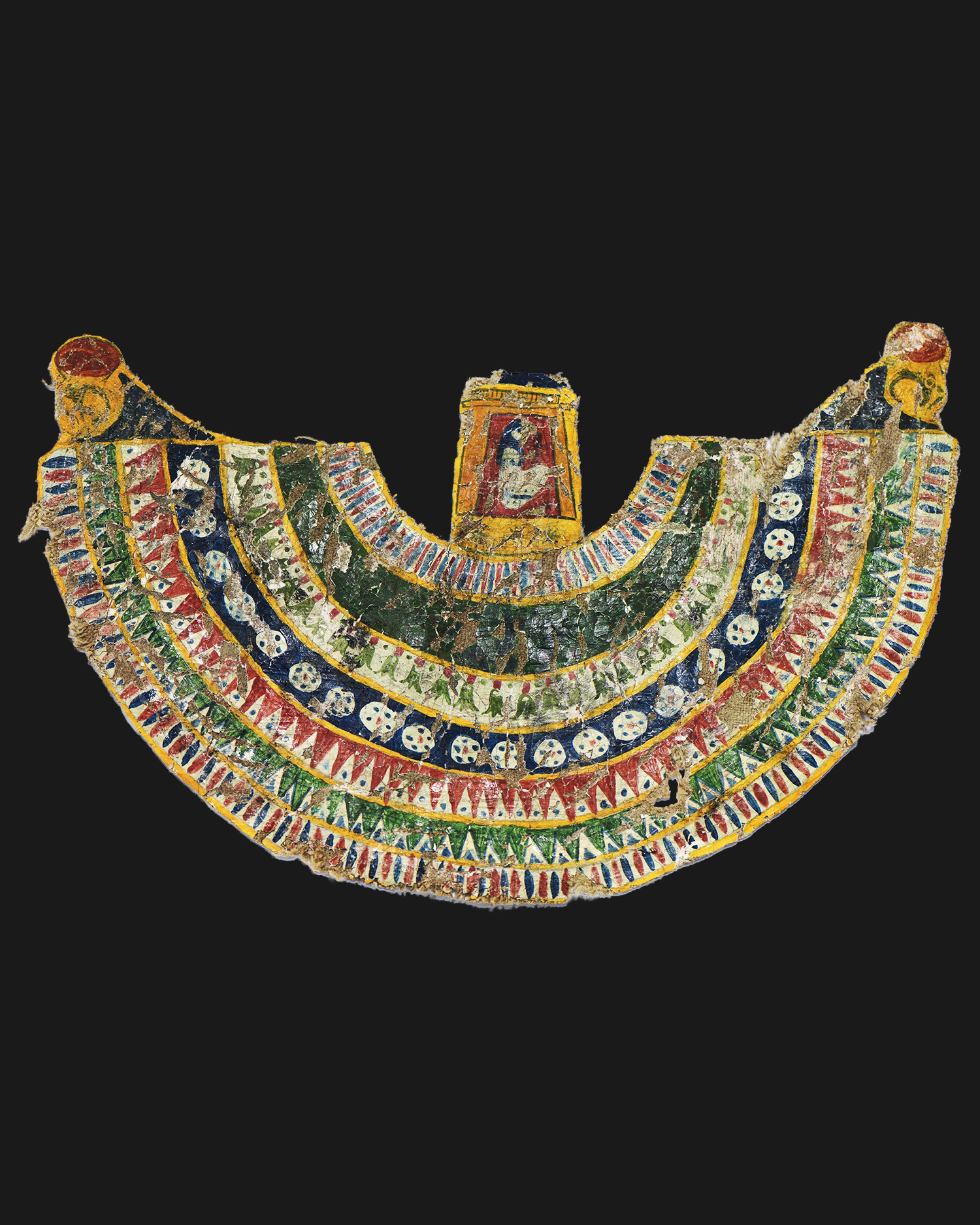
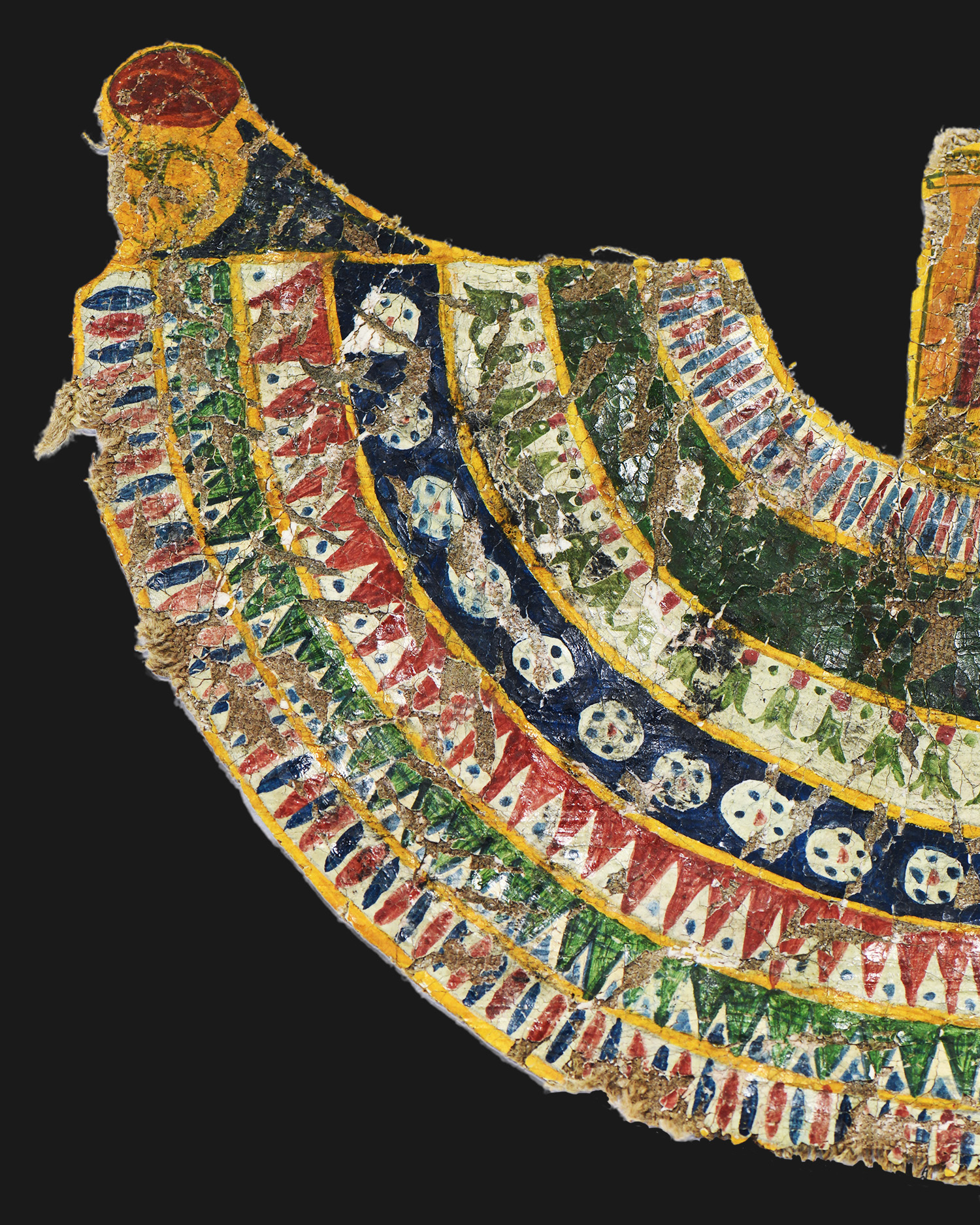
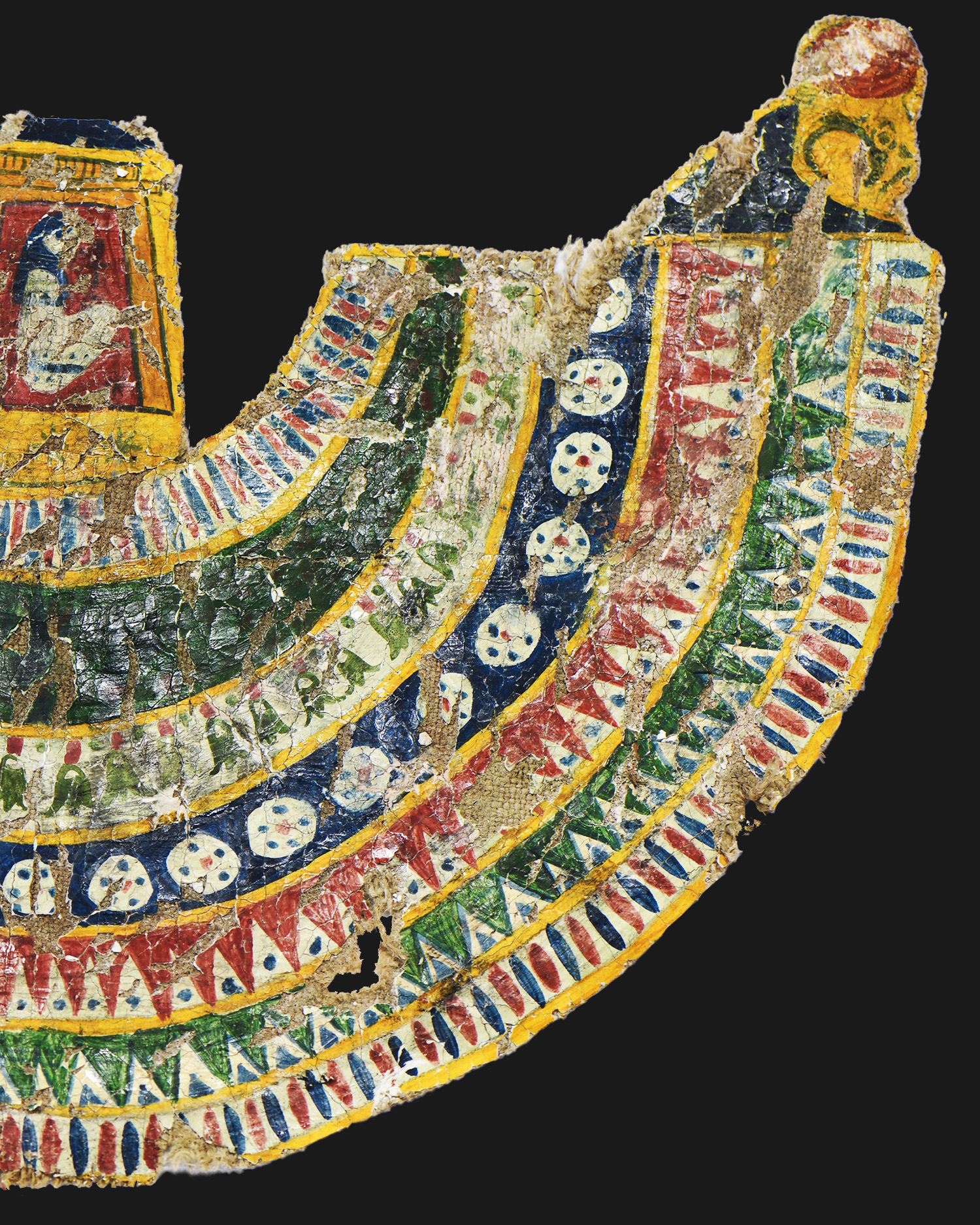
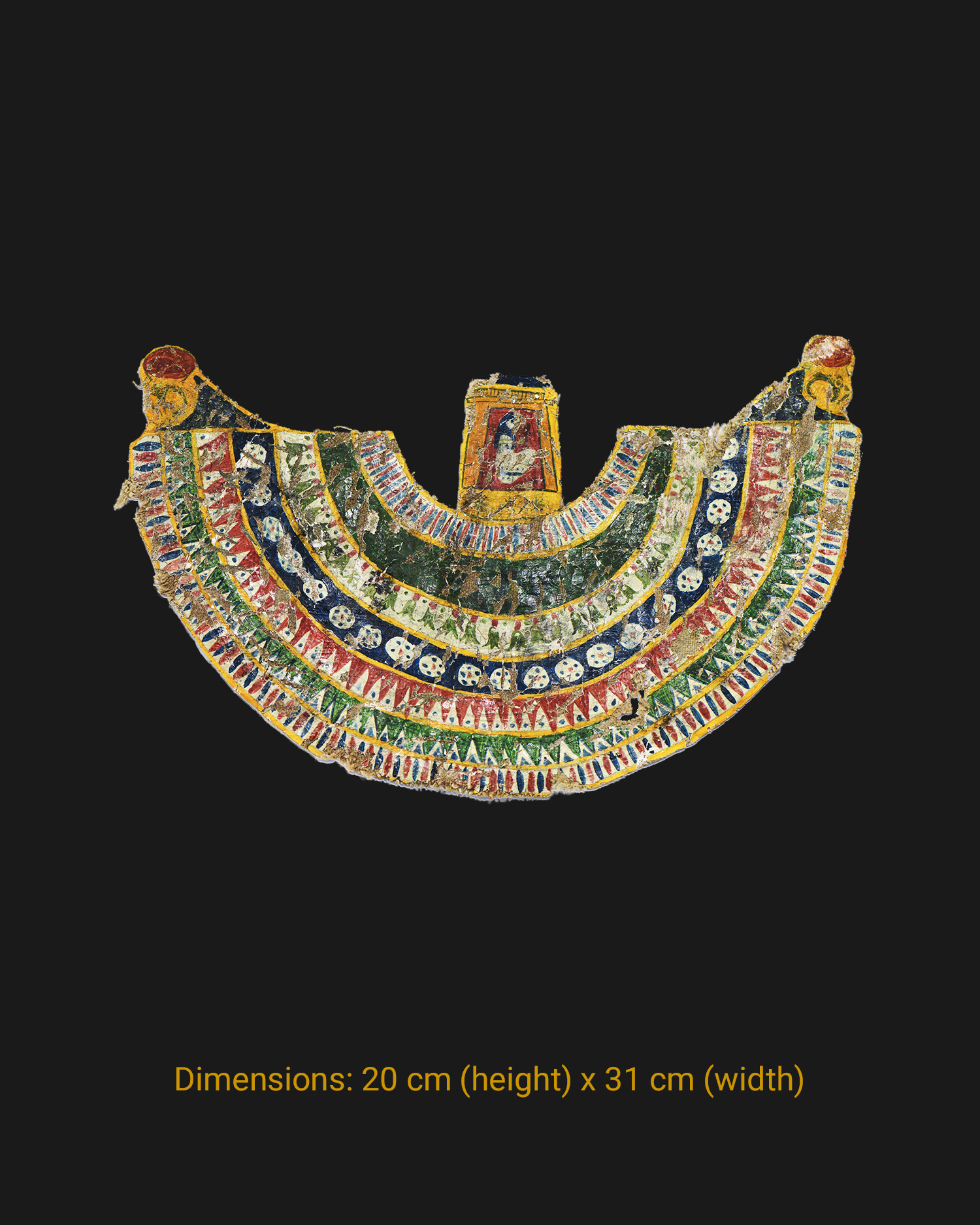

Cartoon with a representation of a usekh necklace, Egypt, 1st millennium BC.
3300,00 zł
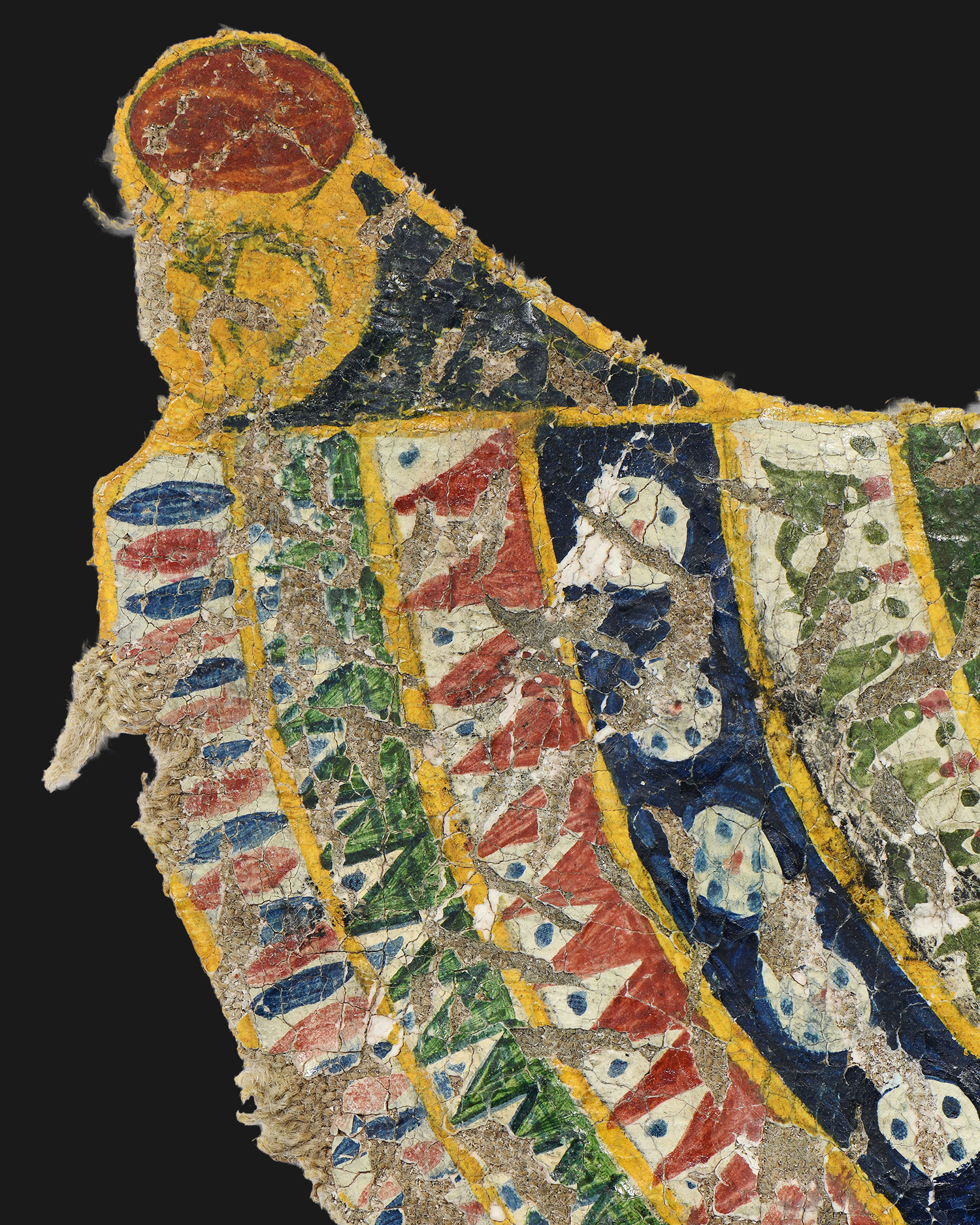
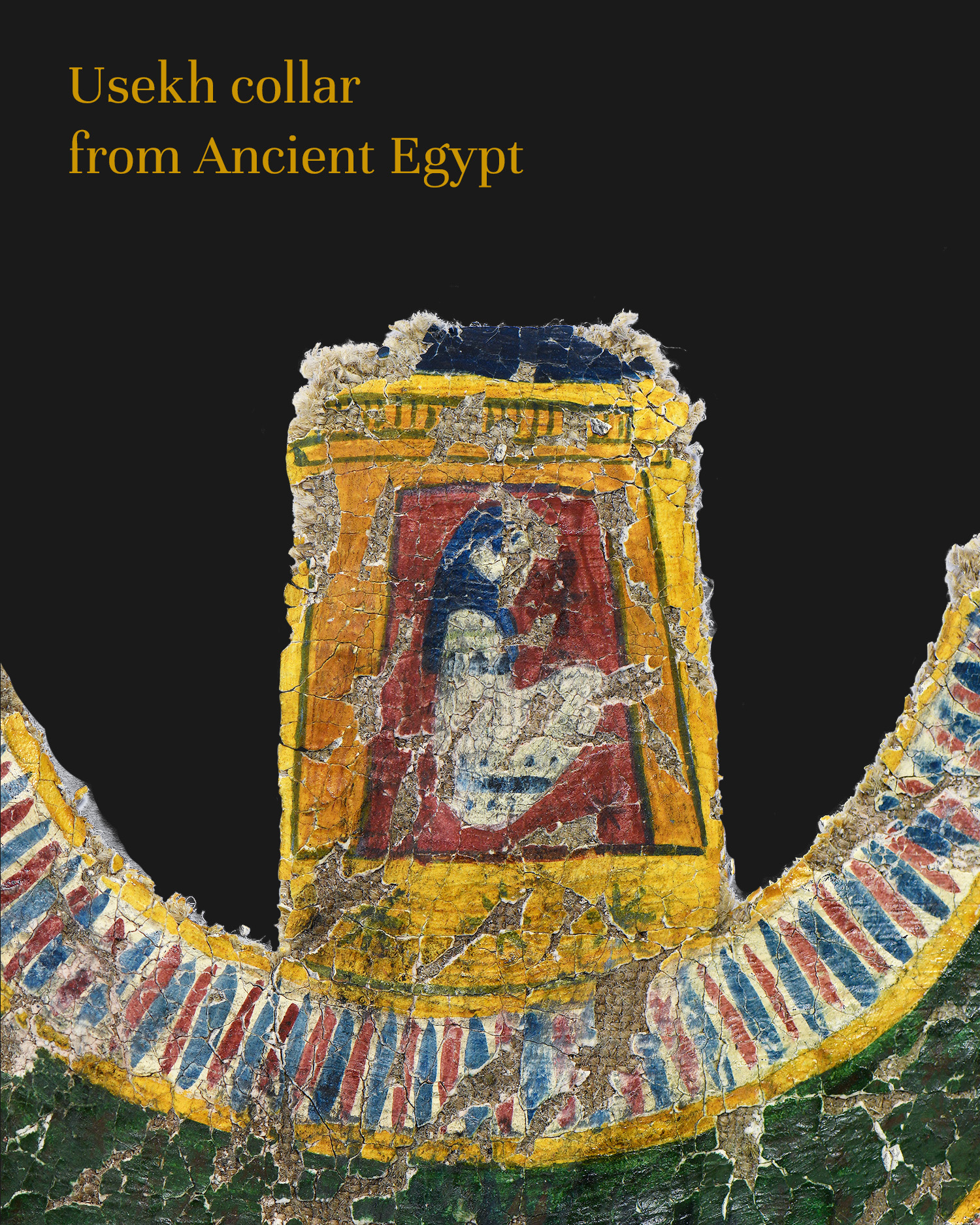
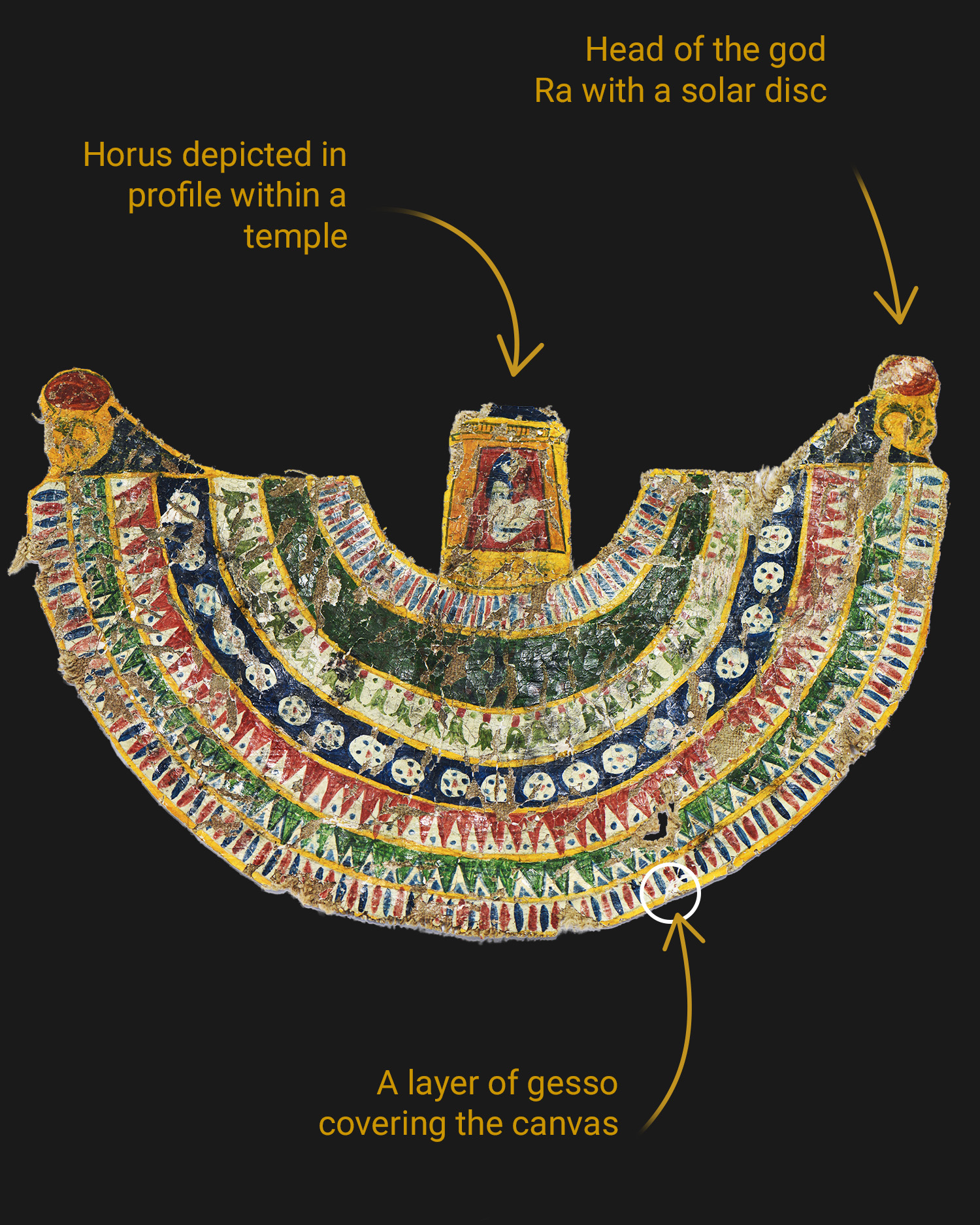
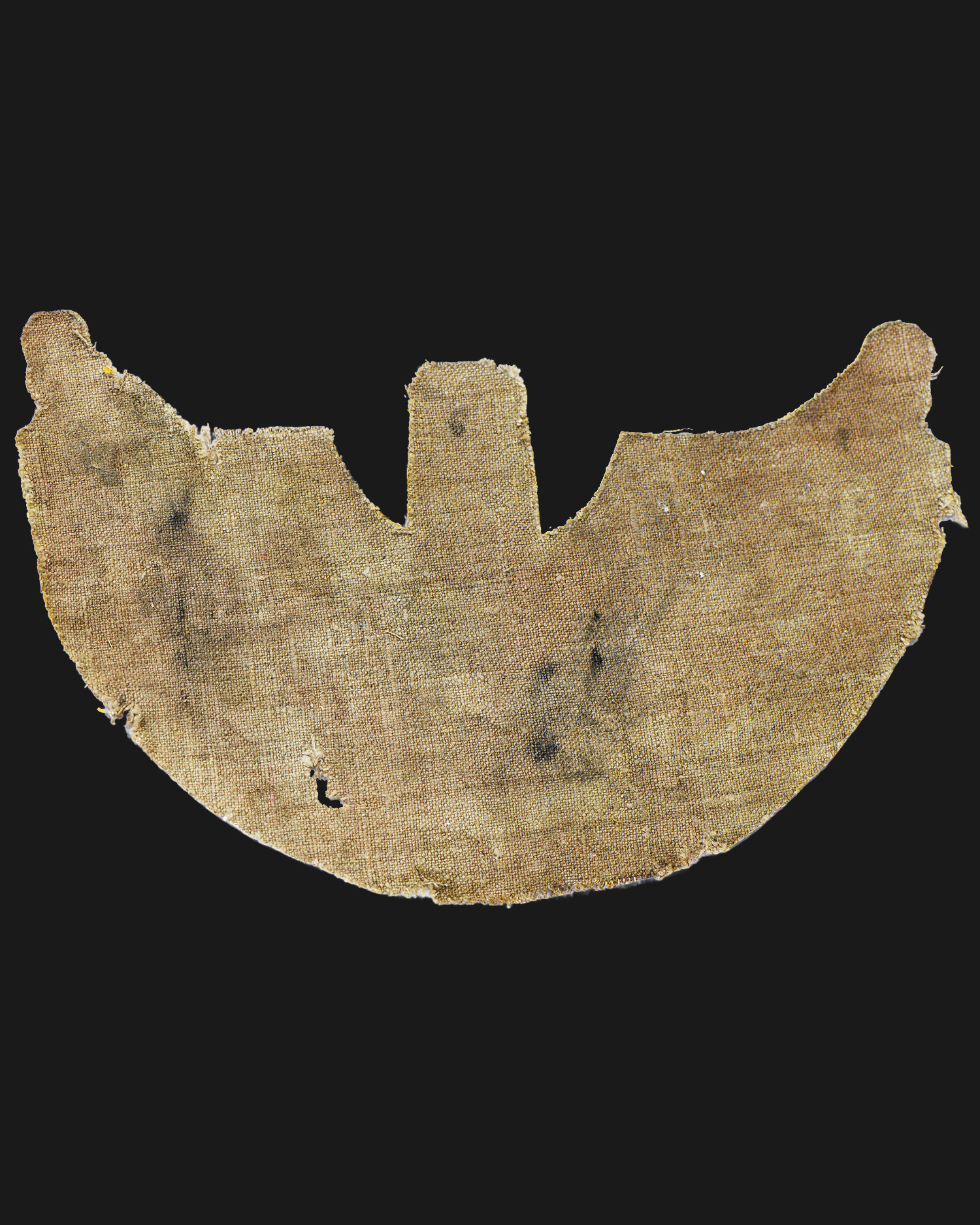
Cartonage (canvas covered with gypsum and polychrome) with a depiction of a wide necklace called a “usekh” collar, ancient Egypt, 1st millennium B.C. The collar has a semicircular form and is composed of several zones of ornament separated by narrow yellow bands. The different zones are filled with diverse decorative motifs: a row of circular ornaments filled with dots, imitating glass or faience beads, stylized “pendants,” strips with alternating triangular segments, and rows of spindle-shaped ornaments. At the top, in the center, is a rectangular field with a representation of Horus, shown in profile in a seated position, facing right, inside a stylized temple. The sides of the collar show depictions of a red disk above the head of a falcon or hawk – most likely a depiction of the head of the god Ra with a solar disk.
It is impossible to say conclusively whether the offered collar covered the coffin or directly the mummy of the deceased, as both possibilities are possible. Without specialized research, its dating should be placed in a wide range covering the 1st millennium B.C. However, it is worth noting that similar decorative motifs appear on a cartonage collar from the collection of The Michael C. Carlos Museum in Atlanta, dated to 1069-750 B.C. (object no. 2018.010.254).
1 in stock
Related products
Balmamarium, terracotta, Ancient Rome, ca. 1st-2nd century A.D.
Balmamarium, terracotta, Ancient Rome, ca. 1st-2nd century A.D.
Gallo-Roman sculpture of the head of Eros (?), marble, 1st-3rd century A.D.
Kyliks (wine drinking vessel), pottery, Ancient Greece, ca. mid-4th century B.C.
Oinochoe, terracotta, Ancient Greece, 4th century BC.
Sculpture of a god’s head (Zeus or Hercules), marble, Mediterranean basin, Hellenistic period