


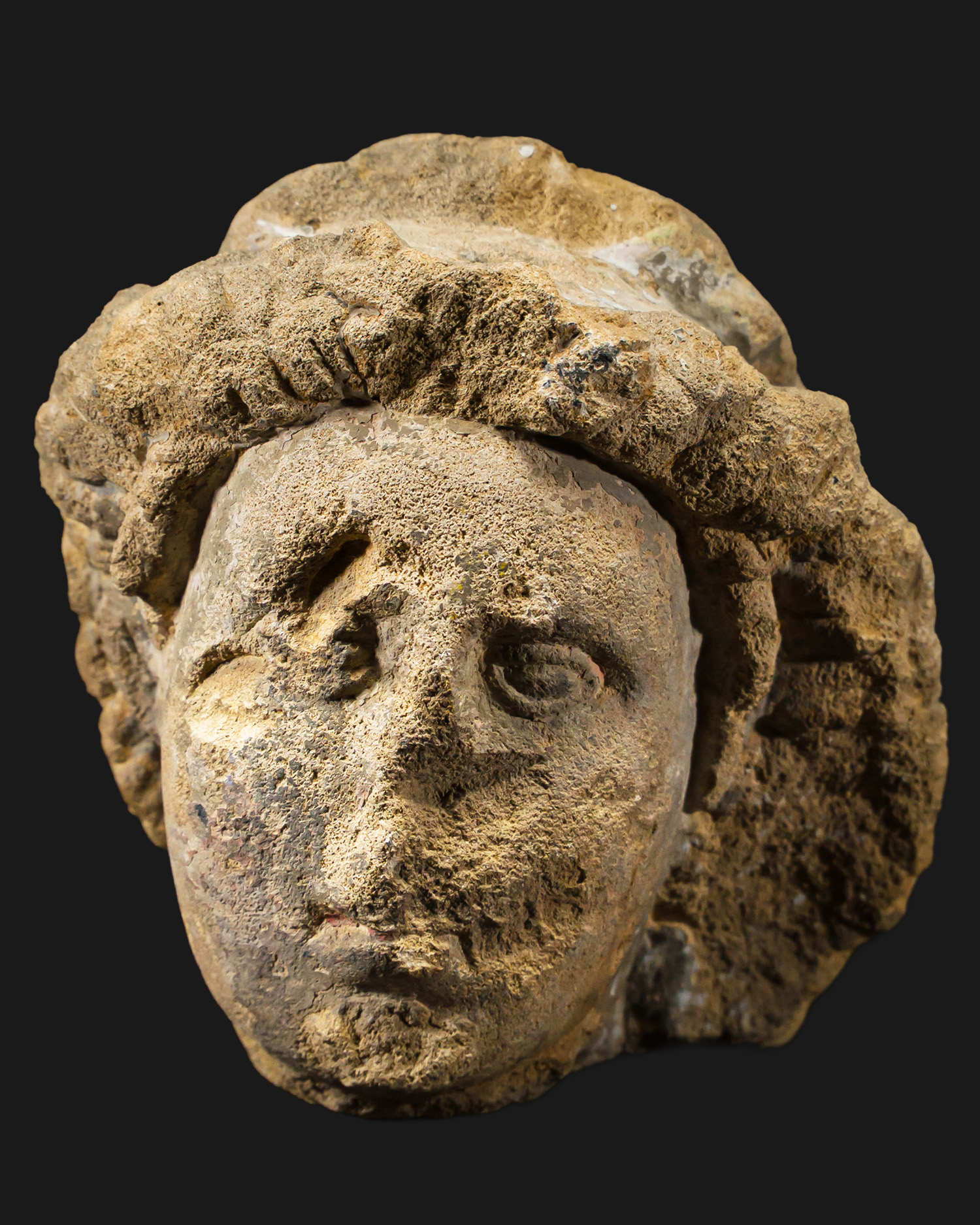
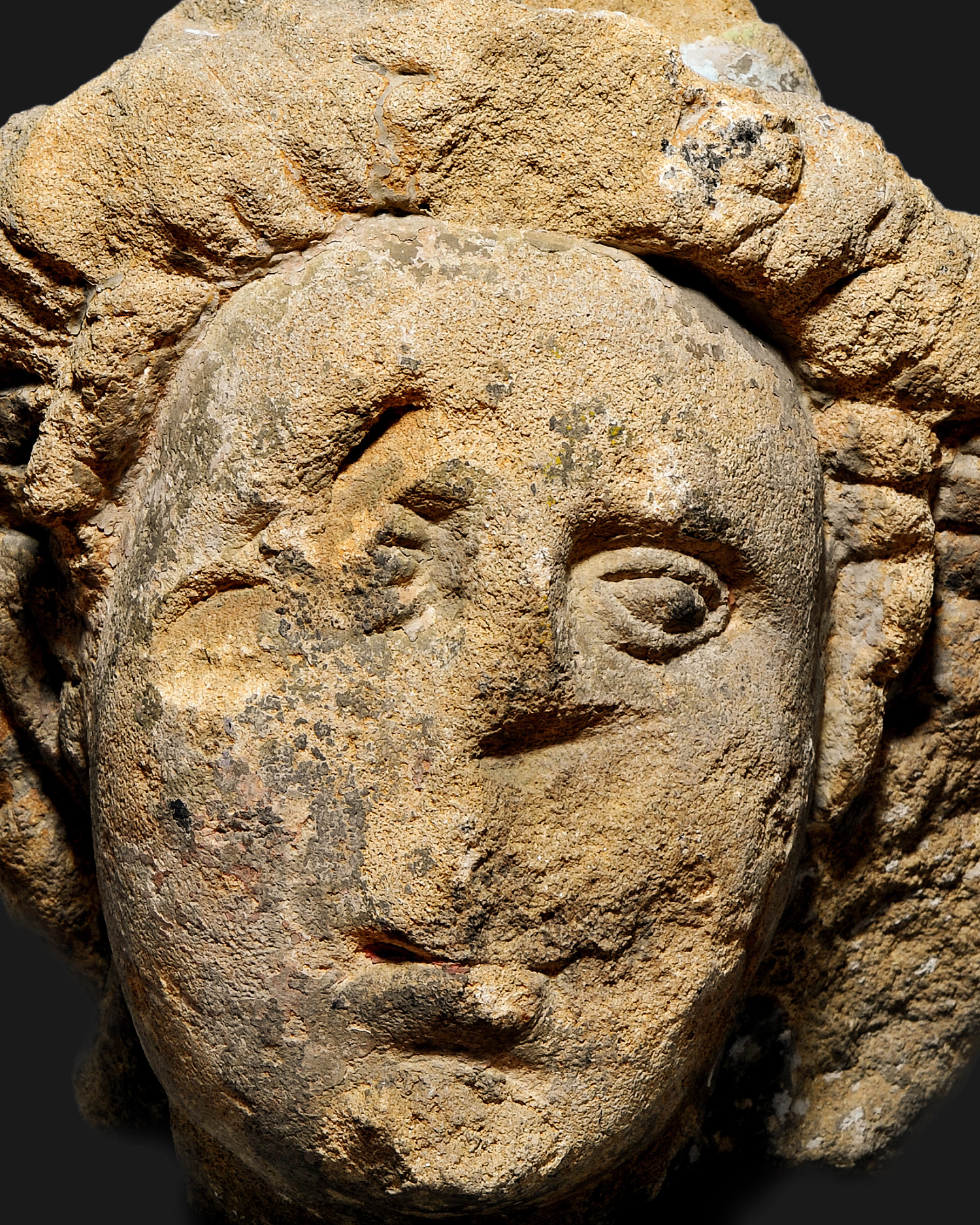
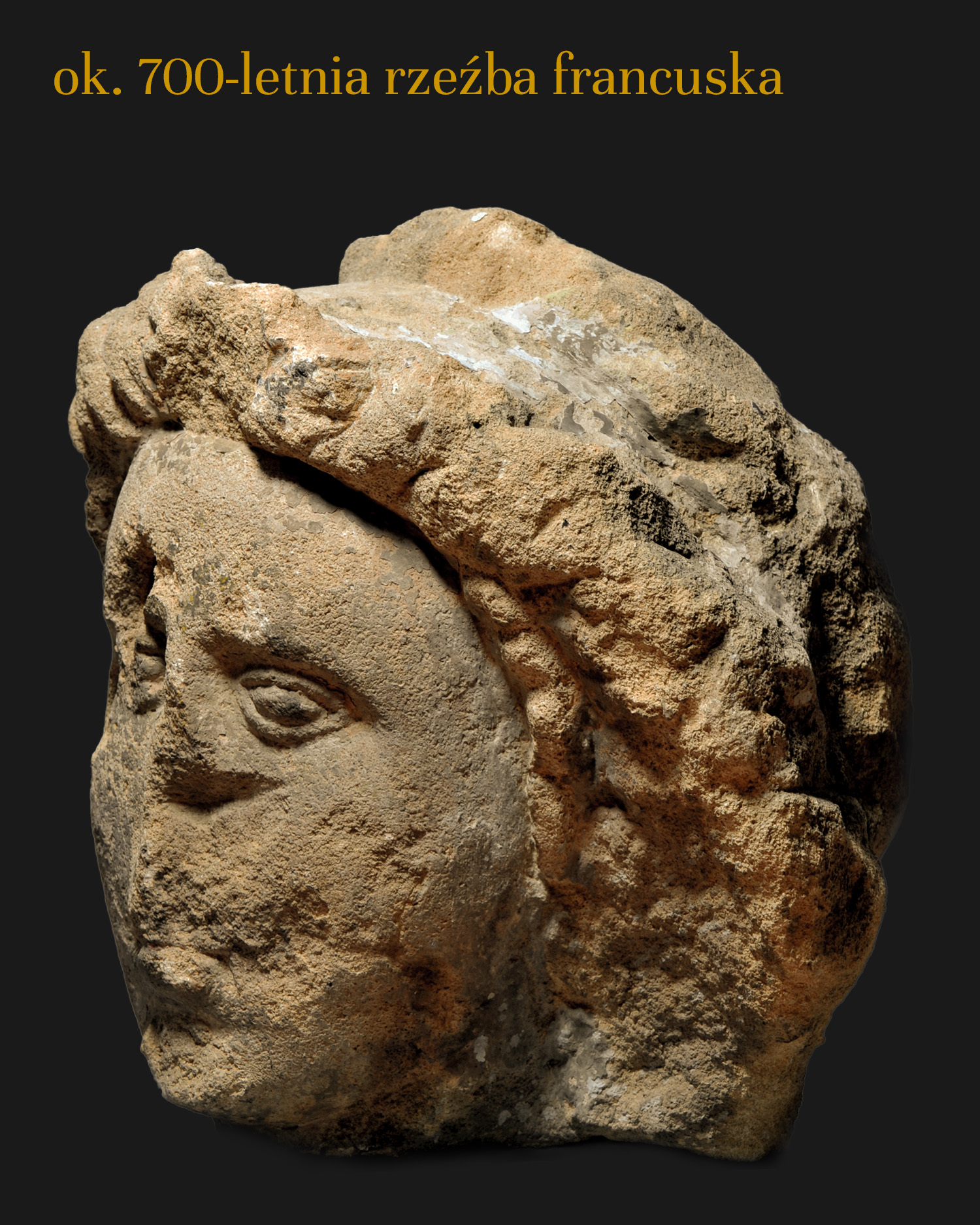
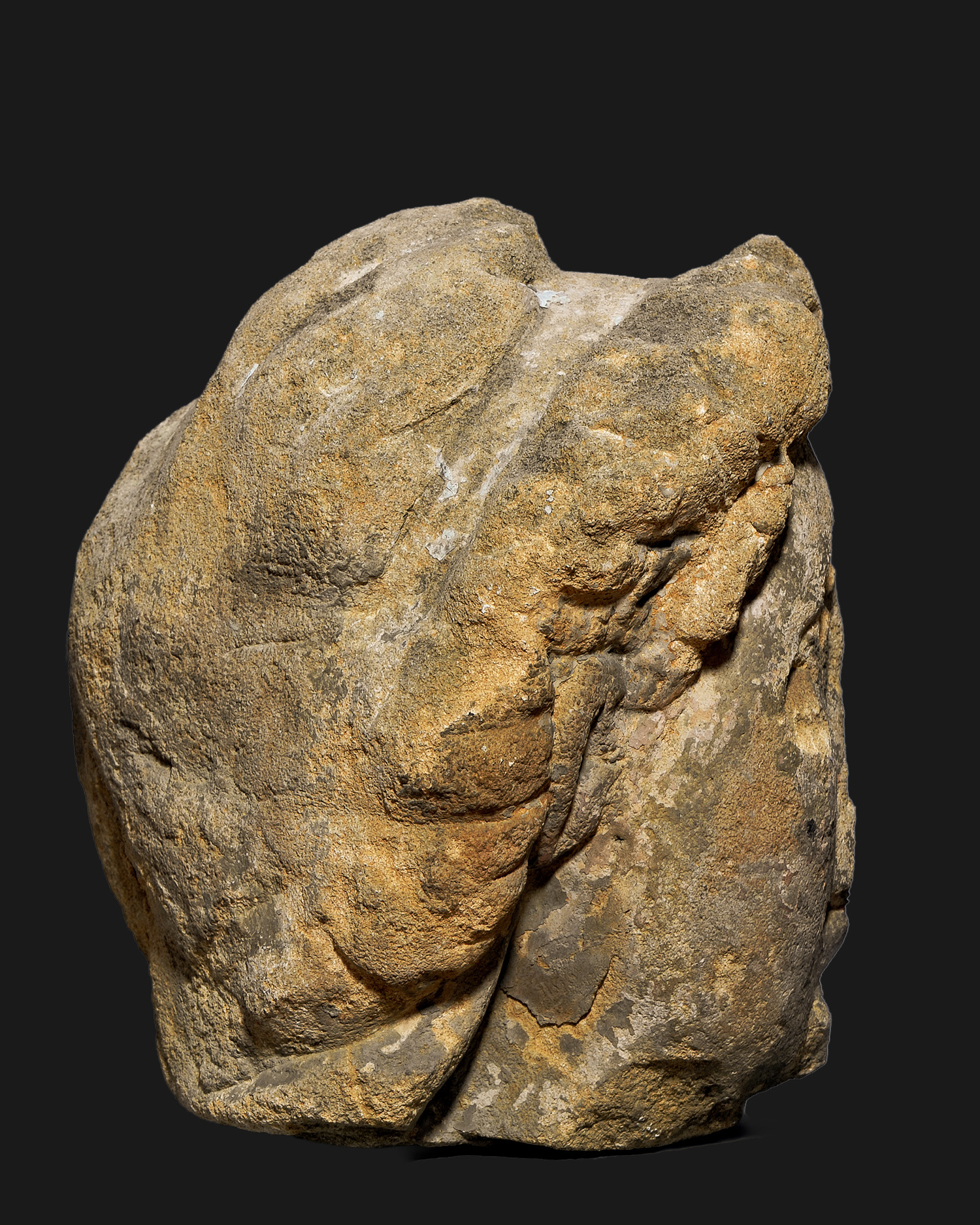
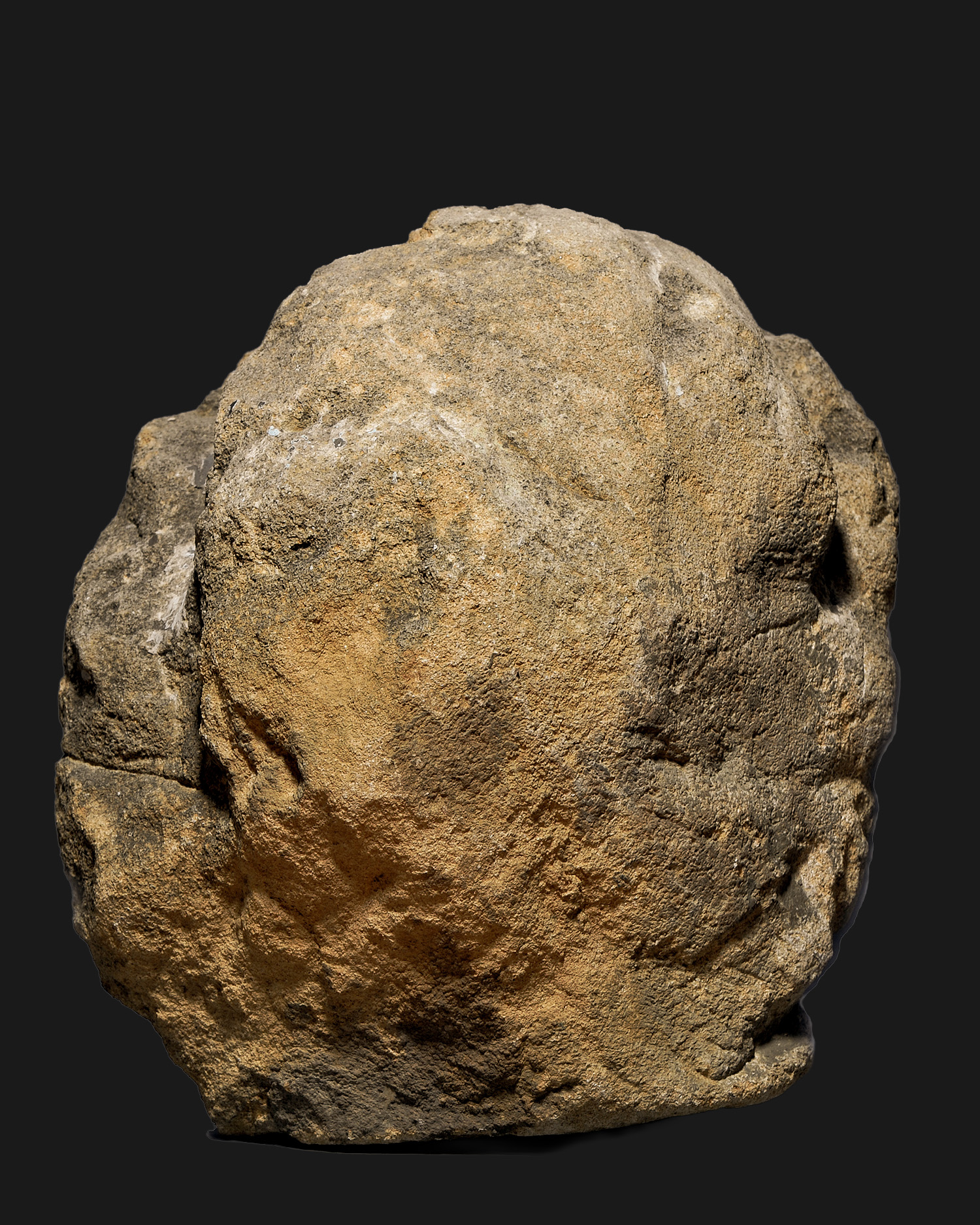
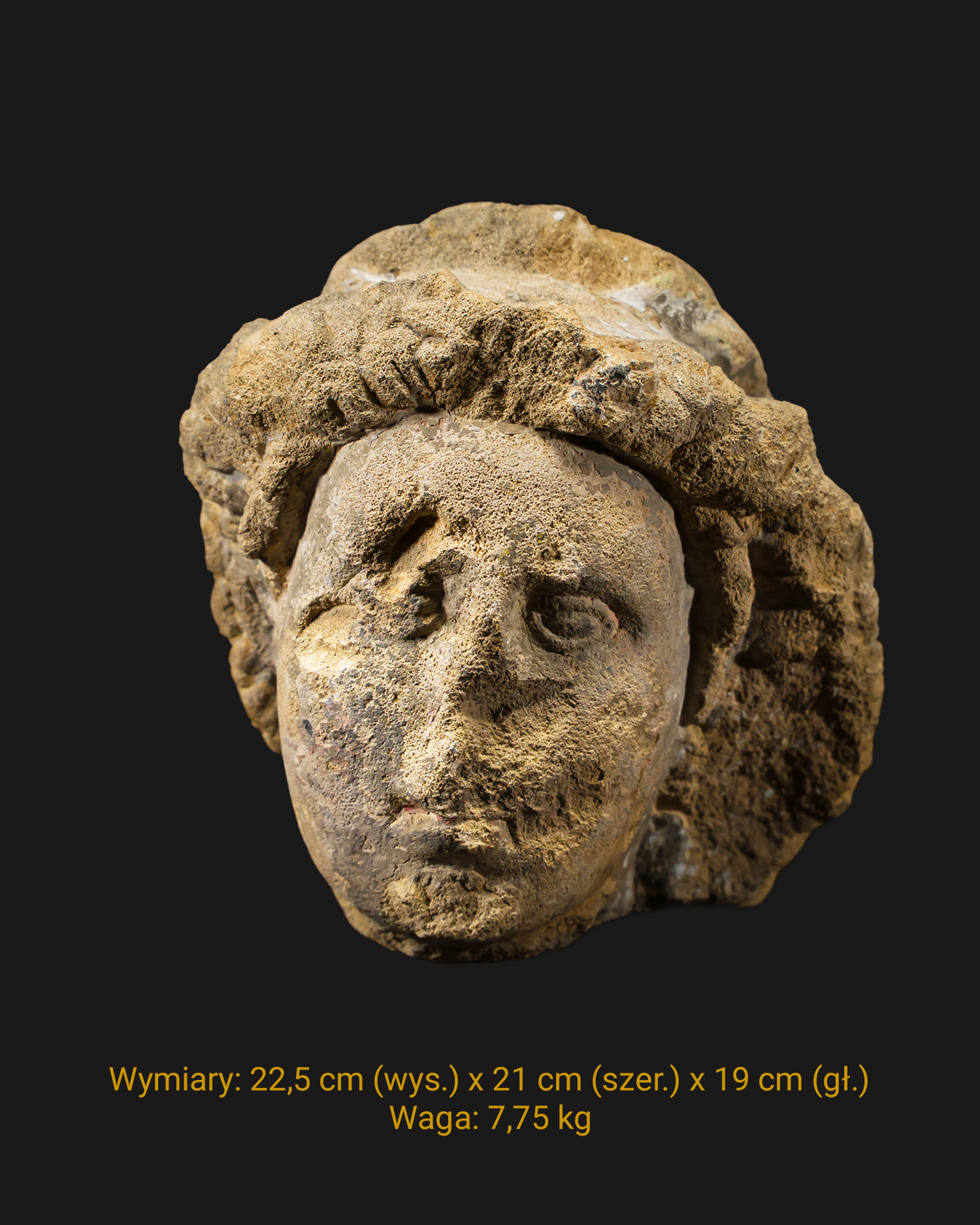

Head of an angel (?), sandstone, France, ca. 1300
3600,00 zł
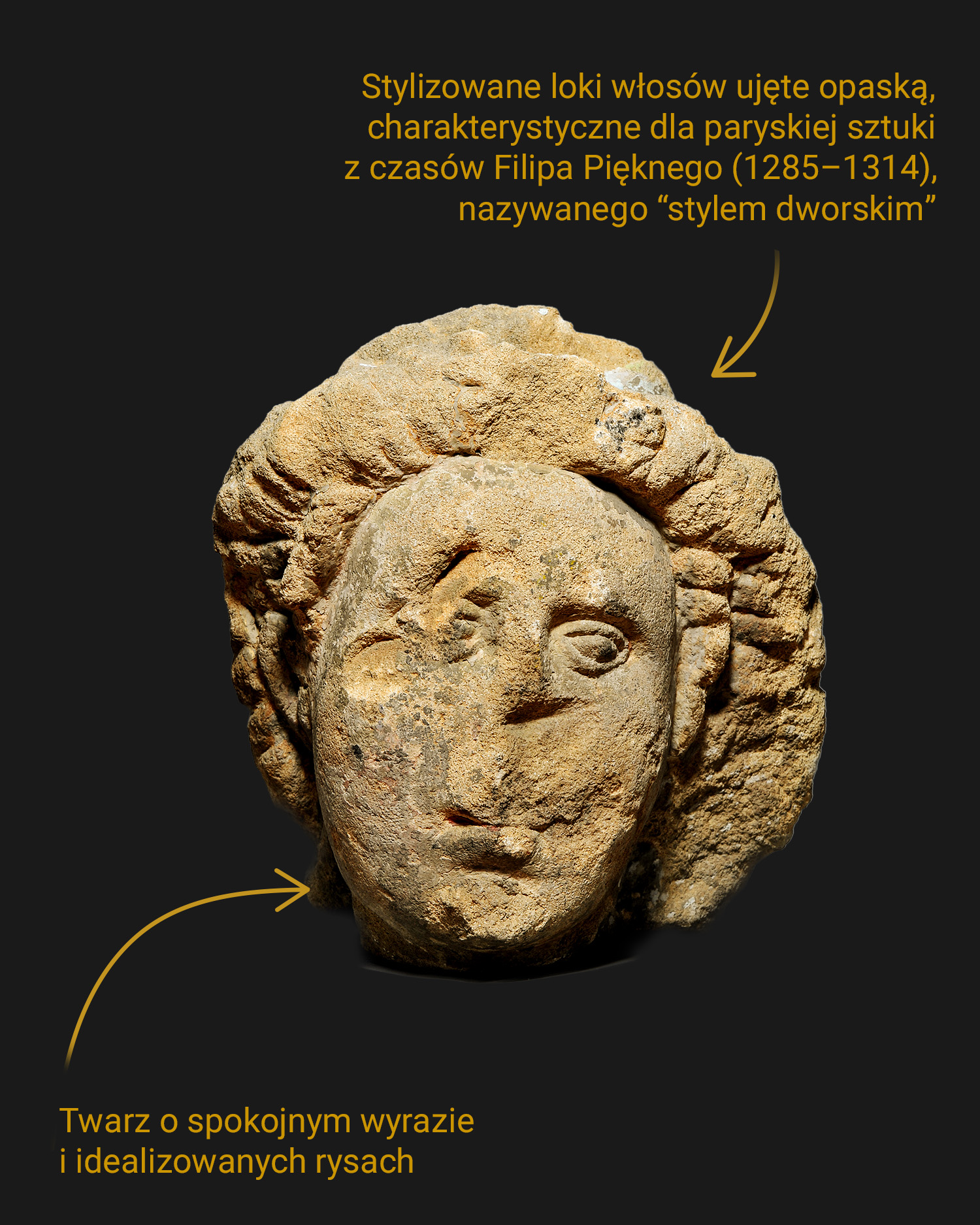
The Gothic full-figure sculpture depicting a head, most likely an angel, was created in the circle of Parisian sculpture around 1300. The face with a calm expression and idealized features, surrounded by curls supported by a band, fits the type of depictions characteristic of French sculpture of the time of Philippe the Beautiful (1285-1314). The style, which spread in the 14th century, is sometimes referred to as “court style.” Sculpture with traces of polychromy, damage and traces of surface erosion. Made of sandstone, it was originally most likely part of a full-figure representation. It most likely had a sacred function.
1 in stock
| Weight | 7,75 kg |
|---|---|
| Dimensions | 22,5 × 21 × 19 cm |
| Type |
Sculpture |
| Form |
Full-plastic sculpture of a nearly life-size head |
| Materiał |
Sandstone |
| Kolorystyka |
Sandy |
| Technika |
Carving |
| Czas powstania |
ca. 1300 |
| Era |
Gothic |
| Kraj pochodzenia |
France |
| State of preservation |
Losses, traces of surface erosion, preserved traces of polychromy |
Related products
Brahma, marble, India, 19th century.
Christ Salvator Mundi, polychrome wood, Poland, 19th century.
Deity or bodhisattva, marble, India, 19th century.
Gallo-Roman male portrait head, marble, Roman Empire, Province of Gaul (area of modern France), 1st-3rd century after Chr.
Head of an Angel (Putta), gilded linden wood, Poland, 1st half of the 18th century.
Krishna, marble, India, 19th century.
Rama, marble, India, 19th century.
A sculpture depicting Rama, one of the most important deities of Hinduism, considered the seventh avatar of Vishnu. The object was hand-carved in white marble in India, probably in the 19th century.
The figure is depicted standing, facing forward. The face has a gentle expression with a soft smile and slightly closed eyes. The head is crowned with a decorative crown, and long necklaces are visible on the chest.
The figure is dressed in a draped robe with clearly marked folds. On its back is a quiver with arrows, characteristic of Rama's depictions.
The hands of the sculpture are not preserved, originally in one of them the figure held a bow - a characteristic element of representations of this deity. Further about these cavities do not write that they are consistent.
Rama is the hero of the epic Ramayana and in the Hindu tradition symbolizes righteousness and fidelity to the principle of dharma. His images occupy an important place in Indian sacred art, although full-figure marble sculptures of this scale are less common.
The object is preserved in good condition, with clear legibility of form and detail.