


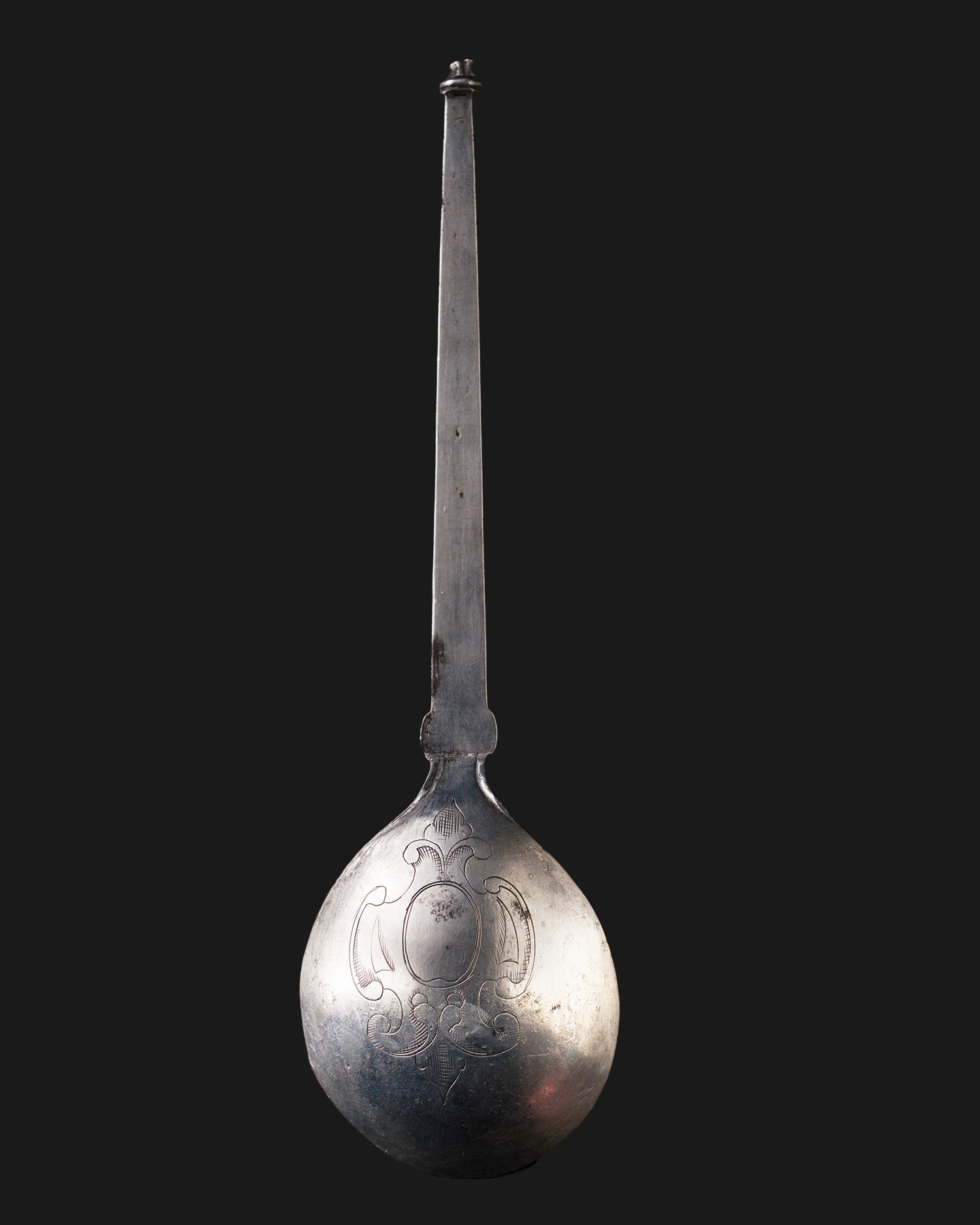
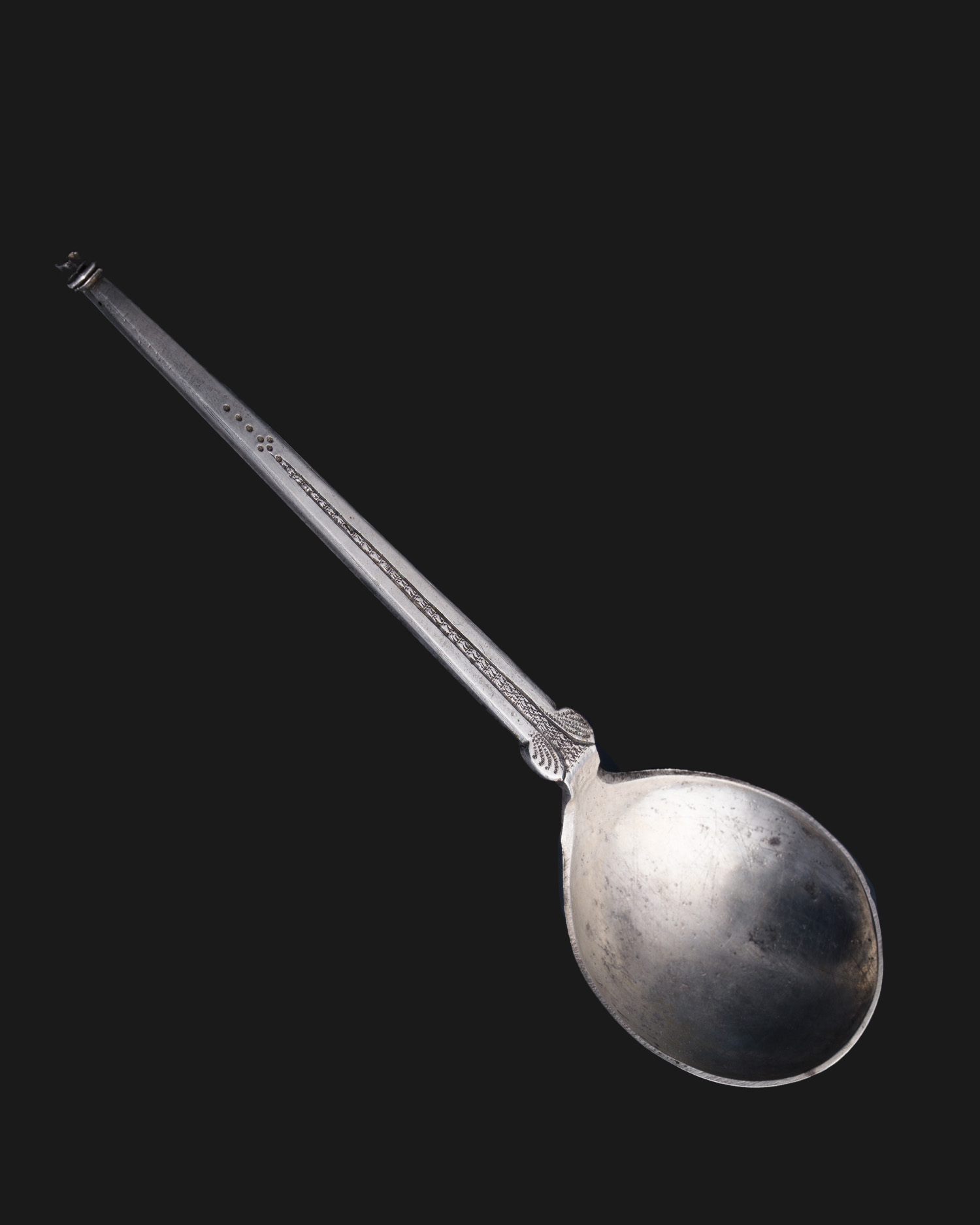
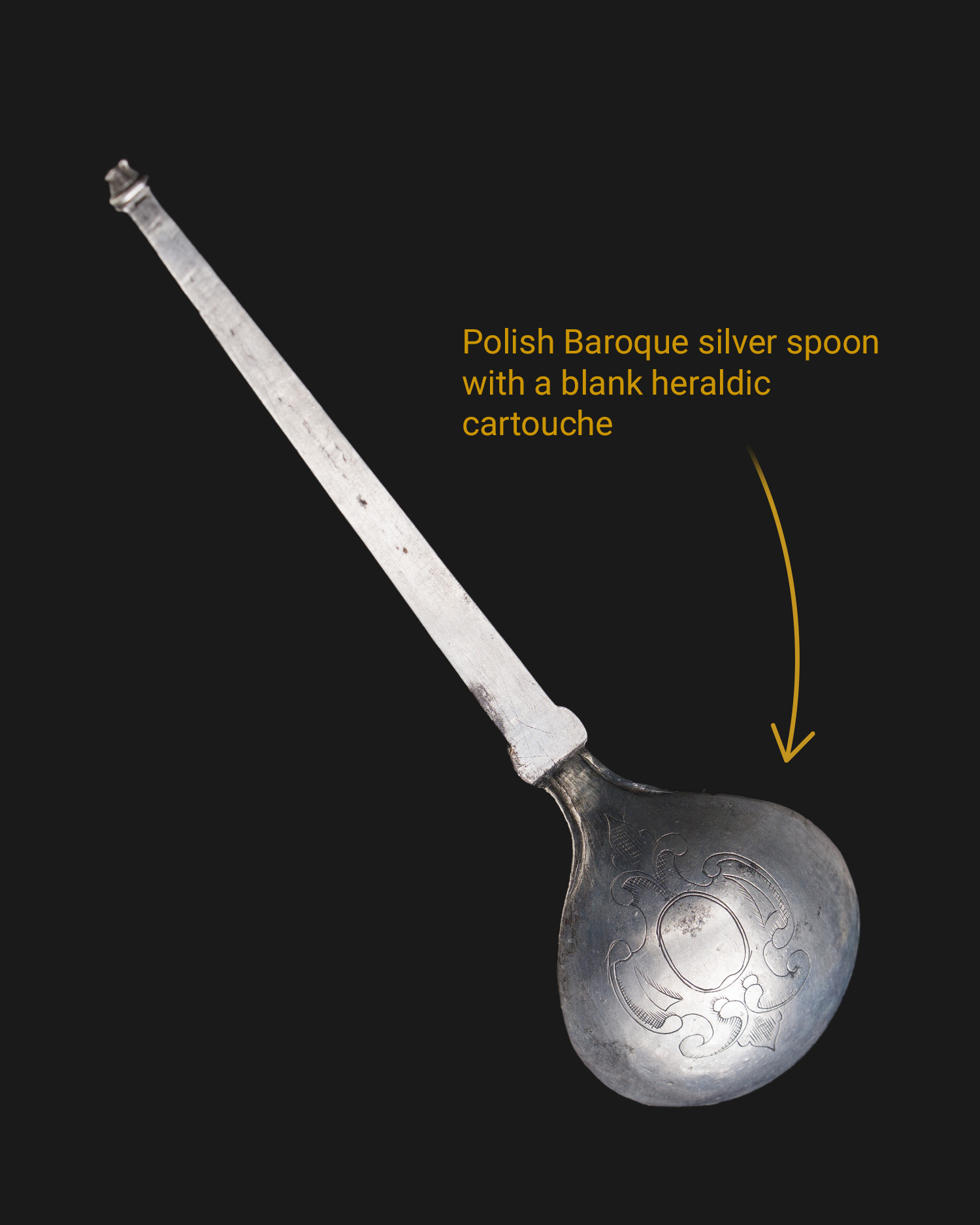

Table spoon, silver, Poland, ca. 1650
3400,00 zł
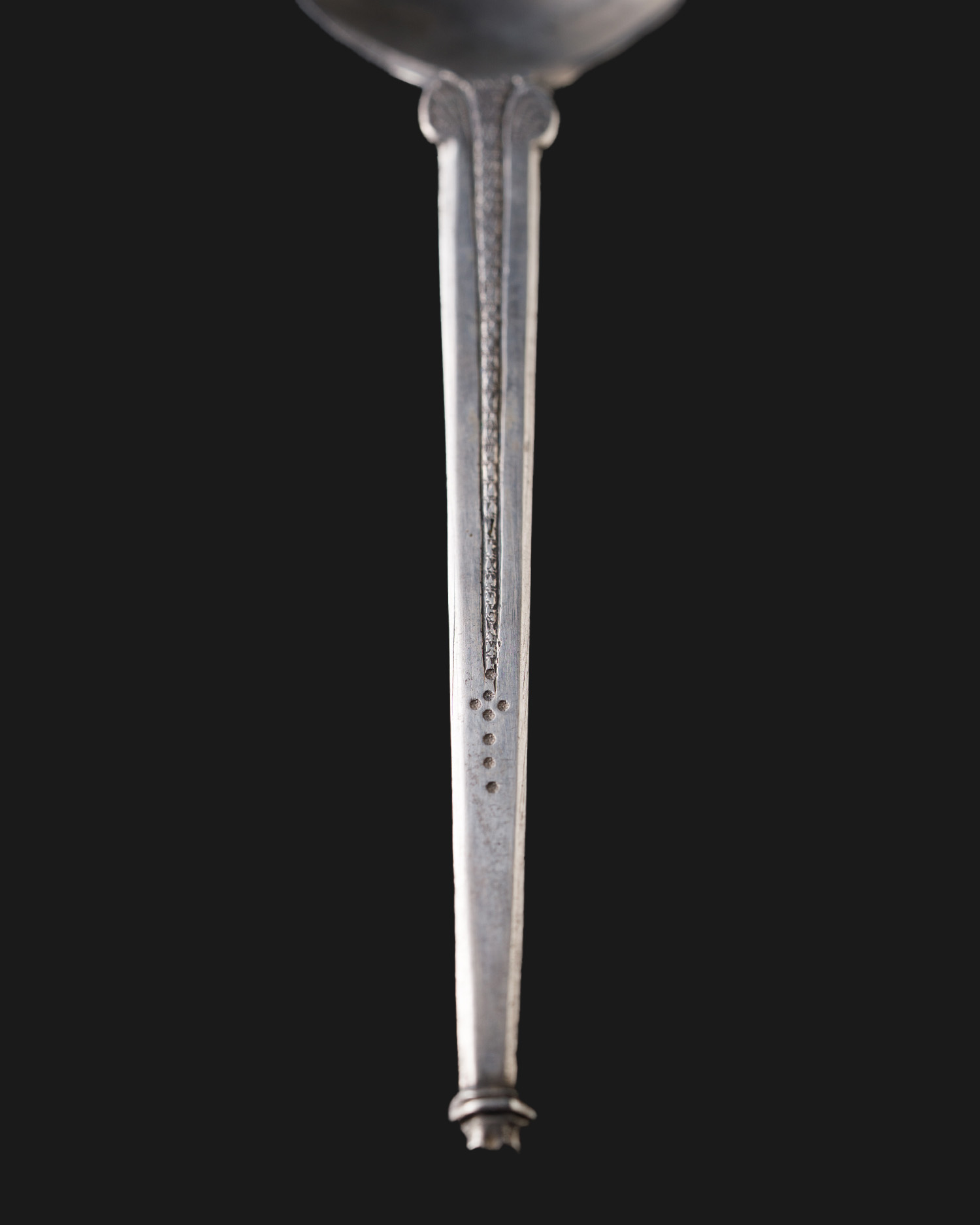
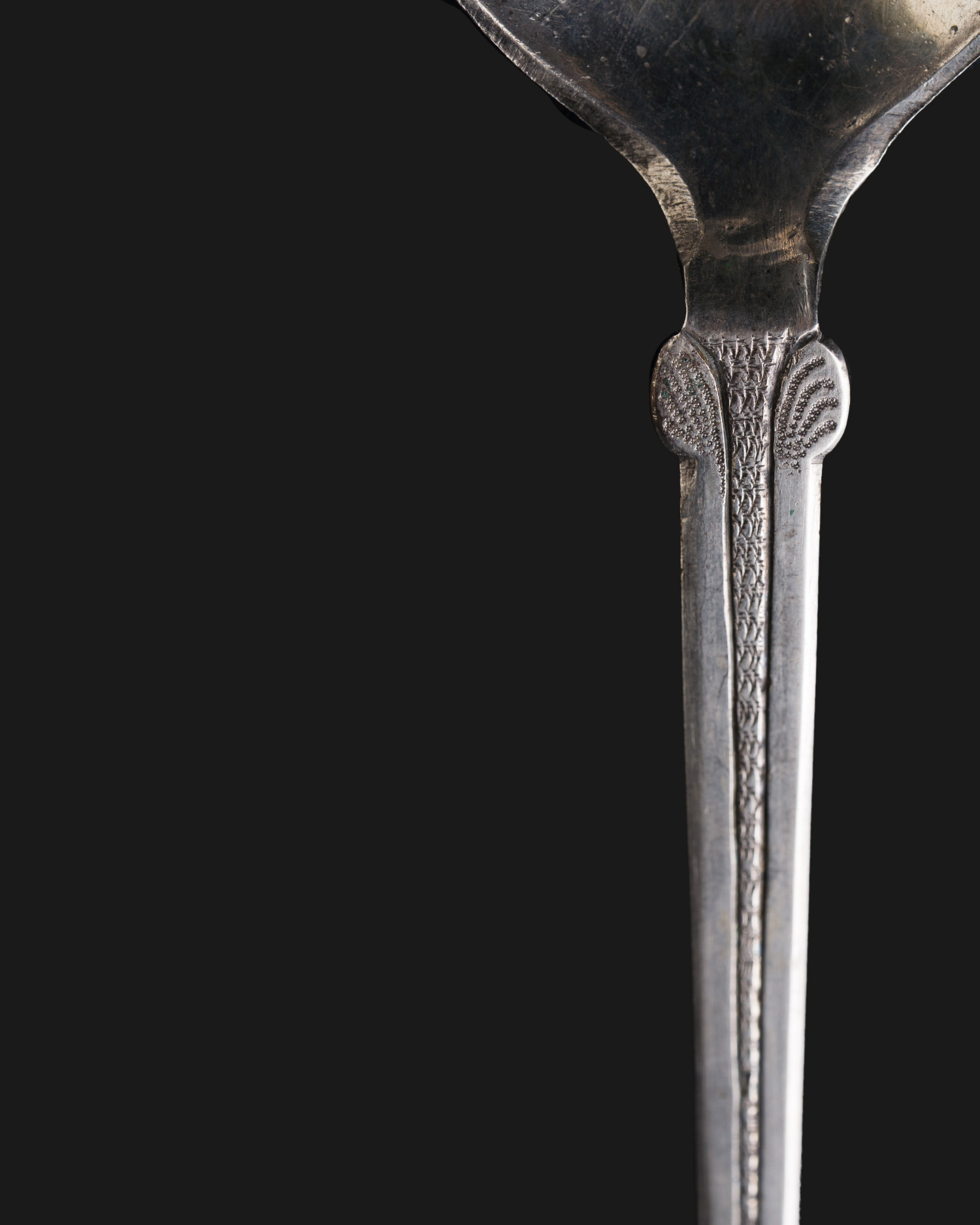
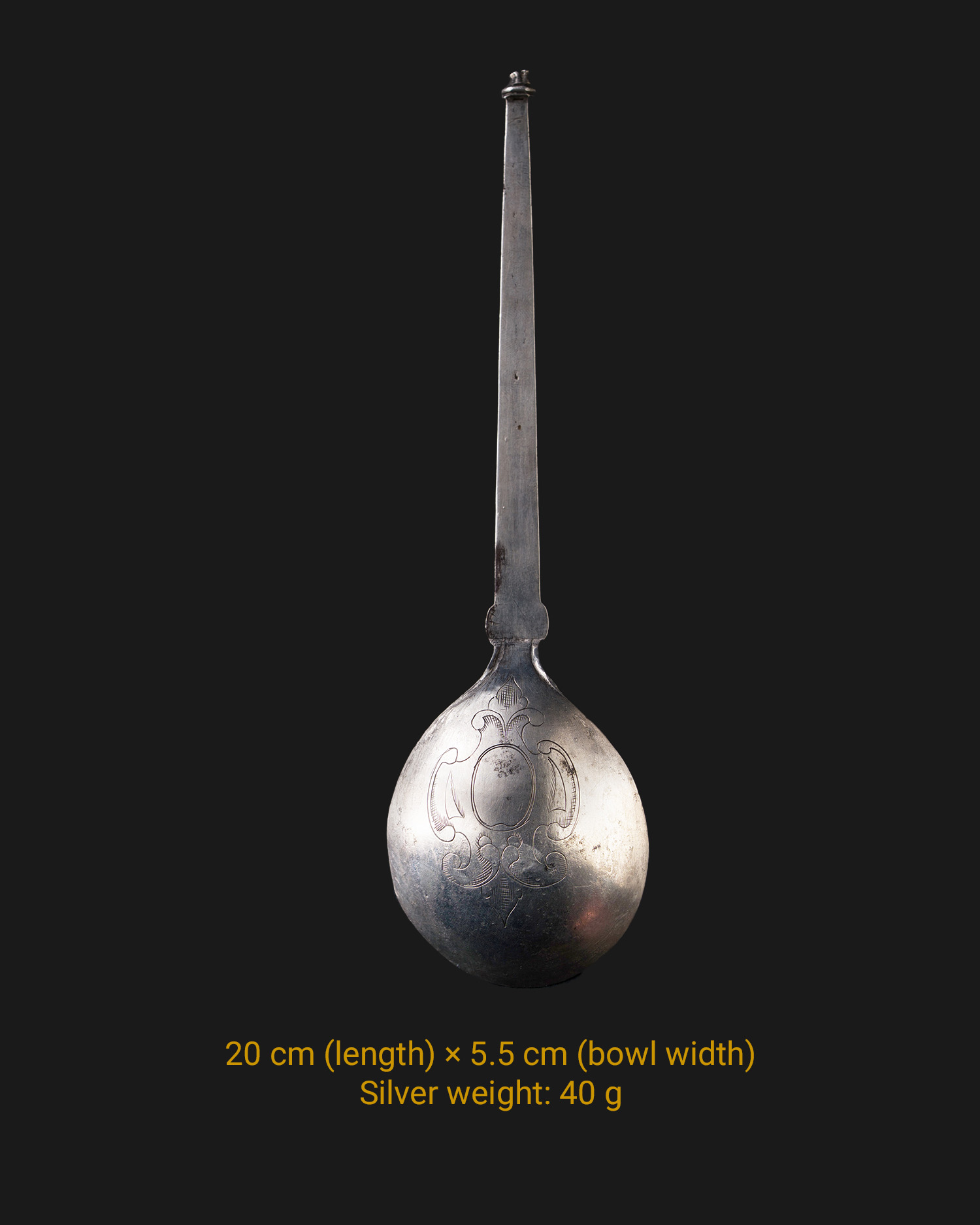
Silver tablespoon made in the Republic circa 1650.; baroque with egg-shaped scoop, on the back, at the joining of the scoop and the handle, engraved cartouche of the coat of arms with a hollow shield; the handle in the form of a flat faceted bar, decorated with engraving, originally ending in a profiled dome.
Very similar spoons are held in the collection of the National Museum in Kraków (including MNK XV-307 https://zbiory.mnk.pl/pl/katalog/523365 ). The similarities are not only in size, but also in form and decoration. It is very likely that they were made in the same workshop or workshop circle.
1 in stock
| Weight | 0,040 kg |
|---|---|
| Dimensions | 20 × 5,5 cm |
| Type |
Silver tablespoon |
| Materiał |
Chiseled silver |
| Kolorystyka |
Silver |
| Technika |
Chiseling ,Riting |
| Czas powstania |
circa 1650. |
| Era |
Baroque |
| Kraj pochodzenia |
Poland |
| State of preservation |
Age-related state of preservation, lack of profiled dome crowning the stem |
Related products
“Apostle” spoon with St. Simon, silver, England, 18th century.
Chapel with Our Lady of Czestochowa and Eagle, Poland, 19th century.
Ivan Khlebnikov, Kovsh with horse’s head, silver, enamel, gilt, Moscow, 1860-1918
Medieval chess figure (chaser), bone, Scandinavia (?), 12th century.
Przeworsk belt buckle, silver, Poland, 17th century.
Stepping lion, gilt silver, Western Europe, 17th-18th century.
Wooden Spoon with ‘V’ Initial, Germany, 19th Century.
This hand-carved wooden spoon, 23 cm long, originates from Poland and is dated to the 19th century or earlier. The deep, functional bowl shows clear signs of use. The handle is adorned with serrated line carvings and a 'V' initial, likely for owner identification. A leather strap with an old collector's paper tag remains attached to the end.
In the 19th century in Poland, spoons of this type were among the basic items of everyday use on rural and pastoral farms. They were made by hand from a single piece of wood, which was part of the tradition of Polish folk craftsmanship, based on simple, durable materials.
Copies with preserved markings are rare today, documenting the development of Polish material culture and everyday practices of village life.