


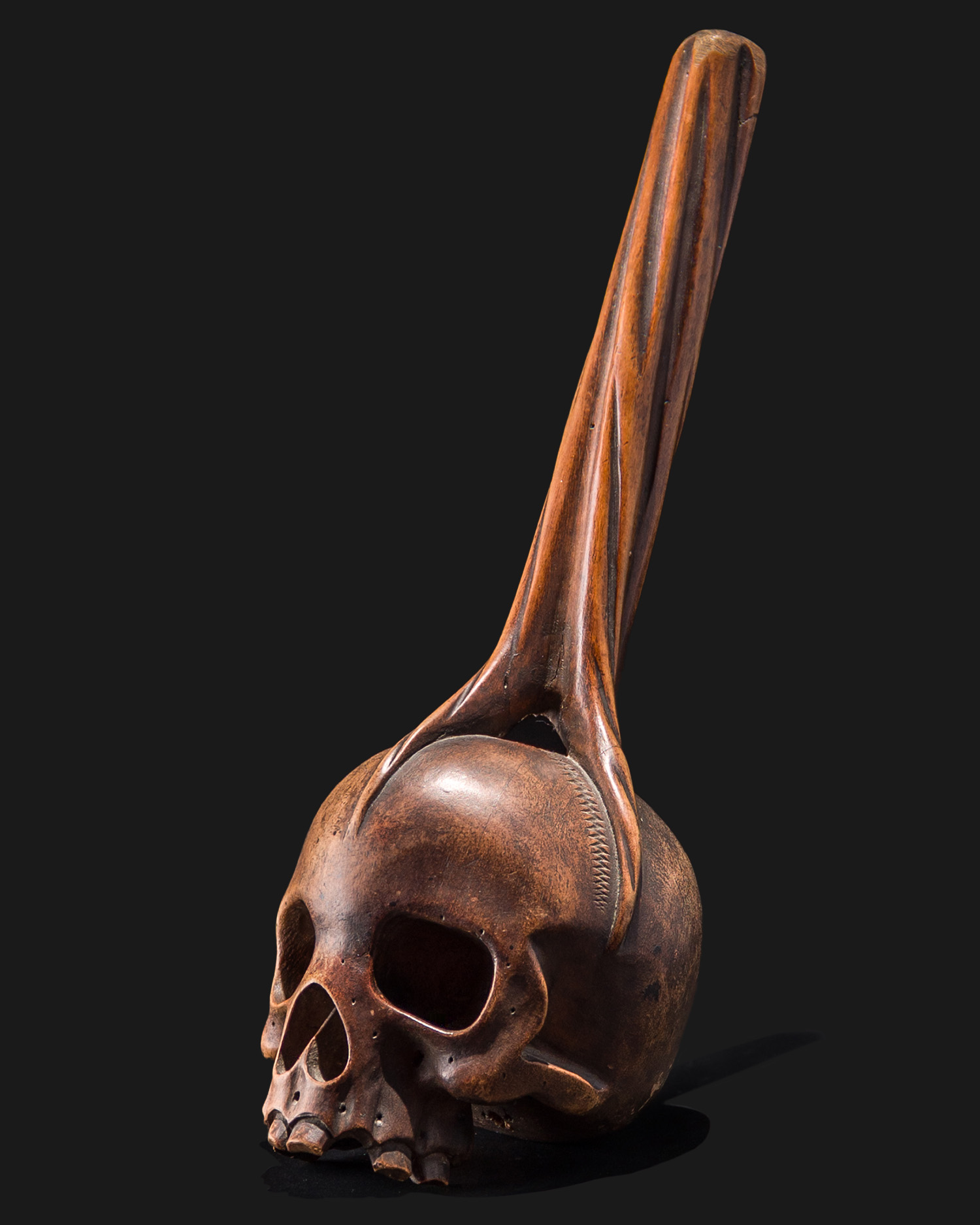
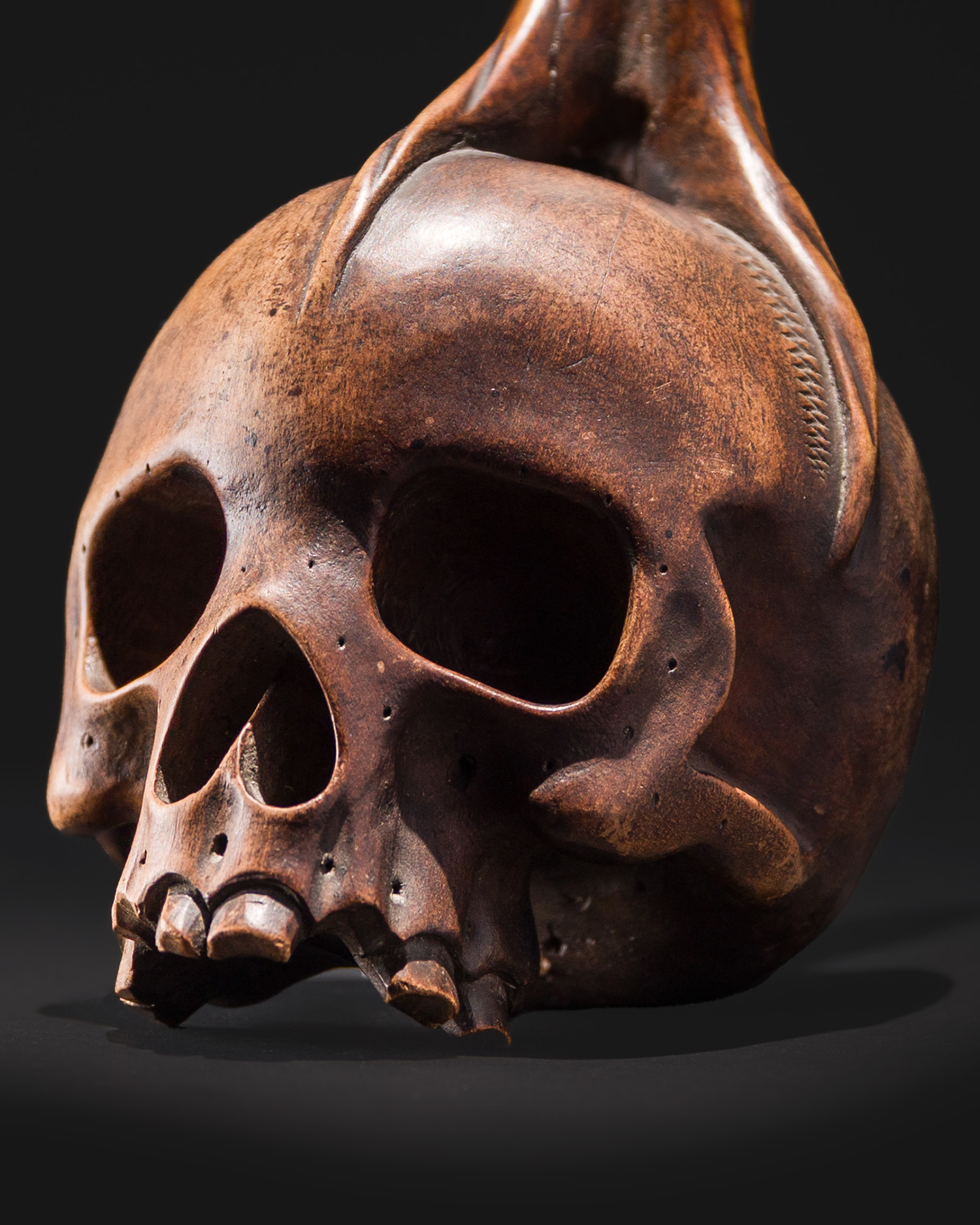
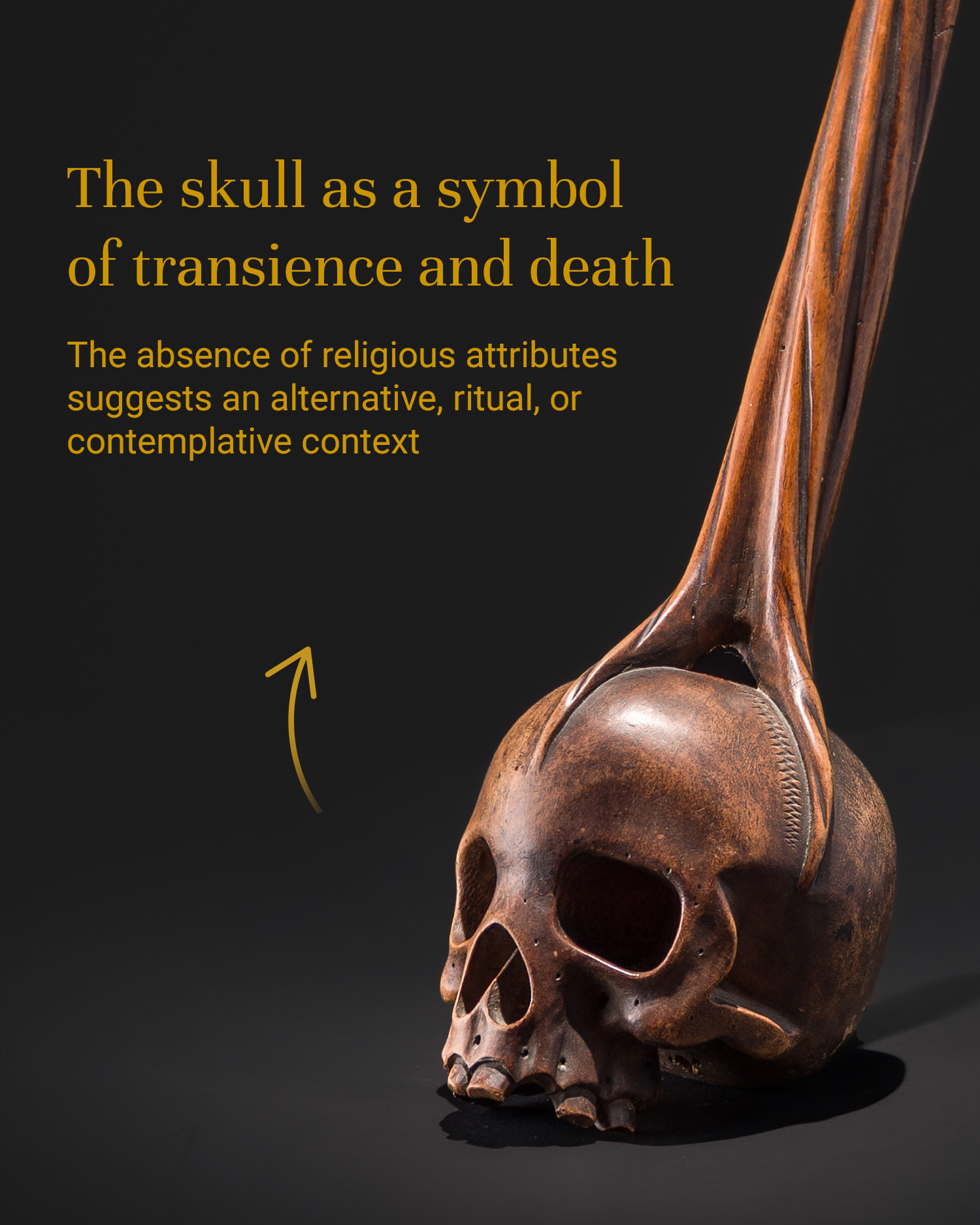
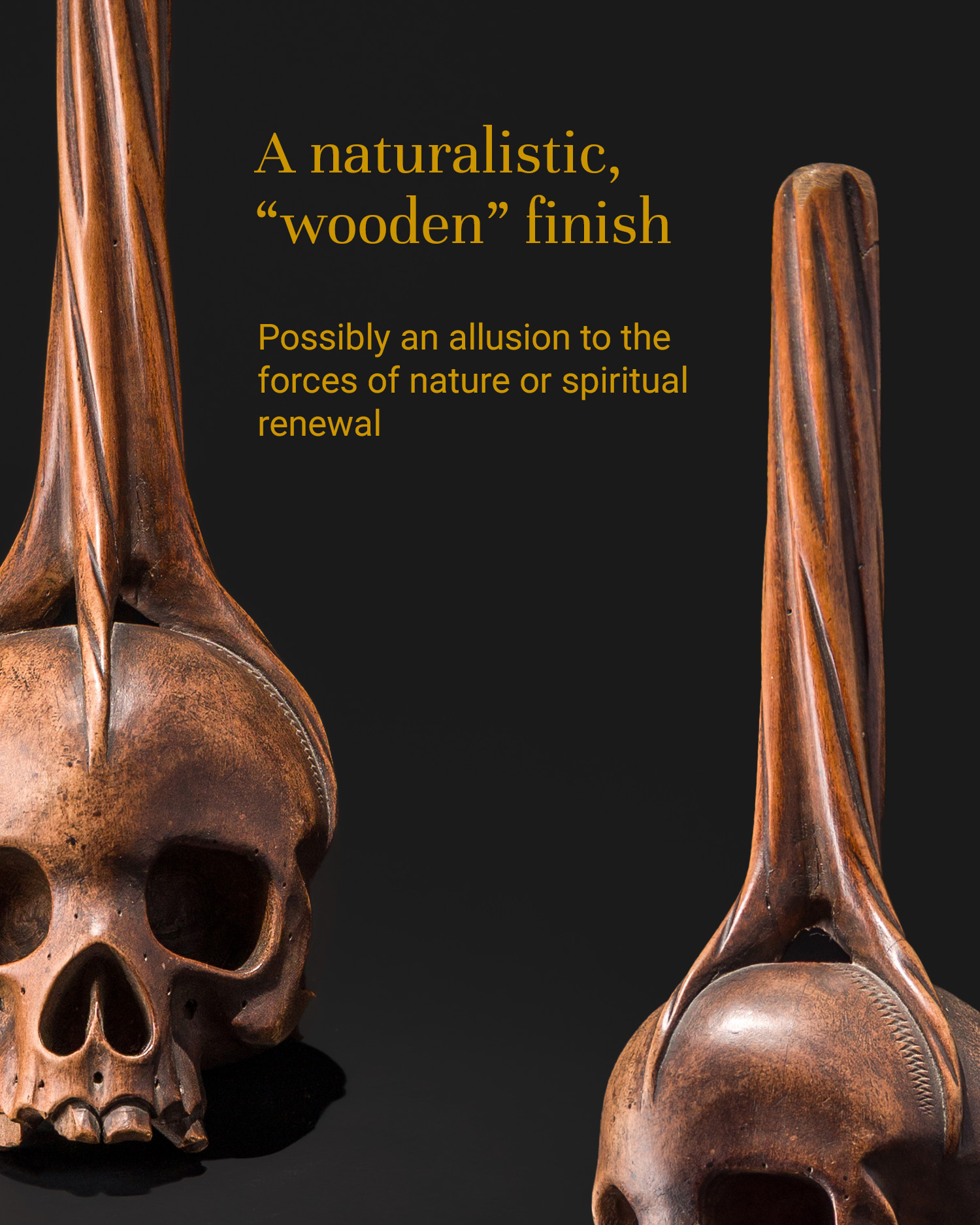
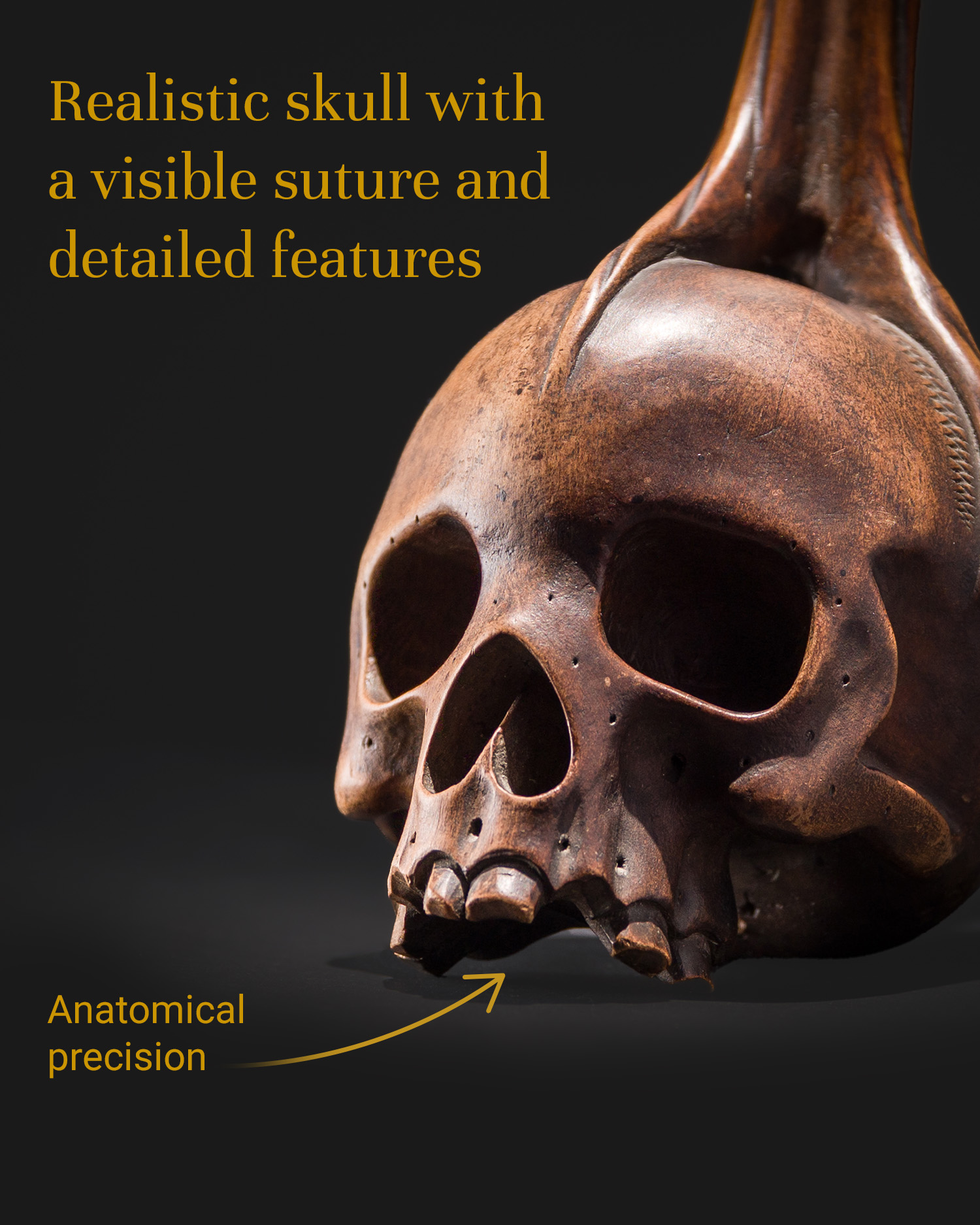
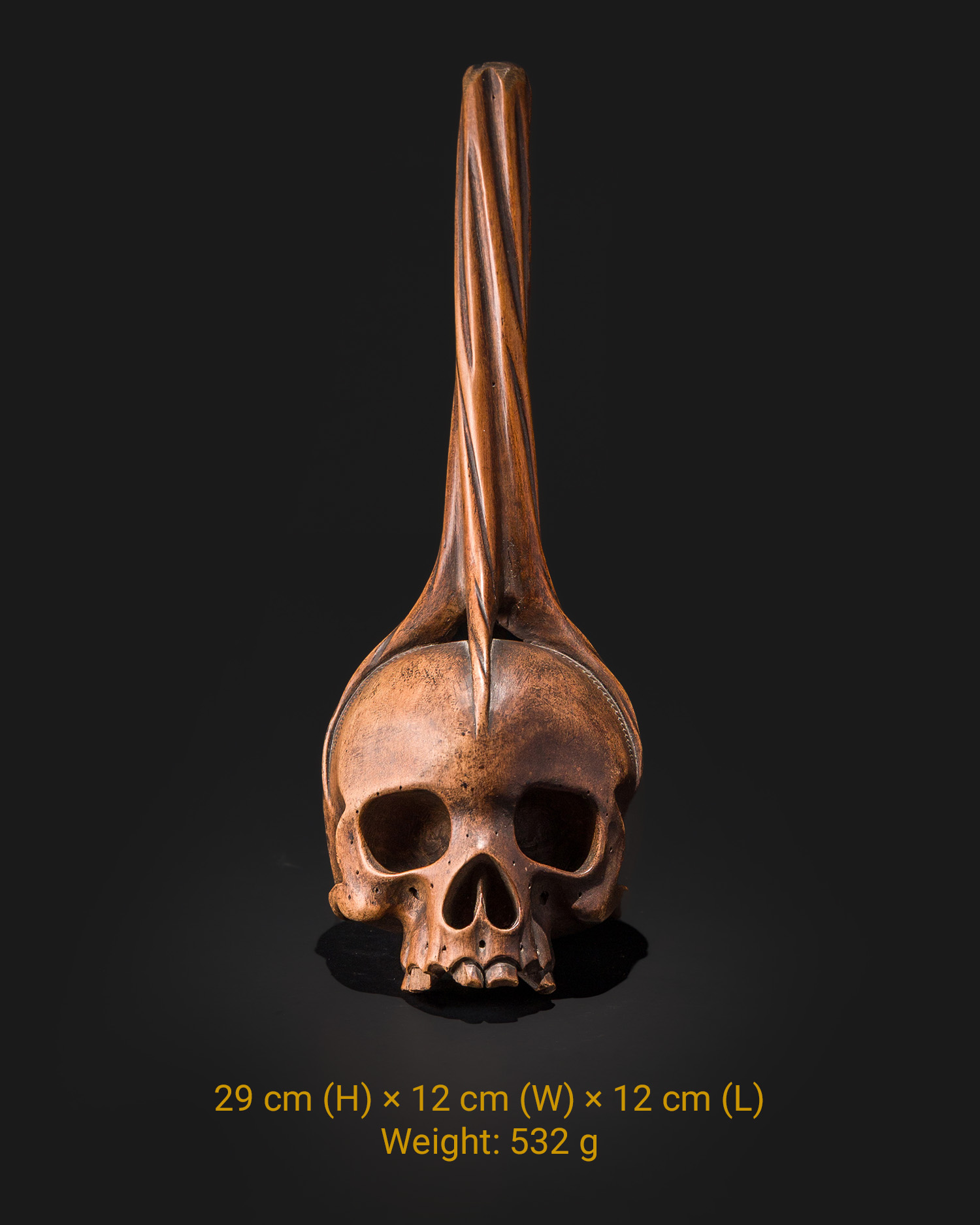

Crucifix base in the form of a skull topped with a stylized tree trunk, wood, Germany (?), 18th-19th century.
5300,00 zł
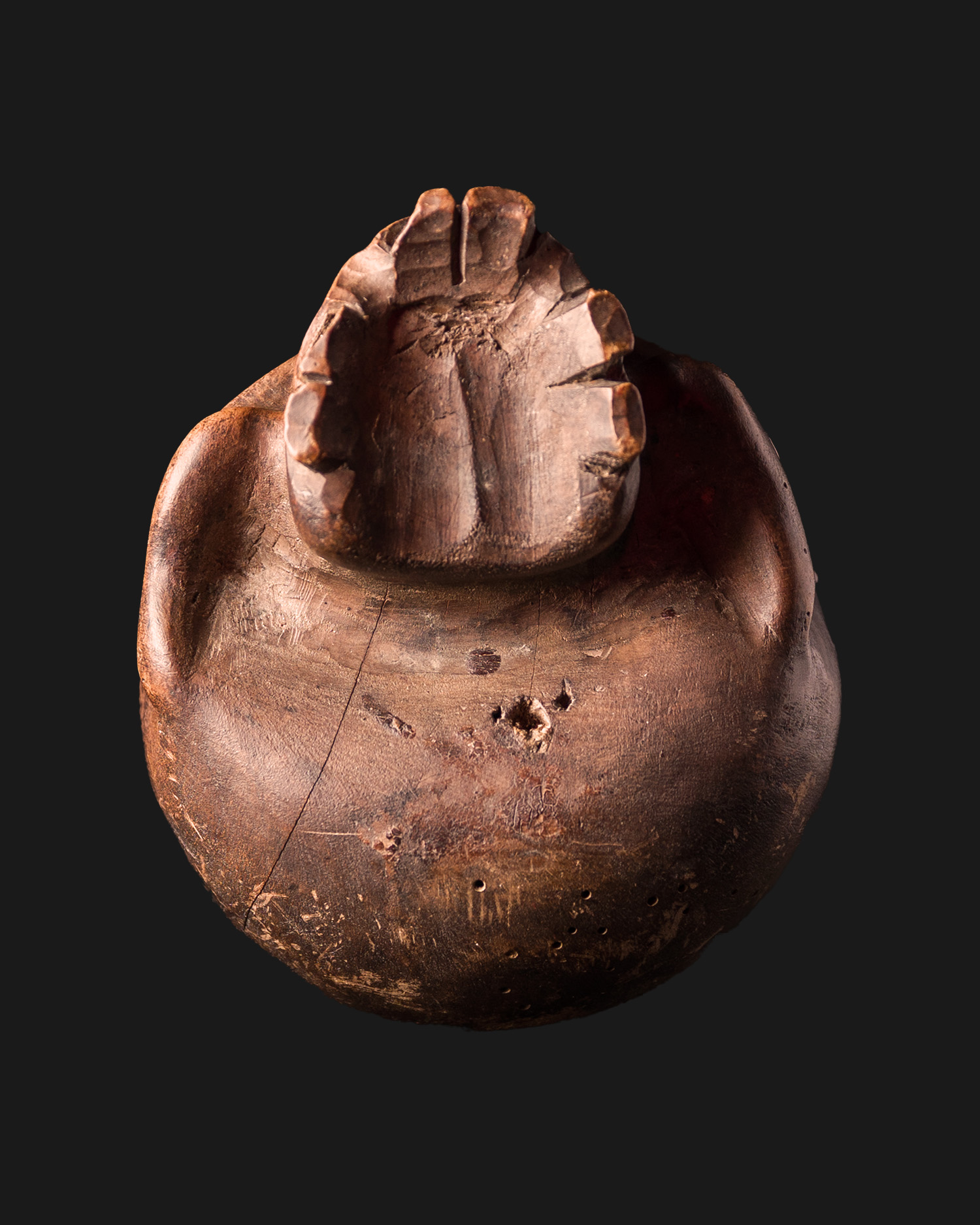
A unique dark wood sculpture featuring a realistically carved human skull, embraced from above by four massive handles resembling claws or roots. These handles converge and twist into a single, compact form, reminiscent of a stylized tree trunk, ending in a flat-cut top surface with a full-width groove, indicating the object was originally part of a larger structure. The skull is carved with meticulous attention to anatomical details, such as cranial sutures, nasal apertures, and dentition. Its form and construction suggest the sculpture served as the base for a memento mori crucifix; the missing element of carved bones beneath the occiput causes the object to currently present with a slight tilt, whereas it was originally positioned vertically.
1 in stock
| Weight | 0,5 kg |
|---|---|
| Dimensions | 29 × 12 × 12 cm |
| Type |
Ritual / esoteric sculpture |
| Form |
Skull topped with a stylized structure resembling a tree trunk or twisted talons |
| Materiał |
Dense exotic wood ,Patina |
| Kolorystyka |
Caramel ,Dark amber |
| Technika |
Anatomical details ,Manual modeling ,Wooden sculpture |
| Czas powstania |
18th-19th century (?) |
| Era |
Early Romanticism ,Late Baroque |
| Kraj pochodzenia |
France |
| Autor |
Unknown |
| State of preservation |
Very Good. Natural patina, microcracks, minor traces of inactive woodworm. Stable wood, no loss in texture. |
Related products
Afrika Korps tropical helmet, cork and canvas, Germany (North Africa), 1941
A tropical cork helmet (Tropenhelm) used by soldiers of the German Afrika Korps (Deutsches Afrikakorps, DAK) during the North African campaign of 1941-1943. Made of lightweight, hardened cork covered with beige canvas. On the sides are metal insignia: on one side a tricolor national shield (black-white-red), on the other a Wehrmacht eagle holding a swastika. The inside of the helmet is lined with red lining, with a preserved leather potnik and a fragment of the chin strap. The potnik bears the manufacturer's stamp HR41 (Heinrich Radecke, Hamburg, 1941).
All in very good state of preservation, with natural wear to the fabric at the edges of the brim and minor rubbing. Despite the broken chin strap, the structure remains fully stable. The helmet is preserved in its original condition, without conservation interference.
Luftwaffe non-commissioned officer’s cap, wool fabric, Germany, ca. 1939-1945
Mask of Shame – “Schandmaske,” Central Europe (Germany?), ca. 1550-1700
Moneybox in the form of a skull, wood, iron, Central Europe (Germany?), 18th century.
Pair of skulls joined by occiputs, wood, Germany, 1635
Plaque with Suchekomnaty coat of arms and panoplies, silver and silk, Poland, 18th century.
A unique heraldic-votive plaque, centered around an oval silver plaque dating from the late 18th century. It is engraved with the Suchekomnaty coat of arms featuring panoply motifs (knightly armament), mantling, a helmet, and a hunting horn, crowned with a noble coronet and the monogram "P.J.". The plaque was in the 1920s-1930s sewn onto an ornate, soft textile backing made of alternating panels of amaranth and ecru silk fabrics. The background is adorned with hand embroidery crafted from silver purl, sequins, and metal applications forming floral compositions. Two original red wax seals remain on the reverse.