


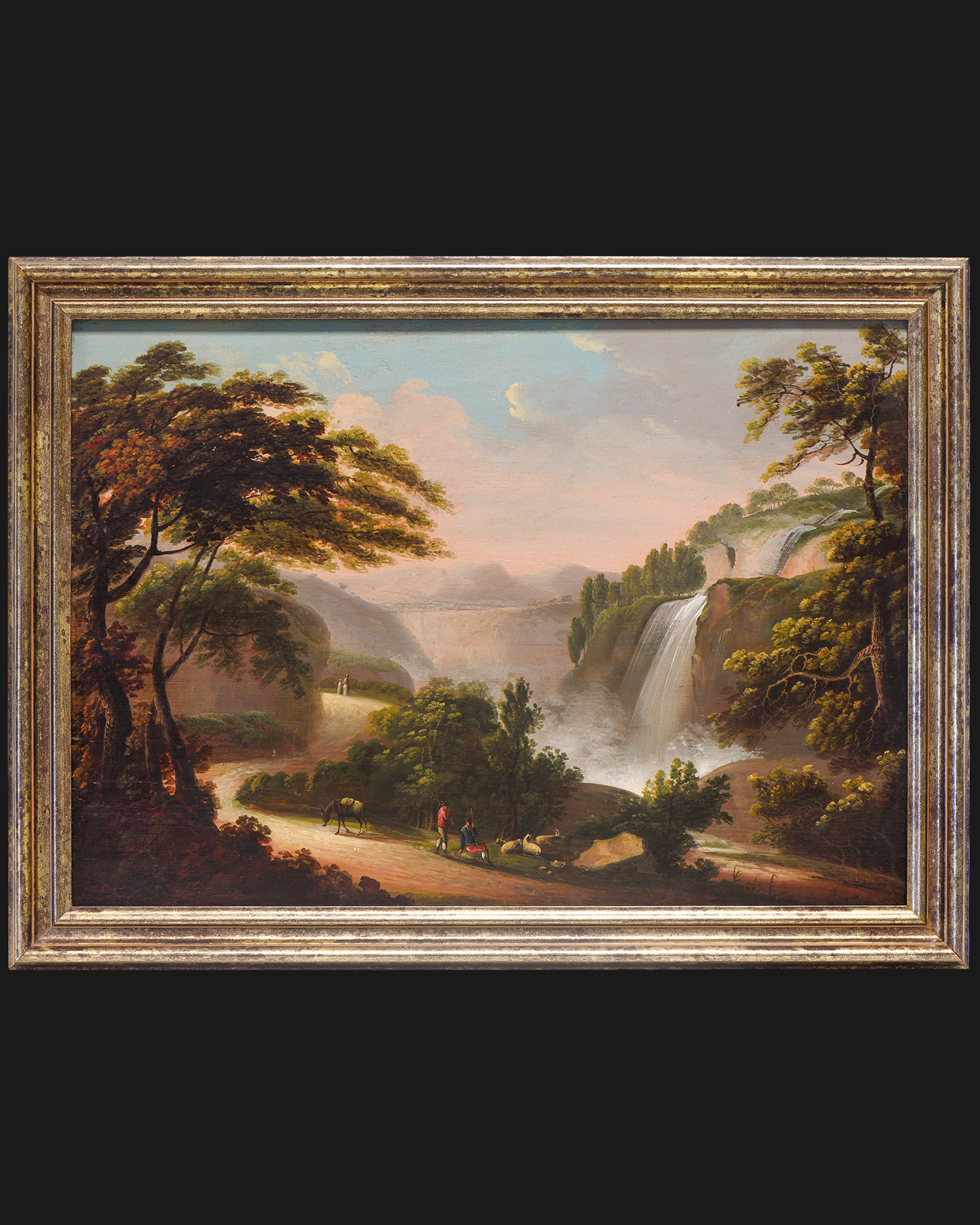
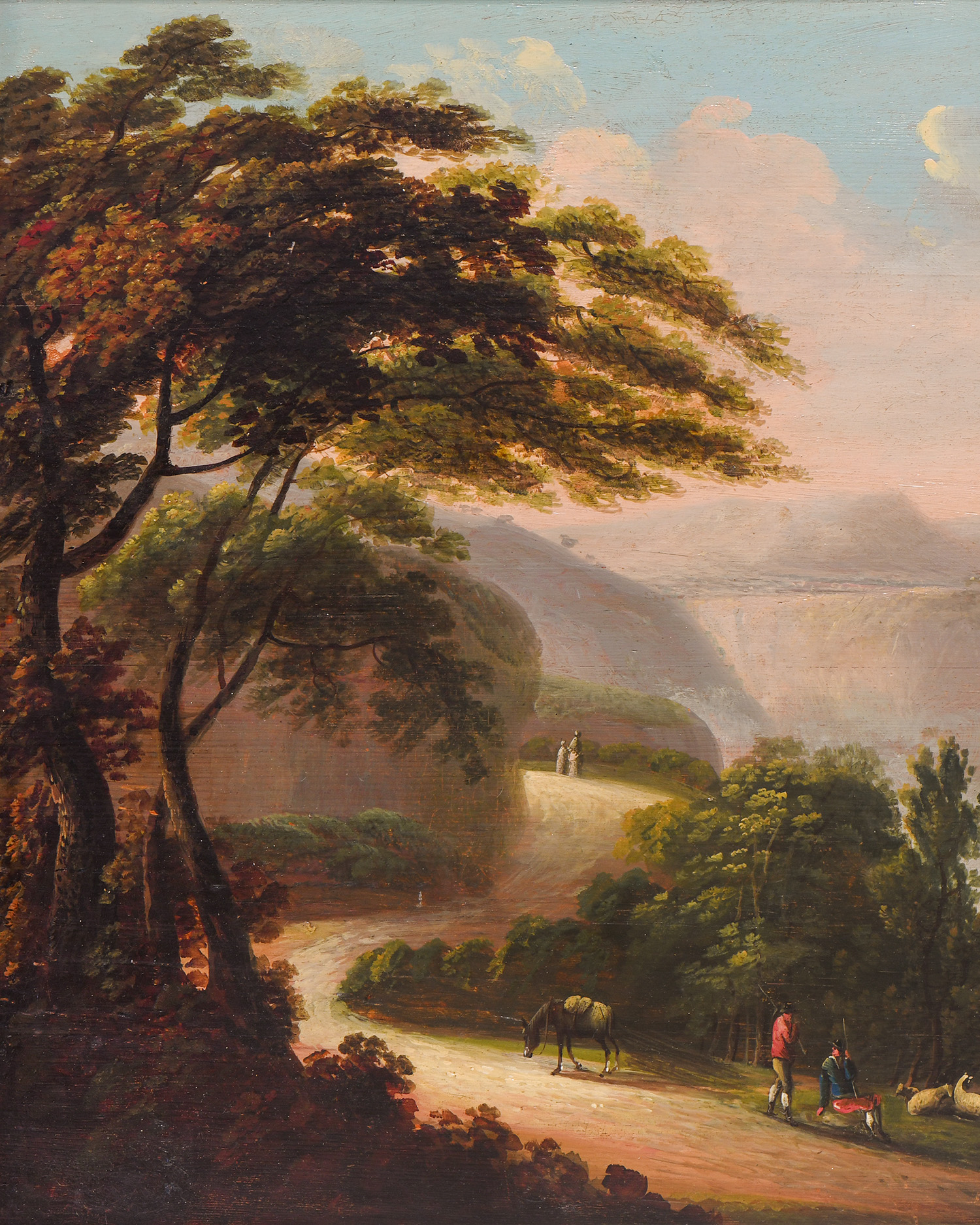
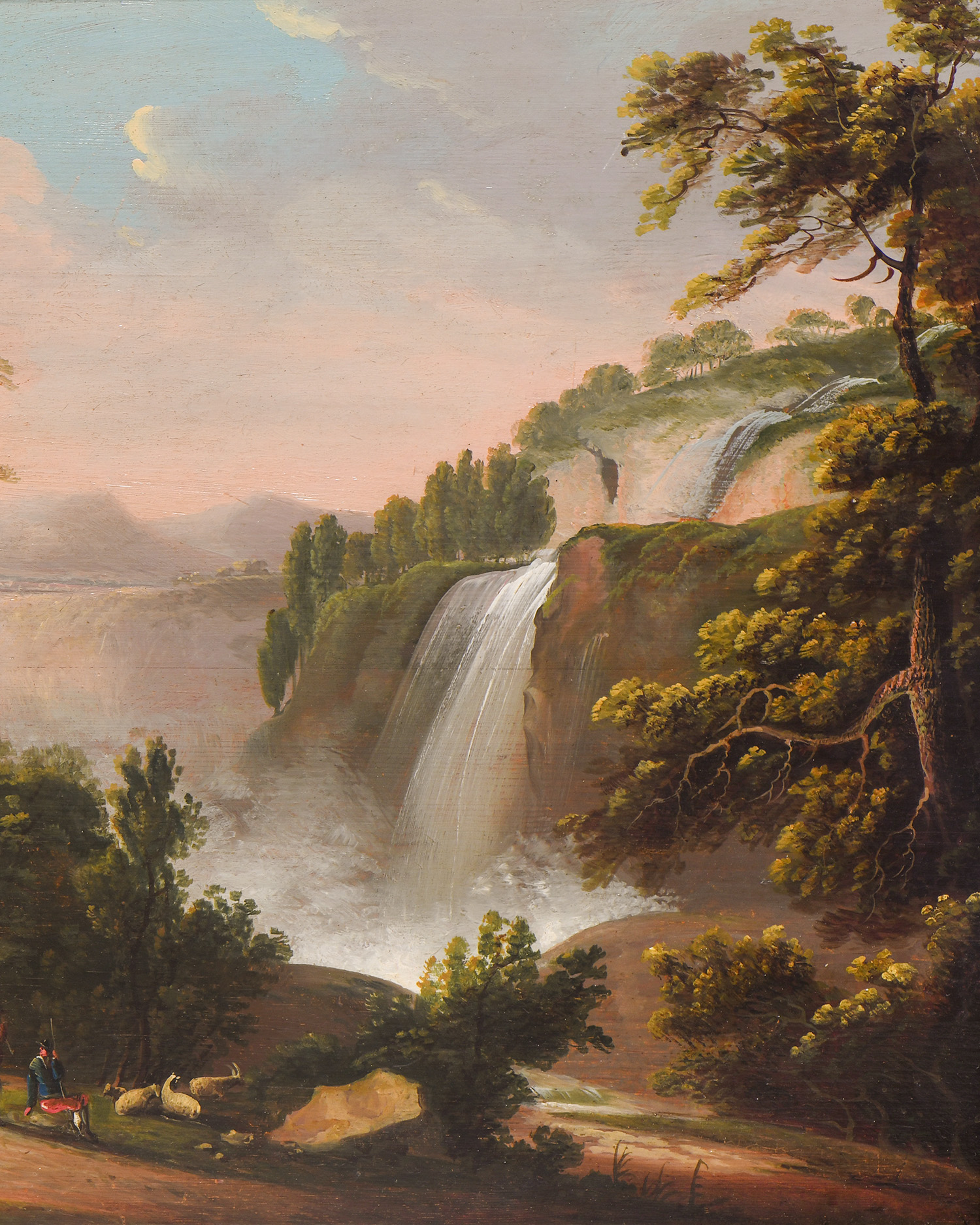
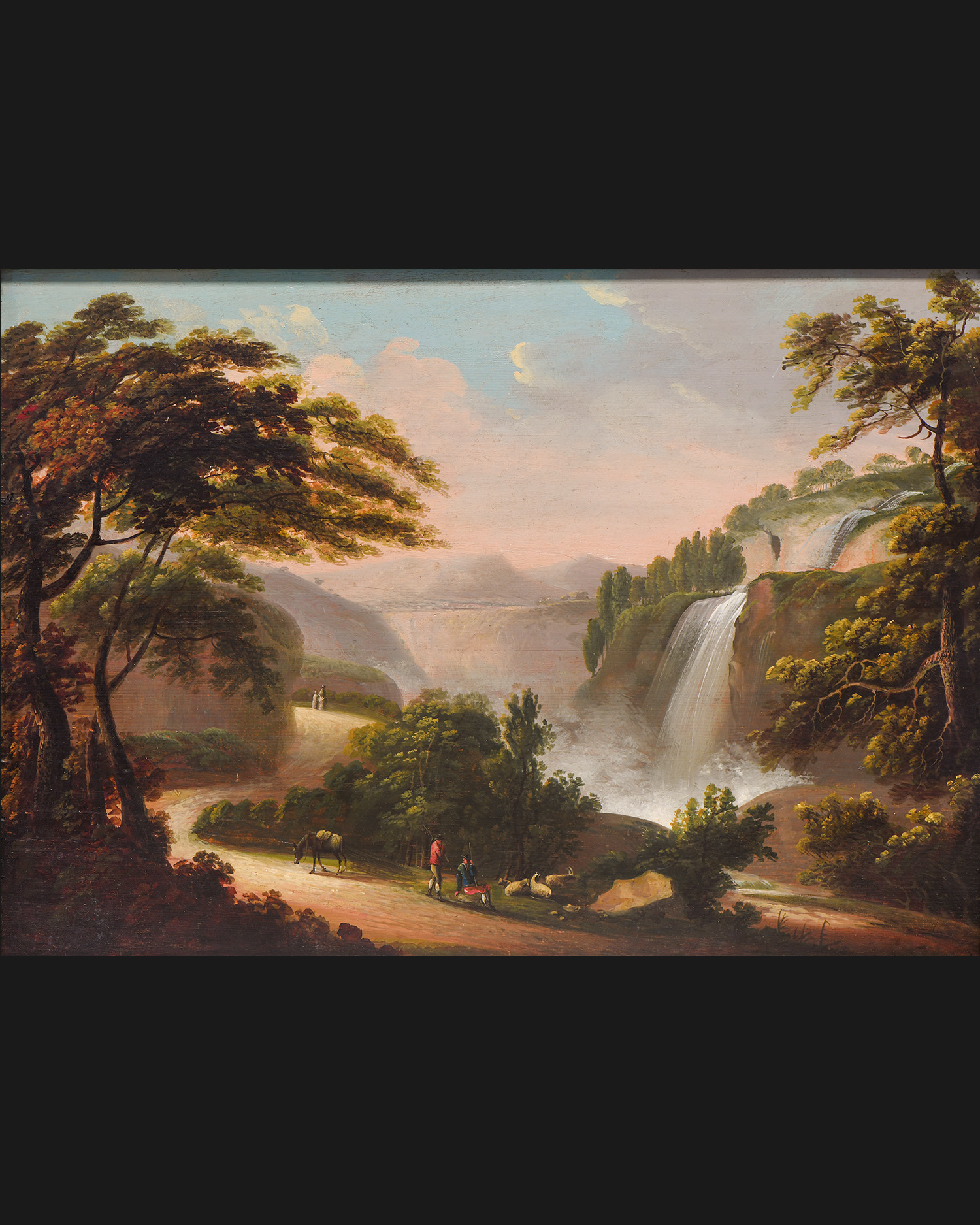
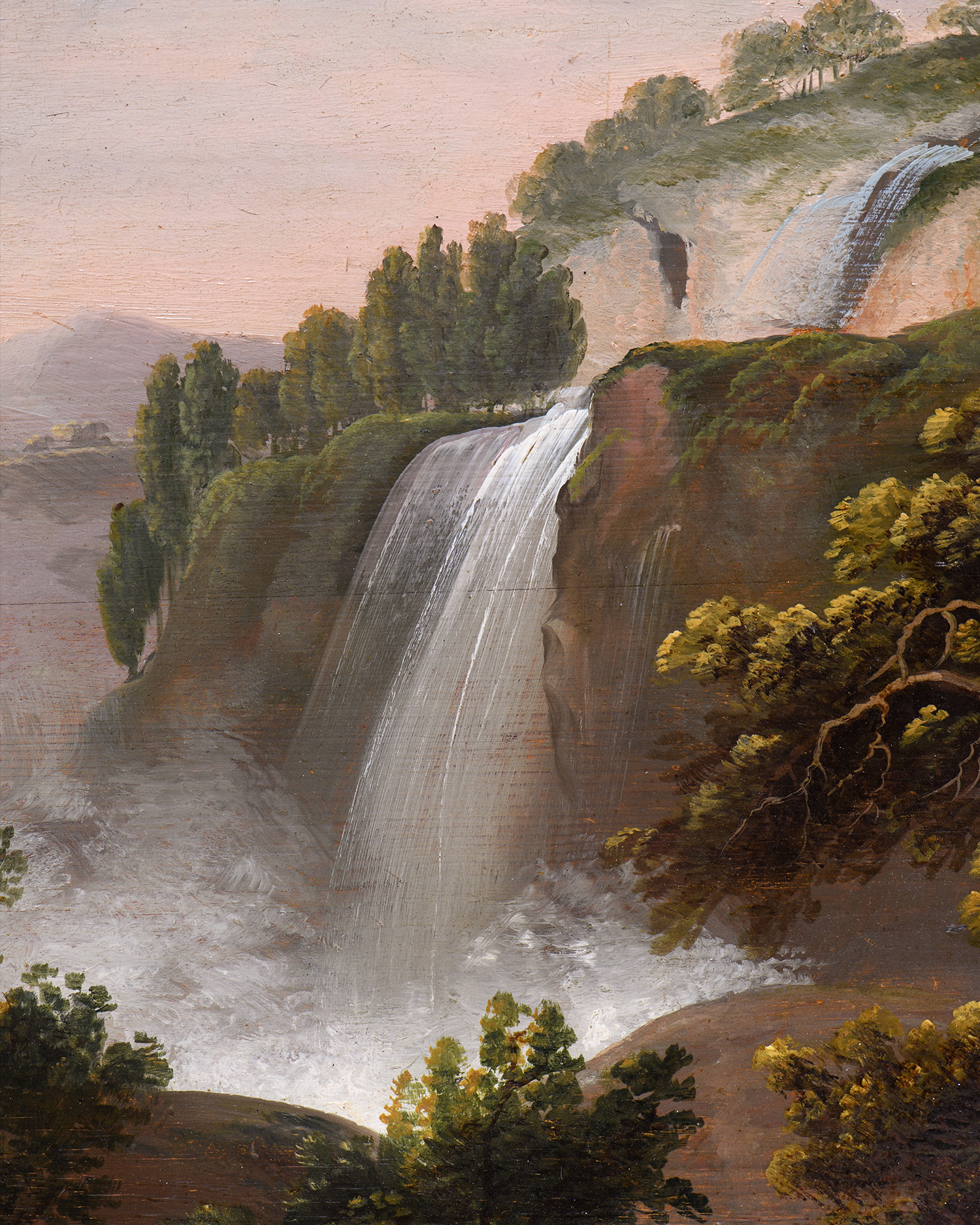
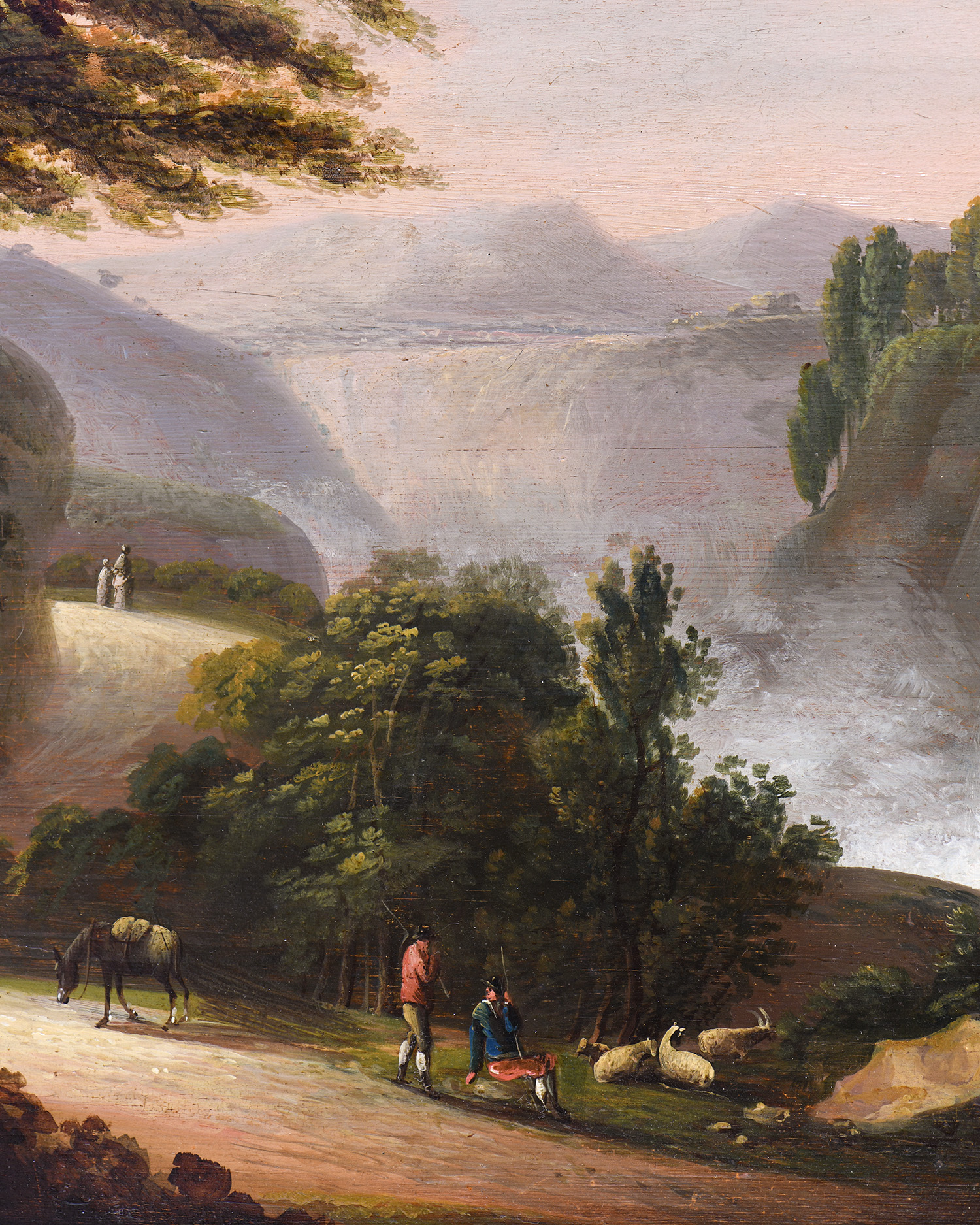

German/Dutch School, Landscape with a Waterfall in Tivoli, oil on panel, Italy (?), first half of the 19th century
3200,00 zł
Canvas dimensions: 59.5 x 42.5 cm
Dimensions with frame: 67.5 x 50.5 cm
Weight: 1.30 kg
1 in stock
| Weight | 1,3 kg |
|---|---|
| Dimensions | 59,5 × 42,5 cm |
| Type |
Image |
| Form |
Landscape |
| Kolorystyka |
Blitz ,Brown ,Greens ,Orange |
| Technika |
Oil on the board |
| Czas powstania |
First half of the 19th century |
| Era |
Romanticism |
| Kraj pochodzenia |
Italy (?) |
| Autor |
Unknown |
| State of preservation |
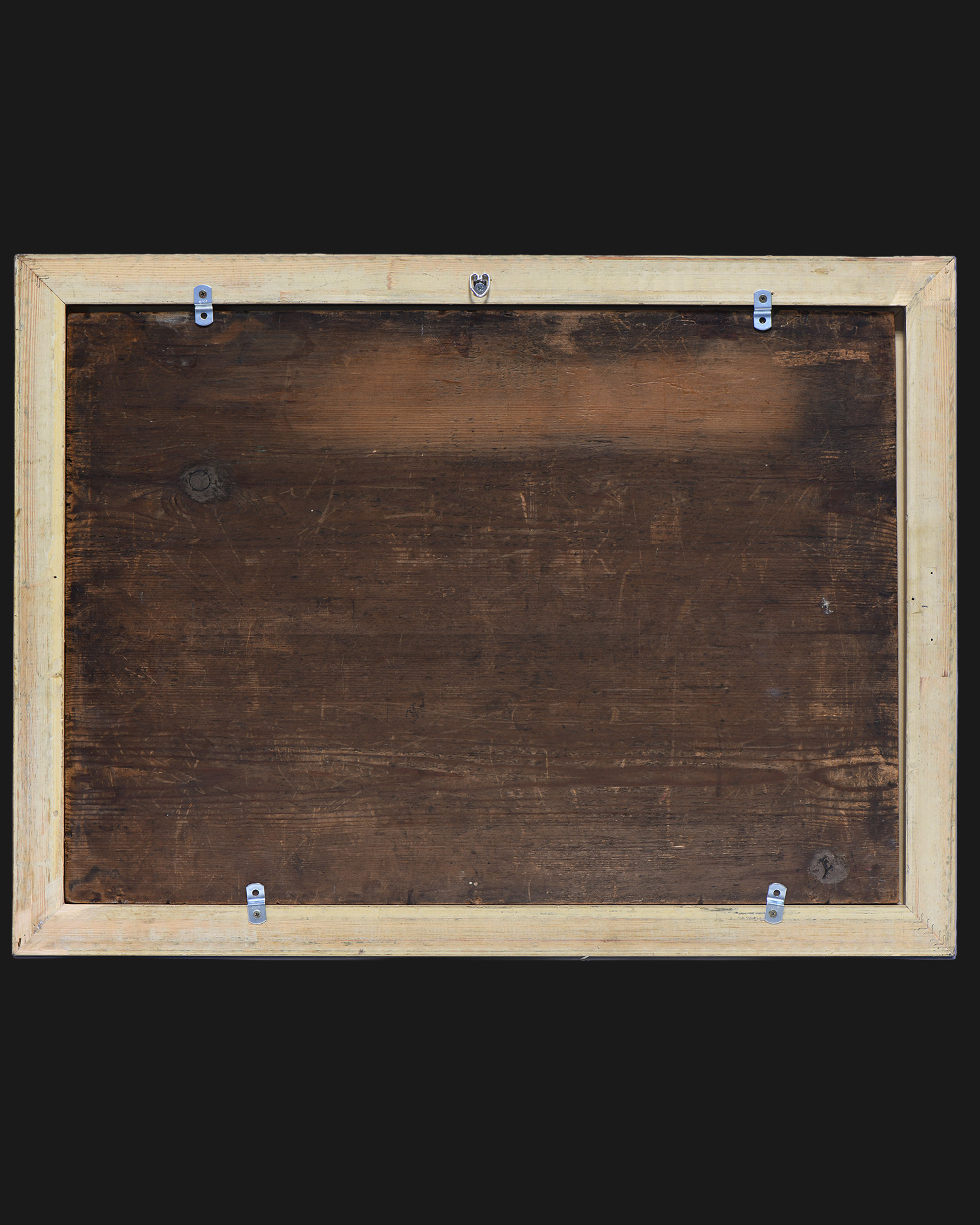
In very good condition, minimal warping of the wood grain, varnish recently reapplied |
Related products
Battle of Mohacz, oil on canvas, Krakow, 1886
Death of Cleopatra, oil on canvas, Italy, 17th-18th centuries.
Epitaph portrait of Jan Czapski (1699-1742), oil on copper, Poland, 1740s.
Govert Camphuysen (1623/1624-1672) – attributed, Landscape with cattle grazing in front of a hut, oil on board
In front of the village thatched hut, sheep, a cow and a goat are grazing. Next to it, a villager is sleeping under a tree. To the left of the composition, a second scene is visible: a man leading a bull over a small bridge over a stream. In the background is a landscape with trees and gentle hills, and the sky occupies a large part of the painting, building the mood of the whole scene. What draws attention is the exquisite way in which the animals are depicted. This was a specialty of Camphuysen, whose work was inspired by the style of Paulus Potter. Warm, earthy colors dominate - browns, ochres, dim greens and broken yellows. The light is soft, diffused, as if in the early morning or towards evening. The sky has shades of gray, beige and soft pink, suggesting changing weather or impending dusk. The contrast between the bright sky on the left and the darker, more saturated part with the cottage on the right gives the image depth and balance.
John Baptist Lambrechts (1680 – after 1731), Genre scene in an inn, oil on board, ca. mid-18th century.
Portrait miniature of King Augustus III, gouache and watercolor on bone, Poland, c. 1734–1750
A portrait miniature depicting Augustus III the Saxon (Wettin), King of Poland and Elector of Saxony – gouache and watercolor on a thin, semi-transparent ivory plaque. The monarch's effigy represents the iconographic canon established in the first years of his reign, immediately following his coronation in Wawel Cathedral in January 1734.
Stanisław Chlebowski (1835-1884), Genre Scene – Dance, watercolor on paper, Istanbul (?), 1874
A small watercolor by Stanisław Chlebowski (artist's signature in the lower left corner: "St. Chlebowski 1874 ), depicting an intimate, dynamic and graceful genre scene of Oriental character. It reflects the artist's fascination with the culture of the Middle East and the Caucasus, which he explored during his many years of work as court painter to the Sultan in Istanbul.
With frame 50 x 42, visible area: 31.5 x 23.5 cm
Symeon Shimin (1902–1984), Gum Chum / This Mortal Coil, oil / mixed media on canvas, United States, circa 1945-1955
The presented canvas is a museum-quality easel painting by the esteemed American painter and muralist of Jewish-Russian descent, Symeon Shimin. The painting is an outstanding example of post-war socially engaged expressionism, combining features of narrative painting with poster-like persuasion. Signed lower right: S. Shimin (artist's signature, authenticated)
The work is characterized by an extremely condensed, claustrophobic composition with a powerful emotional charge. The foreground is dominated by the expressively deformed figure of an elderly man captured in a theatrical, accusatory gesture – his hand points directly at the viewer. This technique, intensifying the cinematic drama, directly refers to Shimin's rich experience in creating iconic political and film posters for Hollywood (the artist was, among others, the author of the original poster for the 1939 film "Gone with the Wind"). In the background, in a dark shadow, the melancholic face of a second sage emerges. The entire piece is rendered in a stark, earthy, monochromatic palette dominated by deep browns, blacks, and muted blue garments, with a masterful use of chiaroscuro.
Dimensions: 82.5 x 59.5 cm (with frame 85 x 62 cm)