



Italian (Roman) School, Goddess Roma (Dea Roma / Roma Barberini), oil on canvas, Italy, c. 1760-1800
9500,00 zł
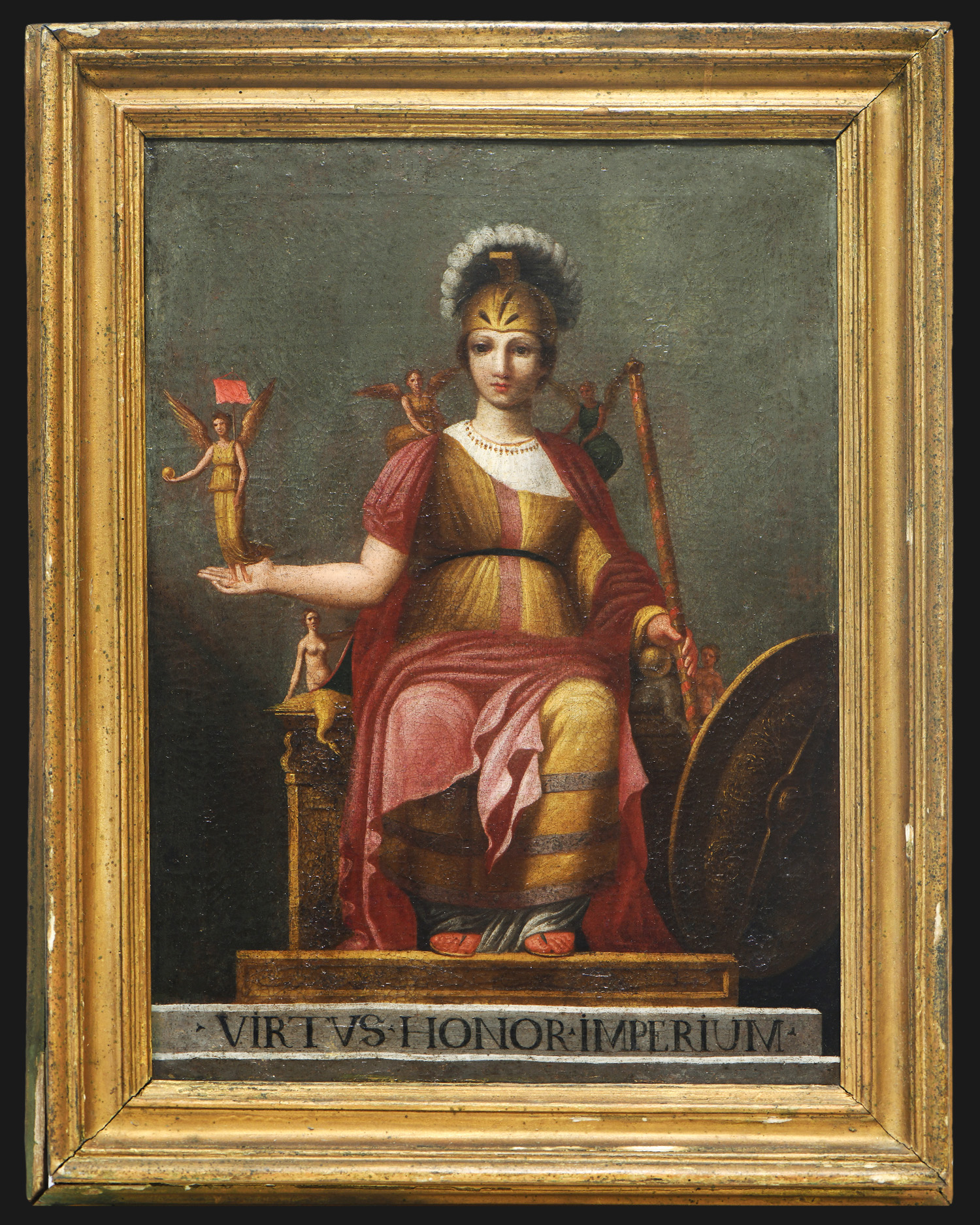
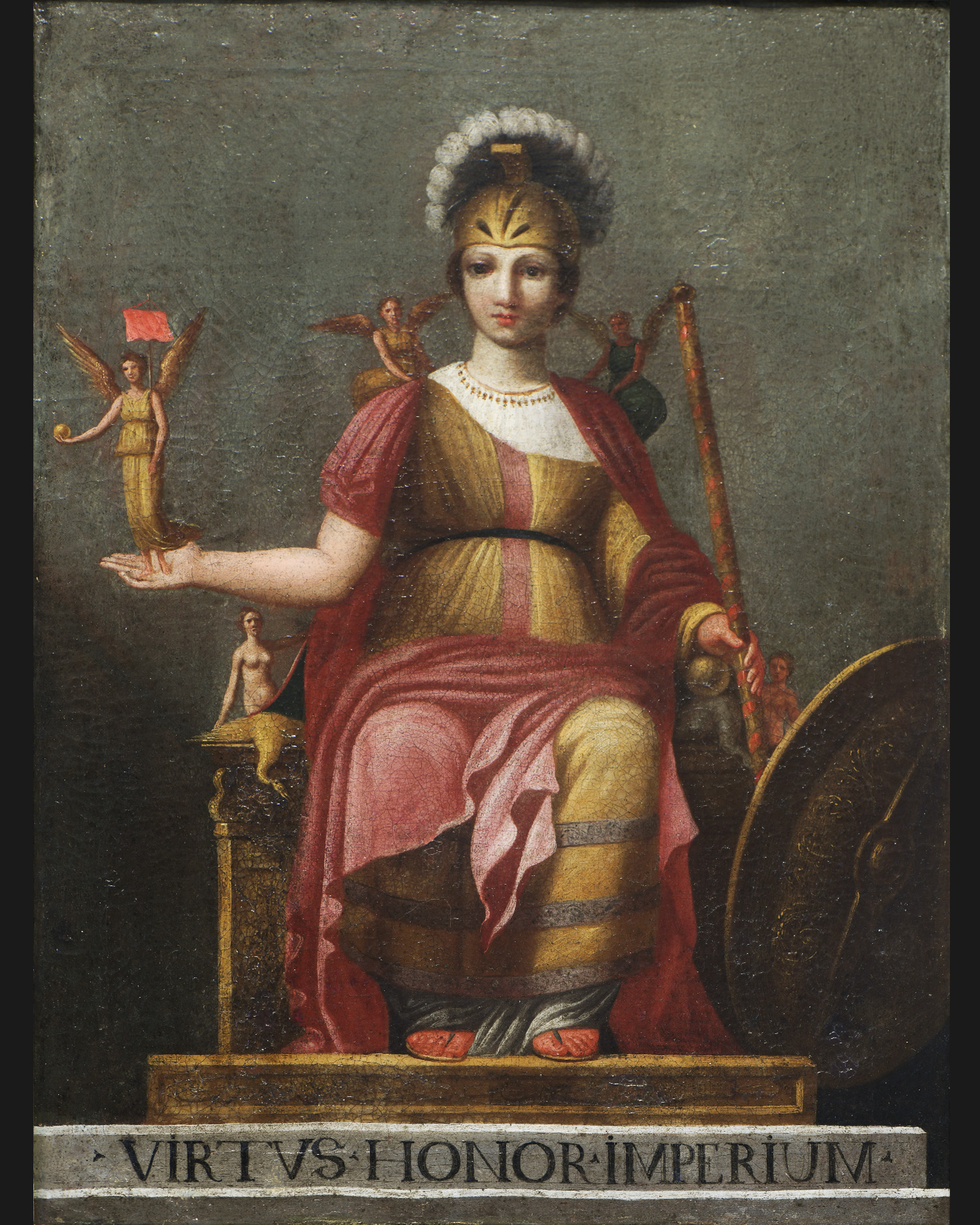
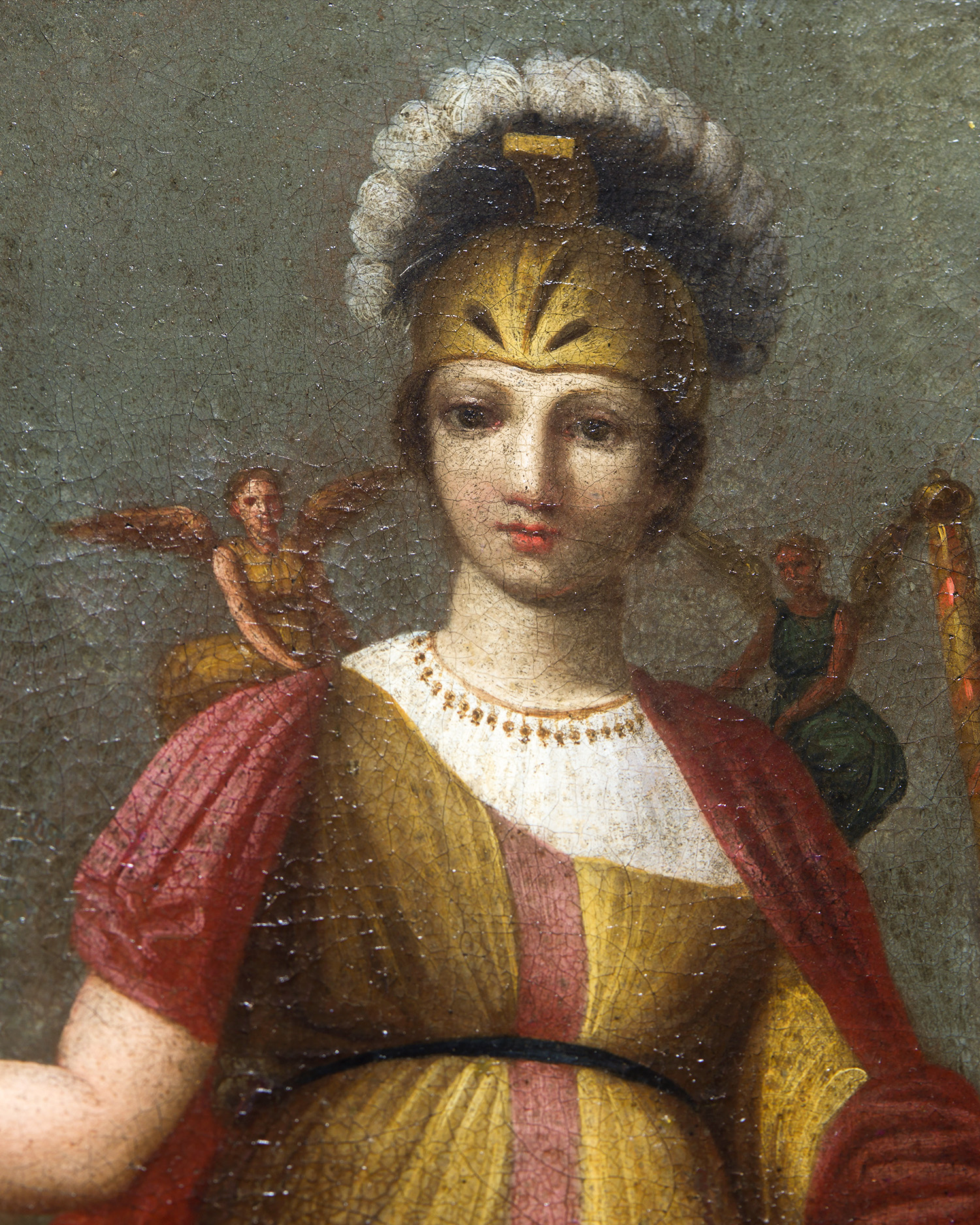
The painting depicts a frontal, dignified, and majestic portrayal of the Goddess Roma seated on a monumental throne, modeled after the famous 4th-century ancient fresco (“Dea Roma” from the Barberini collection, discovered in Rome in 1655).
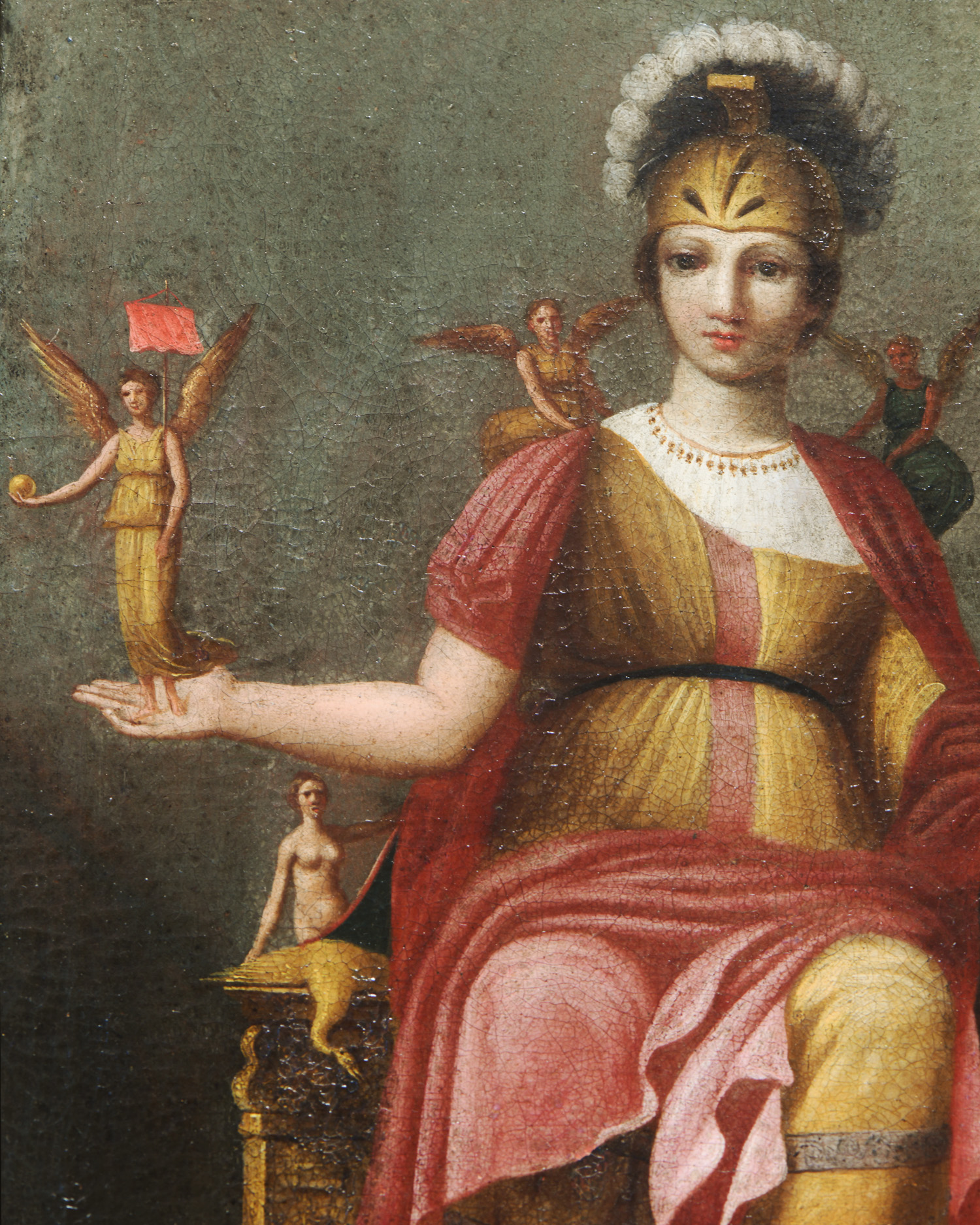
The Goddess is depicted in attire reminiscent of traditional Roman tutelary deities. She wears a yellow-gold tunic tied below the breasts with a dark band and a cascading, pink-red cloak (palla). Her head is adorned with a golden parade helmet featuring a magnificent, dense plume of white and dark feathers. Her facial features are idealized, with smooth skin, large eyes, and small lips – reflecting the academic canon of beauty of early Neoclassicism. Classic red Roman sandals (calcei) are visible on her feet.
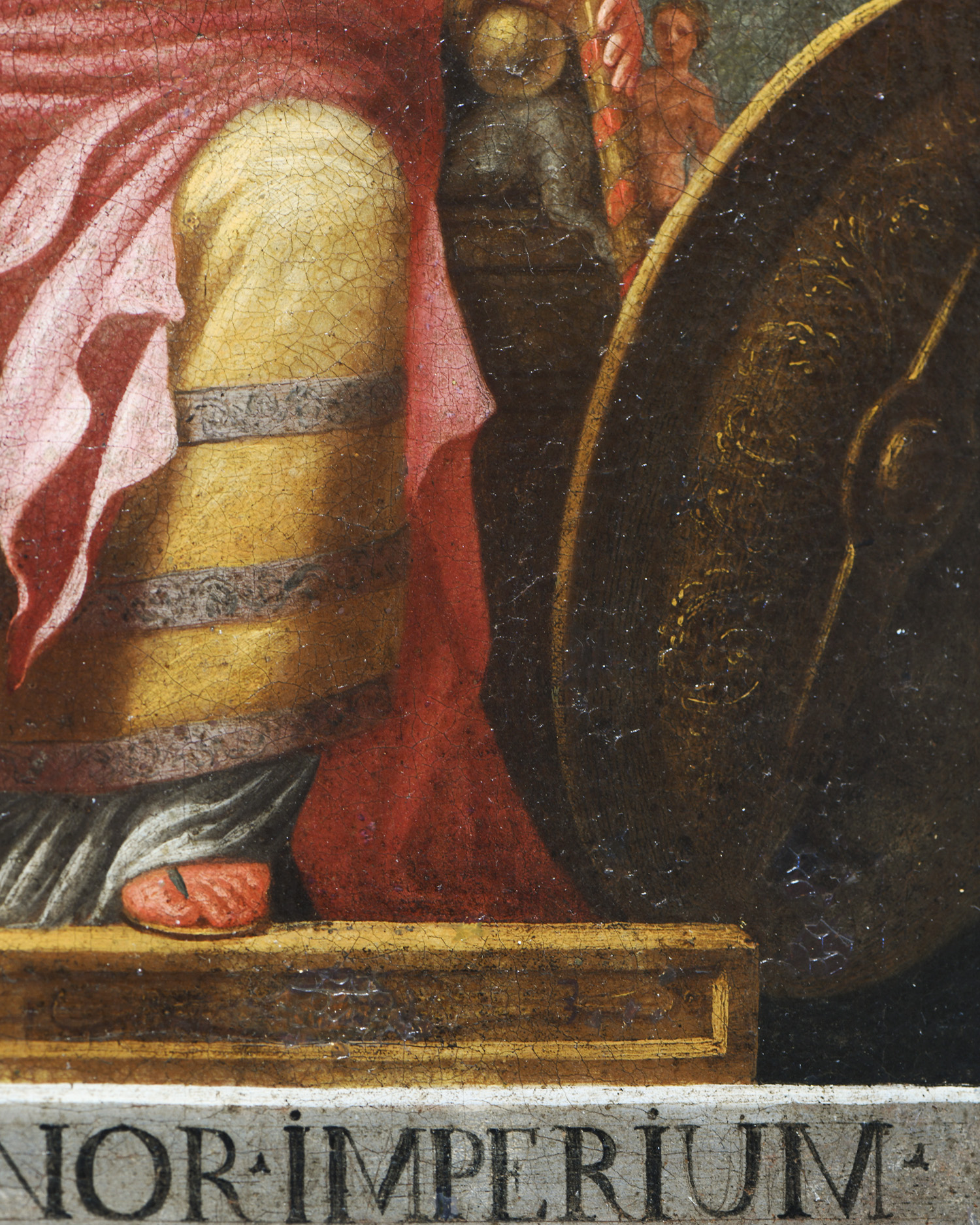
In her open right hand, the goddess holds aloft a winged figurine of the goddess of victory (Nike), who raises a red banner and holds a golden apple (orb) – a symbol of dominion over the world. With her left hand, Roma leans on a tall, golden scepter. Beside her rests a large, round shield (ancile) with a richly ornamented surface.
At the bottom of the painting, on a gray plinth stylized as antique stone, a meticulously calligraphed inscription in Roman capital script is visible:
VIRTVS HONOR IMPERIVM
This formulates the triad of Roman state values: Valor (Virtue), Honor, and Sovereign Power (Imperium). The triangular points separating the words (hederae) are a direct reference to classical Latin epigraphy.
Dimensions: 47.5 x 34.5 cm, framed (period frame)
1 in stock
| Weight | 1,9 kg |
|---|---|
| Dimensions | 47,5 × 34,5 cm |
| Kolorystyka |
Gold-yellow ,Gray-green ,Pink-red |
| Czas powstania |
ca. 1760-1800 |
| Era |
Enlightenment |
| Kraj pochodzenia |
Italy |
| Autor |
Unknown |
| State of preservation |
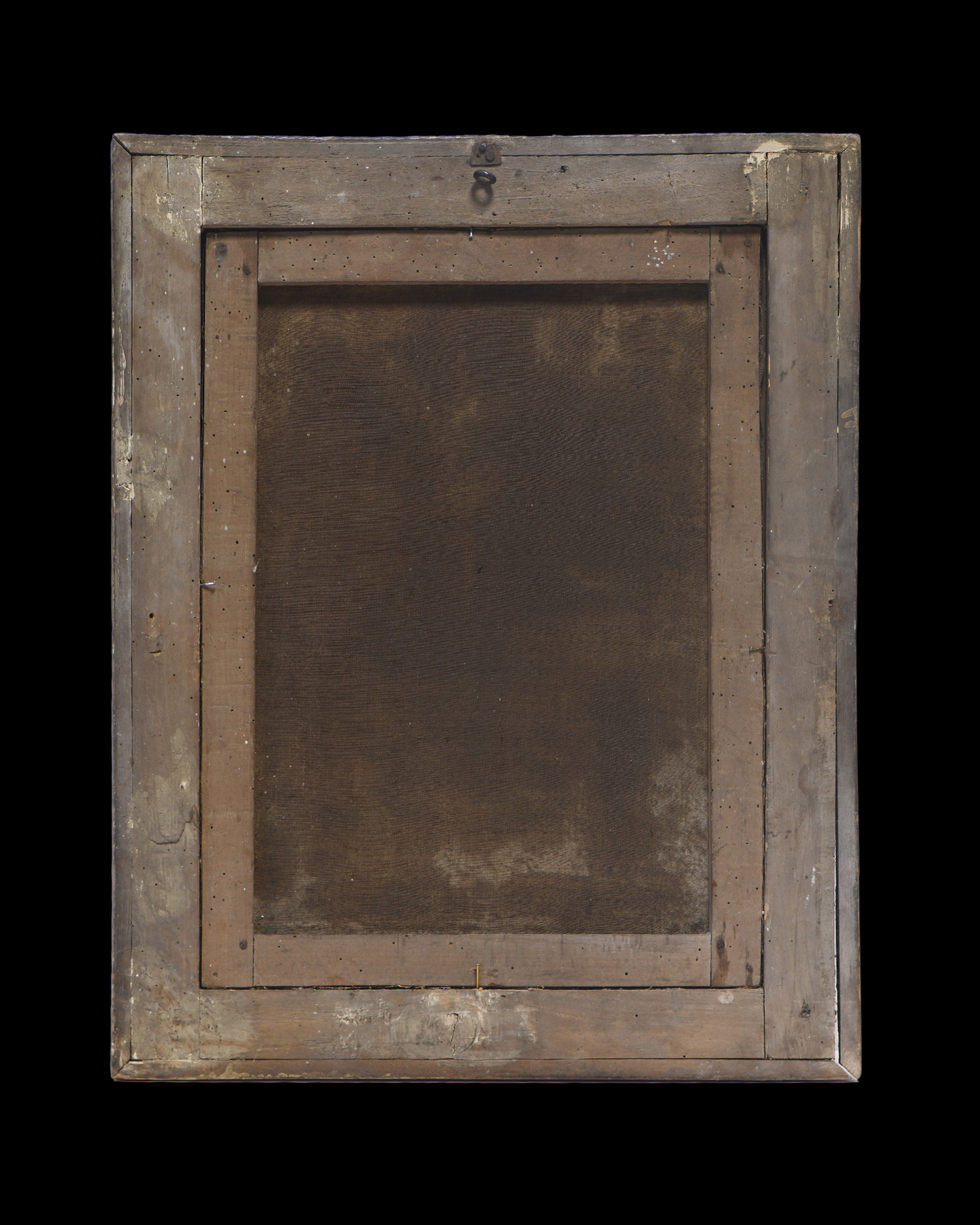
The painting has undergone conservation. The original, stepped period frame (second half of the 18th century) features a classical profile, gilded on a bole ground. Numerous old and inactive woodworm holes are visible on the frame's wood and stretcher bars, confirming the object's age. |
| Material / Technique |
Oil on canvas |
Related products
Alexander Sochaczewski (1843-1923), Portrait of an elderly woman, oil on canvas, Munich, 1884-1897
Battle of Mohacz, oil on canvas, Krakow, 1886
Stanisław Chlebowski (1835-1884), Genre Scene – Dance, watercolor on paper, Istanbul (?), 1874
A small watercolor by Stanisław Chlebowski (artist's signature in the lower left corner: "St. Chlebowski 1874 ), depicting an intimate, dynamic and graceful genre scene of Oriental character. It reflects the artist's fascination with the culture of the Middle East and the Caucasus, which he explored during his many years of work as court painter to the Sultan in Istanbul.
With frame 50 x 42, visible area: 31.5 x 23.5 cm