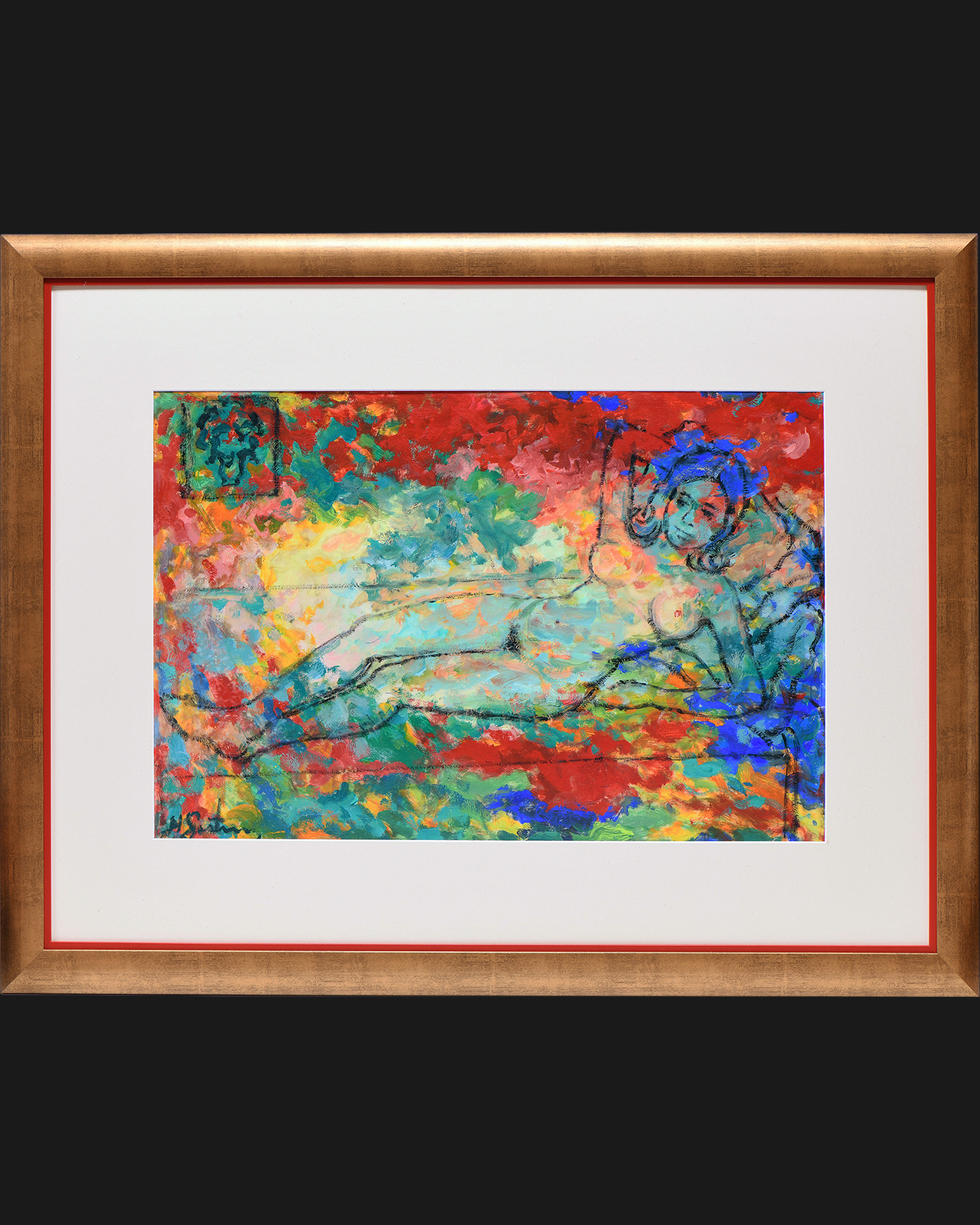
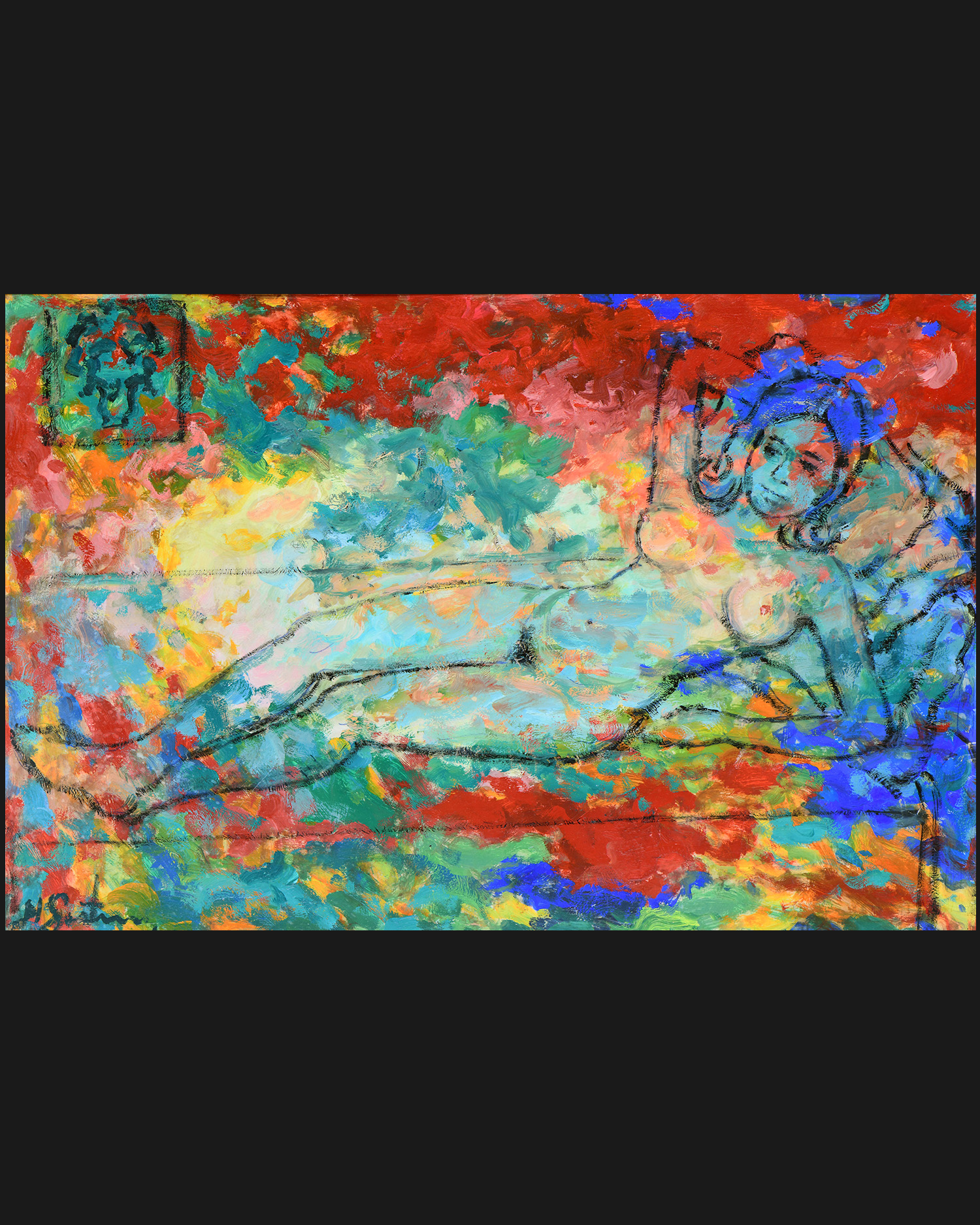
Nathan Gutman (1914 Warsaw – 1990 Paris), Female Nude, oil on cardboard, Paris (?)
3700,00 zł
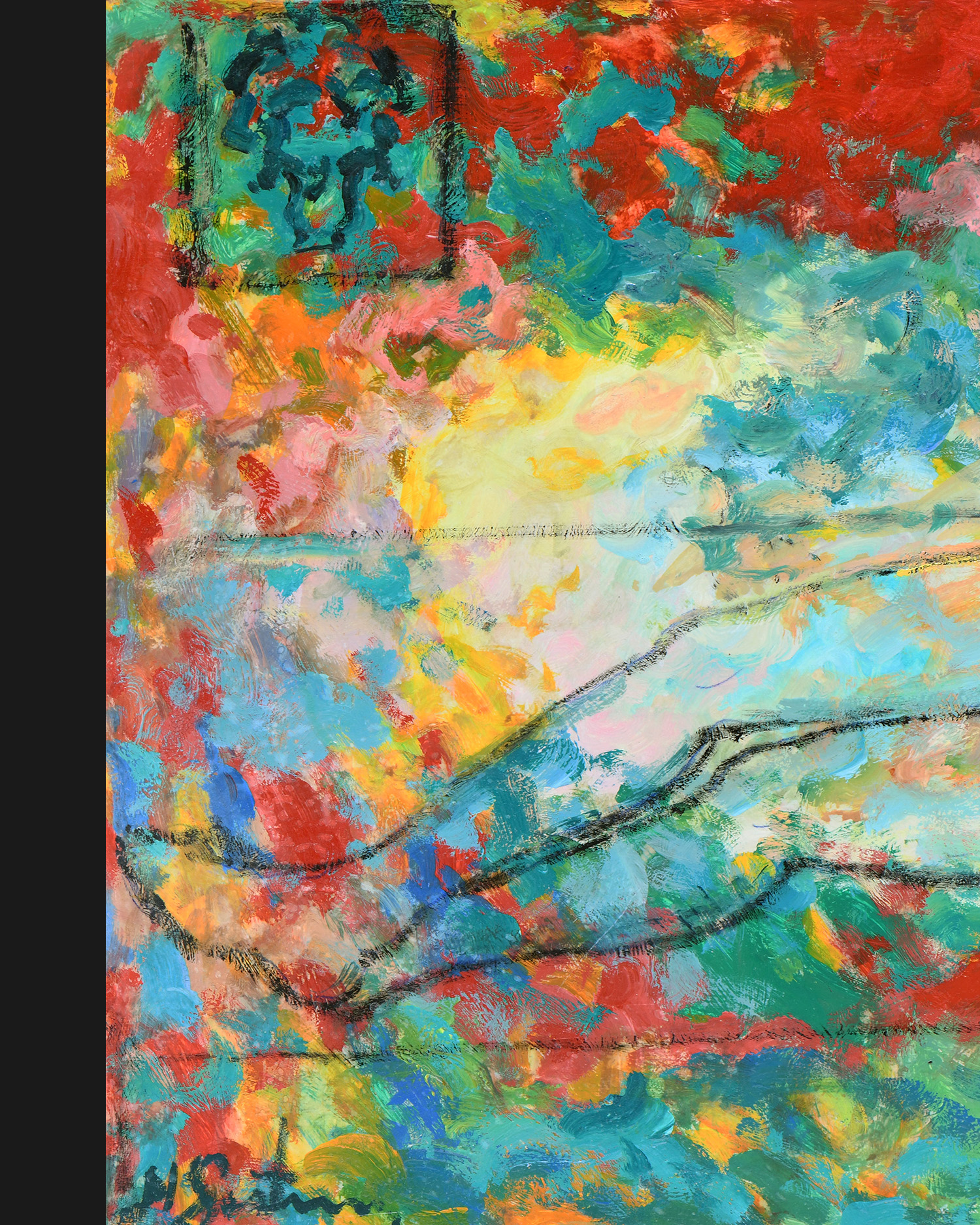
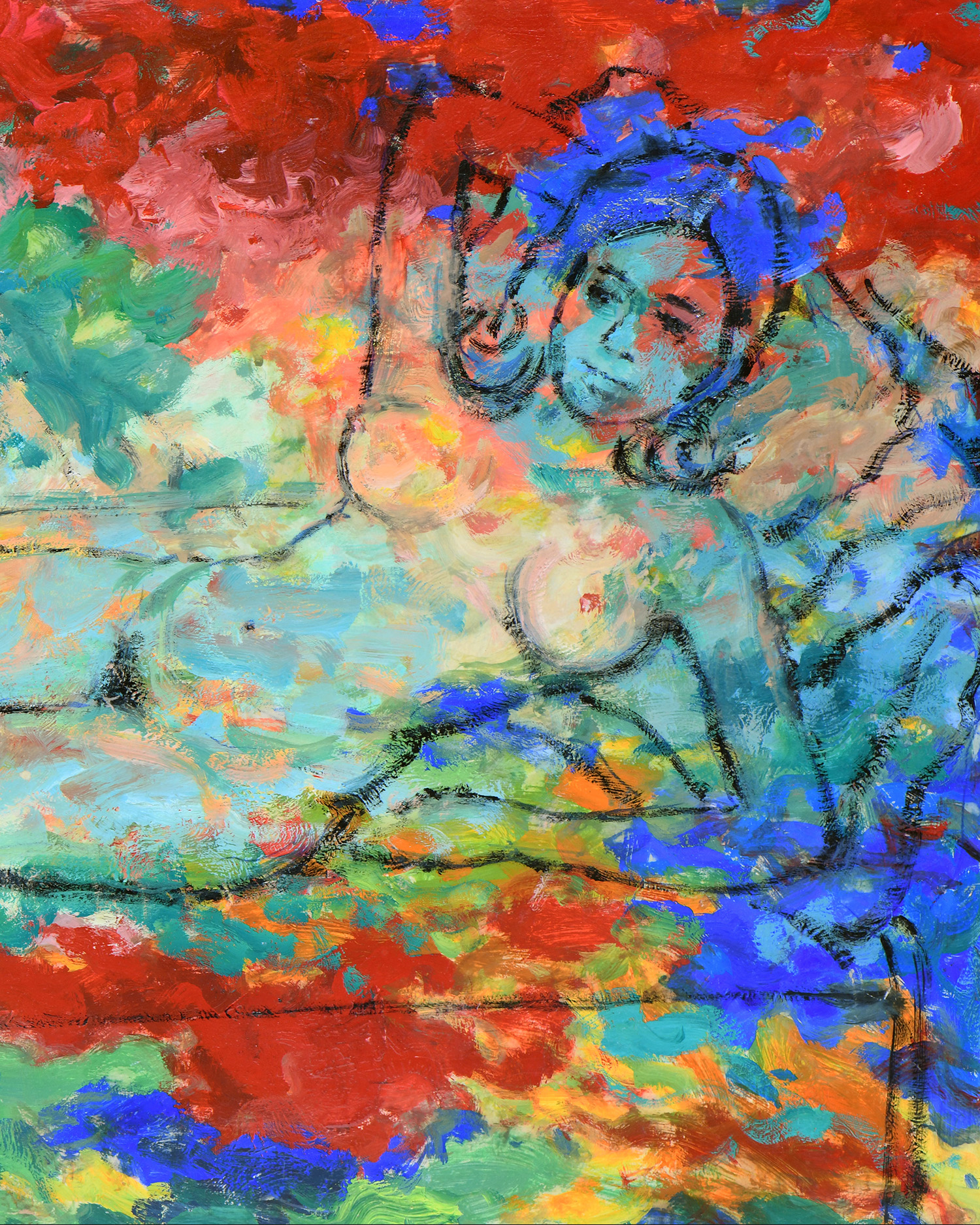
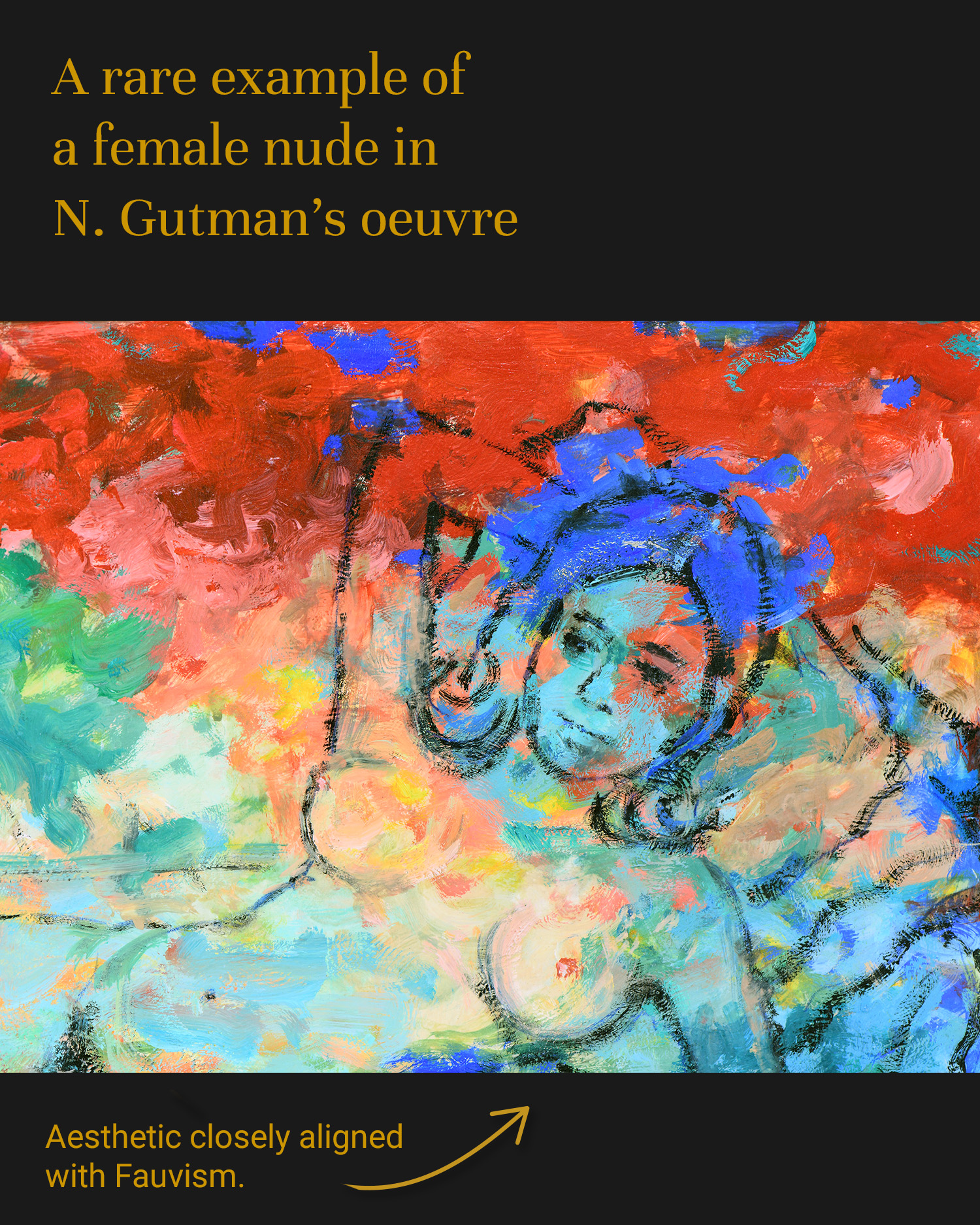
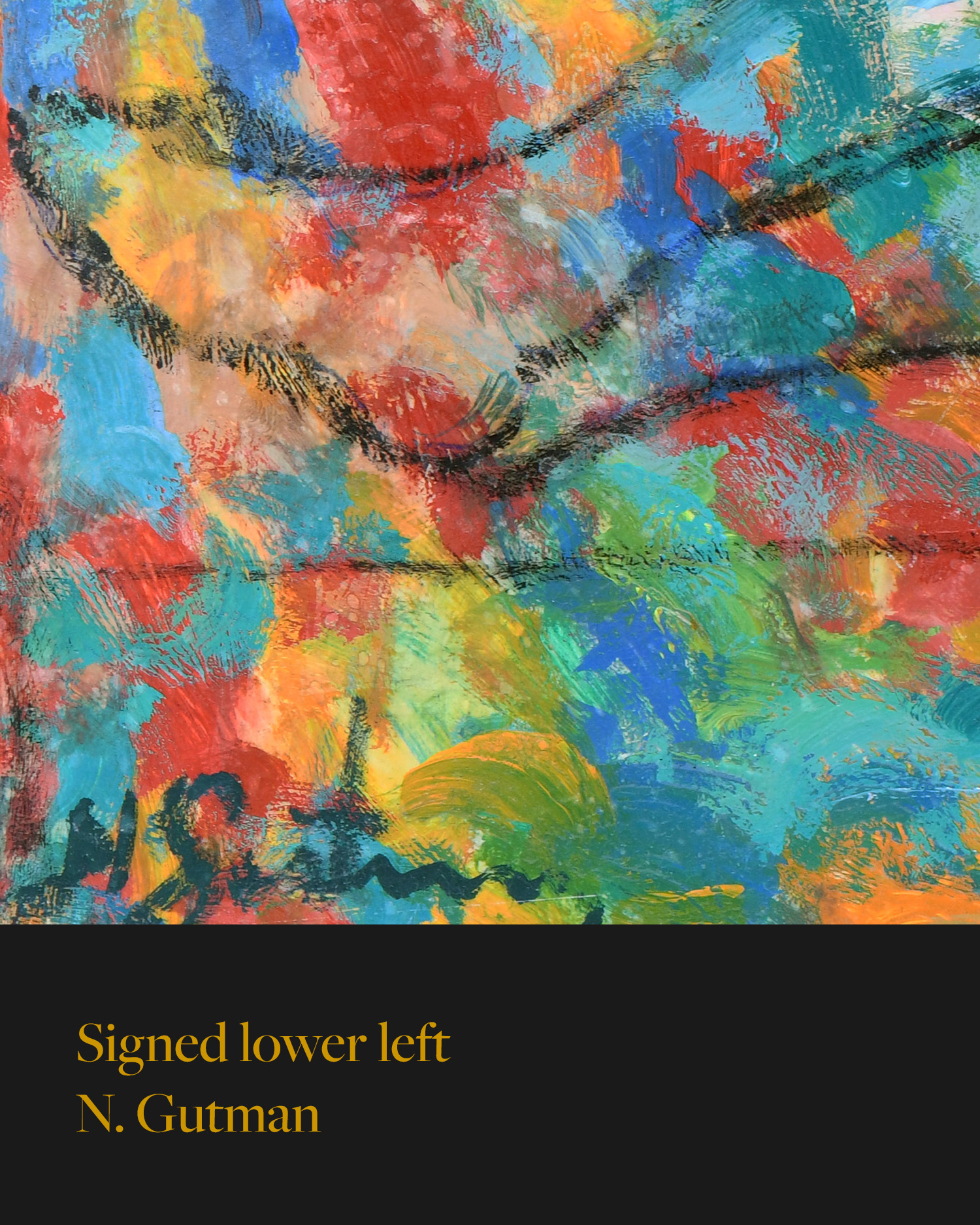
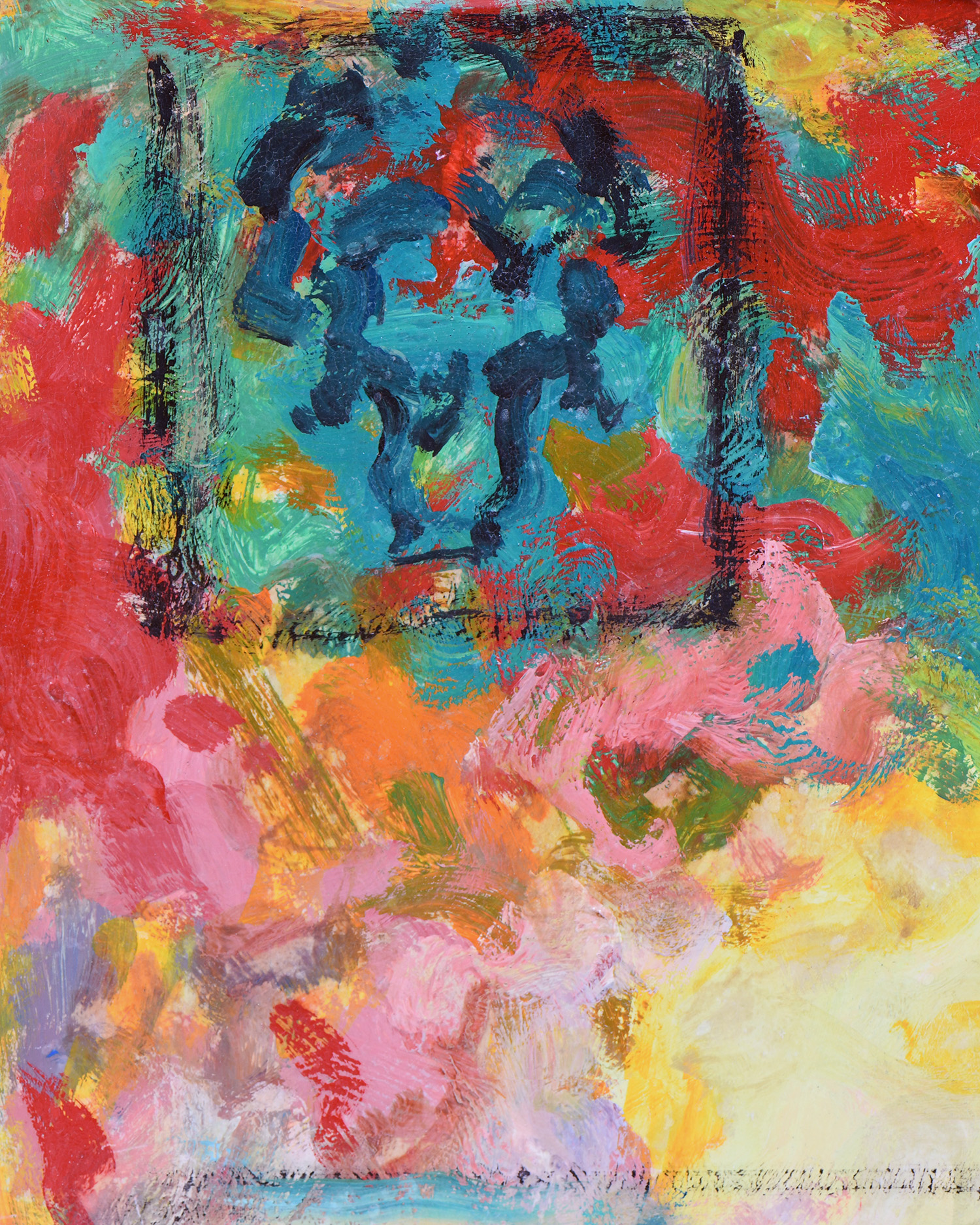
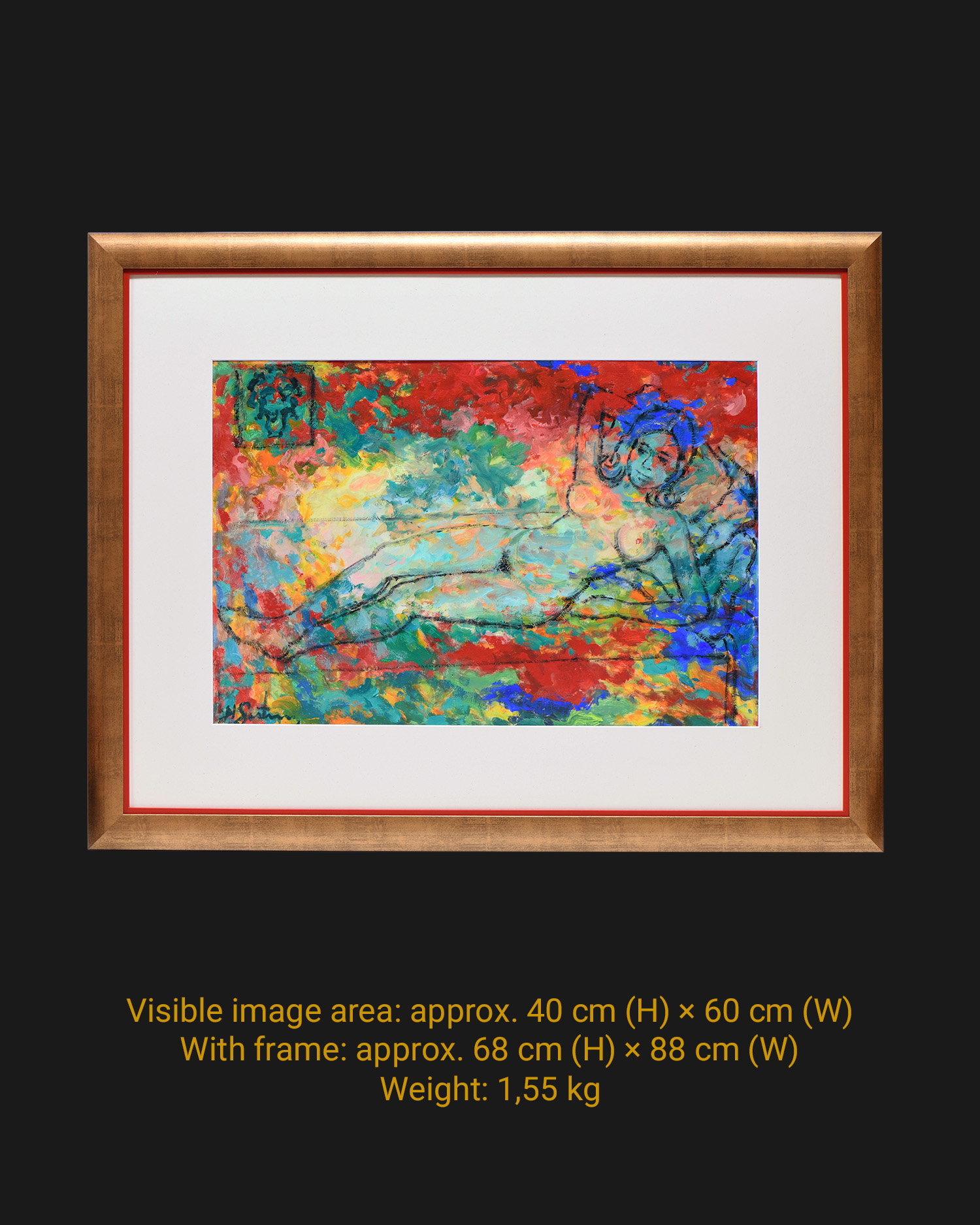
The painting depicts a nude woman in a semi-recumbent position on a bed or sofa; she supports her body with one hand and holds the other behind her head. The figure of the model, the piece of furniture and a small picture in the upper left corner (with a vase of flowers) were painted with a black outline, contrasting with a multicolored background composed of saturated patches of color in various shades of red, yellow, blue and green. The intense color palette clearly refers to the aesthetics of fauvism. The lower left corner bears Gutman’s signature. All framed in a contemporary frame.
1 in stock
Historical context
The painting was probably created after Nathan Gutman emigrated to Paris, where the artist encountered the vibrant tradition of French modernism.
Collector's value
Gutman's works depicting the nude are among the exceptions, so this representation is of particular value to collectors. Its attractiveness is enhanced by the expressive color scheme, which is close to the aesthetics of Fauvism, and the way the figure is depicted, making the painting stand out from the artist's other works.
Aesthetic qualities
The painting attracts attention with an intense color palette juxtaposed with clear contours emphasizing the shapes of figures and interior elements. The combination of straight lines with saturated colors creates a clear and striking composition.
This painting is best suited to modern, eclectic and minimalist interiors, where it acts as a distinctive artistic accent. It goes well with simple forms, neutral walls, natural wood and contemporary furniture, adding character and light creative freedom. It will also work well in spaces with a more gallery or loft atmosphere, where a strong, single eye-catching element is important.
Biography
Nathan Gutman was born in Warsaw in 1914. He studied at the Academy of Fine Arts in Warsaw (1929-1933). After graduation, he worked briefly in Russia, exhibiting at the Museum of the Revolution in Minsk, among other places. After World War II, he returned to Warsaw, but soon emigrated to Paris, where he continued his work. Gutman died in 1990. He painted colorful, expressive scenes of Jewish life - everyday life, rituals, traditions. The largest collection of his works is today in the Museum of the History of Polish Jews in Warsaw.
- Nathan Gutman was born in Warsaw in 1914
- Studied at the Academy of Fine Arts in Warsaw from 1929 to 1933
- After his studies, he worked in Russia and exhibited at the Museum of the Revolution in Minsk
- After World War II, he returned to Warsaw
- He then emigrated to Paris, where he continued his work
- He painted mainly colorful, expressive scenes of Jewish life
- He died in 1990
| Weight | 1,55 kg |
|---|---|
| Dimensions | 60 × 40 cm |
| Type |
Oil painting |
| Form |
Female nude |
| State of preservation |
Very good |
Related products
Death of Cleopatra, oil on canvas, Italy, 17th-18th centuries.
Hendrik van Steenwijk II (ca. 1580 – 1649) – circle, Interior of a Gothic church, oil on board, Flemish school, 17th century.
The painting depicts the interior of a Gothic church, executed in the Flemish school of the 17th century, in the circle of Hendrick van Steenwijk i.e. one of the pioneers of perspective painting. The composition, built on an axis leading towards the main altar, shows a monumental interior with pillars, cross-ribbed vaults and side chapels. Figures of the faithful and clergy are visible in the space, introduced to emphasize the scale of the architecture and the mood of concentration.
The painting was made with oil technique on board, in typical Flemish school style. The frame is original, wooden, veneered, with preserved gilt edge.
The composition refers to the solutions used by Hendrick van Steenwijk the Elder and Younger, as well as Pieter Neefs and Bartholomeus van Bassen, developing the genre of architectural painting in Antwerp and Delft.
John Baptist Lambrechts (1680 – after 1731), Genre scene in an inn, oil on board, ca. mid-18th century.
Pawel Wrobel (1913 – 1984), Merry Town, acrylic on canvas, 1973
Pieter Neefs II (1620 – 1675/1685), Night Mass in a Gothic Church, oil on board, Flanders, 17th century.
The painting depicts the interior of a Gothic church, by Pieter Neefs the Younger (1620-after 1675), a Flemish painter who specialized in depictions of sacred interiors of the 17th century. The composition based on a precise linear perspective leads the eye towards the main altar, around which the faithful and clergy participating in the liturgy are gathered.
The painting was made in oil technique on board, without a visible signature. The upper part of the composition has been cropped, resulting in the loss of the original format and probably also the author's signature.
The work represents the mature style of Pieter Neefs the Younger - precise rendering of space, controlled light and realistic depiction of architecture, characteristic of the Antwerp school. Paintings of almost identical composition appear in several well-known collections and collections - including the Szépművészeti Múzeum (Museum of Fine Arts) in Budapest and a Sotheby's auction (2021).
It is worth mentioning that works from this series are also sometimes attributed to Pieter Neefs the Elder (c. 1578-1656), confirming the strong stylistic affinity between the works of father and son.
Bibliography / links:
- Peeter Neefs I - Invaluable
- Pieter Neefs II - Art Salon
- Pieter Neefs I - Museum of Fine Arts Budapest (Wikimedia Commons)
- Pieter Neefs II - Sotheby's Auction 2021
