


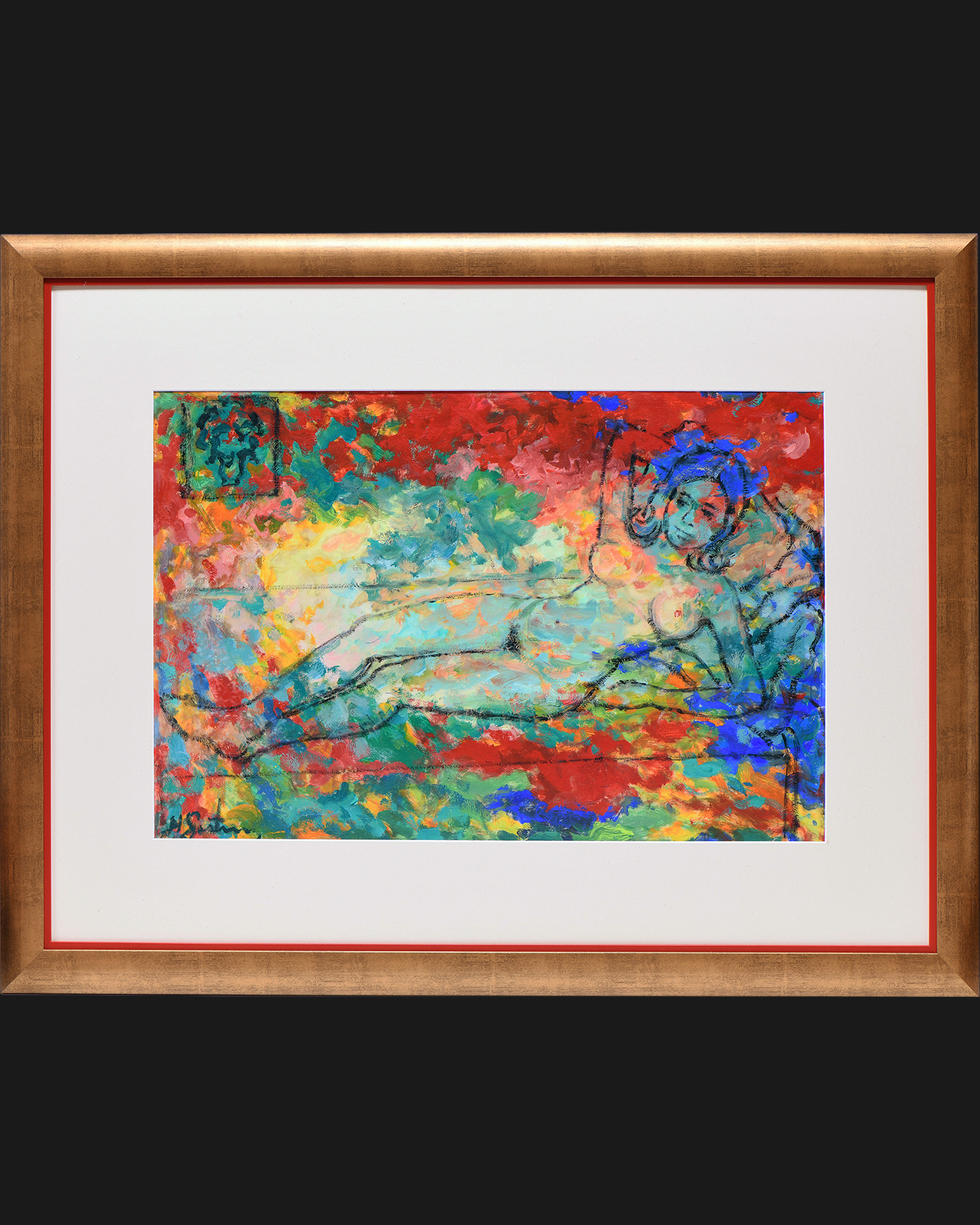
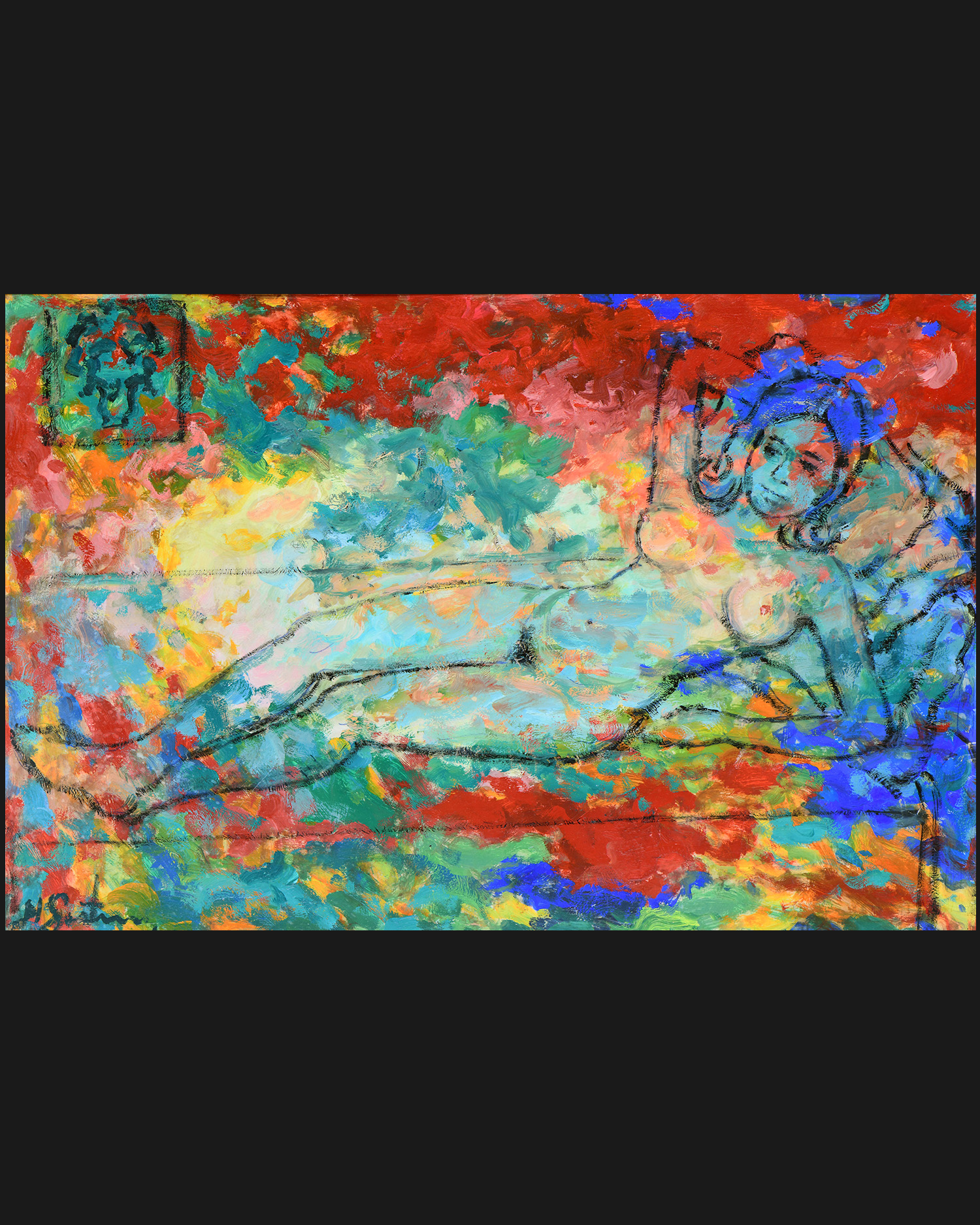
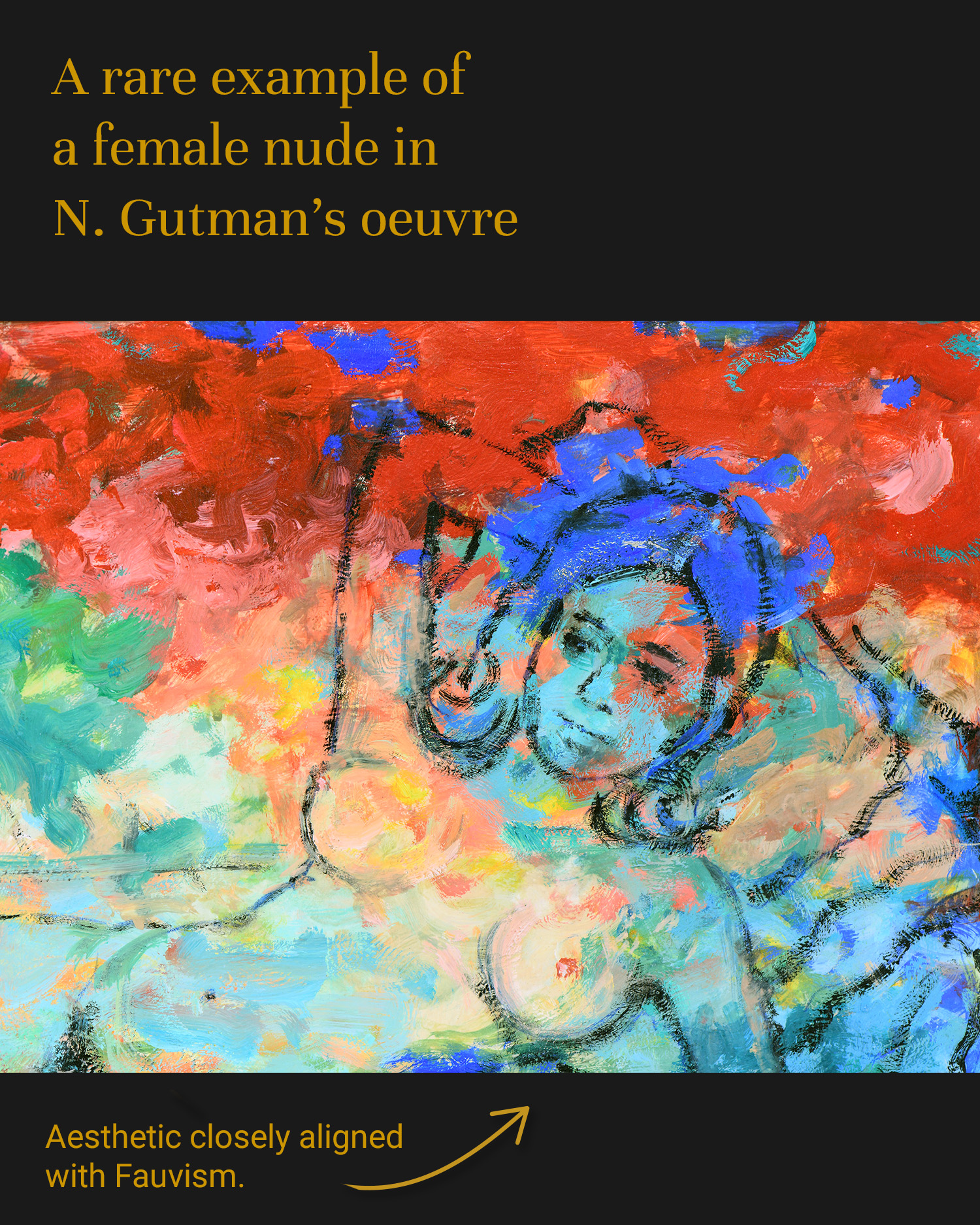
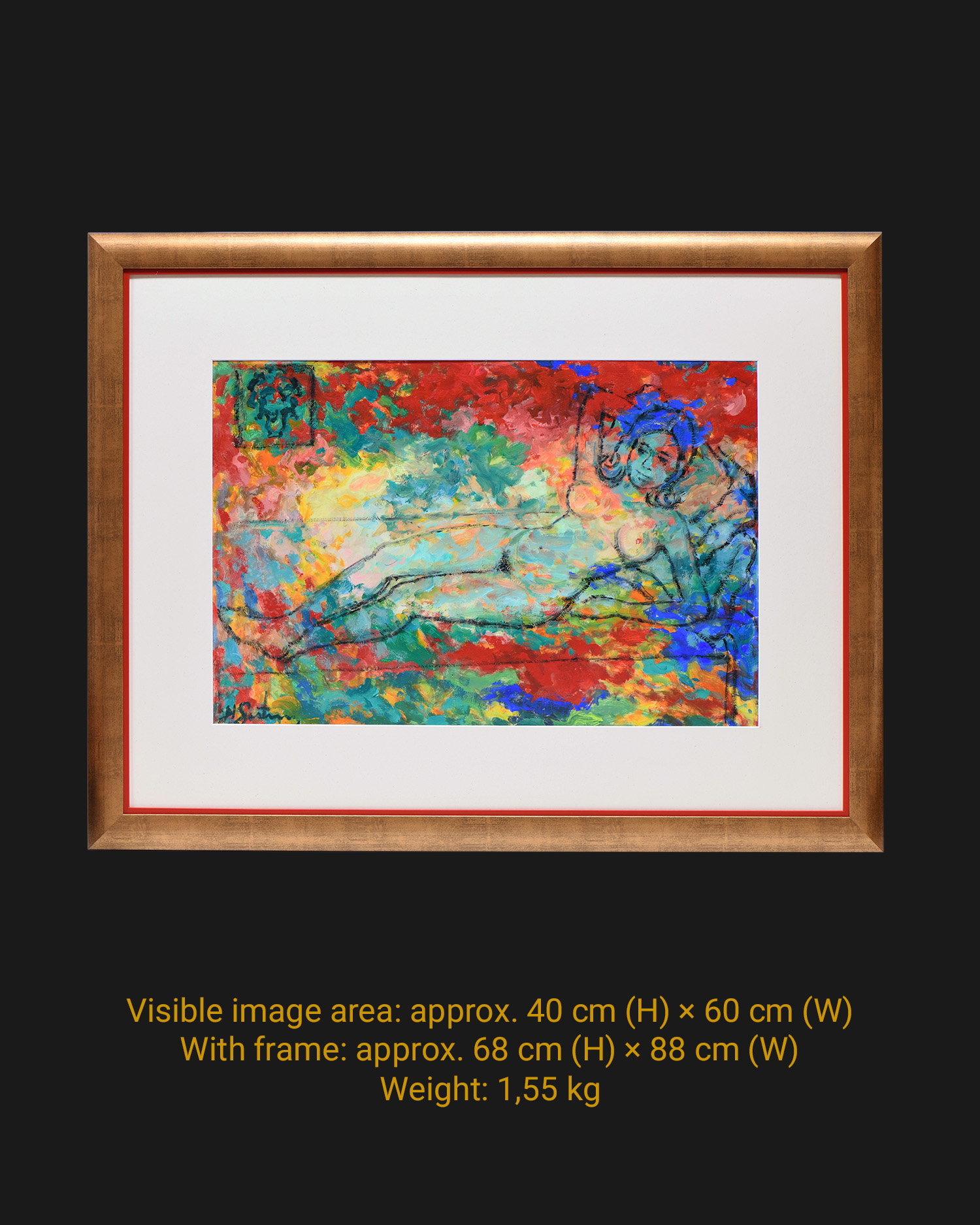

Nathan Gutman (1914 Warsaw – 1990 Paris), Female Nude, oil on cardboard, Paris (?)
3700,00 zł
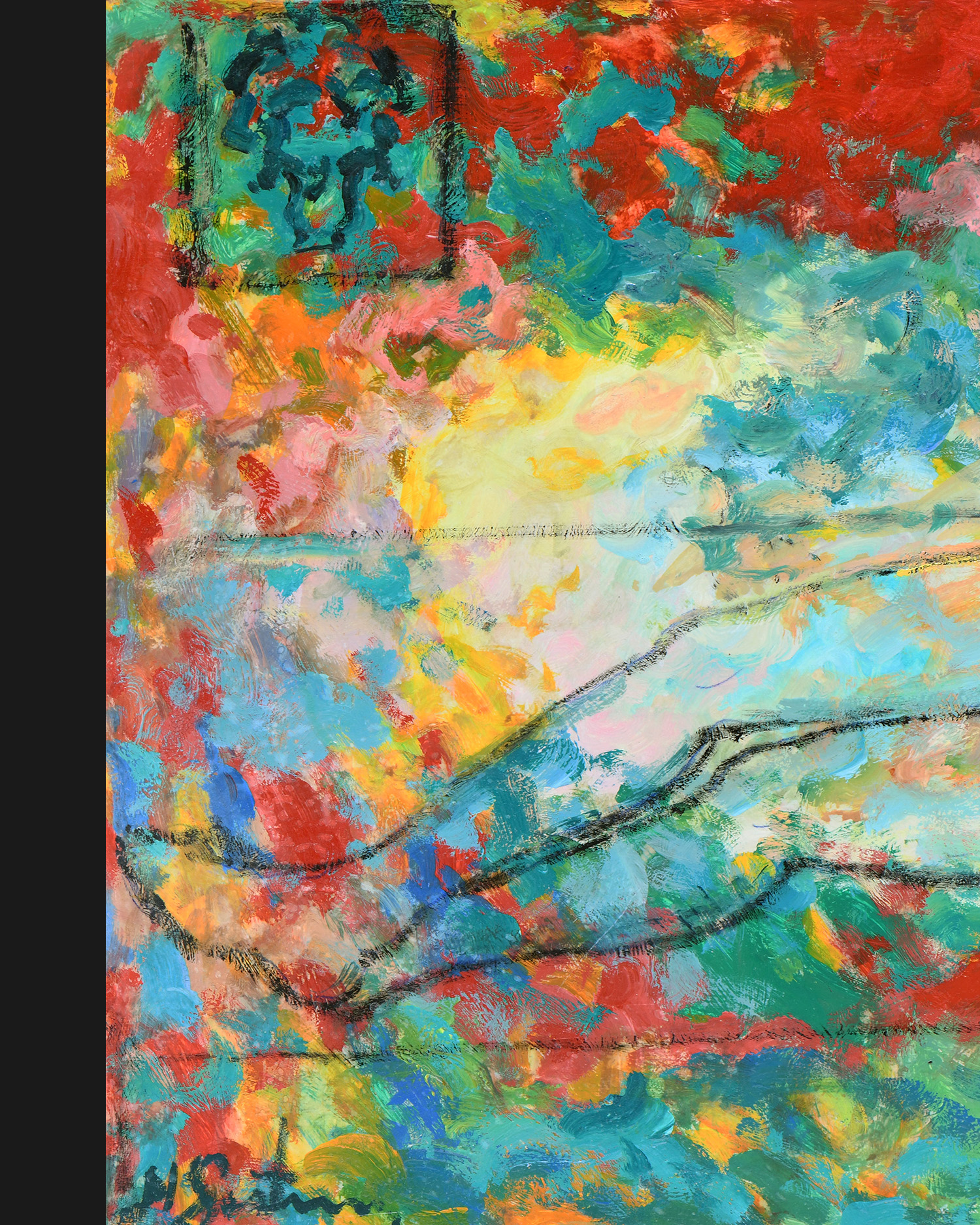
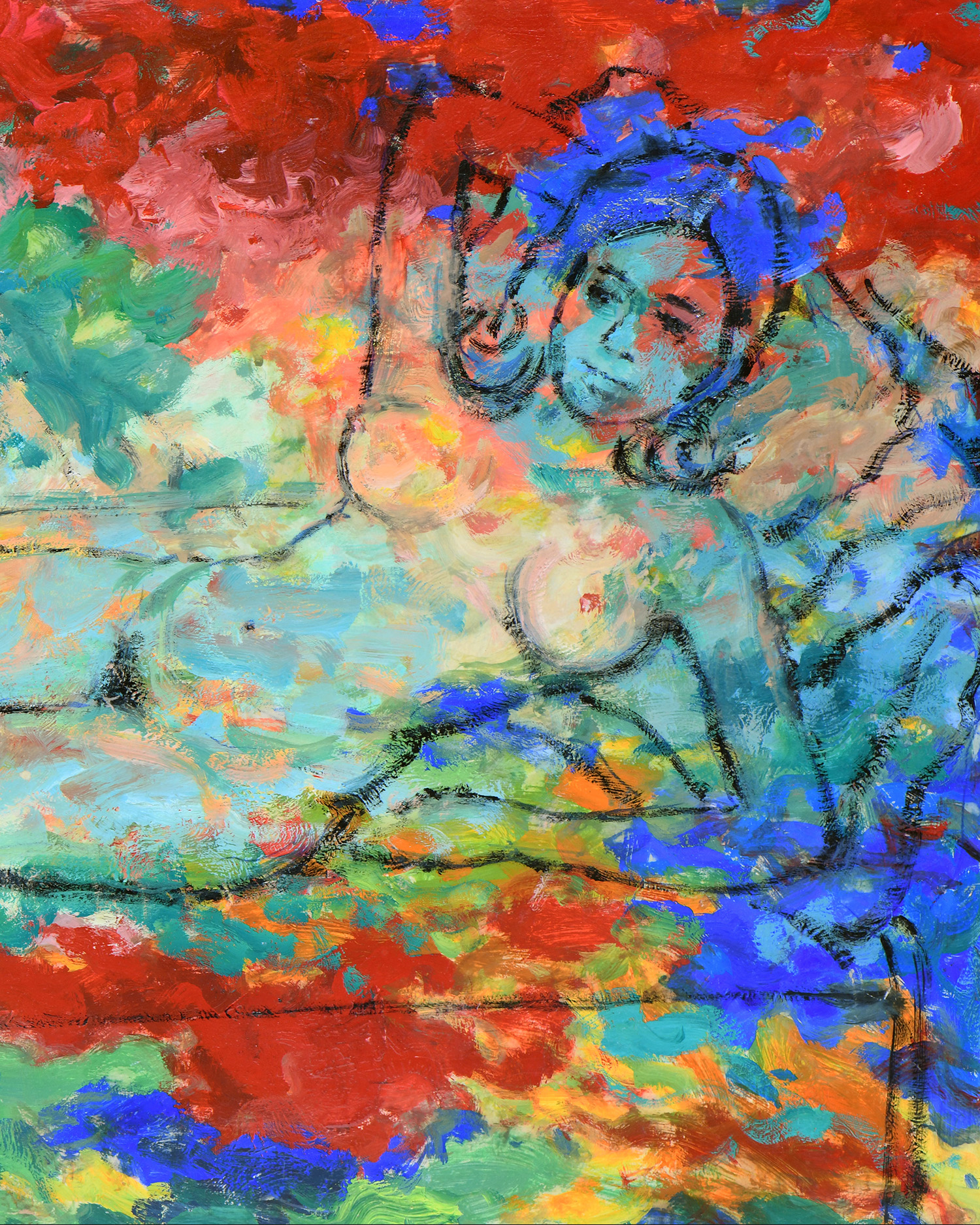
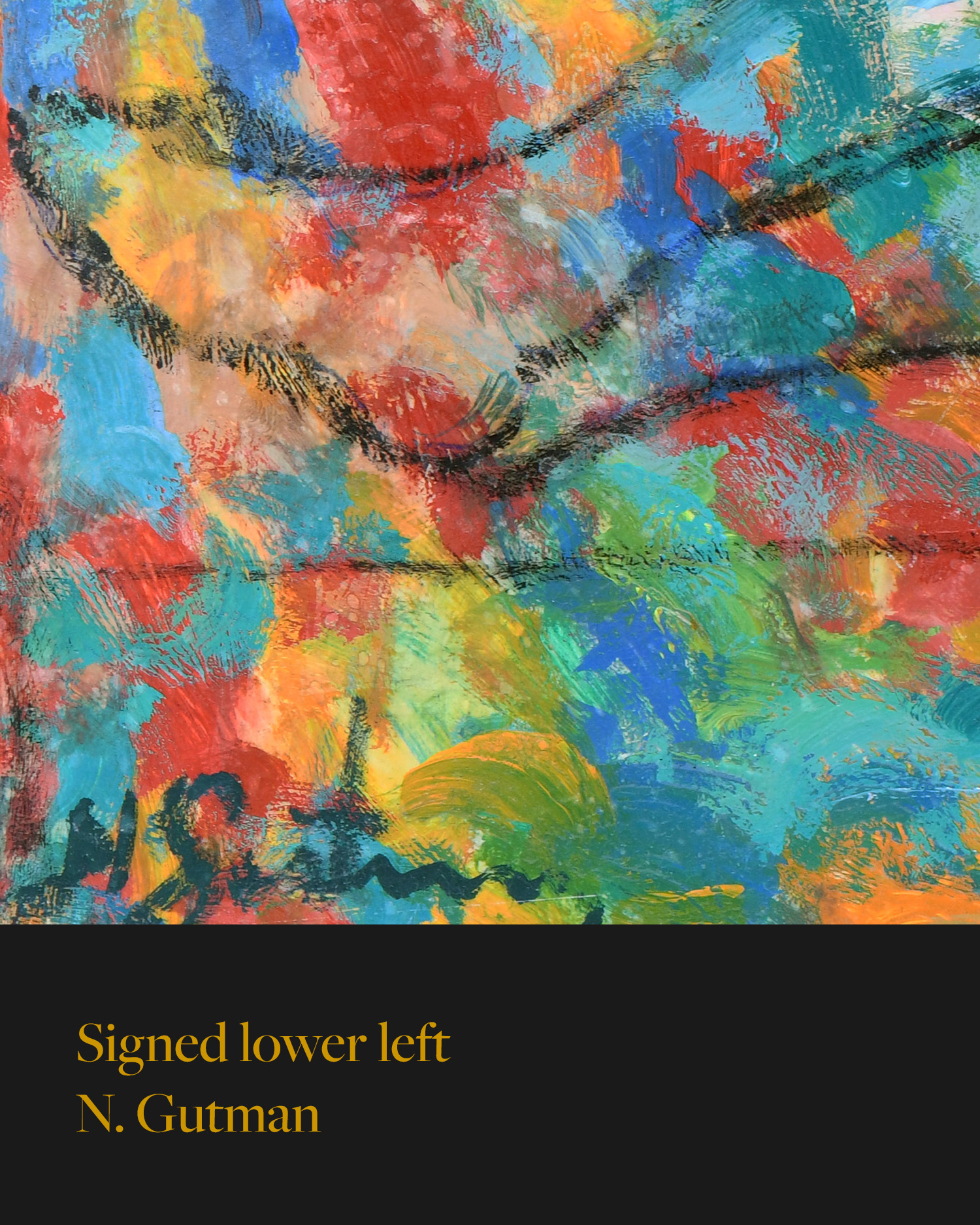
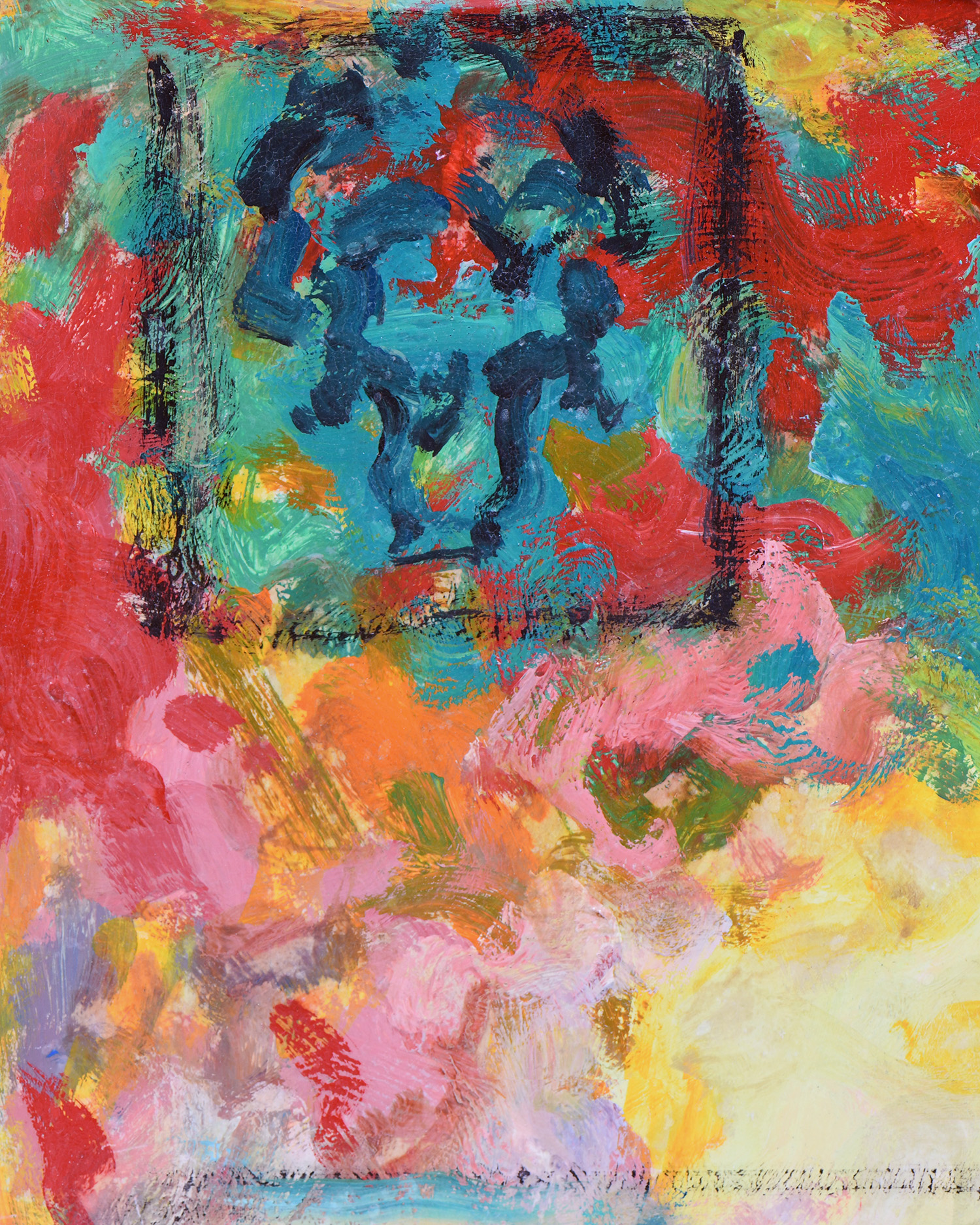
The painting depicts a nude woman in a semi-recumbent position on a bed or sofa; she supports her body with one hand and holds the other behind her head. The figure of the model, the piece of furniture and a small picture in the upper left corner (with a vase of flowers) were painted with a black outline, contrasting with a multicolored background composed of saturated patches of color in various shades of red, yellow, blue and green. The intense color palette clearly refers to the aesthetics of fauvism. The lower left corner bears Gutman’s signature. All framed in a contemporary frame.
1 in stock
| Weight | 1,55 kg |
|---|---|
| Dimensions | 60 × 40 cm |
| Type |
Oil painting |
| Form |
Female nude |
| Kolorystyka |
Black ,Blue ,Green ,Red ,Yellow |
| Technika |
Oil on cardboard |
| Era |
20th century ,Modernism |
| Kraj pochodzenia |
France ,Poland |
| Autor |
Nathan Gutman (1914-1990) |
| State of preservation |
Very good |
Related products
Battle of Mohacz, oil on canvas, Krakow, 1886
Death of Cleopatra, oil on canvas, Italy, 17th-18th centuries.
Egbert van Heemskerck I (1634 – 1704) – attributed, Scene with Soldiers in a Tavern, oil on canvas, Netherlands, second half of the 17th century.
Egbert van Heemskerck I (1634 Haarlem – 1704 London) – attributed, Scene with Soldiers in a Tavern, oil on canvas, relined on panel, framed.
The painting, created in the second half of the 17th century, depicts an intimate yet expressive genre scene with a satirical-political undertone, set within the austere interior of a 17th-century Dutch tavern. The composition centers on a group of five men intently analyzing a document in the form of a large book spread out on a barrel, which serves as a table.
One of the men wears a distinctive metal soldier's helmet (a cabasset or morion type), while another clearly has a rapier attached to his side. The presence of these props indicates that the protagonists of this scene are not ordinary peasants, but rather soldiers, veterans, or members of a local civic militia (the so-called schutterij). The document they are studying thus gains a military-political context; it could be news from the front (a broadsheet), a mobilization order, a royal decree, or a letter of safe conduct, which they are suspiciously verifying.
The artist masterfully employs caricatured facial features, exposing human flaws and creating an ironic narrative about "armchair strategists" or "weekend soldiers," haphazardly dressed and armed. Egbert van Heemskerck delighted in showcasing this contrast for comedic effect. For the painter, such individuals were a brilliant satirical subject – here is a group of common craftsmen or villagers attempting to impersonate great military strategists. One has donned an old helmet, another has strapped on an oversized weapon, yet their attire and physiognomy betray that they are far from a regular army. Each character represents a different emotional state – from deep concentration and suspicion to violent gesticulation (the figure in the light shirt on the left). The composition relies on contrasting, localized chiaroscuro. Light effectively glides across the texture of the paper, drawing hands and grimaces of the characters from the darkness, and reflecting off the metallic surface of the helmet, showcasing the painter's technical skill.
The reverse side bears traces of old paper ownership or auction labels, which once protected the wood from oxidation but have since crumbled. The condition of the support indicates that the relining process onto period wood was carried out a very long time ago (likely at the turn of the 18th and 19th centuries).
Dimensions: 31 cm (width) x 21 cm (height)Epitaph portrait of Jan Czapski (1699-1742), oil on copper, Poland, 1740s.
German-Italian Master, Image from the Cross, oil on board, Western Europe, 16th century.
Giacomo Francesco Cipper – “il Todeschini”, Young man eating from a wooden bowl, oil on canvas, Italy, 1st third of the 18th century
John Baptist Lambrechts (1680 – after 1731), Genre scene in an inn, oil on board, ca. mid-18th century.
Portrait miniature of King Augustus III, gouache and watercolor on bone, Poland, c. 1734–1750
A portrait miniature depicting Augustus III the Saxon (Wettin), King of Poland and Elector of Saxony – gouache and watercolor on a thin, semi-transparent ivory plaque. The monarch's effigy represents the iconographic canon established in the first years of his reign, immediately following his coronation in Wawel Cathedral in January 1734.