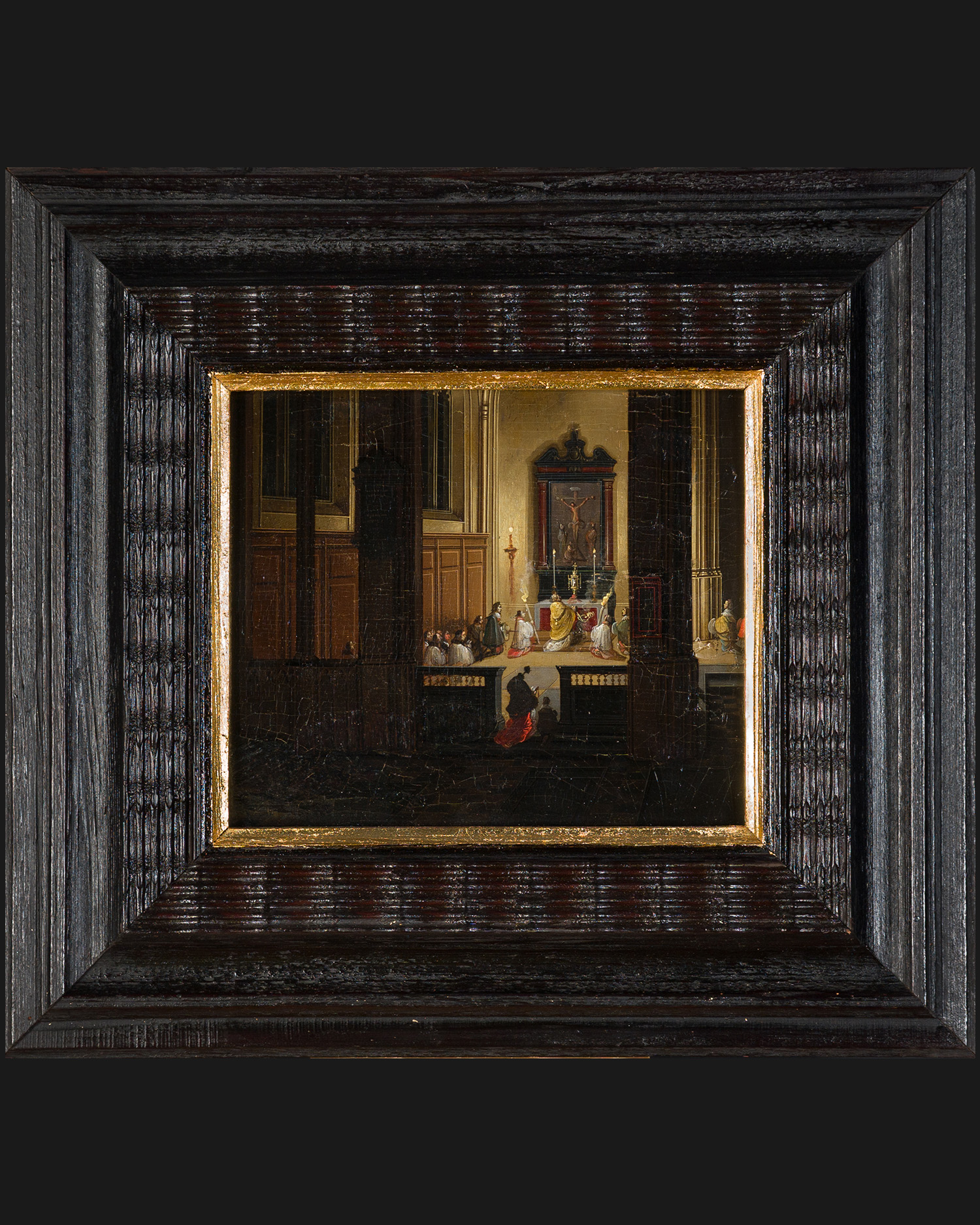
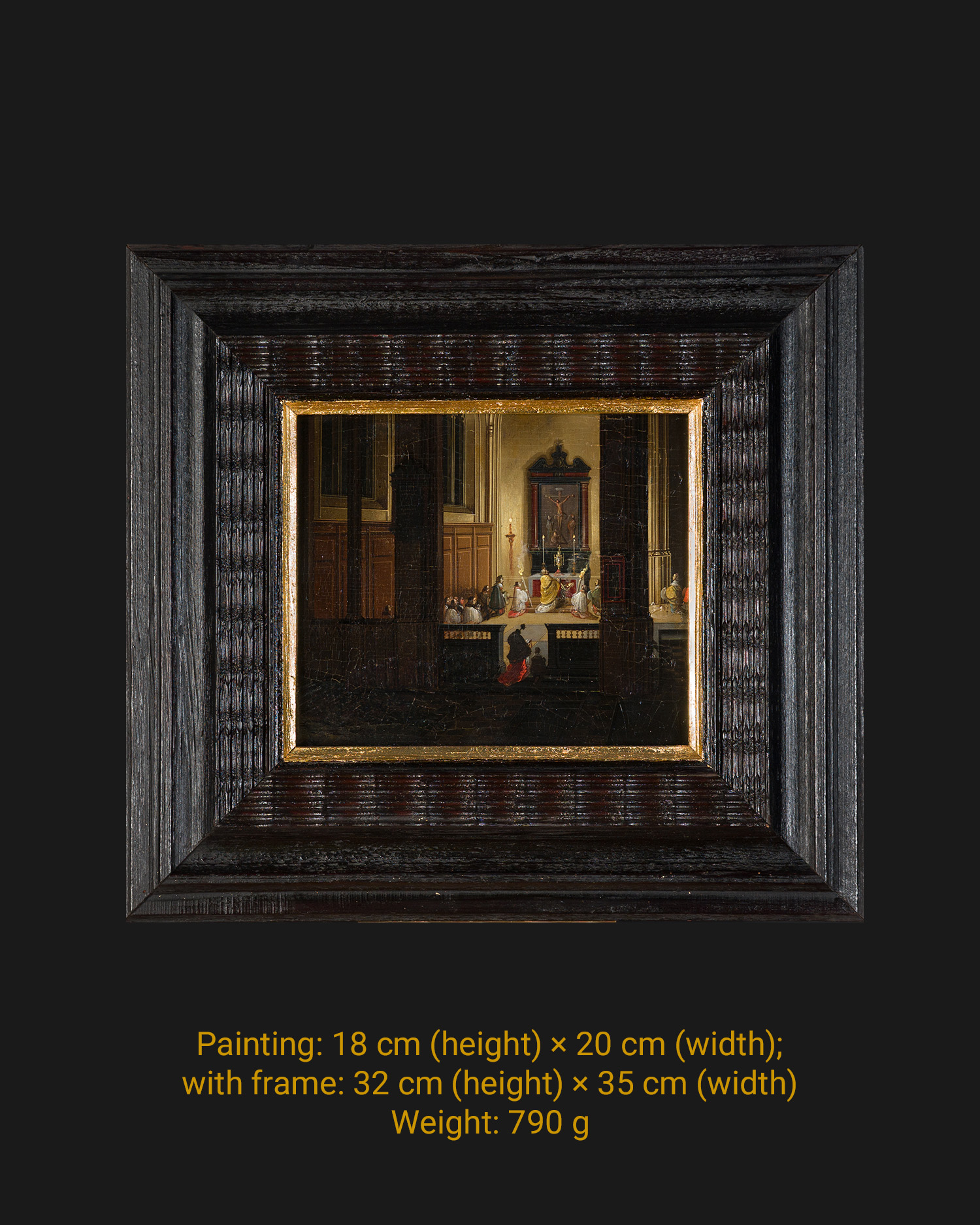
Pieter Neefs II (1620 – 1675/1685), Night Mass in a Gothic Church, oil on board, Flanders, 17th century.
3600,00 zł
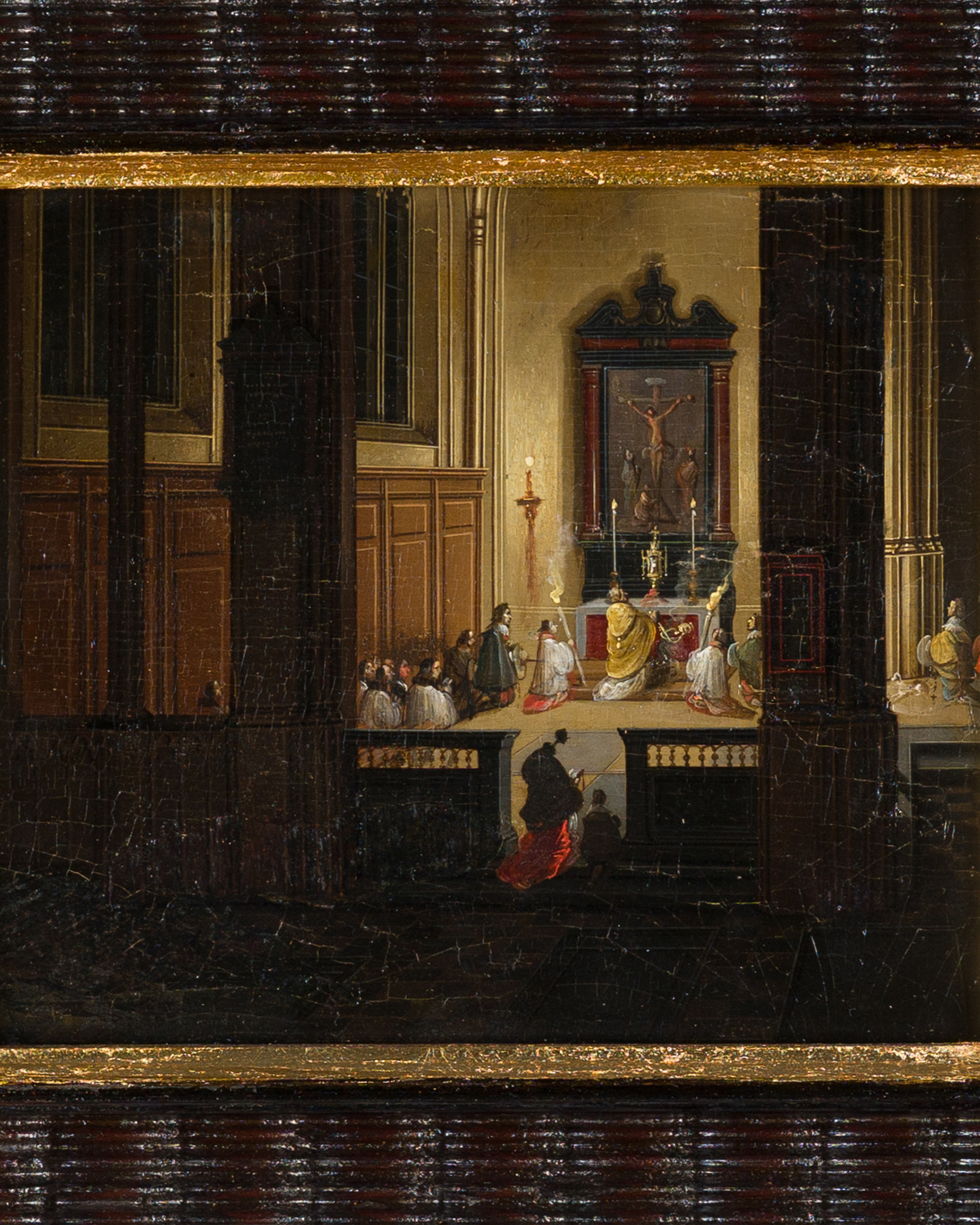
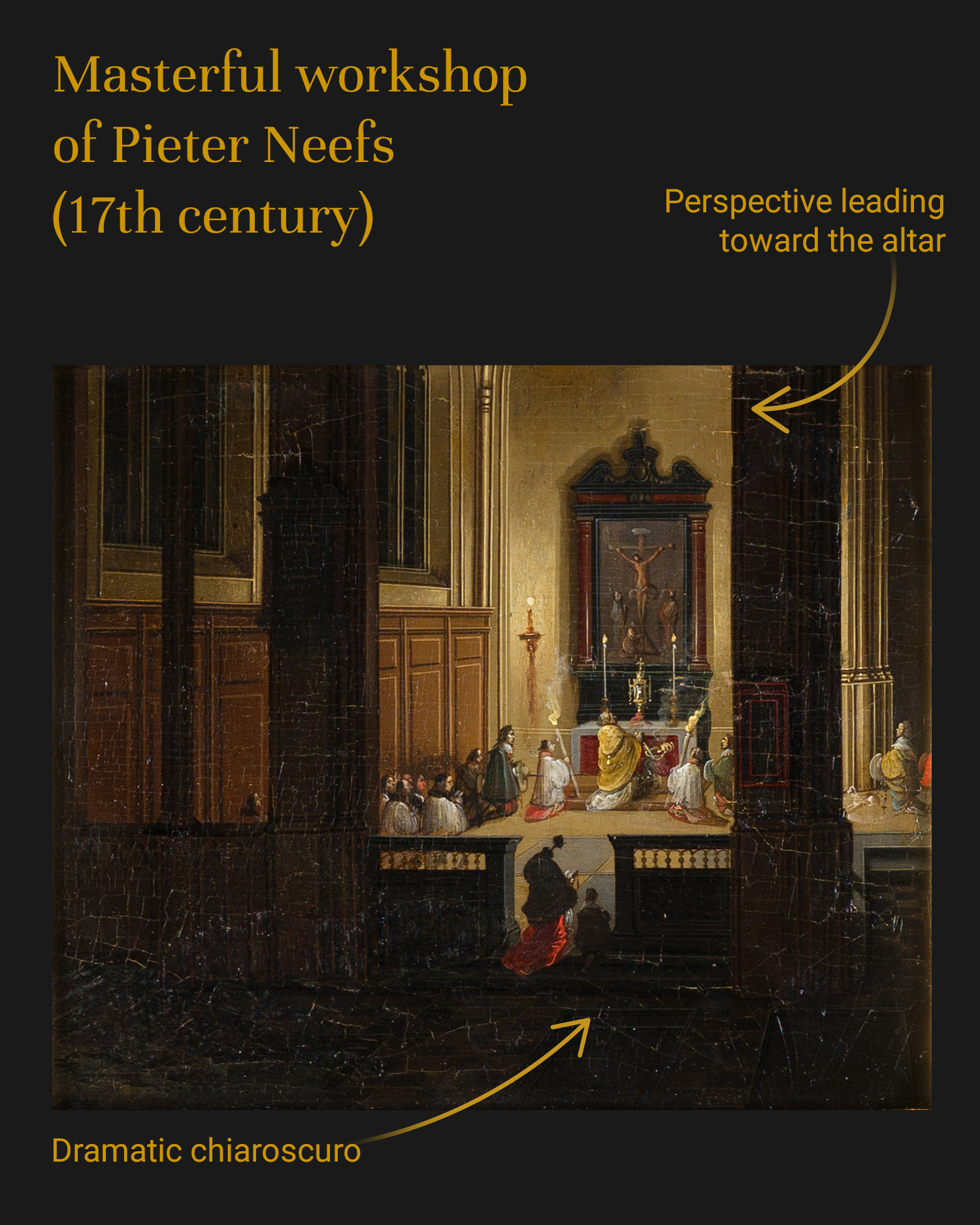
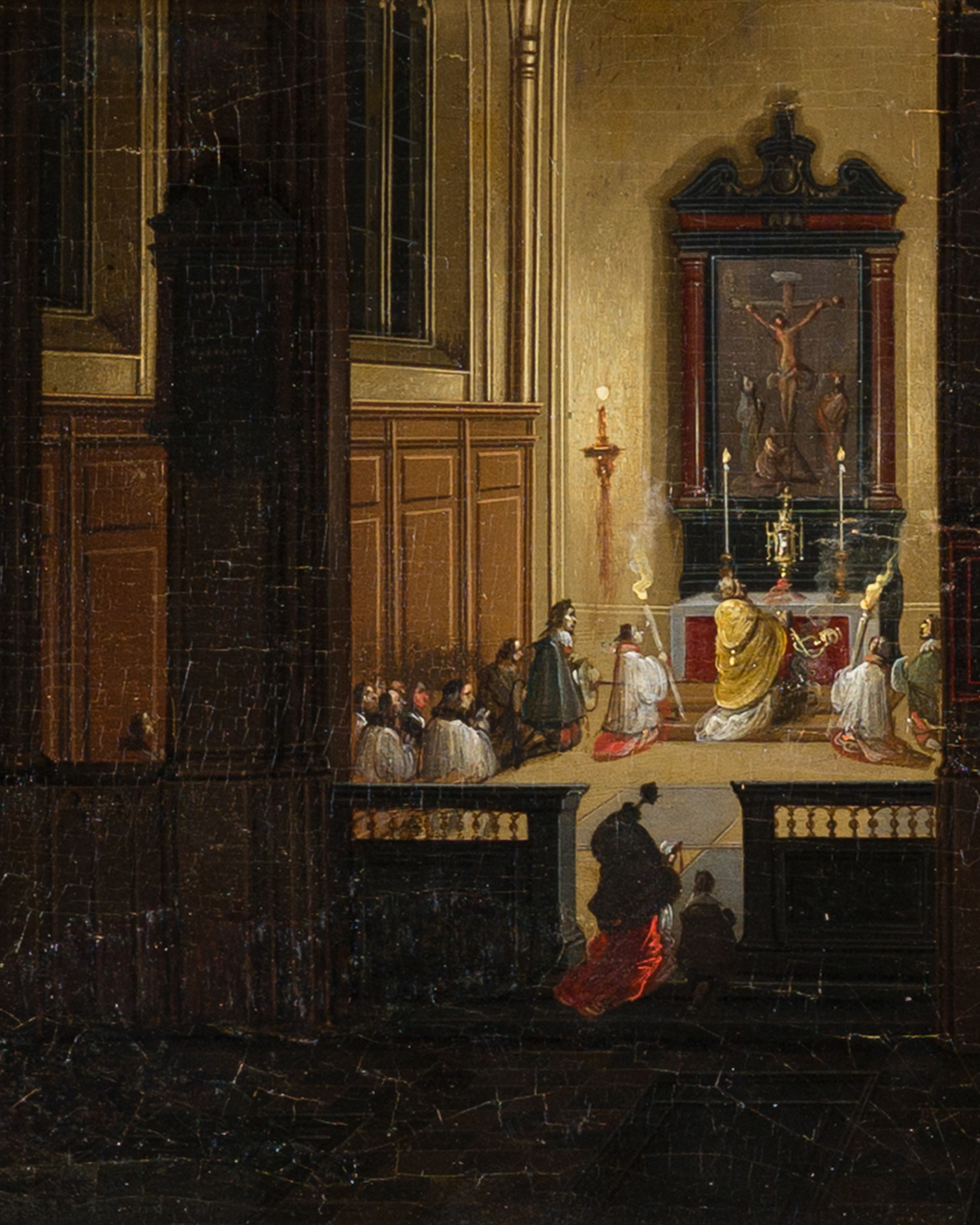
The painting depicts the interior of a Gothic church, by Pieter Neefs the Younger (1620–after 1675), a Flemish painter specializing in 17th-century sacred interiors. The composition based on a precise linear perspective leads the eye towards the main altar, around which the faithful and clergy participating in the liturgy are gathered.
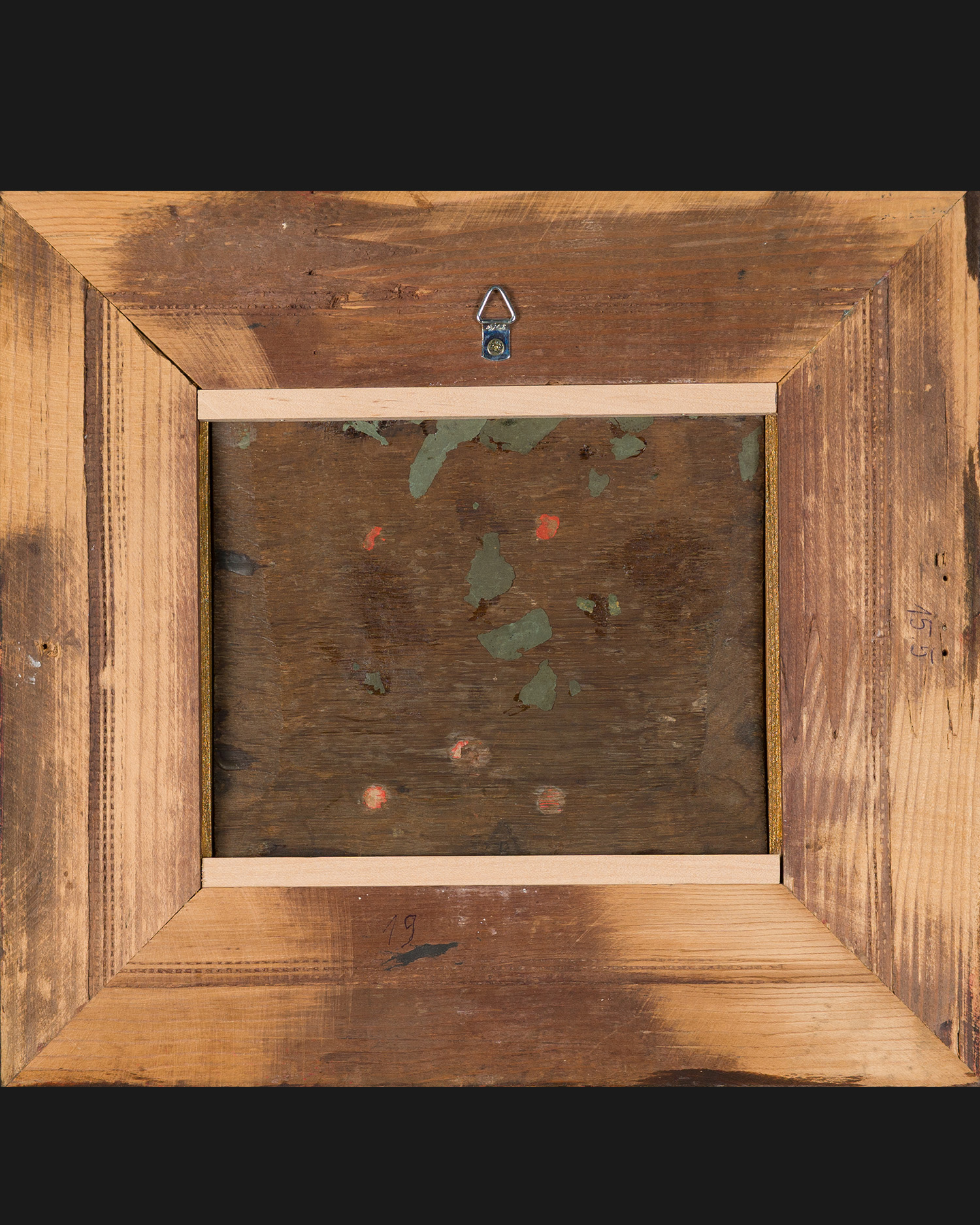
The painting was made in oil technique on board, without a visible signature. The upper part of the composition has been cropped, resulting in the loss of the original format and probably also the author’s signature.
The work represents the mature style of Pieter Neefs the Younger – precise rendering of space, controlled light and realistic depiction of architecture, characteristic of the Antwerp school. Paintings of almost identical composition appear in several well-known collections and collections – including the Szépművészeti Múzeum (Museum of Fine Arts) in Budapest and a Sotheby’s auction (2021).
It is worth mentioning that works from this series are also sometimes attributed to Pieter Neefs the Elder (c. 1578-1656), confirming the strong stylistic affinity between the works of father and son.
Bibliography / links:
– Peeter Neefs I – Invaluable
– Pieter Neefs II – Art Salon
– Pieter Neefs I – Museum of Fine Arts Budapest (Wikimedia Commons)
– Pieter Neefs II – Sotheby’s Auction 2021
Sprzedane
Historical context
Pieter Neefs the Elder (1578–1656) and his son (c. 1600–1675) were among the leading painters of Flemish architectural realism.. Their paintings depict interiors of Gothic and Renaissance churches with precise perspective arrangements. These works were created in the Counter-Reformation environment of Antwerp and held both artistic and documentary significance.
Artistic qualities
The painting stands out for its precise perspectival construction and controlled chiaroscuro, characteristic of the Neefs school. Careful drawing and subtle use of color emphasize the depth of space and the liturgical mood.
Collector's value
Paintings from Pieter Neefs' circle are highly sought after by collectors and museum institutions. Even workshop pieces or those attributed to the artist's workshop retain high value due to the Neefs school's importance in the history of Flemish painting.
Application
A collector's item, recommended for collections of Flemish and Baroque painting, for museum or private display. It can serve as a central element of a classic 17th-century European painting collection.
The church interiors painted by Pieter Neefs often depicted real Antwerp churches, such as the Cathedral of Our Lady. These paintings combined architectural documentation with the portrayal of religious ritual, becoming one of the recognizable motifs of Flemish Baroque.
| Weight | 0,790 kg |
|---|---|
| Dimensions | 20 × 18 cm |
| Form |
Scene inside a Gothic church at night |
| Kolorystyka |
Brown ,Ochra |
| Technika |
Oil paints |
| Materiał |
Board ,Oil paints |
| Kraj pochodzenia |
Flanders |
| Era |
Baroque |
| Czas powstania |
17th century |
| Autor |
Pieter Neefs II |
Related products
Death of Cleopatra, oil on canvas, Italy, 17th-18th centuries.
Egbert van Heemskerck the Younger (1676–1744), Tavern Scene, oil on relined canvas, England, circa. 1695
Hendrik van Steenwijk II (ca. 1580 – 1649) – circle, Interior of a Gothic church, oil on board, Flemish school, 17th century.
The painting depicts the interior of a Gothic church, executed in the Flemish school of the 17th century, in the circle of Hendrick van Steenwijk i.e. one of the pioneers of perspective painting. The composition, built on an axis leading towards the main altar, shows a monumental interior with pillars, cross-ribbed vaults and side chapels. Figures of the faithful and clergy are visible in the space, introduced to emphasize the scale of the architecture and the mood of concentration.
The painting was made with oil technique on board, in typical Flemish school style. The frame is original, wooden, veneered, with preserved gilt edge.
The composition refers to the solutions used by Hendrick van Steenwijk the Elder and Younger, as well as Pieter Neefs and Bartholomeus van Bassen, developing the genre of architectural painting in Antwerp and Delft.
