


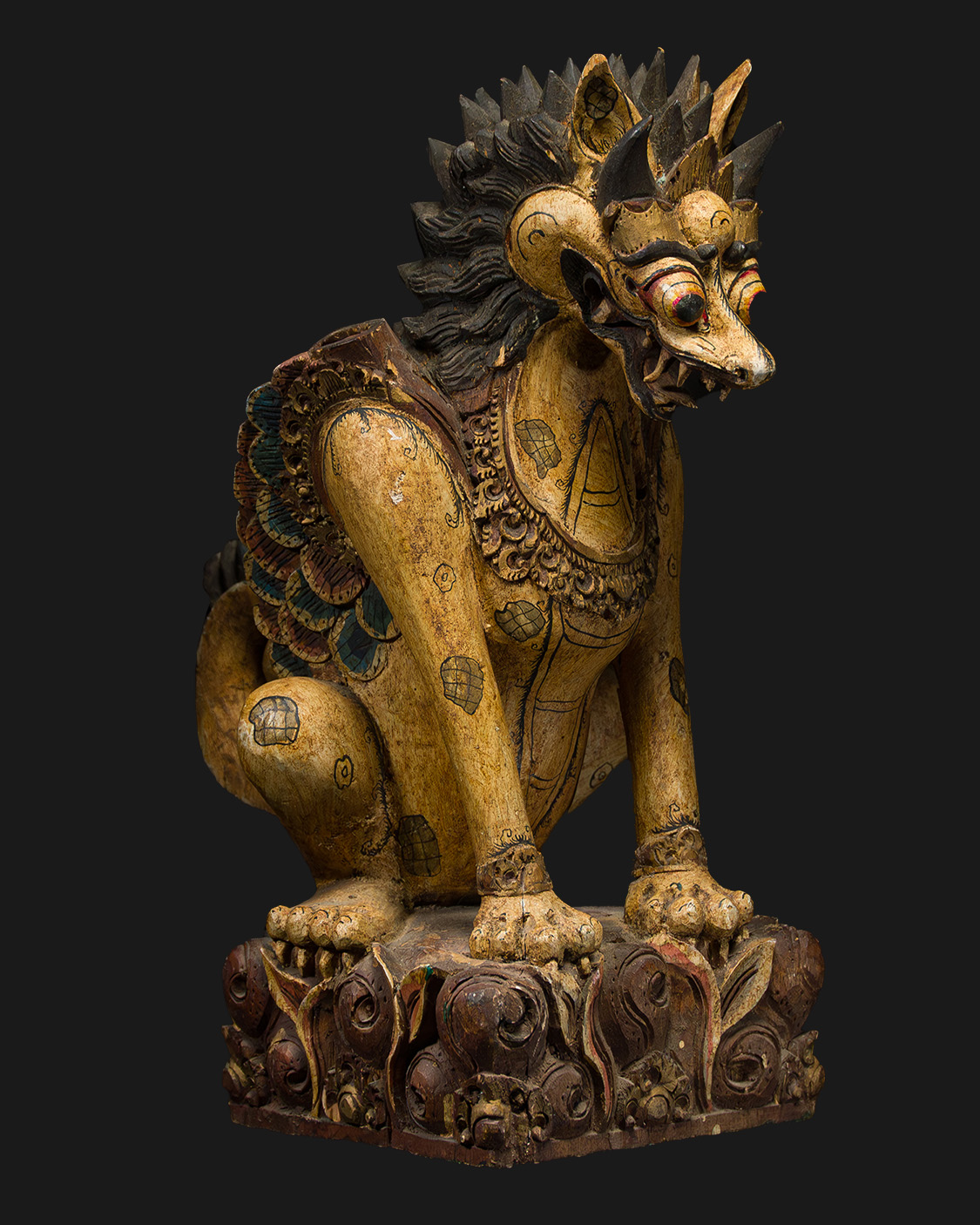
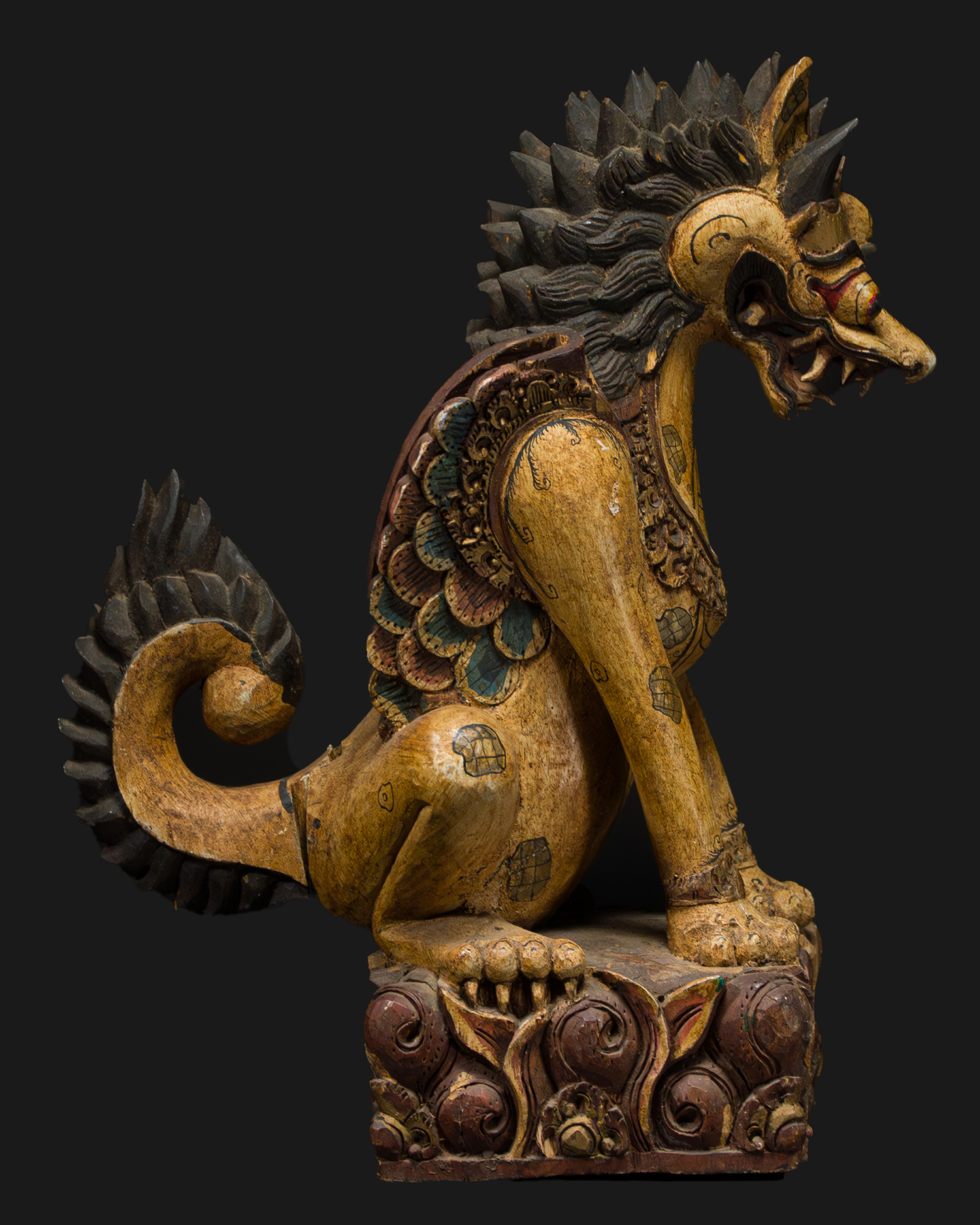
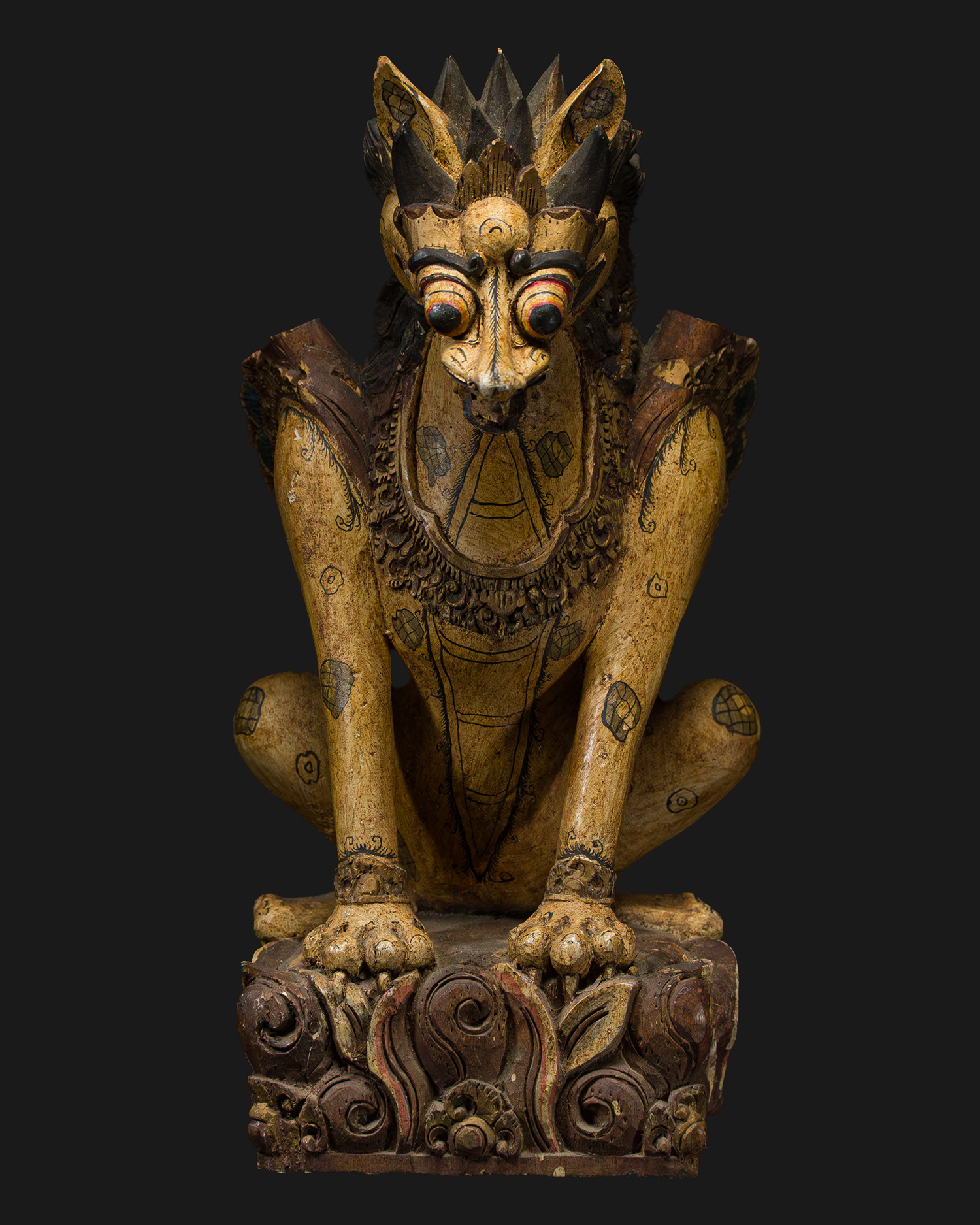
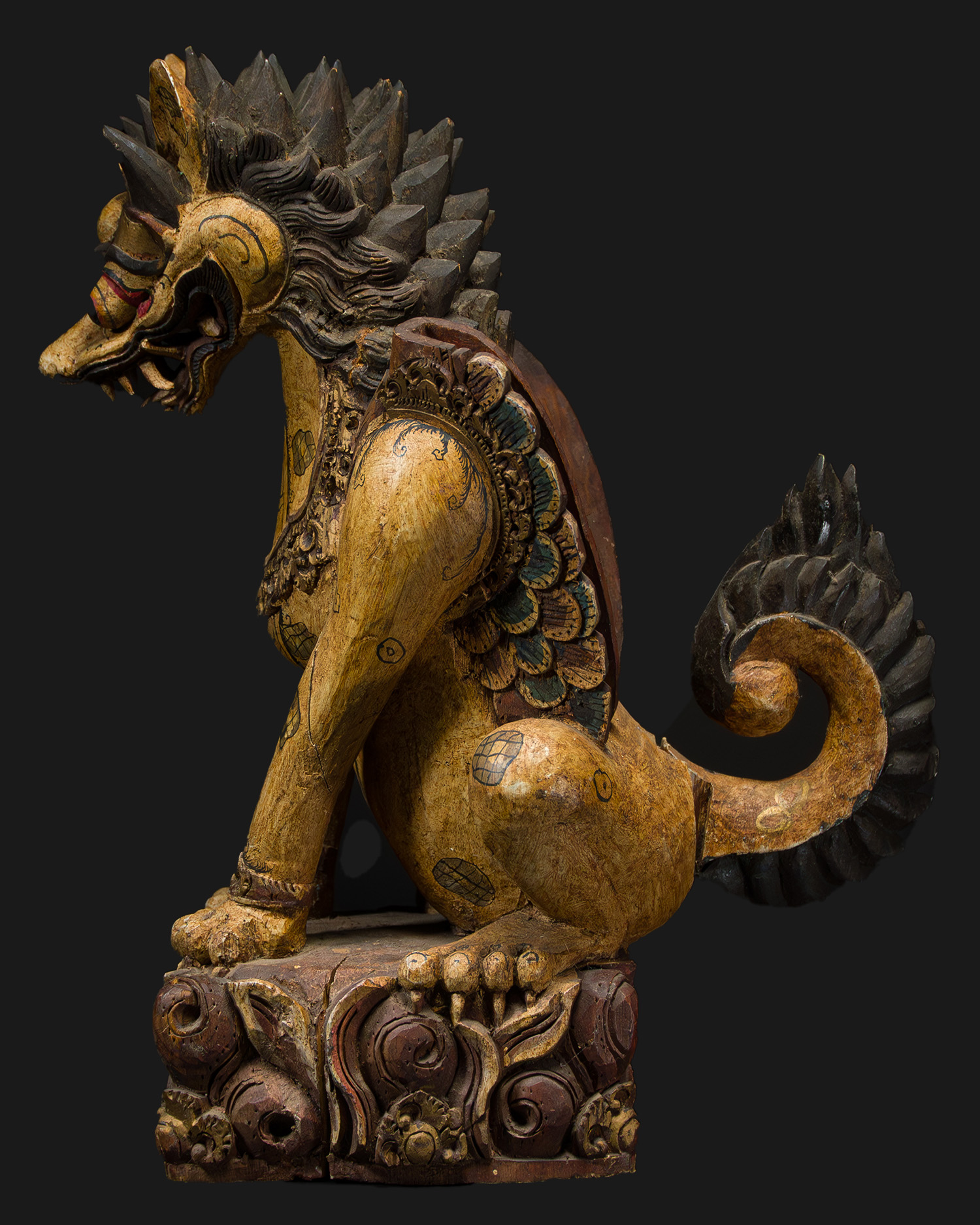
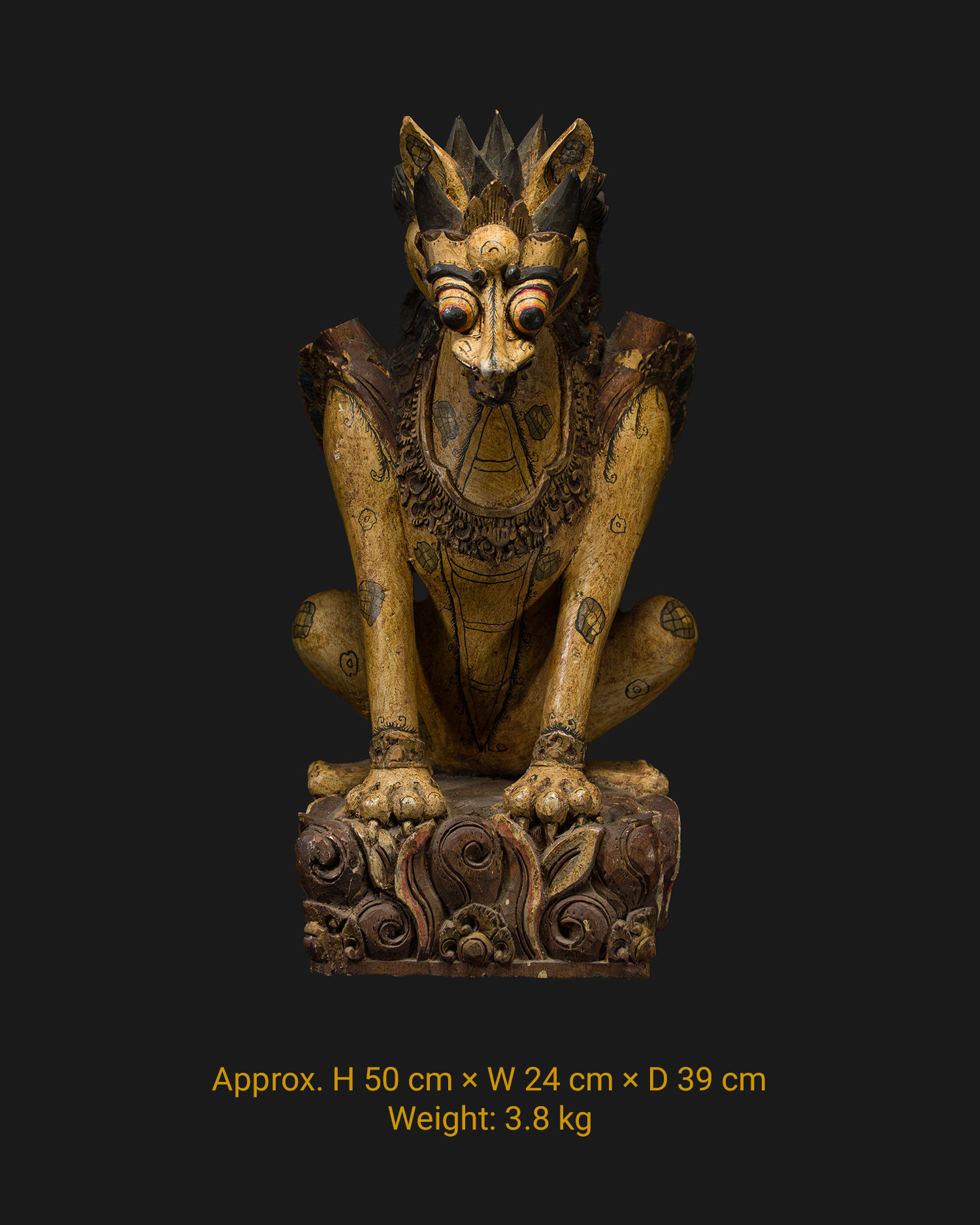

Singa Barong, polychrome wood, Indonesia, 19th century.
1800,00 zł
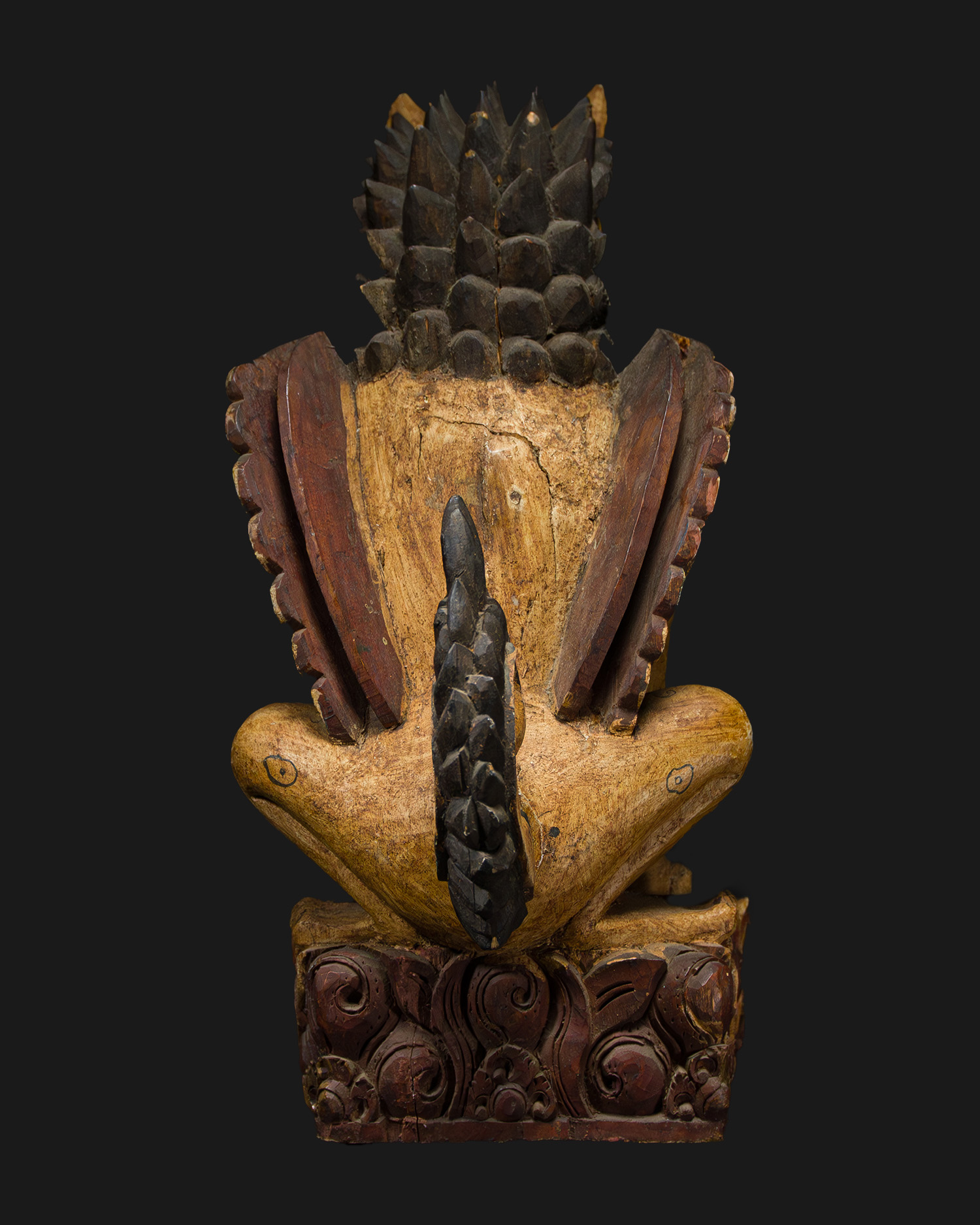
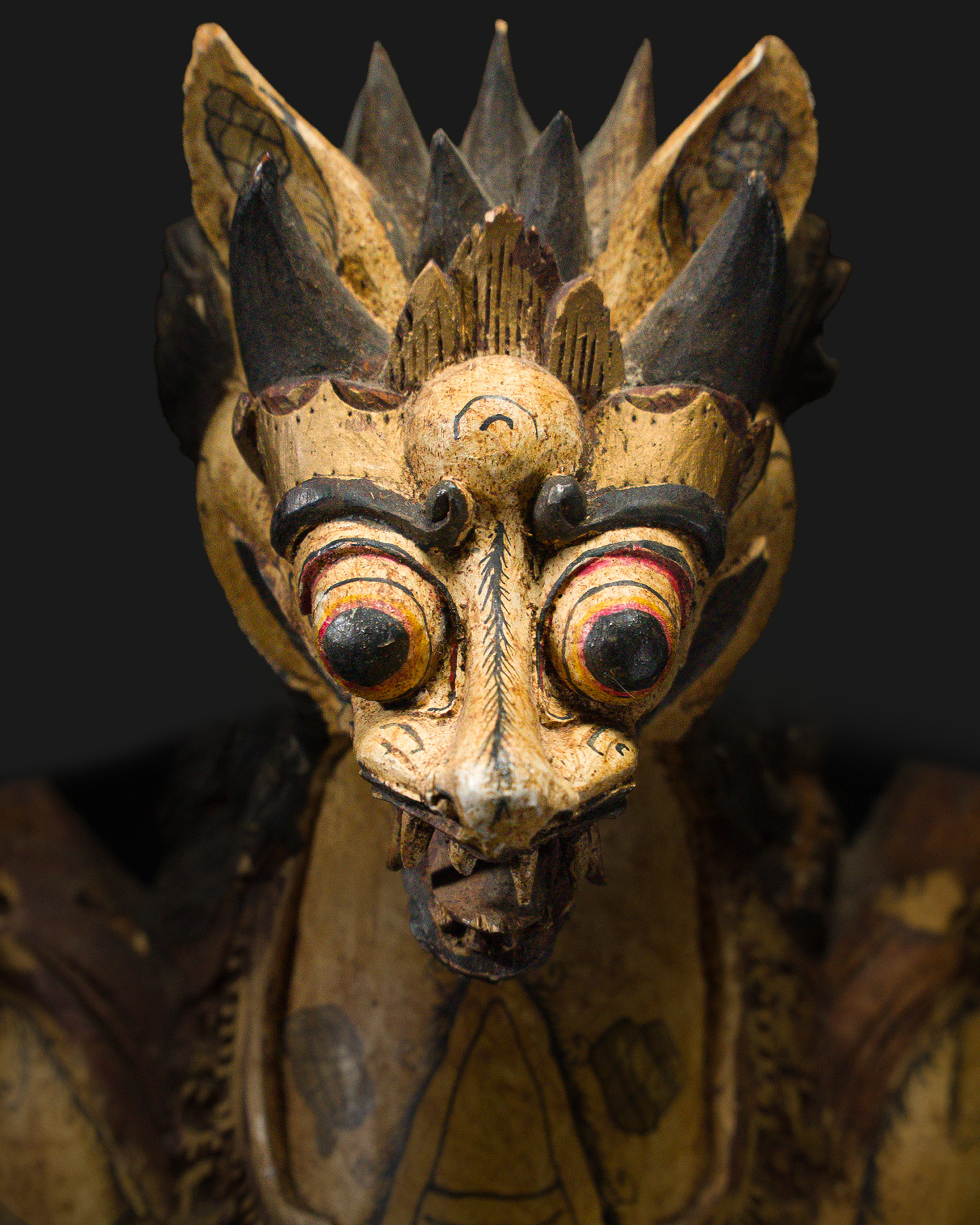
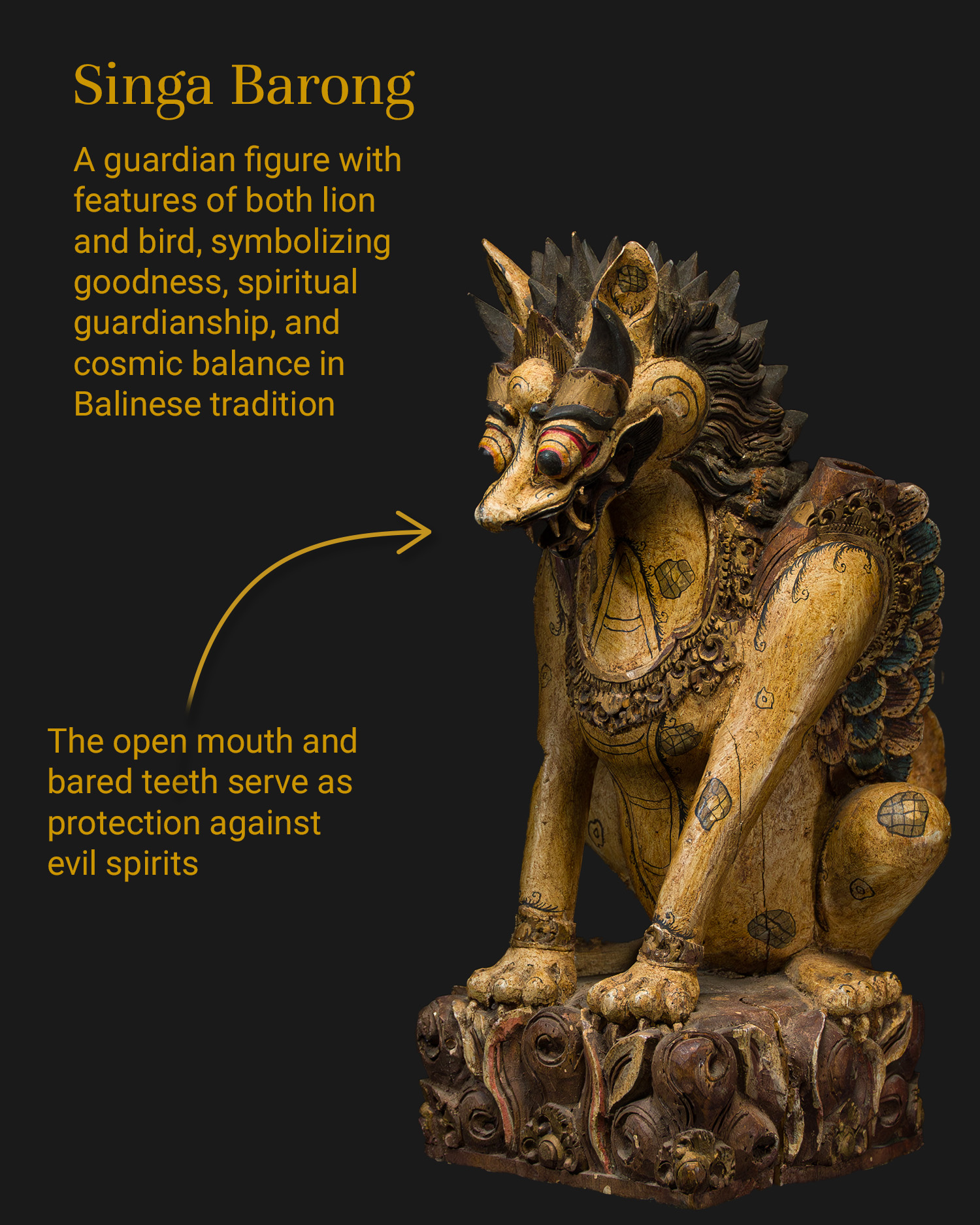
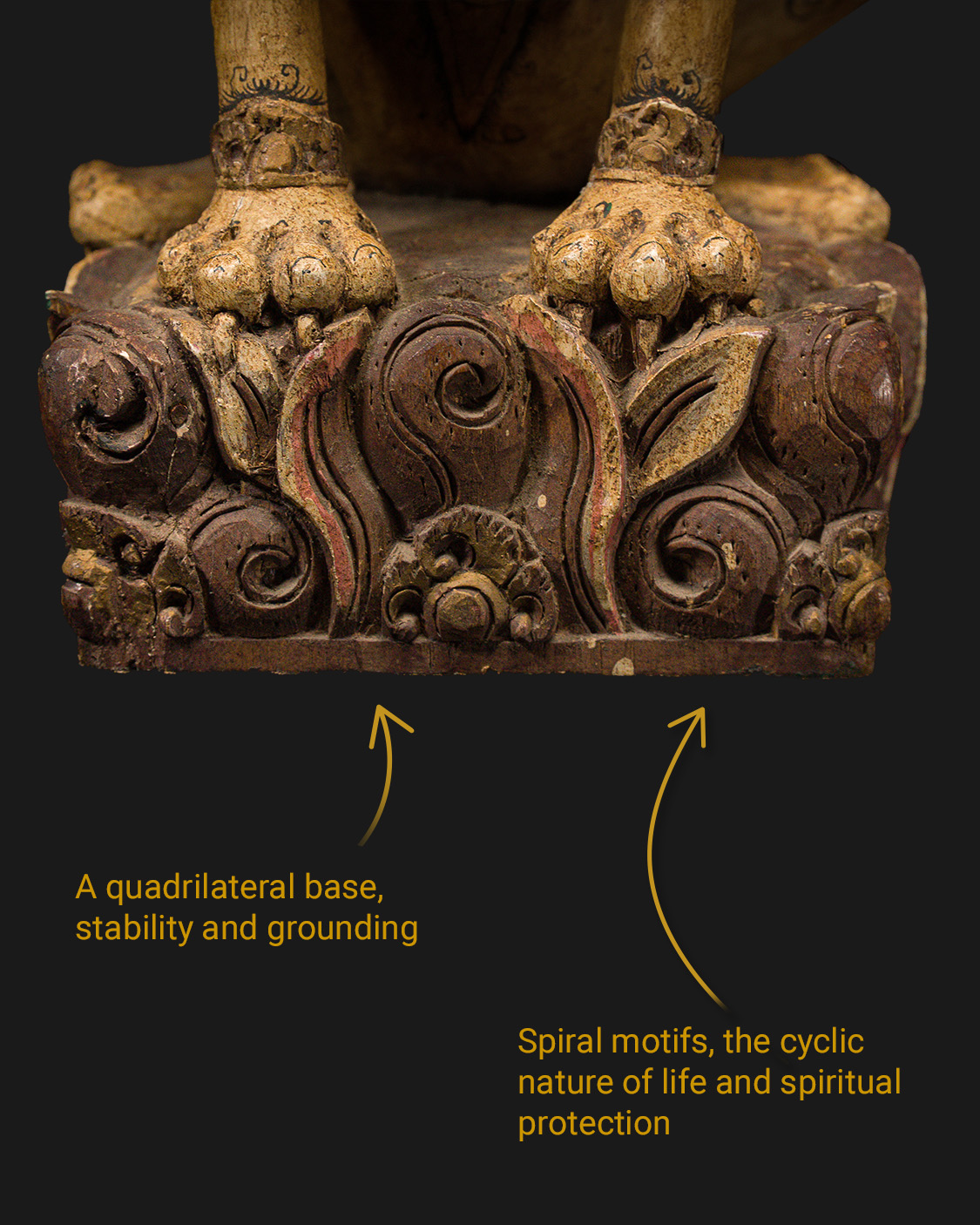
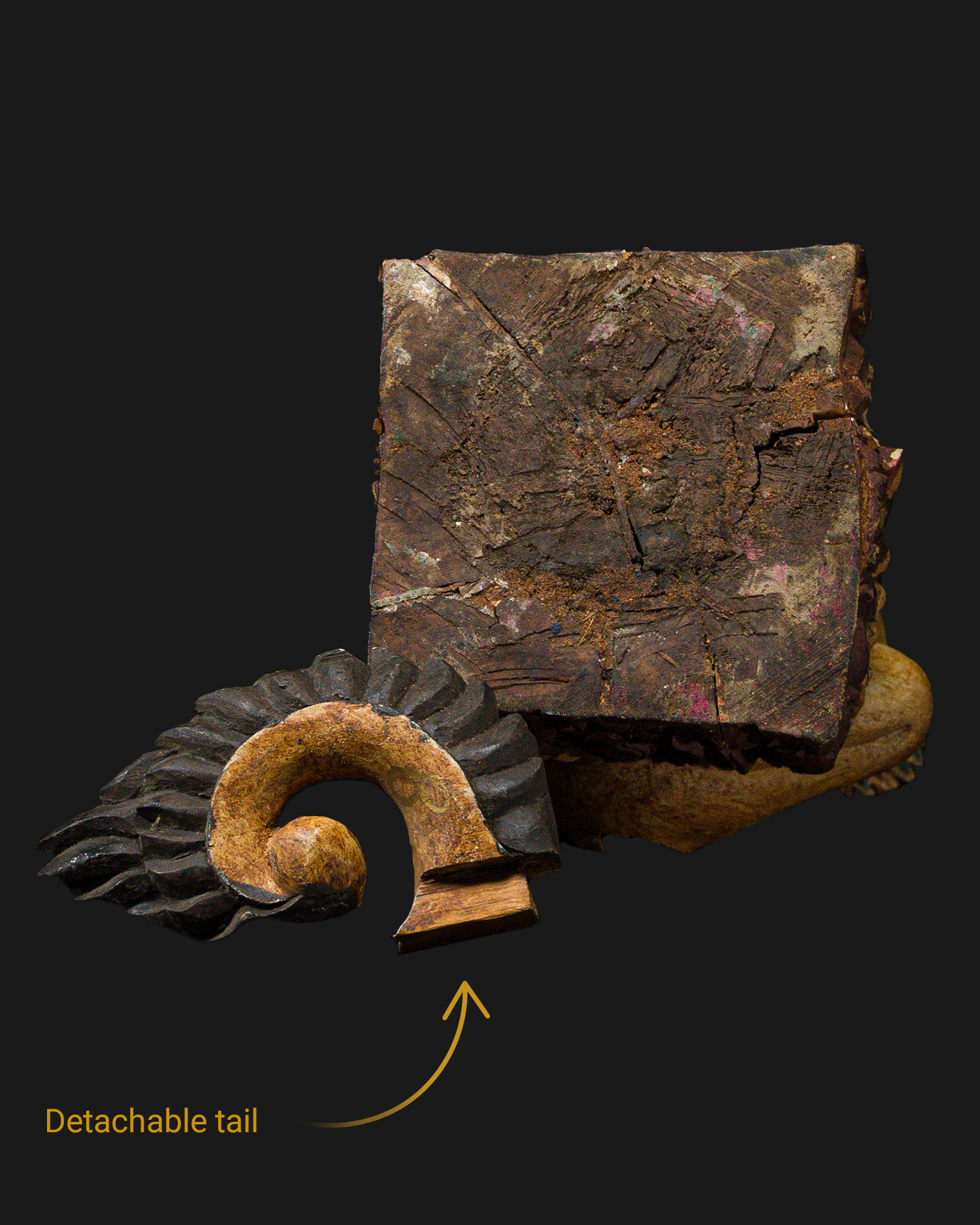
A striking polychrome wood sculpture depicting Singa Barong – a mythical winged lion, known from Balinese and Javanese traditions. The creature is shown in a watchful position, sitting on an ornate base with its mouth open and teeth bared. The figure’s appearance is completed by its distinctive bulging eyes, curled tail and mane. Its body is covered with linear motifs resembling tattoos, its breast is adorned with a wide necklace and its front paws with bracelets. The sculpture was most likely associated with a protective function, both in temple and domestic spaces.
Sprzedane
| Weight | 3,8 kg |
|---|---|
| Dimensions | 50 × 24 × 39 cm |
| Type |
Ritual sculpture / sacred art |
| Form |
Winged lion sitting on a decorative base |
| Materiał |
Polychrome wood |
| Kolorystyka |
Brown ,Red ,Yellows |
| Technika |
Full-plastic sculpture ,Hand carving ,Layered polychromy |
| Era |
The colonial era in Southeast Asia |
| Kraj pochodzenia |
Indonesia |
| State of preservation |
Missing wings, which are separate elements of the sculpture, otherwise very good, with original polychrome and beautiful patina |
Related products
Capital with Figural Decoration, Sandstone, France, 12th-14th Century
Gallo-Roman sculpture of the head of Eros (?), marble, 1st-3rd century A.D.
Madonna and Child, polychrome wood, gilded, Central Europe, 18th/19th century.
Rama, marble, India, 19th century.
A sculpture depicting Rama, one of the most important deities of Hinduism, considered the seventh avatar of Vishnu. The object was hand-carved in white marble in India, probably in the 19th century.
The figure is depicted standing, facing forward. The face has a gentle expression with a soft smile and slightly closed eyes. The head is crowned with a decorative crown, and long necklaces are visible on the chest.
The figure is dressed in a draped robe with clearly marked folds. On its back is a quiver with arrows, characteristic of Rama's depictions.
The hands of the sculpture are not preserved, originally in one of them the figure held a bow - a characteristic element of representations of this deity. Further about these cavities do not write that they are consistent.
Rama is the hero of the epic Ramayana and in the Hindu tradition symbolizes righteousness and fidelity to the principle of dharma. His images occupy an important place in Indian sacred art, although full-figure marble sculptures of this scale are less common.
The object is preserved in good condition, with clear legibility of form and detail.
Saint John the Evangelist, late Gothic wooden sculpture, ca. 1500
The work may have been part of a winged altarpiece (retabulum), most likely in the Crucifixion group.
Sculpture of a god’s head (Zeus or Hercules), marble, Mediterranean basin, Hellenistic period