


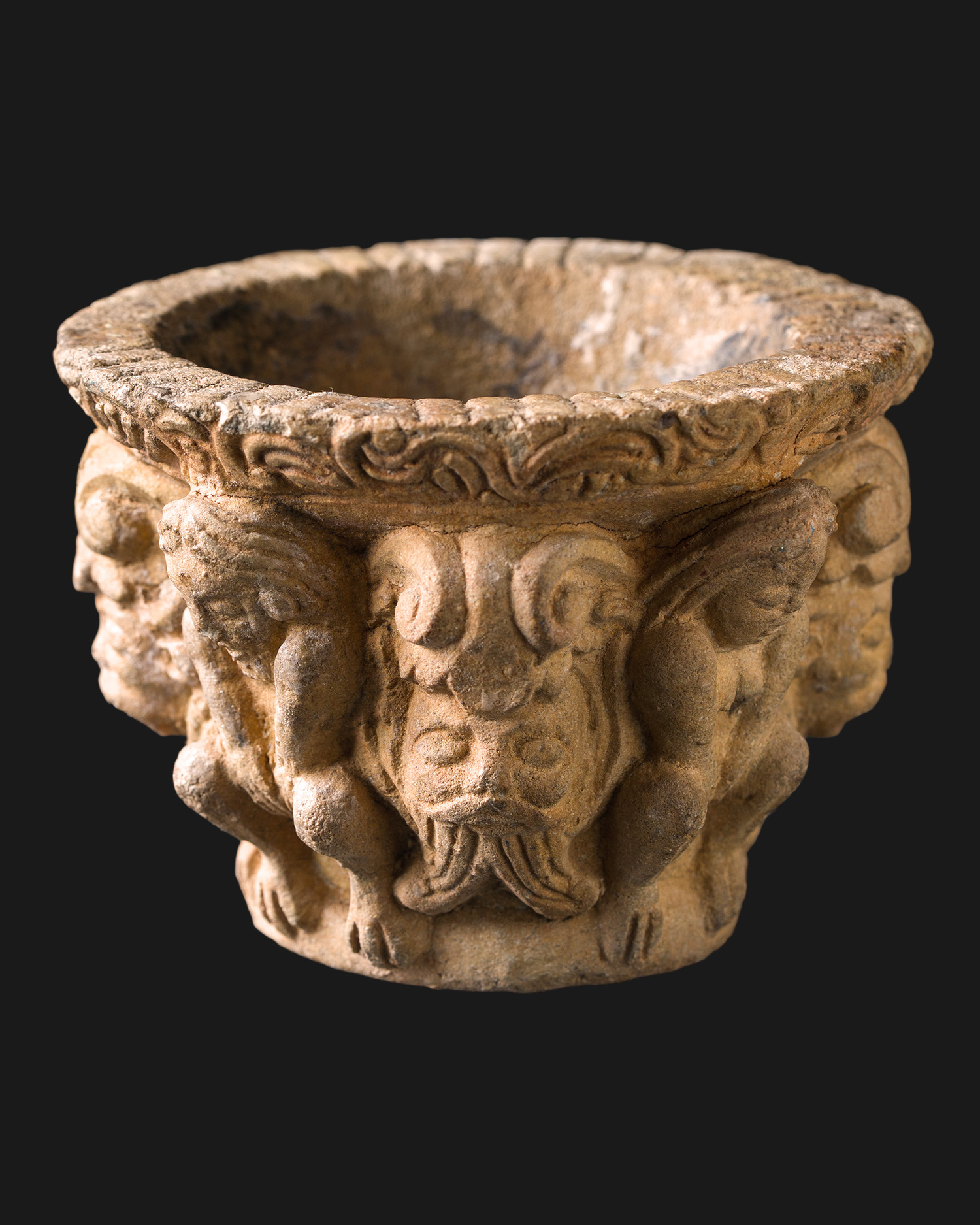
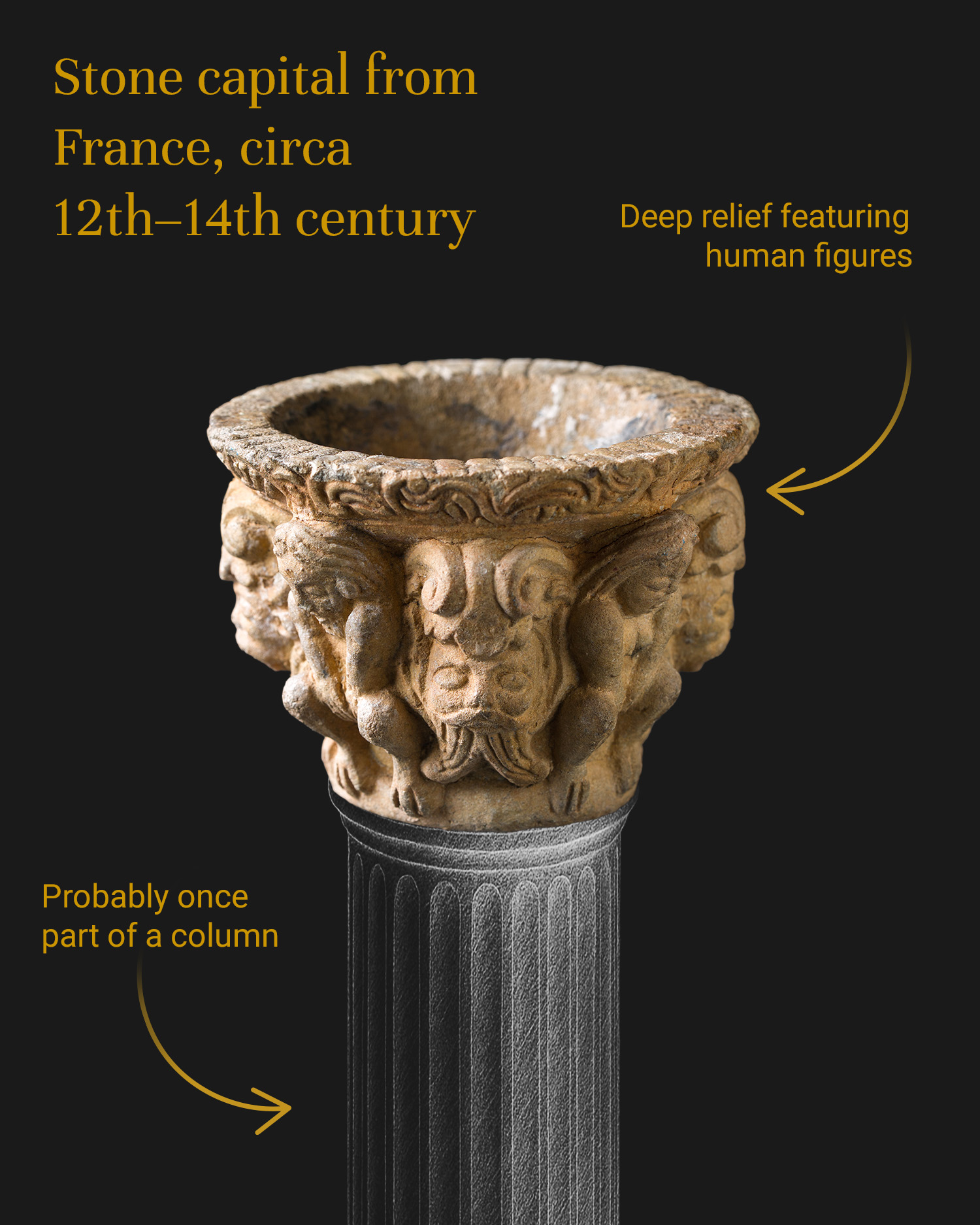
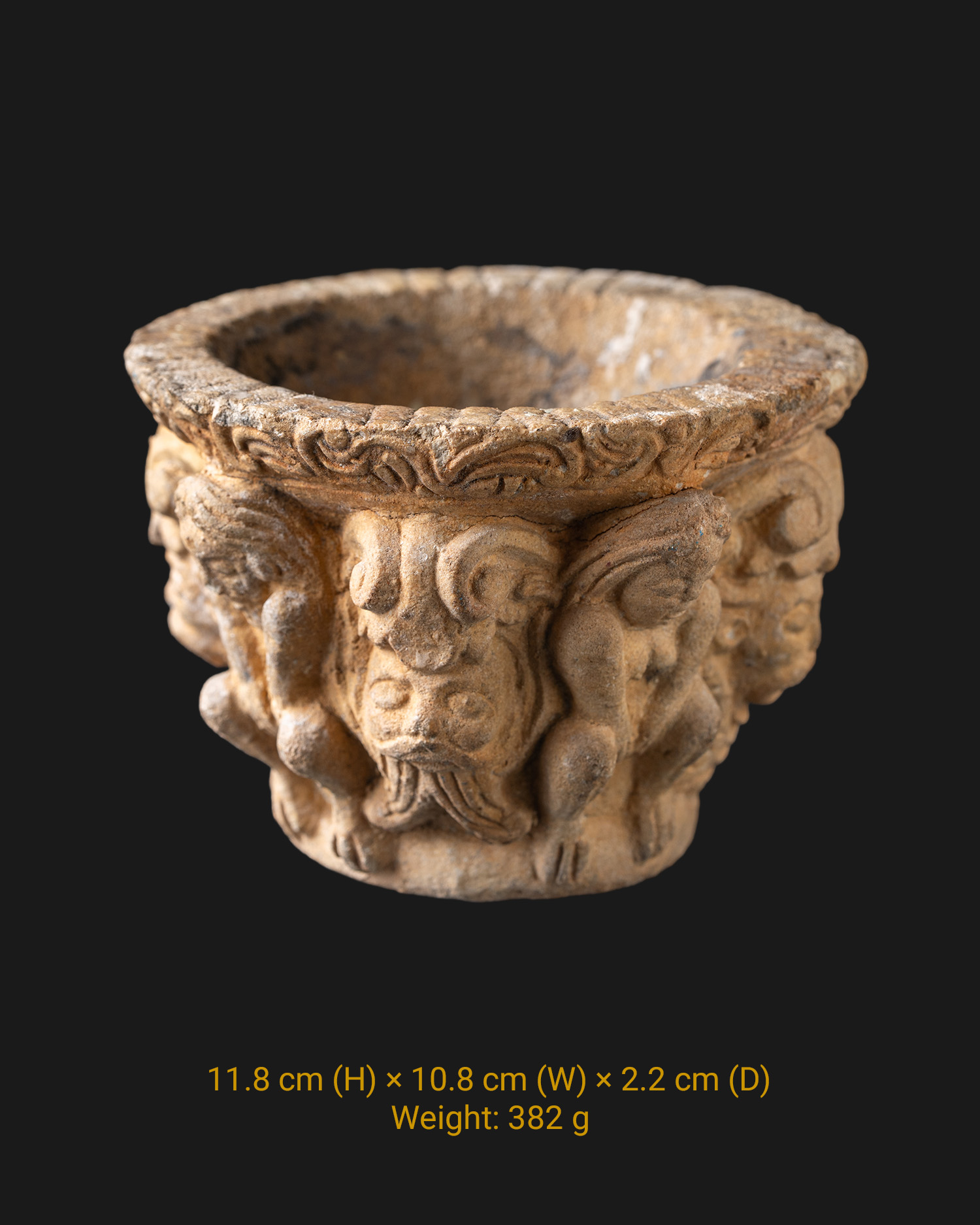

Capital with Figural Decoration, Sandstone, France, 12th-14th Century
2700,00 zł
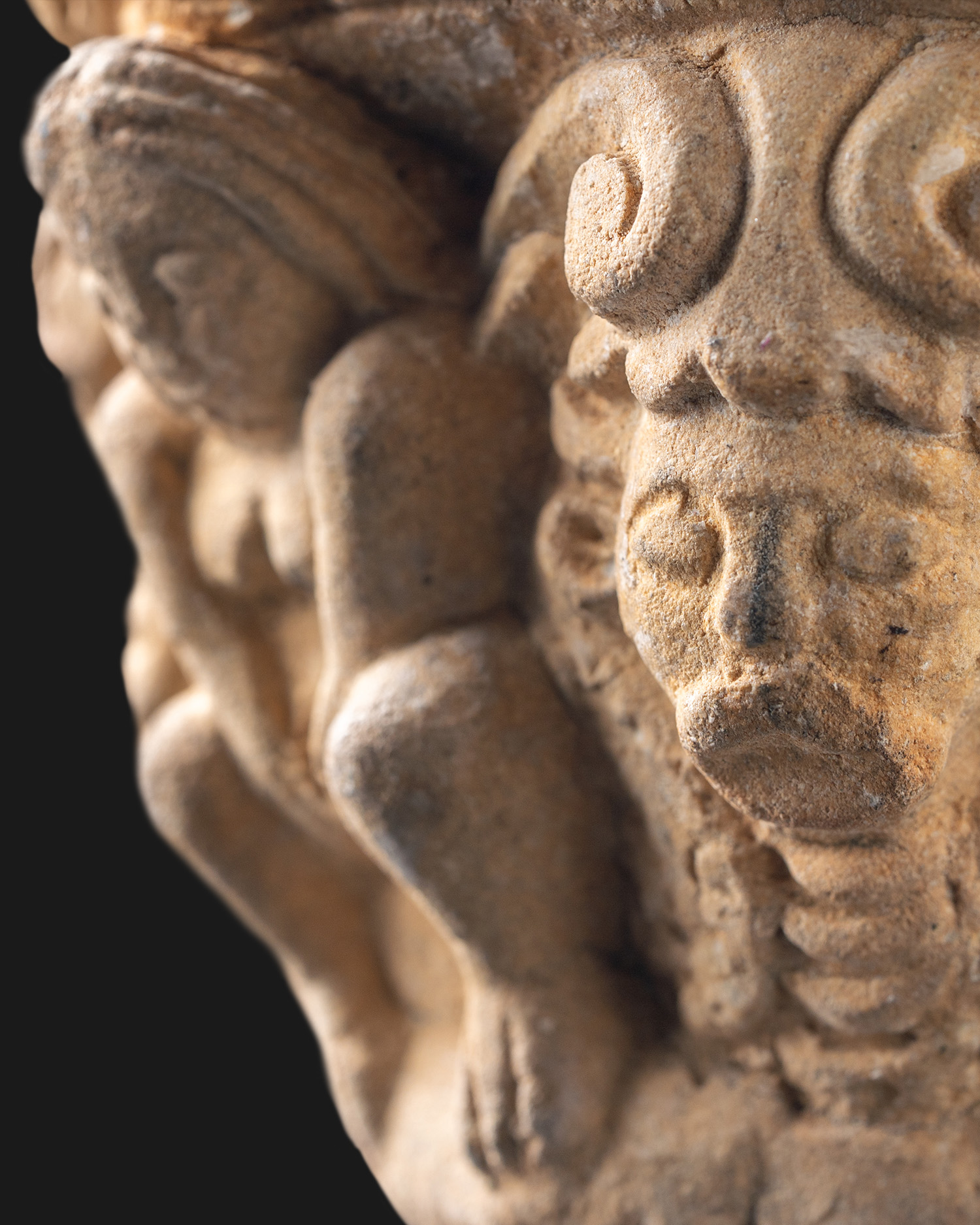
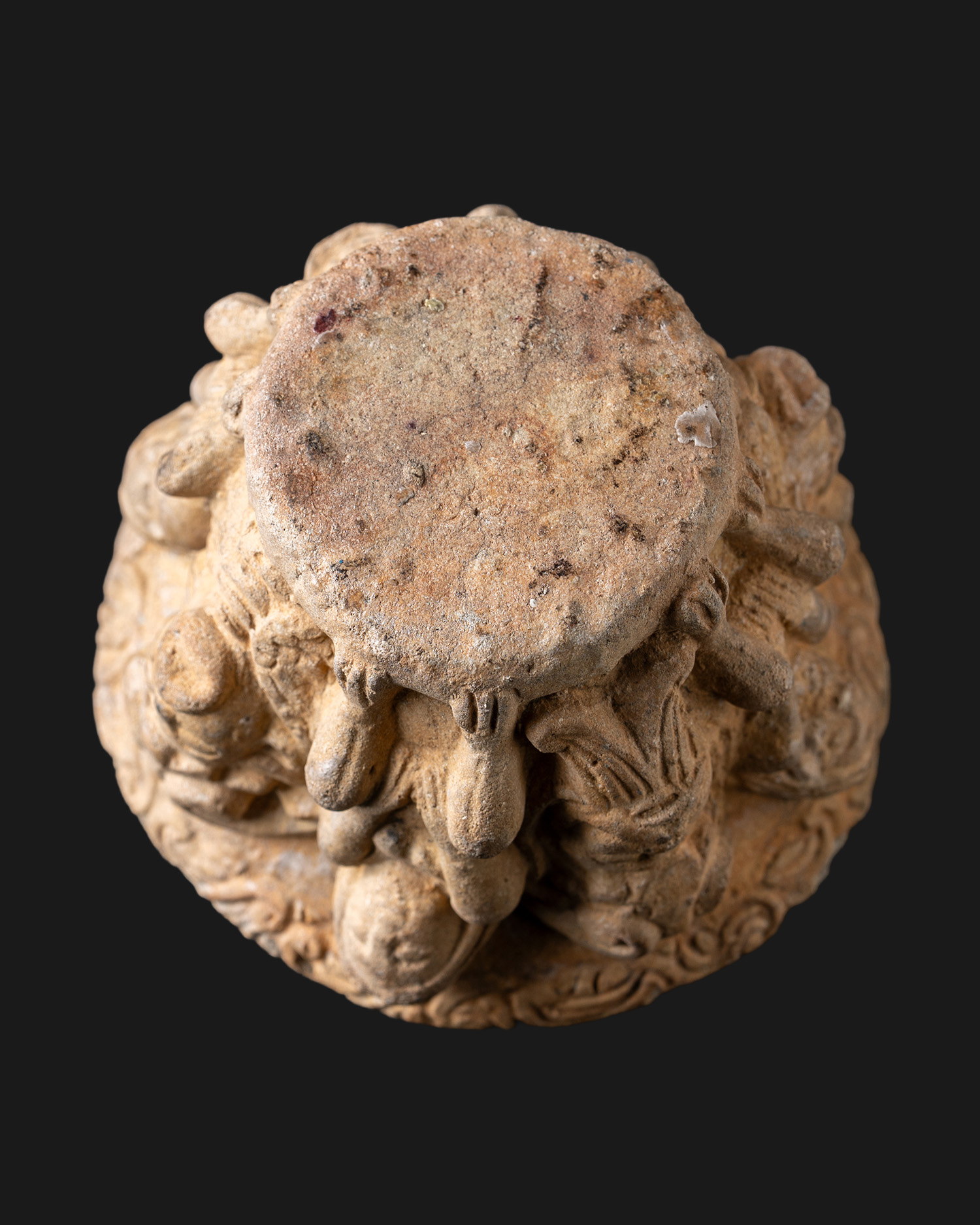
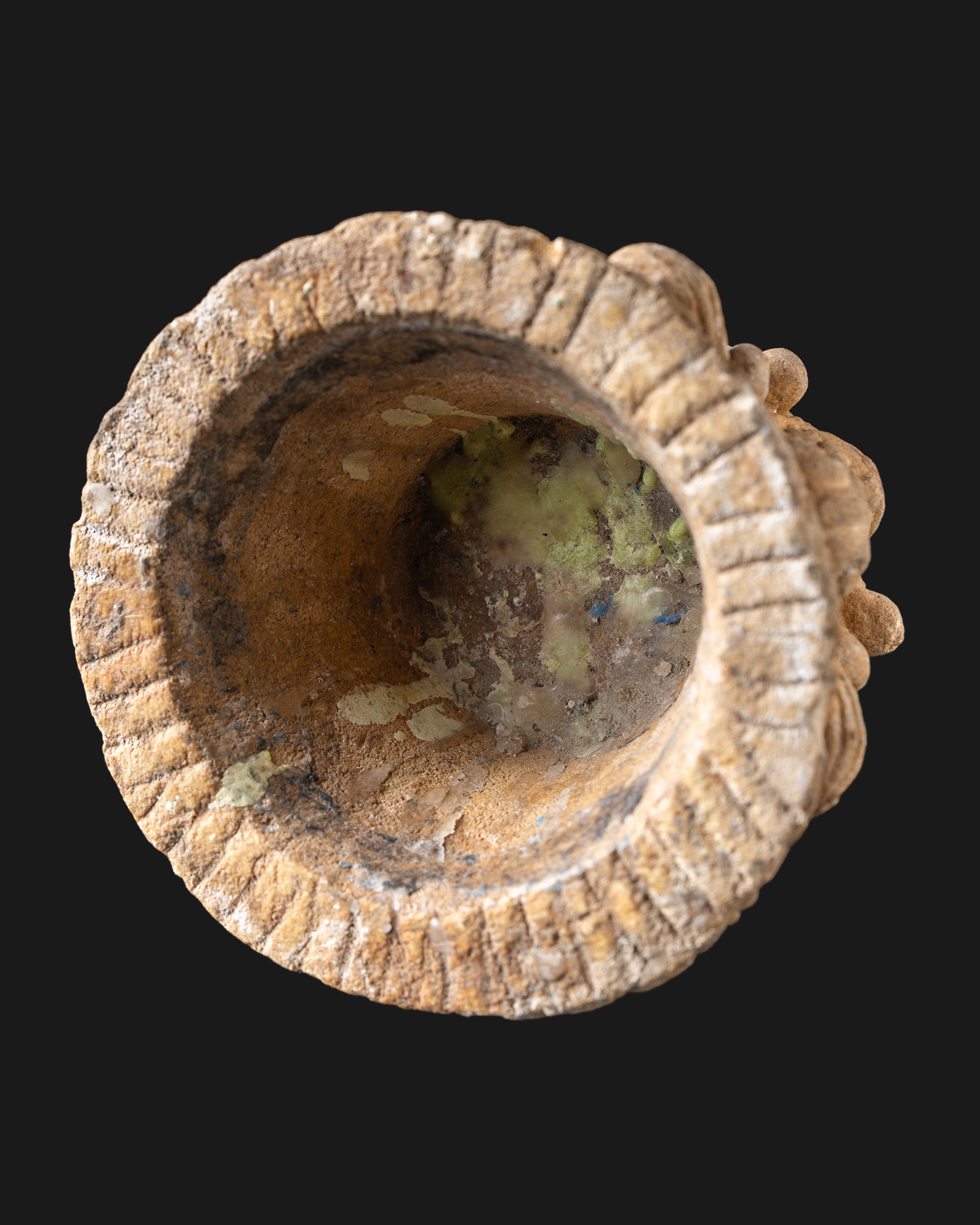
Cylindrical stone capitol, decorated with carved representations of male faces with mustaches and nude female figures. The top edge decorated with a band of ornaments. The interior is deeply grooved. The surface of the object bears clear traces of use – deposits and wax residues are visible. The style of the sculpture refers to Romanesque or early Gothic architecture.
1 in stock
Description
Additional information
| Weight | 0,817 kg |
|---|---|
| Dimensions | 11,5 × 8 cm |
| Type |
Architectural capital / column detail |
| Form |
Cylindrical form with upper collar and ornaments, featuring relief with male and female figures. |
| Materiał |
Sandstone |
| Kolorystyka |
Brown ,Beige |
| Technika |
Hand carving ,Relief |
| Czas powstania |
12th-14th century |
| Era |
The Middle Ages |
| Kraj pochodzenia |
France |
| State of preservation |
Very good condition; no missing parts, visible signs of use (wax deposits, stains) |
Related products
Christ Salvator Mundi, polychrome wood, Poland, 19th century.
Wooden sculpture depicting Christ as Salvator Mundi (Savior of the World), made in Poland in the 19th century. An example of folk Baroque sculpture, combining a religious theme with a simple, legible form. The full-plastic, frontal figure shows a young Jesus in a gesture of blessing, with a globe in his left hand.
The figure is dressed in a white tunic and blue coat with yellow piping. Remnants of the original polychrome and natural traces of use are visible. The simplified modeling, linear folds and expressive face indicate a folk workshop from southern Poland, representing the late Baroque tradition of devotional sculpture.
Gallo-Roman sculpture of the head of Eros (?), marble, 1st-3rd century A.D.
Full-plastic head sculpture made of white marble, facial features treated quite schematically except for the characteristic almond-shaped eyes and "Gioconda's smile." The nose is flat, the hair reaching the neck, wavy around the line of the face, at the back the hairstyle treated schematically. The shape of the neck from underneath allows us to conclude that the head was originally part of a larger composition. The sculpture is placed on a custom-made, two-stage pedestal of black marble.
Saint John the Evangelist, late Gothic wooden sculpture, ca. 1500
Full-plastic sculpture depicting St. John the Evangelist , made of wood, dated around 1500. The figure is shown in counterpoint, with a slightly bowed head and entwined hands holding a book - an attribute of the Evangelist. The sculpture is preserved in its original polychrome, with a visible structure of pigment layers and natural cracking of the wood.
The work may have been part of a winged altarpiece (retabulum), most likely in the Crucifixion group.
The work may have been part of a winged altarpiece (retabulum), most likely in the Crucifixion group.
Samuel Lipszyc (1880 – 1943), Naked ballerina, patinated bronze, ca. 1920
Sculpture by Samuel Lipszyc in the Art Déco style depicting a nude ballerina in a dynamic pose, balancing on one foot. The sculpture is made of green patinated bronze, set on a marble pedestal with decorative contrasting veining. The dancer's dynamic silhouette and streamlined lines are characteristic of the modernist aesthetic of the 1920s. The figure exudes lightness, grace and modern elegance, capturing the spirit of the Art Déco era. The work is signed "Lipchytz" on the left foot.
Sculpture of a god’s head (Zeus or Hercules), marble, Mediterranean basin, Hellenistic period
Monumental sculpture depicting the head of a bearded god, probably Zeus. The hair and beard form wavy, loose curls; a long mustache descends on the sides and frames the closed mouth. The face has a serious, focused expression, with a slightly flattened nose and furrowed brows. The eyes are carefully modeled, with a distinct upper eyelid, without marked pupils. The sculpture is made of white marble. The piece dates from the Hellenistic period in Greece, circa 300–200 BC.
St. Augustine reliquary with Ex Ossibus relic, polychrome wood, gilded, Italy, 18th century.
An expressive figural sculpture depicting a half-figure of St. Augustine in episcopal vestments, with a heart in his hand. The sculpture is the finial of a console in which was placed a relic of the first class (Ex Ossibus), described "S. Augustini", protected by an intact church seal. The work of polychrome and gilded wood, made in the 18th century, in an Italian workshop, representing a good artistic level.
Zhang Heng seismograph model, stained bone, China, circa late 19th/early 20th century.
Seismograph model made of natural animal bone (imitating ivory), engraved and stained. The surfaces are covered with rich ornamentation, consisting of floral and animal motifs (dragons, horses, fish) and a thread of flames. The egg-shaped body features eight figures of intricately carved dragons, to which eight toads correspond, sitting with open mouths on an octagonal base. The seismograph is topped by a figure of Tao reading the Tao Te Ching. The work is signed on the underside.
The prototype of the model is the world's first seismometer, constructed in 132 by Chinese scientist Zhang Heng. The device indicated the direction from which an earthquake came, even if the phenomenon took place hundreds of kilometers from Luoyang - the capital of China at the time. The device was about 2.5 meters high and made of bronze. In the mouth of each of the eight dragons was a small iron ball, balancing between the teeth. Inside the body of the device was a metal pendulum, set in motion by the vibrations of the earth. A lever system activated by the pendulum opened the dragon's mouth, and the falling ball fell into the frog's mouth. The position of the frog, into which the ball fell, indicated the direction of the earthquake.