

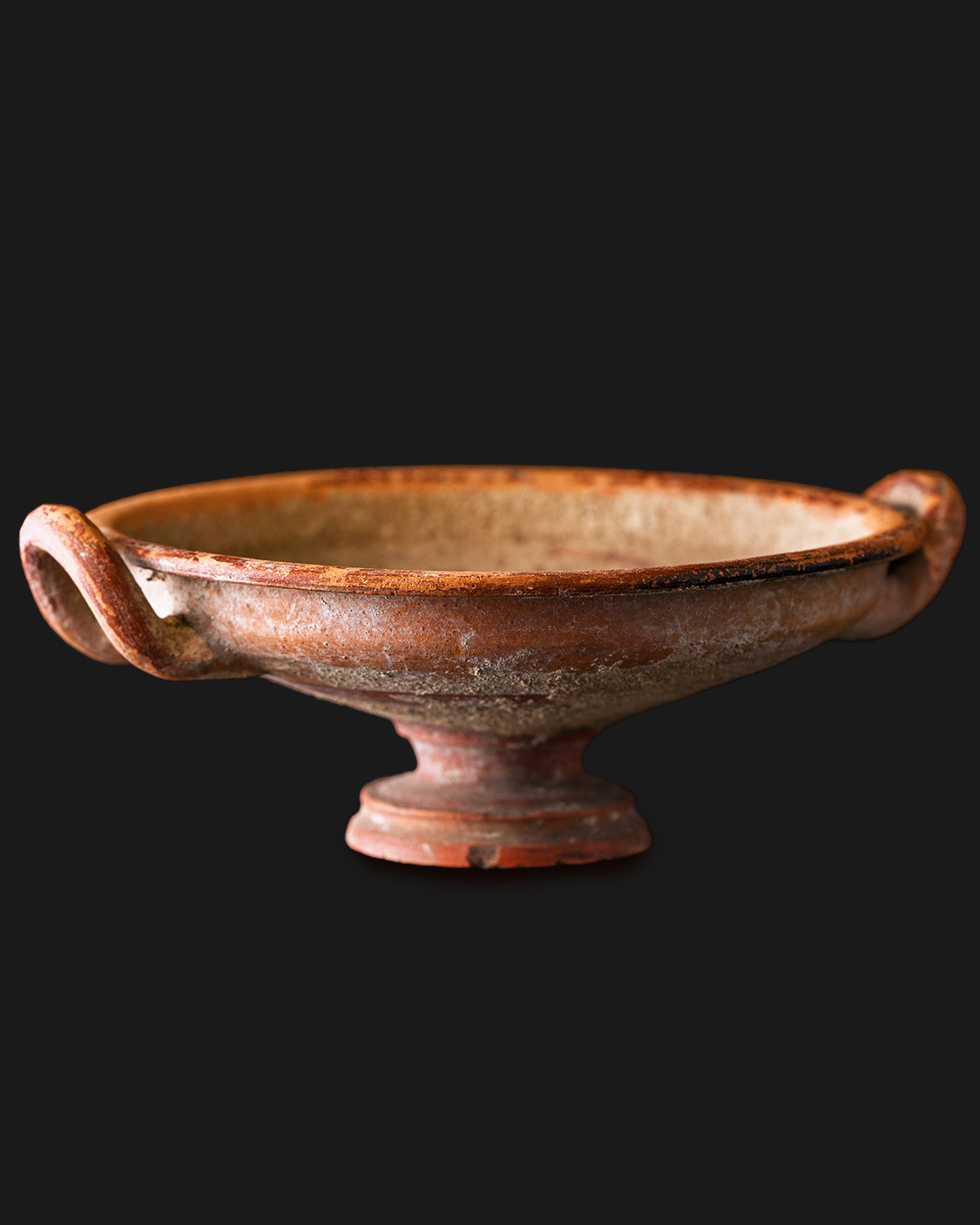
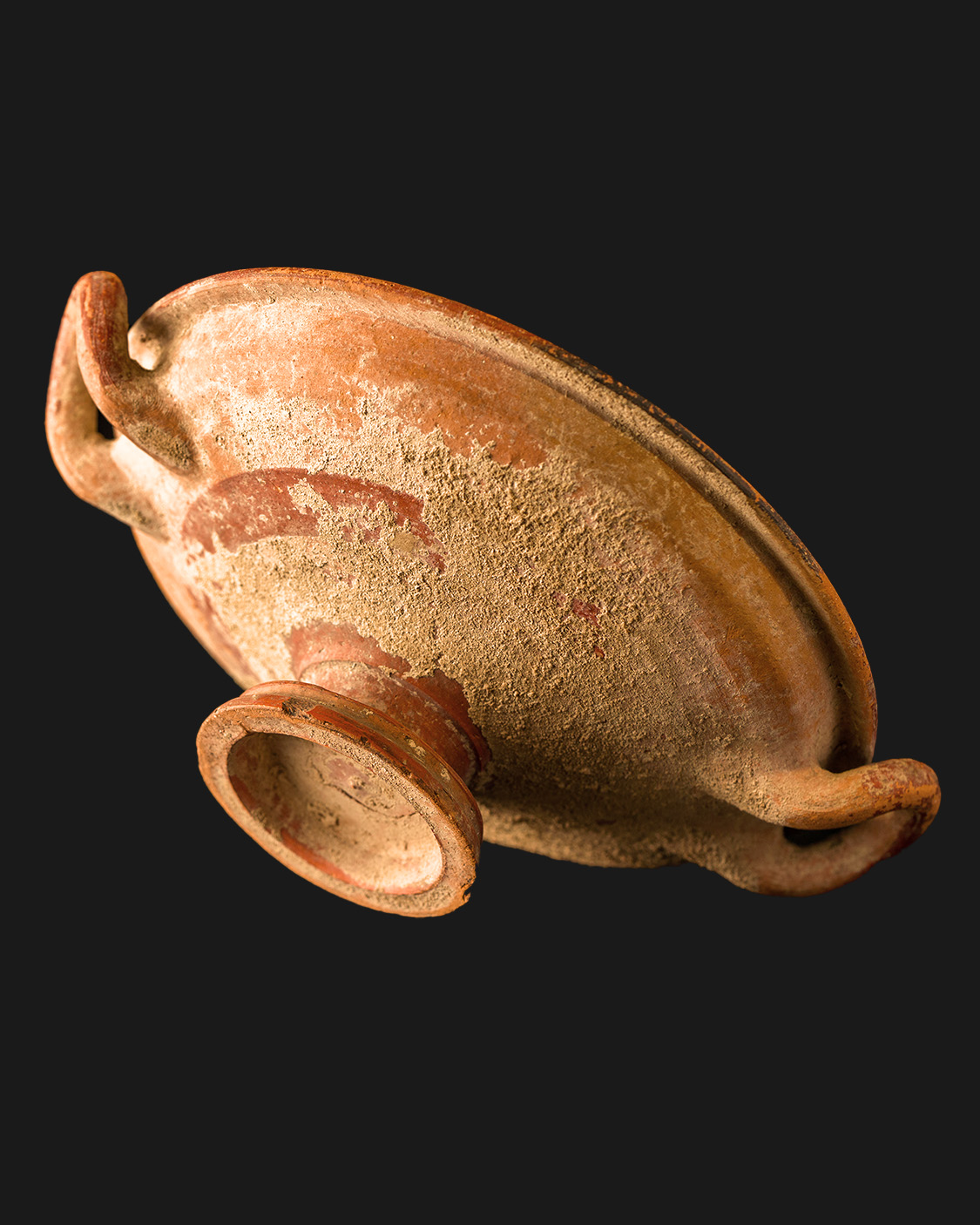
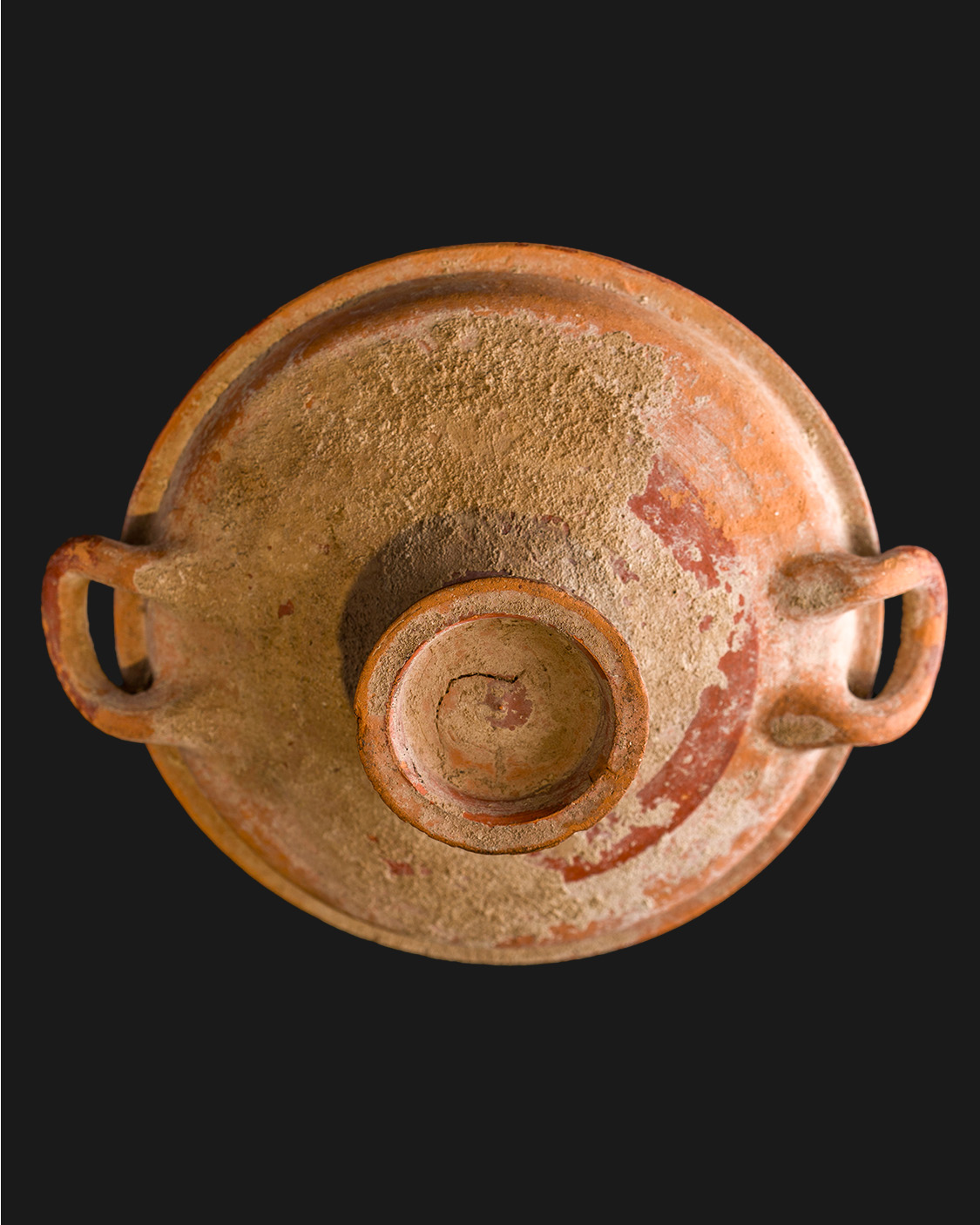
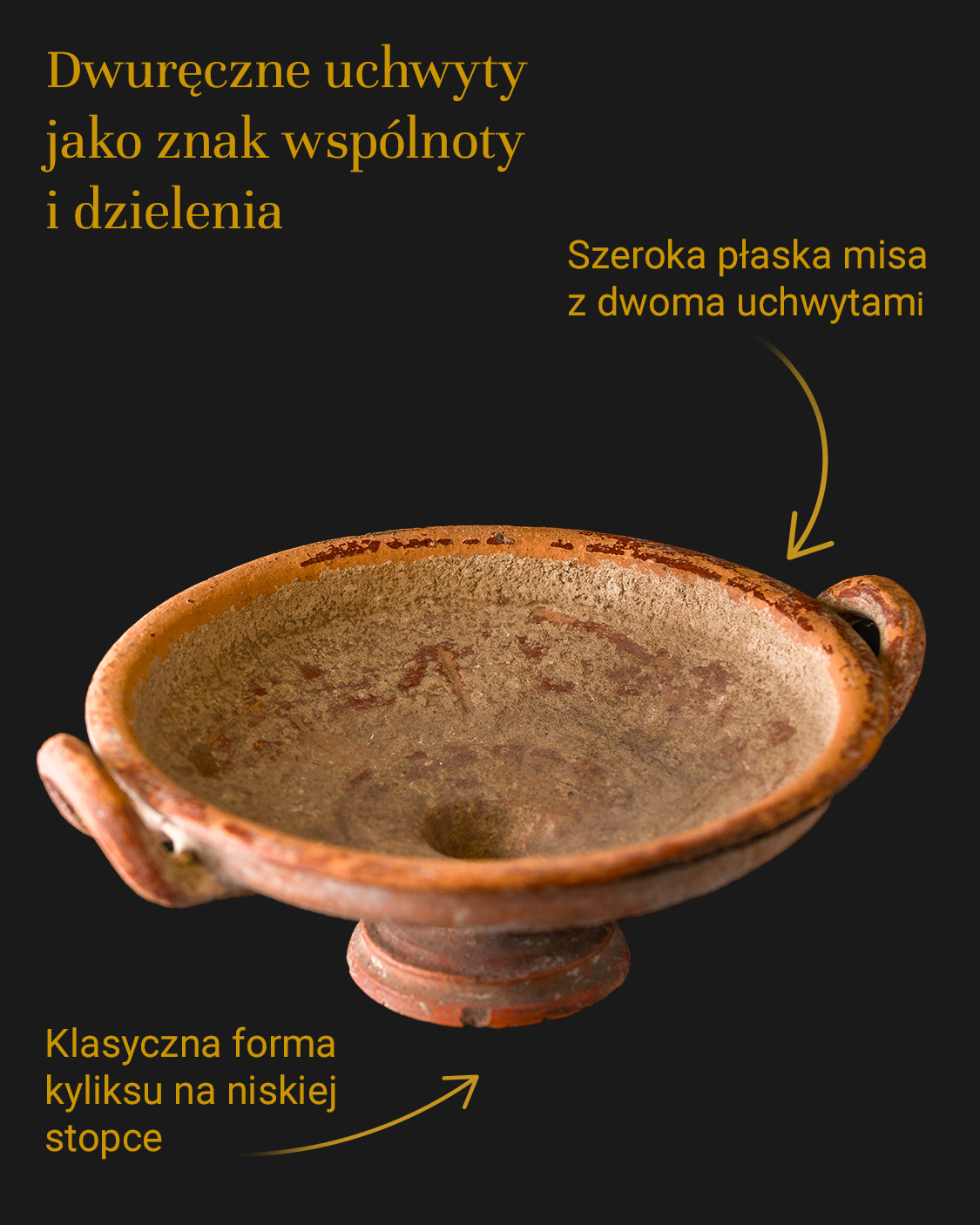


Kyliks (wine drinking vessel), pottery, Ancient Greece, ca. mid-4th century B.C.
800,00 zł
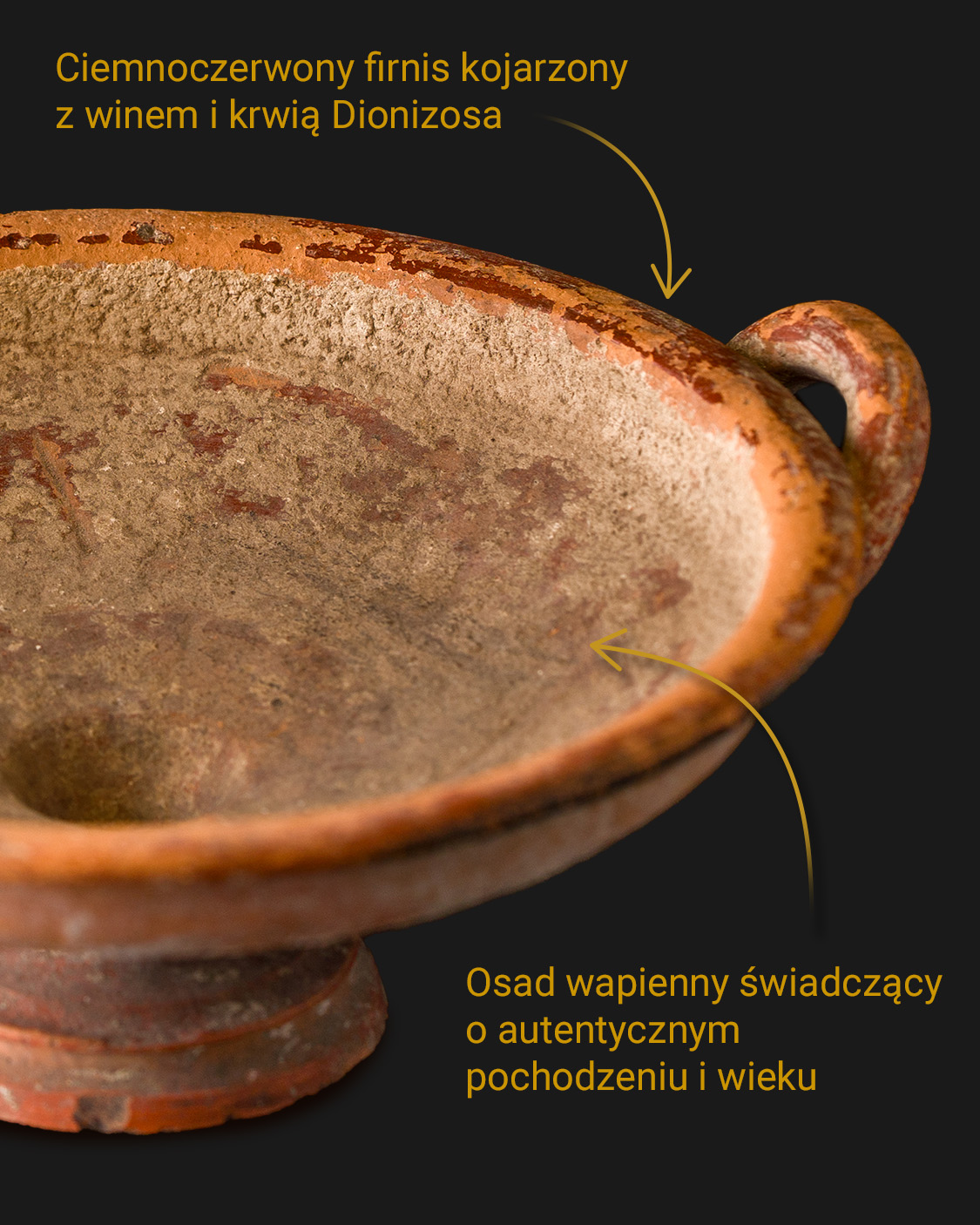
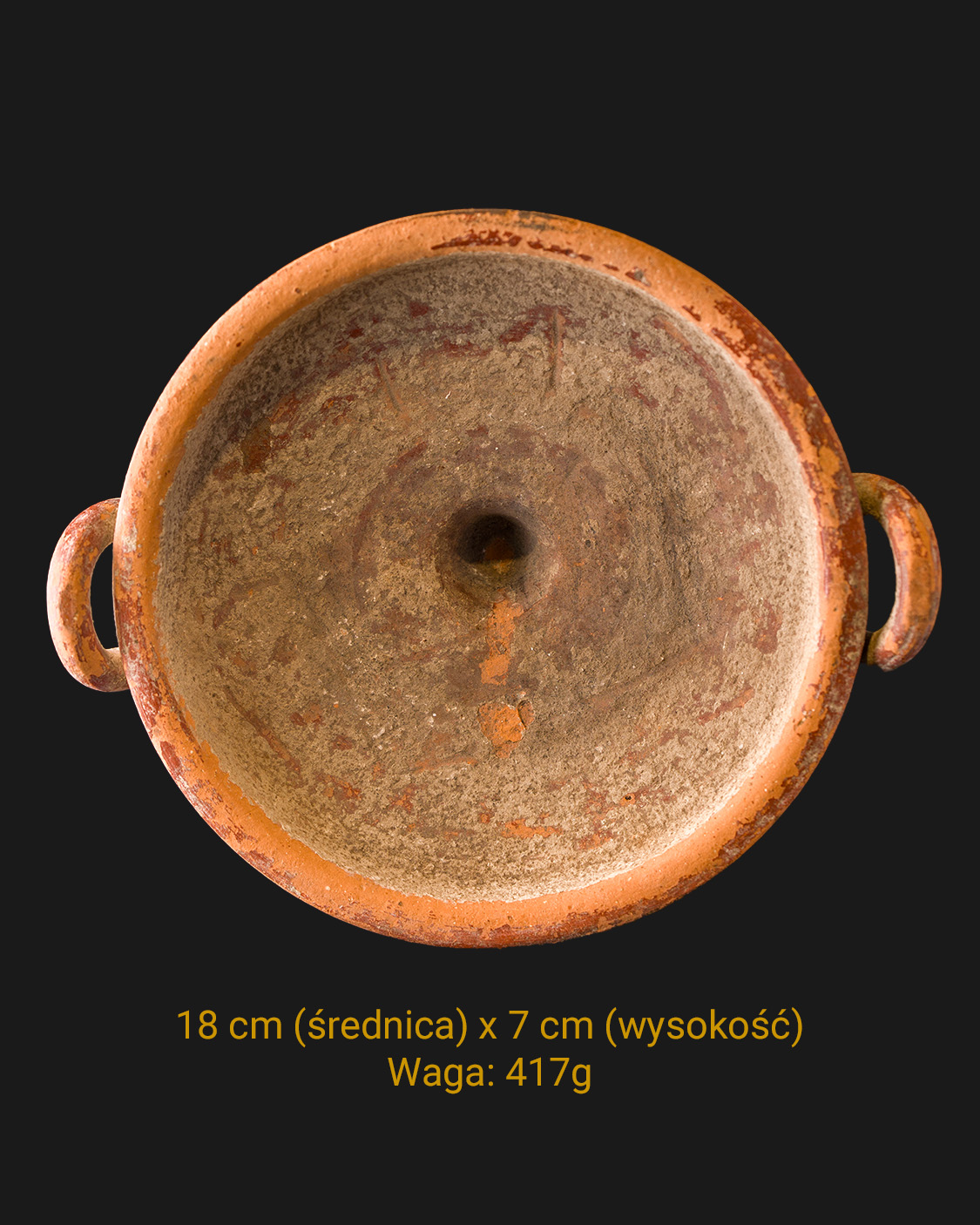
Greek kylix most likely made in Apulia, dated to around the mid-4th century B.C. Classical example of utility ceramics – A chalice used for drinking wine. The vessel is preserved in very good condition, with no cracks or structural defects, with visible signs of age, loss of the firn layer and lime deposit inside. Found in the south of France.
Sprzedane
| Weight | 417 kg |
|---|---|
| Dimensions | 18 × 7 cm |
| Type |
Antique utility vessel |
| Form |
Flat china with two horizontal handles, on a low foot |
| Materiał |
Clay (terracotta) ,Firnis remnants |
| Kolorystyka |
Brick ,Brown ,Orange ,Terracotta |
| Technika |
Layer of dark red firnis ,Pottery wheel |
| Czas powstania |
4th century B.C. |
| Era |
Classical period |
| Kraj pochodzenia |
Italy ,Probably Puglia |
| Style |
Apulian ceramics ,utilitarian style ,classic |
| Autor |
Unknown |
| State of preservation |
Well-preserved specimen without cracks, with loss of firnis, lime deposit and local soiling |
Related products
Balmamarium, terracotta, Ancient Rome, ca. 1st-2nd century A.D.
Dragendorff 15/17 type terra sigillata dish, terracotta, Roman Empire, c. 70-120 AD.
This Roman terra sigillata table dish (patera) represents the Dragendorff 15/17 form (a variant featuring plastic decoration and a prominent rim). It was crafted between approximately 70–120 AD, during the Early Imperial period, specifically under the Flavian dynasty and Emperor Trajan. The dish was produced in renowned, highly specialized ceramic workshops in Pisa, recognized as part of the advanced Tardo-Italic (Padanian) production circle.
Rim diameter (maximum): 24.5 cm Total height: 6.3 cm Foot diameter (base): 11.5 cm Weight: 808 g
Gallo-Roman sculpture of the head of Eros (?), marble, 1st-3rd century A.D.
Oinochoe, terracotta, Ancient Greece, 4th century BC.
Sculpture of a god’s head (Zeus or Hercules), marble, Mediterranean basin, Hellenistic period
Shekel (Judas silver), Tyre, 139 local era = 13/14 after Chr.
Terra sigillata vessel, Dragendorff 18/31 type, terracotta, Roman Empire, circa 190-240 AD.
This Roman terra sigillata vessel (bowl) represents the Dragendorff 18/31 form, a smooth, undecorated transitional variant between a flat plate and a deep bowl. The artifact dates from the turn of the 2nd and 3rd centuries AD (the time of Septimius Severus or Caracalla) and was produced in the thriving provincial Roman pottery center in Trier, within the Roman province of Gallia Belgica. The vessel features universal, medium table dimensions: a maximum rim diameter of 19.2 centimeters, an overall height of 4.5 centimeters, and a stabilizing footring diameter of 10.2 centimeters. These proportions reflect an ancient geometric module based on a strict two-to-one relationship between the rim width and the base, which was standard in serial workshop production of that period.
The bowl was crafted from very well-sorted ferruginous clay, which, after firing, achieved a uniform, bright red color. The surface of the vessel is covered with a slip exhibiting a characteristic silky sheen. Natural traces of ancient use are visible on its structure, manifesting as fine scratches within the interior and superficial abrasions on the rim and the underside of the footring, resulting from repeated placement of the vessel on hard surfaces. The vessel's profile is formed by straight, conically flaring side walls that gently curve into a deepened base in the lower section. The central part of the interior features a regular, conical elevation, known as an omphalos, which is further encircled by a distinct ring incised into the clay before firing.
Rim diameter (maximum): 19.2 cm Overall height: 4.5 cm Footring diameter (base): 10.2 cm Weight: 417 g