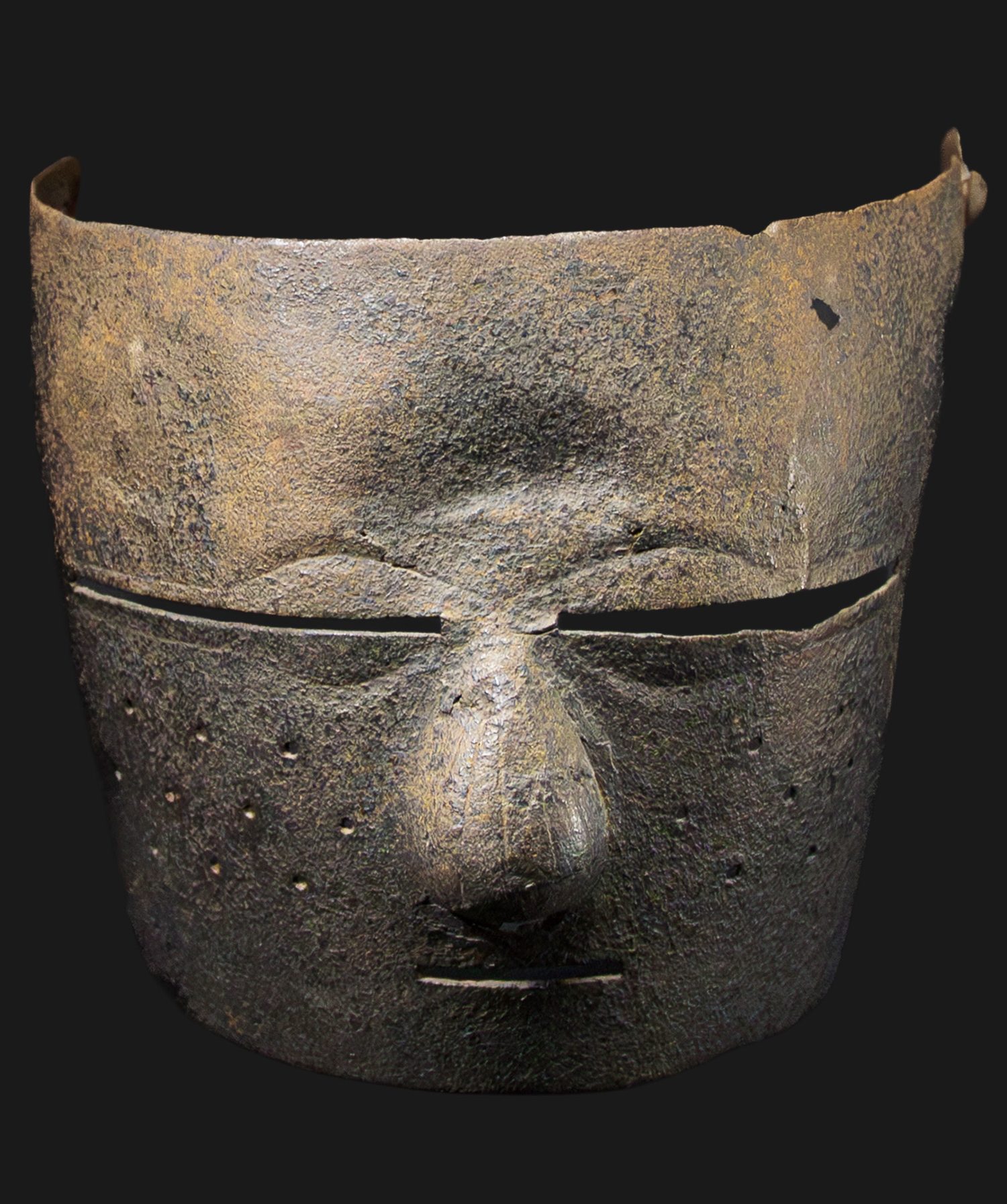
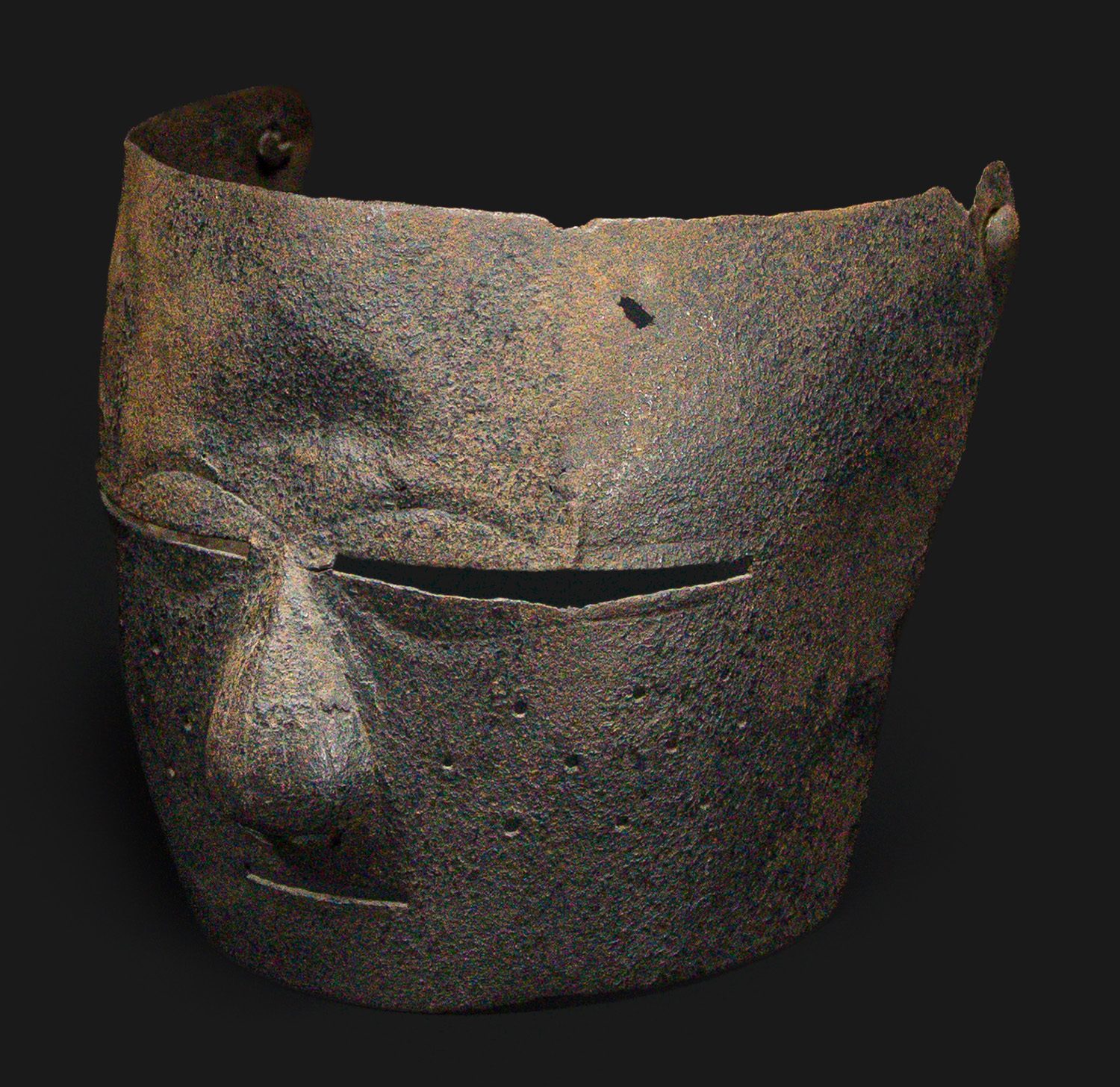
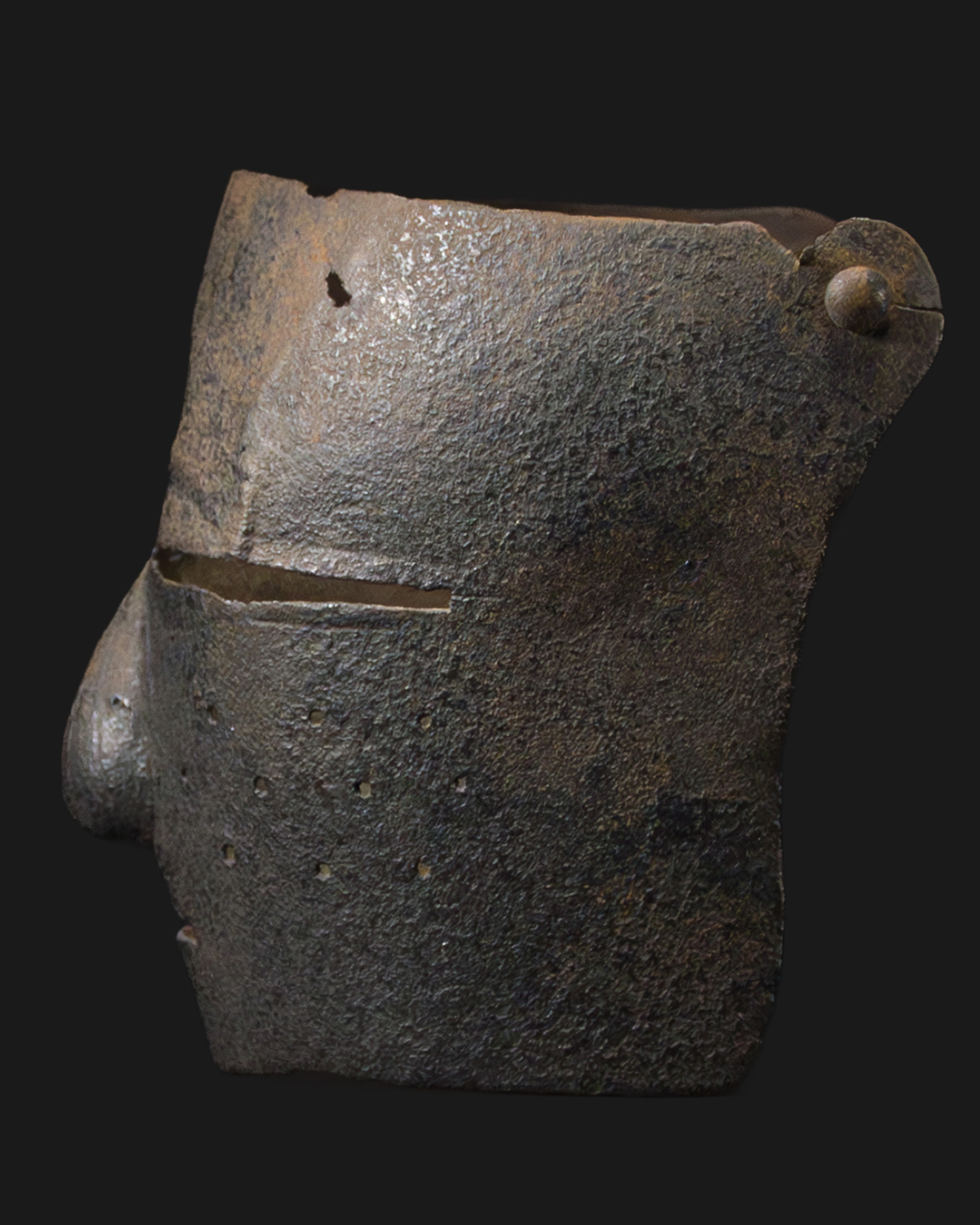
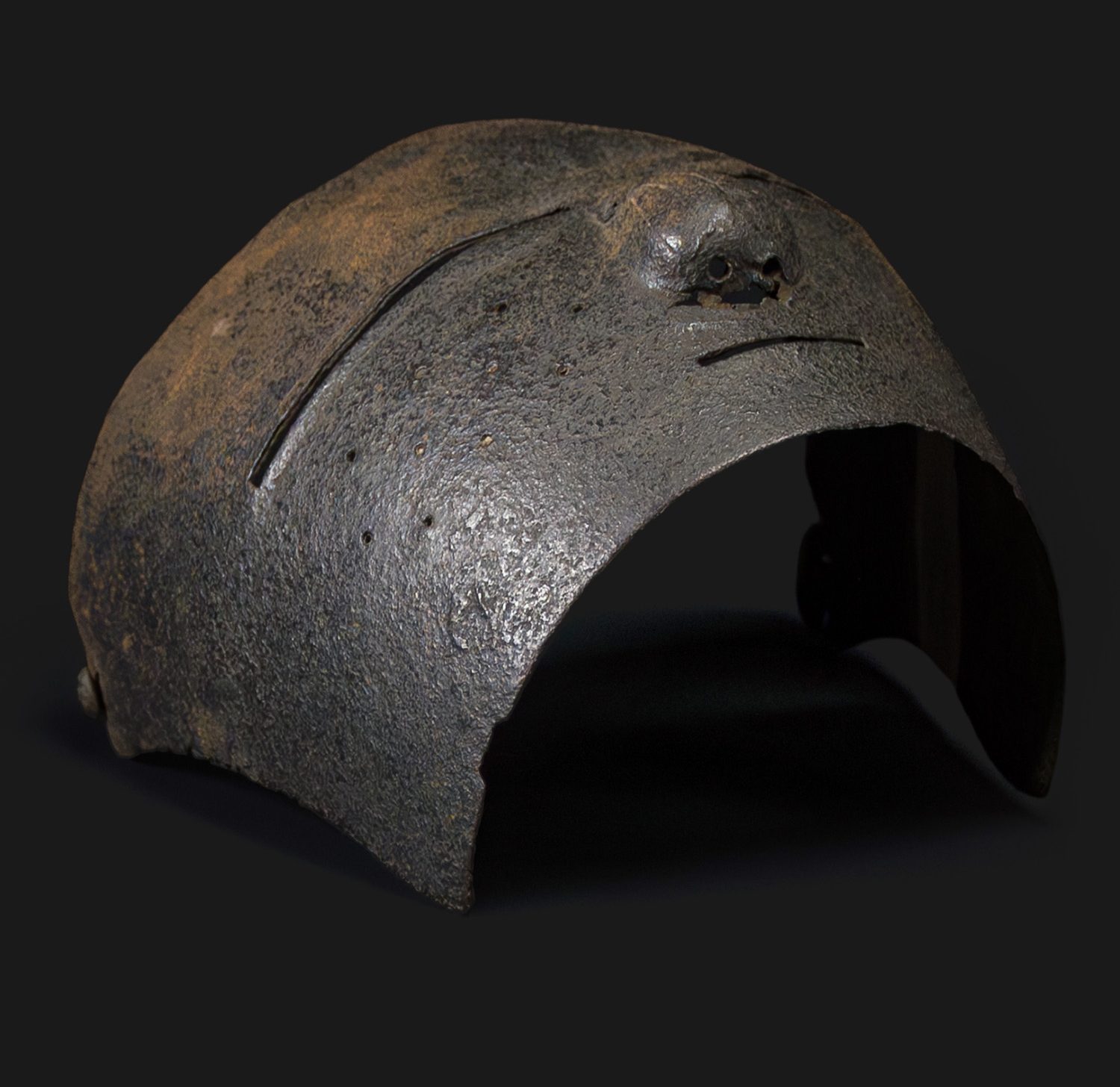
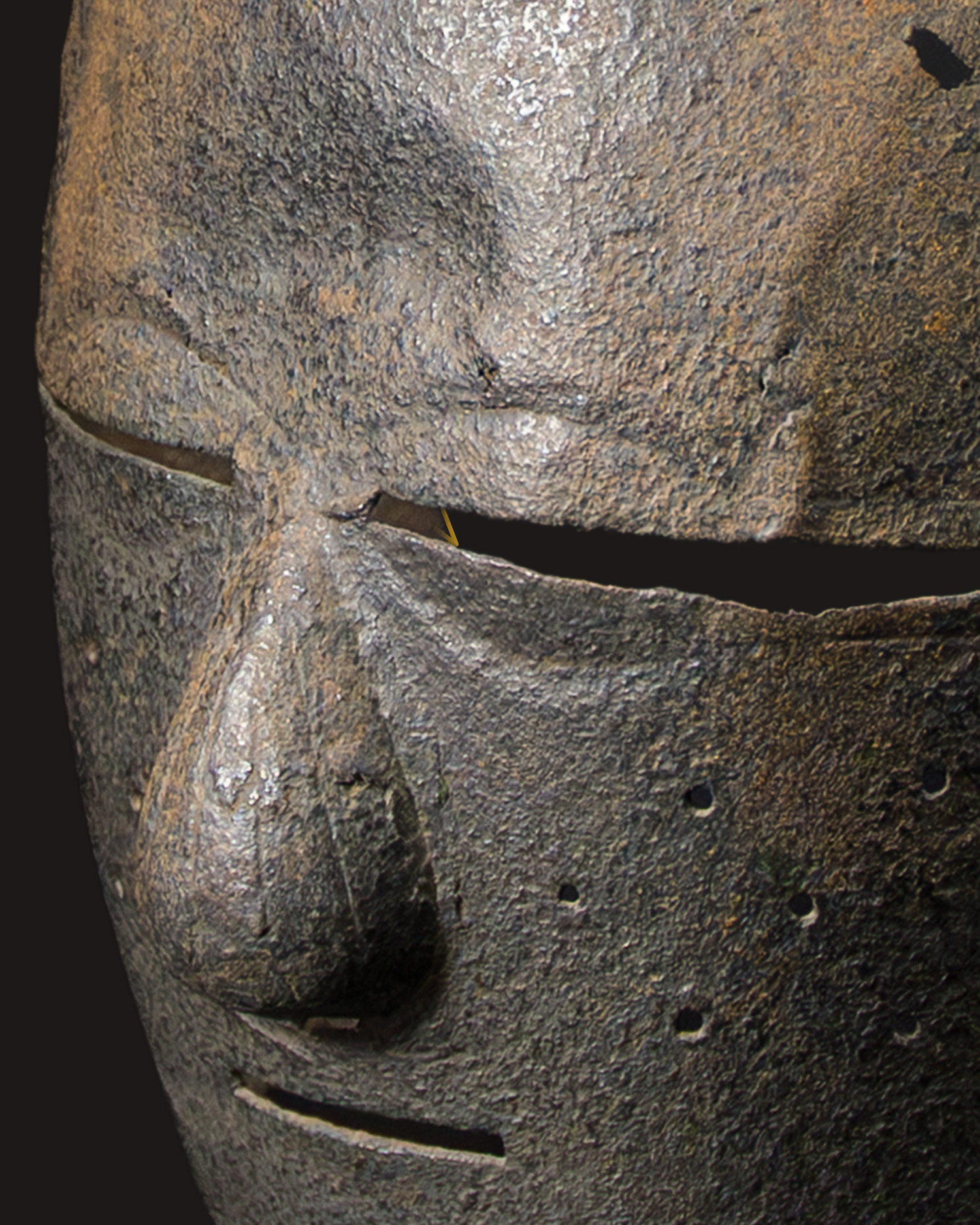
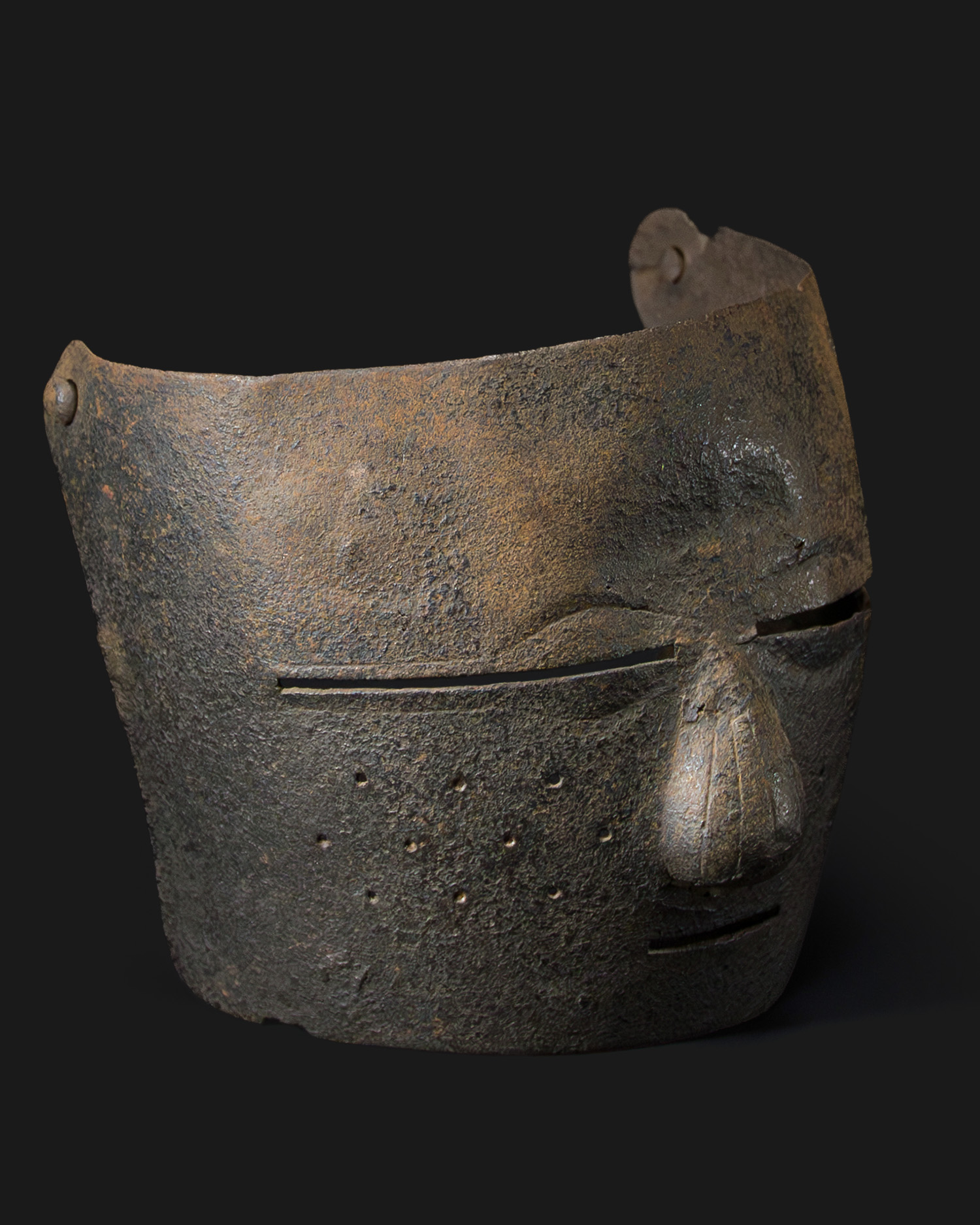
A rare and authentic example of a so-called “mask of shame” (Schandmaske), forged from a single piece of iron. It resembles the face guard used in German-style Salad helmets with a movable visor. Like the visors on Salado helmets, it was a movable component, secured by two rivets preserved at the temples. Unlike the visors on helmets, the mask was made of thin sheet metal and has narrow eye slits that significantly restricted the field of vision. Other features distinguishing it from helmet visors include a grotesquely depicted nose and a rather sloppy workmanship. These features were related to its functionality—the mask was intended to attract attention and evoke negative associations with the person wearing it, rather than to serve as protection during battle.