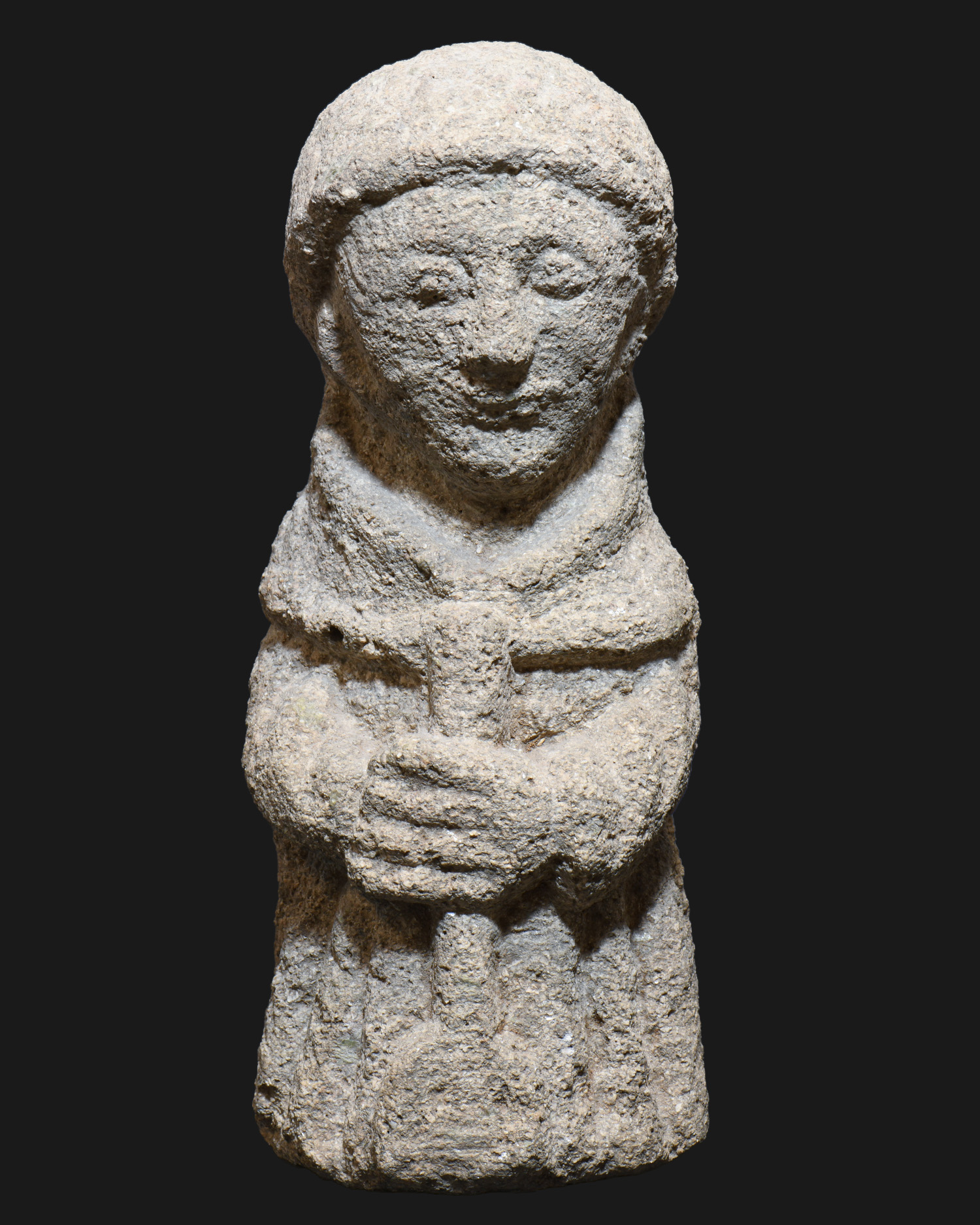
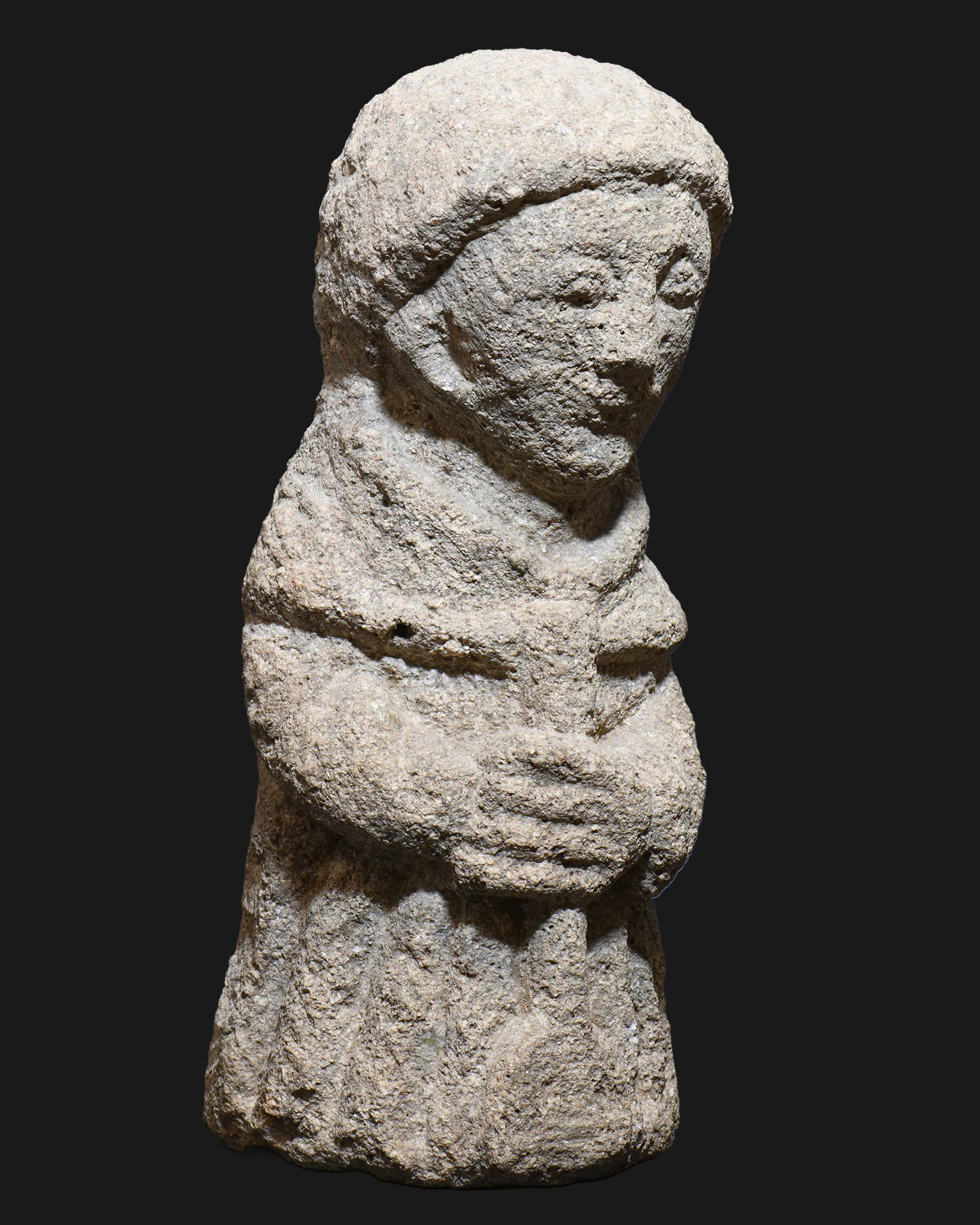
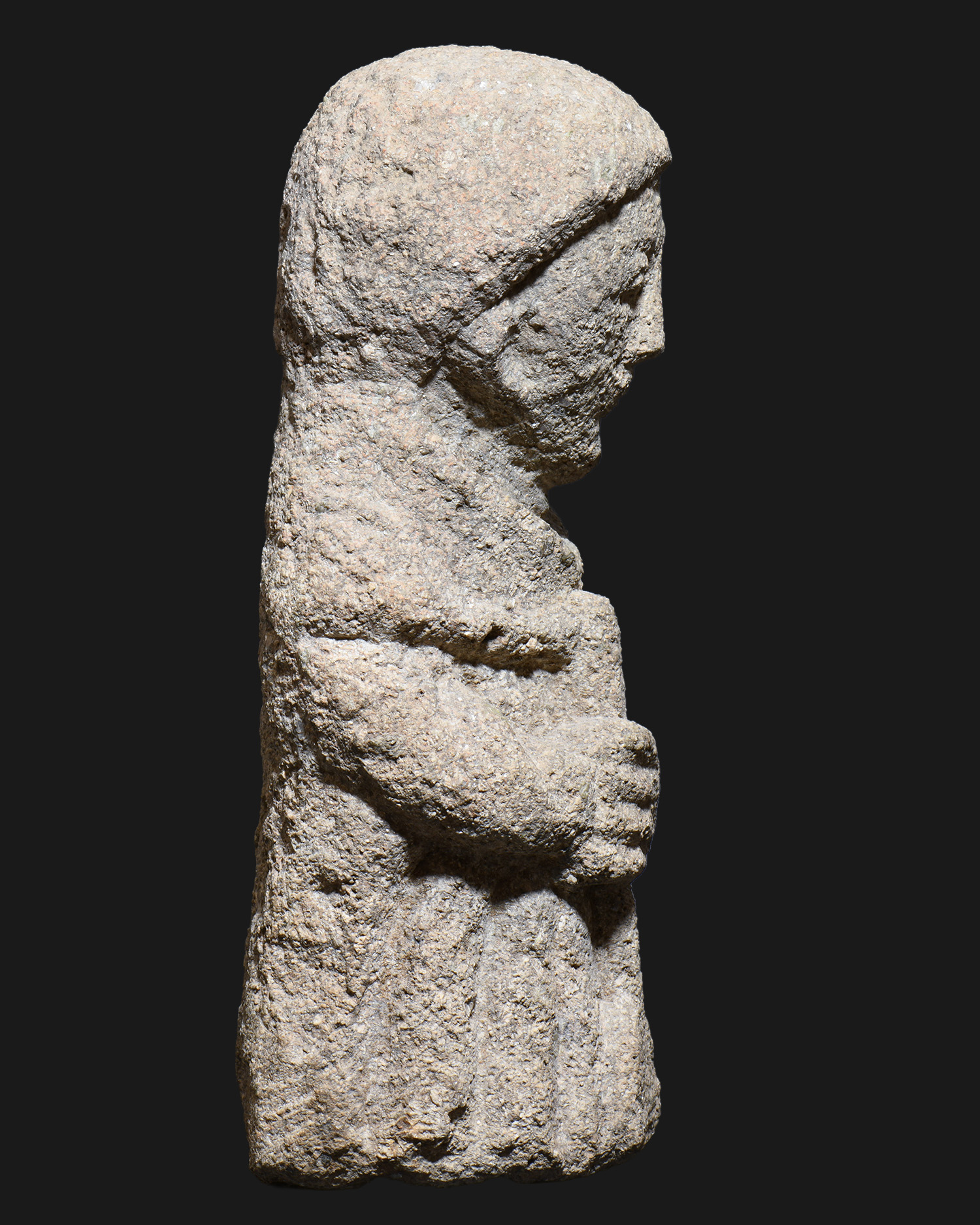
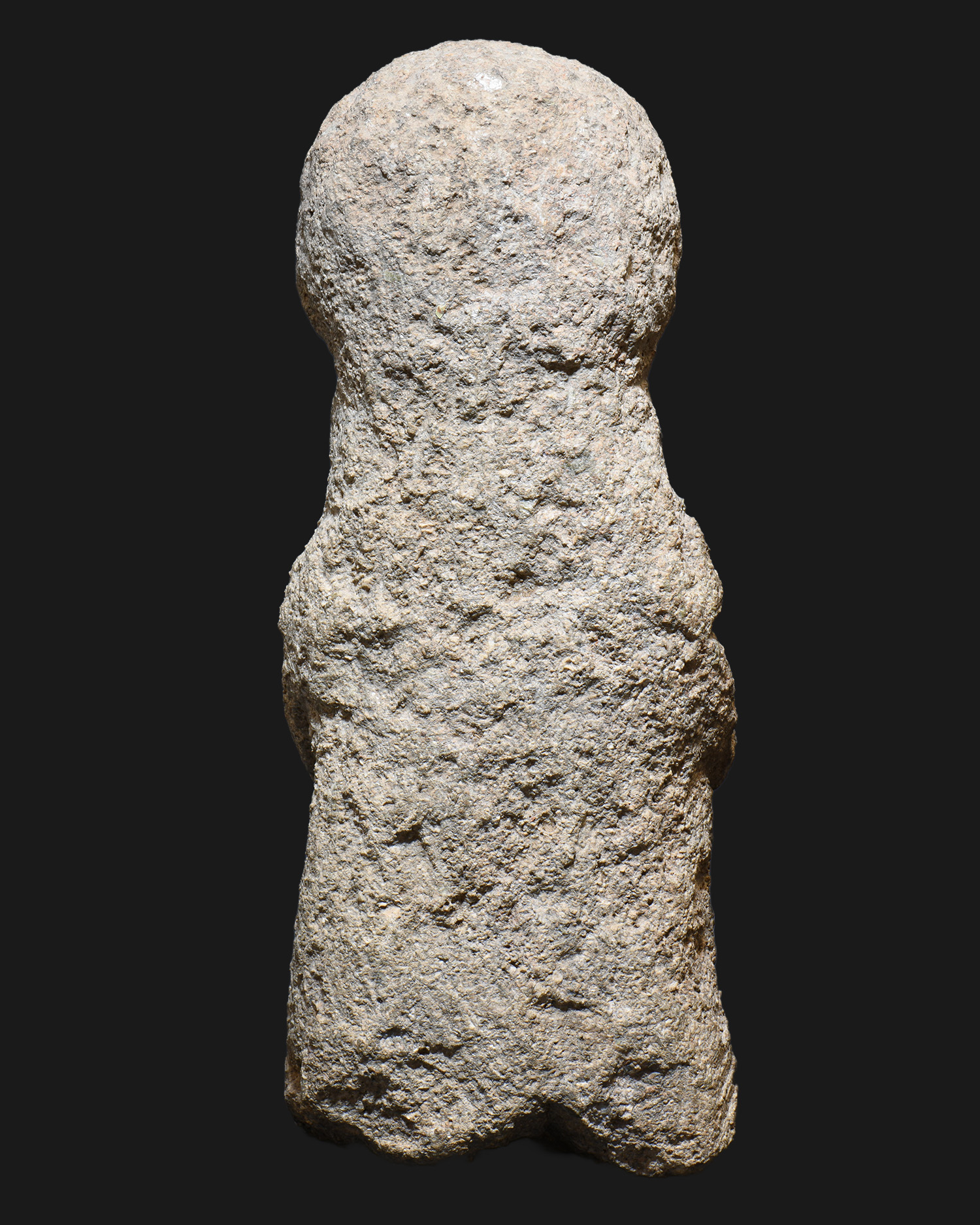
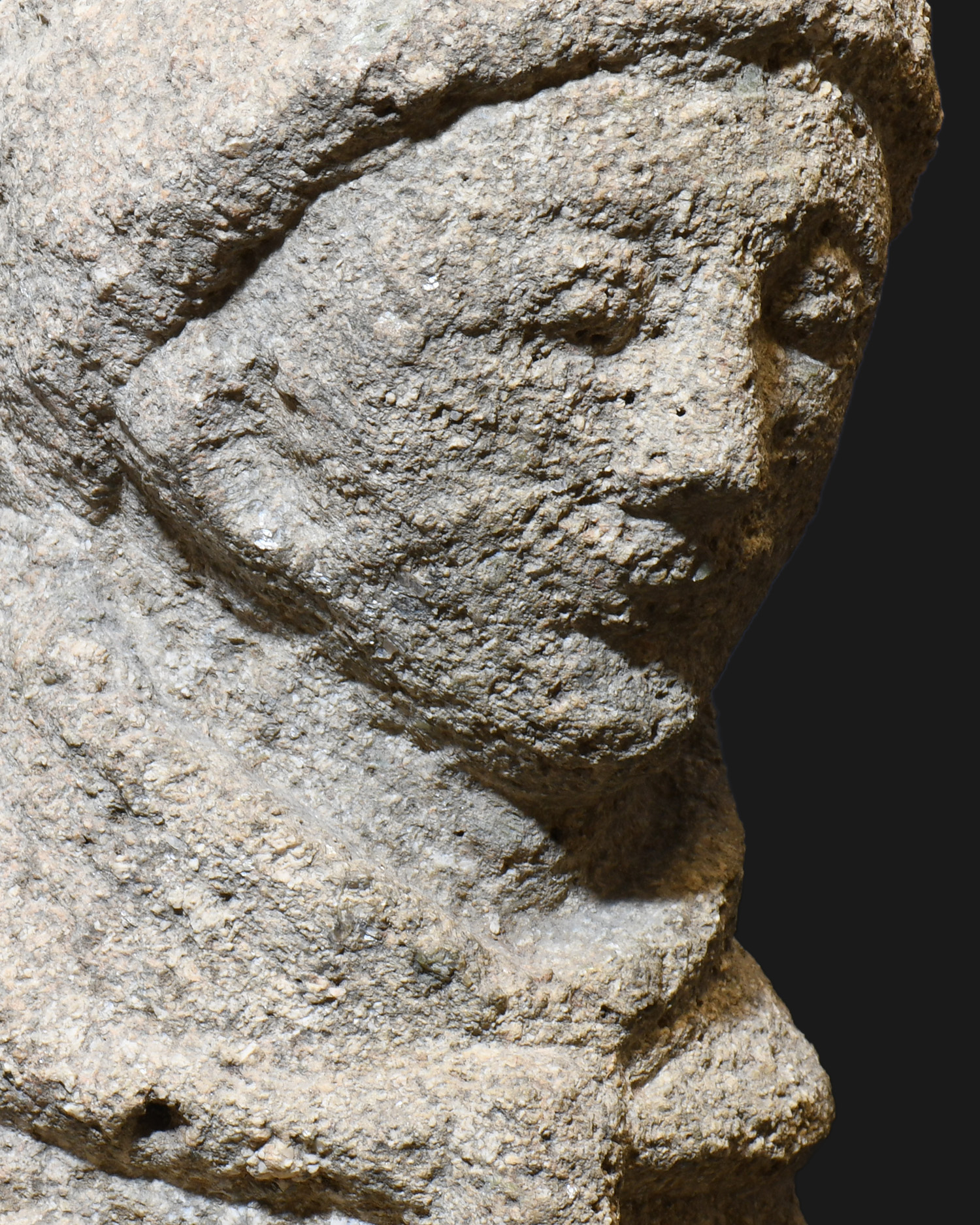
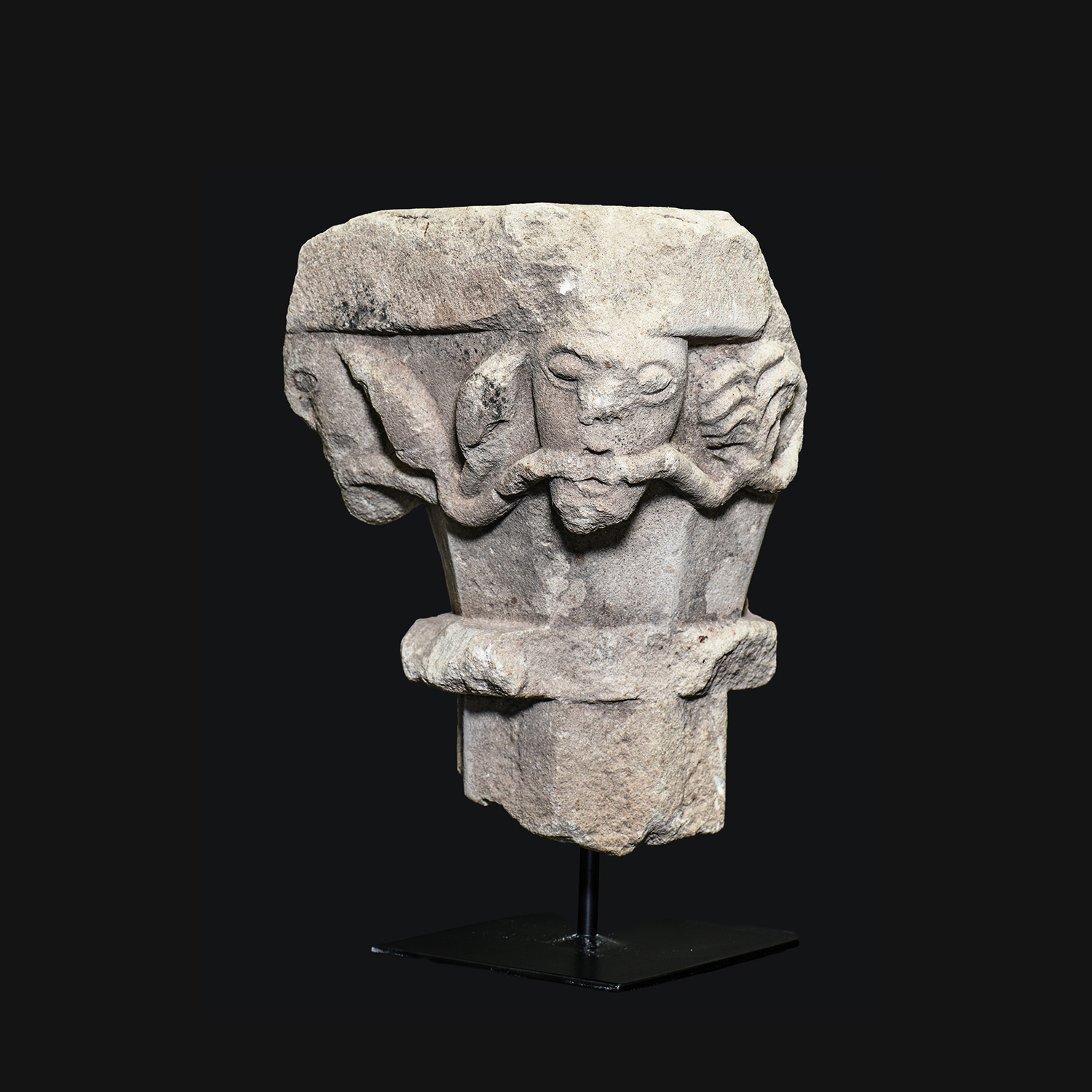
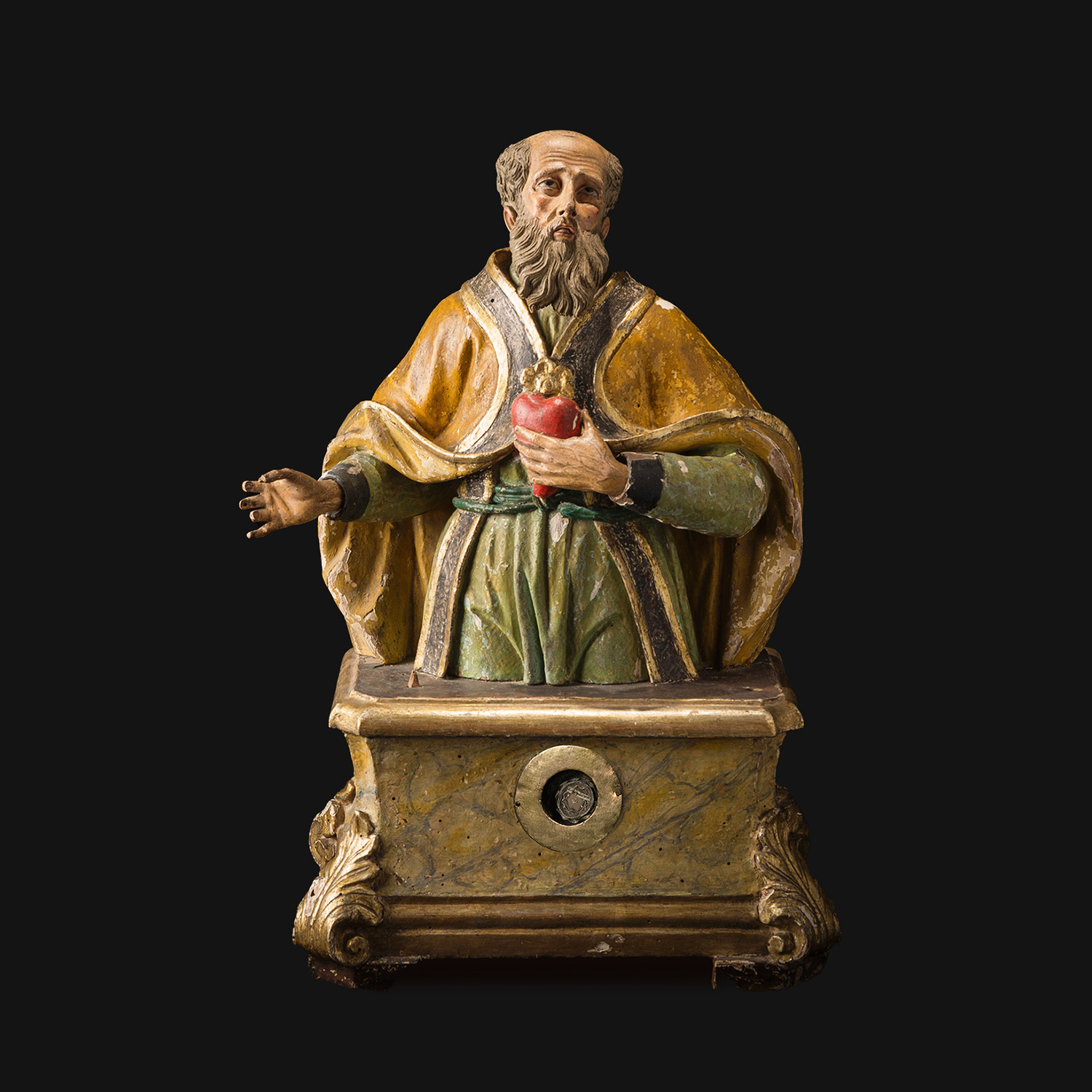
Folk sculpture depicting St. Fiacre (Saint Fiacre), patron saint of gardeners, herbalists and protector of hemorrhoid sufferers, whose ailment was even referred to as "St. Fiacre's disease" in France for centuries. It is maintained in the traditional simplified Breton style. The figure is shown standing, clad in a habit with a clearly marked hood. The saint's face with a gentle expression is characterized by primitivism of form - wide-set eyes and a delicately outlined smile are typical of folk workshops referring to Romanesque patterns.
The key attribute of the figure is a shovel (spade) held vertically in front of him, the handle of which is embraced by both hands of the saint. This alludes to the legend of the miraculous demarcation of the garden at the Brie monastery.
The cult of St. Fiacre grew in France over the centuries, reaching particular popularity in the 17th century. According to tradition, the saint, an Irish hermit living in Brie near Paris, became famous as a protector of the sick, the poor and gardeners. The shelter and vegetable garden he founded were to become the site of numerous healings. From his name also derives the name of the French "fiacres" - the first public horse-drawn carriages running in Paris since the 17th century. St. Fiakr remains today the patron saint of gardeners, coachmen, cab drivers, as well as urologists and proctologists.