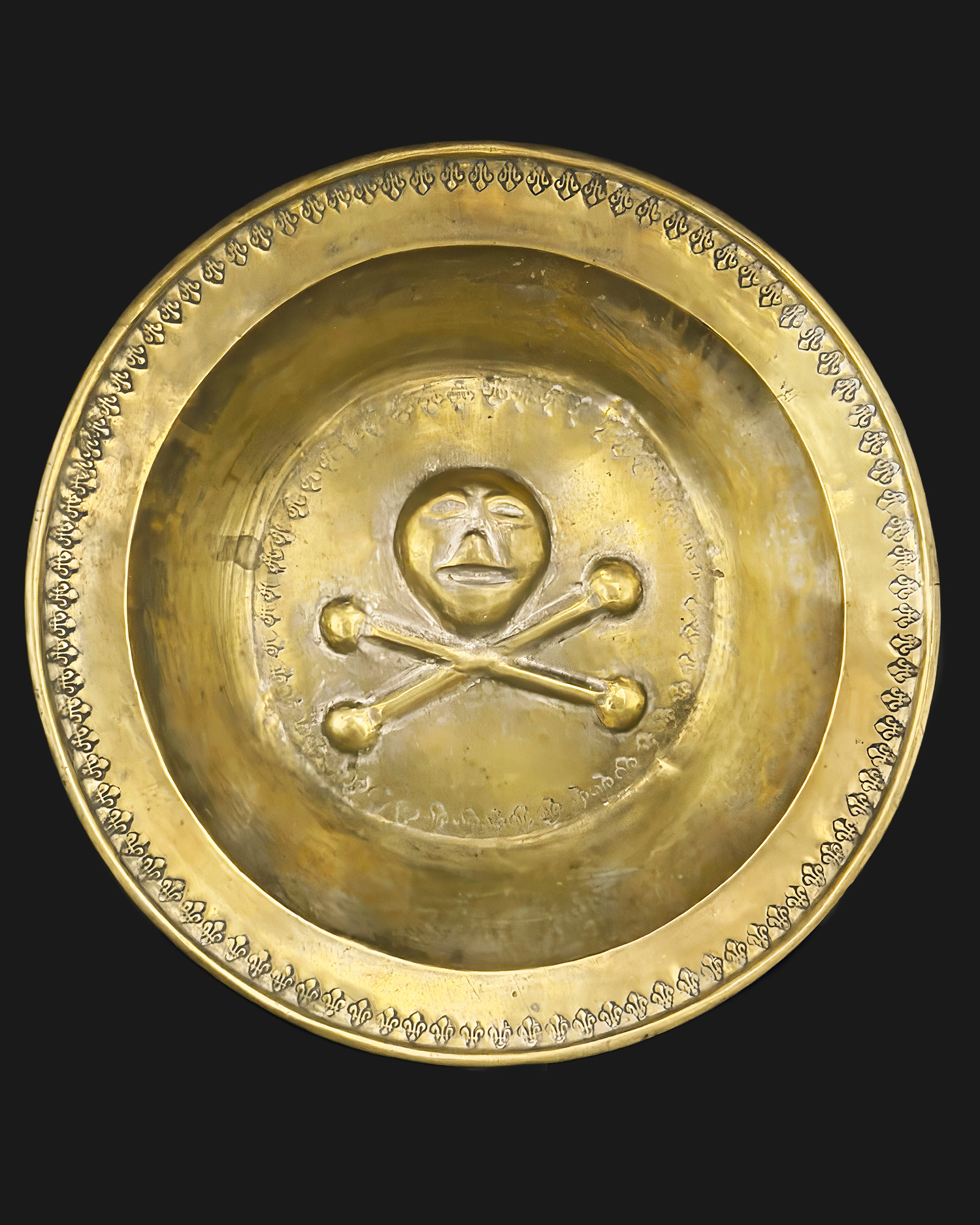
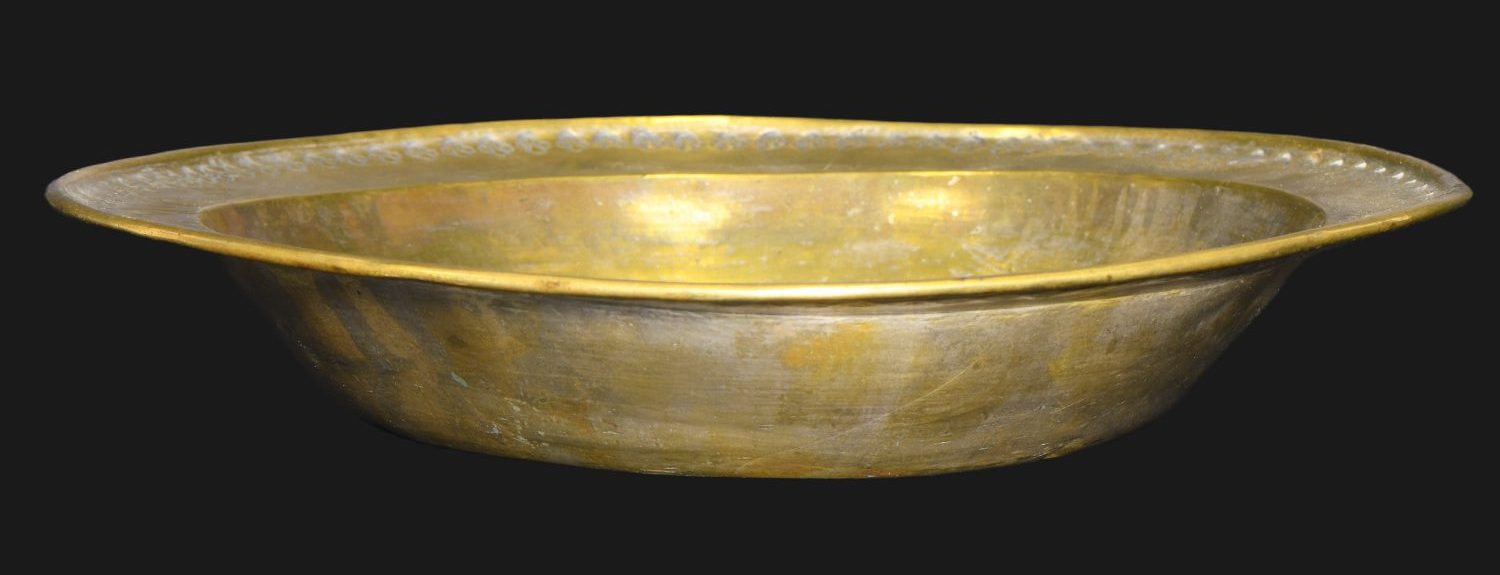
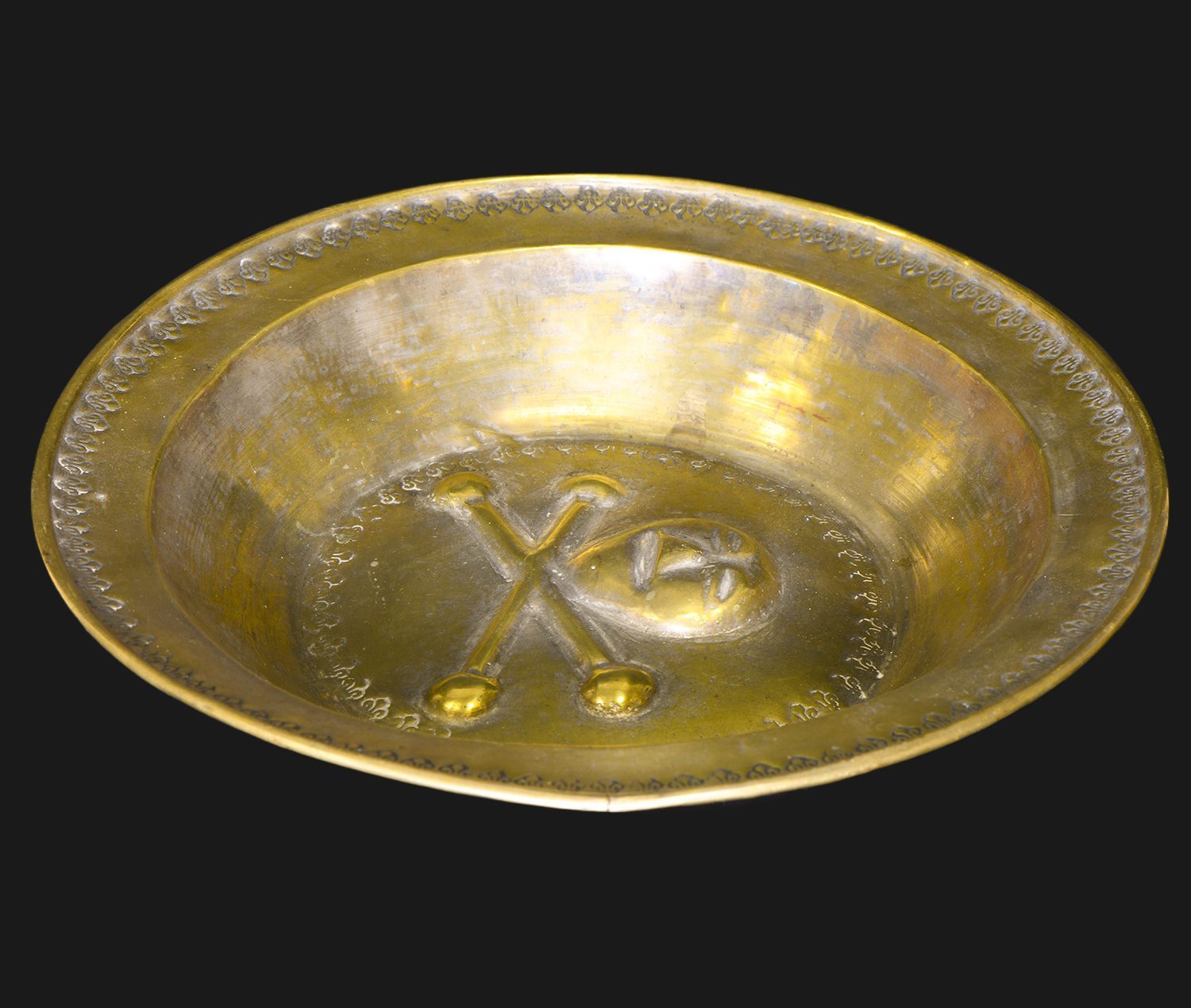
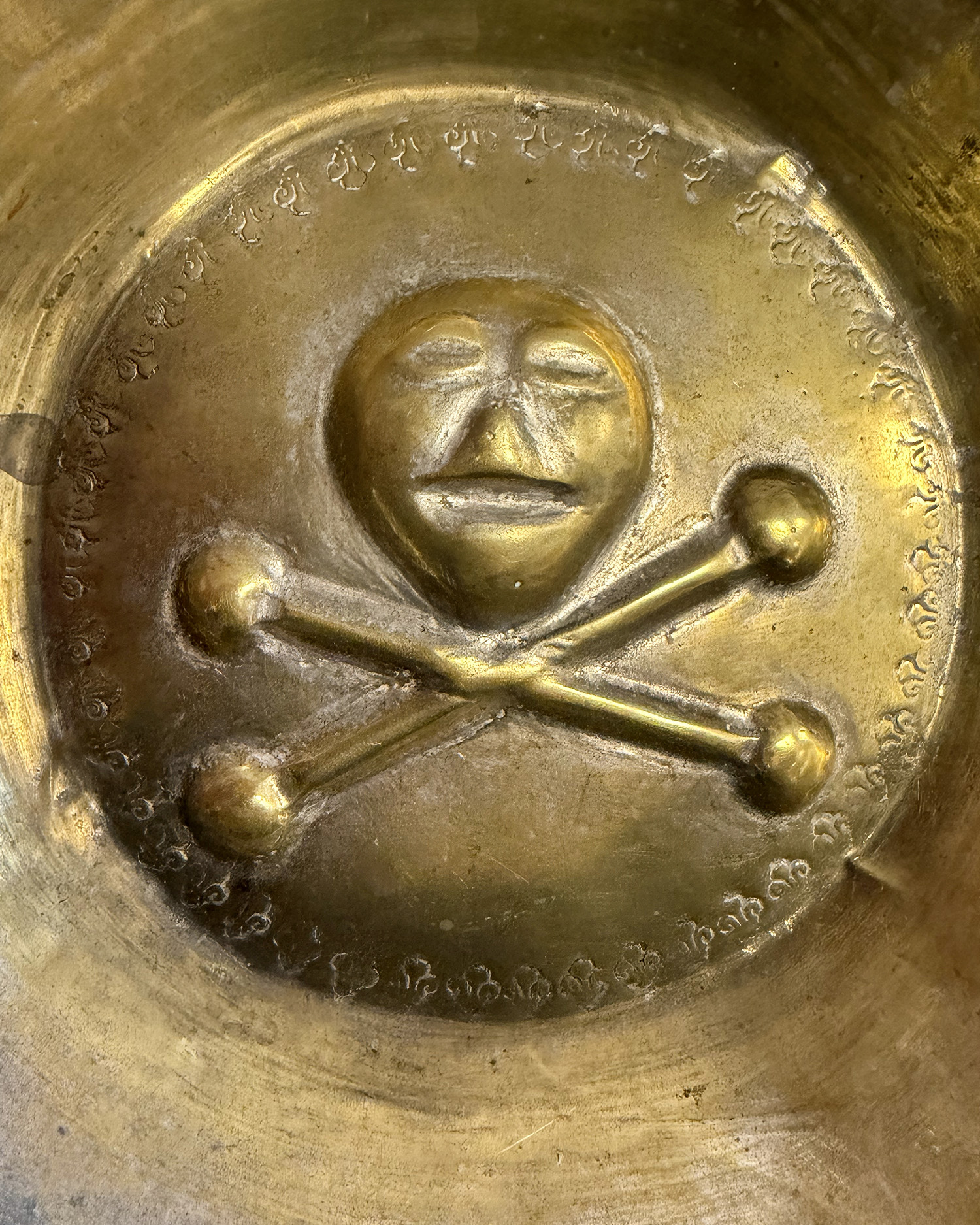
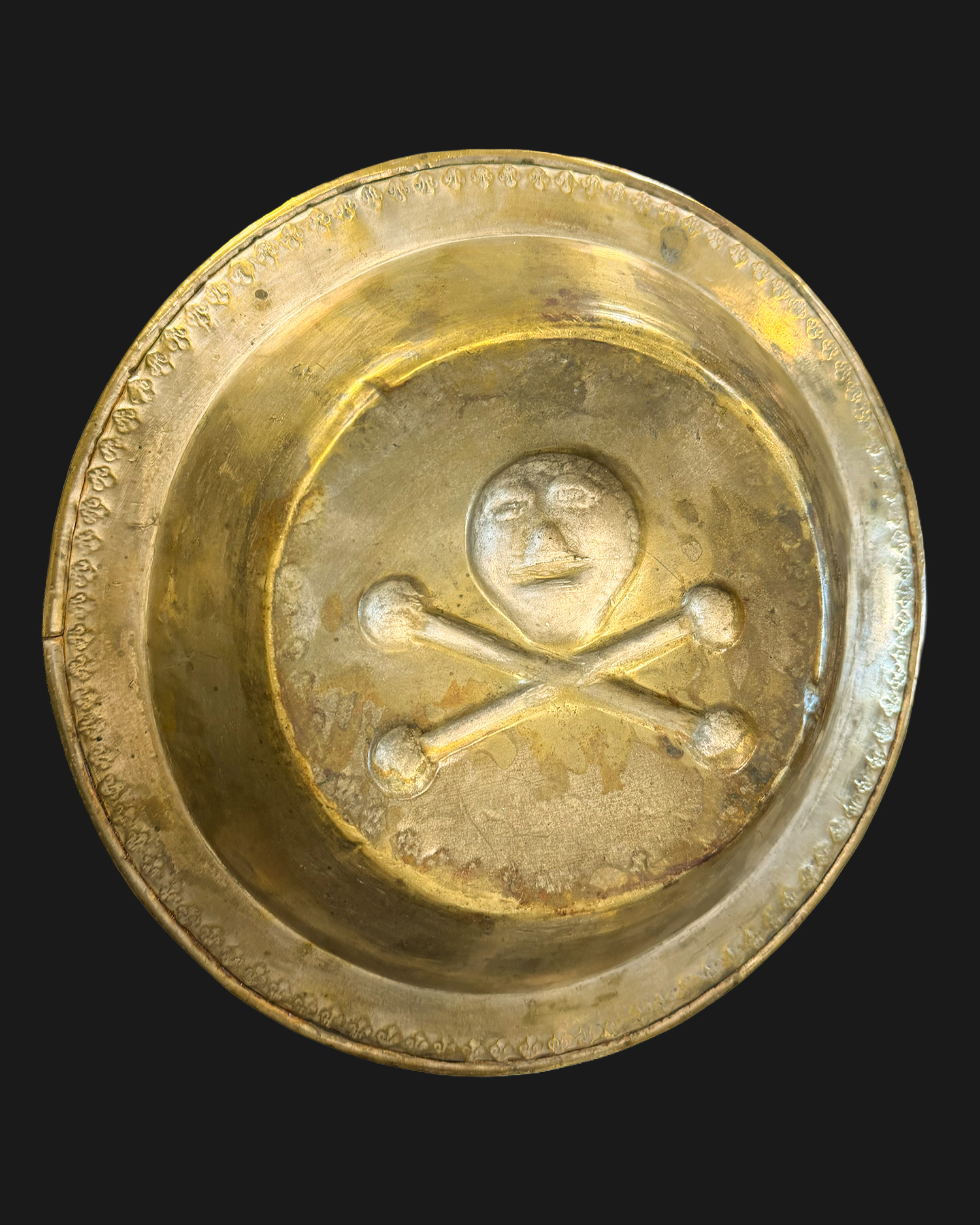
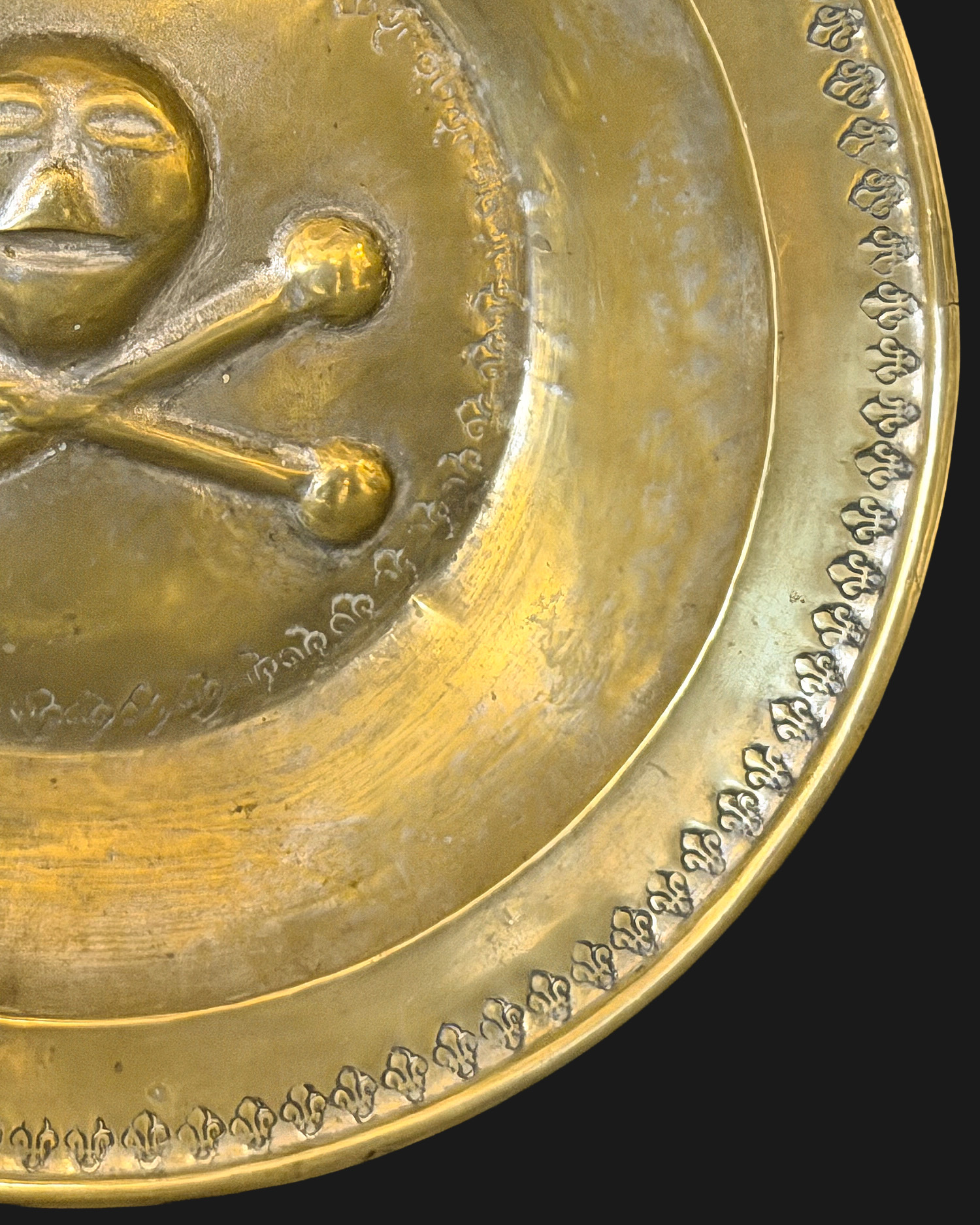
A round, deep bowl; the surface of the mirror is slightly convex, transitioning into the side wall via a diagonal curve; in the center of the bowl, a repoussé, stylized human skull above crossed tibias, surrounded by a border of fleur-de-lis motifs stamped with punches; a narrow, slightly slanted rim with the same ornamentation along the edge. The rim is turned outward, likely reinforced with wire. In places, especially in the recesses, remnants of a white metal coating—most likely tin—are visible.
Nuremberg Bowls
Bowls of this type were the products of many workshops, both in Nuremberg itself and in other centers of present-day Germany, France and Belgium. However, the most famous and typical specimens began to be produced around the middle of the 15th century in Nuremberg. Workshops there produced them on a large scale and exported them to numerous European countries. The production was almost mass, for the conditions of the era. As a result, these bowls found their way to many countries and social strata, although they were often associated with more affluent users. Bowls varied in size and shape - they could be shallow like a plate or more deep. Their diameter usually ranged from a dozen to several dozen centimeters. Decoration was the most important element: floral and geometric motifs (such as rosettes), biblical scenes or figures of saints.
These bowls had both a practical and representative function. They were used for washing hands during meals, as decorative home furnishings, and in religious contexts, such as as baptismal bowls or church furnishings. They usually did not serve as wall decorations, but were stored or displayed on shelves or tables. Their metallic surface could additionally reflect candlelight.
Memento Mori
The type of memento mori decoration occurs on Beckenschlägerschüssel, but is much rarer than religious scenes or rosettes. The depiction of the skull deviates from realistic anatomy - it was depicted almost like the face of a living person,
with oval eyes and a plastically shaped, convex nose, which gives it a somewhat anthropomorphic, almost mask-like character. Correct identification of the "corpse head" would be made much more difficult if it were not for the two crossed tibias, placed below. The reference to memento mori symbolism does not mean that the bowl could not have been an everyday object. As an object of a contemplative nature, it could have been used on occasions of a more "reflective" nature (e.g., fasting, prayer). It is possible that it constituted equipment of a religious institution, such as a monastery.