


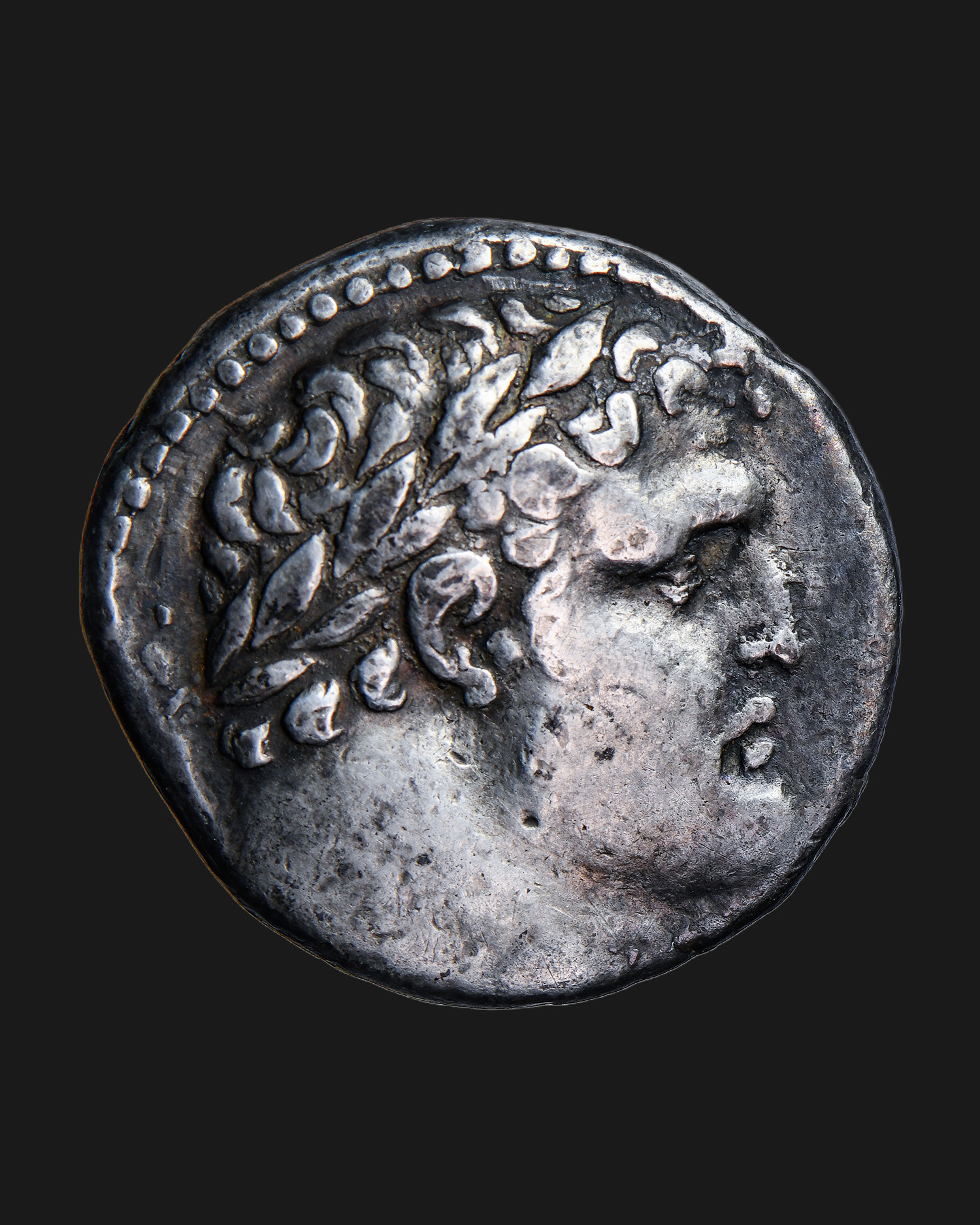
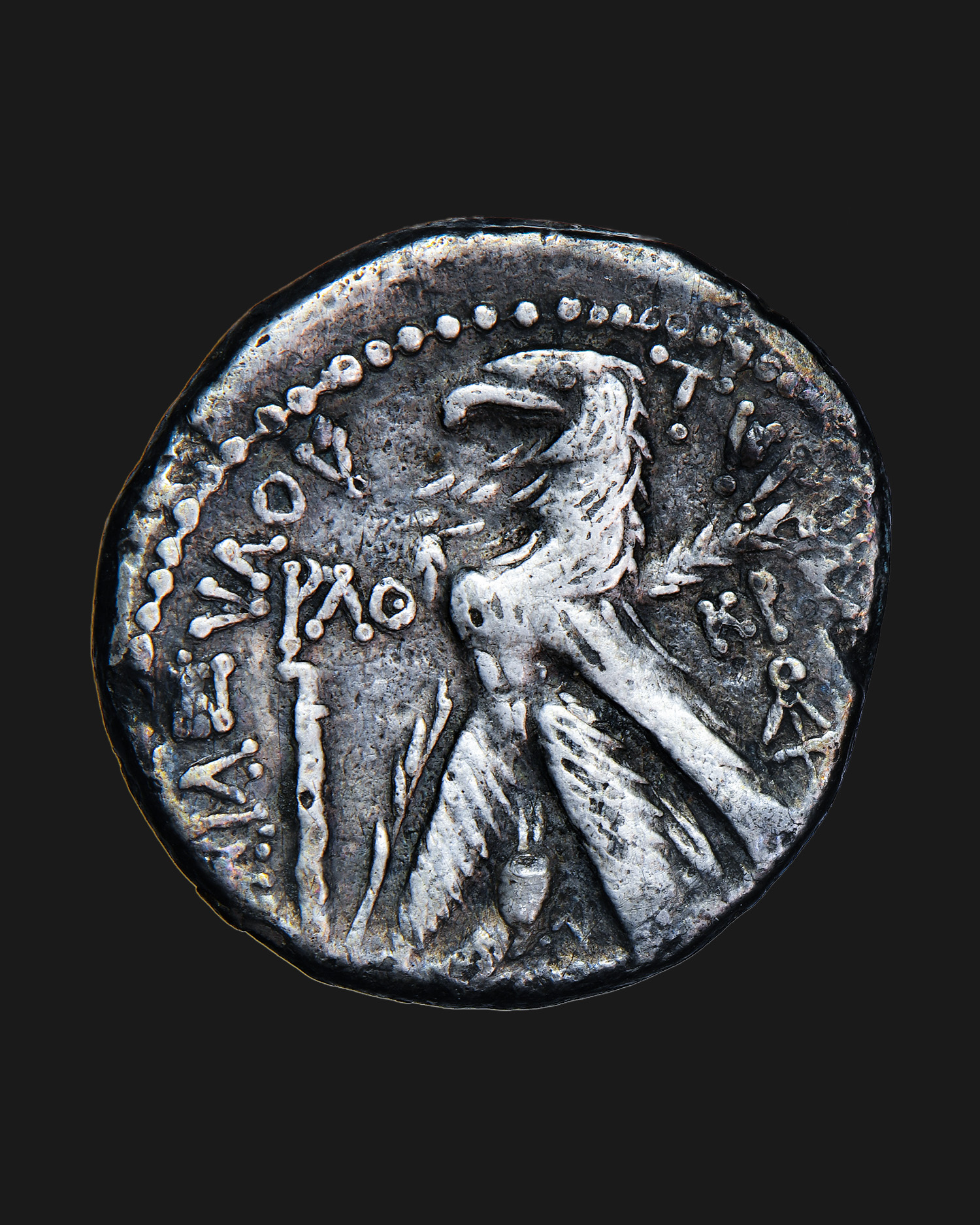
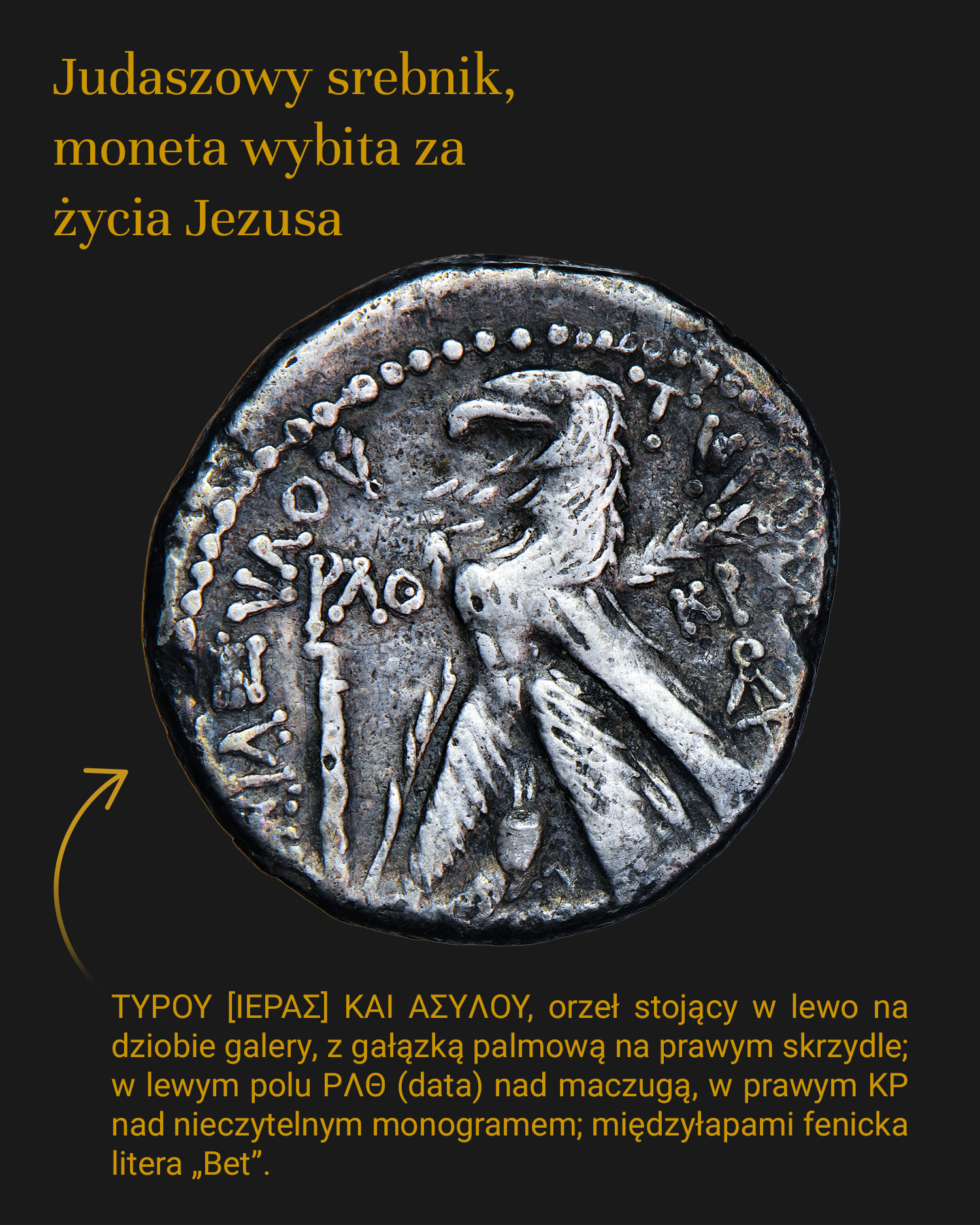
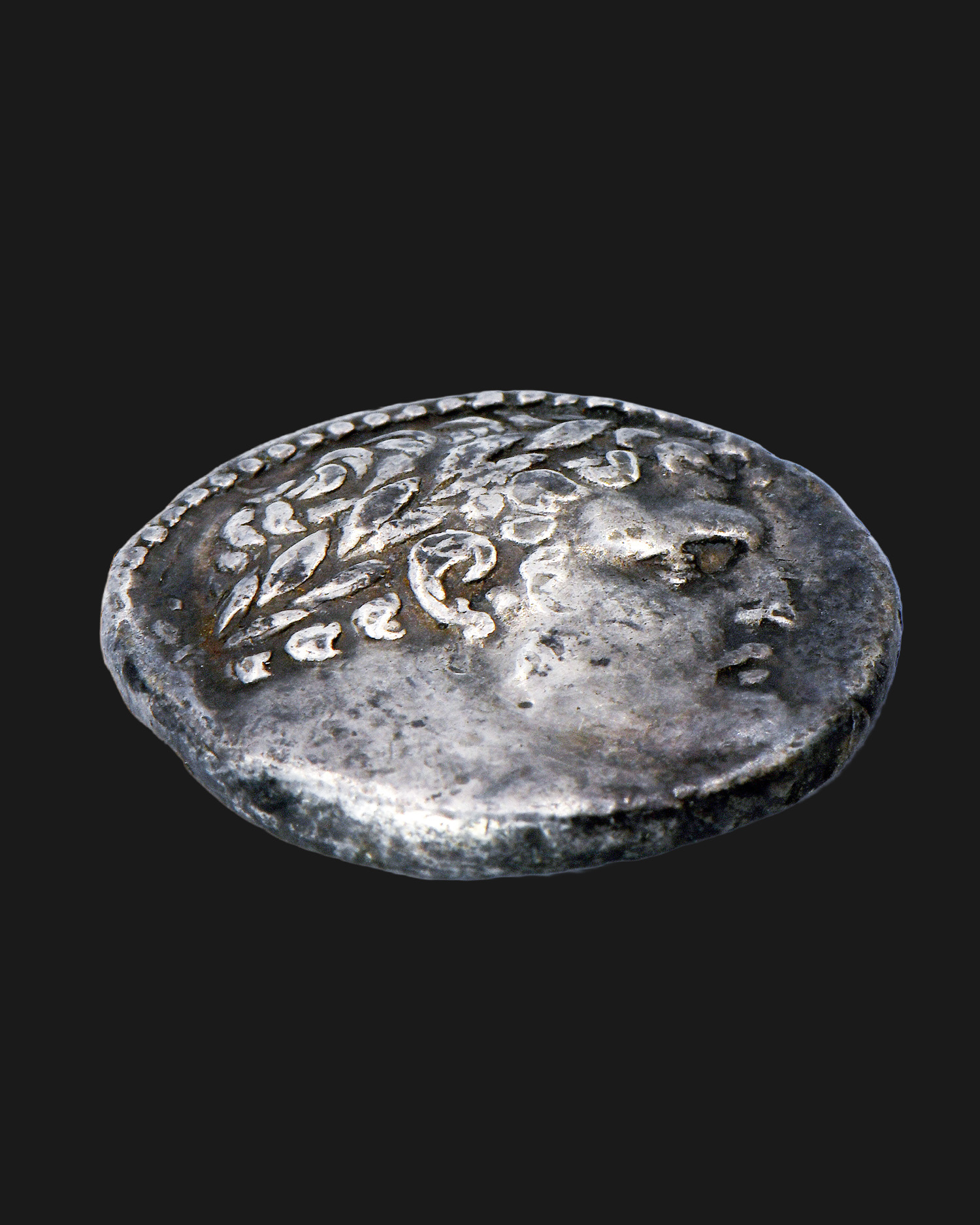
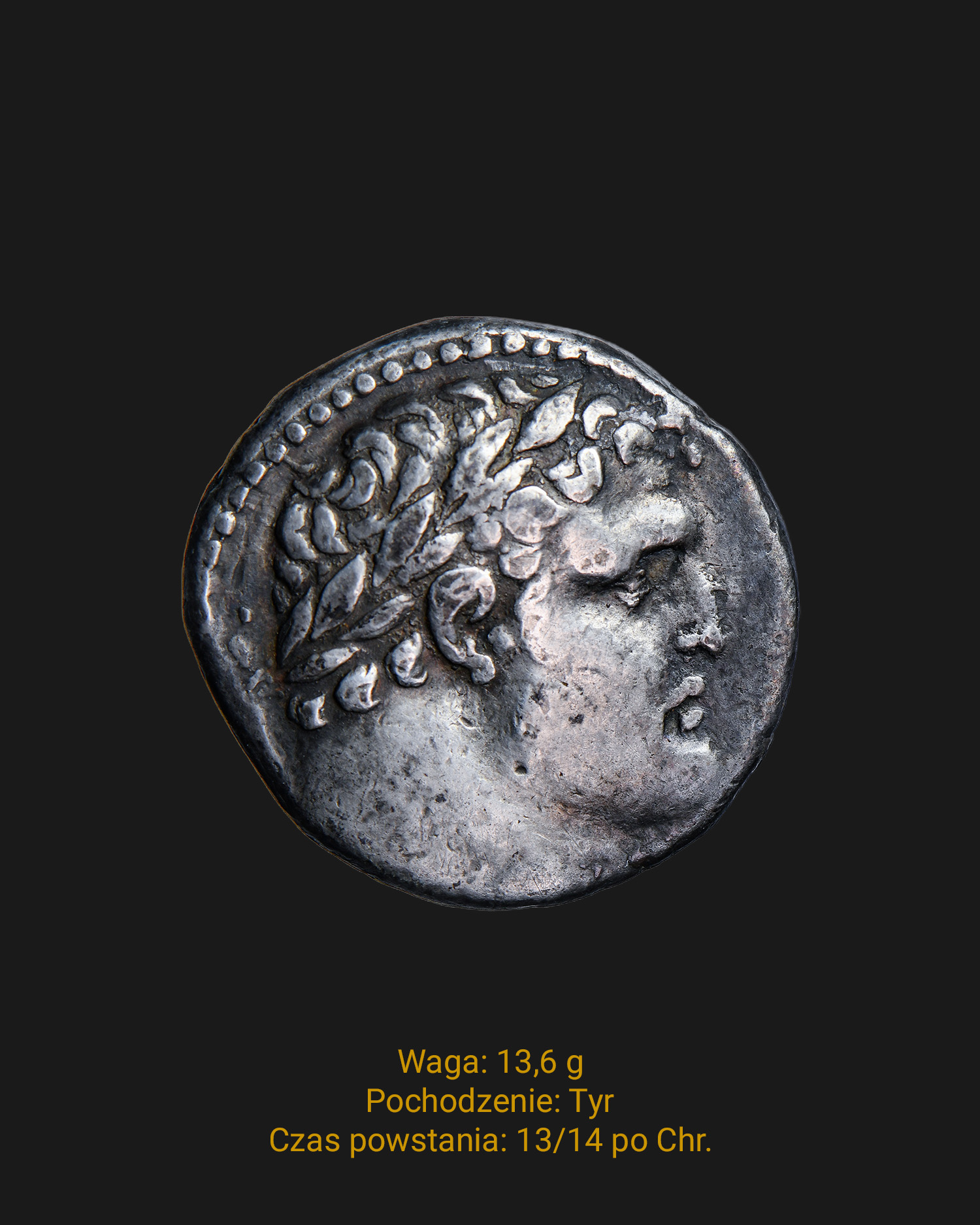

Shekel (Judas silver), Tyre, 139 local era = 13/14 after Chr.
5200,00 zł
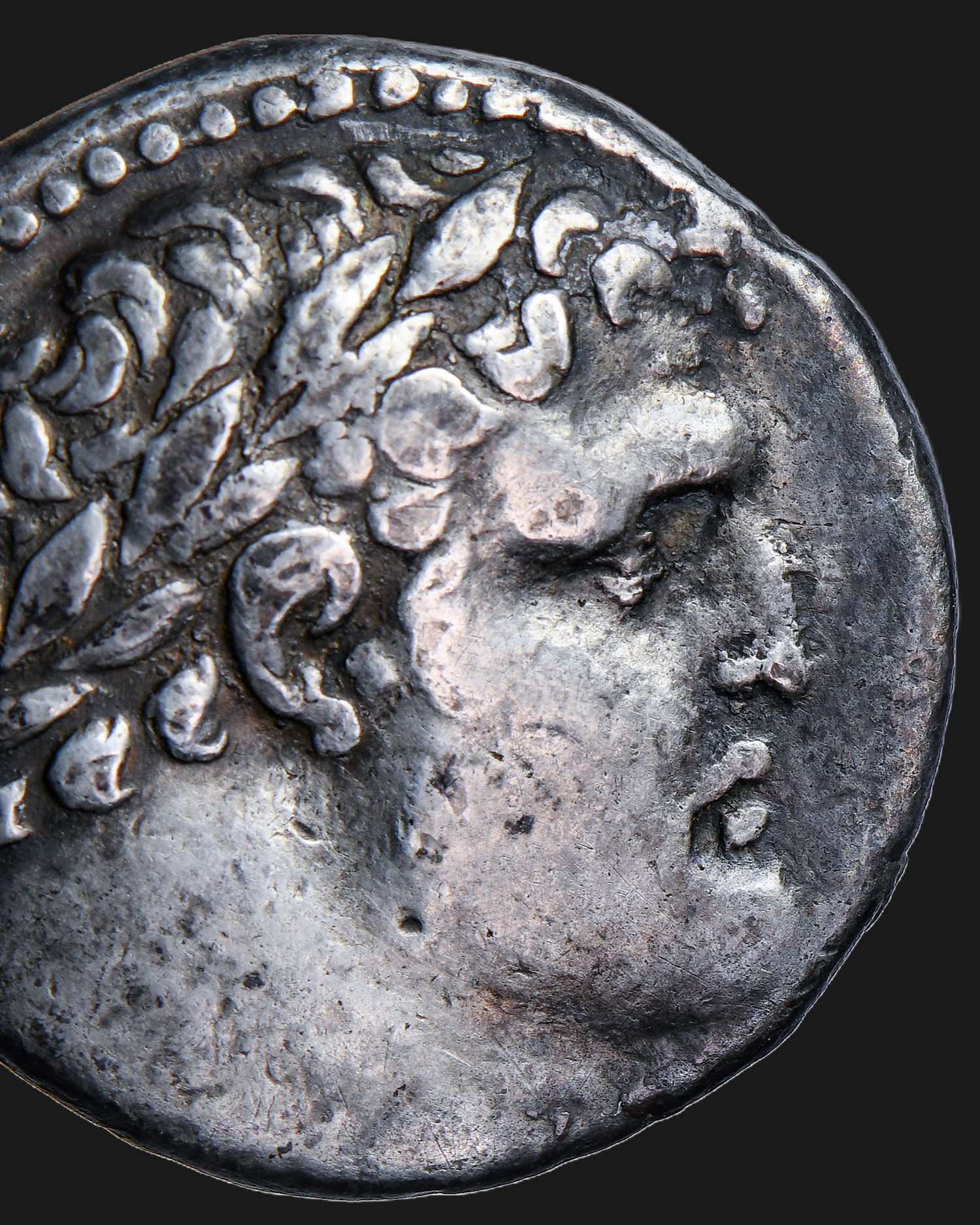
Av. Melkart’s head in laurel wreath to the right.
Rv. TYPOY [IEPAΣ] KAI AΣYΛOY, eagle standing left on prow of galley, palm branch on right wing, in left field letters PΛΘ (date) over mace, in right KP over monogram, Phoenician letter “Bet” between eagle’s paws.
Silver, 13.6 g, 25.4 mm. Literature: DCA 920; HGC 10, 357.
Condition III+, rare and nicely preserved coin minted during Jesus’ lifetime.
1 in stock
Related products
Balmamarium, terracotta, Ancient Rome, ca. 1st-2nd century A.D.
Authentic Roman balsamarium (unguentarium) from the 1st-2nd century BC, made of clay using a potter's wheel. The vessel, which had a distinctive form - with a cracked belly, slender neck and wide, orifice-shaped spout, was used to store liquid fragrances and toilet scents. It was often part of the equipment of the deceased. Formerly it was believed that balsamaria were used to collect the tears of mourners during funeral ceremonies - hence the misnomer lacrimatorium (from lacrima - tear).
Cartoon with a representation of a usekh necklace, Egypt, 1st millennium BC.
Cartonage (canvas covered with gypsum and polychrome) with a depiction of a wide necklace called a "usekh" collar, ancient Egypt, 1st millennium B.C. The collar has a semicircular form and is composed of several zones of ornament separated by narrow yellow bands. The different zones are filled with diverse decorative motifs: a row of circular ornaments filled with dots, imitating glass or faience beads, stylized "pendants," strips with alternating triangular segments, and rows of spindle-shaped ornaments. At the top, in the center, is a rectangular field with a representation of Horus, shown in profile in a seated position, facing right, inside a stylized temple. The sides of the collar show depictions of a red disk above the head of a falcon or hawk - most likely a depiction of the head of the god Ra with a solar disk.
It is impossible to say conclusively whether the offered collar covered the coffin or directly the mummy of the deceased, as both possibilities are possible. Without specialized research, its dating should be placed in a wide range covering the 1st millennium B.C. However, it is worth noting that similar decorative motifs appear on a cartonage collar from the collection of The Michael C. Carlos Museum in Atlanta, dated to 1069-750 B.C. (object no. 2018.010.254).
Gallo-Roman sculpture of the head of Eros (?), marble, 1st-3rd century A.D.
Full-plastic head sculpture made of white marble, facial features treated quite schematically except for the characteristic almond-shaped eyes and "Gioconda's smile." The nose is flat, the hair reaching the neck, wavy around the line of the face, at the back the hairstyle treated schematically. The shape of the neck from underneath allows us to conclude that the head was originally part of a larger composition. The sculpture is placed on a custom-made, two-stage pedestal of black marble.
Kyliks (wine drinking vessel), pottery, Ancient Greece, ca. mid-4th century B.C.
Greek kylix most likely made in Apulia, dated to around the mid-4th century B.C. Classical example of utility ceramics - A chalice used for drinking wine. The vessel is preserved in very good condition, with no cracks or structural defects, with visible signs of age, loss of the firn layer and lime deposit inside. Found in the south of France.
Lekanis with lid, terracotta, Ancient Greece (probably Beotia), 5th century BC.
Small ancient ceramic vessel of the type lekanis, dated to 5th century p. Ch. , probably originating in Beotia in central Greece. A vessel with a low, flattened body, with two thin, rising handles and a matching lid ending in a flat button. Made of fine-grained clay with a orange-red shadecovered with dark firnis and decorated with a band of vertical zigzags in brown-black.
On the underside is visible an undersized ring foot With concentric circles and lathe marks. Preserved museum numbering applied in ink. The surface of the dish shows typical traces of reduction firing, local discoloration, loss of phirnis and mineral deposits, but the whole is preserved in complete form with the original lid.
Lekanis was used in ancient Greece for storing cosmetics, fragrances, jewelry and small ornaments. Vessels of this type accompanied women in daily life, and were also placed in graves as a items of personal use with symbolic significance.
Oinochoe, terracotta, Ancient Greece, 4th century BC.
A ceramic vessel, turned on a wheel, used in antiquity as a basic pitcher at Greek feasts (symposion). Oinochoe presents a variant typical of the Greater Greece region with a three-leaf spout, whose innovative form facilitated precise portioning of liquid without spilling.
Dark gray/dark brown matte surface with visible mineral deposits and earth deposits. The state of preservation is very good, the handle and spout are complete, which increases the collector and research value. This is a rare utilitarian piece, representing a tangible piece of ancient Italian culture.
Sculpture of a god’s head (Zeus or Hercules), marble, Mediterranean basin, Hellenistic period
Monumental sculpture depicting the head of a bearded god, probably Zeus. The hair and beard form wavy, loose curls; a long mustache descends on the sides and frames the closed mouth. The face has a serious, focused expression, with a slightly flattened nose and furrowed brows. The eyes are carefully modeled, with a distinct upper eyelid, without marked pupils. The sculpture is made of white marble. The piece dates from the Hellenistic period in Greece, circa 300–200 BC.