


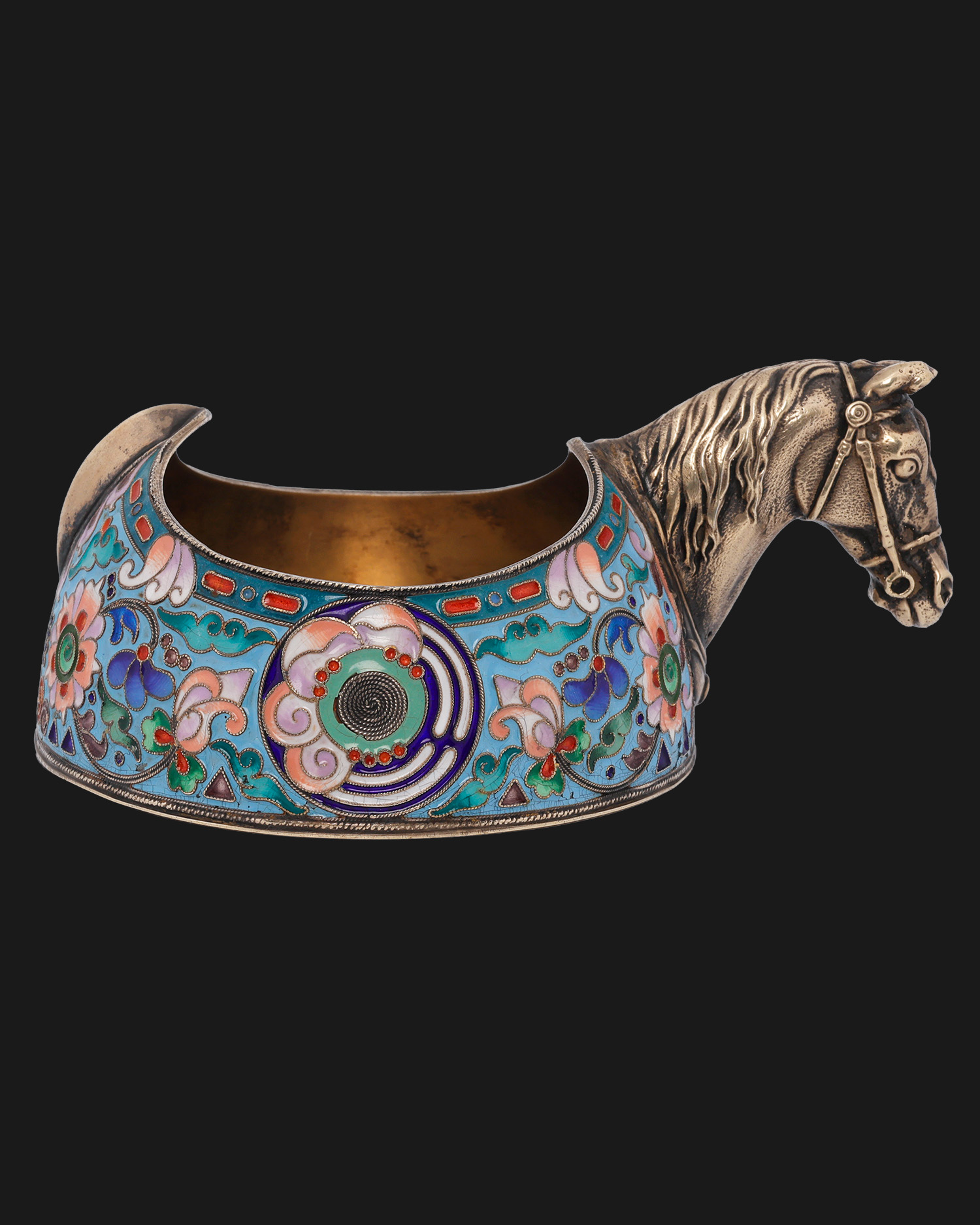
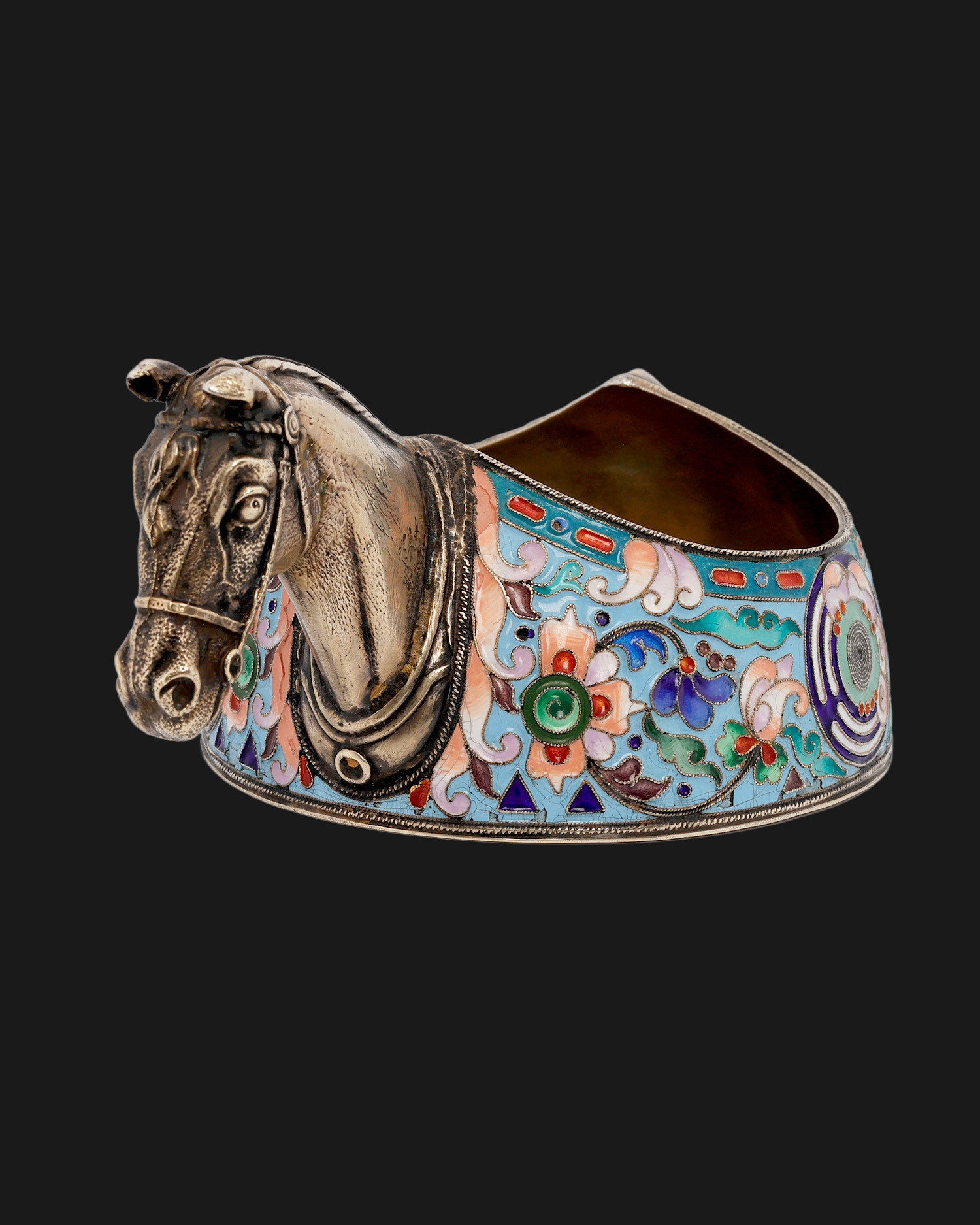
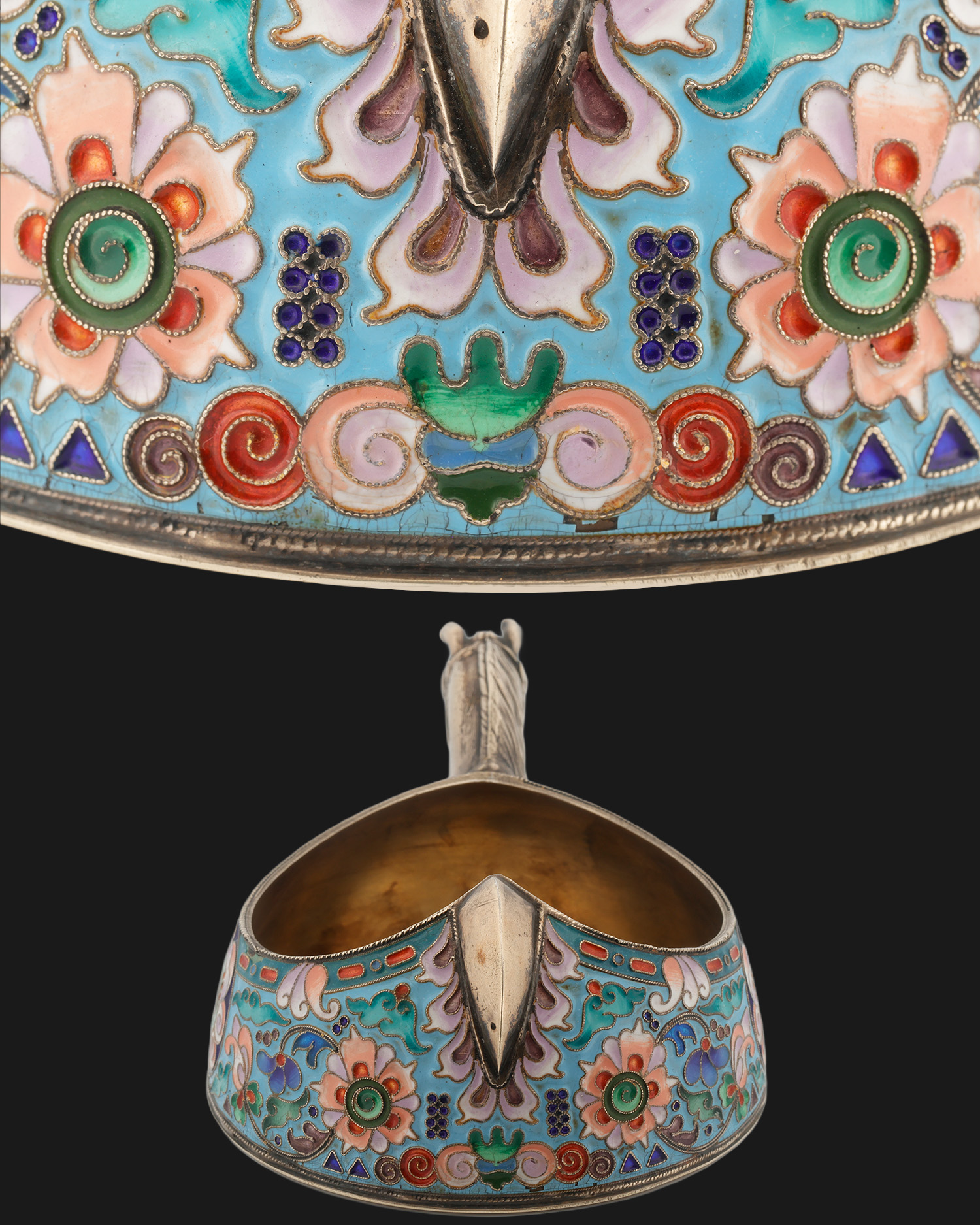
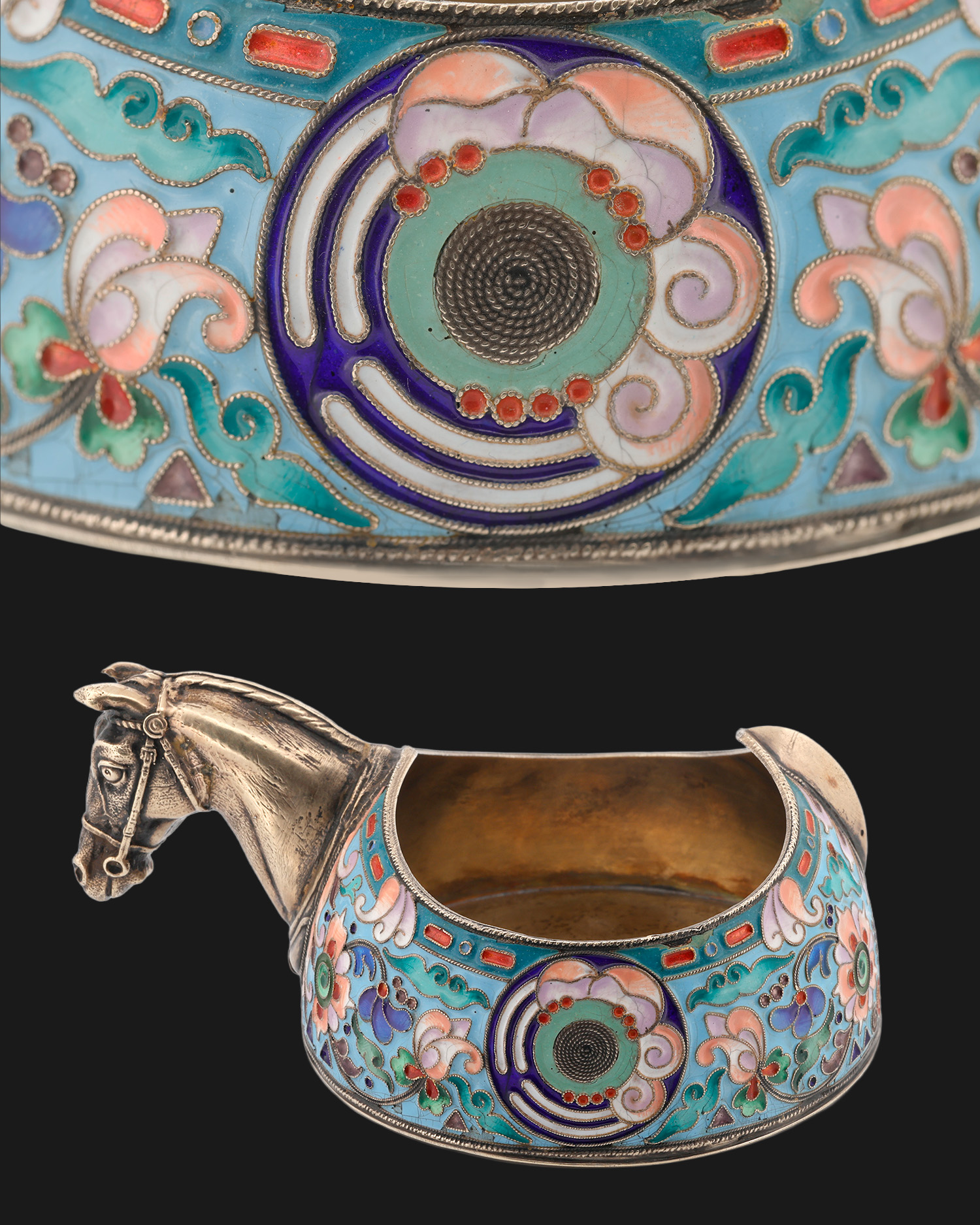
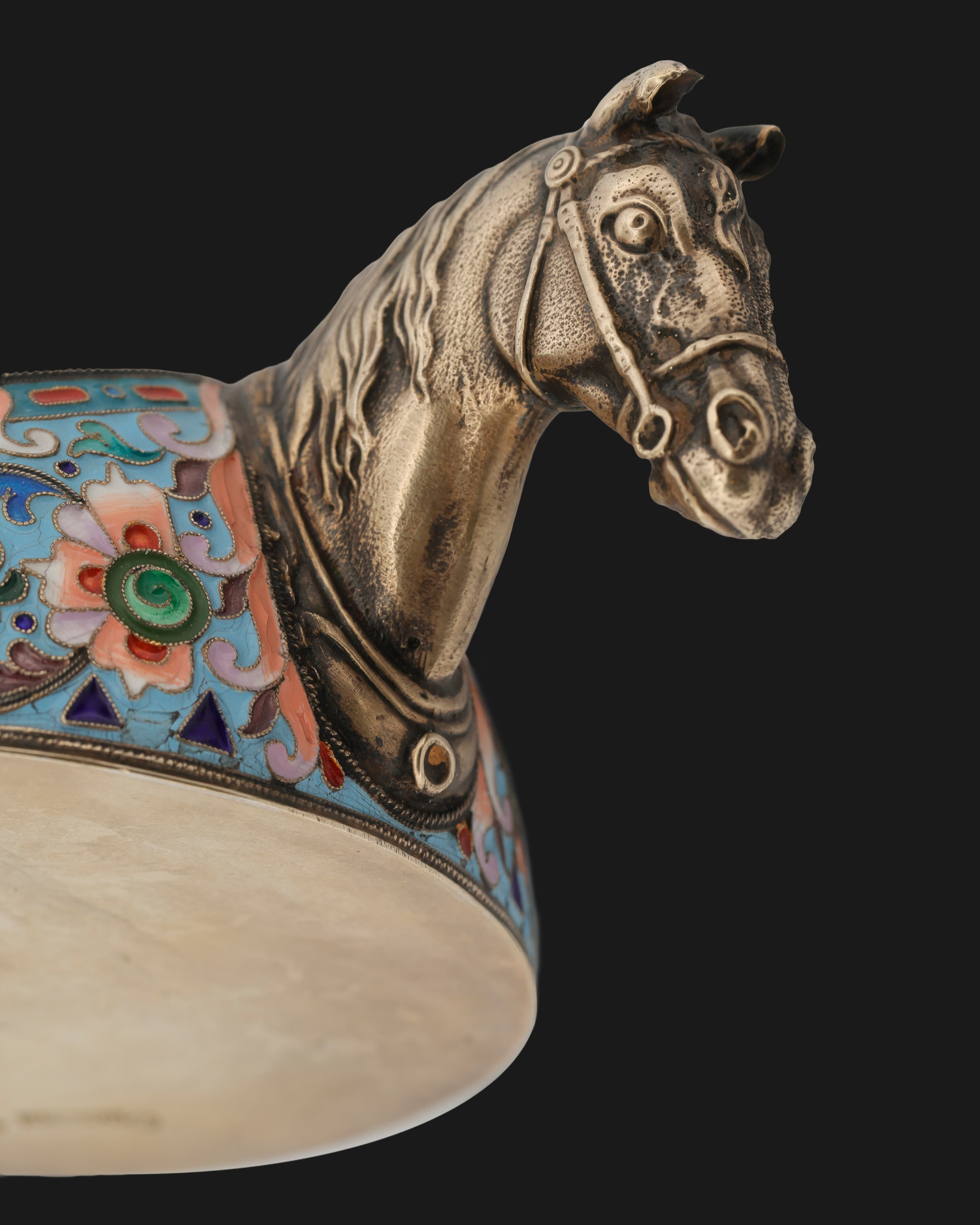

Ivan Khlebnikov, Kovsh with horse’s head, silver, enamel, gilt, Moscow, 1860-1918
10000,00 zł
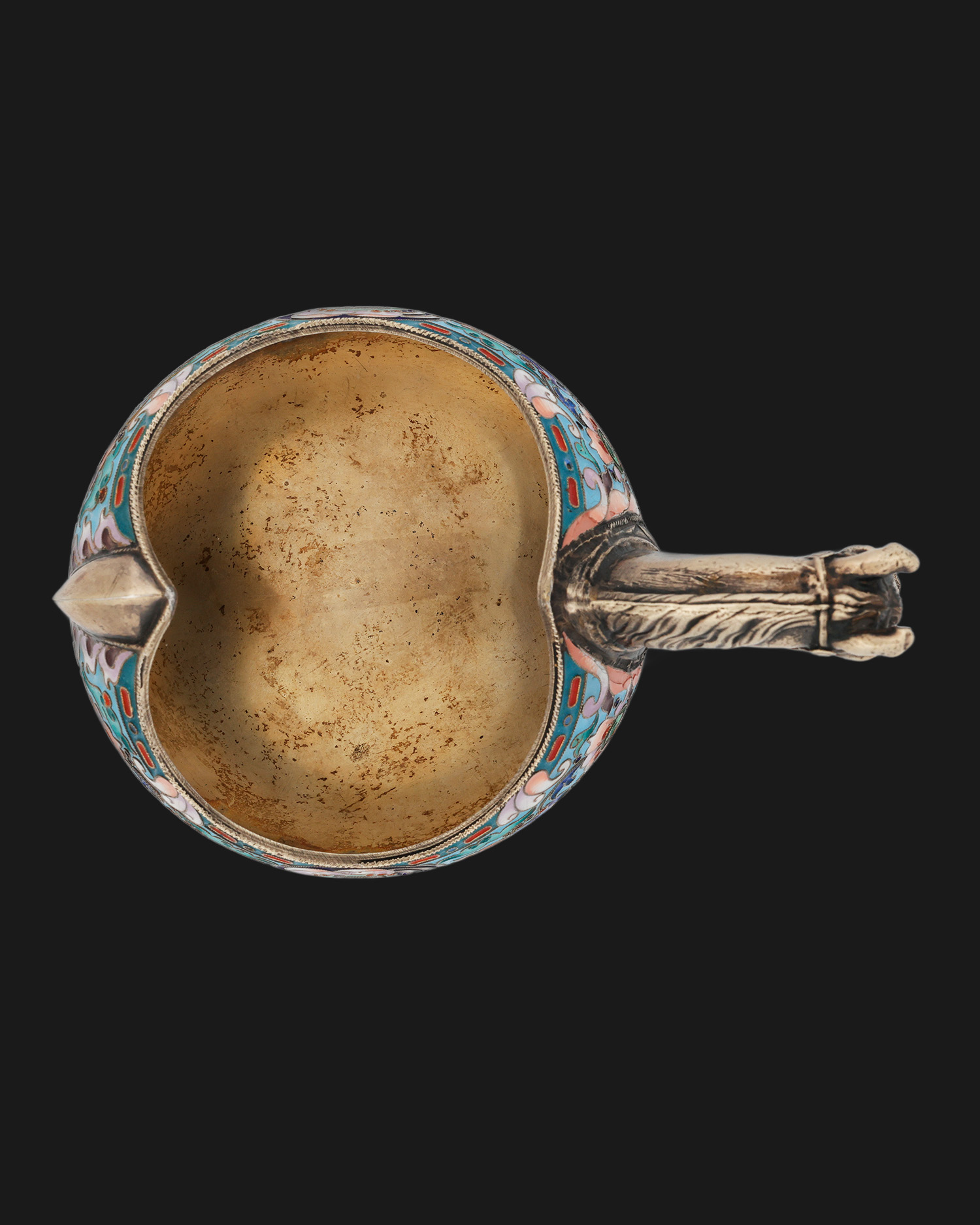
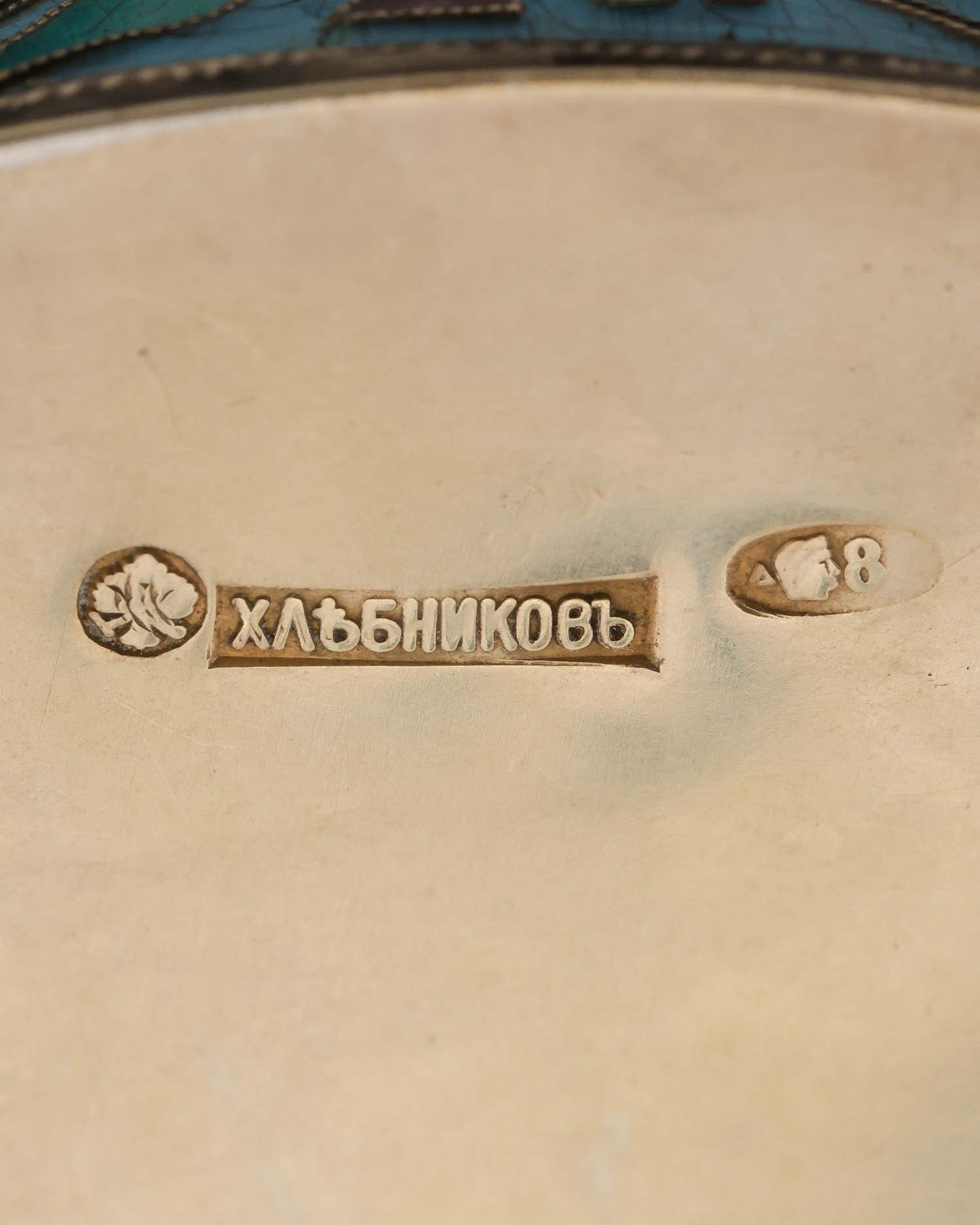
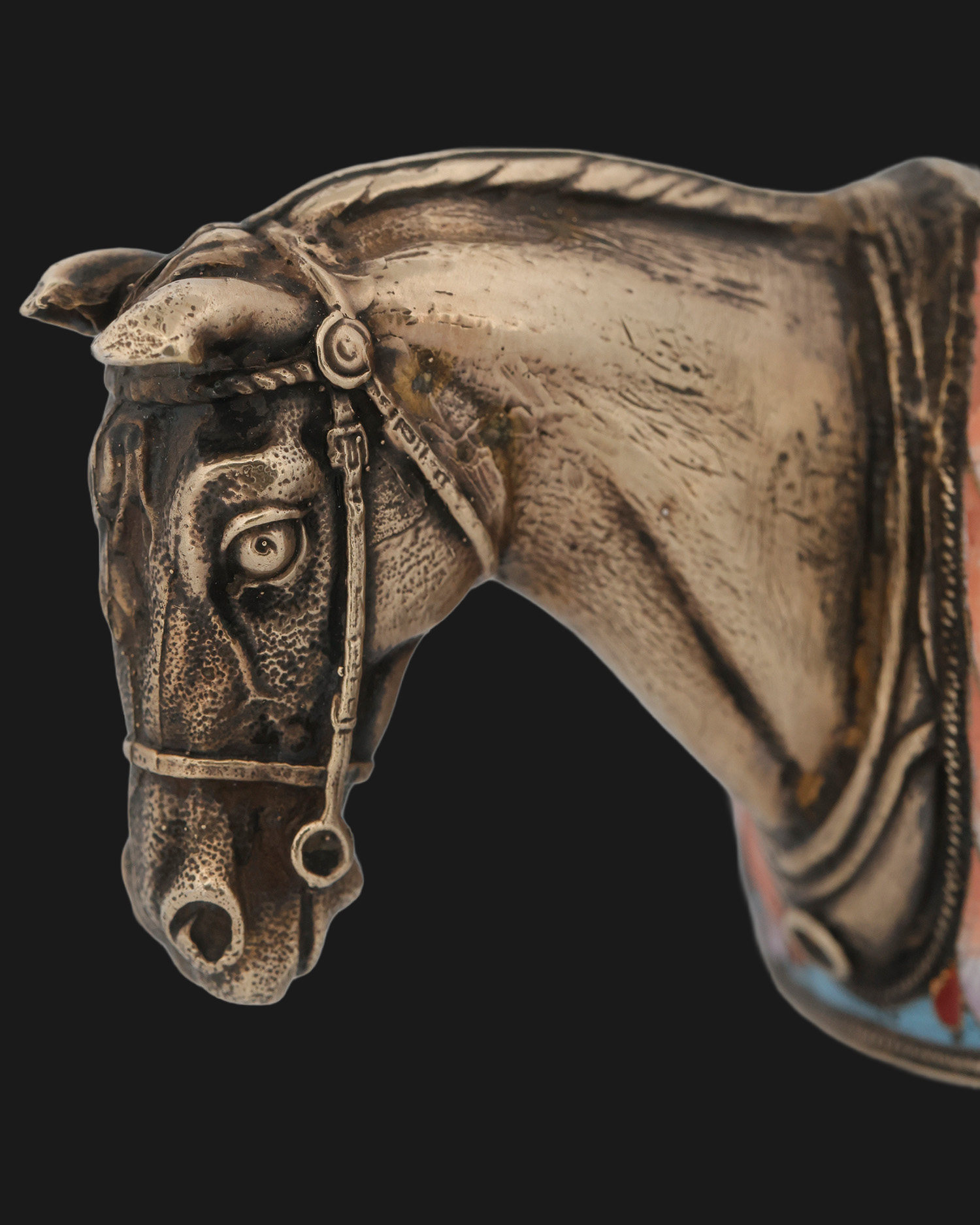
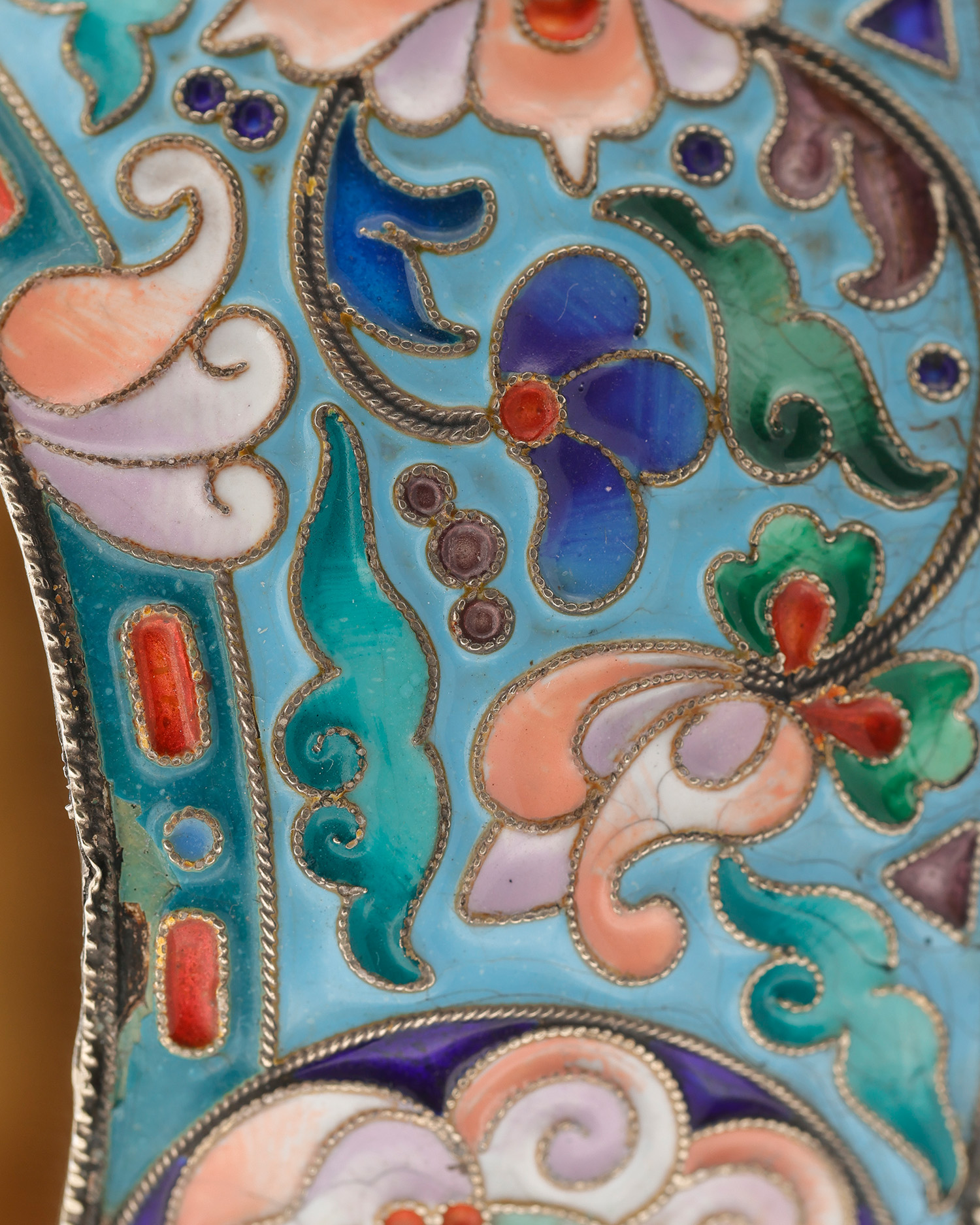
A unique kovsh from the famous Moscow factory of Ivan Khlebnikov, made of silver and maintained in the aesthetics of the Novorussian style. The surface of the vessel is decorated with enamel cloisonné – cells formed from thin silver wires soldered to the body, forming partitions later filled with colored glaze, repeatedly fired and polished. The result is a smooth, glossy decoration with floral and geometric motifs in vivid colors. A striking accent is the naturalistically chiseled silver horse’s head forming the vessel’s handle. The interior retains traces of the original gilding. The kovsh bears the punches: the inscription ХЛѢБНИКОВЪ, which is the signature of Ivan Khlebnikov’s company with an eagle (marking the Imperial Court’s suppliers), and the oval Moscow probationary mark – the profile of a woman in a coquina with the Greek letter delta and the number 84 (partially rubbed off), indicating the sample of silver.
1 in stock
| Weight | 0,181 kg |
|---|---|
| Dimensions | 12,5 × 9 × 5,5 cm |
| Type |
Kovsh |
| Form |
Vessel in the form of a teapot with a handle shaped as a horse's head |
| Materiał |
Enamel ,Silver ,Silver gilt |
| Kolorystyka |
Blitz ,Blue ,Flesh ,Green ,Lilac ,Navy blue ,Red ,Turquoise ,White |
| Technika |
Chiseled casting ,Enamelling cloisonné ,Gilding |
| Czas powstania |
1860-1918 |
| Era |
19th/20th century |
| Kraj pochodzenia |
Russia |
| Autor |
Ivan Khlebnikov |
| State of preservation |
Very good; micro cracks in enamel at bottom, interior gilding partially rubbed off |
Related products
Bell fragment from the garrison church in Zamość, bronze, Poland, 1915.
Commemorative fragment of a church bell (so-called Kriegsandenken / Grabenschmuck), an irregular bronze shard from the mantle with distinct, sharp edges, typical of a mechanical fracture.
On the outer surface of the bronze, a fragment of rich, plastic relief decoration in the Byzantine-Russian style has been preserved. It depicts a distinct bust/face of a bearded saint wearing a dignified, ceremonial headdress (a bishop's miter or an Eastern princely crown). The anatomical features of the figure and the details of the vestments indicate the high sculptural artistry of the Tsarist manufacture. Most likely, this is an image of Saint Nicholas the Wonderworker or Saint Prince Vladimir. Above the figure's head, the outline of a decorative frieze (vegetal ornament or cherub's wings) is visible.
A rectangular metal plate with an engraved, German-language inscription in decorative cursive has been attached to the fragment with two rivets:
a. d. Zarenglocke d. Garnison Kirche Don Kosaken Zamosc, 27.8.1915
Coin Necklace, Silver, Rock Crystal, Bronze, Poland, 17th Century
Devotional Ring, Silver, Lviv, 1872-1920
Medieval chess figure (chaser), bone, Scandinavia (?), 12th century.
Monstrance, brass with silver-plated elements, France, ca. 1860-1890
Nuremberg basin (Beckenschlägerschüssel) with memento mori decoration, brass, Germany (Nuremberg), 15th-16th century
Round basin, deep; the surface of the mirror slightly convex, passing with an oblique fold into the side wall; in the center of the mirror a repoussed, stylized human skull above crossed tibias, all around a bordure of fleur-de-lis punched with punctures; a narrow, slightly oblique collar with the same ornament at the edge. Edge curled outward, probably reinforced with wire. In places, especially in the recesses, visible remnants of a coating of white metal - most likely tin.