


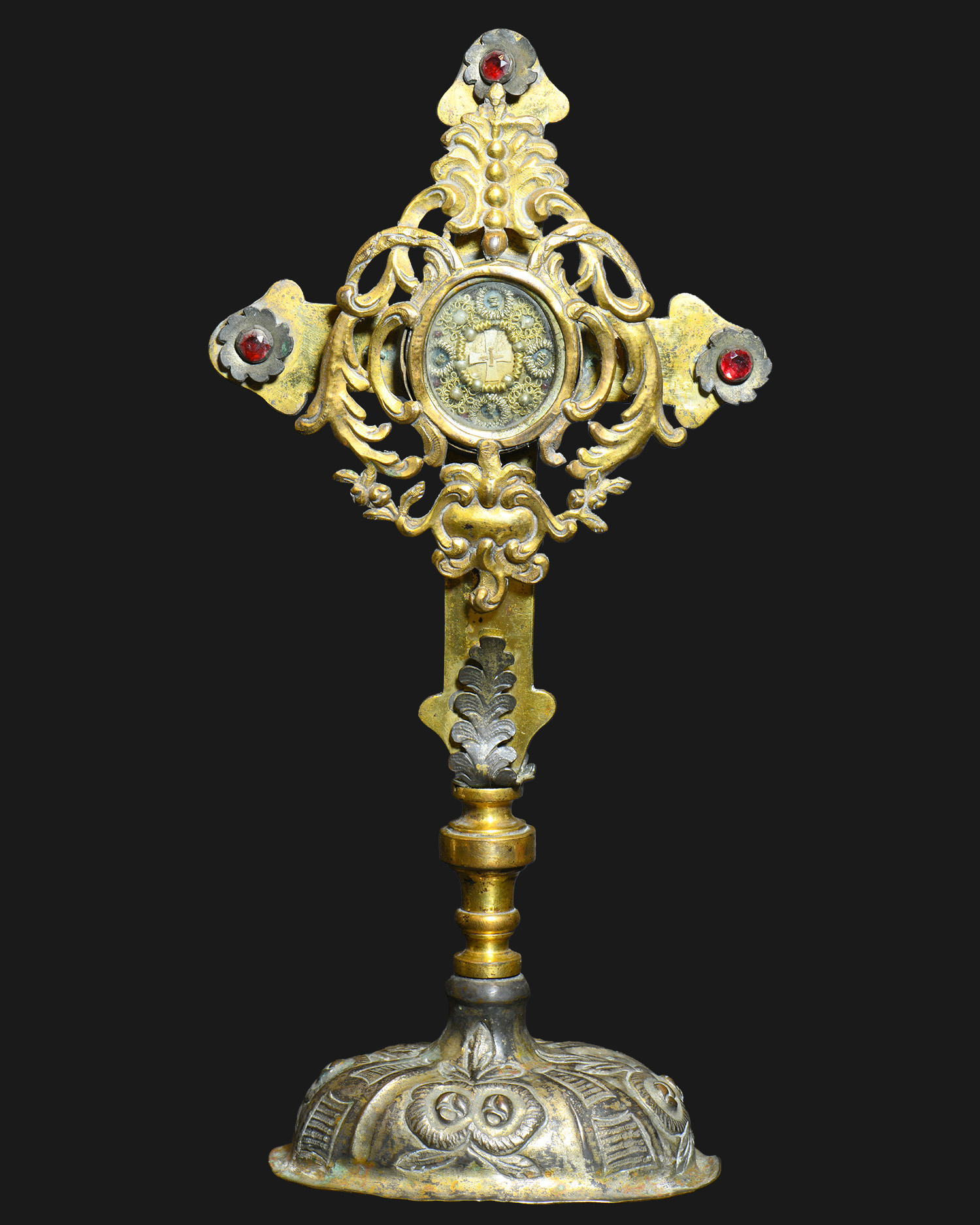
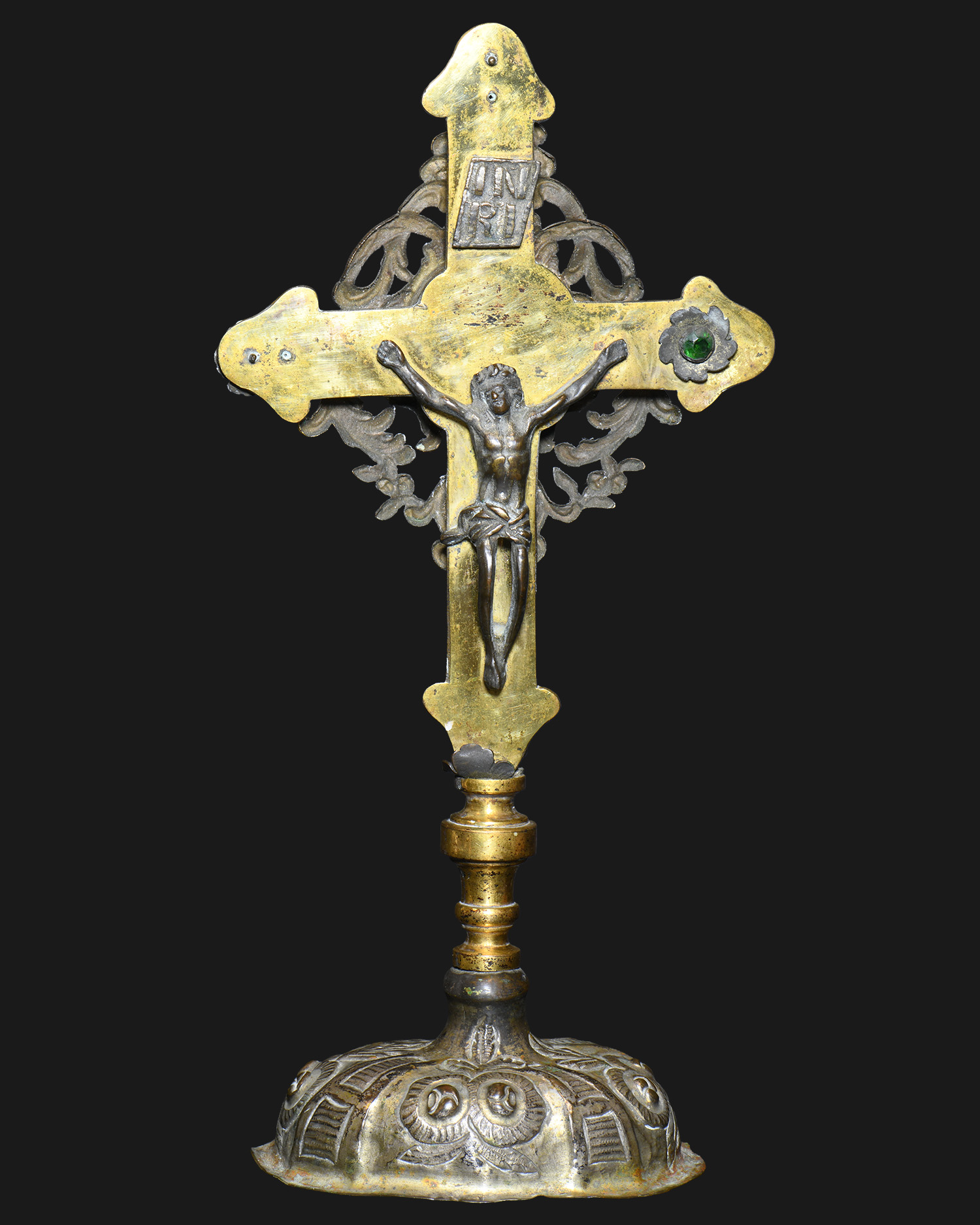
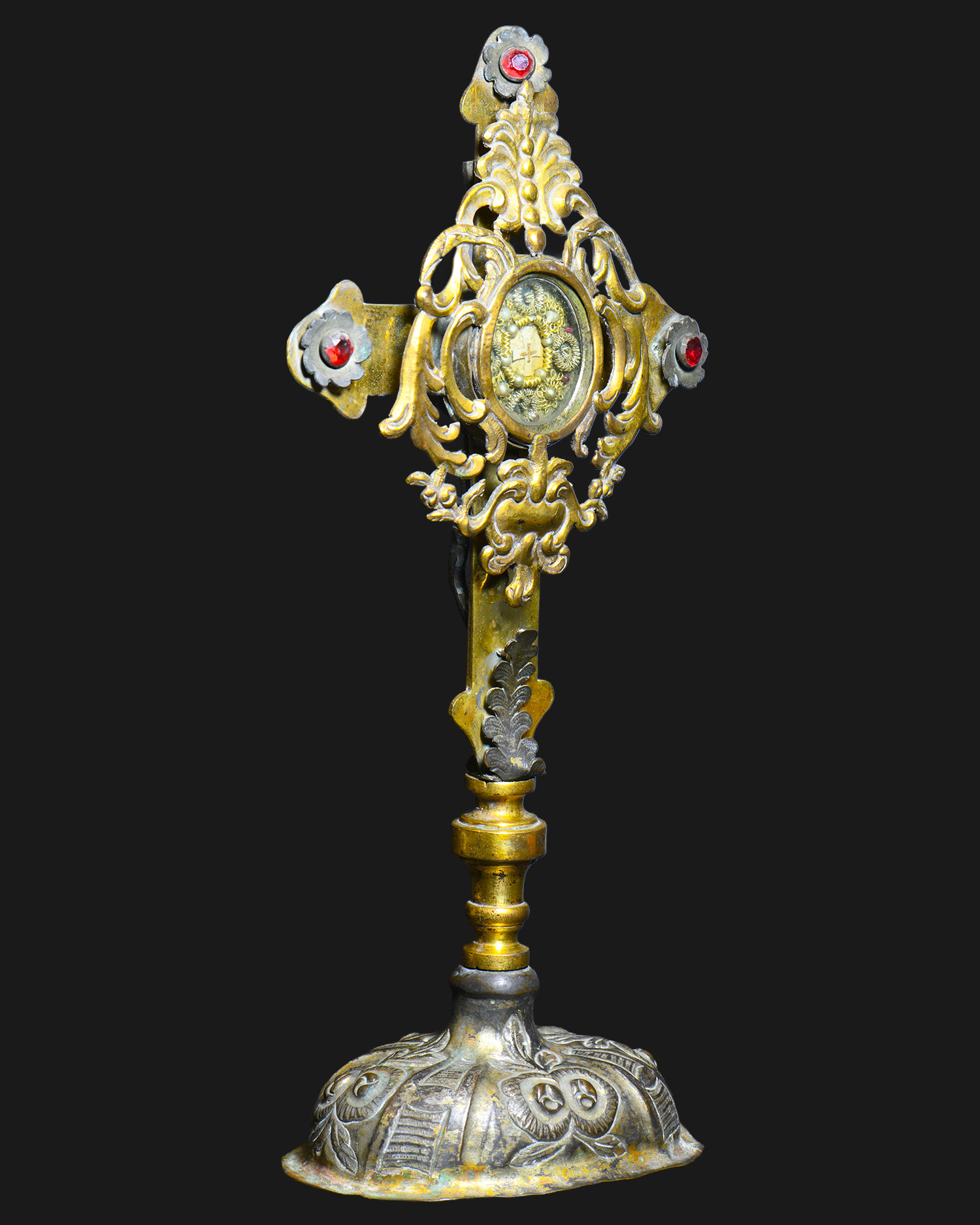
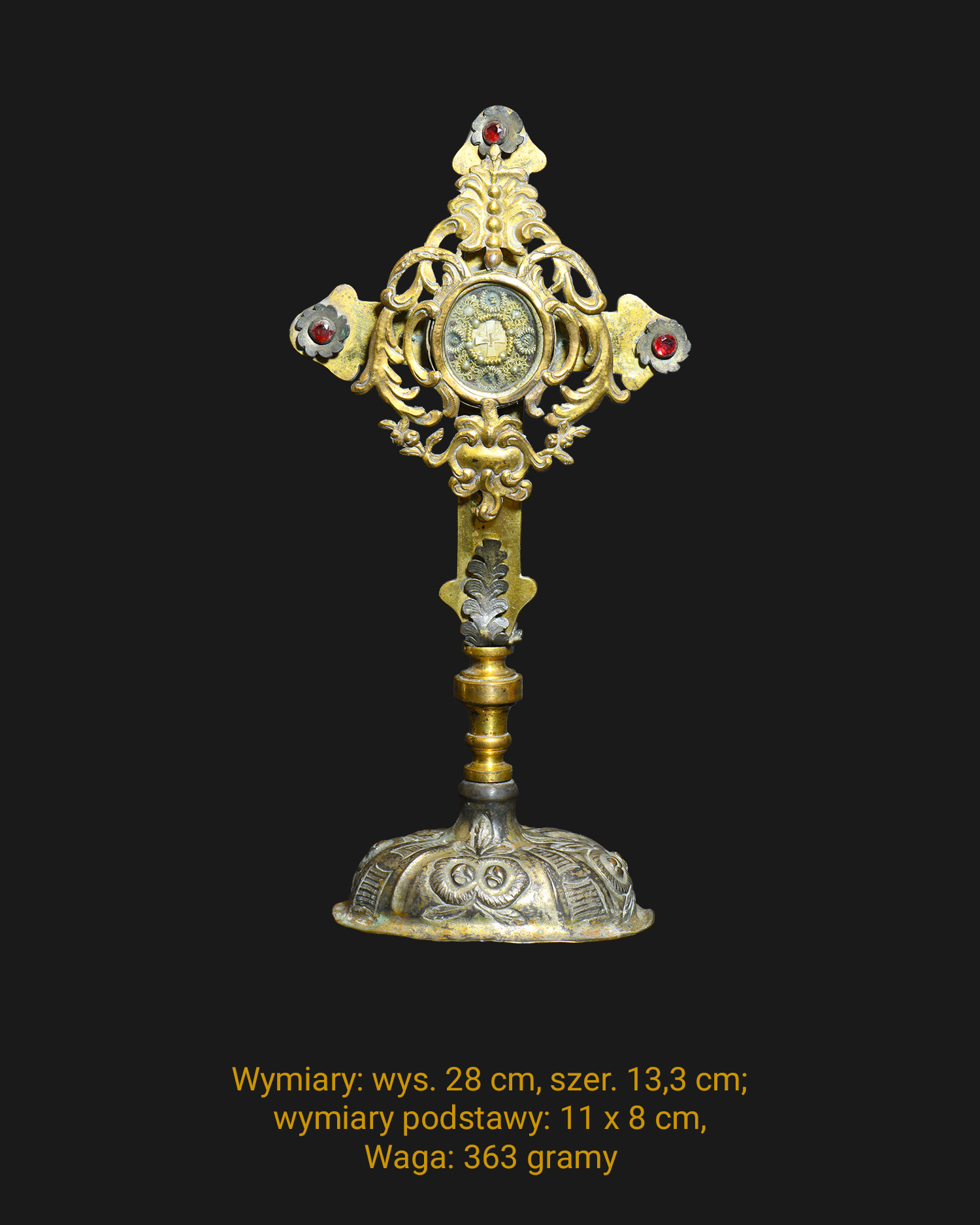

Monstrance reliquary in the form of a crucifix with relics of the Holy Cross, gilt bronze, silver-plated, Central Europe, 18th century.
8200,00 zł
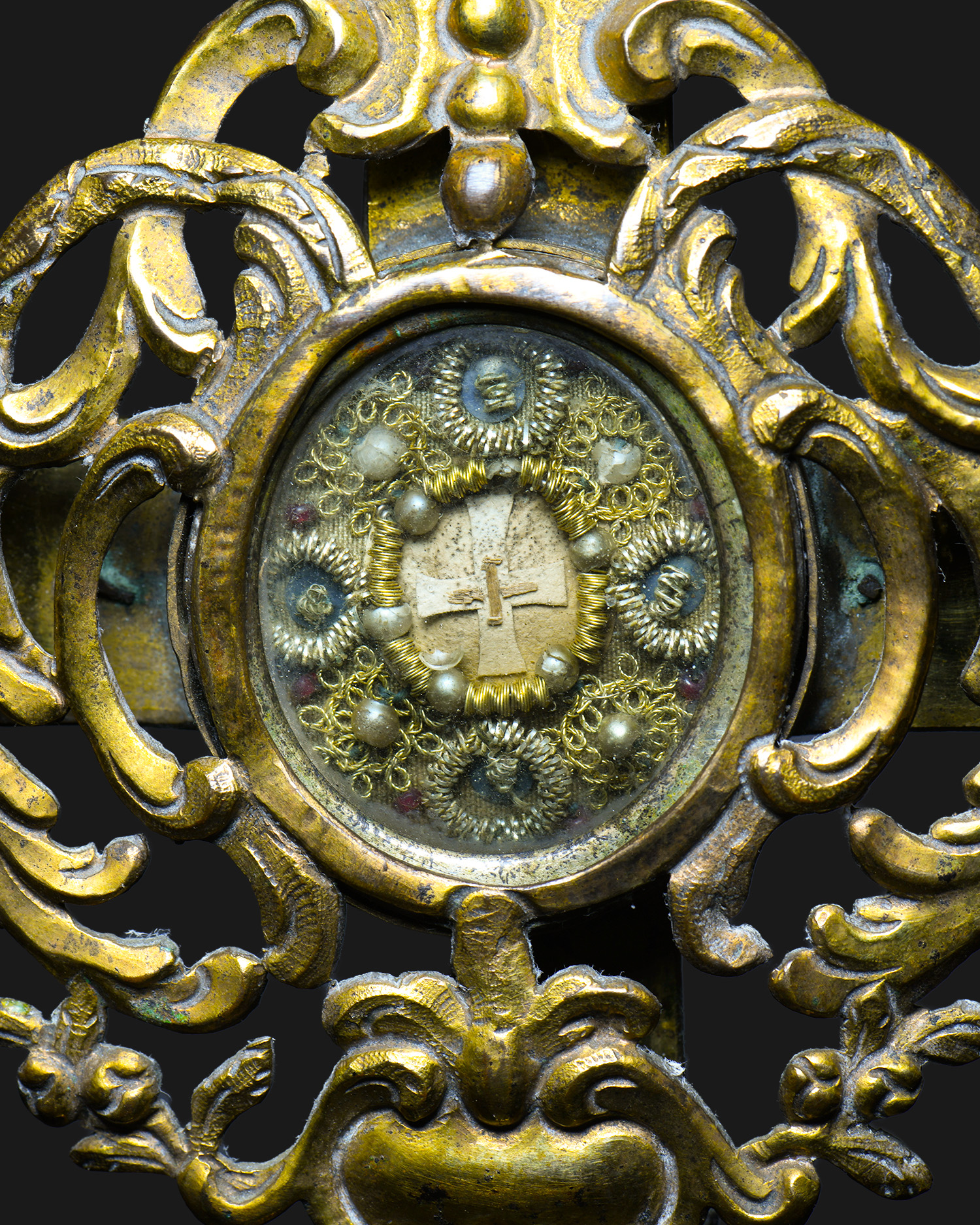
A rococo double-sided reliquary in the shape of a cross with decorative three-leafed arm ends, decorated with silver rosettes and ruby-colored glass. The glazed box (ostensorium) contains a metal, glazed capsule. At its very center, against a bright background, are two splinters arranged in a cross. The relic is surrounded by an elaborate decoration made of silver or gilded metal threads twisted into tiny springs and weaves (known as biont). They form the form of a radial nimbus around a central point. The wreath around the relic is decorated with eight pearls (probably river pearls). The whole was composed on a silk or parchment pad.
Around the capsule a rich, openwork gloria with a dynamic, asymmetrical rococo composition. The decoration is based on rocaille motifs and fancifully twisted volutes of the C and S type, supplemented with artistic floral details (cartilaginous and bivalve ornament). Surface finely chiseled, with preserved gilding in the recesses of the ornament.
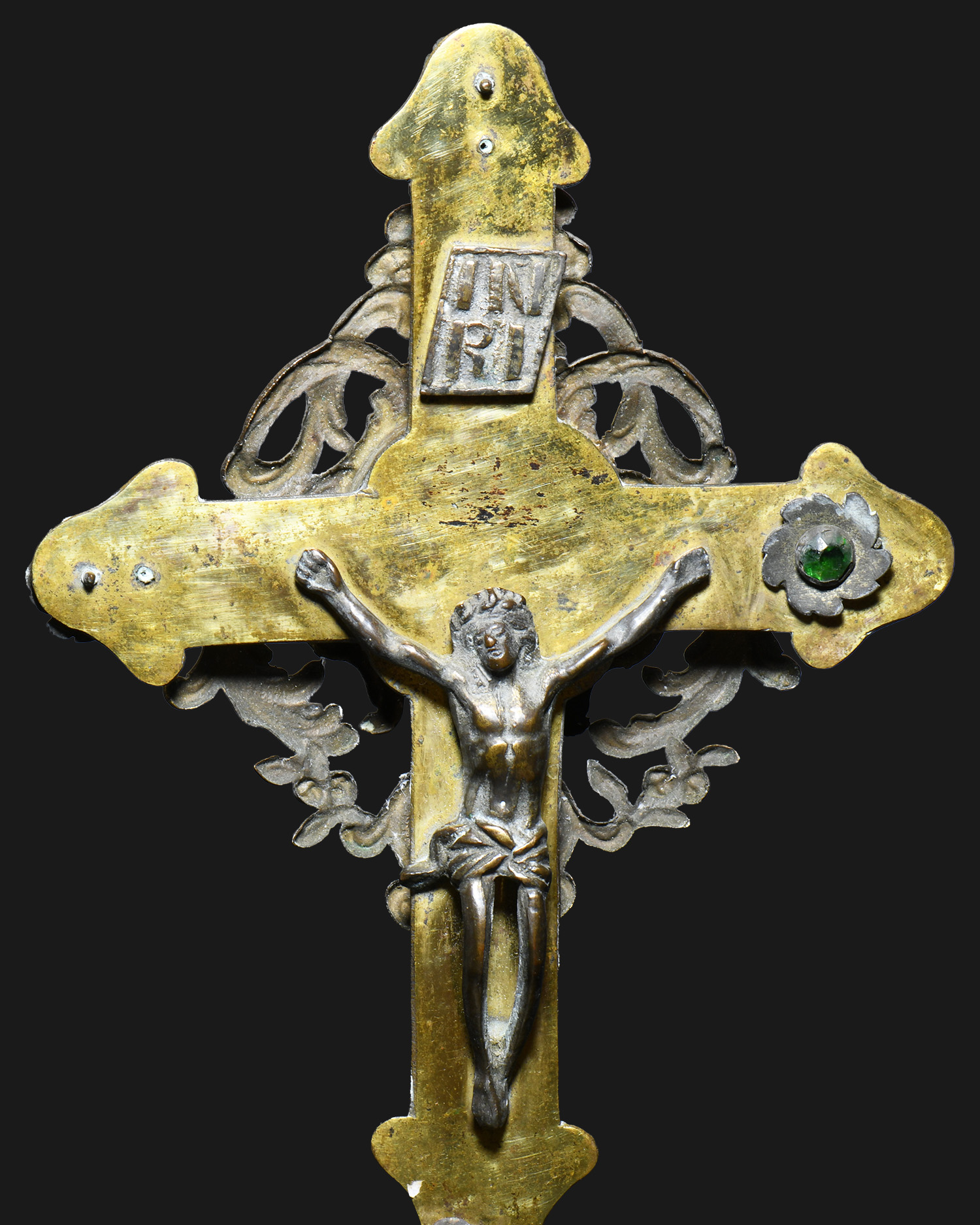
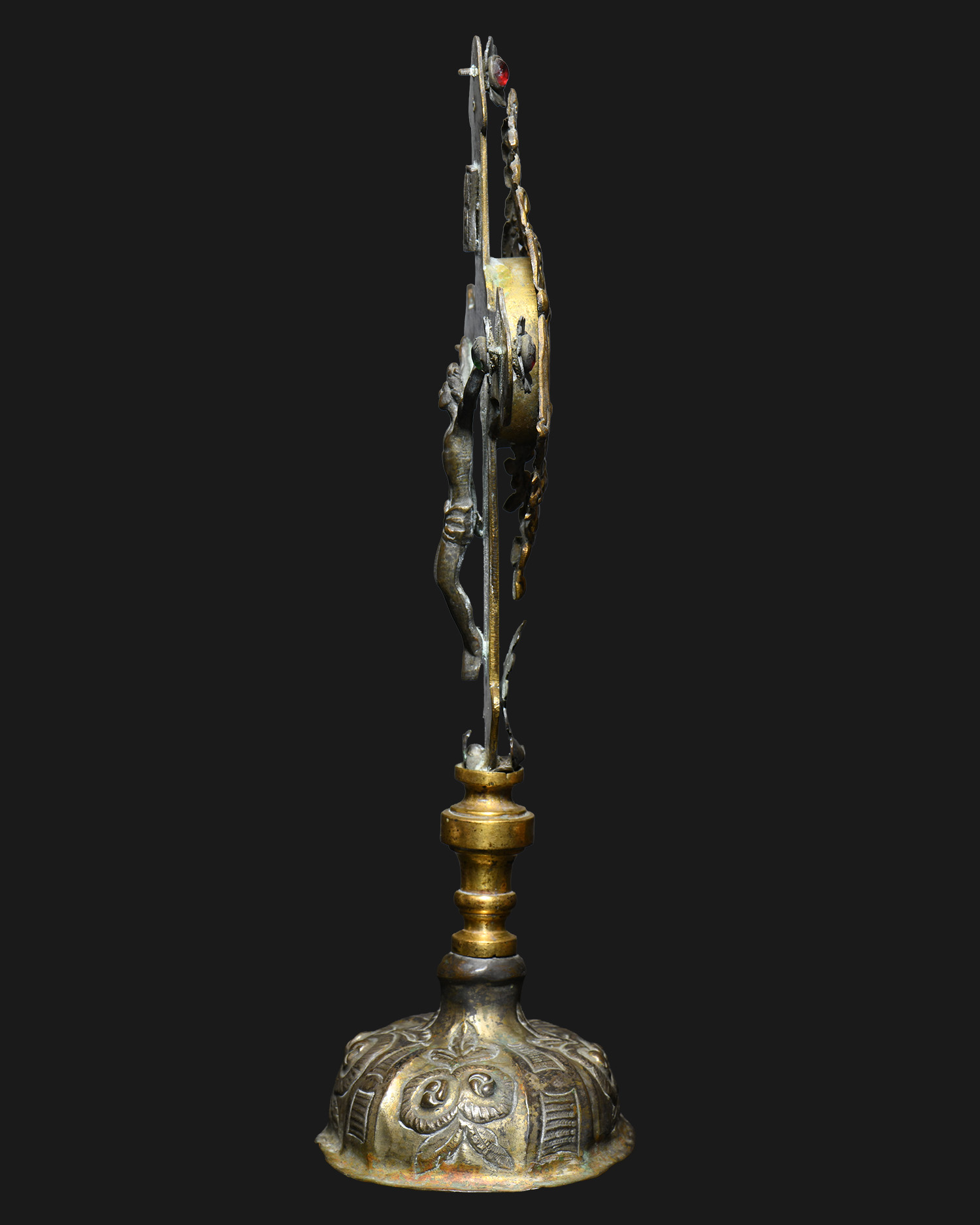
The back of the reliquary has a passion character. The figure of the Crucified Christ (Corpus Christi) is placed here. A decorative rosette with green glass is preserved on the right arm of the cross. Mounting holes and rivets can be seen on the other arms.
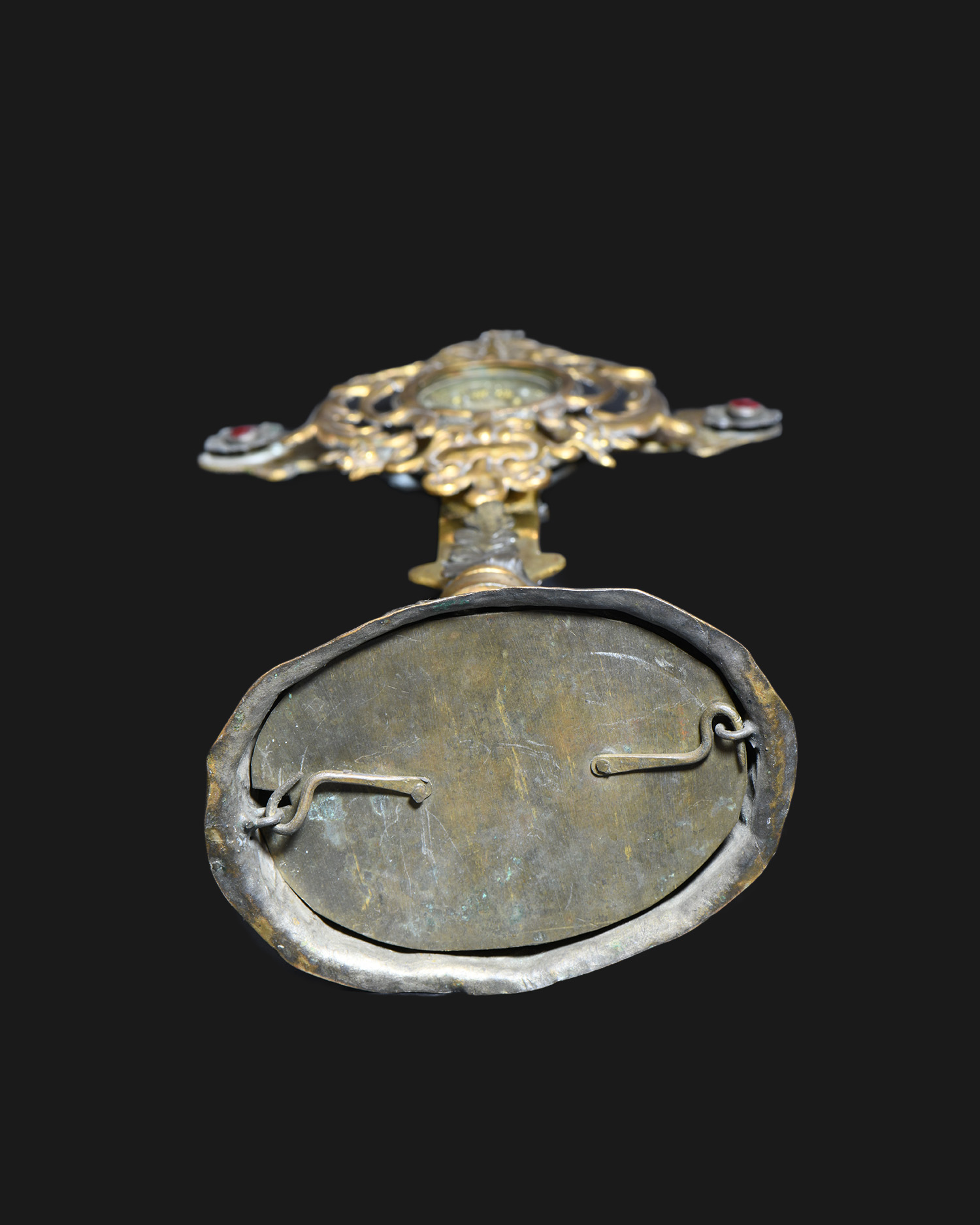
Baluster shaft, in a simple geometric form. Oval foot, wide and profiled, decorated with repoussed motifs of leaves and flowers, silvered.
1 in stock
| Weight | 0,363 kg |
|---|---|
| Dimensions | 28 × 13,3 × 8 cm |
| Type |
Monstrance reliquary in the form of a crucifix double-sided |
| Forma | |
| Materiał |
Gilded bronze, silver plated |
| Kolorystyka |
Gold ,Silver |
| Technika |
Chiseled casting ,Repousing |
| Czas powstania |
ca. 1740-1760 r. |
| Era |
Baroque |
| Kraj pochodzenia |
Central Europe |
| Autor |
Unknown |
| State of preservation |
Rubbing of gilding and silvering, visible signs of age but overall very good. The reliquary is preserved in integral condition. |
Related products
Altar Bust of Saint James the Greater, Linden Wood, Lower Silesia, Turn of the 15th/16th Century.
This Late Gothic altar bust depicting Saint James the Greater (the Apostle) was created at the turn of the 15th and 16th centuries, approximately between 1490 and 1510. It represents the mature guild craftsmanship associated with the Lower Silesia region, with a particular emphasis on the workshop circle active in Wrocław or Świdnica. The object's flat-cut, raw reverse, bearing clear traces of medieval tools such as an adze or a profiling chisel, unequivocally confirms the sculpture's original purpose for mounting in an altar cabinet or predella.
Height: 32 cm Width: 24 cm Depth: 16.5 cm Weight: 1.99 kg
Chapel with Our Lady of Czestochowa and Eagle, Poland, 19th century.
Christ Salvator Mundi, polychrome wood, Poland, 19th century.
Fragment of an antiphonary page with illuminated initial, parchment, Europe, 15th century
Frame reliquary in ostensory type, silver repoussed on wood core, Naples, 1778
Richly decorated front covered with repoussed silver sheet. Decoration in the type of mature Baroque with floral (acanthus leaves, volutes) and figurative (plastic heads of putti / angels) motifs. In the lower part next to the ovolo there is a clear municipal punca of Naples: NAP 78 (marking the Kingdom of Naples with the abbreviated date 1778). Silver plate applied to a carved wooden core. The back polychromed in light color, with the original bracket preserved. Wooden base, stepped, with traces of original gilding. Authentic object, preserved in good condition. The silver is covered with a natural dark age patina. The original custody (glazing) and the relic in the central oval are missing. A very interesting and decorative item, not only for those interested in "Neapolitans". Naples in 1778 was a bustling metropolis under the Bourbons, and the goldsmiths' workshops there were famous for their finesse and panache, as can be seen in the dynamic carvings of the angels on the offered reliquary.
Head of an Angel (Putta), gilded linden wood, Poland, 1st half of the 18th century.
Irish (Celtic) cross, stone sculpture, Ireland, 19th century.
Saint John the Evangelist, late Gothic wooden sculpture, ca. 1500
The work may have been part of a winged altarpiece (retabulum), most likely in the Crucifixion group.