


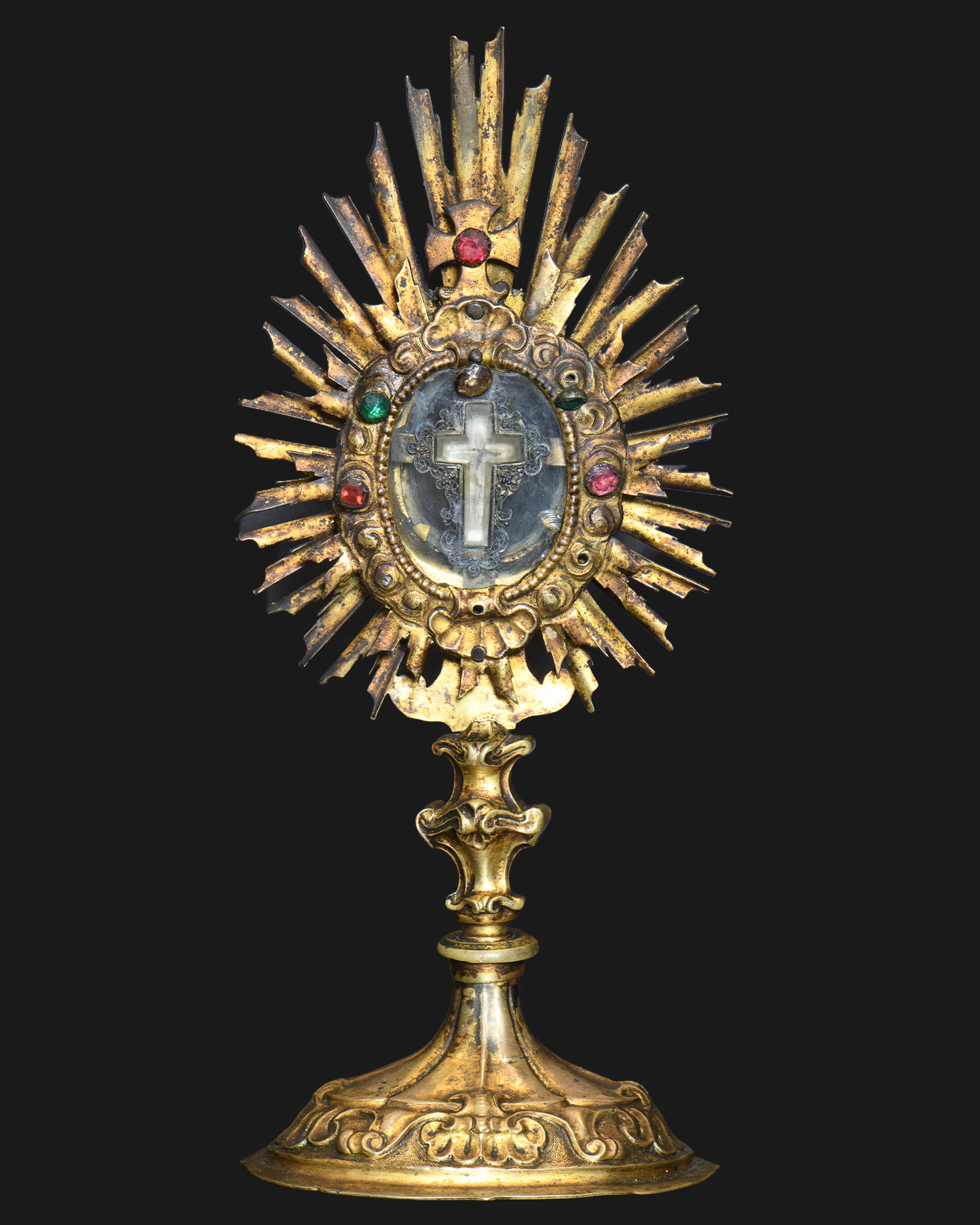
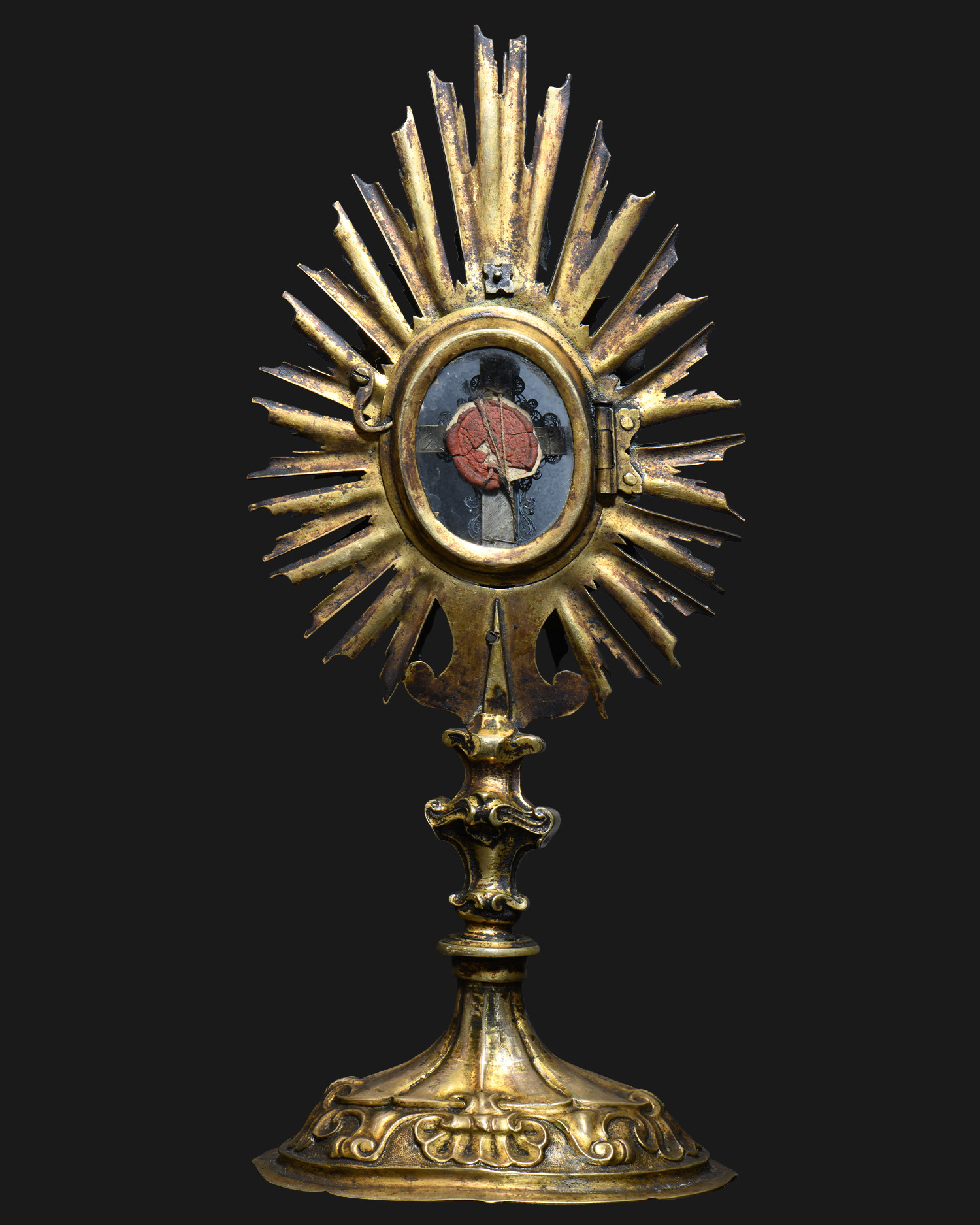
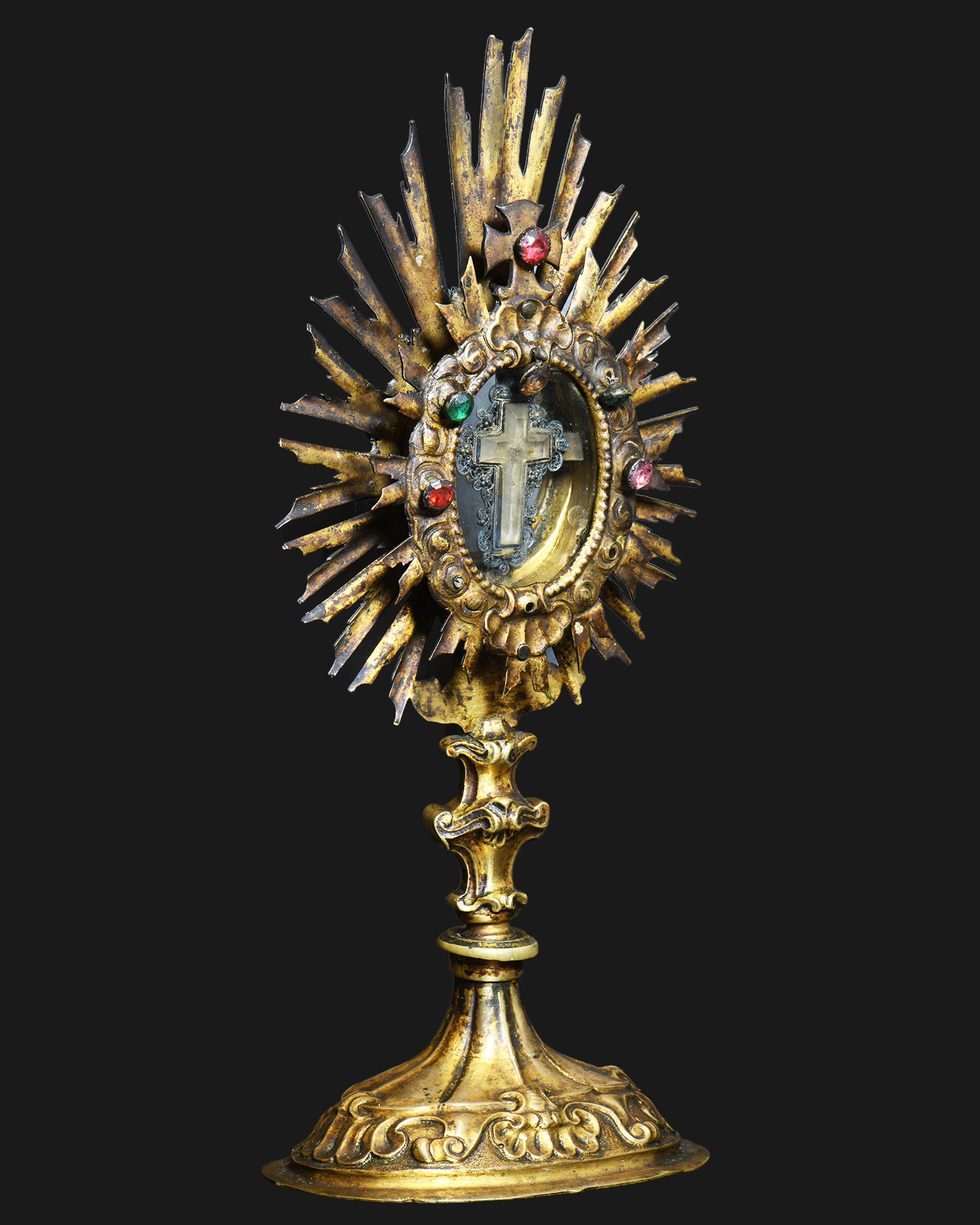
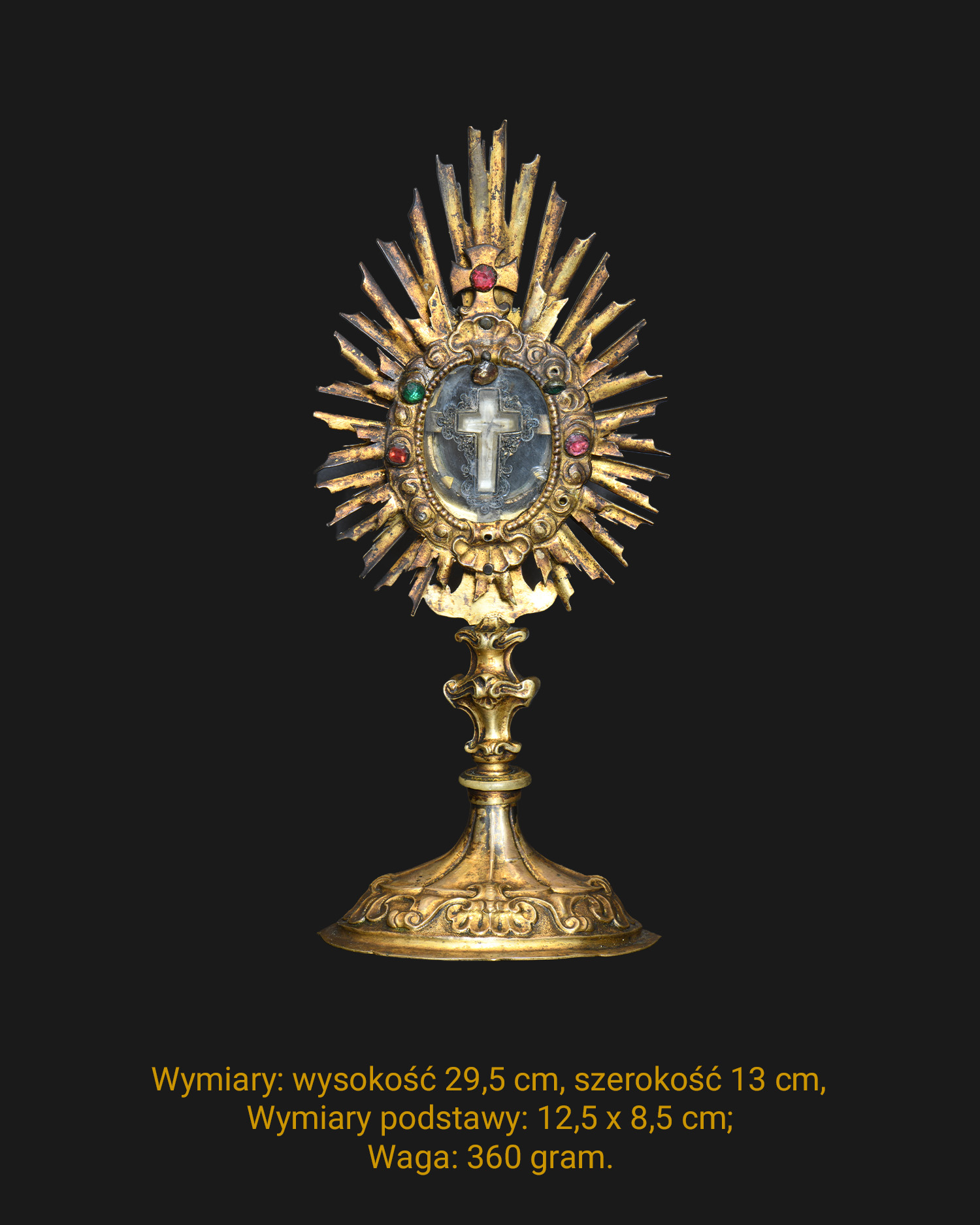

Holy Cross monstrance reliquary, gilded bronze, Central Europe, 18th century (ca. 1750)
7400,00 zł
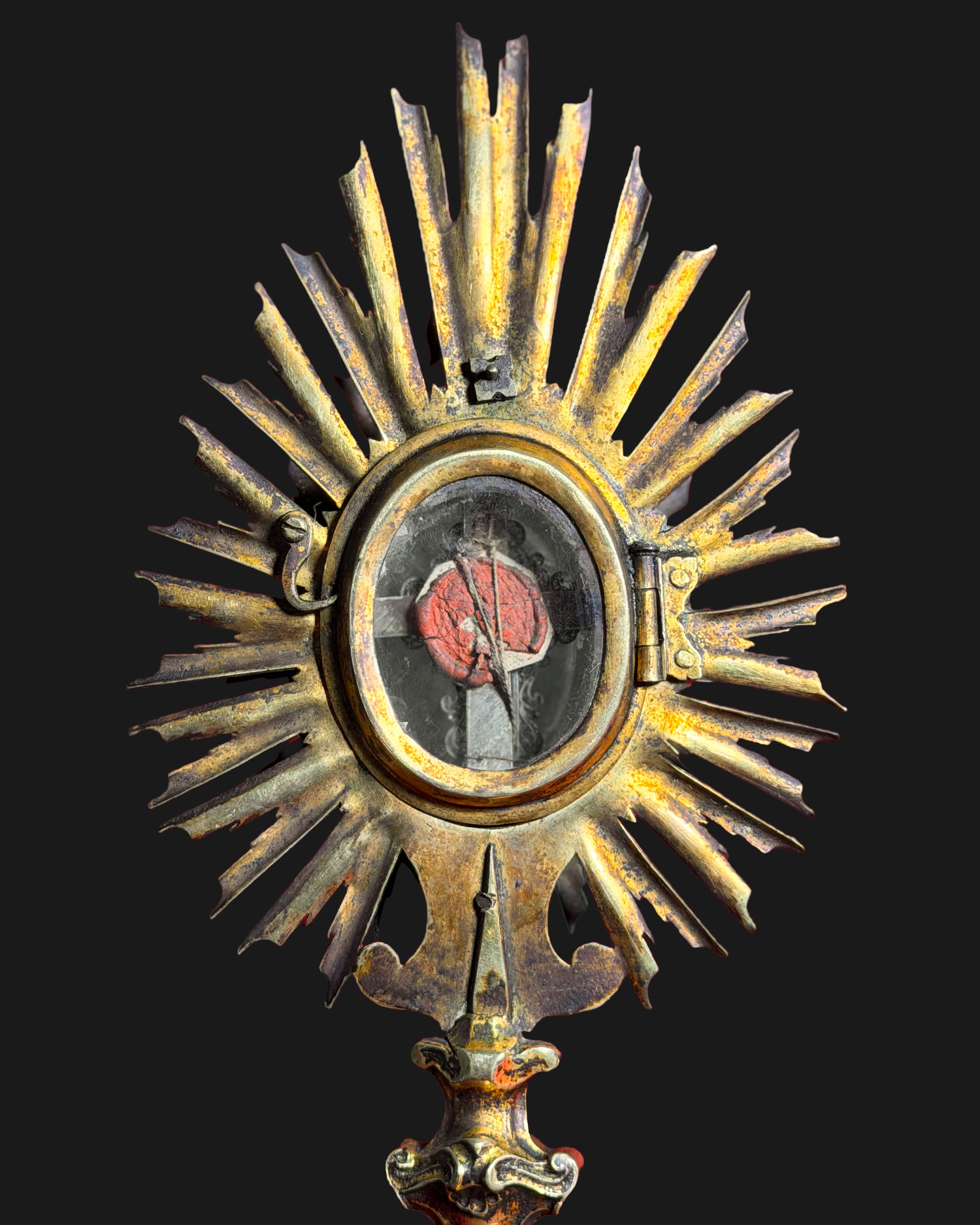
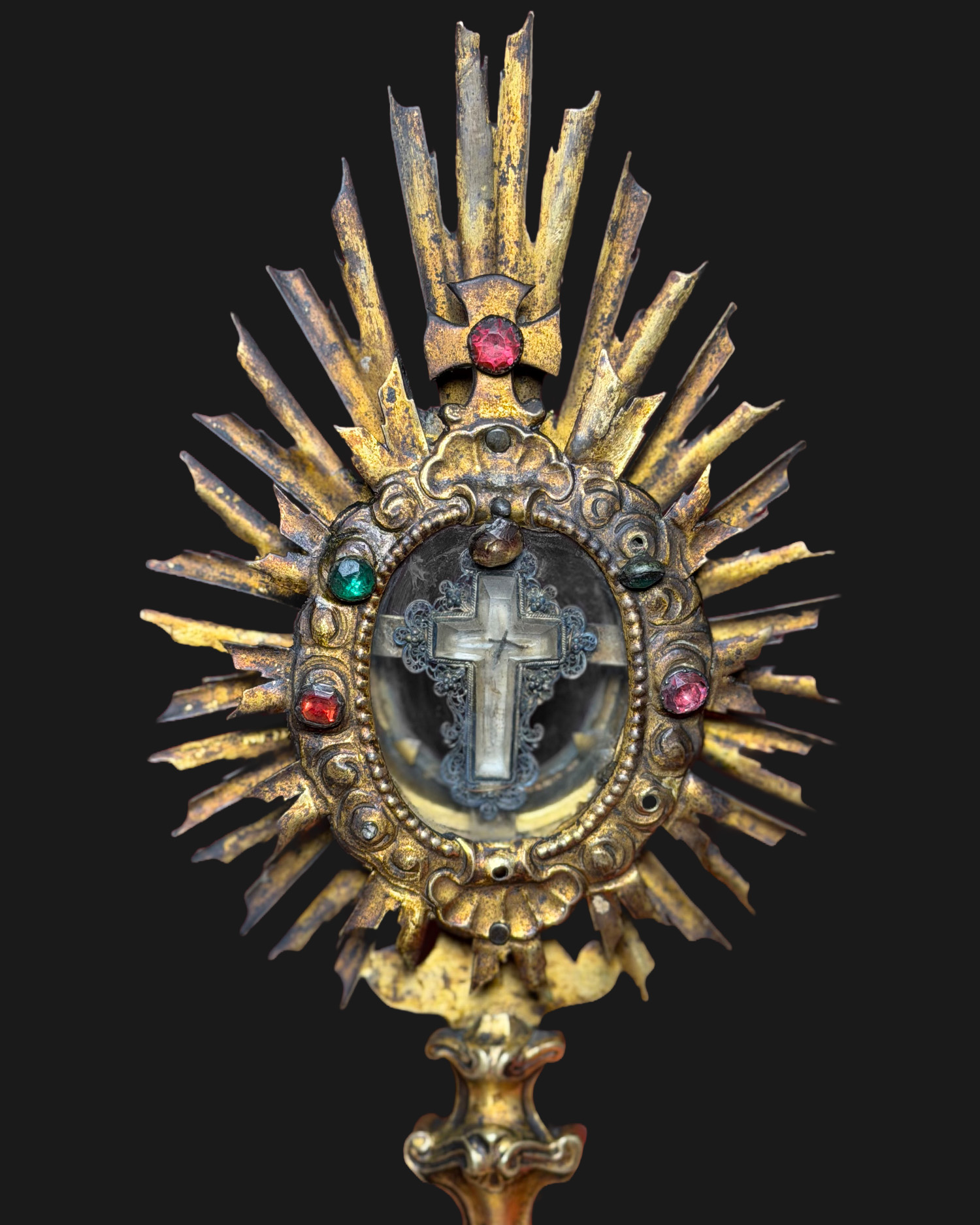
Rococo reliquary in the form of a monstrance. In the glazed box (ostensorium) there is a cross made of rock crystal, in an openwork silver frame. Inside it are placed relics – small fragments (splinters) from the Holy Cross. On the back of the crystal cross, silk threads are visible, binding the relic to the setting, as well as a lacquer seal imprint.
Gloria (rays) – a richly decorated halo in the form of a radial shield, characteristic of a monstrance. On its perimeter, decorated with rocaillas, colored glasses of ruby and green are set, and the whole is crowned by a small cross with a central red eye.
Instead of a simple geometric form, the nodus is formed of twisted, sigmoidal volutes (shapes resembling the letters “C” and “S”) that flow seamlessly from one to the other.
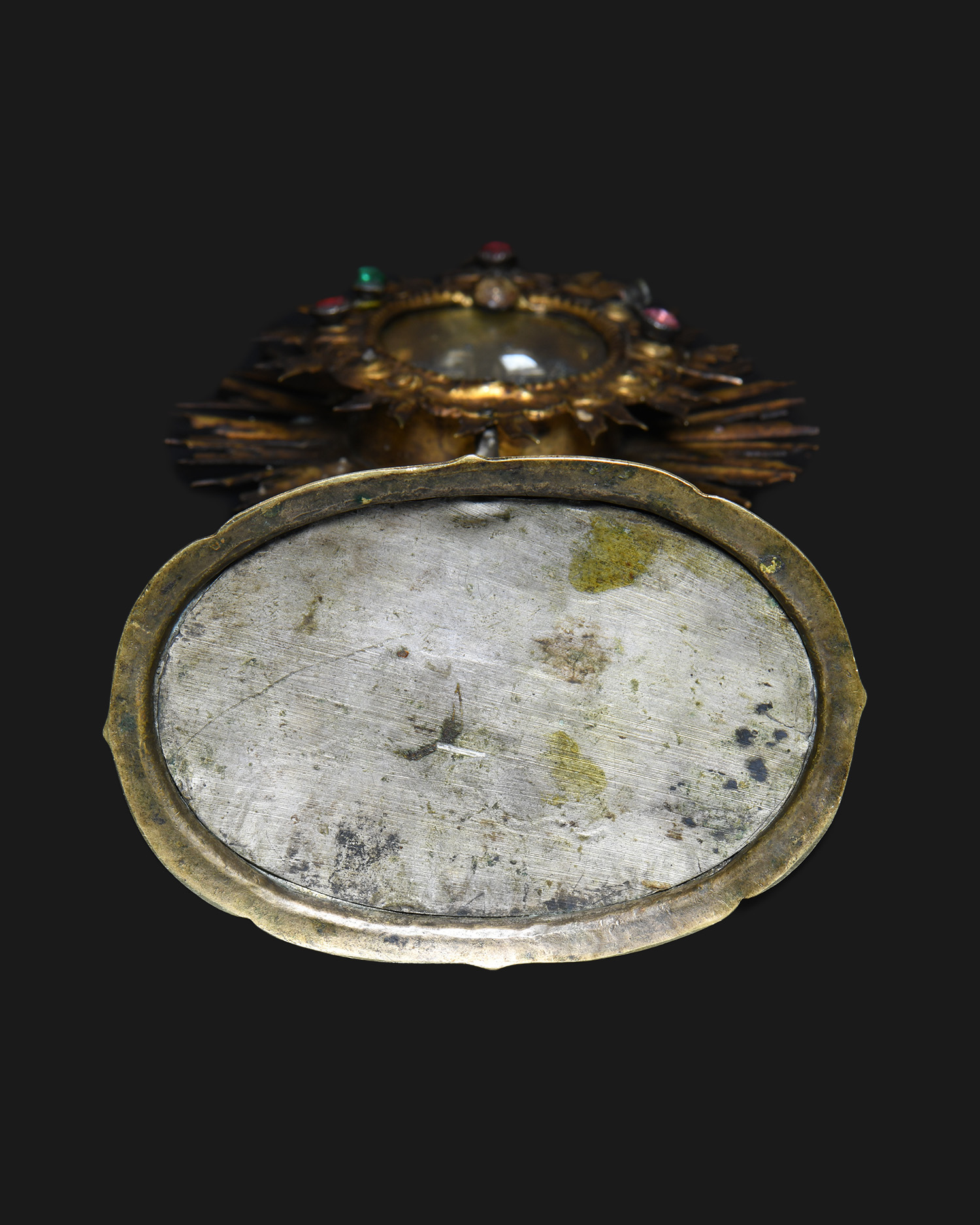
The foot is oval, multi-stepped, decorated with repoussed rocaillas. The reliquary represents high-class artistic craftsmanship; it is most likely preserved in “integral” condition.
1 in stock
Related products
Chapel with Our Lady of Czestochowa and Eagle, Poland, 19th century.
Devotional Ring, Silver, Lviv, 1872-1920
Frame reliquary in ostensory type, silver repoussed on wood core, Naples, 1778
Richly decorated front covered with repoussed silver sheet. Decoration in the type of mature Baroque with floral (acanthus leaves, volutes) and figurative (plastic heads of putti / angels) motifs. In the lower part next to the ovolo there is a clear municipal punca of Naples: NAP 78 (marking the Kingdom of Naples with the abbreviated date 1778). Silver plate applied to a carved wooden core. The back polychromed in light color, with the original bracket preserved. Wooden base, stepped, with traces of original gilding. Authentic object, preserved in good condition. The silver is covered with a natural dark age patina. The original custody (glazing) and the relic in the central oval are missing. A very interesting and decorative item, not only for those interested in "Neapolitans". Naples in 1778 was a bustling metropolis under the Bourbons, and the goldsmiths' workshops there were famous for their finesse and panache, as can be seen in the dynamic carvings of the angels on the offered reliquary.
German-Italian Master, Image from the Cross, oil on board, Western Europe, 16th century.
Head of an Angel (Putta), gilded linden wood, Poland, 1st half of the 18th century.
Irish (Celtic) cross, stone sculpture, Ireland, 19th century.
Saint John the Evangelist, late Gothic wooden sculpture, ca. 1500
The work may have been part of a winged altarpiece (retabulum), most likely in the Crucifixion group.