


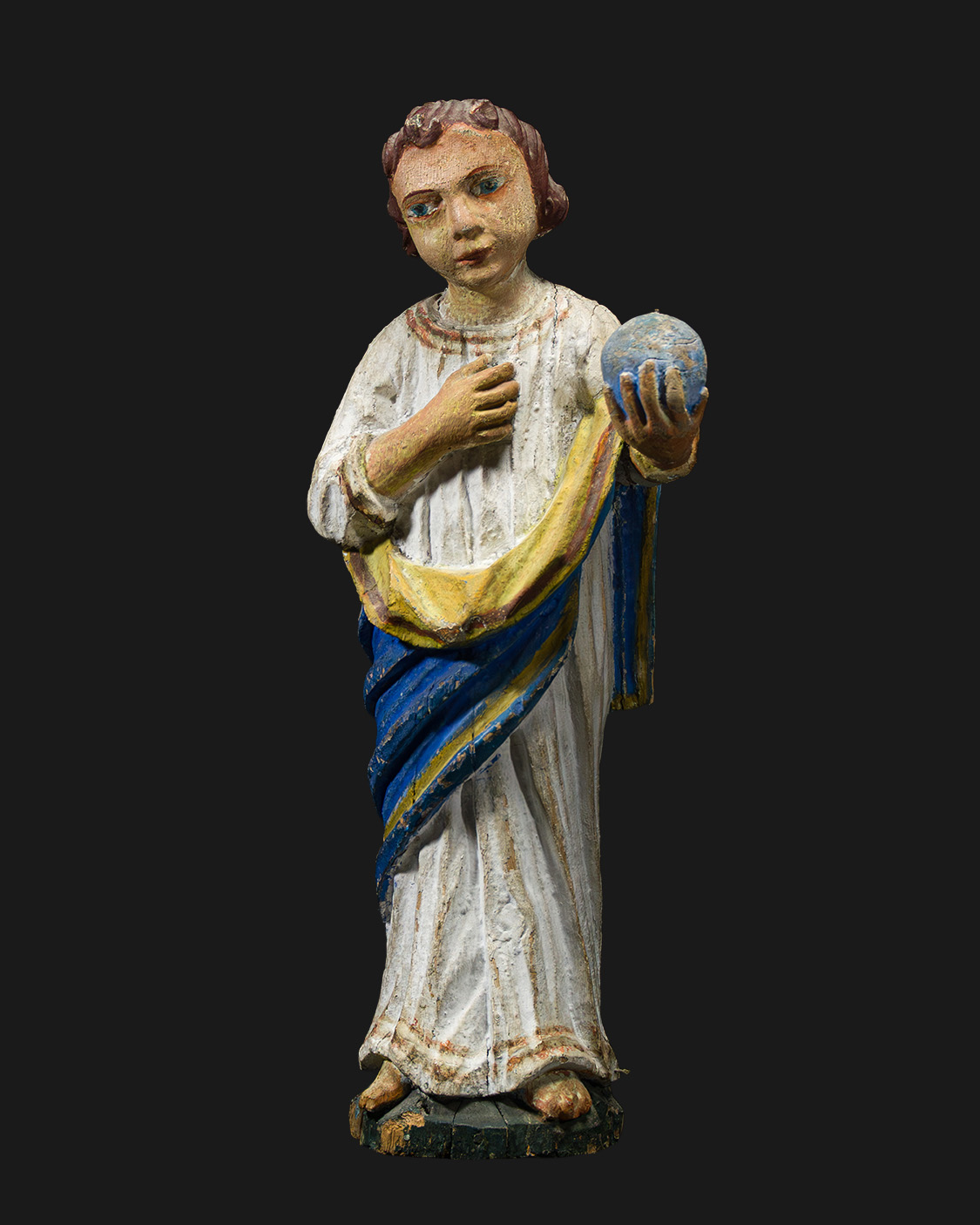
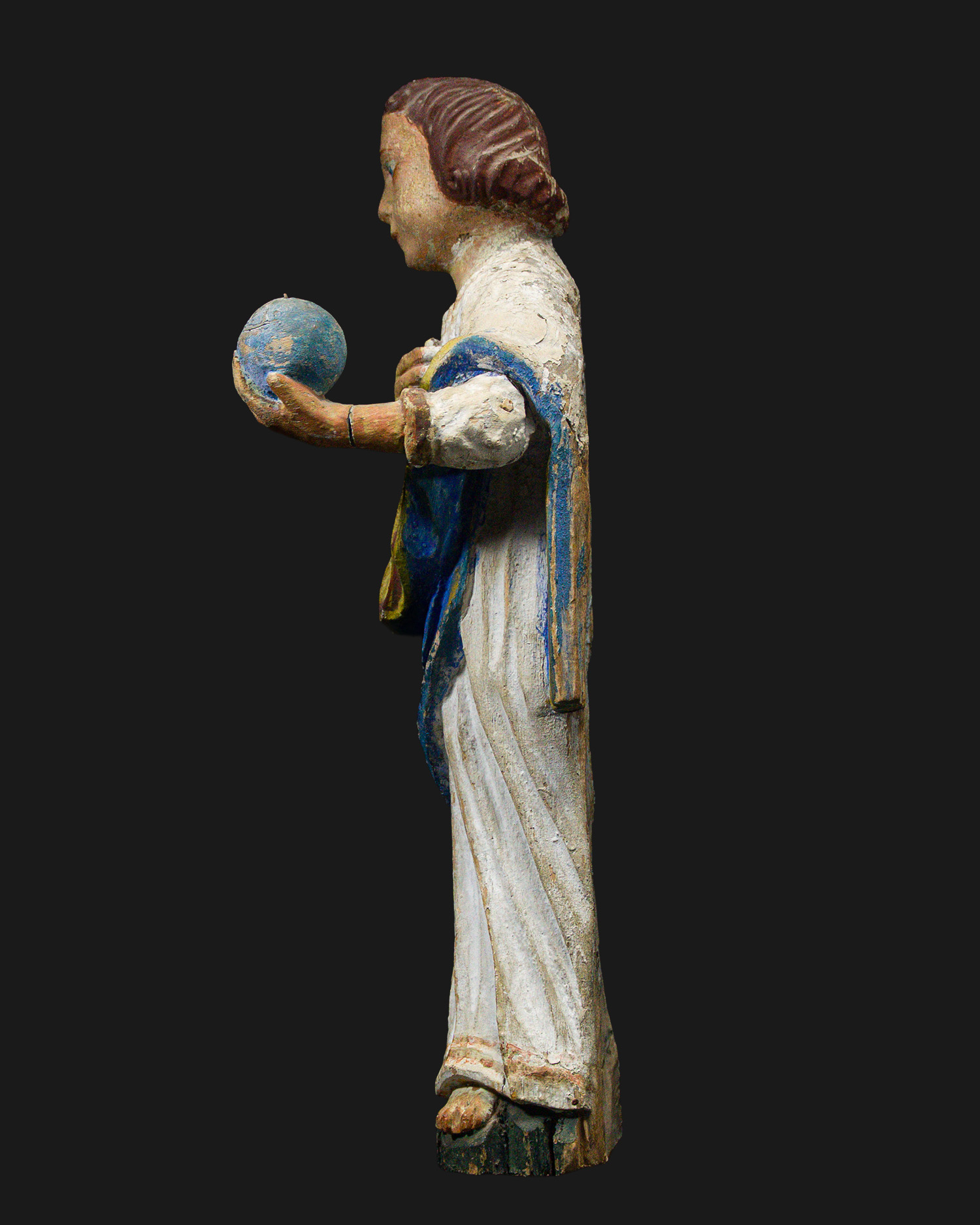
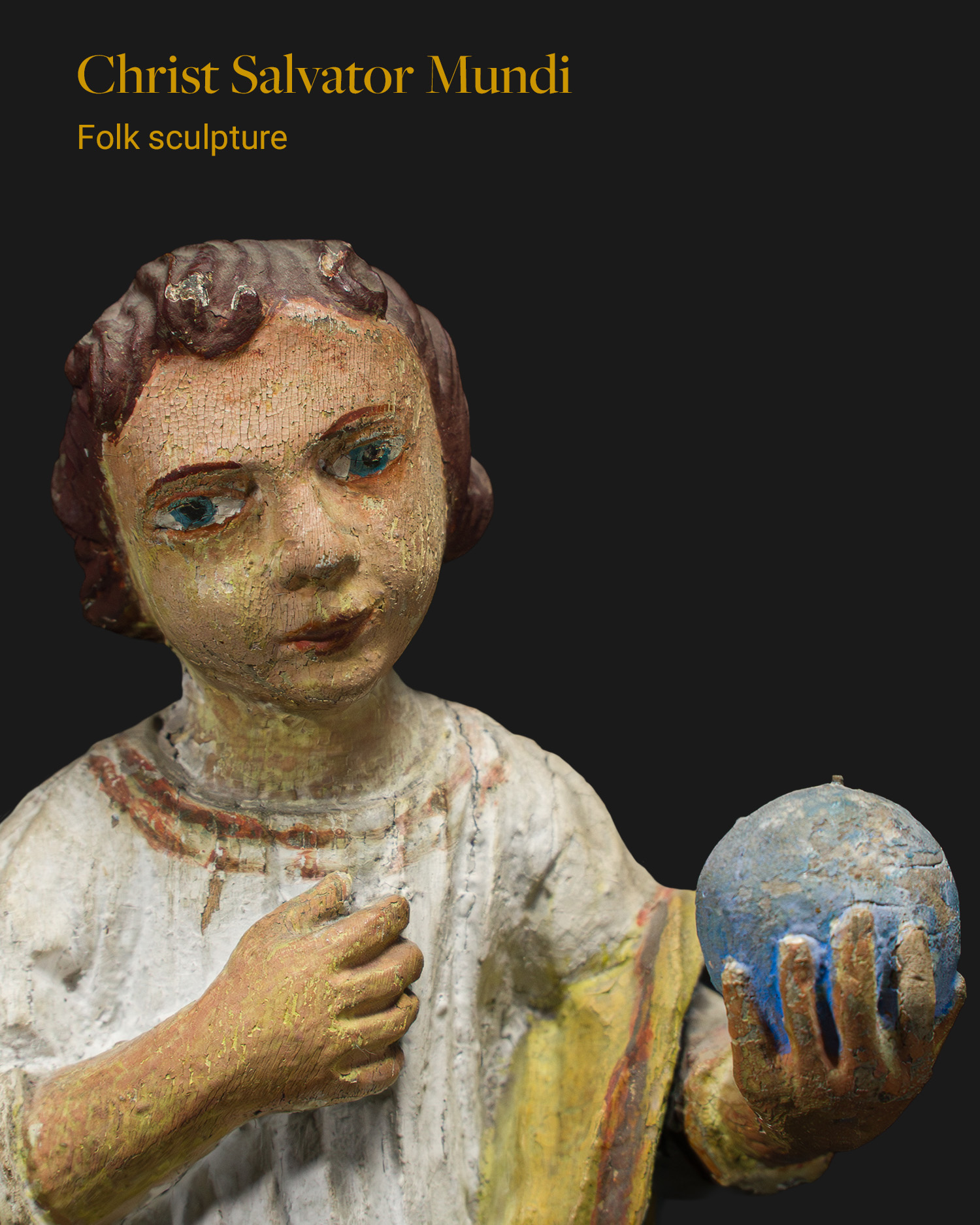
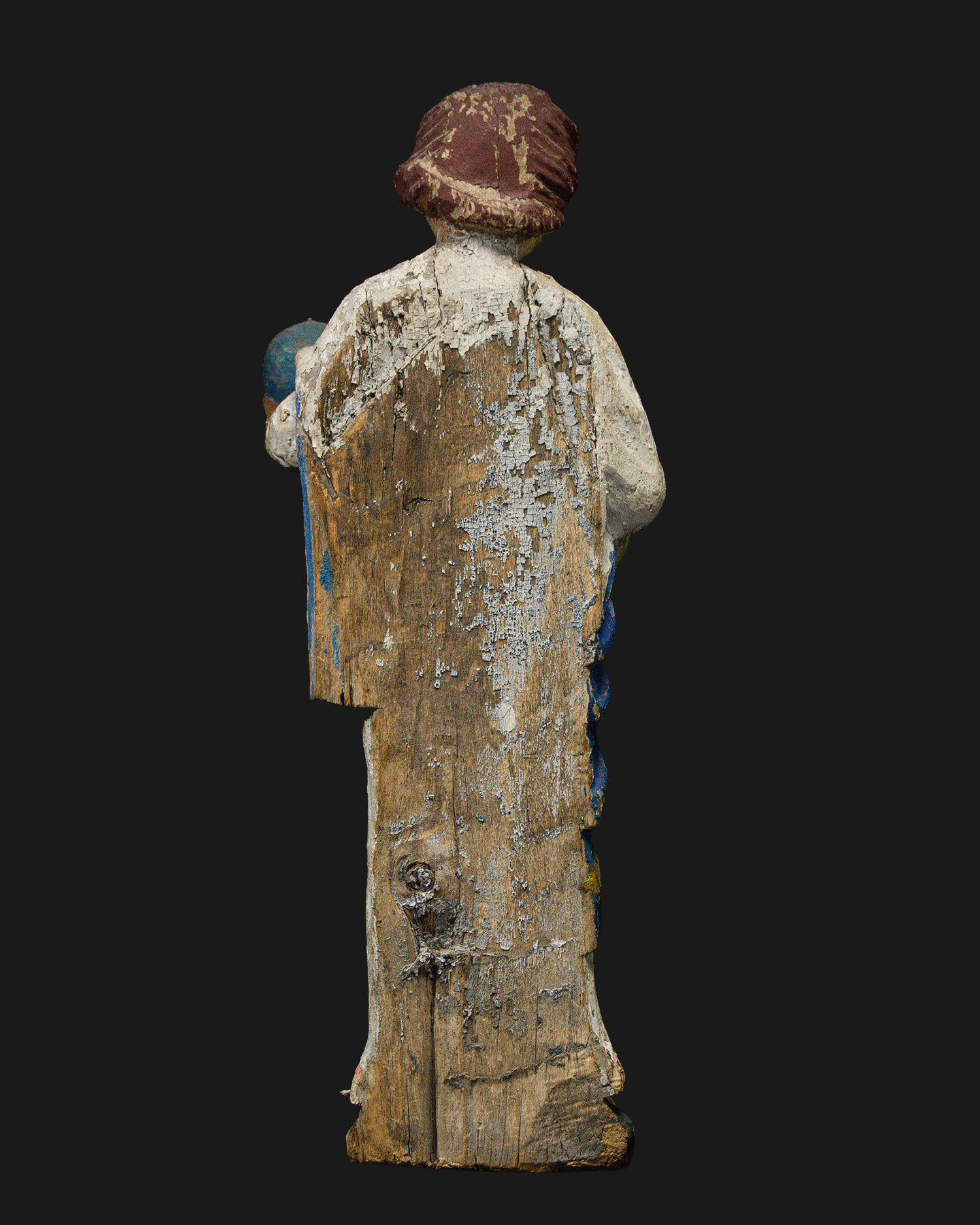
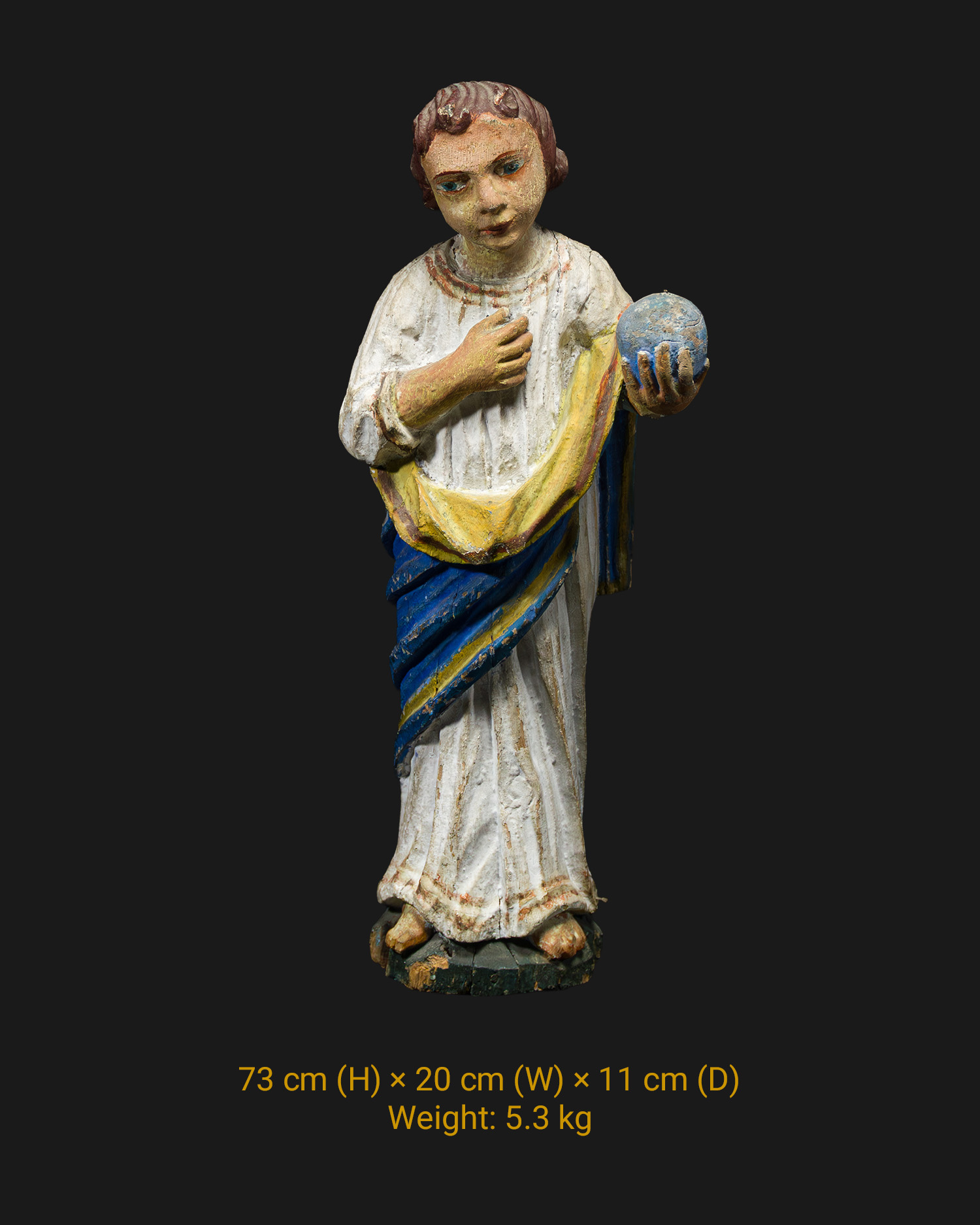

Christ Salvator Mundi, polychrome wood, Poland, 19th century.
2200,00 zł
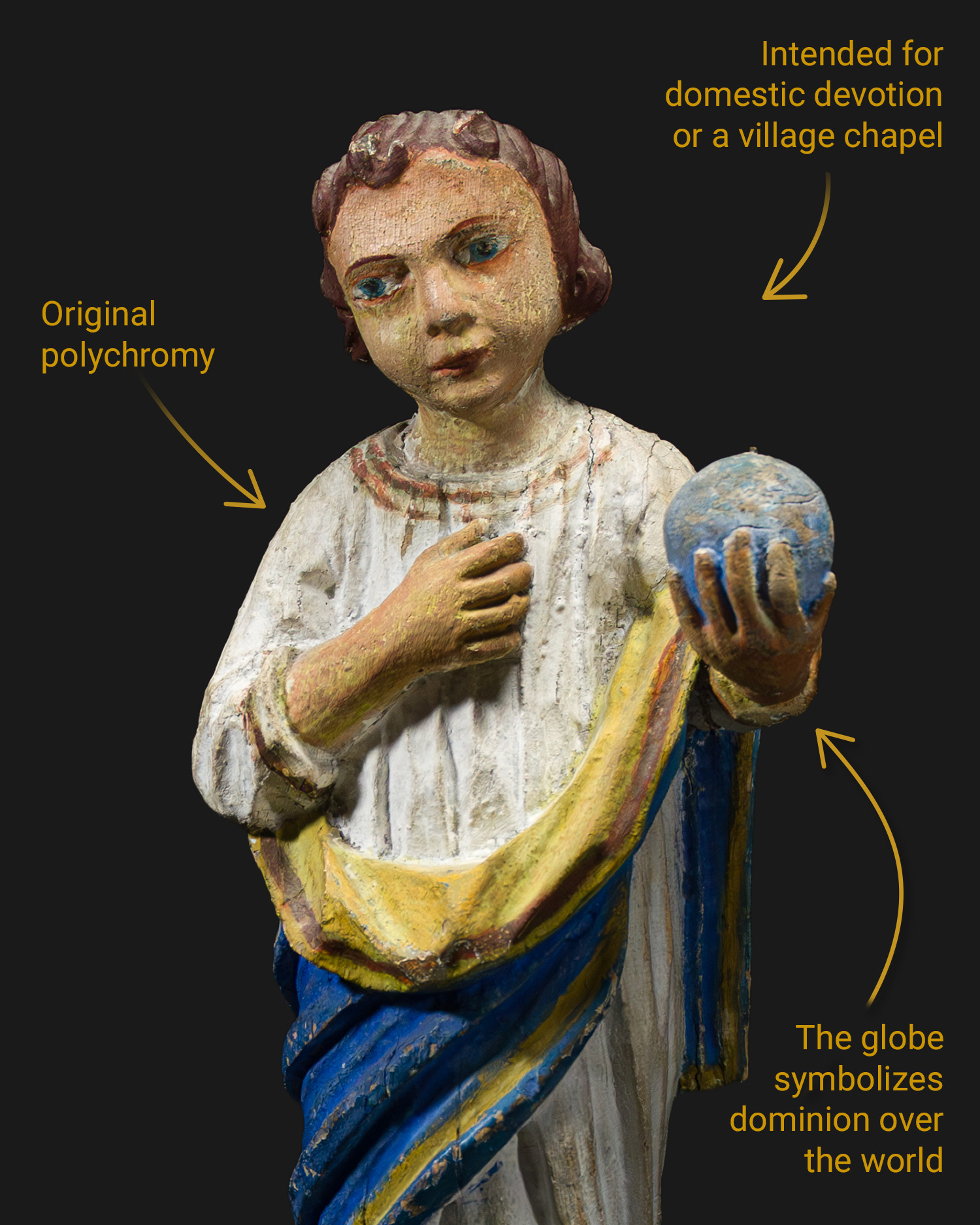
Wooden sculpture depicting Christ as Salvator Mundi (Savior of the World), made in Poland in the 19th century. An example of folk Baroque sculpture, combining a religious theme with a simple, legible form. The full-plastic, frontal figure shows a young Jesus in a gesture of blessing, with a globe in his left hand.
The figure is dressed in a white tunic and blue coat with yellow piping. Remnants of the original polychrome and natural traces of use are visible. The simplified modeling, linear folds and expressive face indicate a folk workshop from southern Poland, representing the late Baroque tradition of devotional sculpture.
| Weight | 1,6 kg |
|---|---|
| Dimensions | 45,5 × 17 × 14 cm |
| Type |
Sacred sculpture |
| Form |
Full-figure, frontal figure showing young Jesus in a gesture of blessing – right hand raised, left hand holding a blue globe symbolizing power over the world |
| Materiał |
Polychrome wood |
| Kolorystyka |
Blitz ,Brown ,White ,Yellow |
| Czas powstania |
18th century (1701-1800) |
| Era |
Baroque |
| Kraj pochodzenia |
Poland |
| State of preservation |
Very good; visible rubbing and cracking of wood, well-preserved colors, original polychromy |
Related products
Chapel with Our Lady of Czestochowa and Eagle, Poland, 19th century.
Gallo-Roman sculpture of the head of Eros (?), marble, 1st-3rd century A.D.
Icon of Our Lady of the Dawn Gate, brass, enamel on metal, Poland, 19th century.
Rama, marble, India, 19th century.
A sculpture depicting Rama, one of the most important deities of Hinduism, considered the seventh avatar of Vishnu. The object was hand-carved in white marble in India, probably in the 19th century.
The figure is depicted standing, facing forward. The face has a gentle expression with a soft smile and slightly closed eyes. The head is crowned with a decorative crown, and long necklaces are visible on the chest.
The figure is dressed in a draped robe with clearly marked folds. On its back is a quiver with arrows, characteristic of Rama's depictions.
The hands of the sculpture are not preserved, originally in one of them the figure held a bow - a characteristic element of representations of this deity. Further about these cavities do not write that they are consistent.
Rama is the hero of the epic Ramayana and in the Hindu tradition symbolizes righteousness and fidelity to the principle of dharma. His images occupy an important place in Indian sacred art, although full-figure marble sculptures of this scale are less common.
The object is preserved in good condition, with clear legibility of form and detail.
Sculpture of a god’s head (Zeus or Hercules), marble, Mediterranean basin, Hellenistic period
St. Augustine reliquary with Ex Ossibus relic, polychrome wood, gilded, Italy, 18th century.