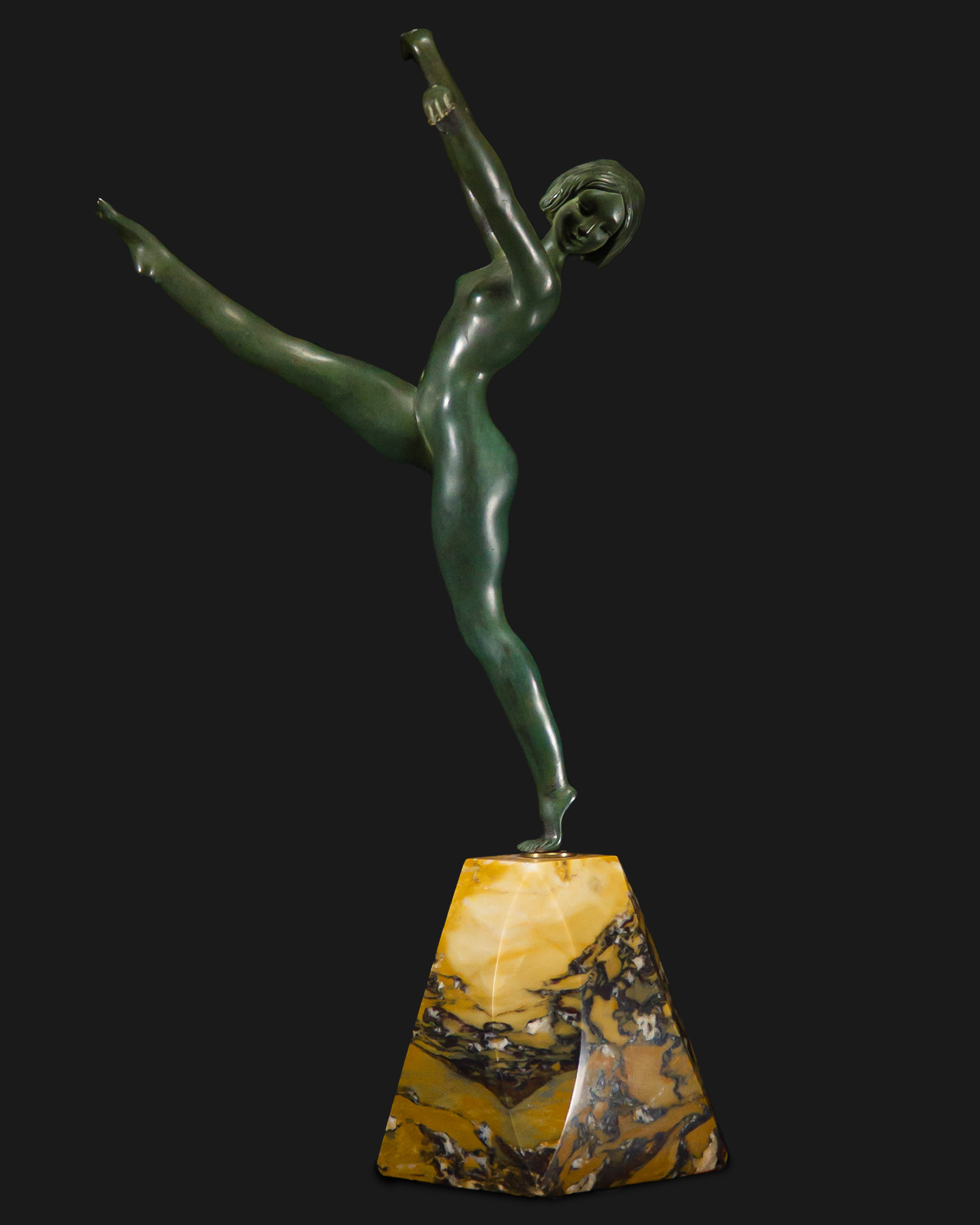
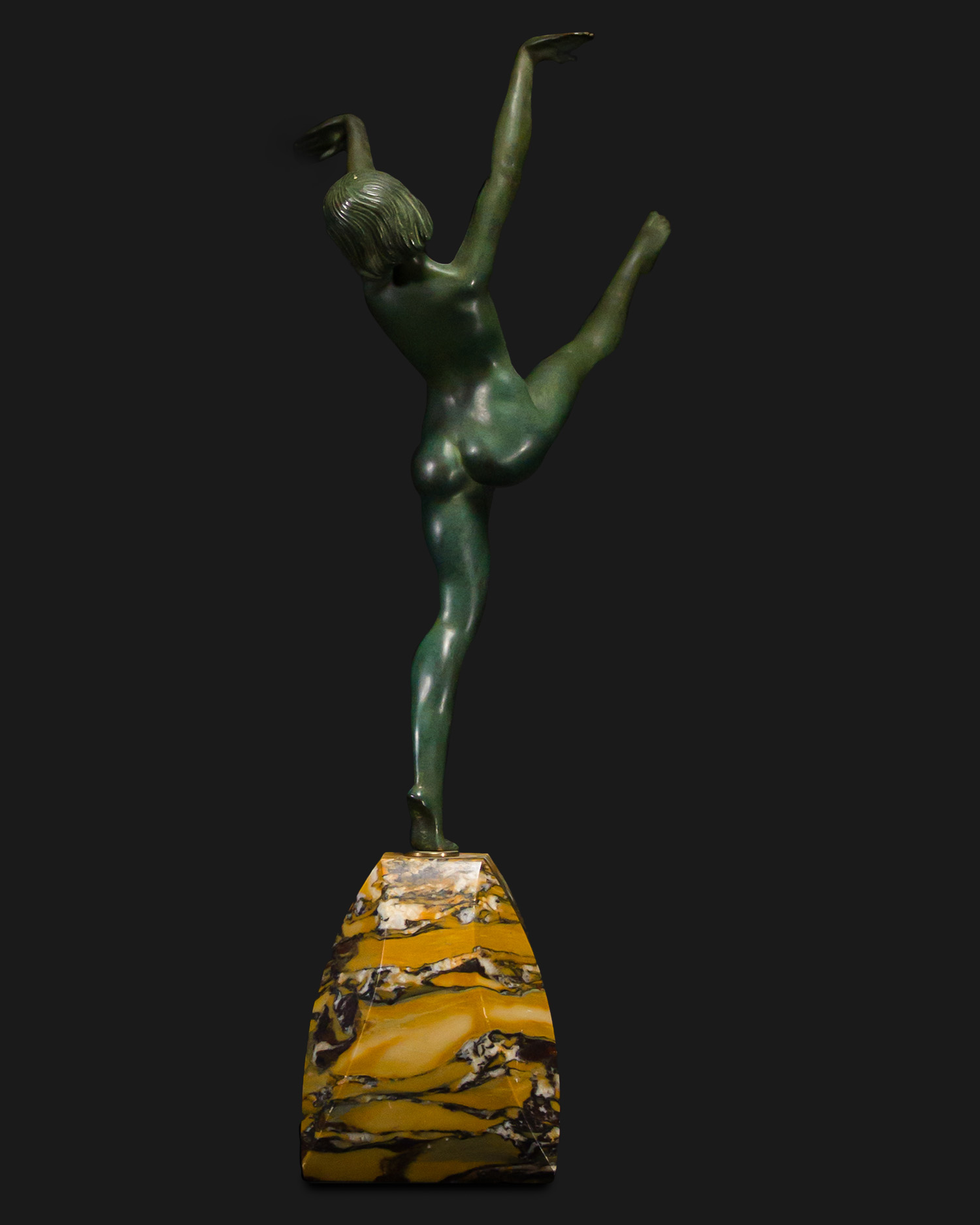

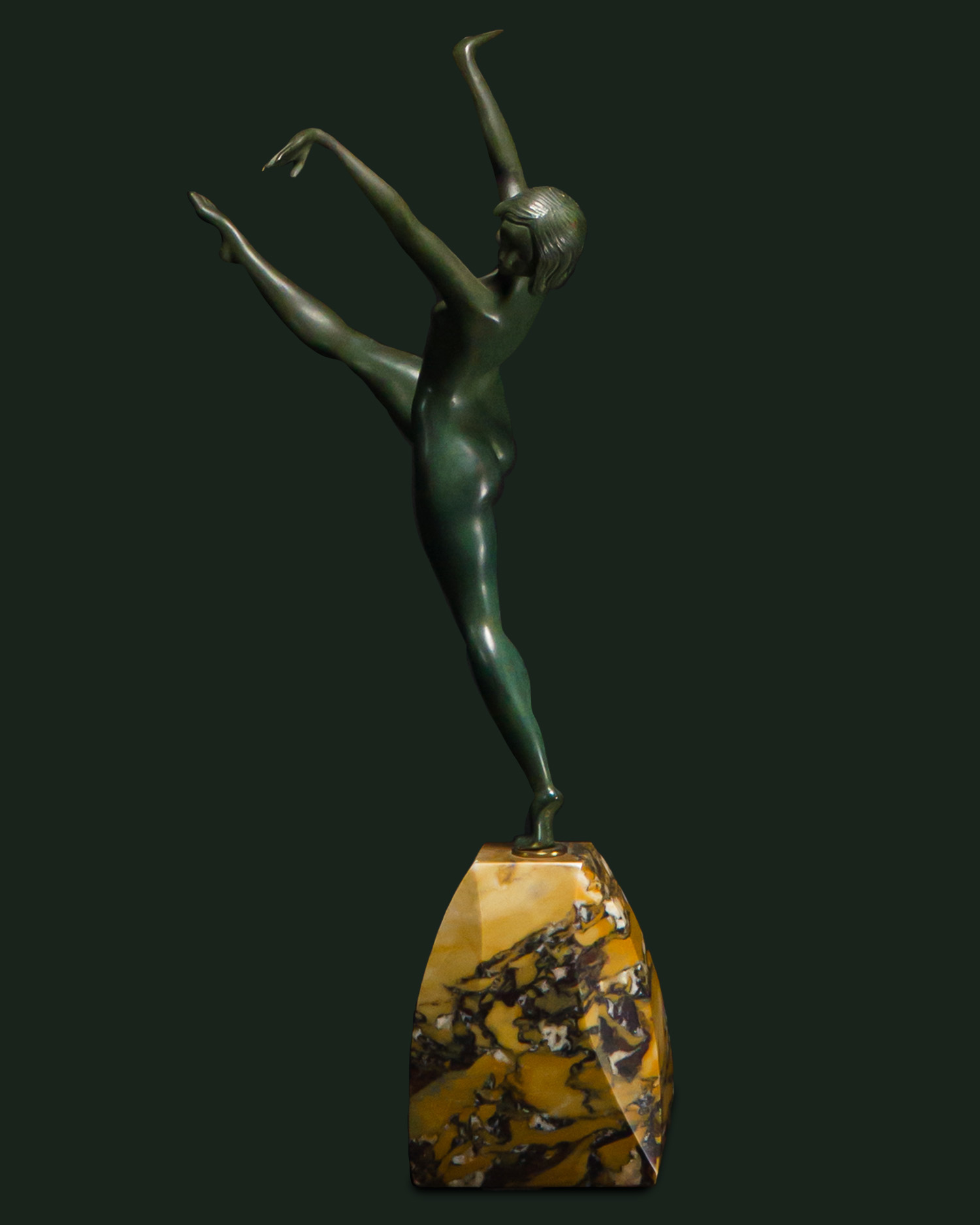
Samuel Lipszyc (1880 – 1943), Naked ballerina, patinated bronze, ca. 1920
5000,00 zł
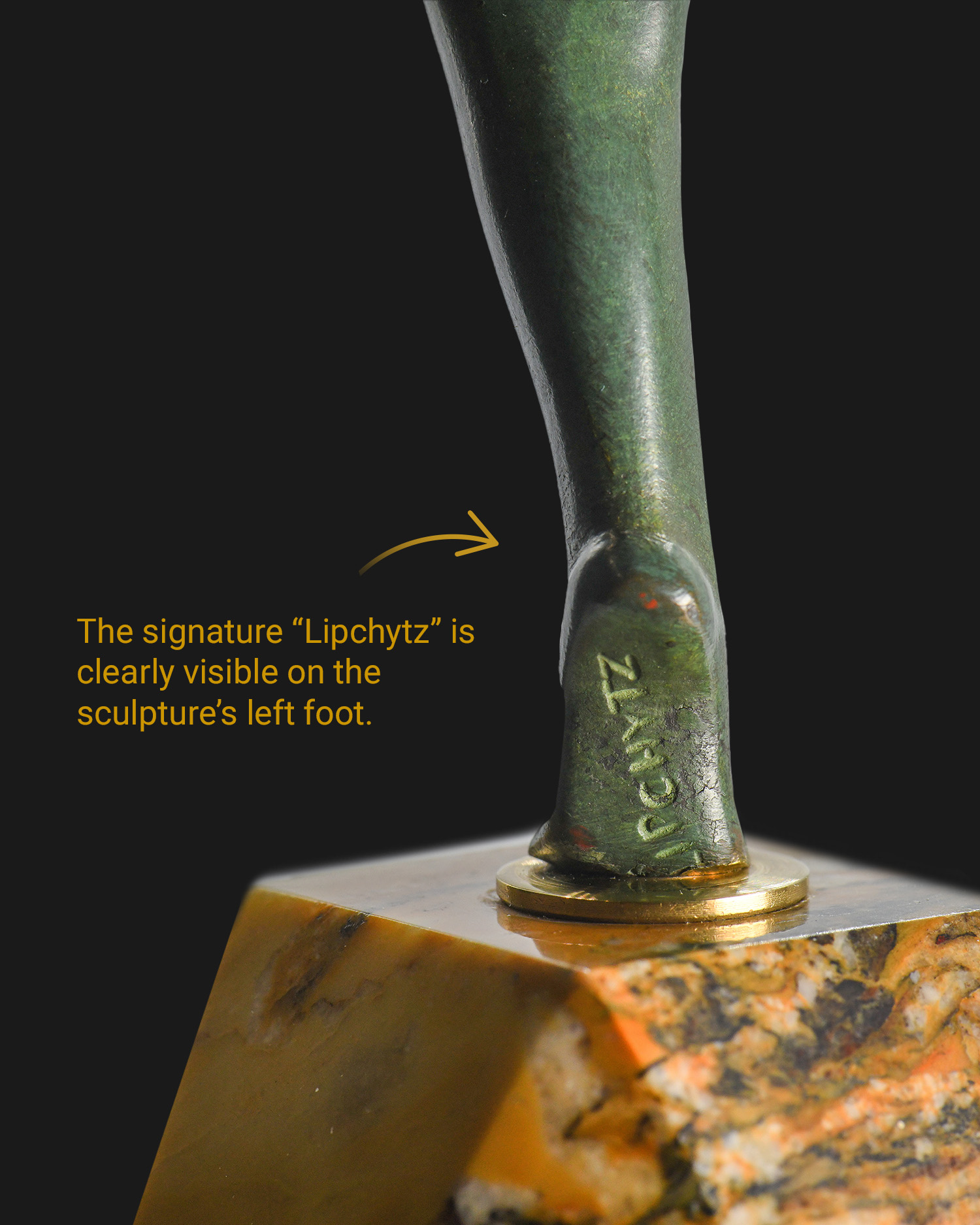
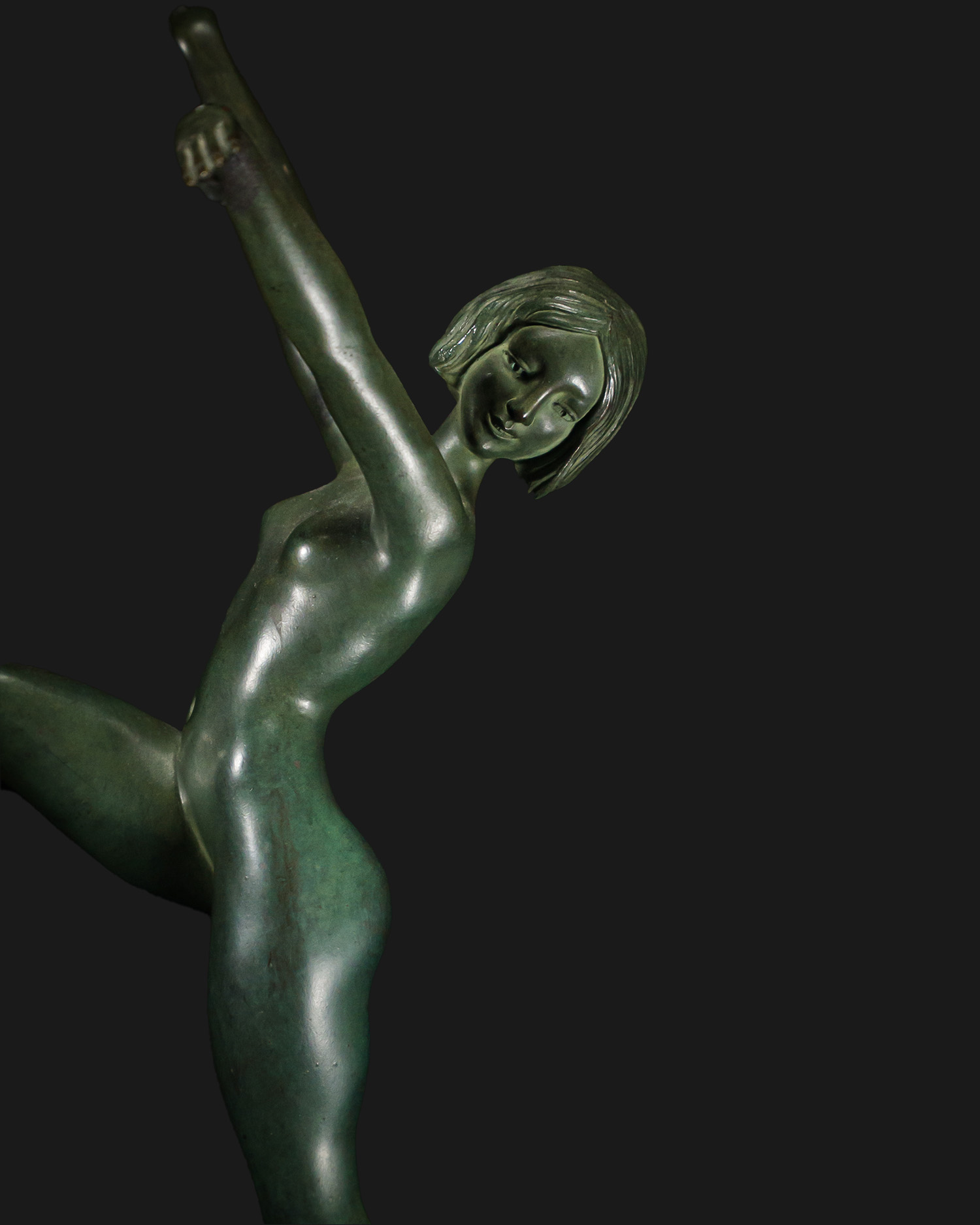
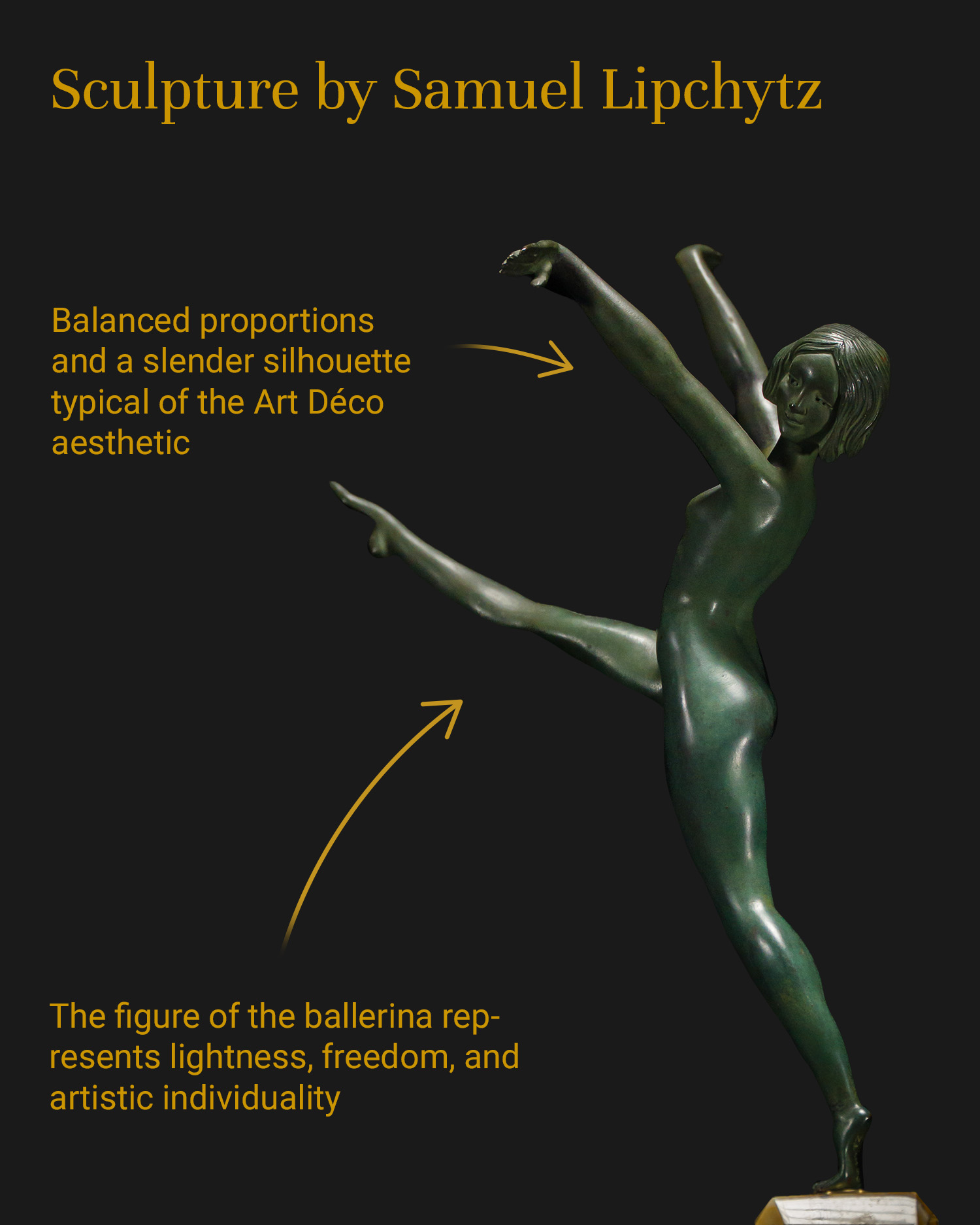
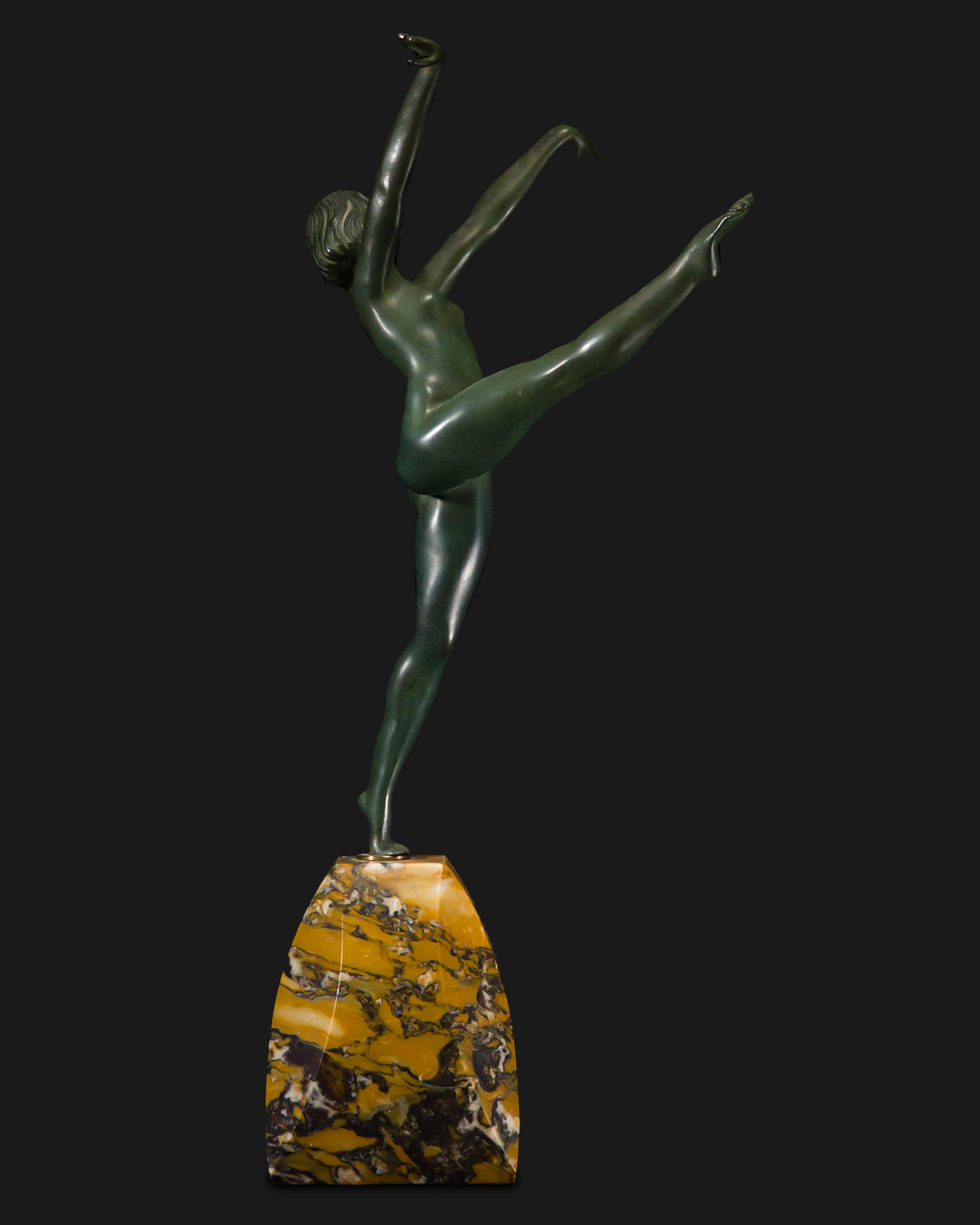
Sculpture by Samuel Lipszyc in the Art Déco style depicting a nude ballerina in a dynamic pose, balancing on one foot. The sculpture is made of green patinated bronze, set on a marble pedestal with decorative contrasting veining. The dancer’s dynamic silhouette and streamlined lines are characteristic of the modernist aesthetic of the 1920s. The figure exudes lightness, grace and modern elegance, capturing the spirit of the Art Déco era. The work is signed “Lipchytz” on the left foot.
1 in stock
The most important feature
The ballerina is shown in a dynamic pose characteristic of Lipszyc's dance sculptures. The figure is depicted in a leaning pose on one leg, which emphasizes the moment of movement and the tension of the figure. The elongated body proportions and synthetic silhouette are in keeping with Art Déco aesthetics and modernist sculpture of the 1920s.
Historical context
The sculpture was created during the period of intense development of modern figural sculpture in the 1920s, when artists sought synthetic forms and dynamic depictions of figures. The aesthetics of Art Déco, dominant after World War I, combined modern formal solutions with traditional materials and took shape simultaneously in various artistic centers of Europe, creating a common language of modern sculpture. Representations of female nudes and dancers occupied a special place in this trend, emphasizing movement, rhythm and the modern ideal of the figure, which is reflected in the sculpture on display.
Collector's value
The sculpture is signed with the artist's name, which, combined with the high quality of workmanship and the use of durable materials, increases its collector appeal. Figurative sculptures from the Art Déco period are among the most recognizable in Samuel Lipszyc's oeuvre. The artist's works remain of constant interest to lovers of modernist sculpture.
Artistic qualities
The sculpture accentuates the form and proportions of the figure appropriate to Art Déco aesthetics. The modeling is based on smoothed surfaces without accentuating fine anatomical details. The juxtaposition of patinated bronze with a marble plinth gives the work a distinctly decorative character.
Application
The sculpture can function as a stand-alone display object in a private or gallery space. It would work well as part of a collection of modernist or Art Déco sculpture, or as an object displayed in a study, library or formal space. Due to its subject matter and form, it may be of interest to lovers of dance, ballet and figural sculpture. The small format allows for display on a dresser, table or pedestal.
Samuel Lipszyc has often taken up the subject of human body movement in his work, with a particular focus on dance. Motifs of dancers and nudes in dynamic poses are among the most recognizable in his oeuvre. His interest in the movement and proportions of the body found expression in the artist's numerous figural sculptures, in which the observation of figures in motion played an important role.
Biography of the artist
- Samuel Lipszyc (also known as Samuel Lipchytz) - born in 1880 in Poland.
- He studied sculpture in Warsaw and Berlin, and then continued his art education in Paris.
- He worked mainly in bronze, marble and plaster, focusing on the female figure and motifs of movement, especially in figural sculpture.
- He was associated with modernist artists' circles, including the circle of creators of Art Déco aesthetics.
- His works have been exhibited in Poland and Western Europe.
- He died in the German concentration camp Auschwitz in 1943.
- Posthumously recognized as an important representative of Polish modernist sculpture.
Looking for modernist art?
This sculpture by Samuel Lipszyc is a unique offering for lovers of Polish modernist art and Art Déco aesthetics. The bronze ballerina can serve as a stand-alone display object or become a valuable part of a private collection of 20th century sculpture.
Take a look at other Art Déco sculptures and products available in our offer.
| Weight | 3,3 kg |
|---|---|
| Dimensions | 40 × 13 × 19 cm |
| Type |
Decorative and collectible sculpture |
| Form |
Figure of a woman in motion, nude ballerina |
| Materiał |
Green patinated bronze ,Jasper marble |
| Kolorystyka |
Dark green ,Marbled |
| Technika |
Bronze casting ,Cut and polished marble ,Hand chasing |
| Czas powstania |
20th Century (1901-2000) |
| Era |
Interwar period ,Modernism |
| Kraj pochodzenia |
Poland |
| Autor |
Samuel Lipszyc |
| Style |
Art Deco |
| State of preservation |
Very good |
Related products
Capital with Figural Decoration, Sandstone, France, 12th-14th Century
Christ Salvator Mundi, polychrome wood, Poland, 19th century.
Gallo-Roman sculpture of the head of Eros (?), marble, 1st-3rd century A.D.
Madonna and Child, polychrome wood, gilded, Central Europe, 18th/19th century.
Rama, marble, India, 19th century.
A sculpture depicting Rama, one of the most important deities of Hinduism, considered the seventh avatar of Vishnu. The object was hand-carved in white marble in India, probably in the 19th century.
The figure is depicted standing, facing forward. The face has a gentle expression with a soft smile and slightly closed eyes. The head is crowned with a decorative crown, and long necklaces are visible on the chest.
The figure is dressed in a draped robe with clearly marked folds. On its back is a quiver with arrows, characteristic of Rama's depictions.
The hands of the sculpture are not preserved, originally in one of them the figure held a bow - a characteristic element of representations of this deity. Further about these cavities do not write that they are consistent.
Rama is the hero of the epic Ramayana and in the Hindu tradition symbolizes righteousness and fidelity to the principle of dharma. His images occupy an important place in Indian sacred art, although full-figure marble sculptures of this scale are less common.
The object is preserved in good condition, with clear legibility of form and detail.
Saint John the Evangelist, late Gothic wooden sculpture, ca. 1500
The work may have been part of a winged altarpiece (retabulum), most likely in the Crucifixion group.
