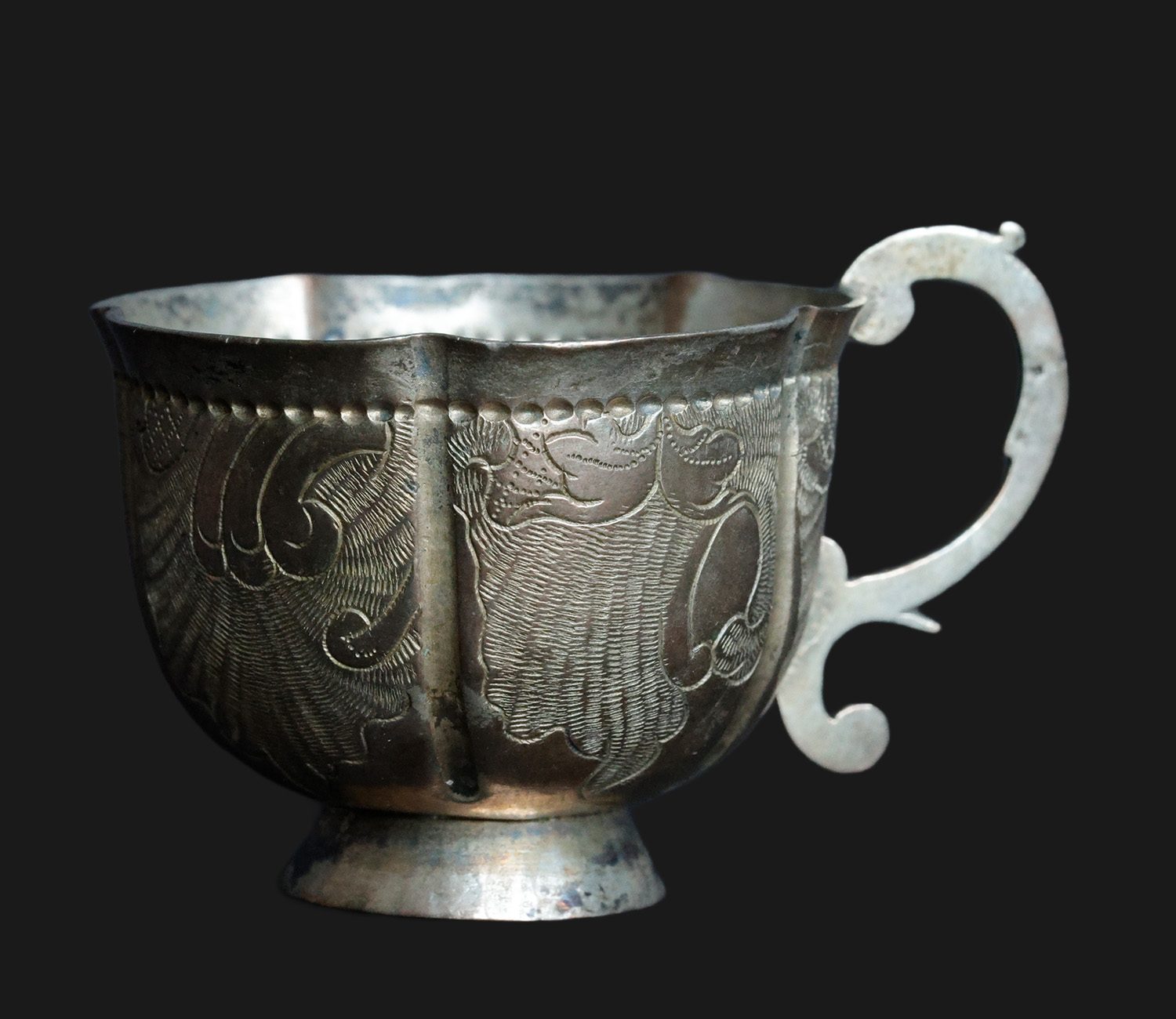
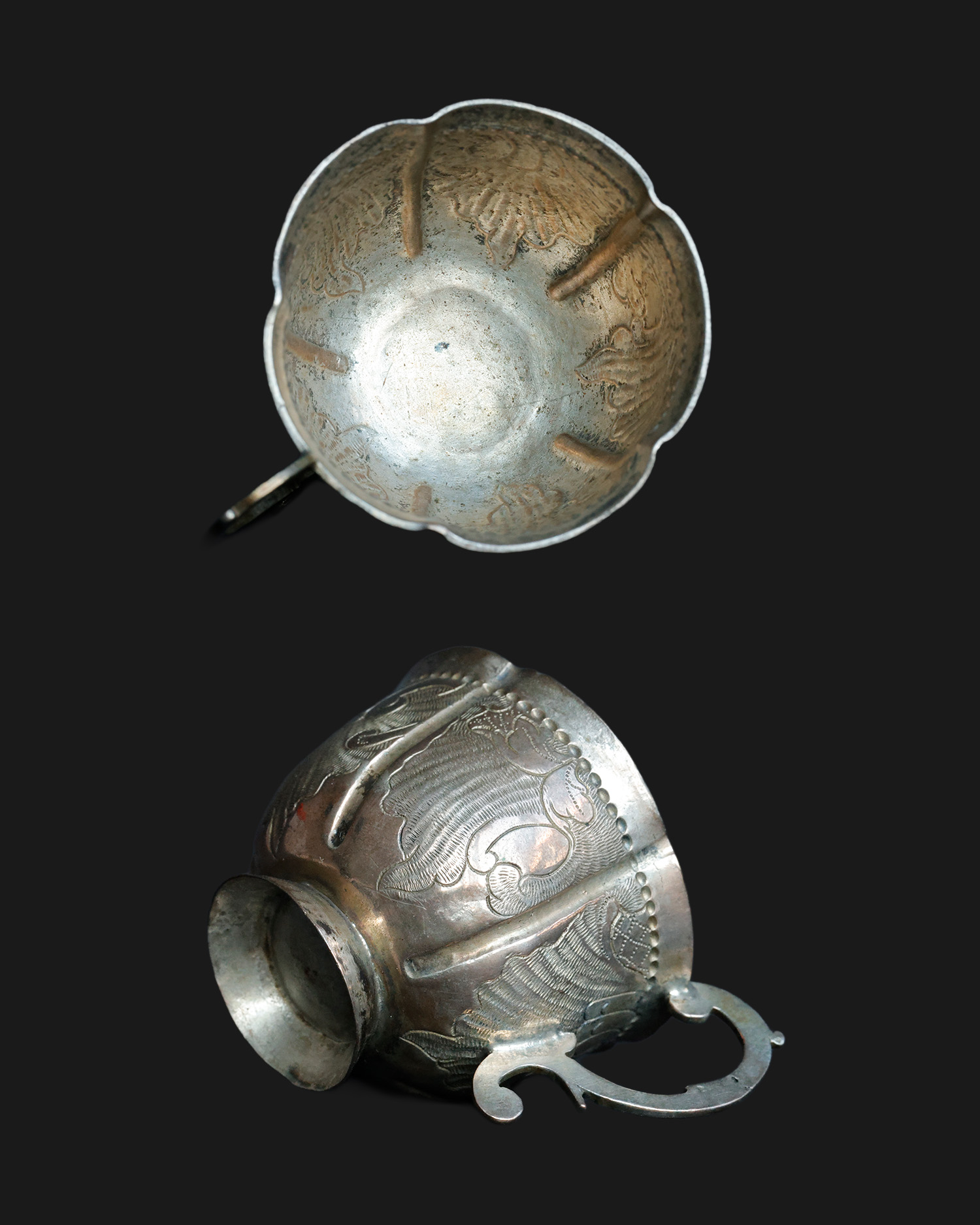
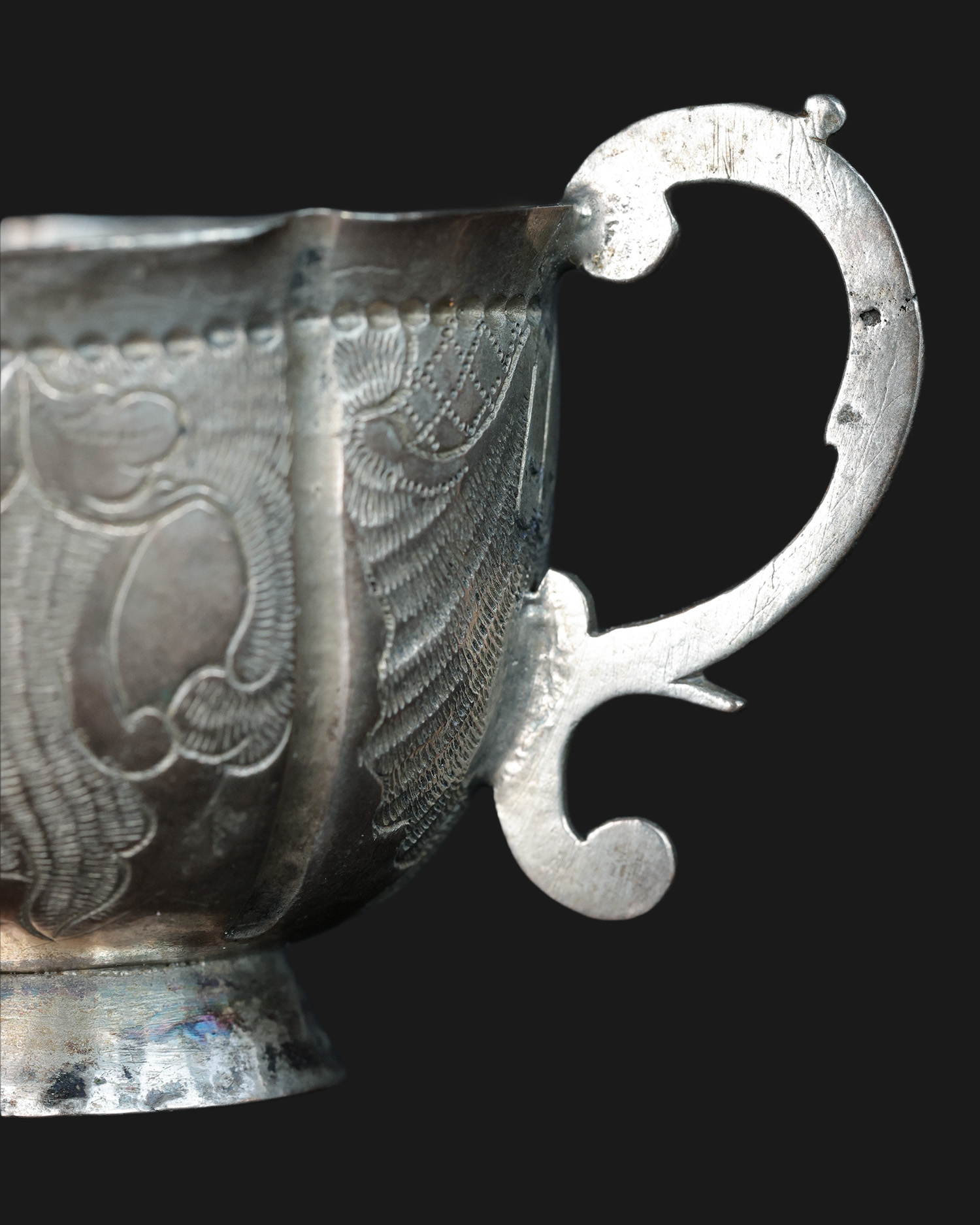
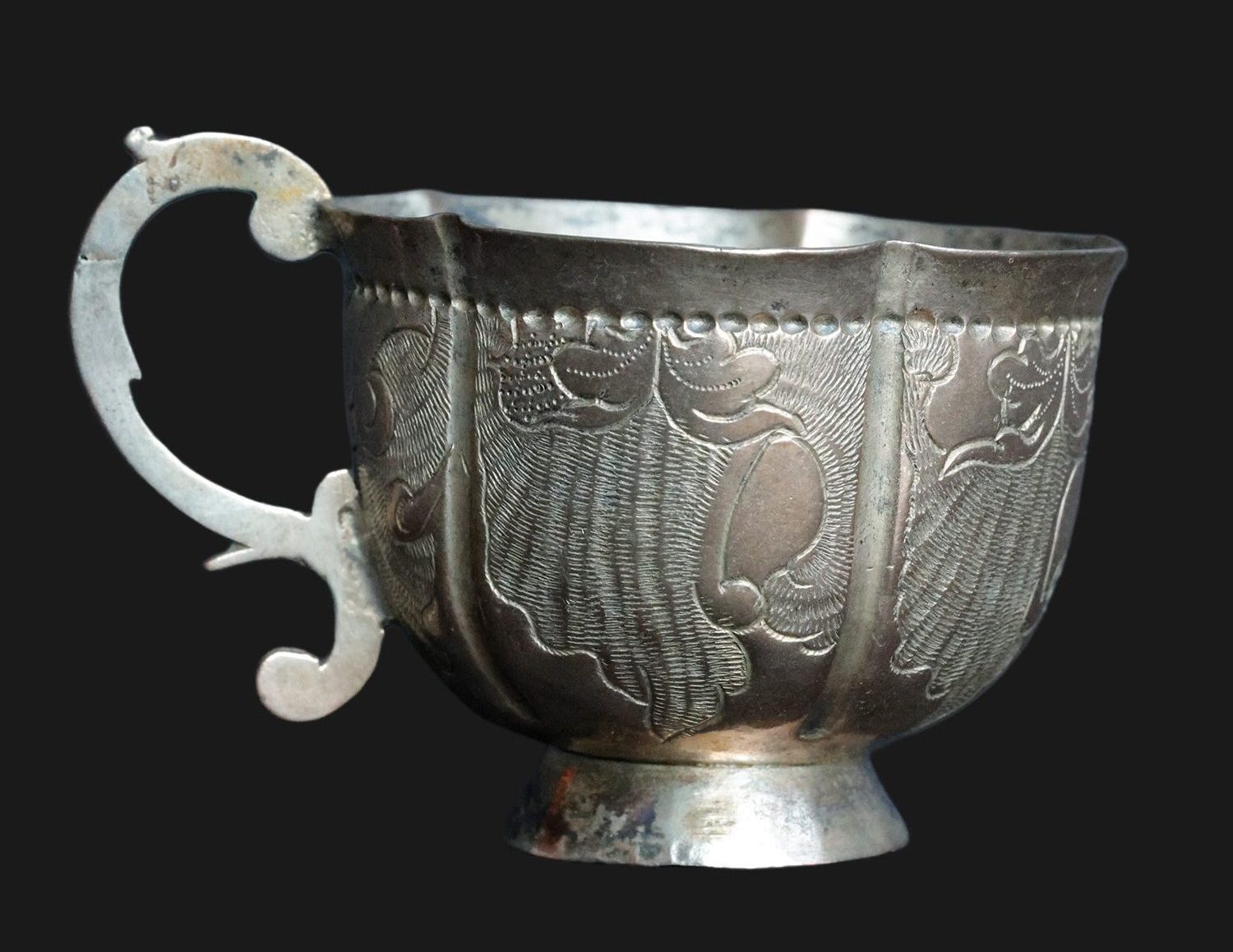
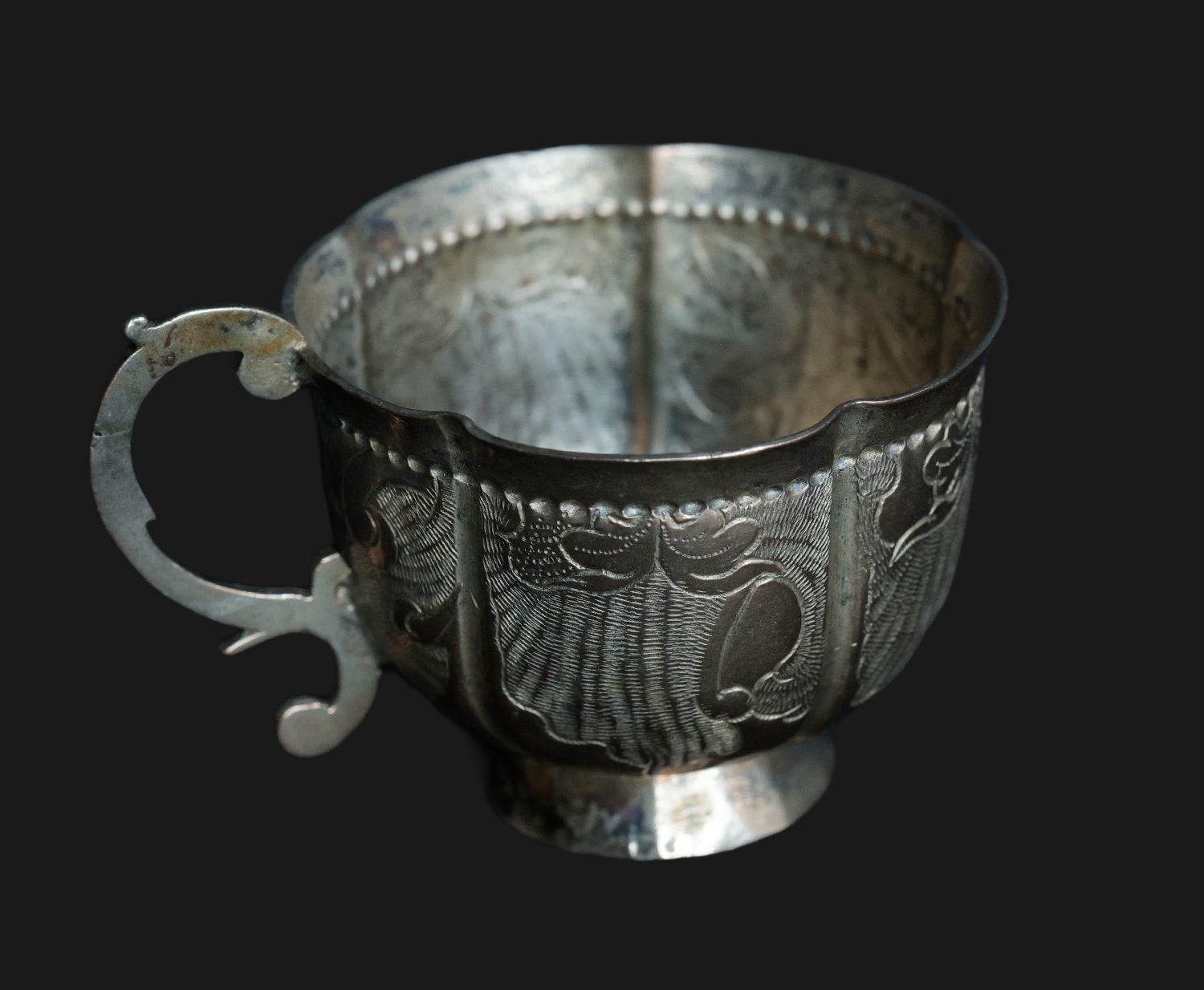
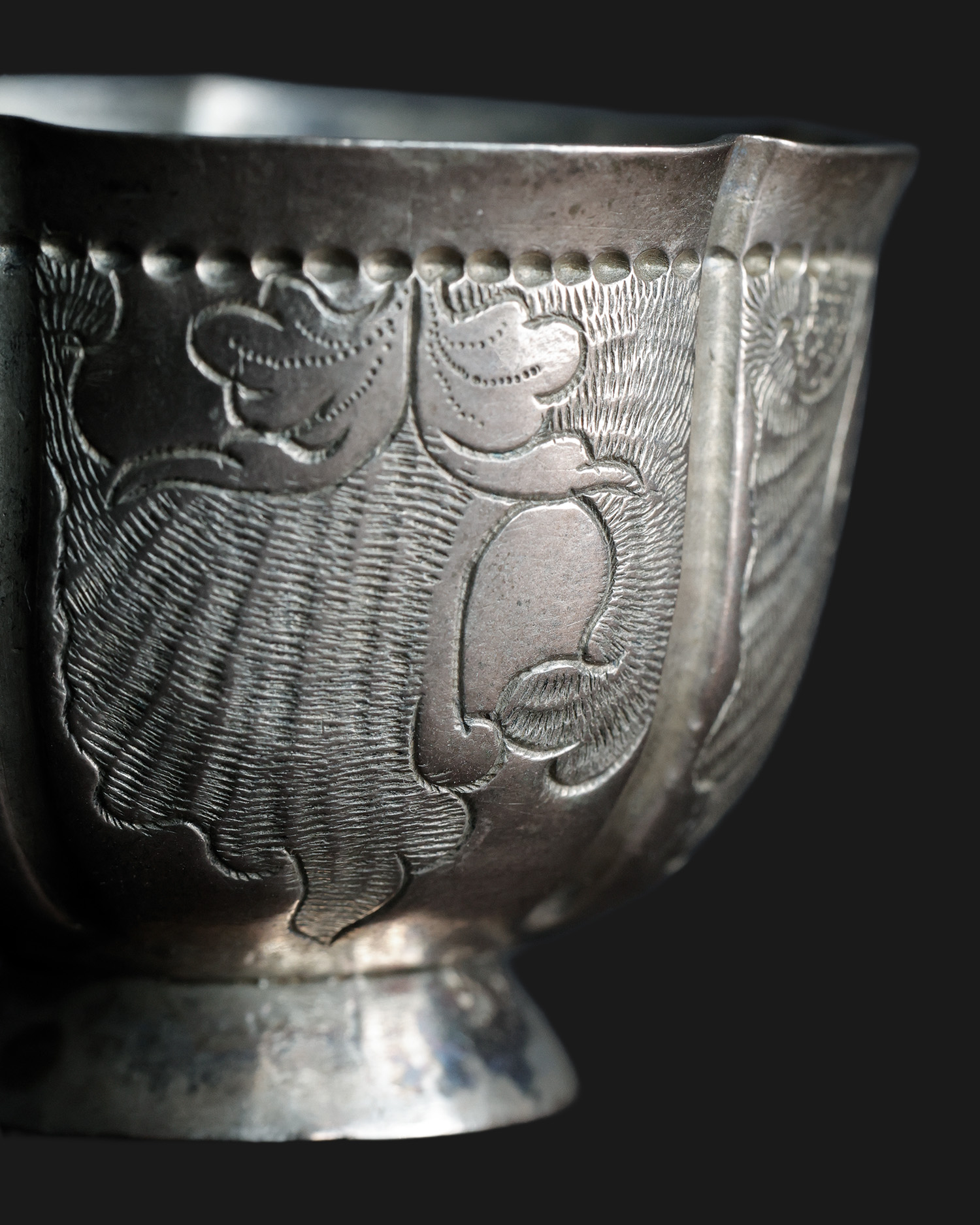
A cup made of forged silver, likely intended for drinking vodka or other spirits. The vessel has a squat form. The bowl with a semicircular bottom has straight walls, slightly flared upward. The rim is straight, slightly tilted outward and clearly separated from the wall section by a row of concave dots. The bowl has a five-part form – both the rim edge and the walls are divided into five convex segments, separated by vertical fluting. The vessel is set on a low, conical foot and fitted with a flat, S-curved handle. The surface of the bowl is decorated with engraved floral motifs and rocaille ornament.
Similar cups are characteristic of 18th-century Russian silverwork. This particular piece carries no hallmarks whatsoever, despite undoubtedly originating from a skilled goldsmith's workshop. It is possible that the described cup was made in the 17th century and not in Muscovy at all, but in the eastern territories of the Polish-Lithuanian Commonwealth. This would account for the lack of marks, as the absence of hallmarks on Polish silverware from this period is entirely normal. At the same time, it should be kept in mind that the origins of the popular Russian cups remain unknown.