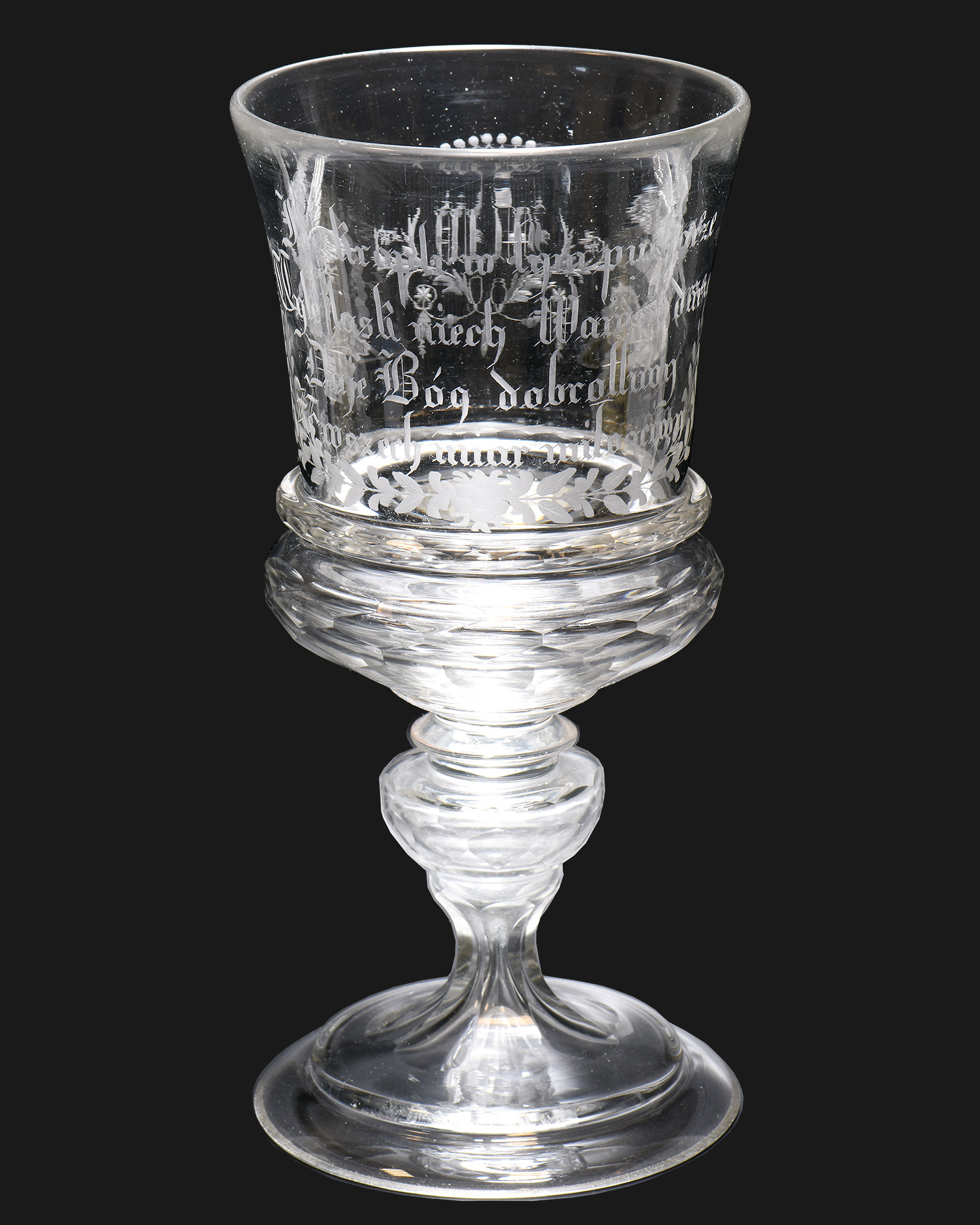
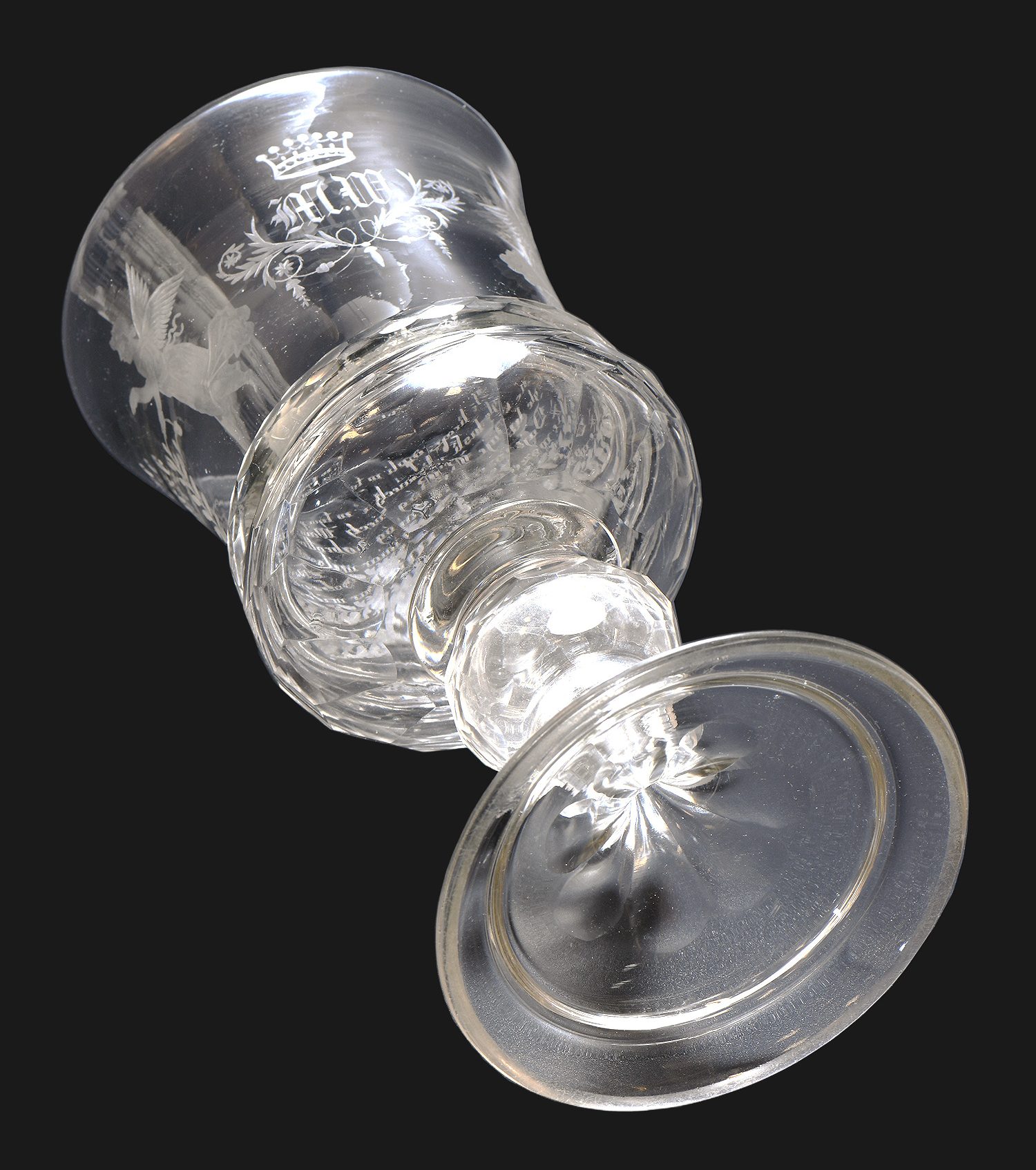
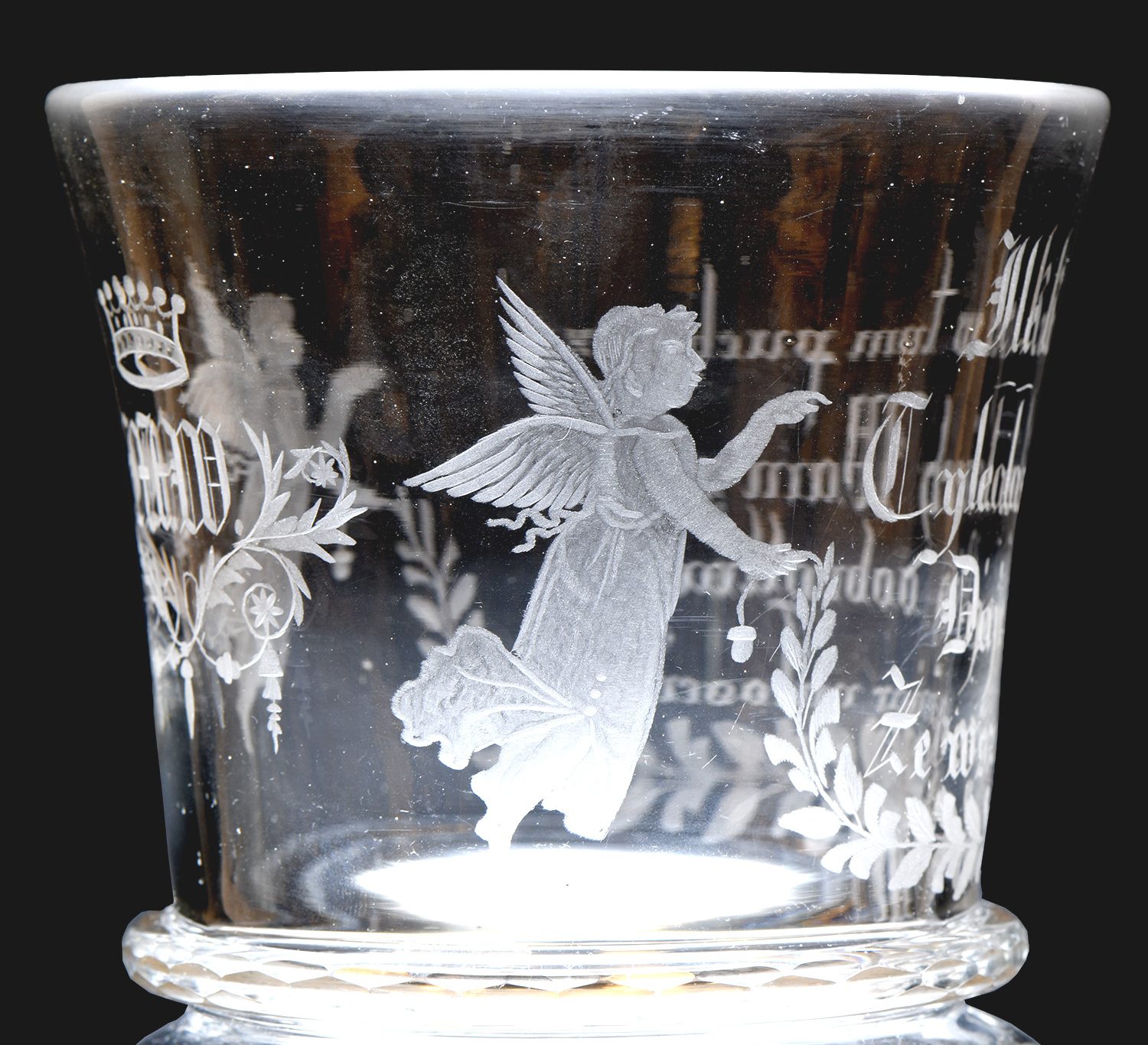
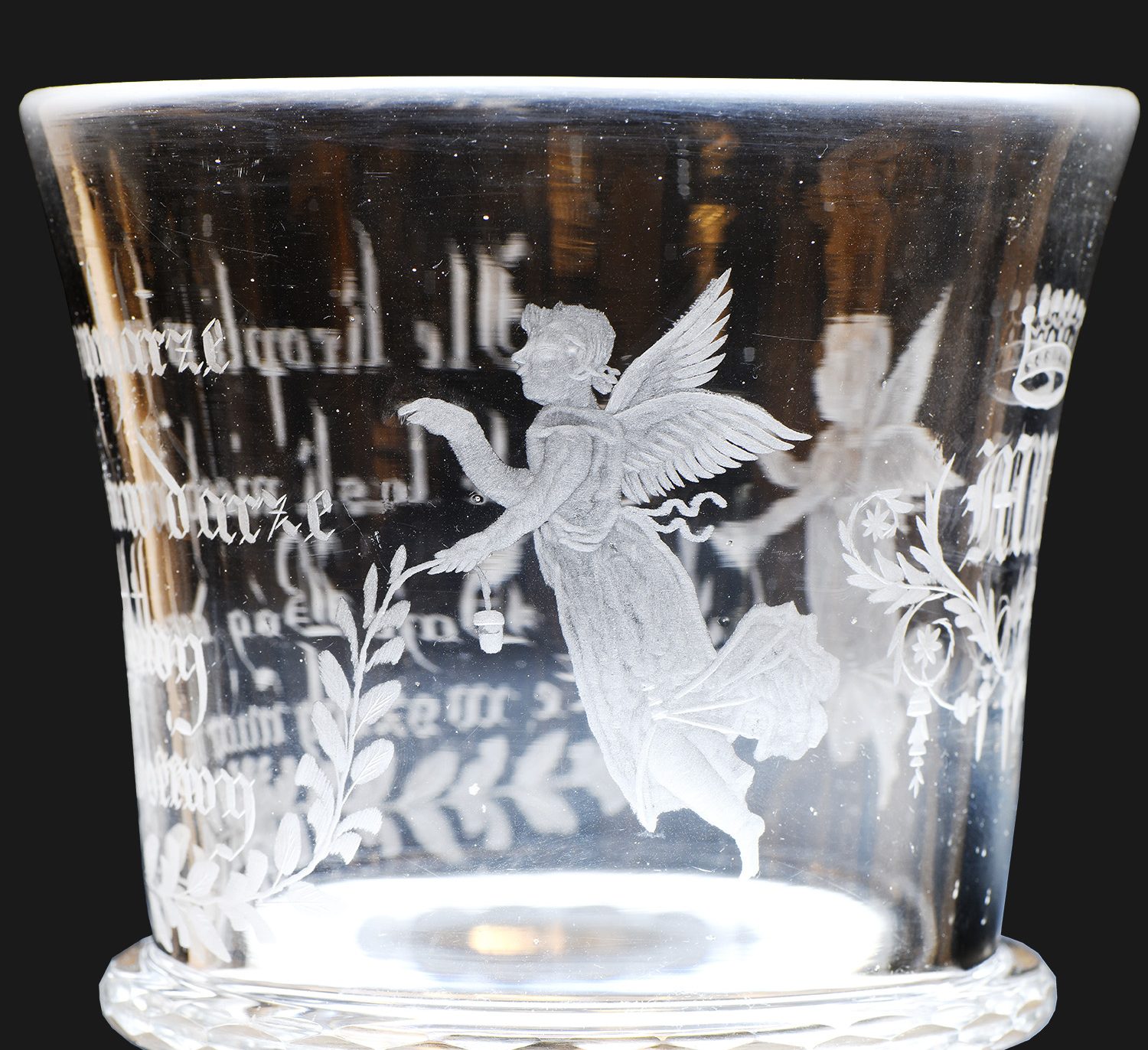
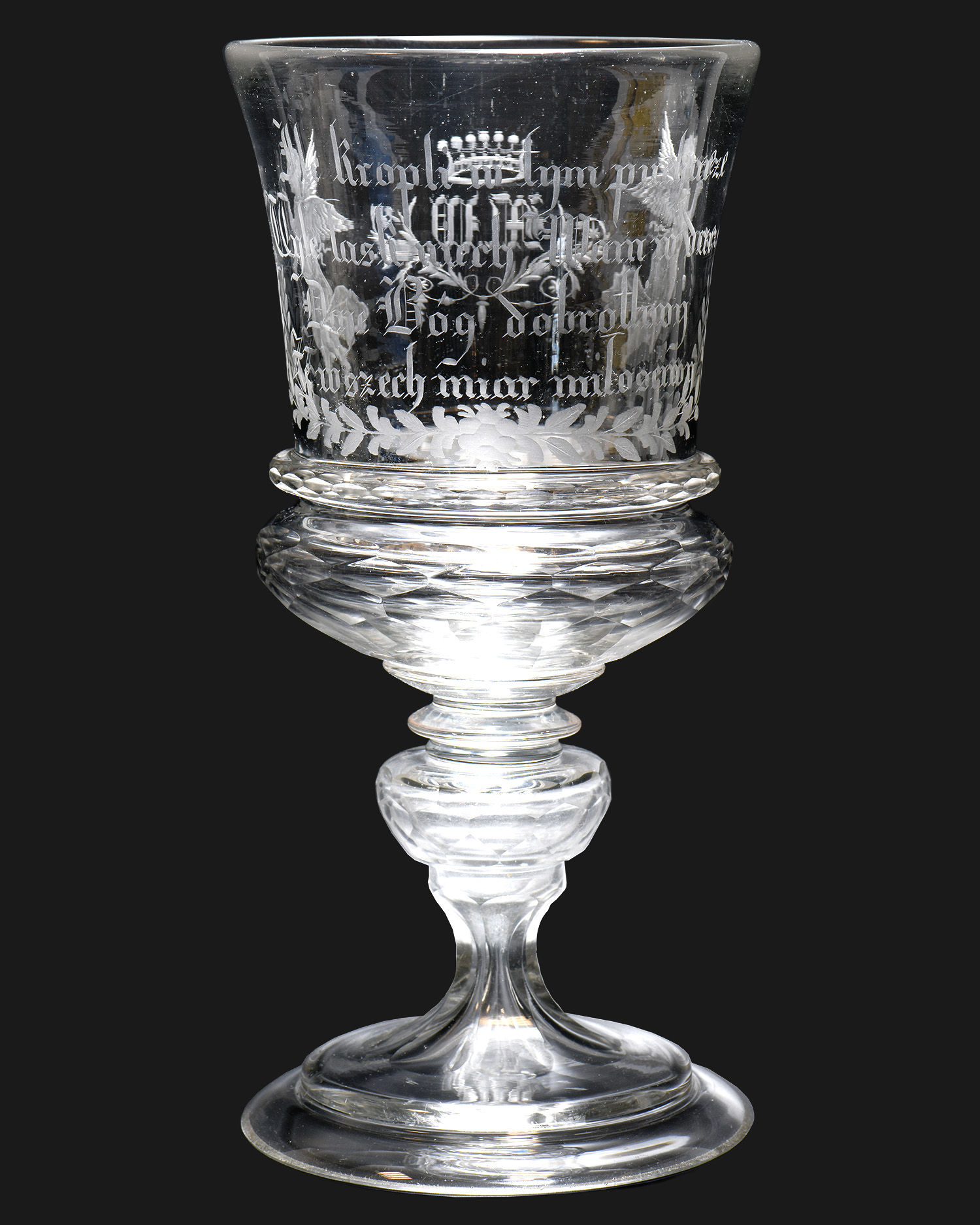
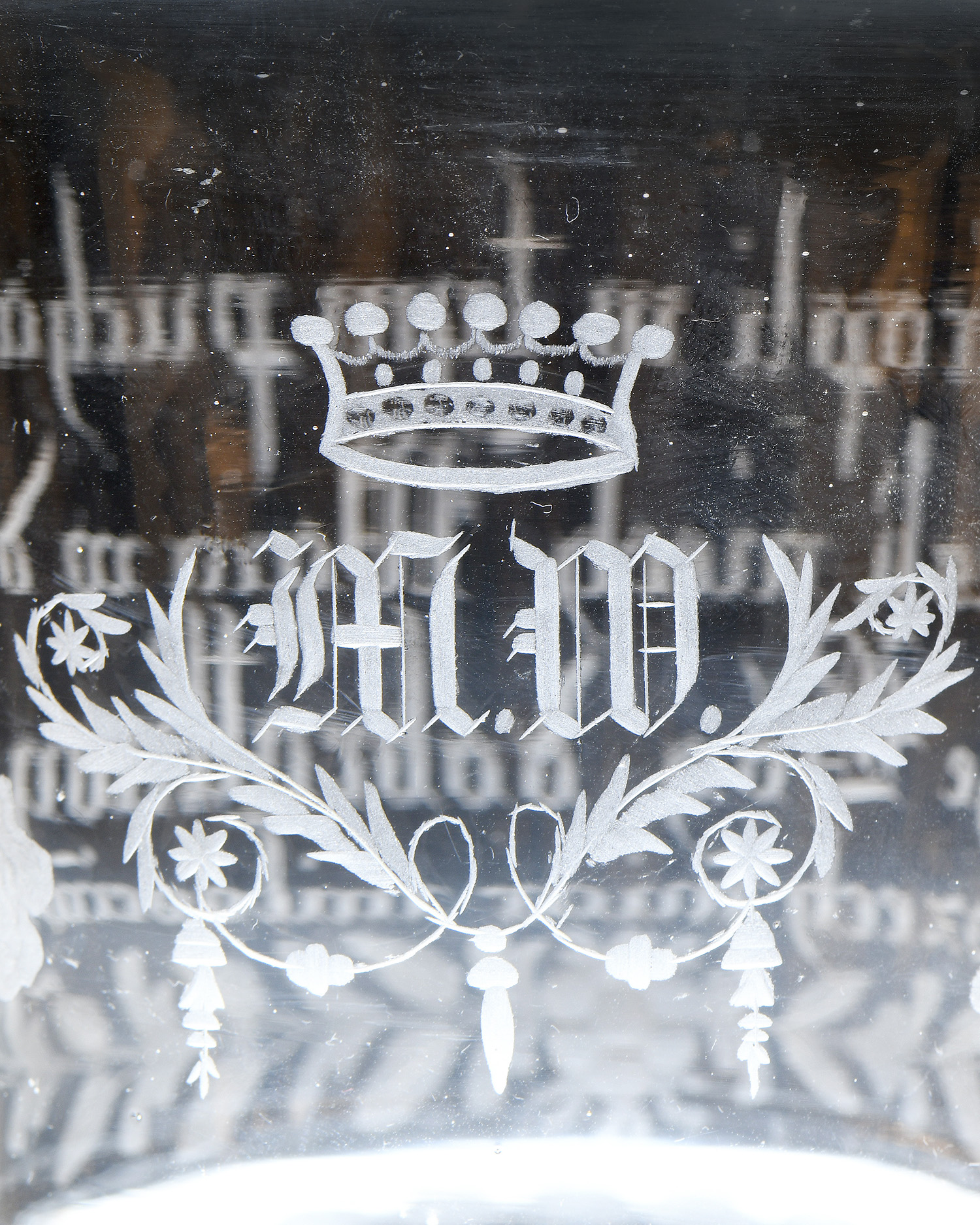
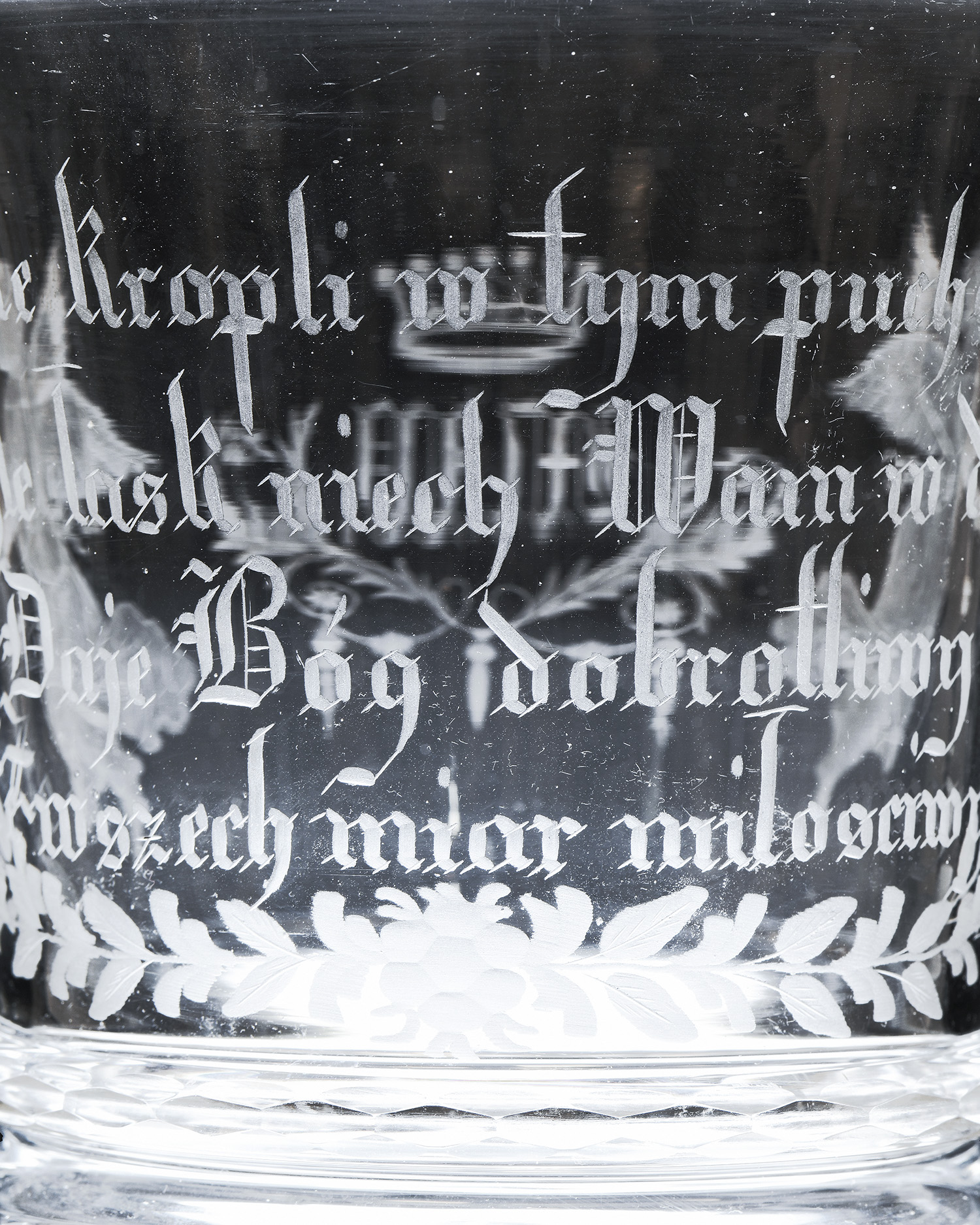
The bowl is cylindrical, slightly tapering towards the bottom, thickened and profiled in the lower part, decorated with a dense, regular cut resembling fish scales. The shaft is baluster-shaped, faceted (ground). Nodus elaborate, tripartite, ground in the same way as the bottom of the bowl. Circular foot, two-stepped. On the canopy a bilateral engraved decoration, on one side the initials MW under a rank (baronial) crown with seven batons ending in pearls, on the other side an inscription in Gothic: "How many drops in this goblet / So much grace may you receive as a gift / Given to you by the benevolent God / Of all mercies". Below, an engraved oak garland with an acorn motif, supported by a pair of putti, made by the technique of carving. Putti with proportions and poses characteristic of the Baroque and Rococo.
Radziwill Manufaktura in Urzecz
The golden age of the development of glassmaking in Poland did not occur until the 18th century. The most famous for the quality of their products and the beauty of their decoration were the glassworks operating in the Radziwill estates (now in Belarus) - in Naliboki (1722-1862) and in Urzecz (1737-1846). Both were established thanks to Duchess Anna of Sanguszko Radziwill. Among the vessels produced there, goblets of various shapes and sizes prevailed - the tallest ones reached up to half a meter in height. The most luxurious ones had ornately polished feet and bowls covered with engraved patterns. Their decoration consisted of various ornaments and custom-made designs, such as coats of arms, monograms and inscriptions in the nature of sentences or wishes.
The products of Radziwill smelters are so similar that it is often difficult to separate them. However, the "carp shell" cut is an indisputable hallmark of the Radziwill manufactory in Urzecz (less commonly used in Naliboki). Figural representations such as the putti on the offered chalice were also the domain of masters from Urzecz.
Chalice decoration and inscription
The decoration of the chalice and the inscription on the bowl indicate that it was created on the occasion of the nuptials. Chalices with such an inscription ("How many drops...") were used during the most important moment of the wedding - the first toast of the young couple. The Polish inscription made in Gothic on the chalice is a hallmark of luxury Polish glass from the 18th century. Polish glassworks often employed master craftsmen imported from Saxony or Bohemia, for whom Gothic writing was a natural artistic choice when engraving glass. In the 19th century, Polish inscriptions were more often made in legible antiqua (Latin letters). Gothic in the 19th century in our lands evoked negative associations with the Prussian partition and the German language.
The fact that it bears a baronial crown means that the object was made to order for a particular titled family. The chalice happily survived the wedding celebrations, which "consumed" many beautiful glass specimens. This is because there was a custom of breaking chalices after fulfilling a "good luck" toast.