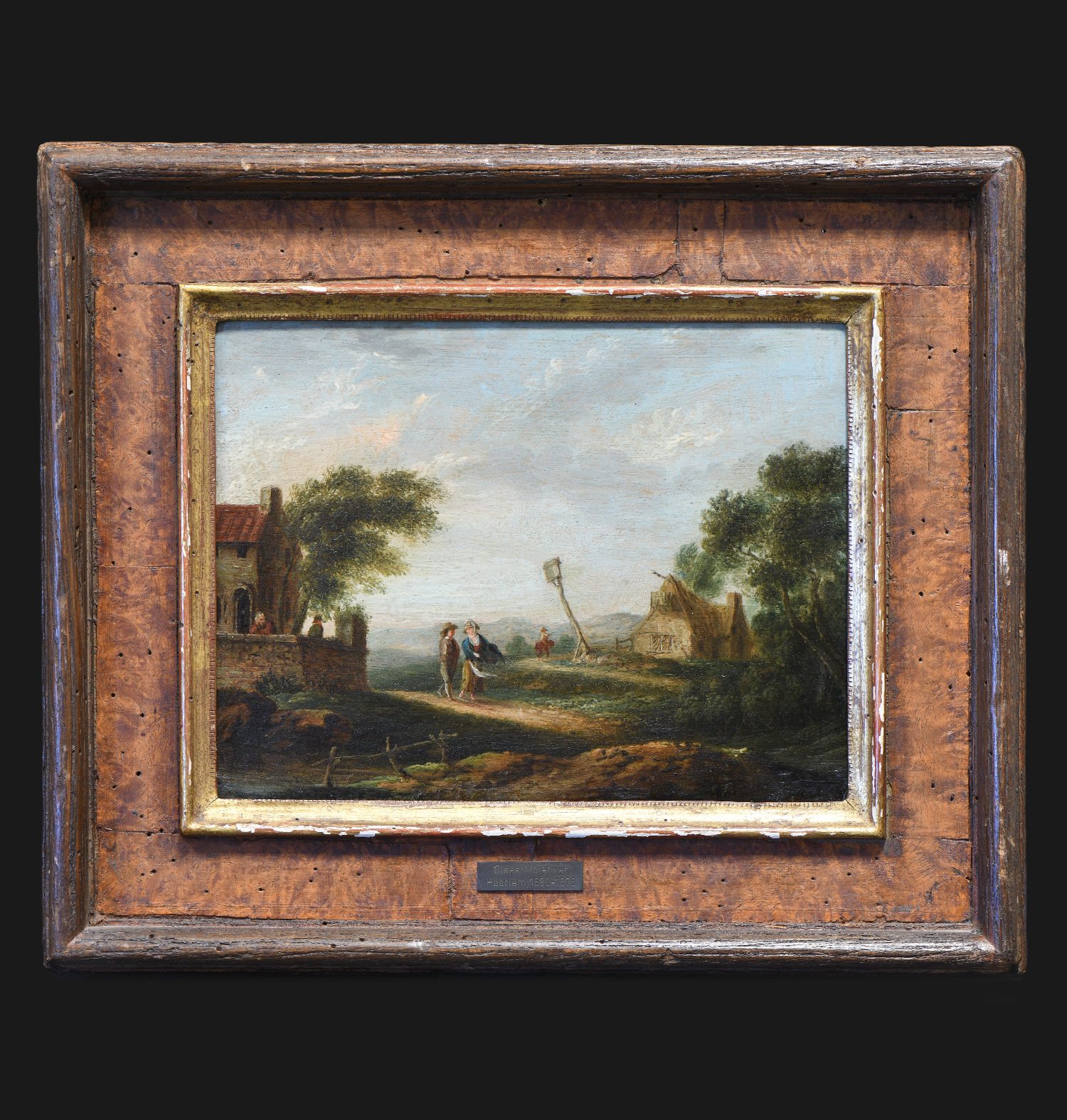
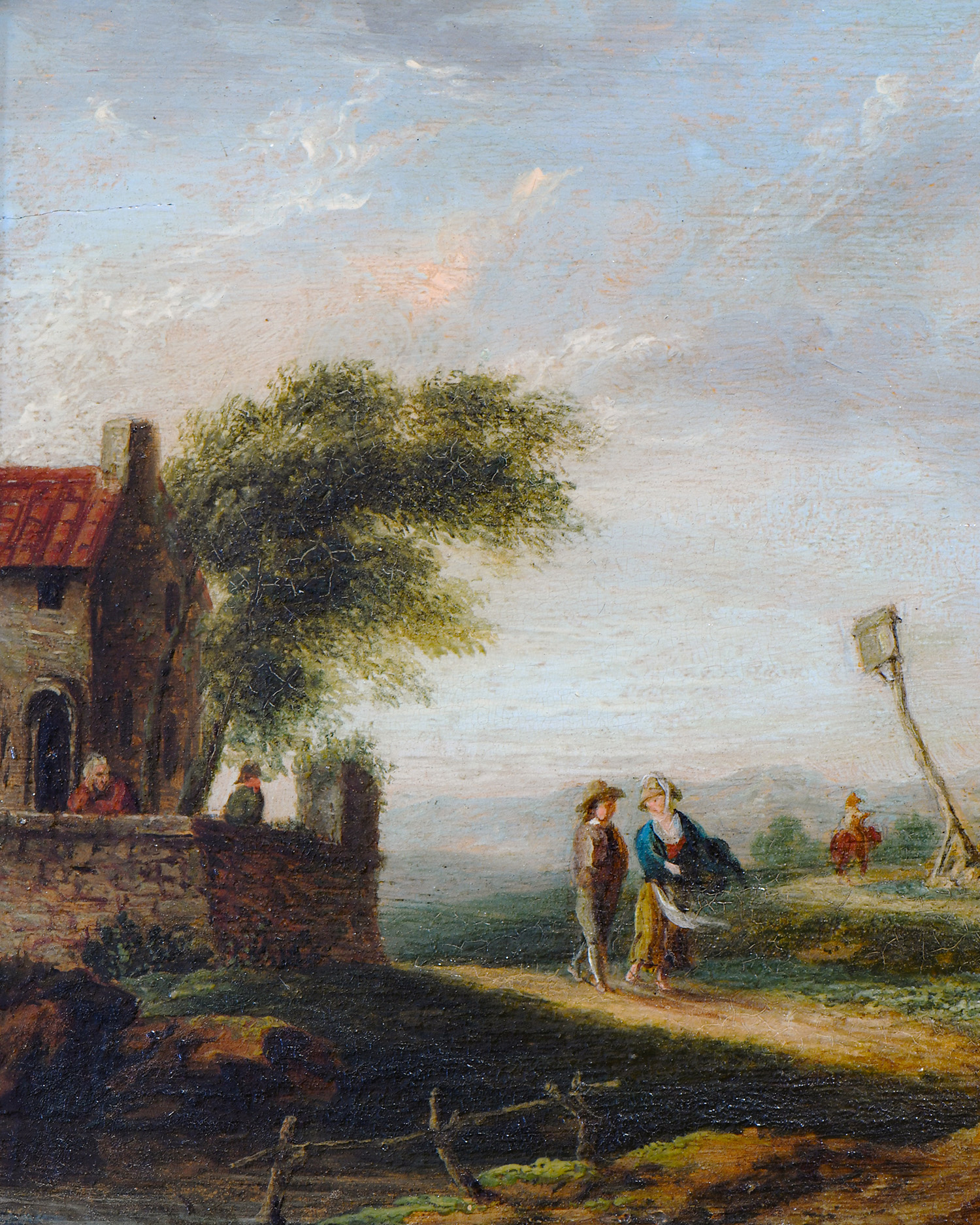
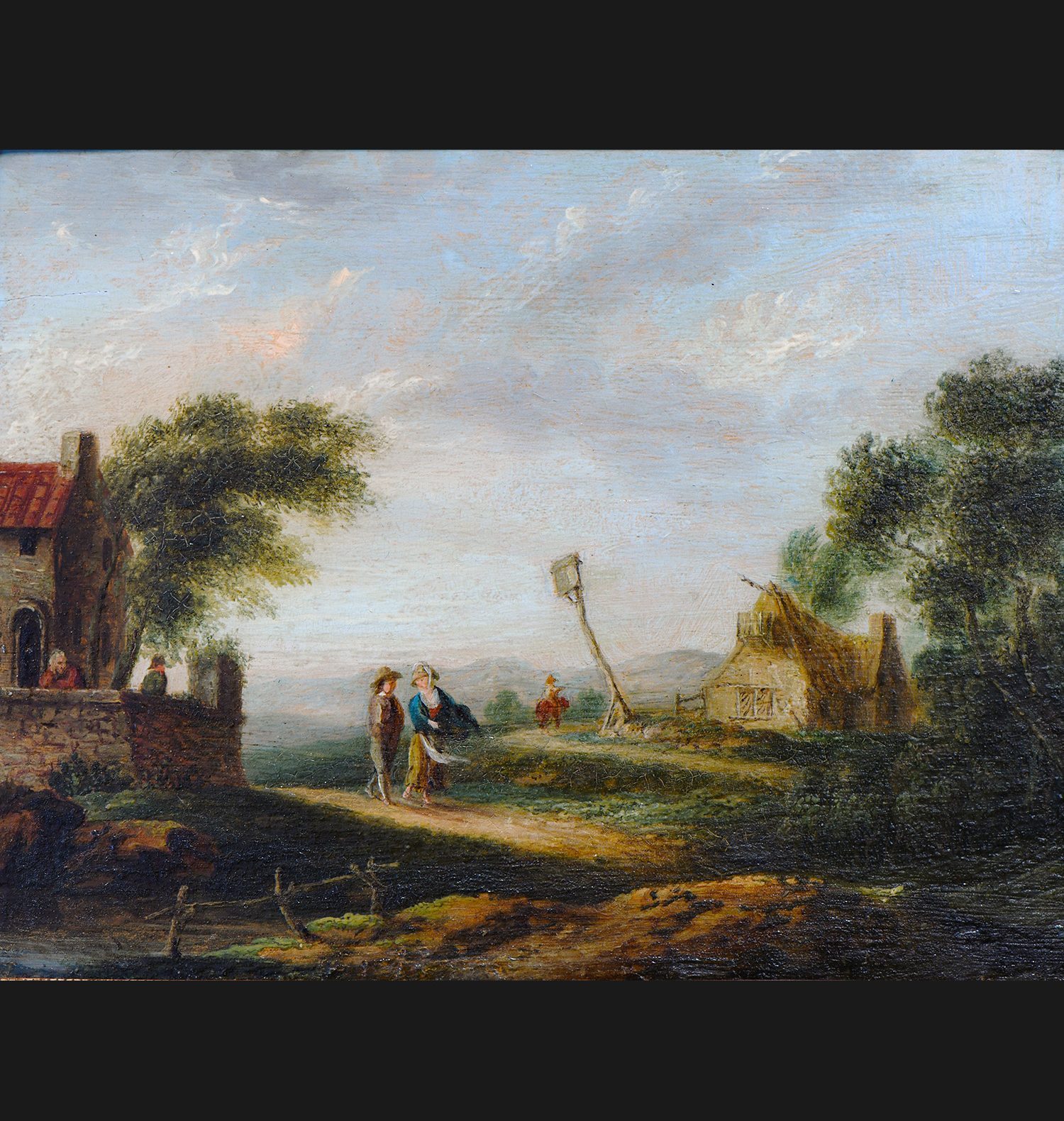
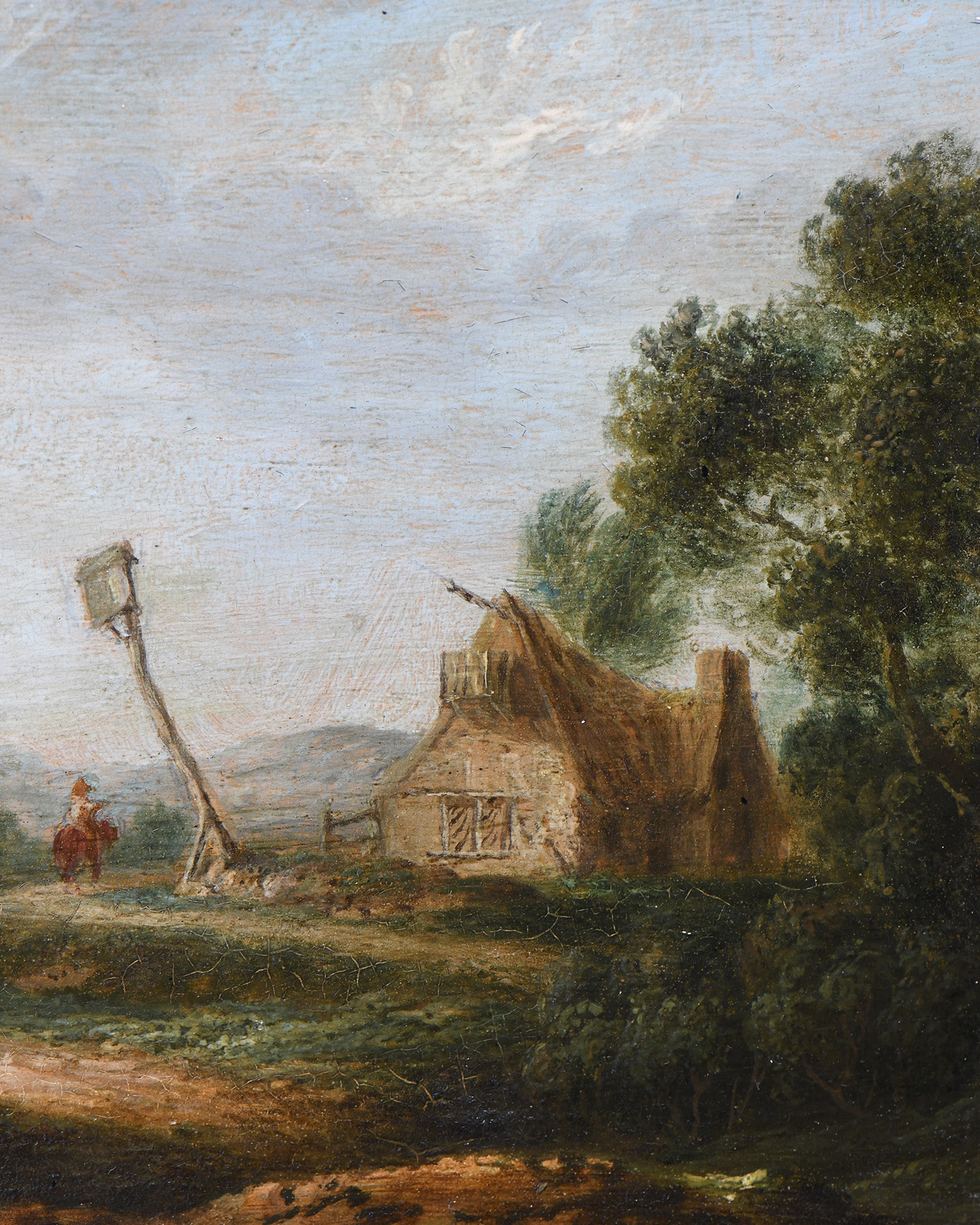
An intimate tonal landscape that embodies the essence of Northern European landscape painting from the Golden Age of Dutch and Flemish painting. The composition depicts an atmospheric rural scene, dominated by the diffuse afternoon light filtering through the clouds. In the foreground, on a sandy road leading deeper into the frame, a pair of travelers is visible in traditional 17th-century Dutch attire (the peasant woman’s characteristic tucked-up skirt, designed to protect against mud, and her leggings fastened below the knee, as well as the man’s conical hat). In the background, a picturesque thatched cottage, the figure of a horseman, and a heavily leaning wooden roadside pillar—a motif deeply rooted in the iconography of the masters of the Haarlem school.
The painting is characterized by a refined color palette that borders on monochromatic (the so-called tonal style), based on rich nuances of browns, ochres, earthy greens, and the cool blue of the sky. This lends the composition a sense of spatial depth and an intimate, nostalgic character.
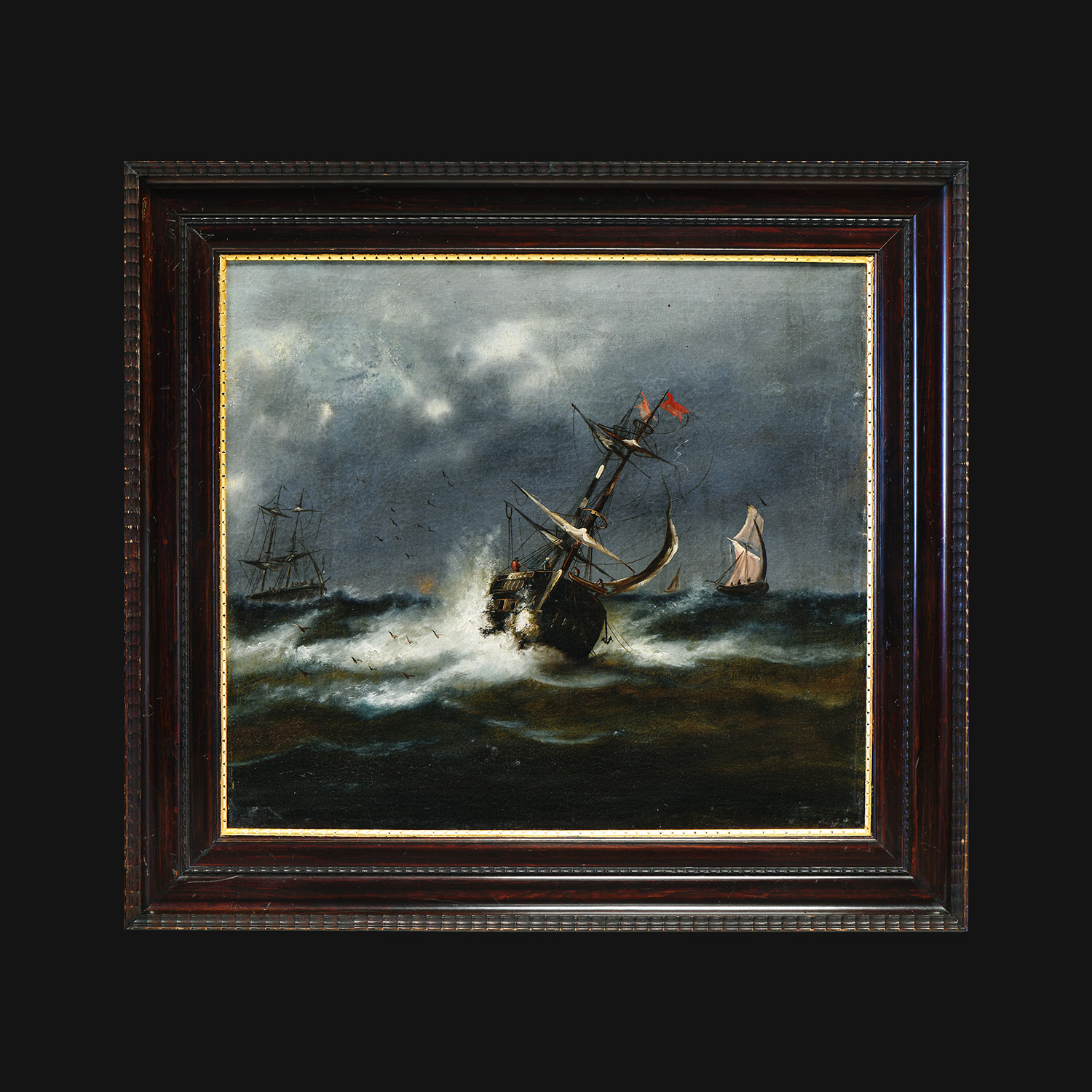
The painting is set in an elegant 19th-century frame with burl wood veneer and a gilded fluted inner profile (with an identified red pulment ground).
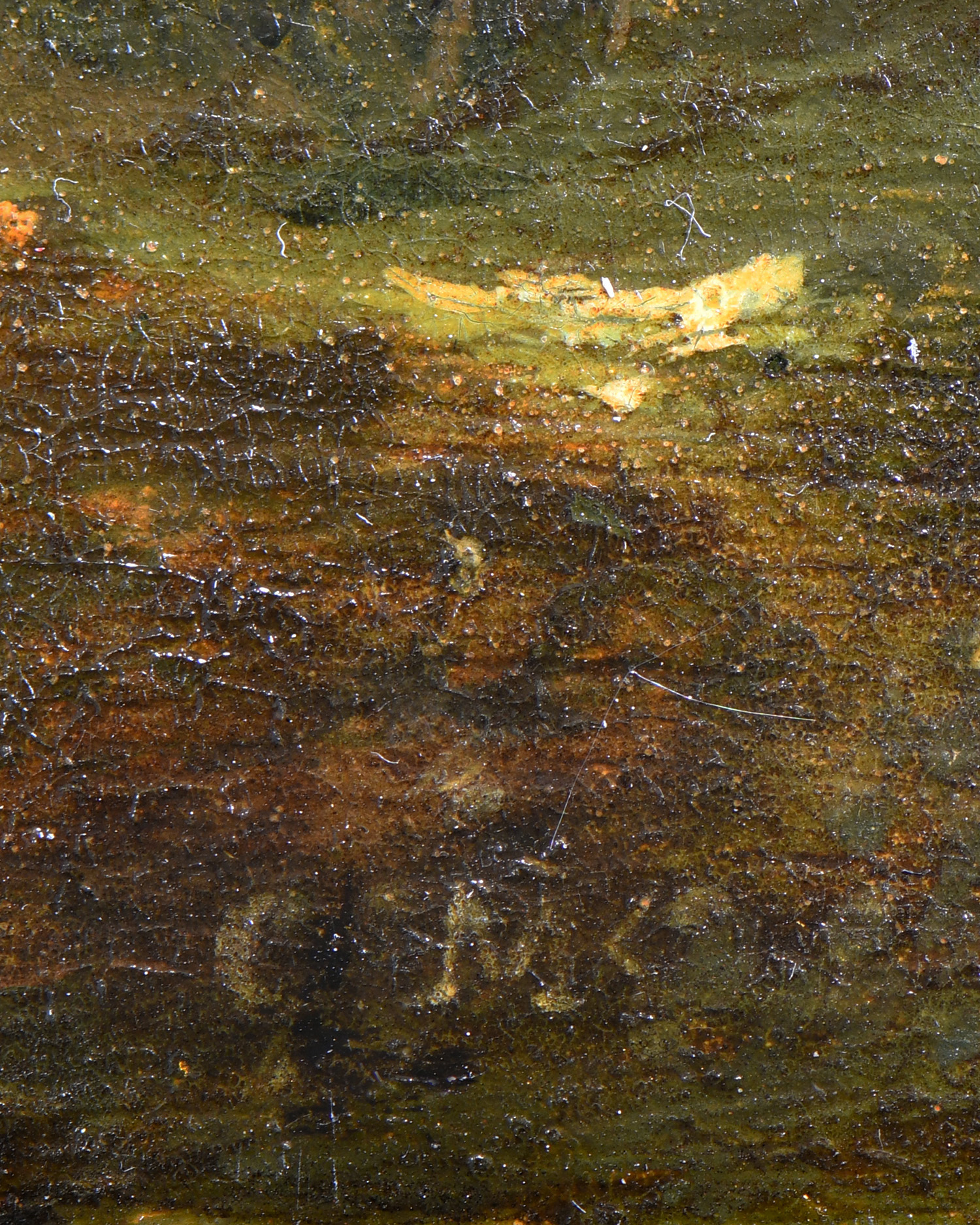
The painting is signed in the lower right corner with a distinct “CM” monogram (followed by at least one more illegible character). In the context of 17th-century Netherlandish painting, the structure of this signature and its stylistic features strongly suggest that the work was created by the Flemish-Dutch master Cornelis Mahu (c. 1613–1689) or the “CM Monogramist,” a distinct figure in art history.
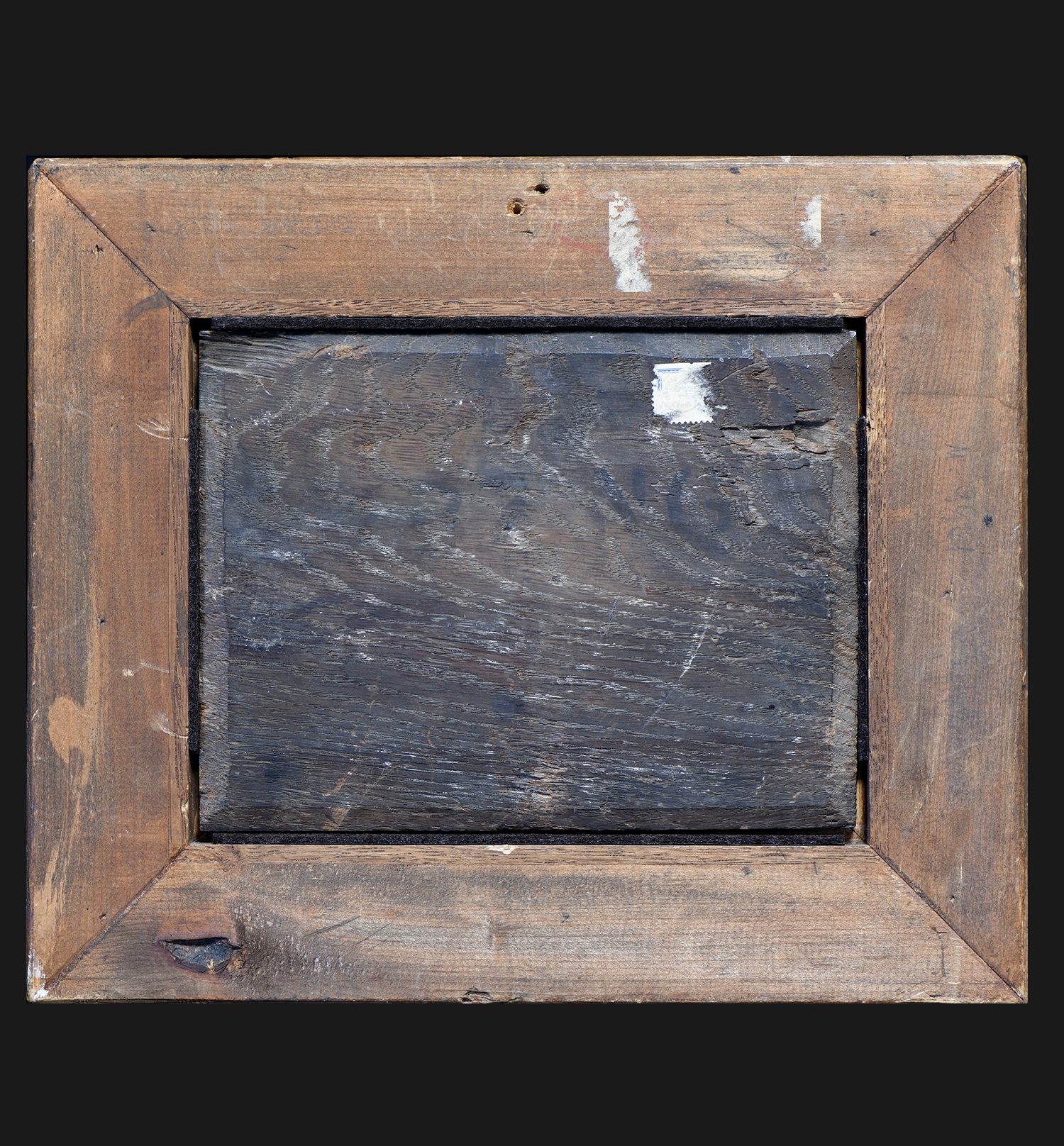
On the reverse side of the oak panel, the original inventory number 287 (?) NG—applied in black ink using a stencil—has been preserved. The abbreviated, three-digit structure of this code clearly points to the early 19th-century inventory system of the National Gallery in London (associated with national acquisitions or gallery deposits from that era).
The historic frame still bears an old inscription attributing the painting to Claes (Klaes) Molenaer, a painter from Haarlem. However, contemporary factual and costume analysis shows that this attribution is incorrect. Klaes Molenaer himself, at the time, spelled his name with a “K” and signed his works with his full name or the monogram “KM,” never “CM.” The presence of the label on the frame constitutes a fascinating historical trace of early, 19th-century attempts by British art dealers to identify the work. At the same time, the morphology of the monogram and the distinctly northern, indigenous character of the landscape make it possible to rule out other artists who used similar initials, such as the Amsterdam-based historical painter Claes Moeyaert, which ultimately confirms the coherence and historical authenticity of the work within the tradition of tonal landscape painting.