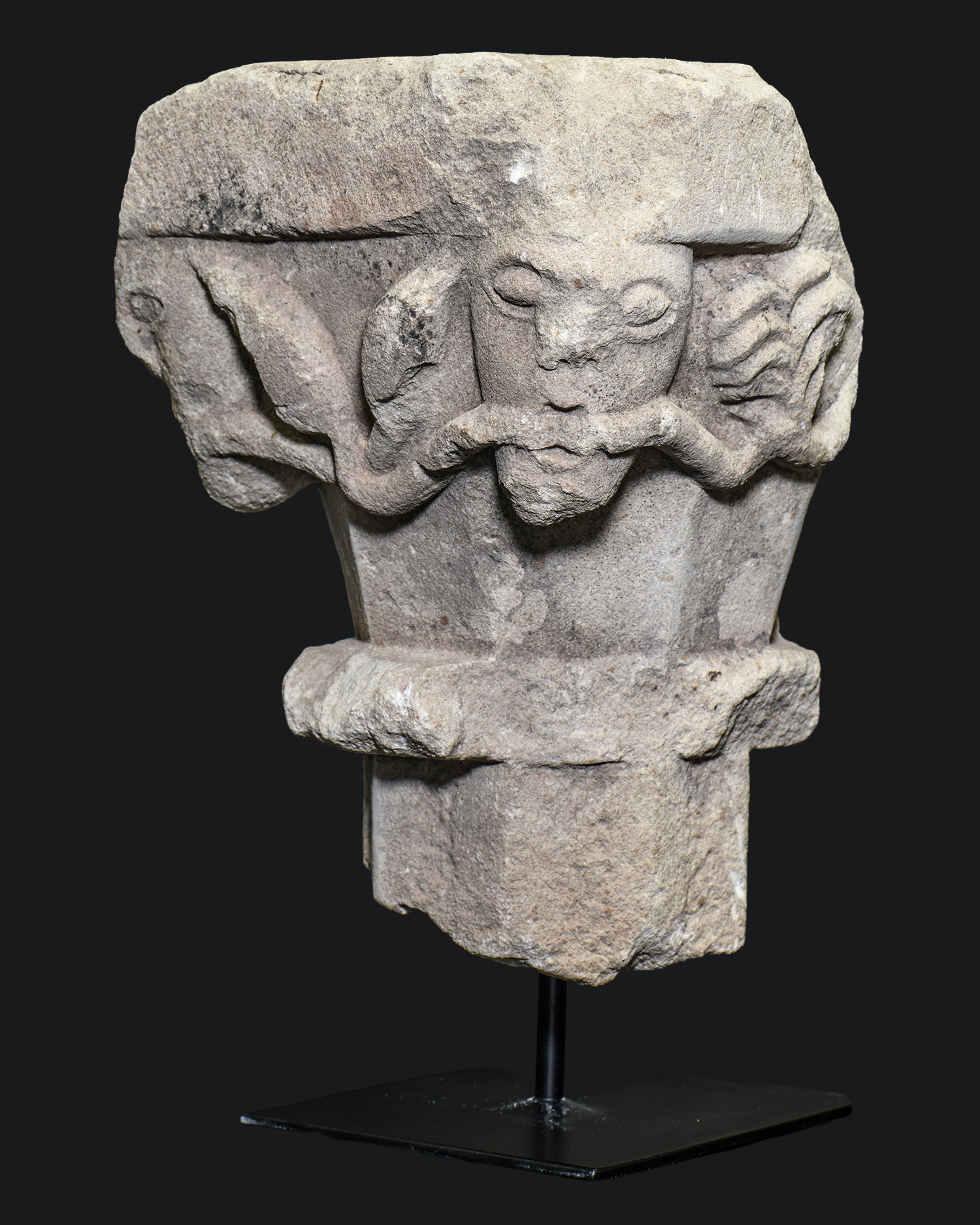
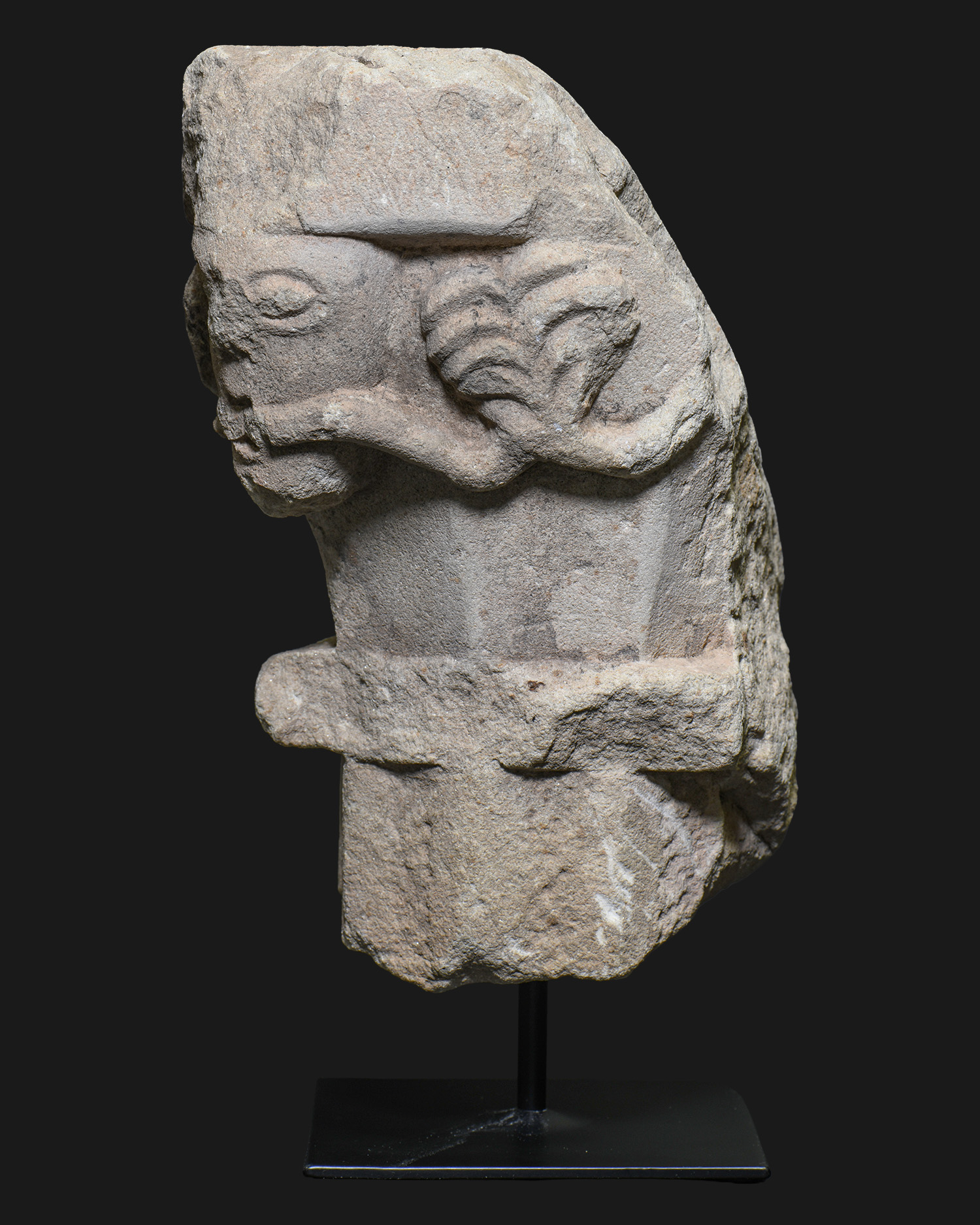
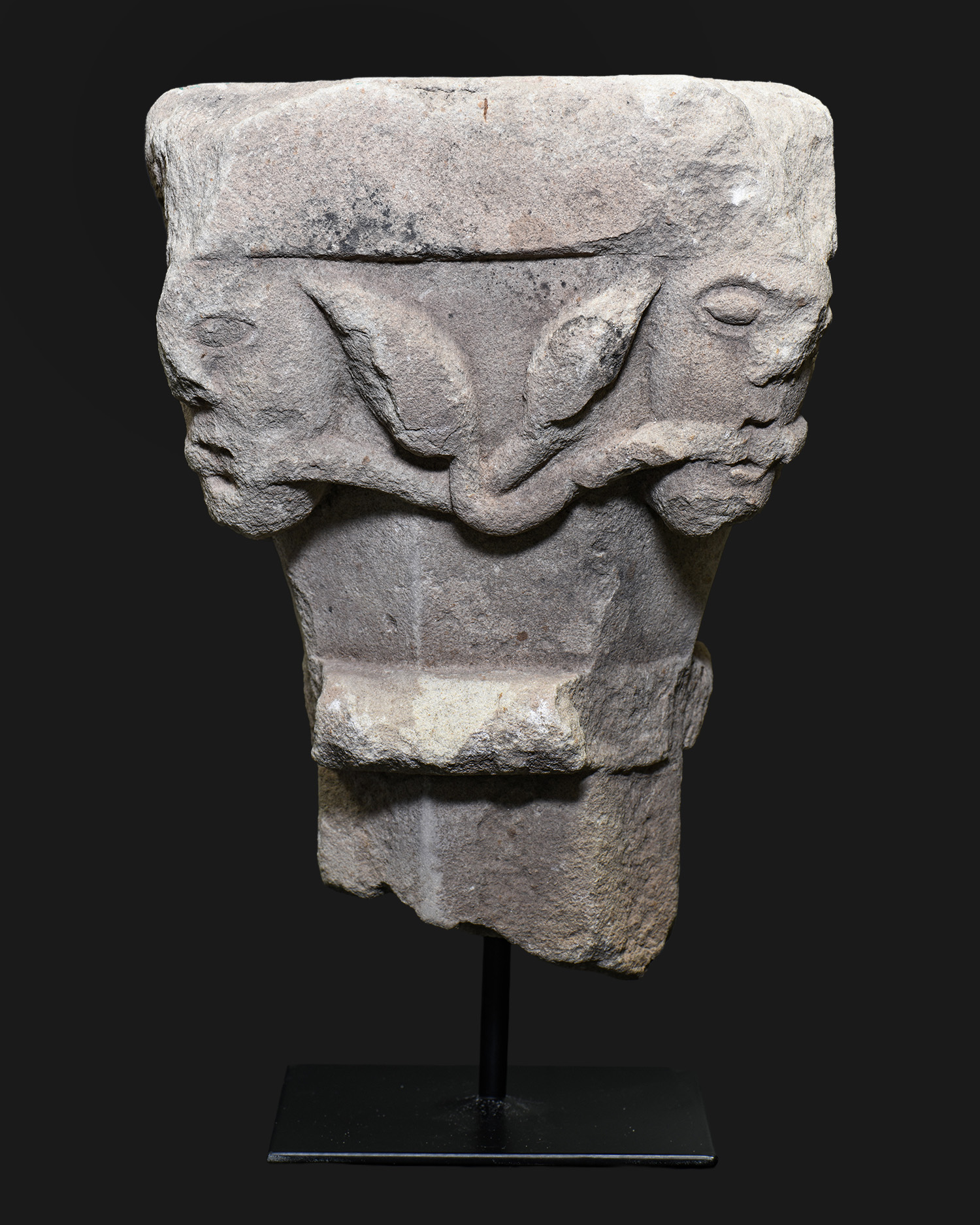
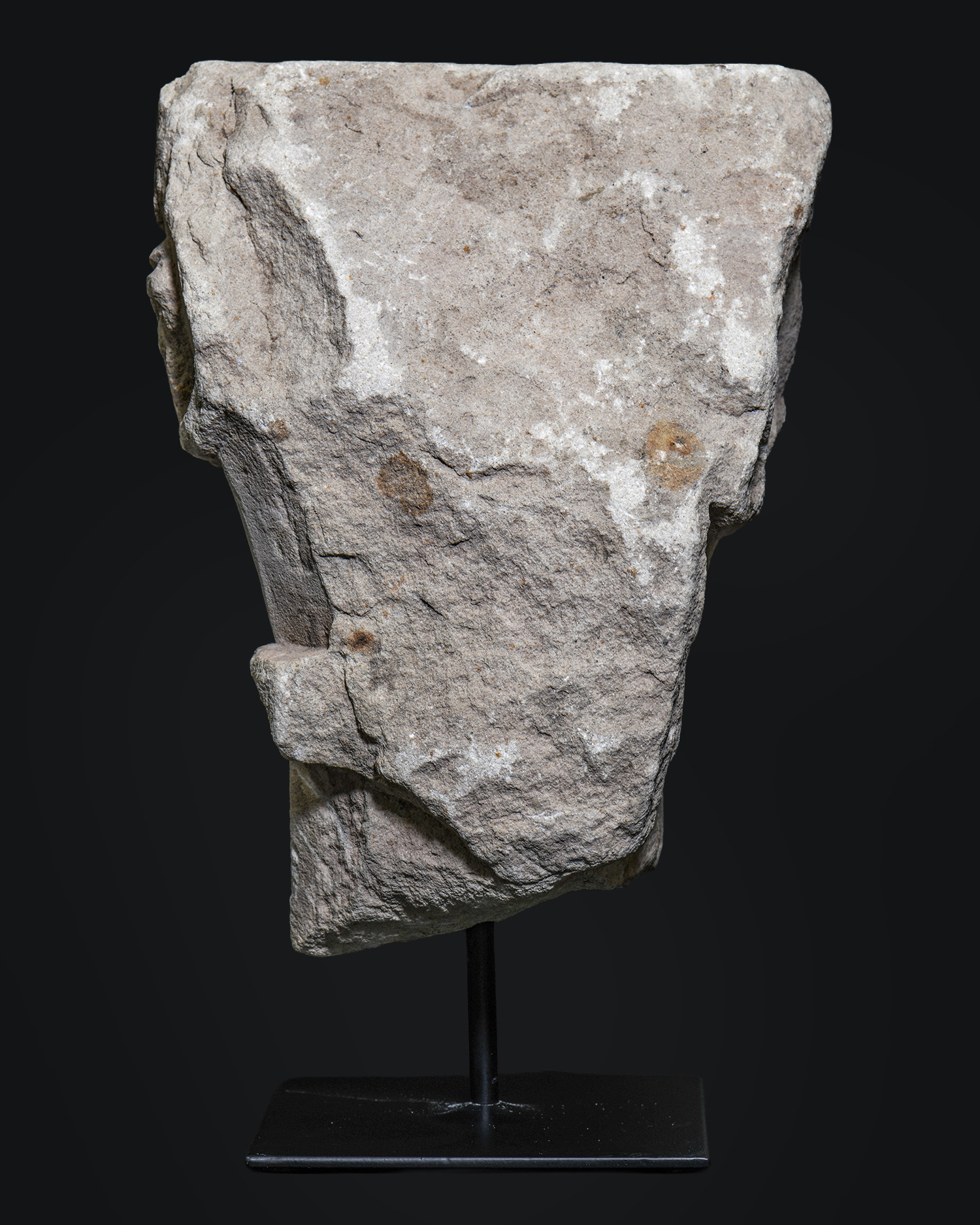
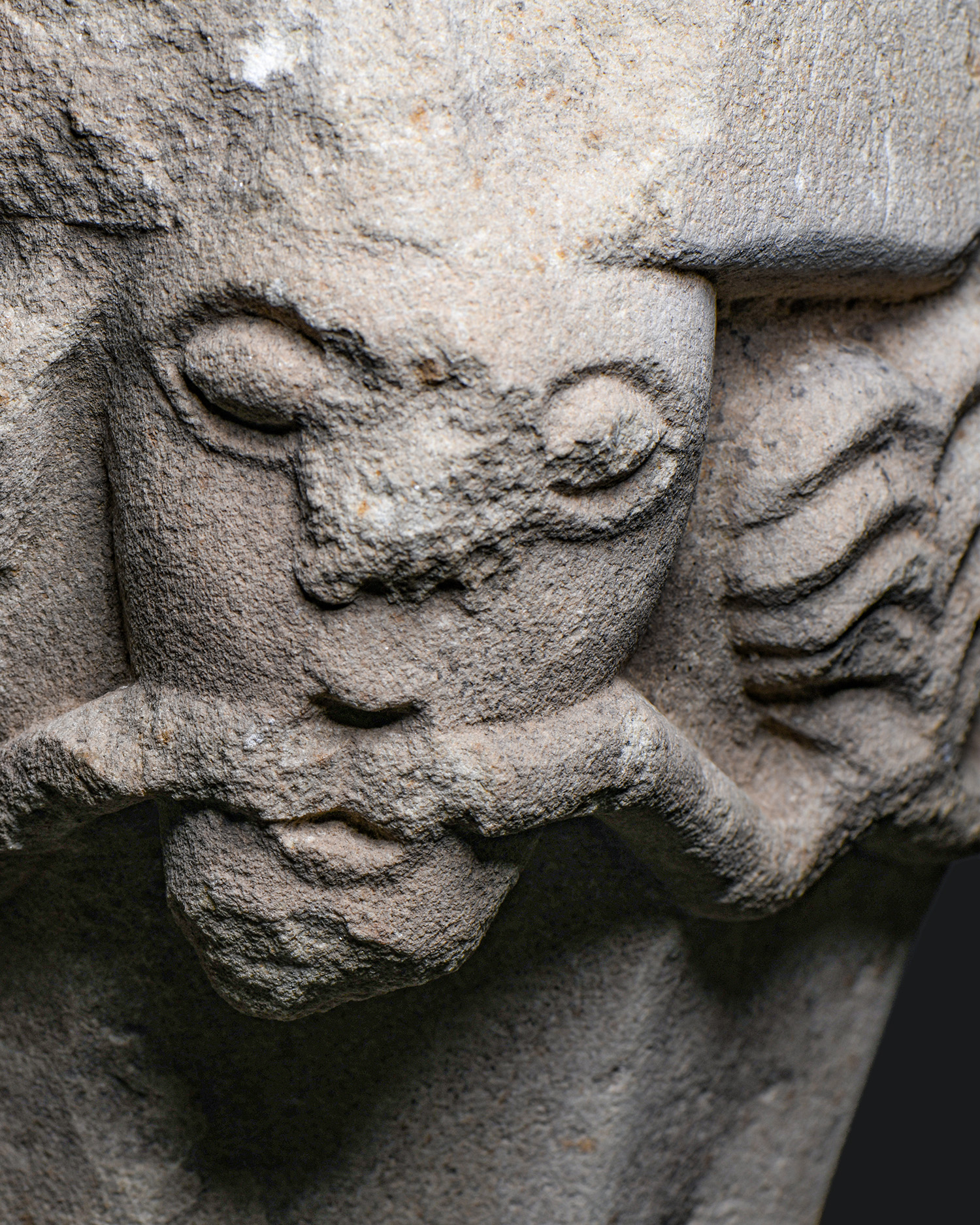
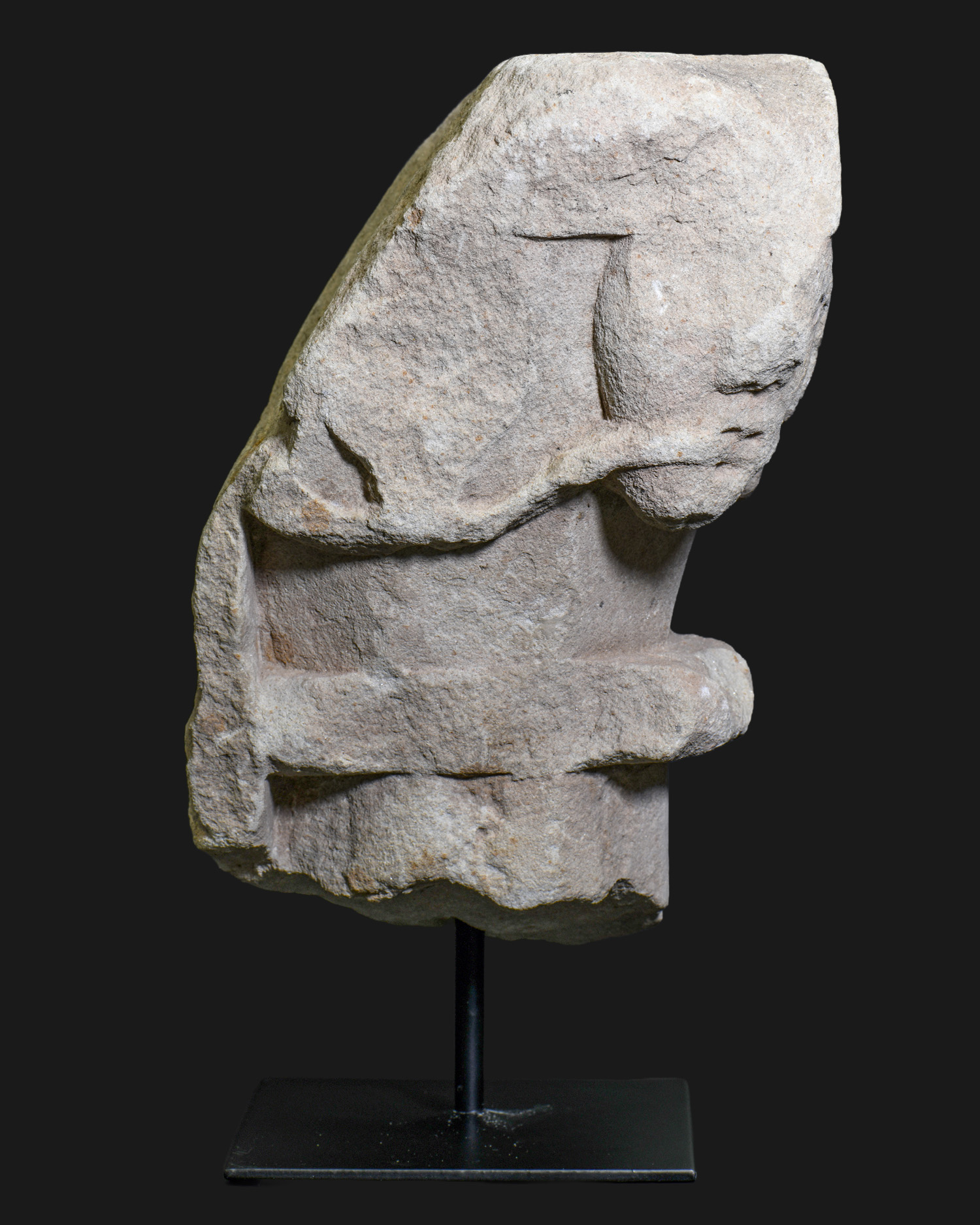
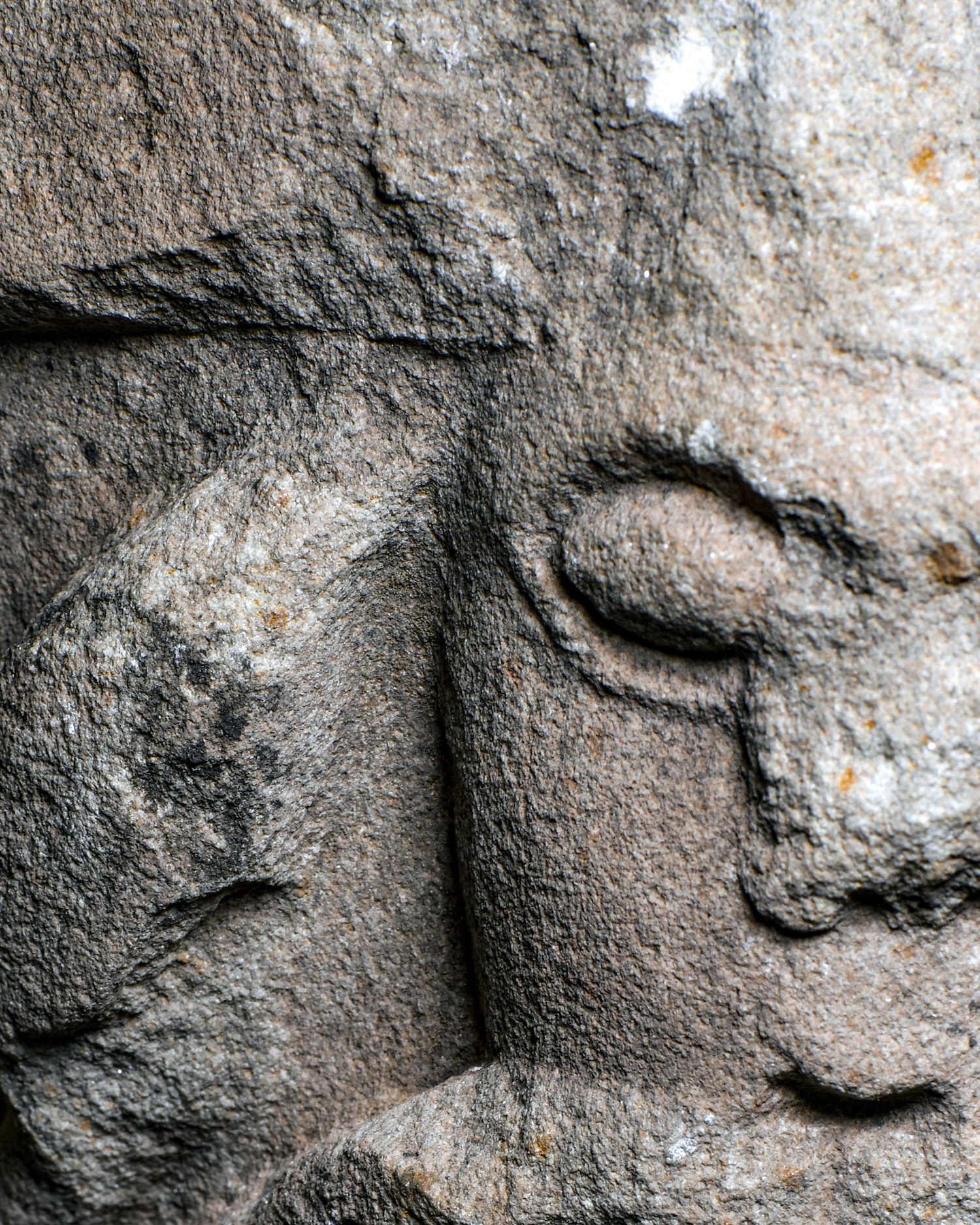
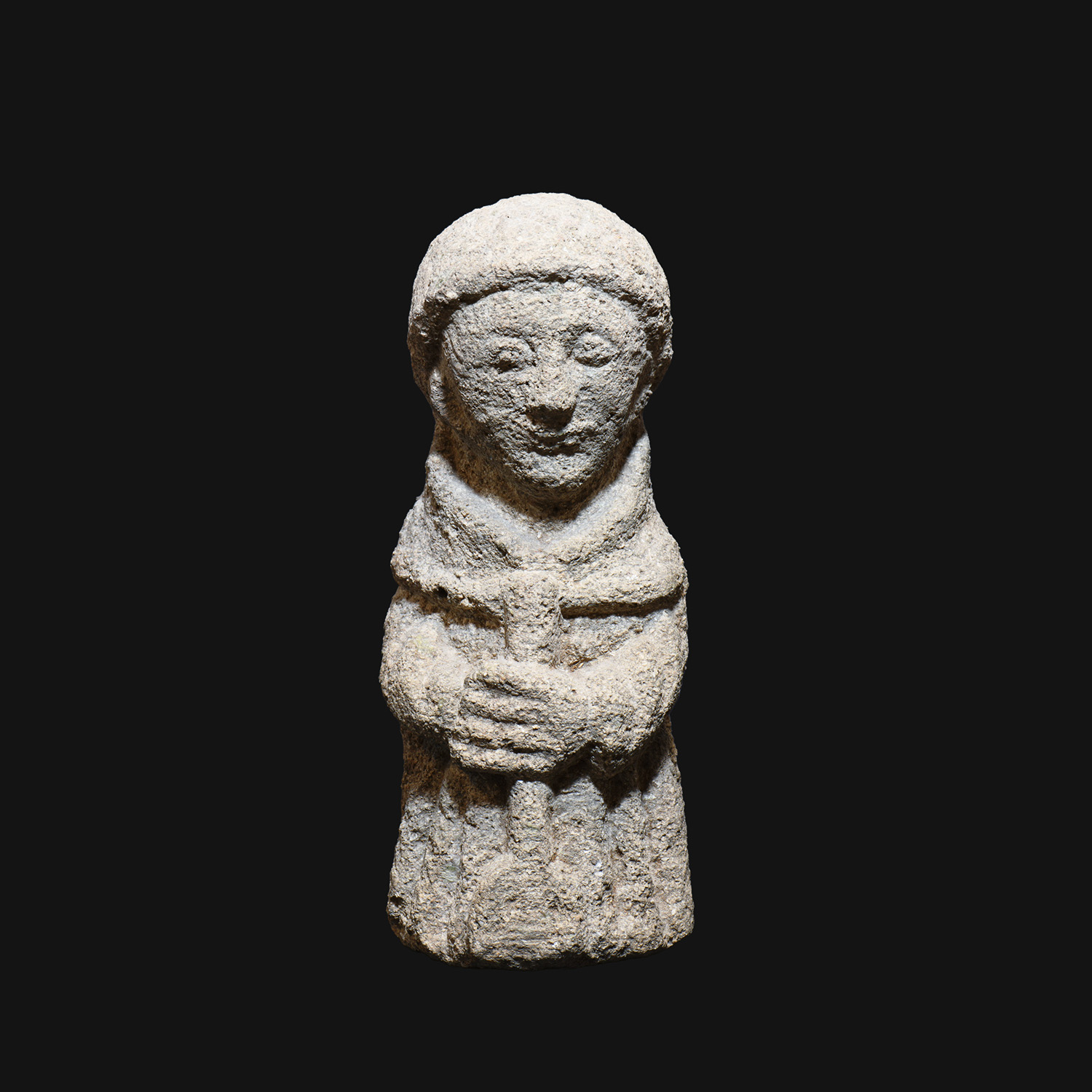
A Romanesque architectural capital made of sandstone, originating from France and dating to the 12th century (ca. 1100–1170). Decorated with figurative carvings on three sides, it was originally an architectural element most likely associated with a cloister, arcade, or church interior, mounted on a wall or pillar.
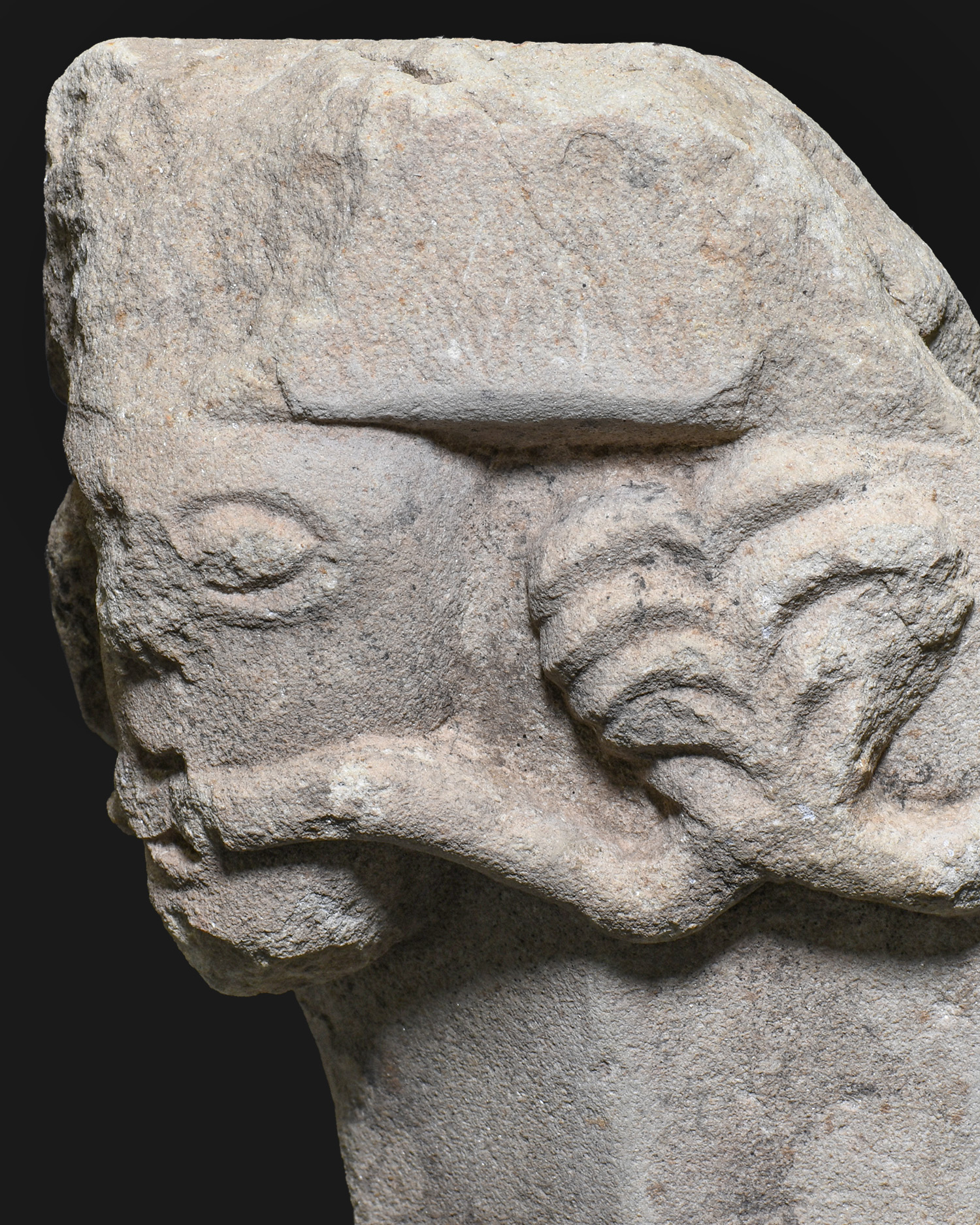
The decoration is made up of stylized human masks joined by an ornamental motif of a floral-zoomorphic nature, typical of Romanesque monastic sculpture of the 12th century. The faces with narrow, almond-shaped eyes represent an archaizing style characteristic of mature Romanesque sculpture before the spread of more realistic Gothic forms.
The sculptural form, the manner of elaboration of the relief and the integration of figural motifs with ornament show connections with the workshops of southern and central France, especially the Languedoc, Auvergne or Burgundy circle.