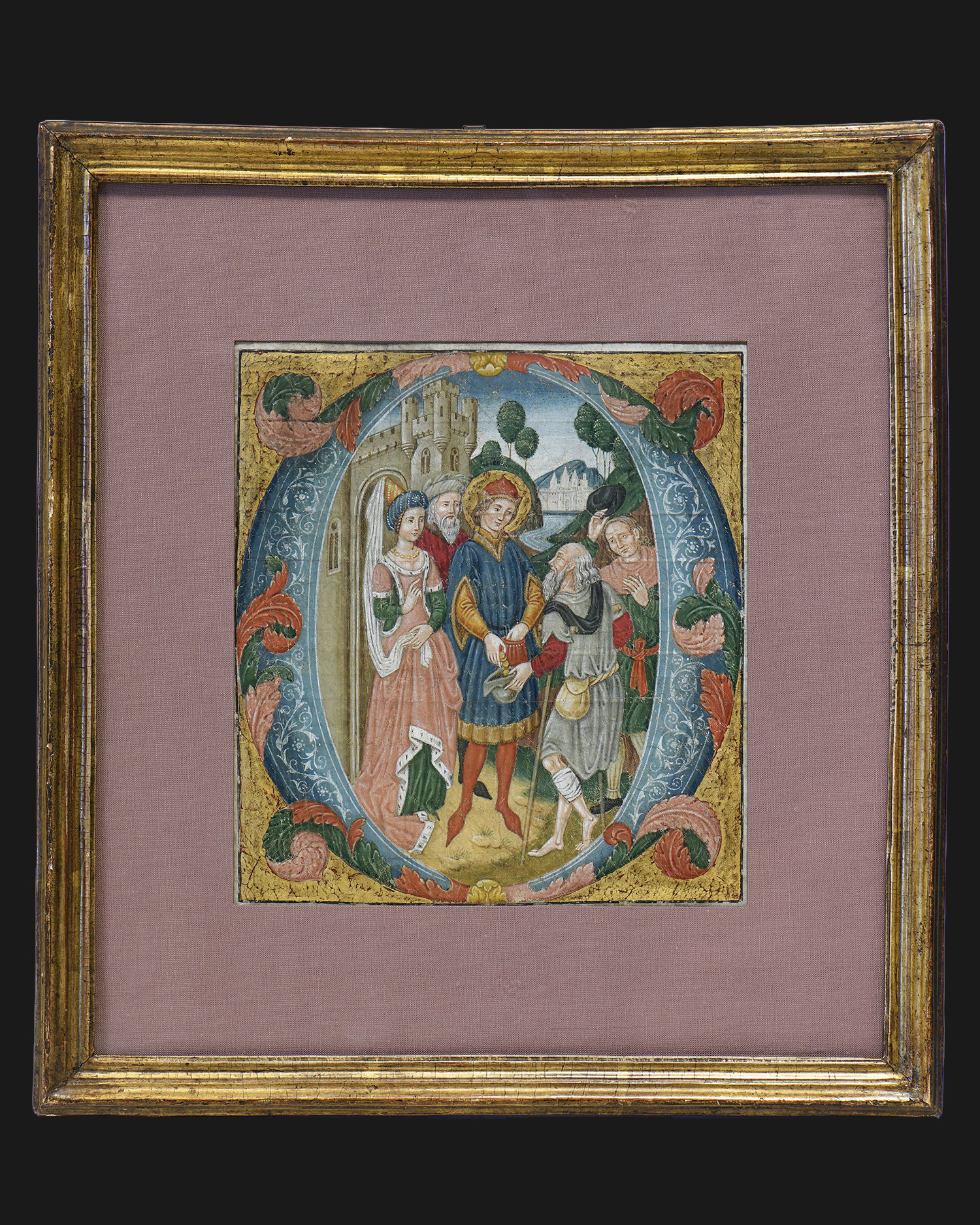
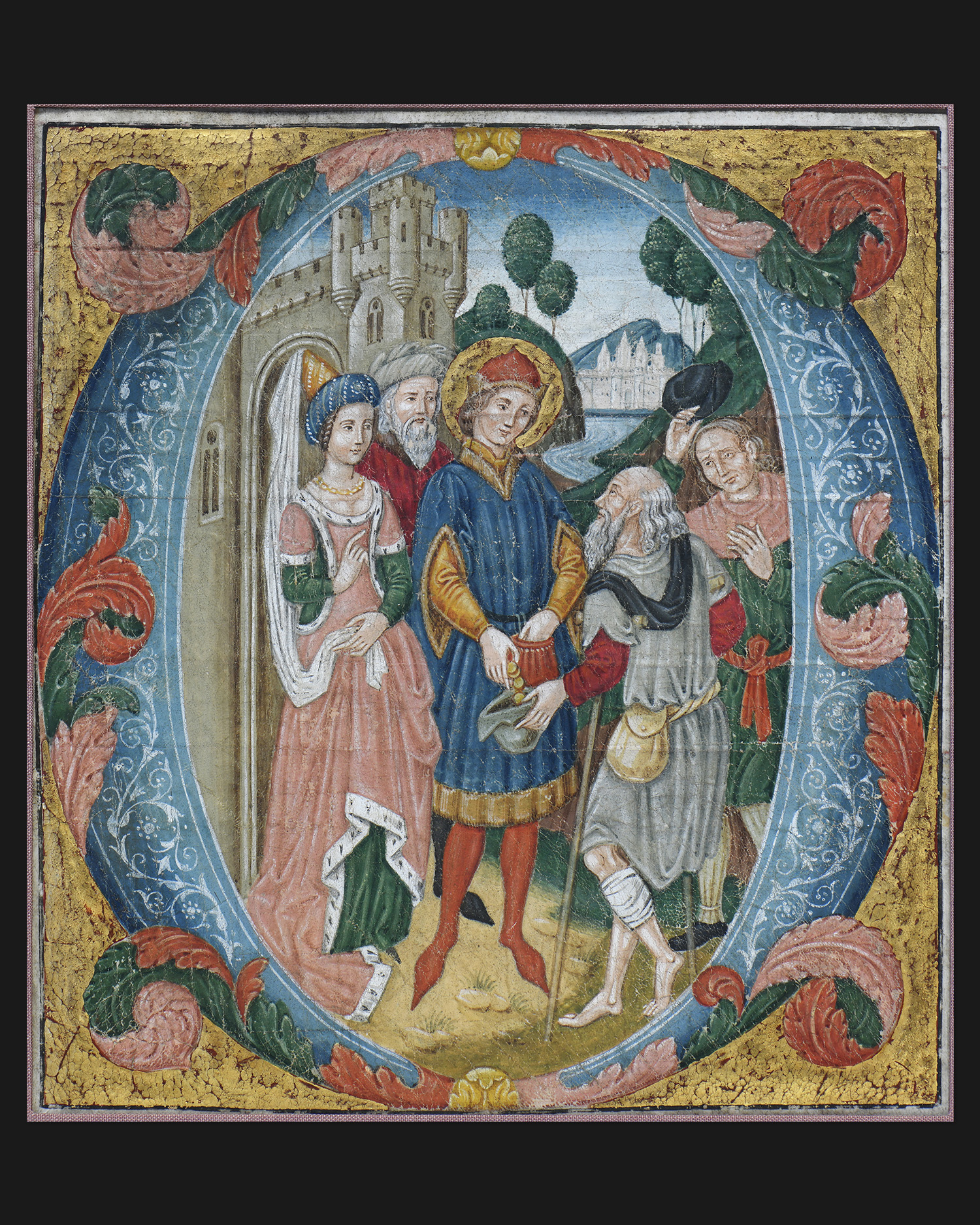
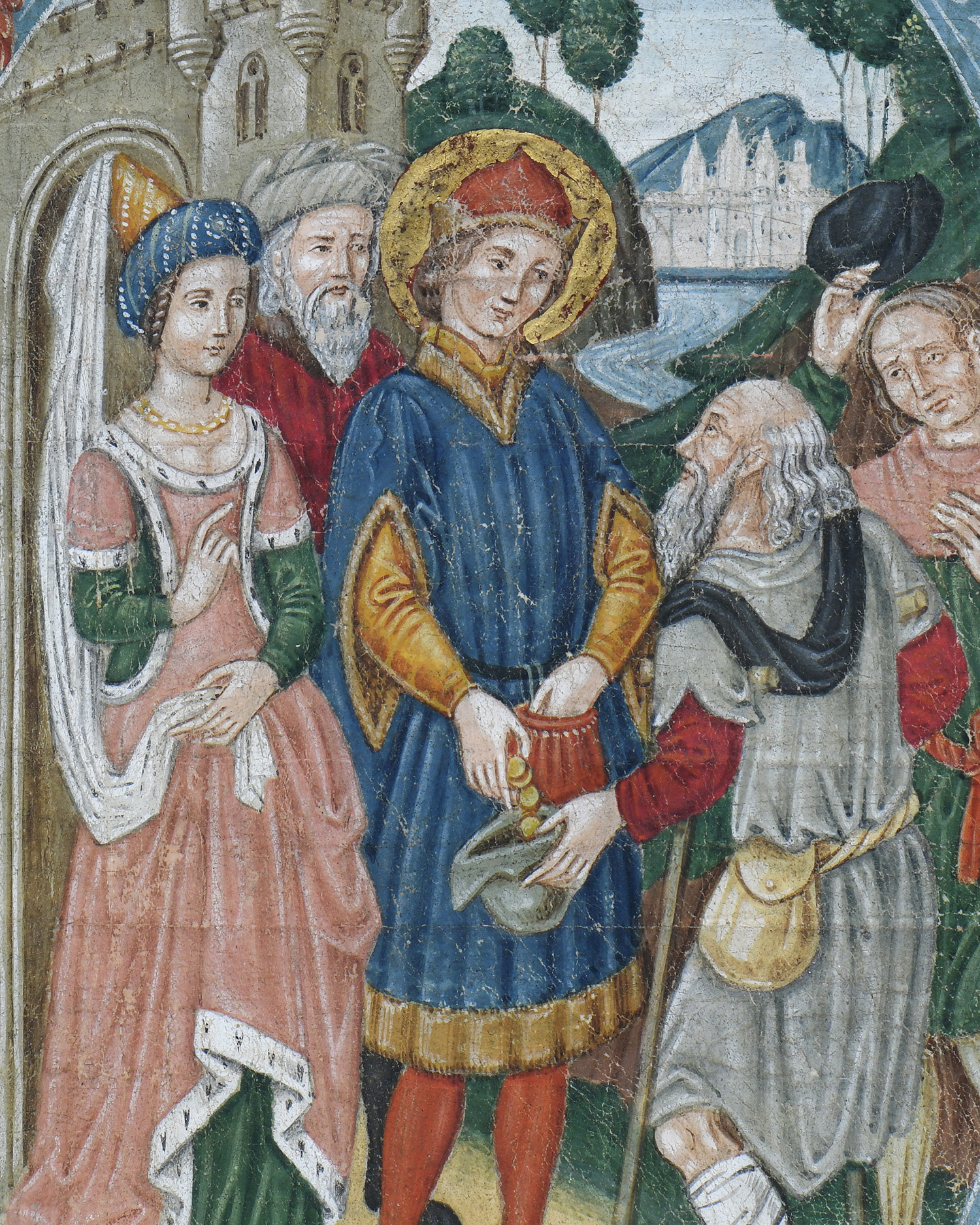
The fragment of the page visible within the frame is entirely occupied by a historiated initial "O". The figural scene within depicts a haloed youth dressed in secular attire giving alms to an old beggar supported by crutches. He is accompanied by a young woman and an older man, with urban architecture visible in the background.
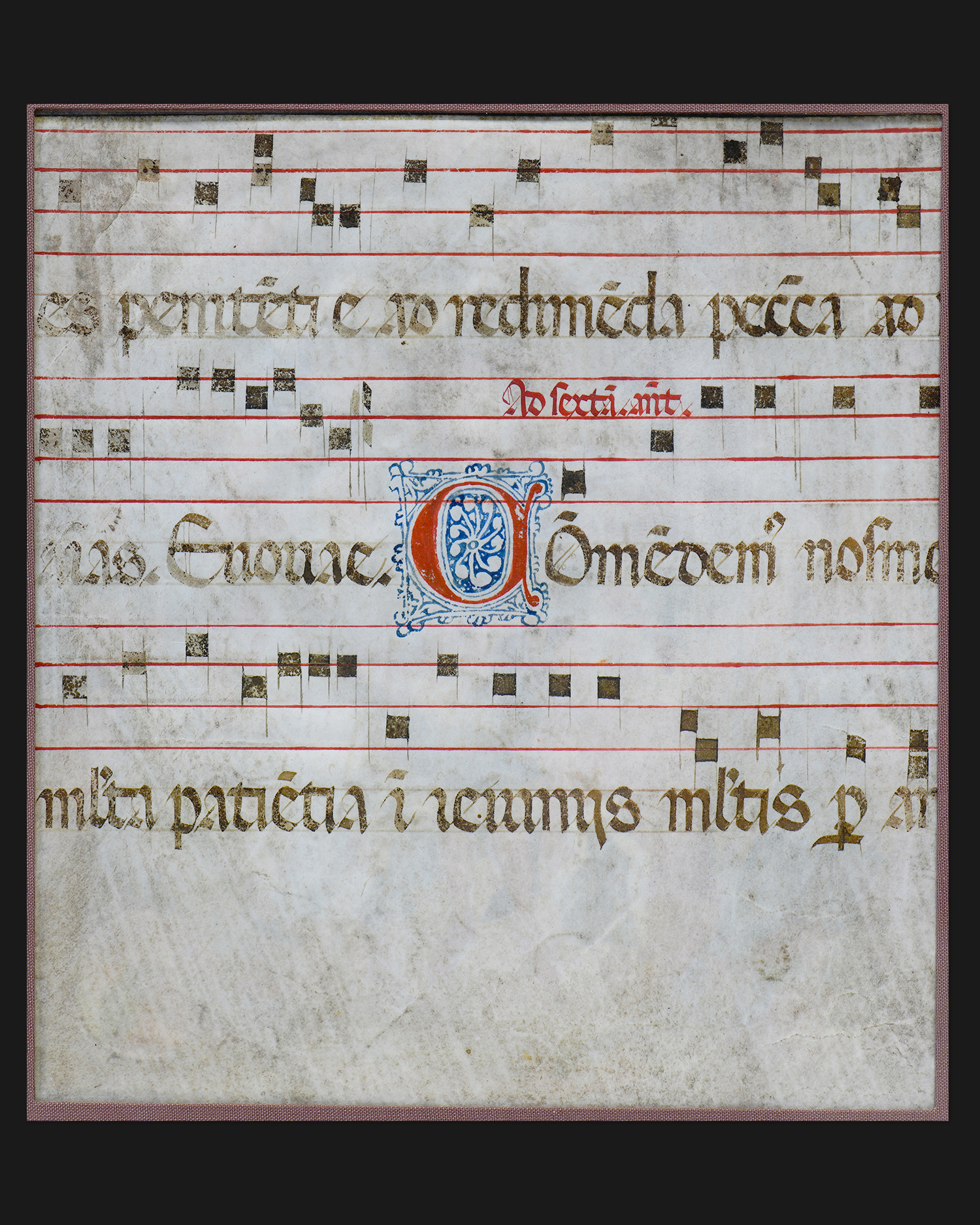
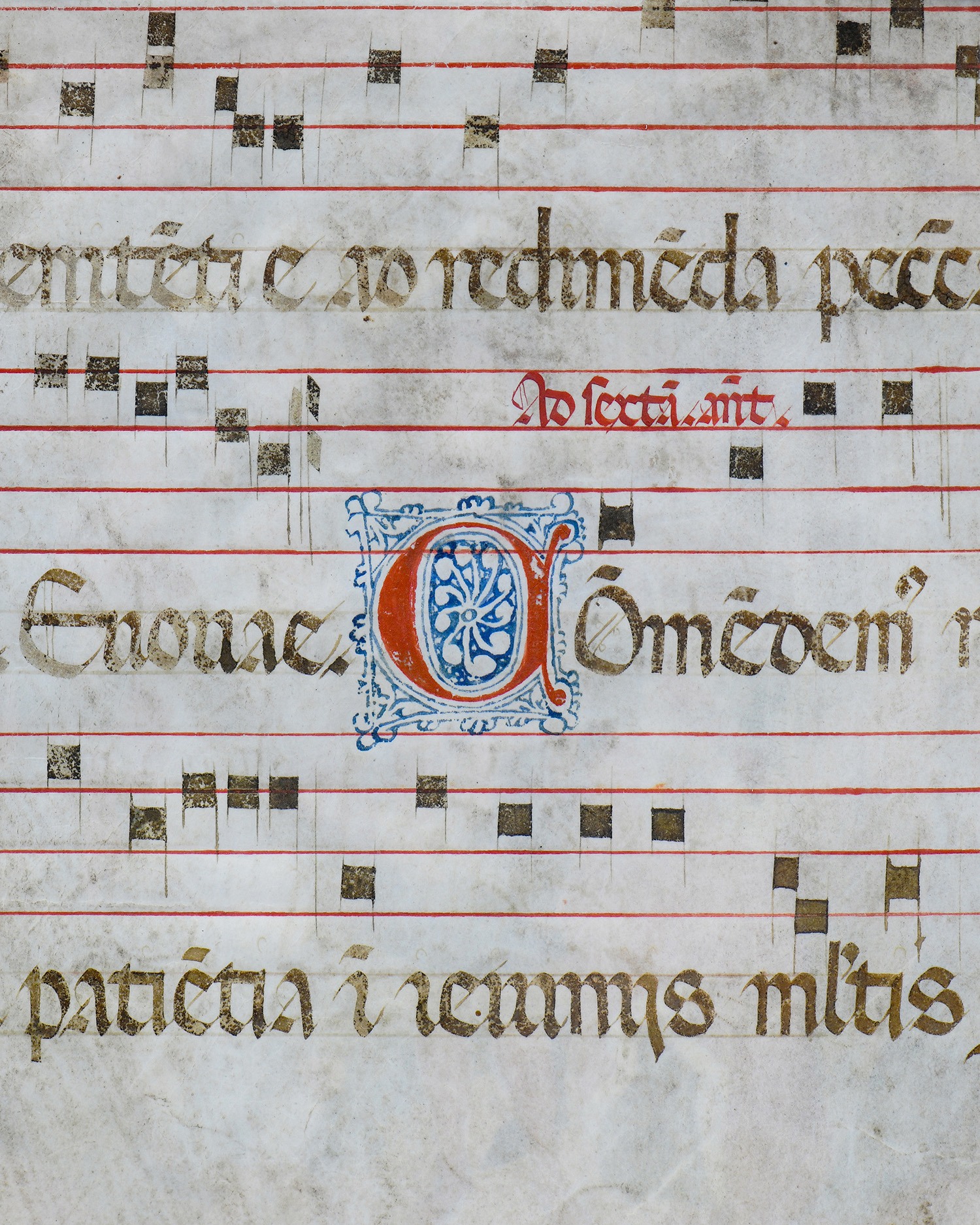
The reverse side features a fragment of Latin liturgical text written in Gothic minuscule and musical notation using square neumes (predecessors of notes used in medieval Europe) on a four-line staff, characteristic of Gregorian chant. The presence of the formula "Euouae" (a notation of vowels from the phrase saeculorum Amen), typical of psalm endings in antiphonal arrangement, allows identification of the notation as a fragment of an antiphon. The page also features a decorative initial "O" beginning a new antiphon.
The page is framed in a 19th-century gilded frame with a gently curved upper edge.
The depiction of a youth in courtly dress distributing money to a pauper, in the presence of a young woman and an older man, may reference the iconography of St. Alexius. In his legend, Alexius, son of a wealthy Roman patrician, leaves his family home immediately after marriage, having first distributed his wealth to the poor. In this interpretation, the young woman could be understood as his wife, and the older man as his father. However, the absence of definitive attributes does not allow for certain identification of this figure.
In medieval antiphonaries, historiated initials often illustrated a moral idea, referring generally to the meaning of the text. In this interpretation, the scene could constitute a universal representation of caritas, rather than referring to a specific saint's story.