

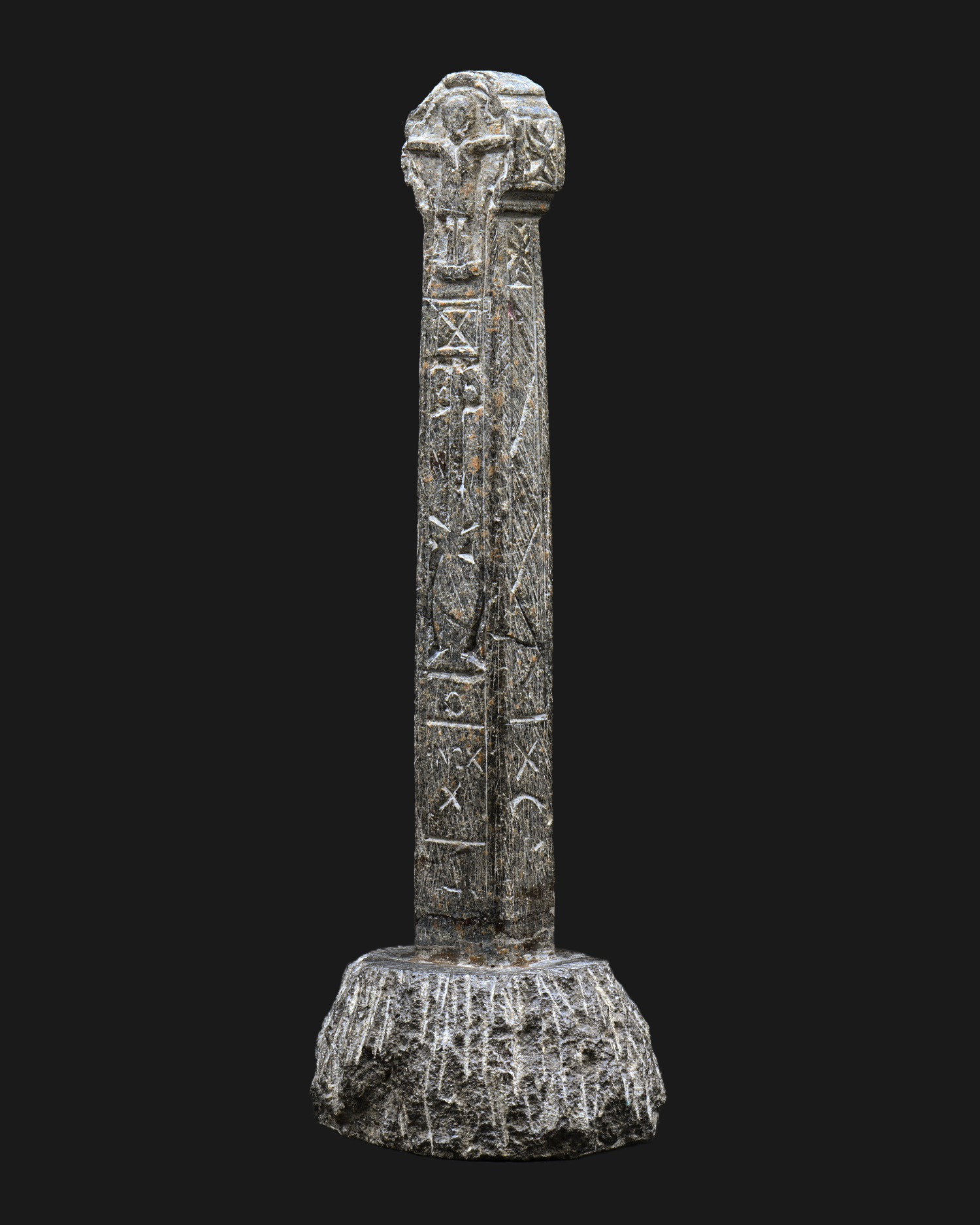
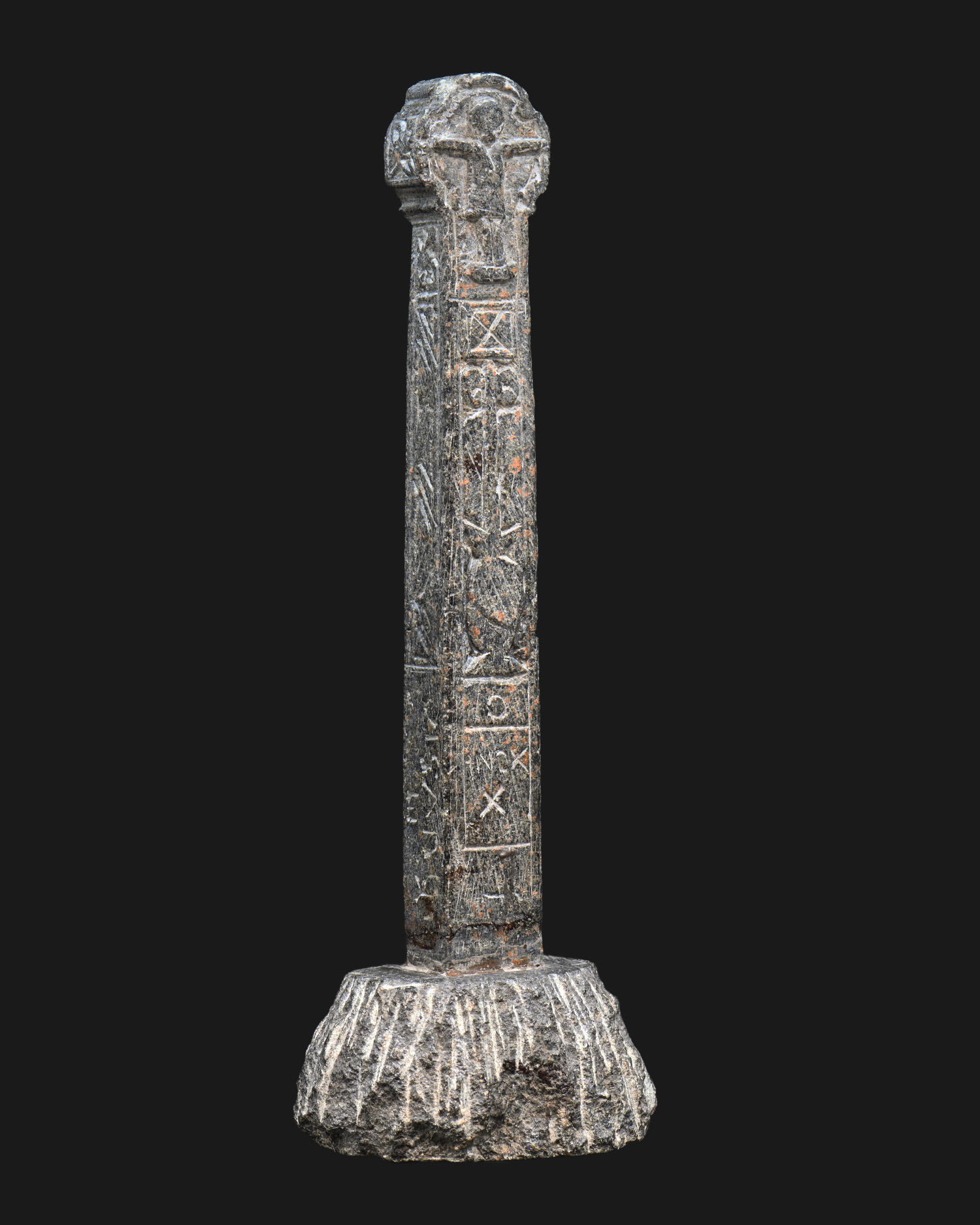
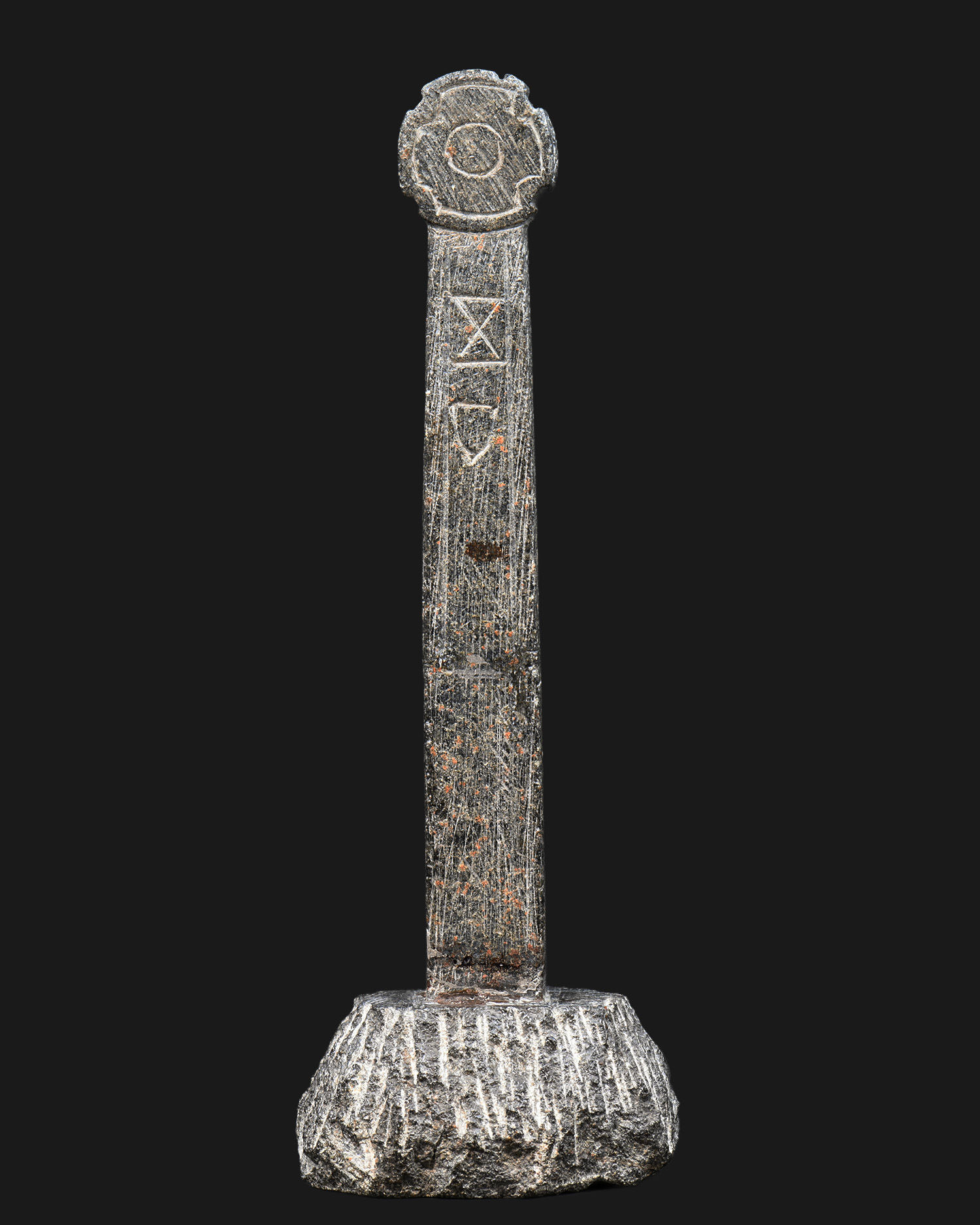
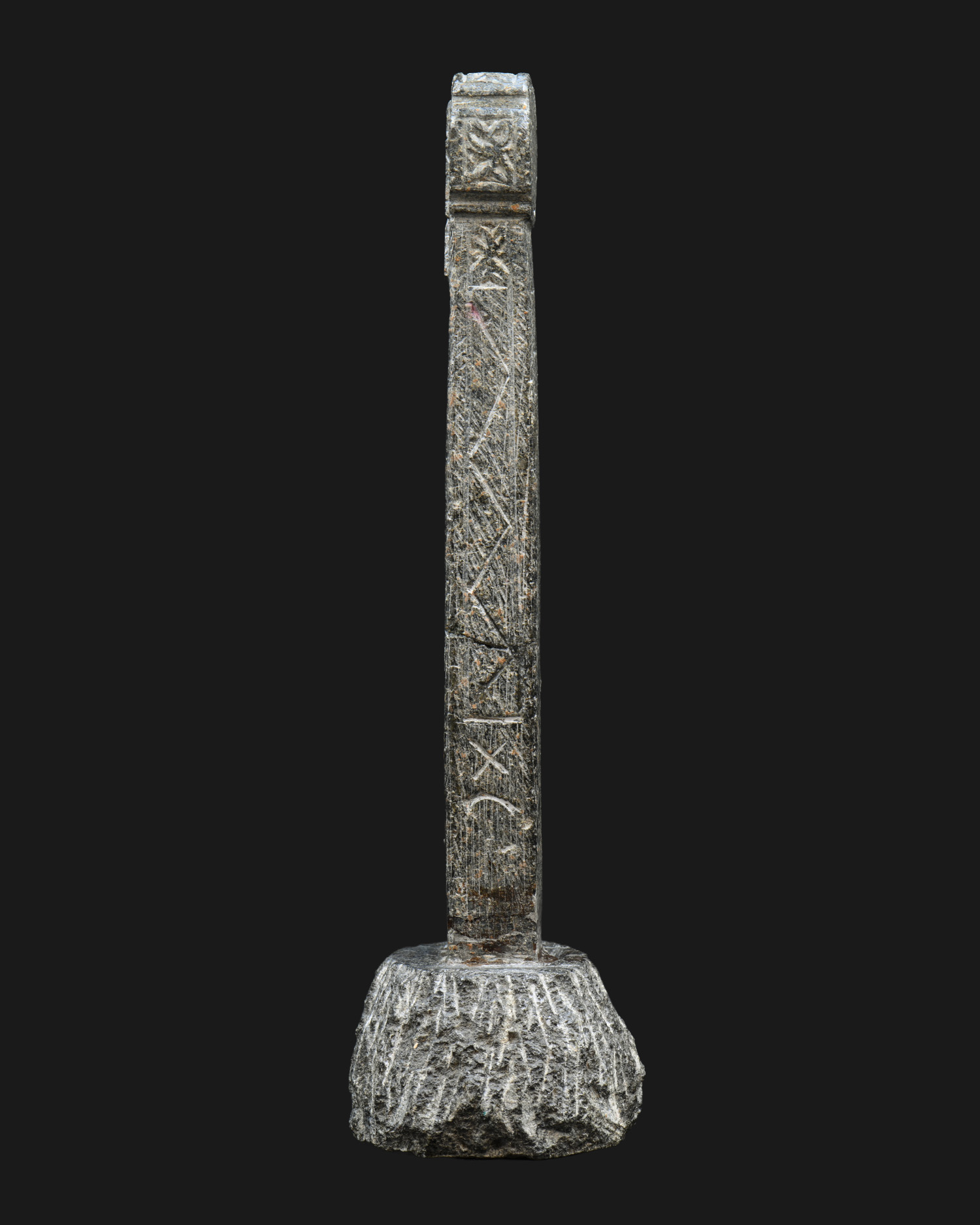
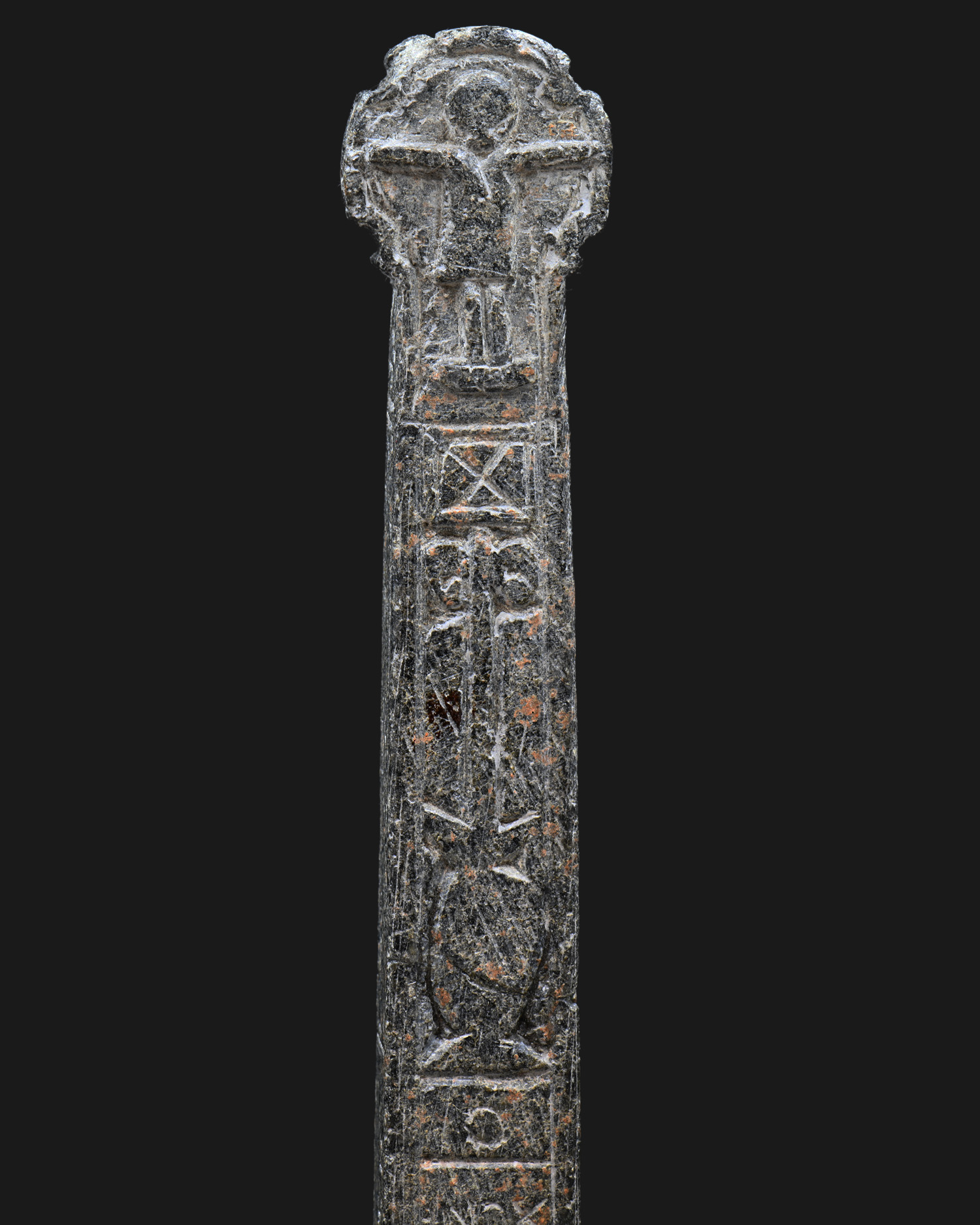
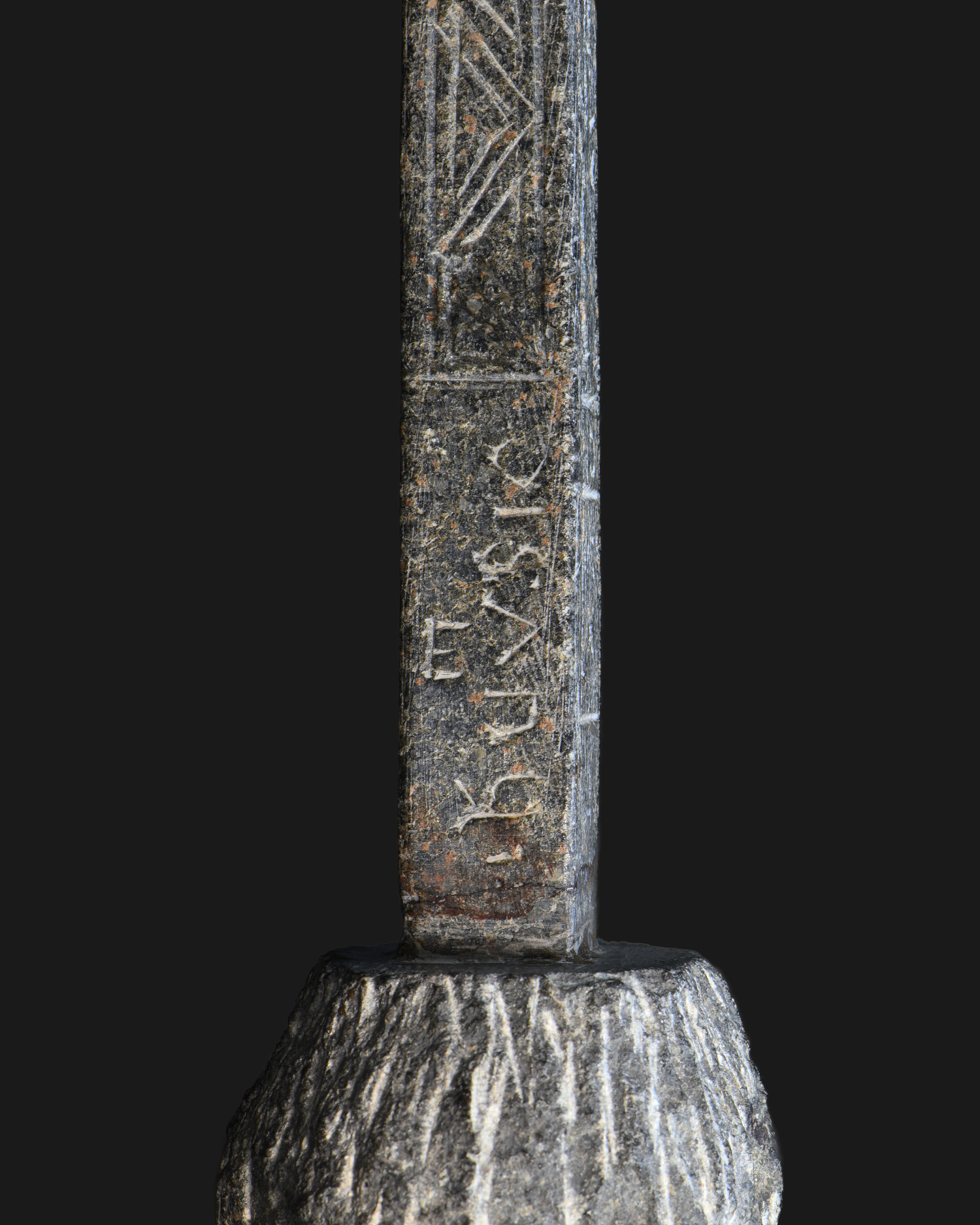
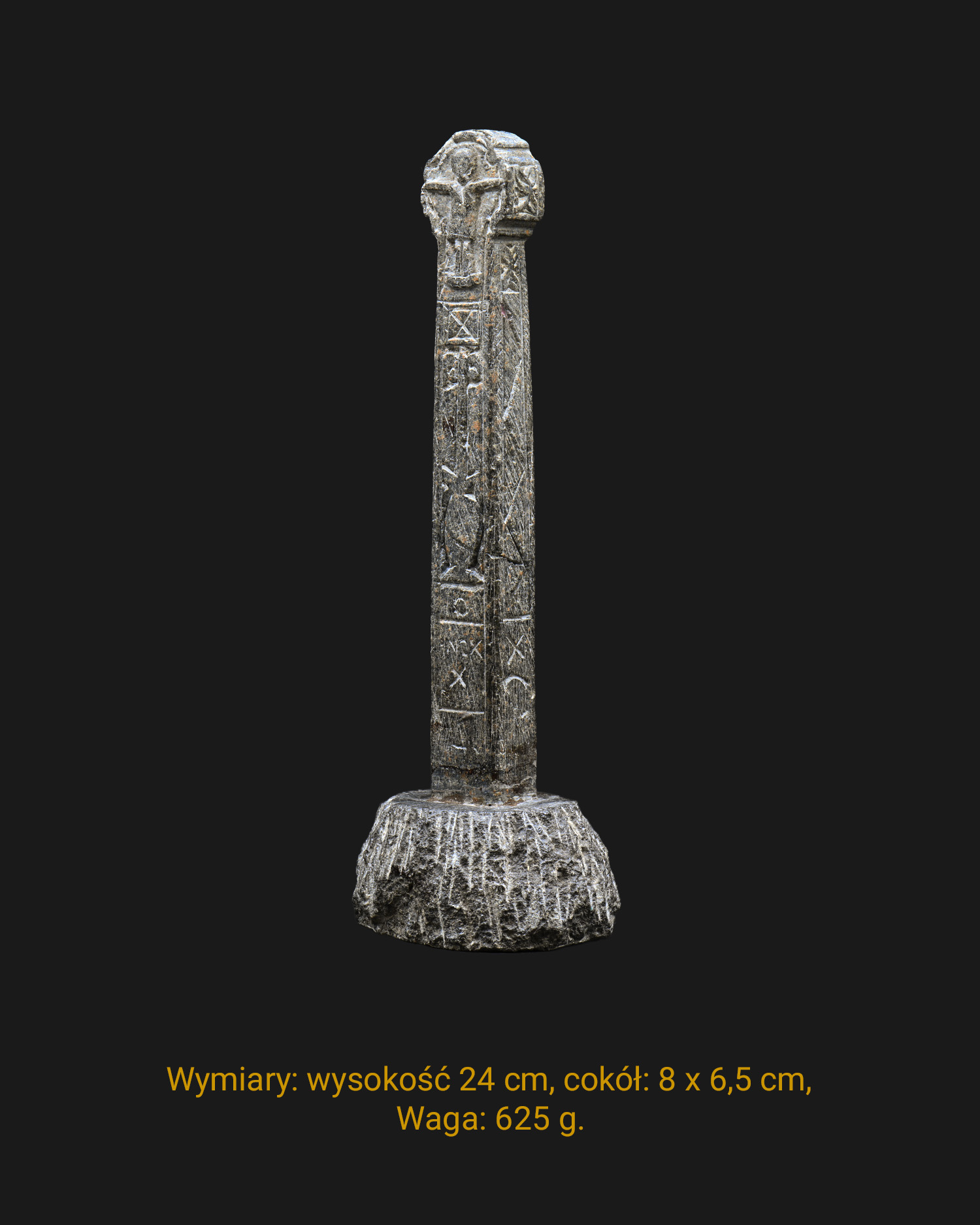

Irish (Celtic) cross, stone sculpture, Ireland, 19th century.
1200,00 zł
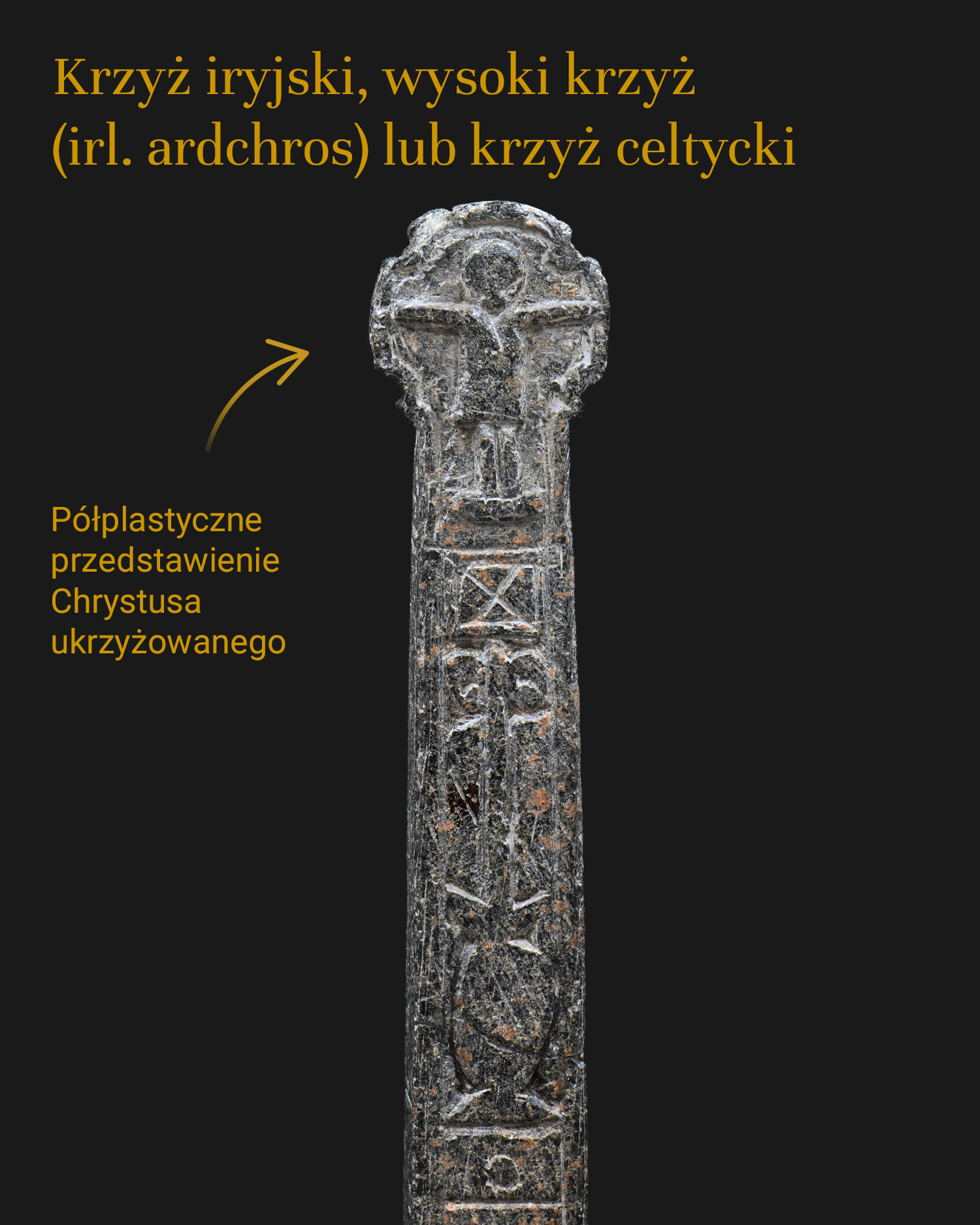
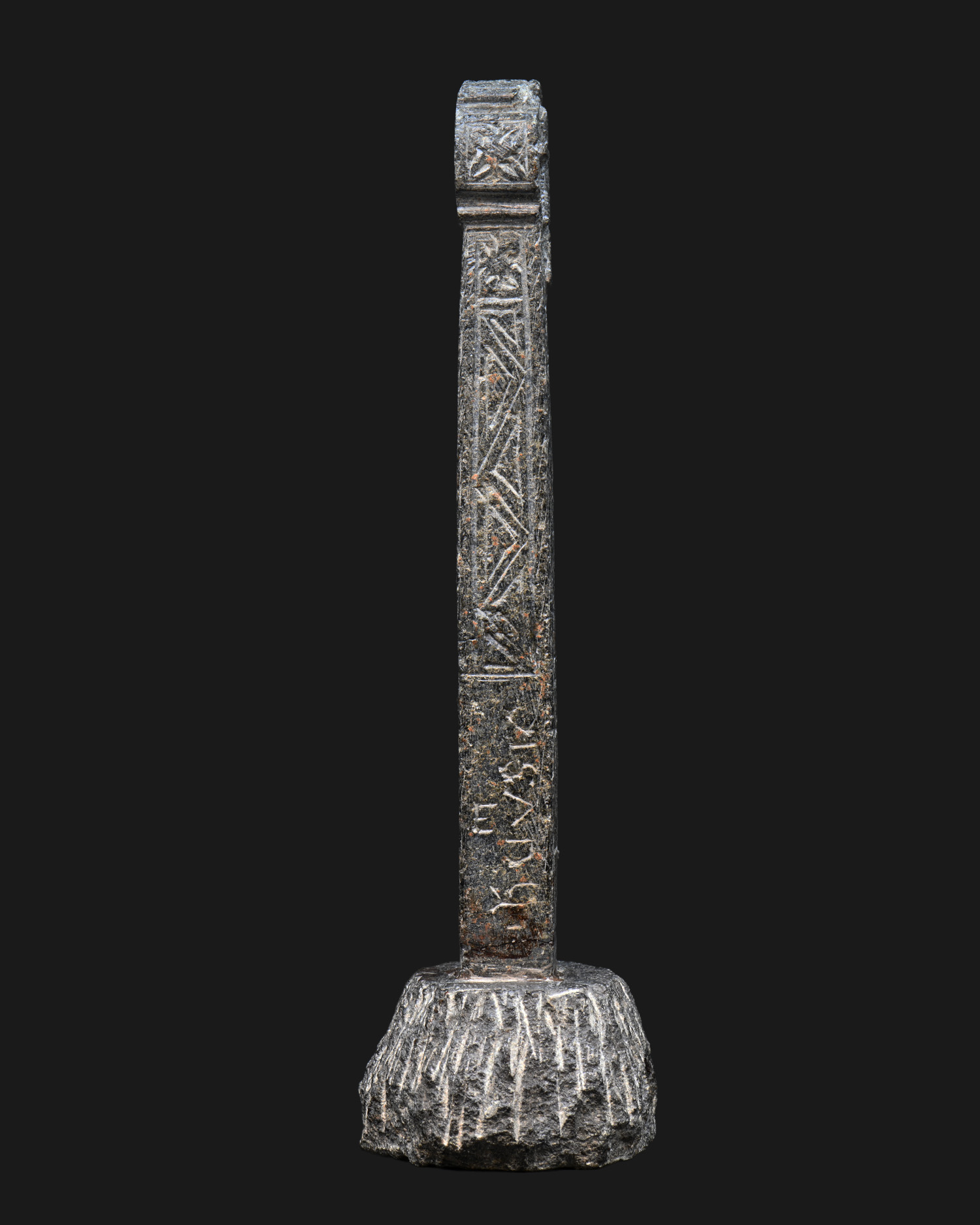
The sculpture in the form of an Irish cross, 24 cm high, made of a single piece of gray stone (slate). Like the medieval prototypes, it consists of a base (pedestal) with chamfered sides, a high shaft topped by a crossbar merged with a circle (nimbus). In the upper section, partially enclosed within the ring, is a semi-relief depiction of the Crucified Christ. The shaft below is decorated with incised “X” marks, simple geometric ornamentation, and the inscription INCX. The sides of the shaft feature carved rosettes and zigzag motifs. Additionally, the right side bears the inscription IXC, while the left side contains an unclear word, most likely in the Irish (Gaelic) language. On the reverse of the shaft appears another “X” mark, with a triangular shield motif below. The ends of the cross arms are decorated with four-pointed rosettes.
Sprzedane
Related products
Christ Salvator Mundi, polychrome wood, Poland, 19th century.
Deity or bodhisattva, marble, India, 19th century.
Ganesha, marble, India, 19th century.
Ganesha, marble, India, 19th century.
Head of an Angel (Putta), gilded linden wood, Poland, 1st half of the 18th century.
Madonna and Child, polychrome wood, gilded, Central Europe, 18th/19th century
Rama, marble, India, 19th century.
A sculpture depicting Rama, one of the most important deities of Hinduism, considered the seventh avatar of Vishnu. The object was hand-carved in white marble in India, probably in the 19th century.
The figure is depicted standing, facing forward. The face has a gentle expression with a soft smile and slightly closed eyes. The head is crowned with a decorative crown, and long necklaces are visible on the chest.
The figure is dressed in a draped robe with clearly marked folds. On its back is a quiver with arrows, characteristic of Rama's depictions.
The hands of the sculpture are not preserved, originally in one of them the figure held a bow - a characteristic element of representations of this deity. Further about these cavities do not write that they are consistent.
Rama is the hero of the epic Ramayana and in the Hindu tradition symbolizes righteousness and fidelity to the principle of dharma. His images occupy an important place in Indian sacred art, although full-figure marble sculptures of this scale are less common.
The object is preserved in good condition, with clear legibility of form and detail.
Skull (Memento Mori), marble, Italy, 18th-19th century
Elegant, decorative skull made of natural gray marble, maintained in a realistic style: the eye sockets, cranial seam lines and zygomatic arches are clearly formed. The faded dentition alludes to the concept of Vanitas.
The characteristic feature of the stone used for the sculpture is irregular veining in shades of beige, cream and gray, which gives it a unique character. The surface is polished, with natural discolorations and small marks due to the properties of the material, which emphasizes the authenticity and nobility of the marble. The skull is provided with a lead pin underneath, set on a minimalist, contemporary base in black, which exposes the sculpture and gives it a museum-like character.
The object is ideal for collectors of curiosities, lovers of the art of Vanitas - Memento Mori, cabinets of curiosities and as an expressive element of interior design in classical, industrial or eclectic style. An object with a strong aesthetic and symbolic expression, which is difficult to pass by indifferently.