


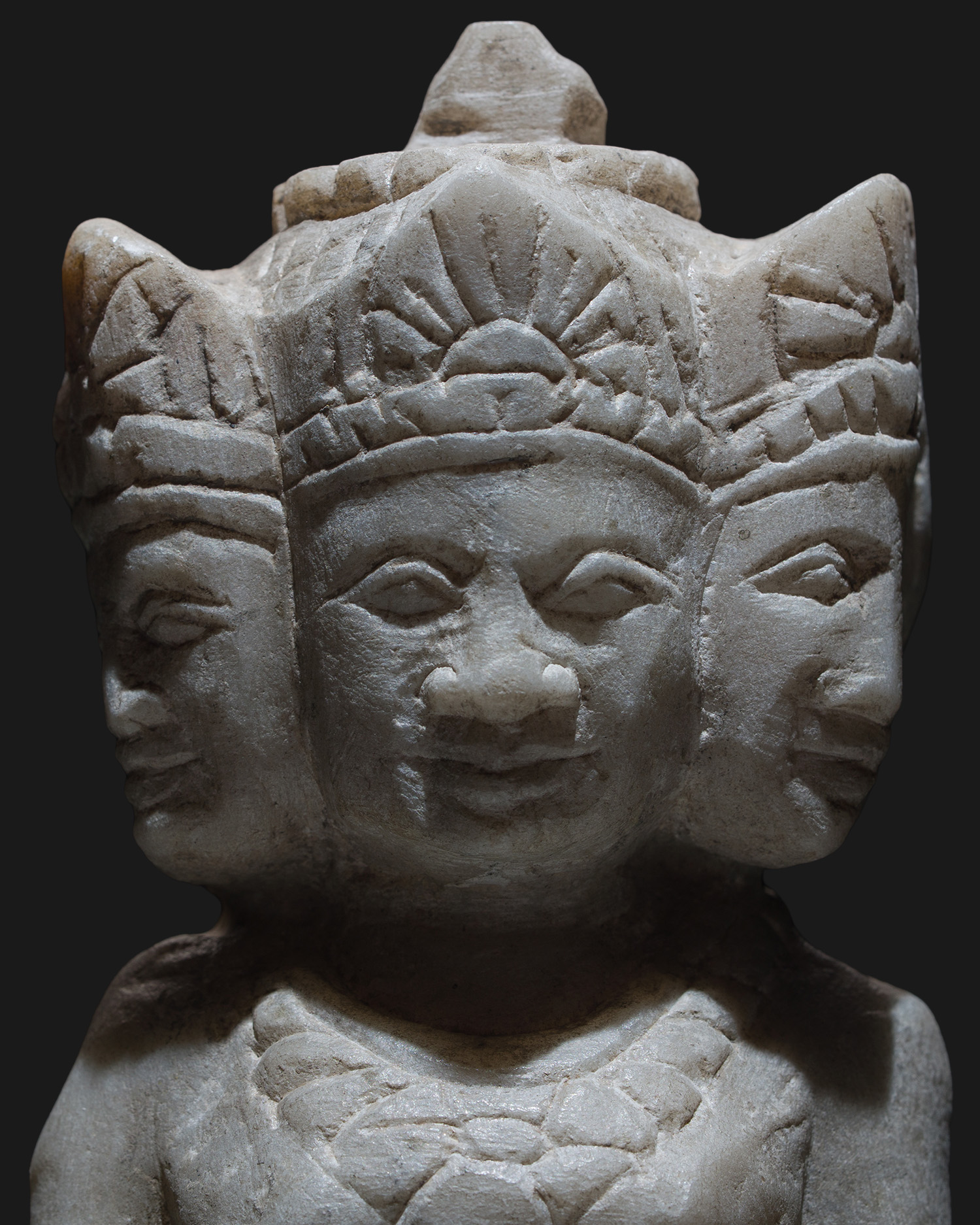
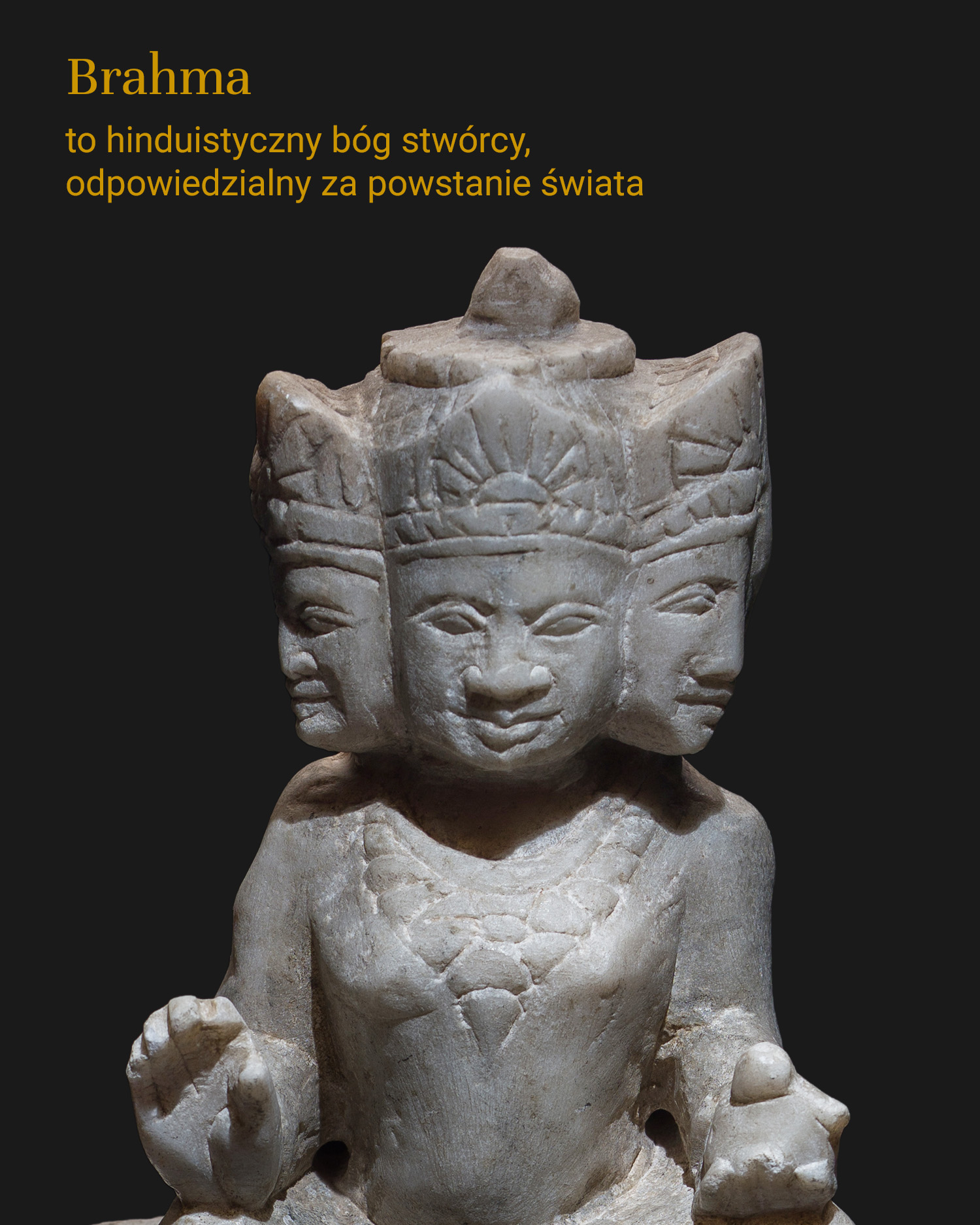
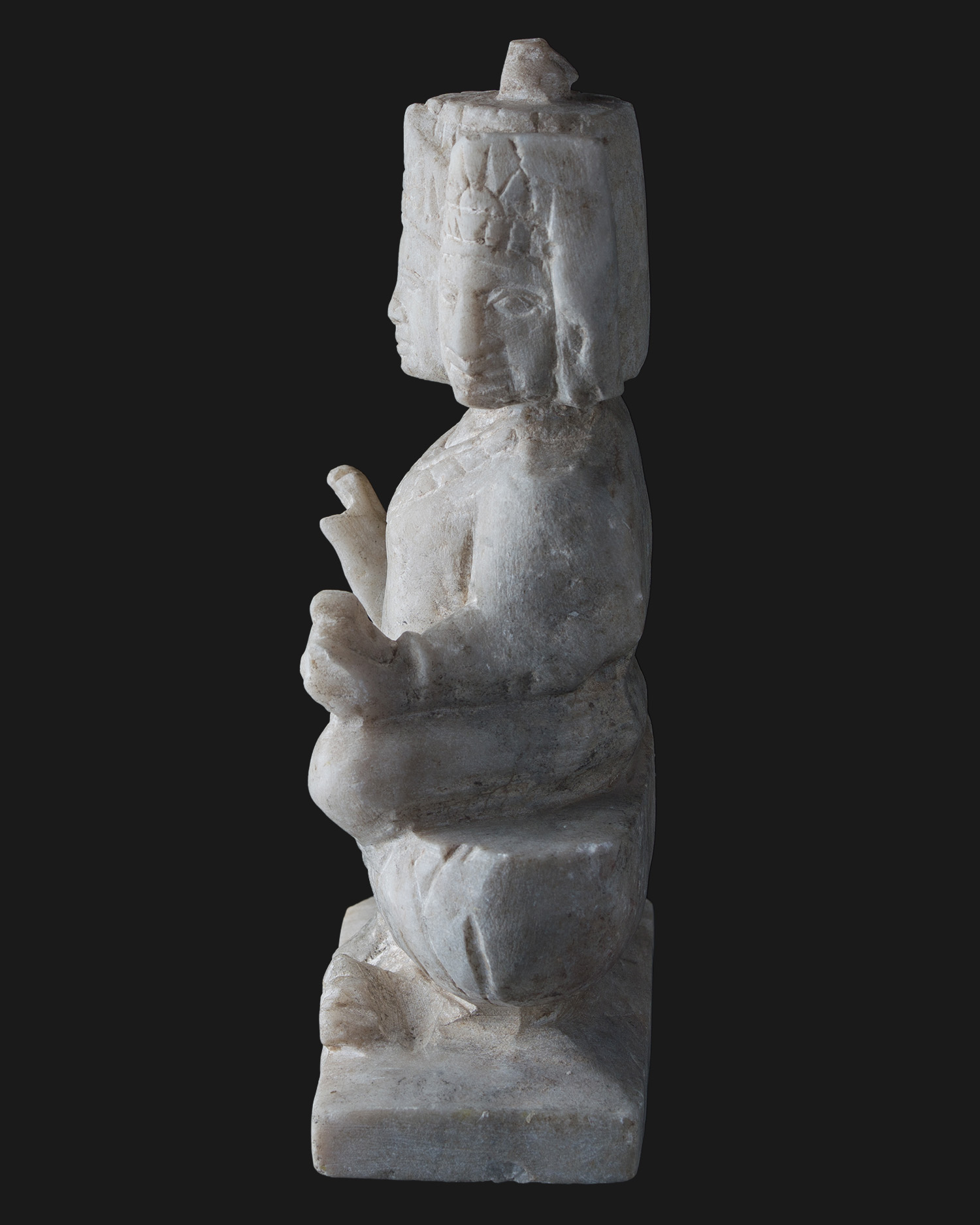
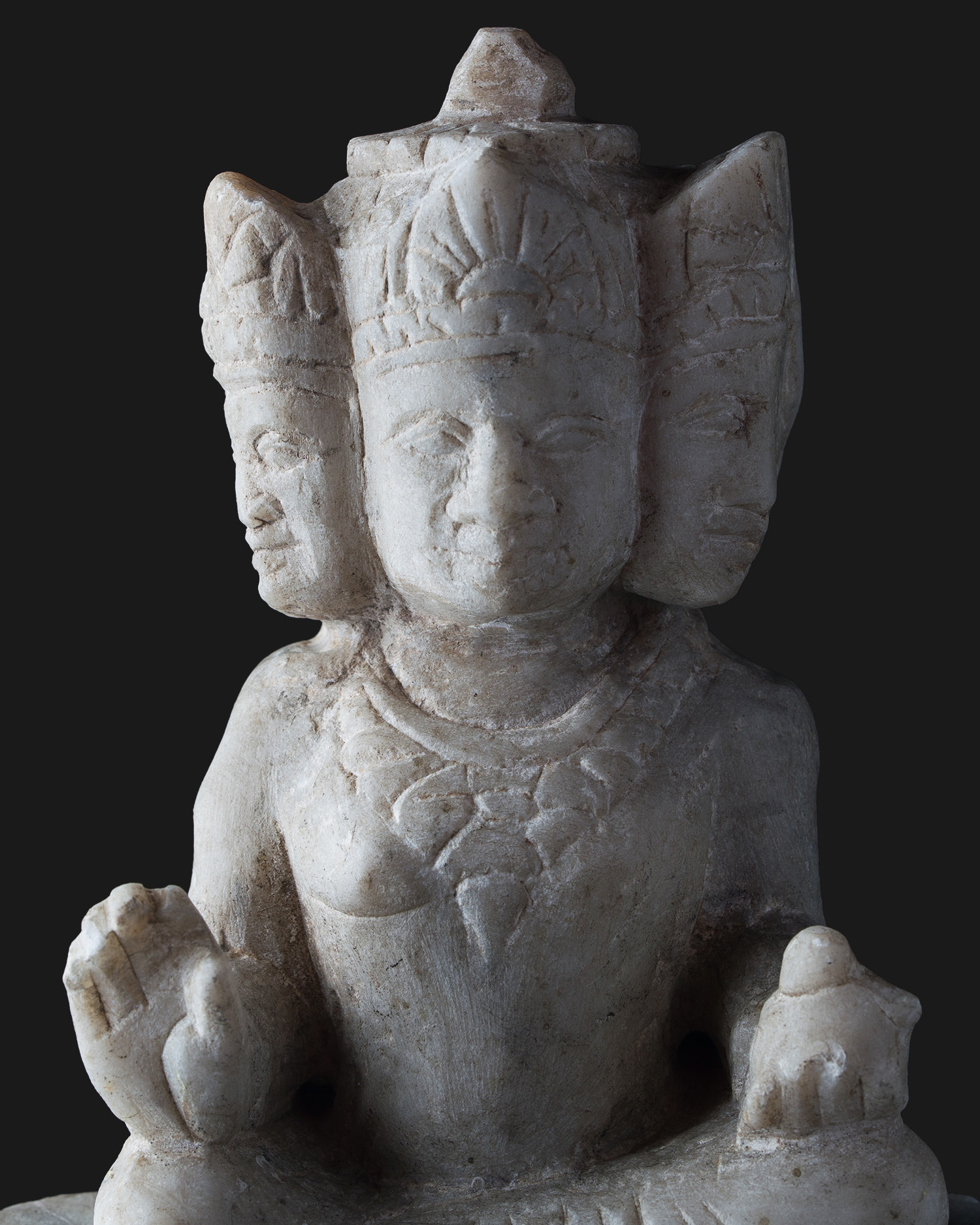


Brahma, marble, India, 19th (?) century.
500,00 zł
A marble sculpture depicting Brahma, the Hindu creator god and personification of cosmic wisdom, belonging to the Trimurti trinity alongside Vishnu and Shiva. The object was hand-carved in gray marble and represents a simplified iconographic form in which Brahma is shown with three faces, instead of the traditional four .
The figure is depicted seated, with a sphere held in his hand, interpreted as a symbol of the earth or the entire cosmos, and refer to the act of creation and the order of the world.
Due to the limited worship of Brahma in India and the small number of temples dedicated to him, sculptural representations of this deity are rare, making the object particularly interesting. The sculpture is in very good condition.
Sprzedane
Related products
Bust of Krishna, marble, India, 19th century.
Capital with Figural Decoration, Sandstone, France, 12th-14th Century
Christ Salvator Mundi, polychrome wood, Poland, 19th century.
Head of an Angel (Putta), gilded linden wood, Poland, 1st half of the 18th century.
Irish (Celtic) cross, stone sculpture, Ireland, 19th century.
Krishna, marble, India, 19th century.
Rama, marble, India, 19th century.
A sculpture depicting Rama, one of the most important deities of Hinduism, considered the seventh avatar of Vishnu. The object was hand-carved in white marble in India, probably in the 19th century.
The figure is depicted standing, facing forward. The face has a gentle expression with a soft smile and slightly closed eyes. The head is crowned with a decorative crown, and long necklaces are visible on the chest.
The figure is dressed in a draped robe with clearly marked folds. On its back is a quiver with arrows, characteristic of Rama's depictions.
The hands of the sculpture are not preserved, originally in one of them the figure held a bow - a characteristic element of representations of this deity. Further about these cavities do not write that they are consistent.
Rama is the hero of the epic Ramayana and in the Hindu tradition symbolizes righteousness and fidelity to the principle of dharma. His images occupy an important place in Indian sacred art, although full-figure marble sculptures of this scale are less common.
The object is preserved in good condition, with clear legibility of form and detail.
Vajrabhairava in Tantric Union (Yab-Yum) with Vajravetali, gilt and polychromed bronze, Tibet (?), 19th century
The sculpture depicts Vajrabhajrava, or more specifically, his Tantric form. The deity has three heads with angry expressions, crowned with a crown of skulls, symbolizing the direct destruction of illusion. Inside the crown, flames burst forth, a fire of wisdom burning away ignorance. Emerging from them is the head of a gentle animal - it belongs to Vajrabhajrava himself (his higher aspect).
The figure has six arms, symbolizing the multifaceted activity of the enlightened mind, and holds ritual attributes. The outstretched wings are a rarer but significant feature, representing a transcendental aspect and the overcoming of samsaric limitations. Vajrabhairava stands in a dynamic pose on a lotus base, trampling a male and female figure. These figures symbolize ignorance (avidya), attachment, anger, ego, and the illusion of duality.