


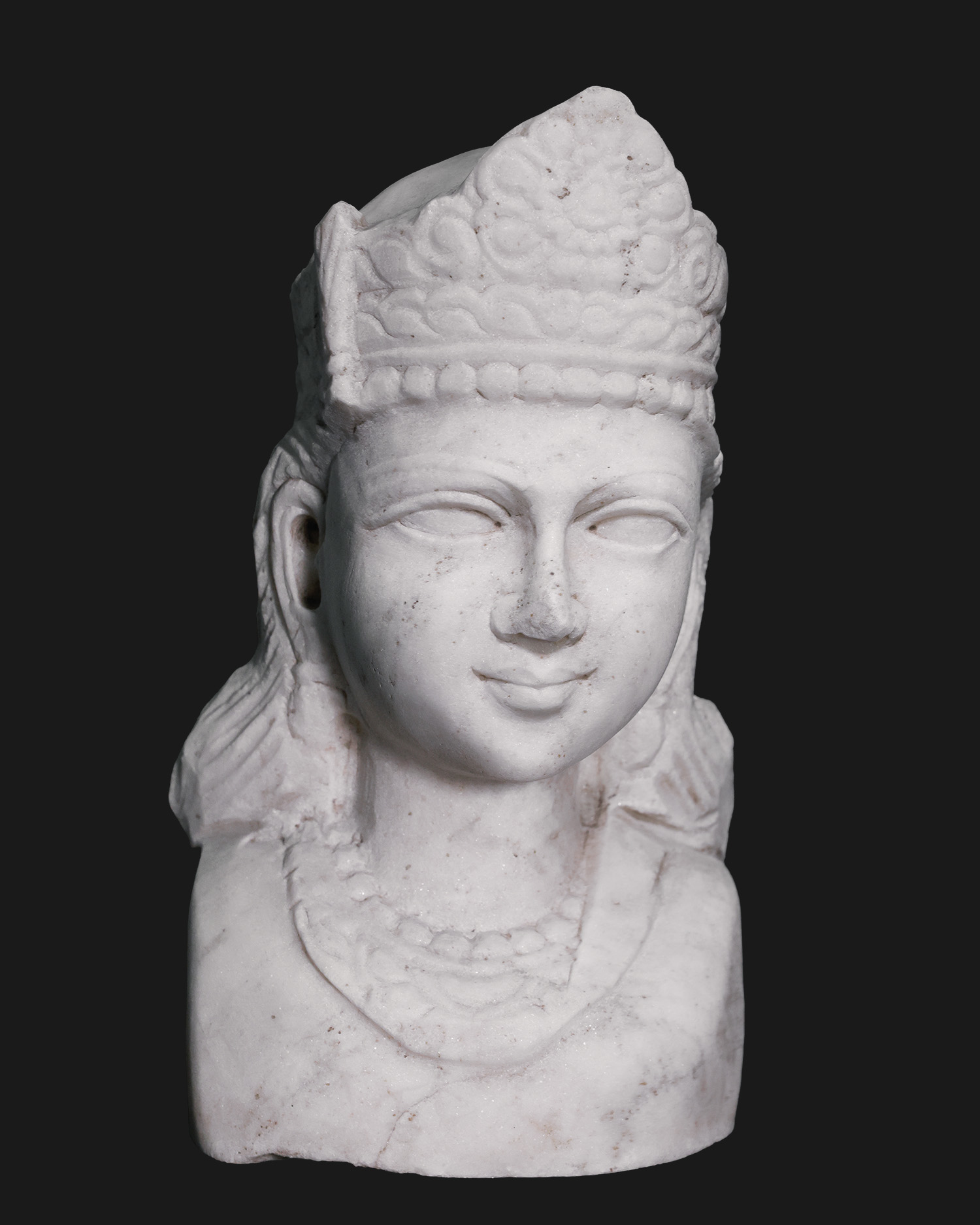
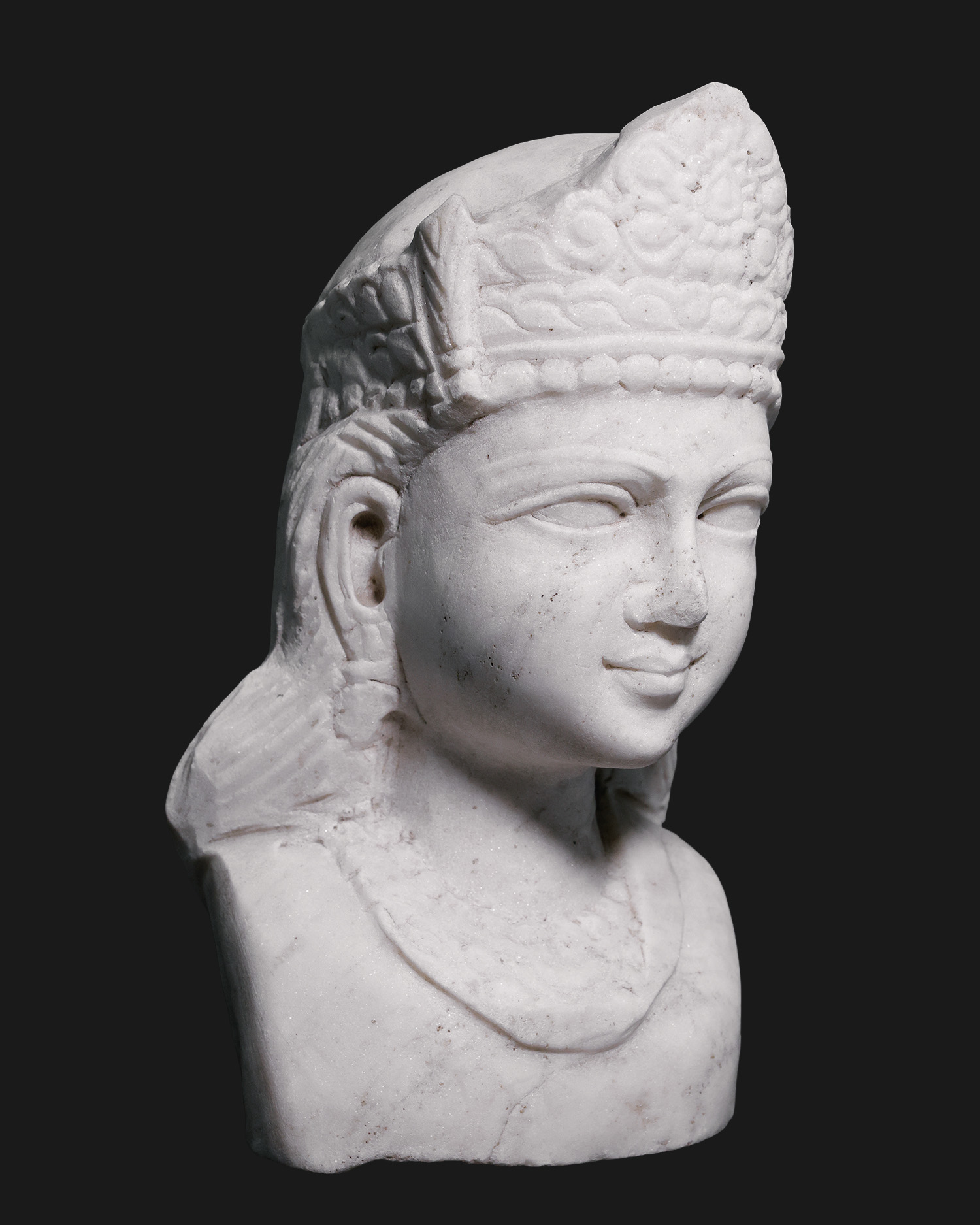
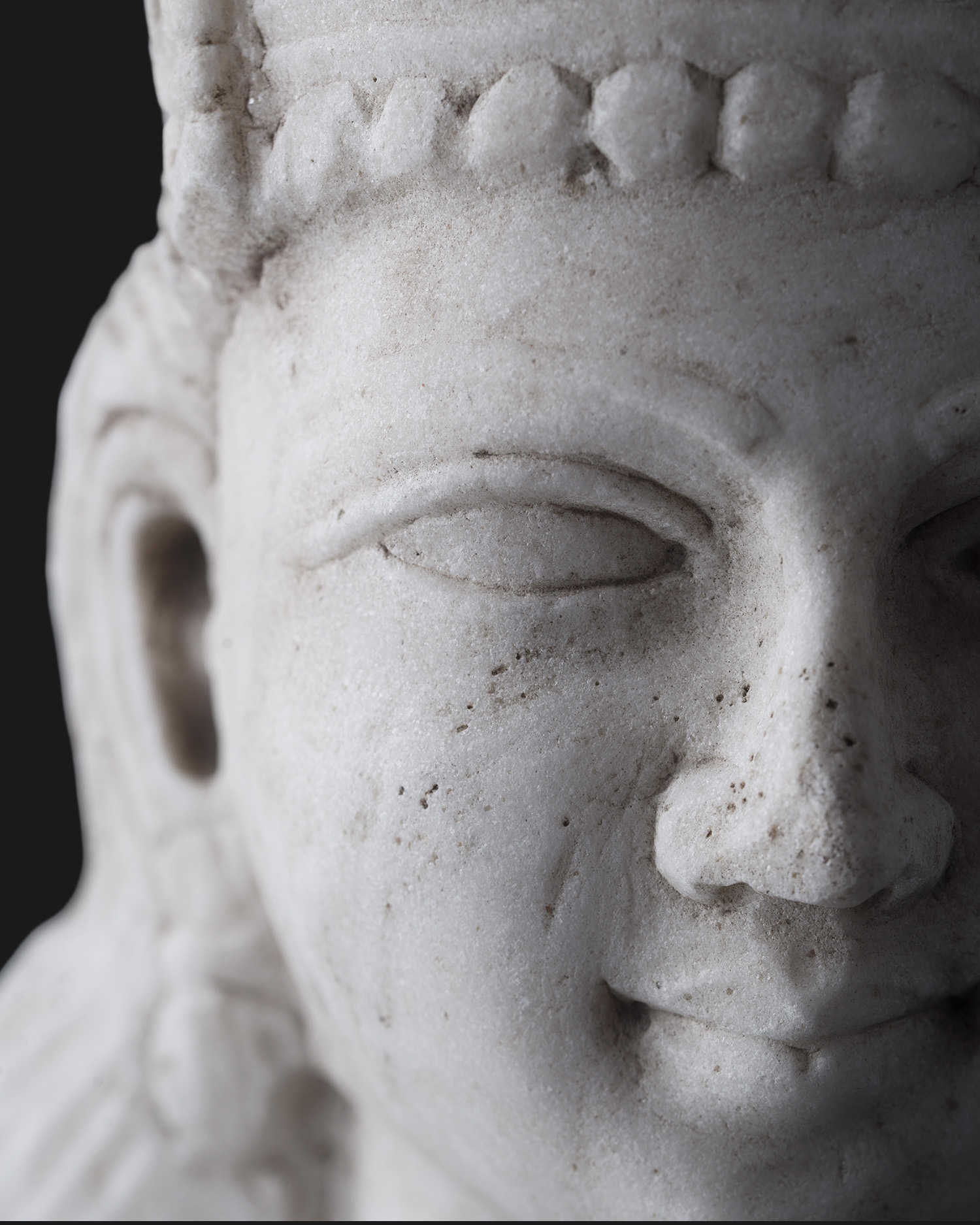
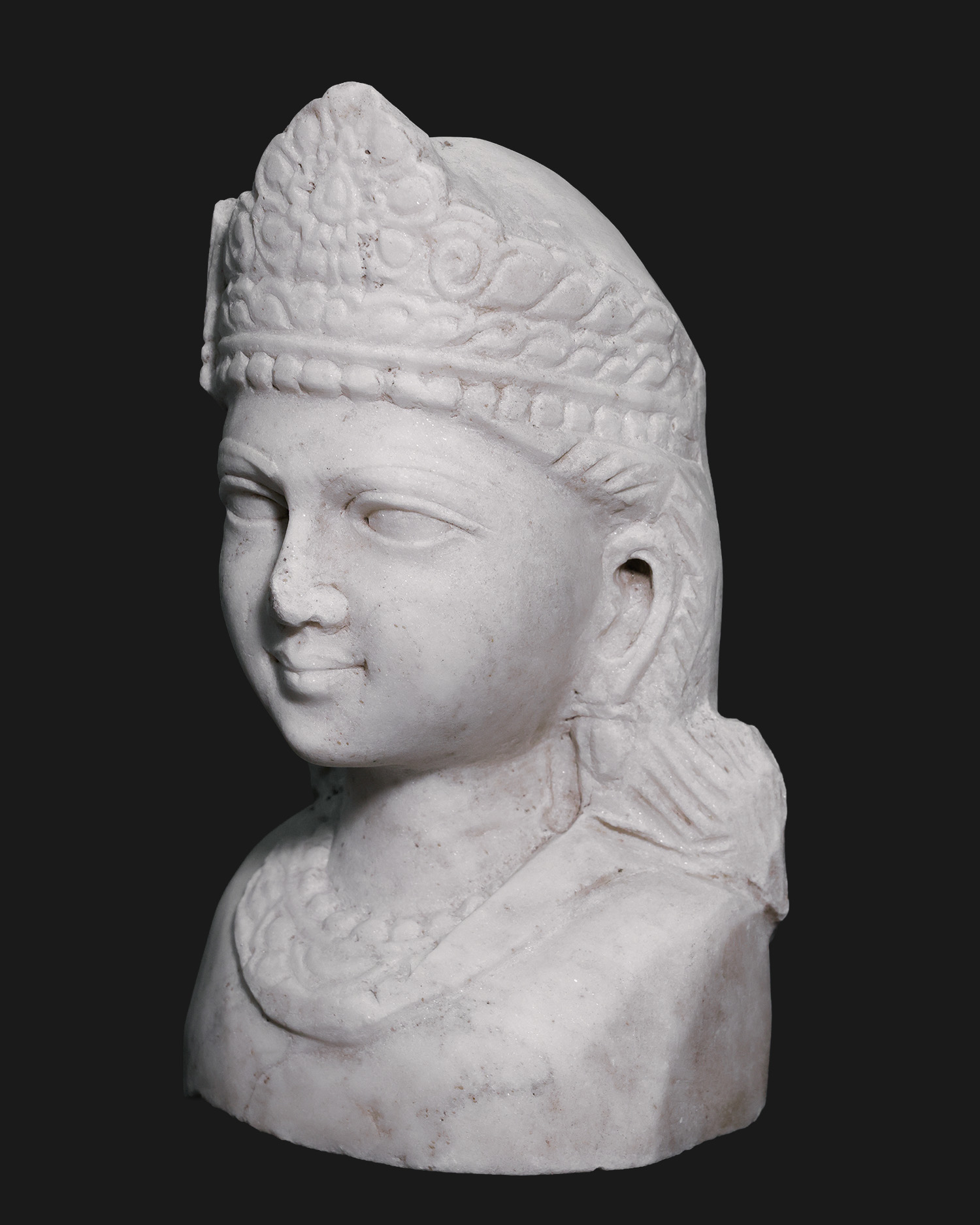
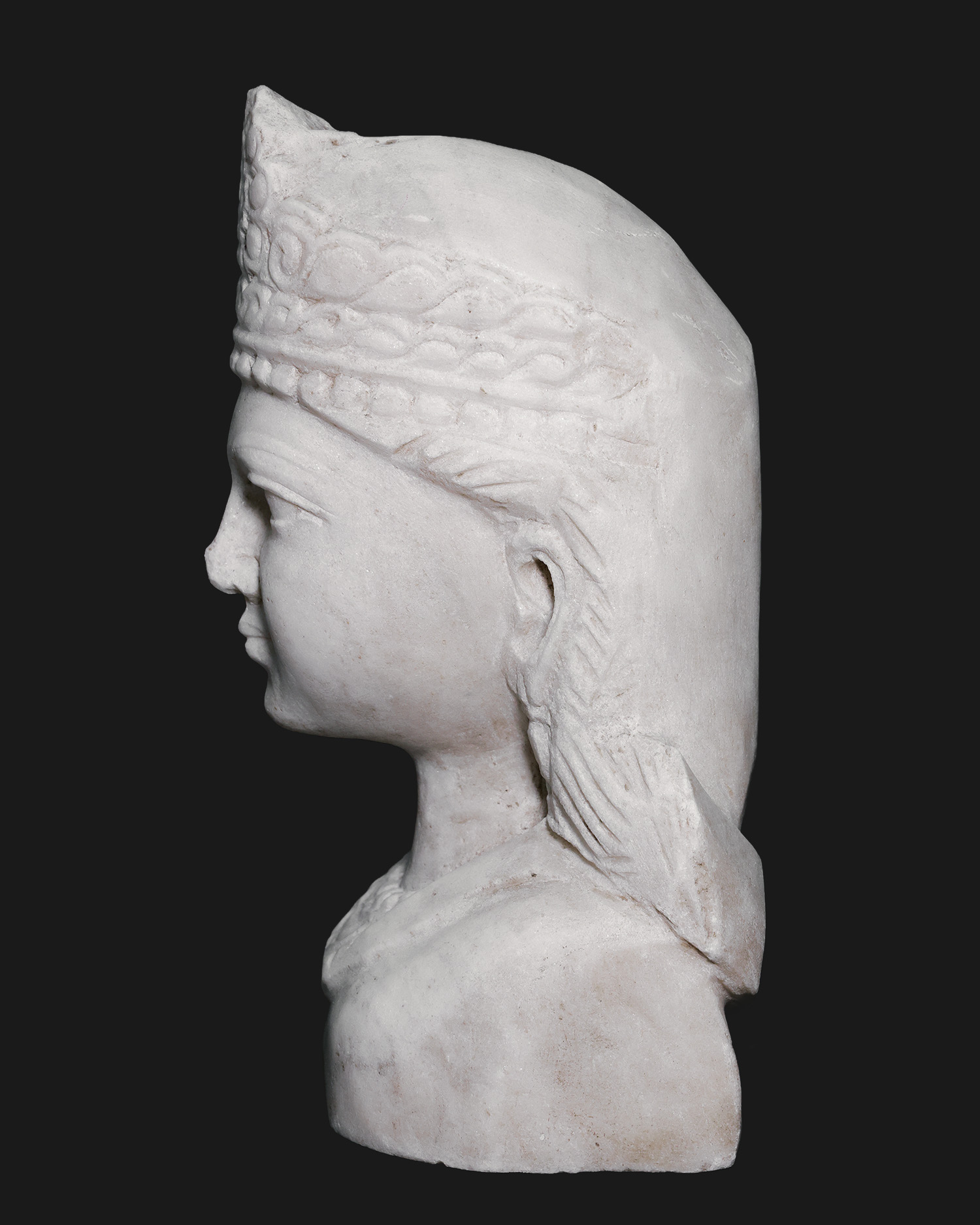
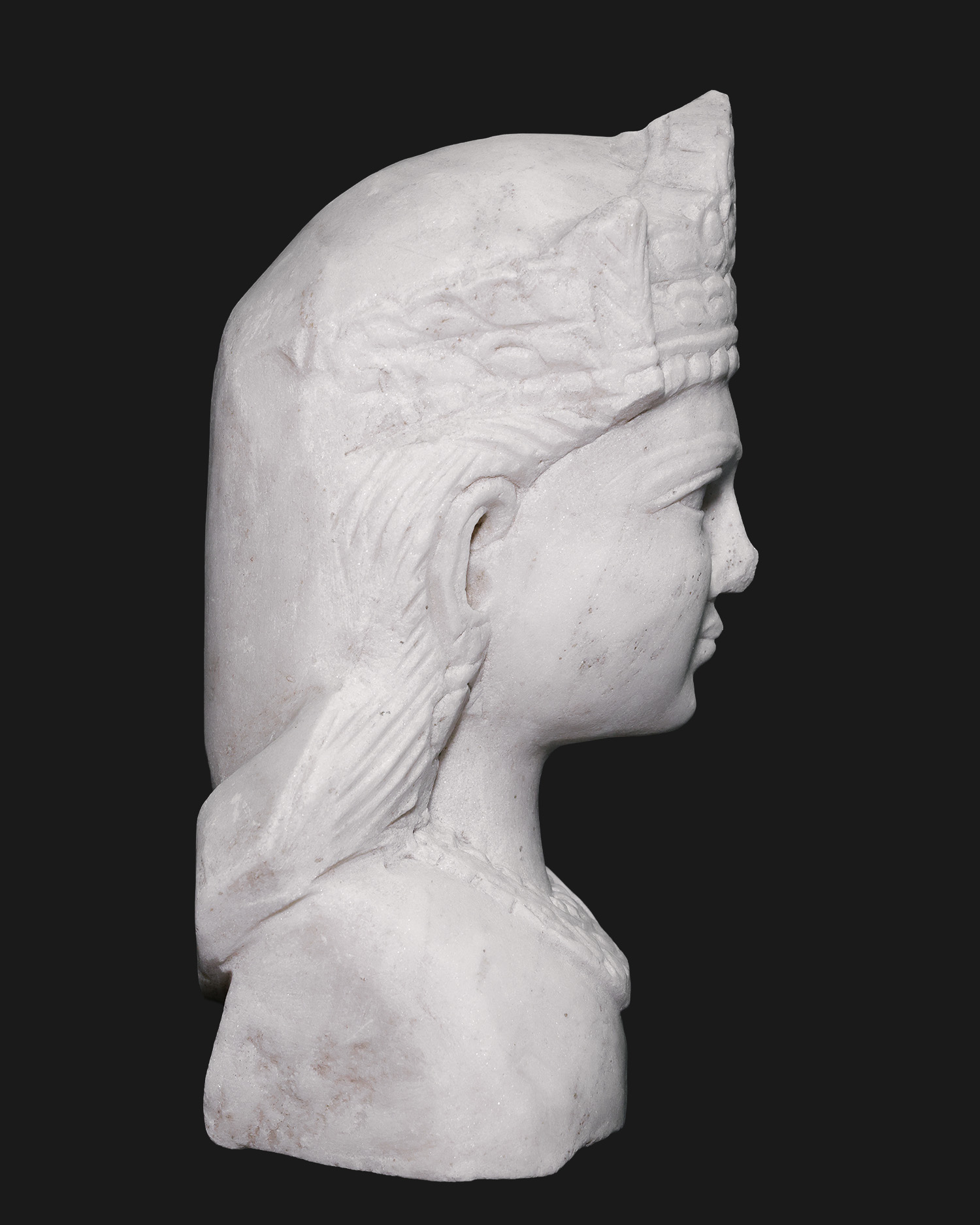
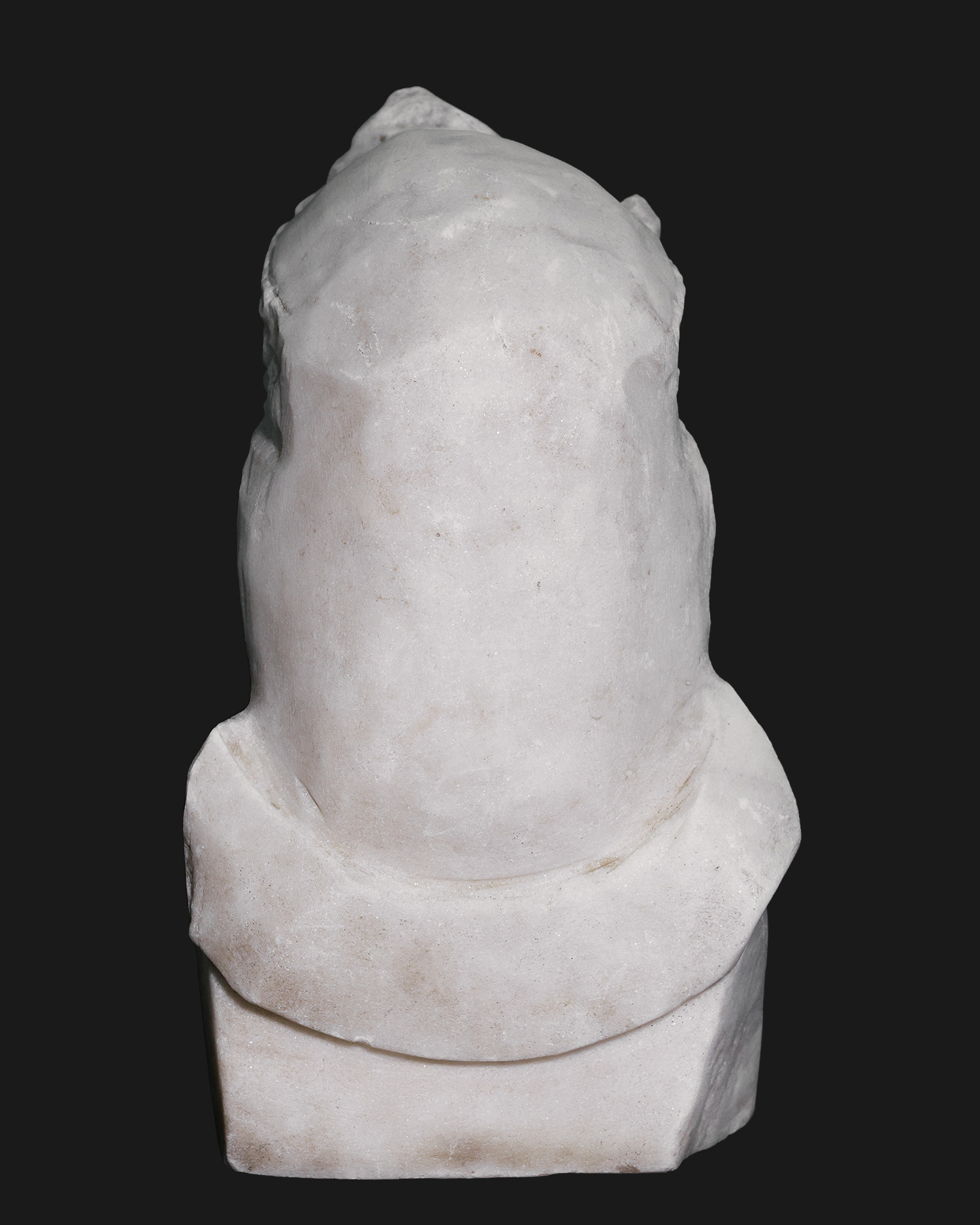
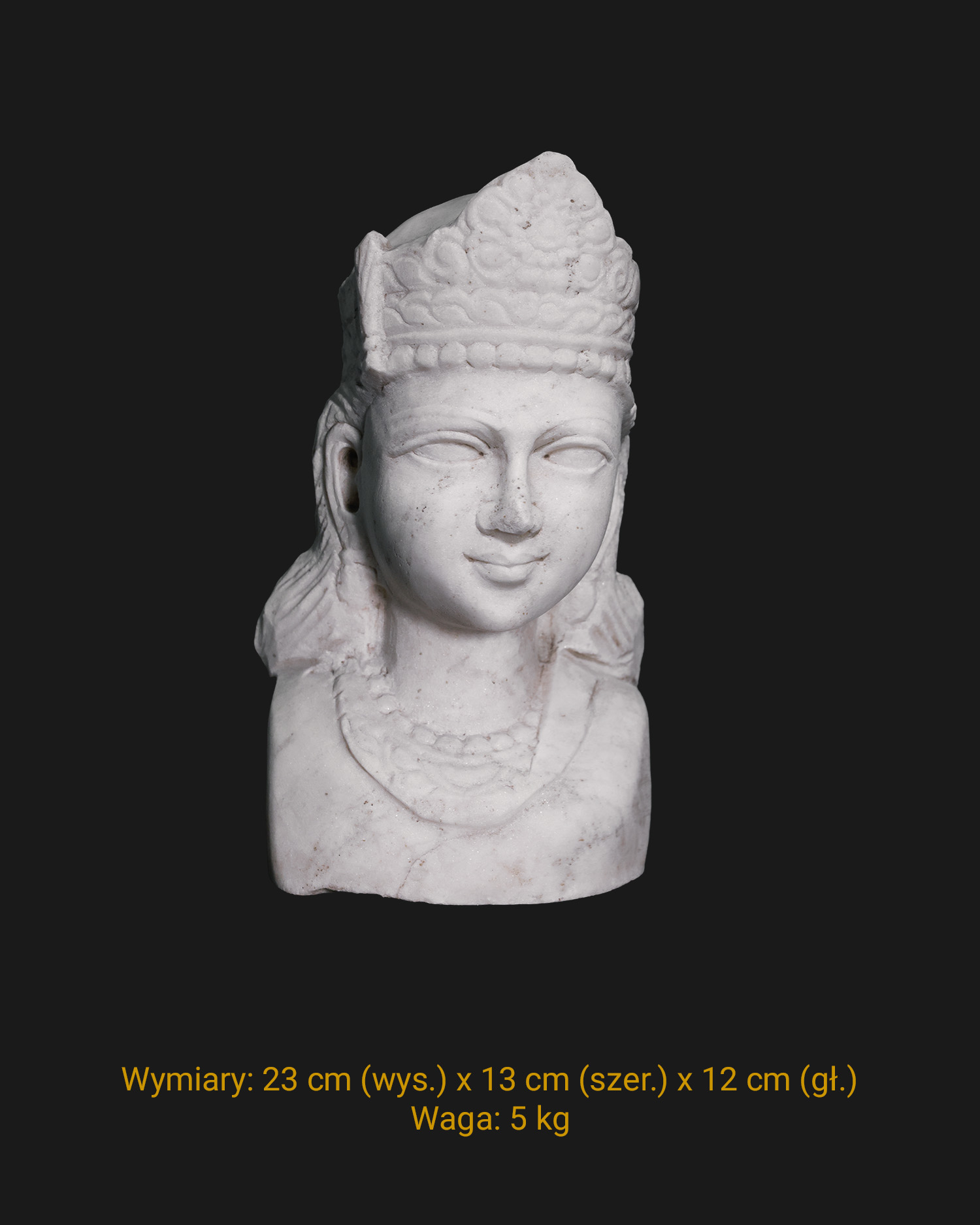

Bust of Krishna, marble, India, 19th century.
800,00 zł
The sculpture depicts a bust of the deity, identified as Krishna – one of the most popular incarnations of the god Vishnu. The figure is characterized by idealized facial features with a gentle, meditative expression. The delicate, barely defined smile (so-called archaic) and wide, almond-shaped eyes with well-defined eyebrows are typical of Rajasthani art. The proportions convey the youthful grace of the deity (bala-rupa). The deity’s head is adorned with a tall, richly carved Kiritamukuta-type crown. It consists of several tiers: a lower band imitating a string of pearls or beads, a middle band with a braided motif, and a finial with floral, rosette-like decorations. On the left profile of the crown (just above the ear) a vertical carved element is visible. It is a stylized peacock feather (Mayur Pankh) – a key and unique attribute of Krishna, symbolizing the beauty of creation and divine royalty. The figure’s neck is adorned with a wide, close-fitting necklace (kanthamala). Thick, stylized strands of hair fall from the sides of the head, and traditional large earrings (kundala) are visible in the ears.
Dimensions: 23 cm (height) x 13 cm (width) x 12 cm (depth)
Weight: 5 kg
1 in stock
Related products
Brahma, marble, India, 19th century.
Christ Salvator Mundi, polychrome wood, Poland, 19th century.
Gallo-Roman male portrait head, marble, Roman Empire, Province of Gaul (area of modern France), 1st-3rd century after Chr.
Hercules, bronze, marble, northern Italy (?), 16th century (?).
Samuel Lipszyc (1880 – 1943), Naked ballerina, patinated bronze, ca. 1920
Singa Barong, polychrome wood, Indonesia, 19th century.
Skull (Memento Mori), marble, Italy, 18th-19th century
Elegant, decorative skull made of natural gray marble, maintained in a realistic style: the eye sockets, cranial seam lines and zygomatic arches are clearly formed. The faded dentition alludes to the concept of Vanitas.
The characteristic feature of the stone used for the sculpture is irregular veining in shades of beige, cream and gray, which gives it a unique character. The surface is polished, with natural discolorations and small marks due to the properties of the material, which emphasizes the authenticity and nobility of the marble. The skull is provided with a lead pin underneath, set on a minimalist, contemporary base in black, which exposes the sculpture and gives it a museum-like character.
The object is ideal for collectors of curiosities, lovers of the art of Vanitas - Memento Mori, cabinets of curiosities and as an expressive element of interior design in classical, industrial or eclectic style. An object with a strong aesthetic and symbolic expression, which is difficult to pass by indifferently.
Vajrabhairava in Tantric Union (Yab-Yum) with Vajravetali, gilt and polychromed bronze, Tibet (?), 19th century
The sculpture depicts Vajrabhajrava, or more specifically, his Tantric form. The deity has three heads with angry expressions, crowned with a crown of skulls, symbolizing the direct destruction of illusion. Inside the crown, flames burst forth, a fire of wisdom burning away ignorance. Emerging from them is the head of a gentle animal - it belongs to Vajrabhajrava himself (his higher aspect).
The figure has six arms, symbolizing the multifaceted activity of the enlightened mind, and holds ritual attributes. The outstretched wings are a rarer but significant feature, representing a transcendental aspect and the overcoming of samsaric limitations. Vajrabhairava stands in a dynamic pose on a lotus base, trampling a male and female figure. These figures symbolize ignorance (avidya), attachment, anger, ego, and the illusion of duality.