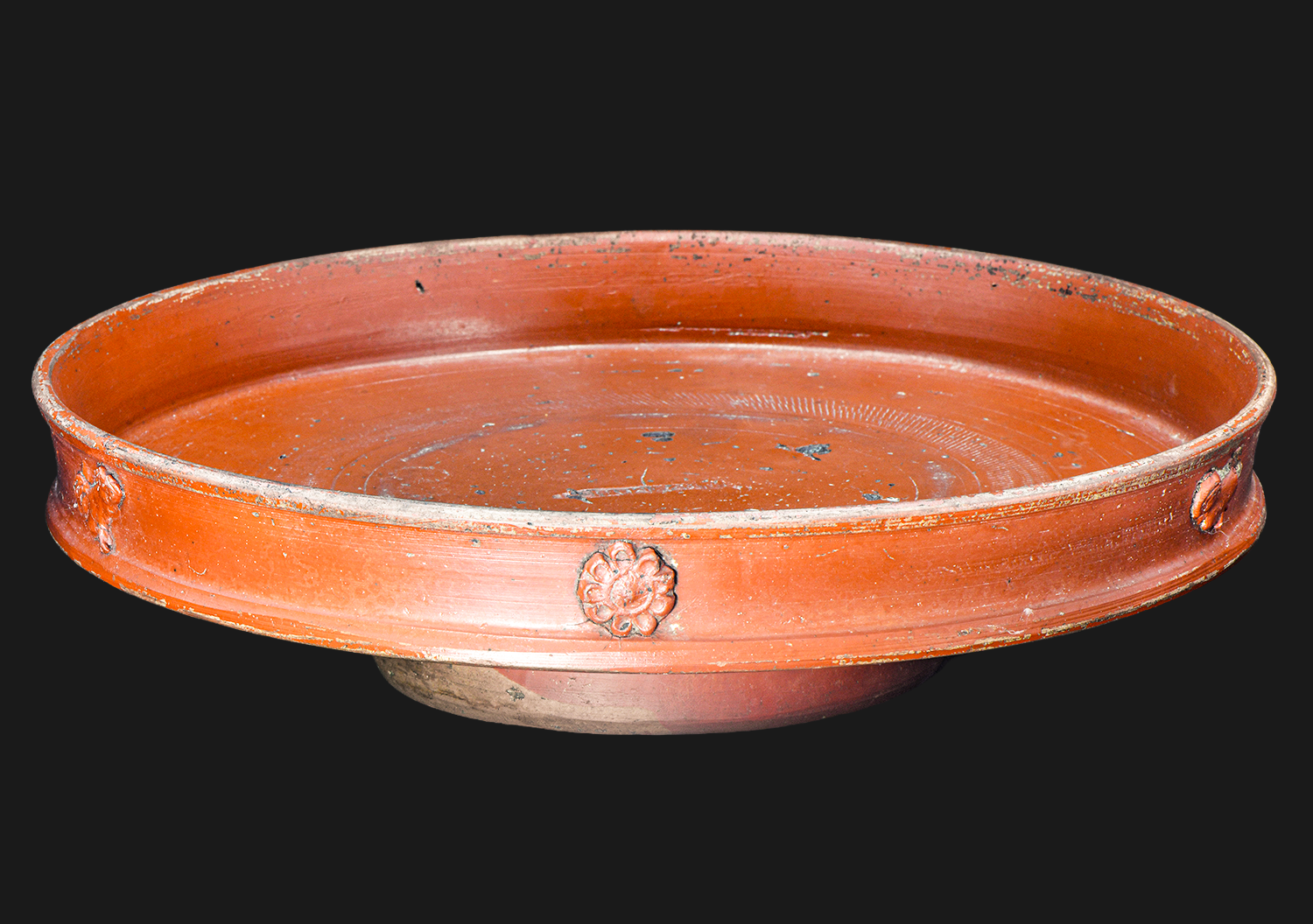
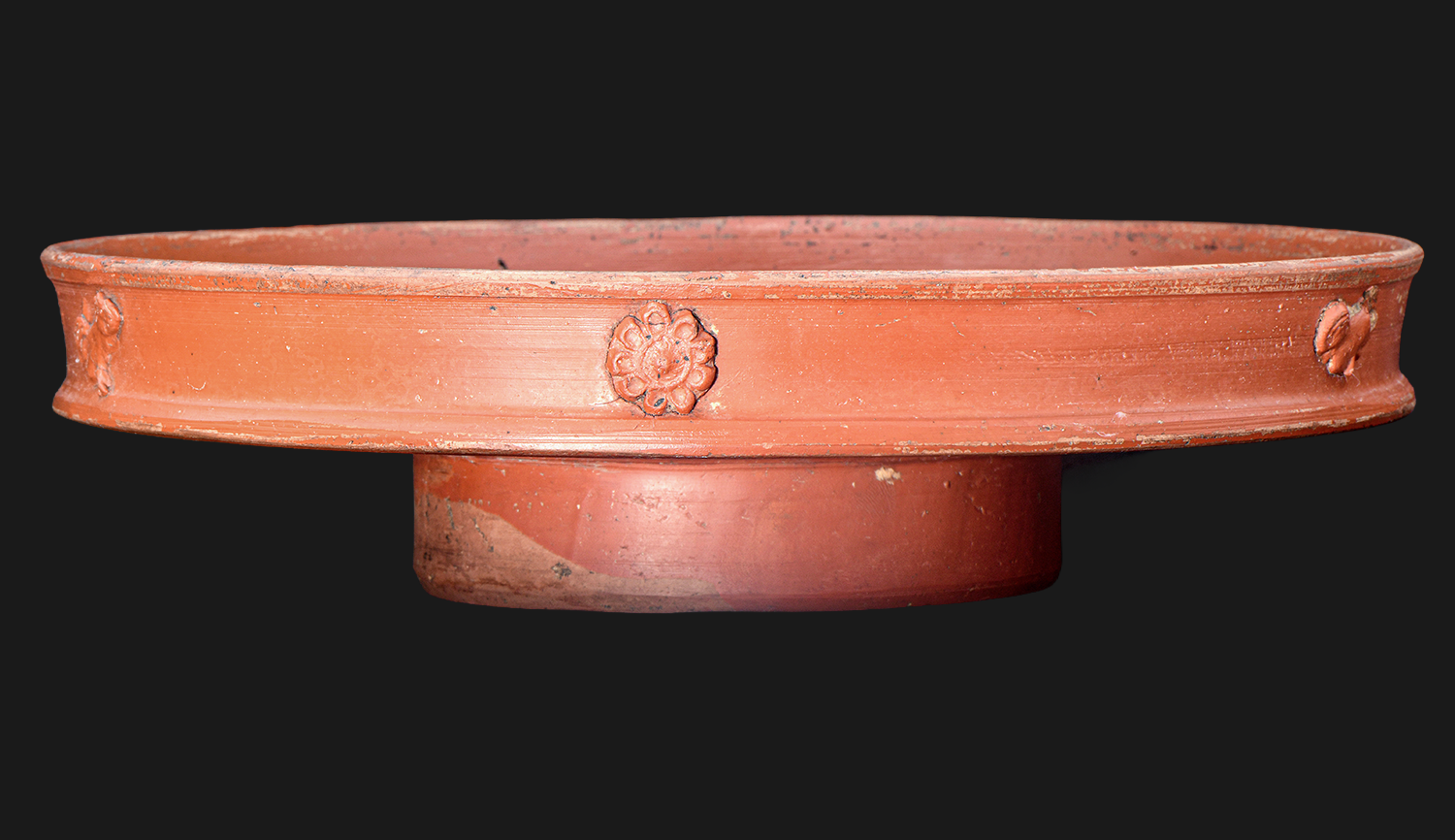
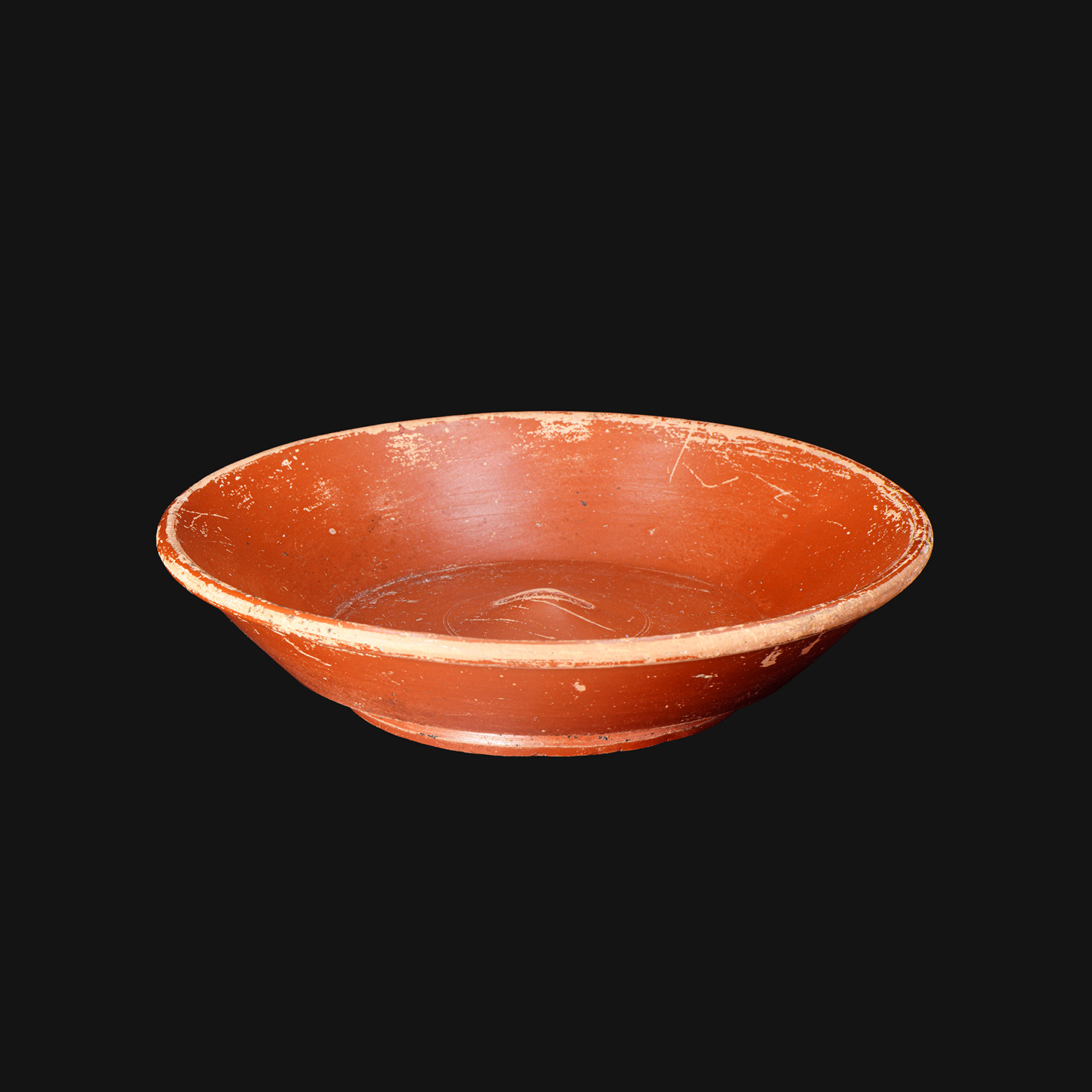
A Roman terra sigillata tableware vessel (patera) representing Dragendorff form 15/17 (a variant with applied decoration and a prominent rim). It was made between approximately 70–120 AD, during the Early Empire – the period of the Flavian dynasty and Emperor Trajan's reign. The vessel was produced in renowned, highly specialized ceramic workshops in Pisa, considered part of the advanced Late Italic (Padanian) production circle.
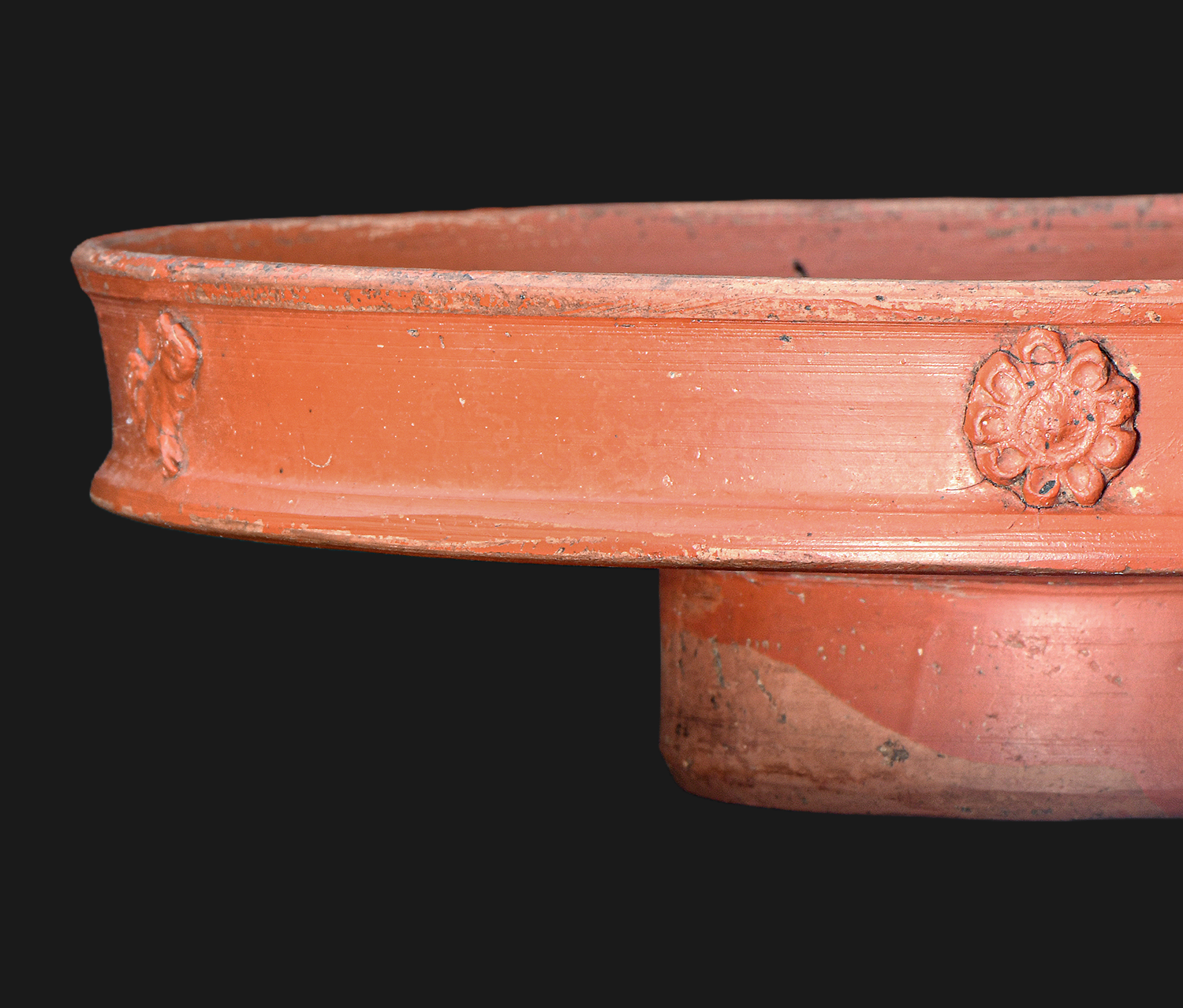
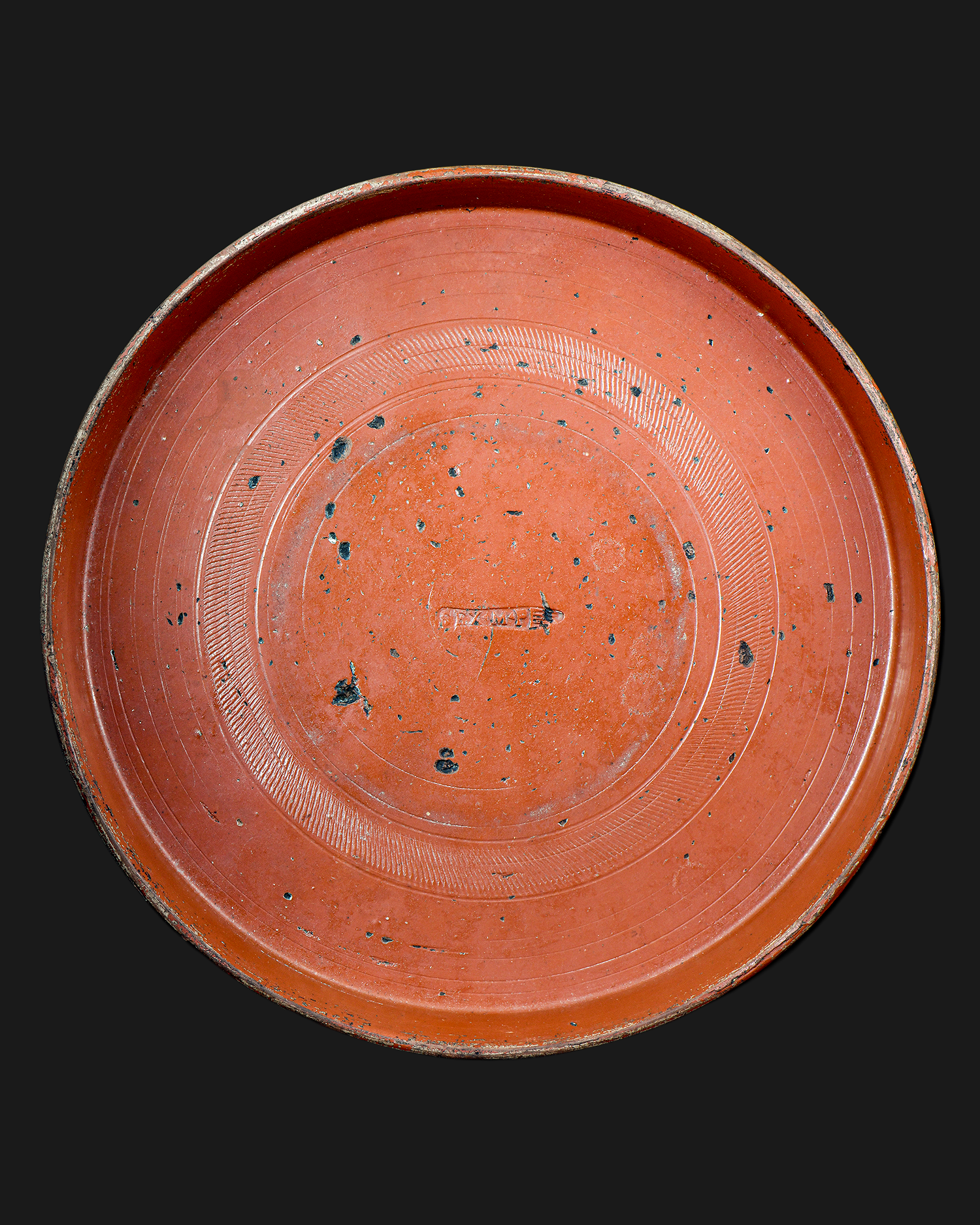
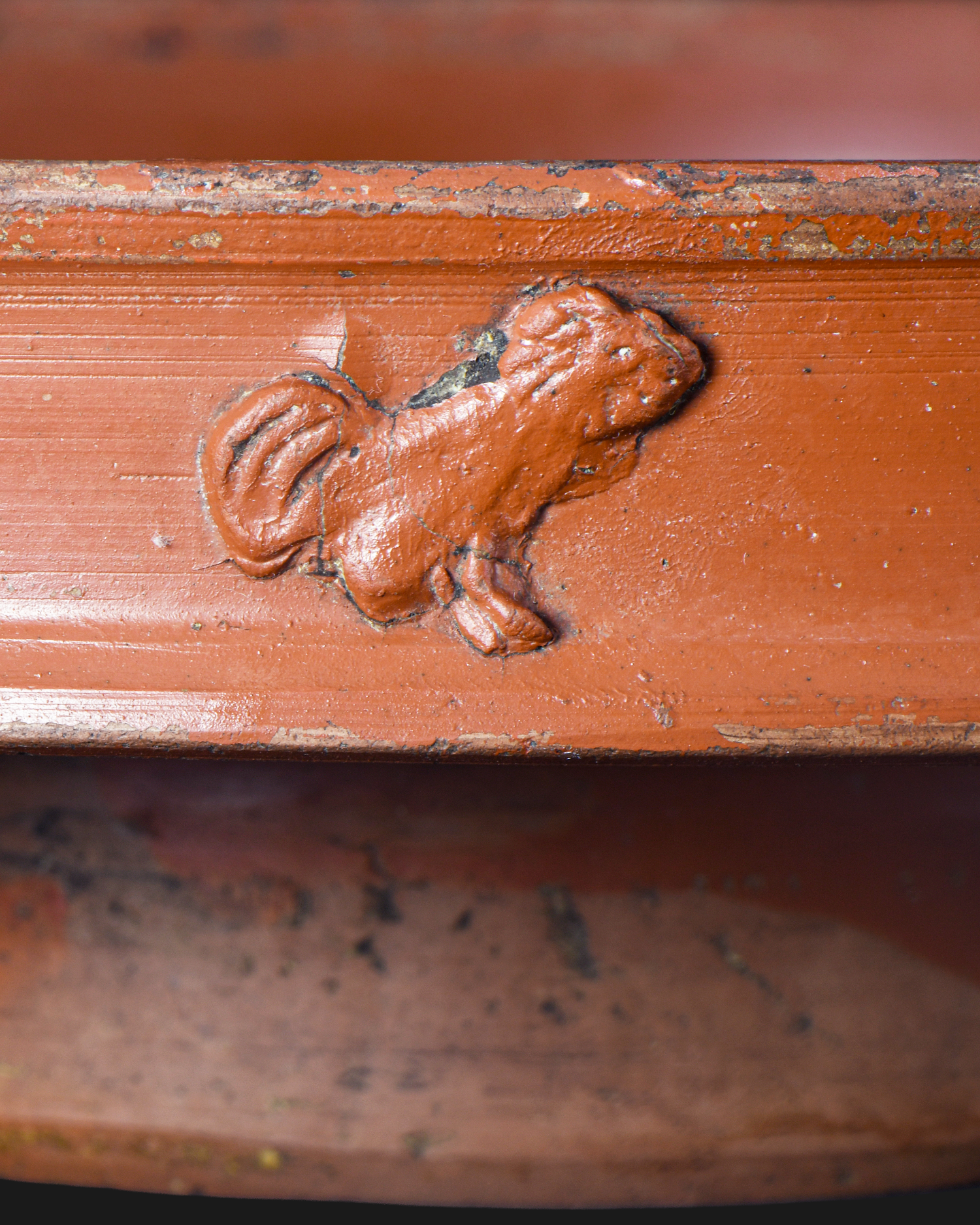
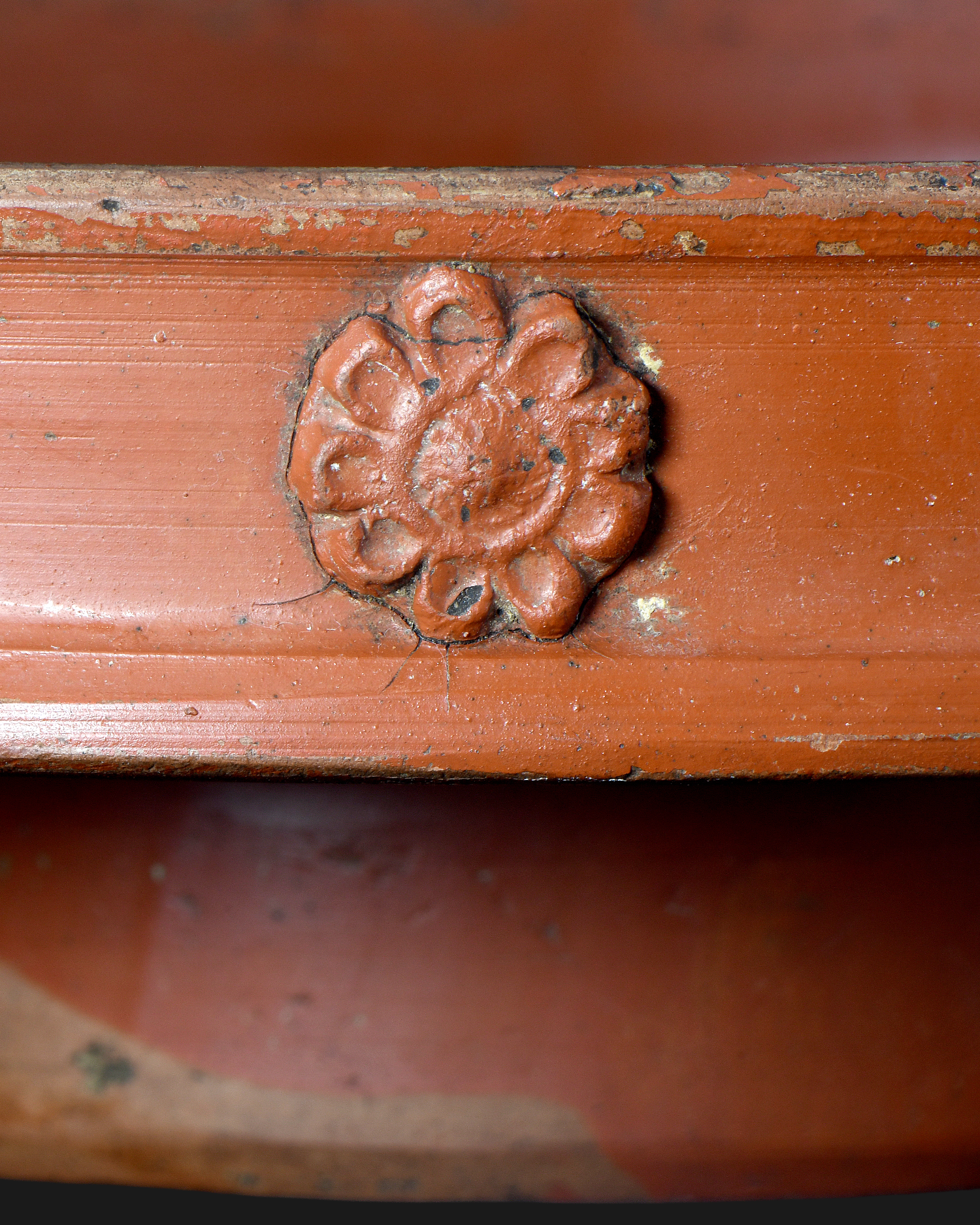
The patera consists of a shallow bowl with vertical walls (rim), set on a ring-shaped foot. Given its significant dimensions and decoration, it can be assumed that it was intended for displaying and serving food during Roman feasts. The vessel was formed from sorted, impurity-free clay rich in iron oxides, which, after firing, resulted in a body of deep, saturated brick-red color. The surface of the patera is covered with a clay slip featuring a characteristic, silky sheen, bearing natural traces of ancient use, such as delicate, superficial abrasions of the lacquer on the rim's edge and the underside of the foot. The outer wall of the vertical rim is adorned with two motifs: multi-petaled floral rosettes alternating with silhouettes of birds (likely roosters with prominent tail feathers), created using applied relief technique by pressing into a miniature matrix and attaching the finished element to the dried body. The interior of the vessel's base is additionally decorated with a wide band of rouletted ornament.
Ancient Production
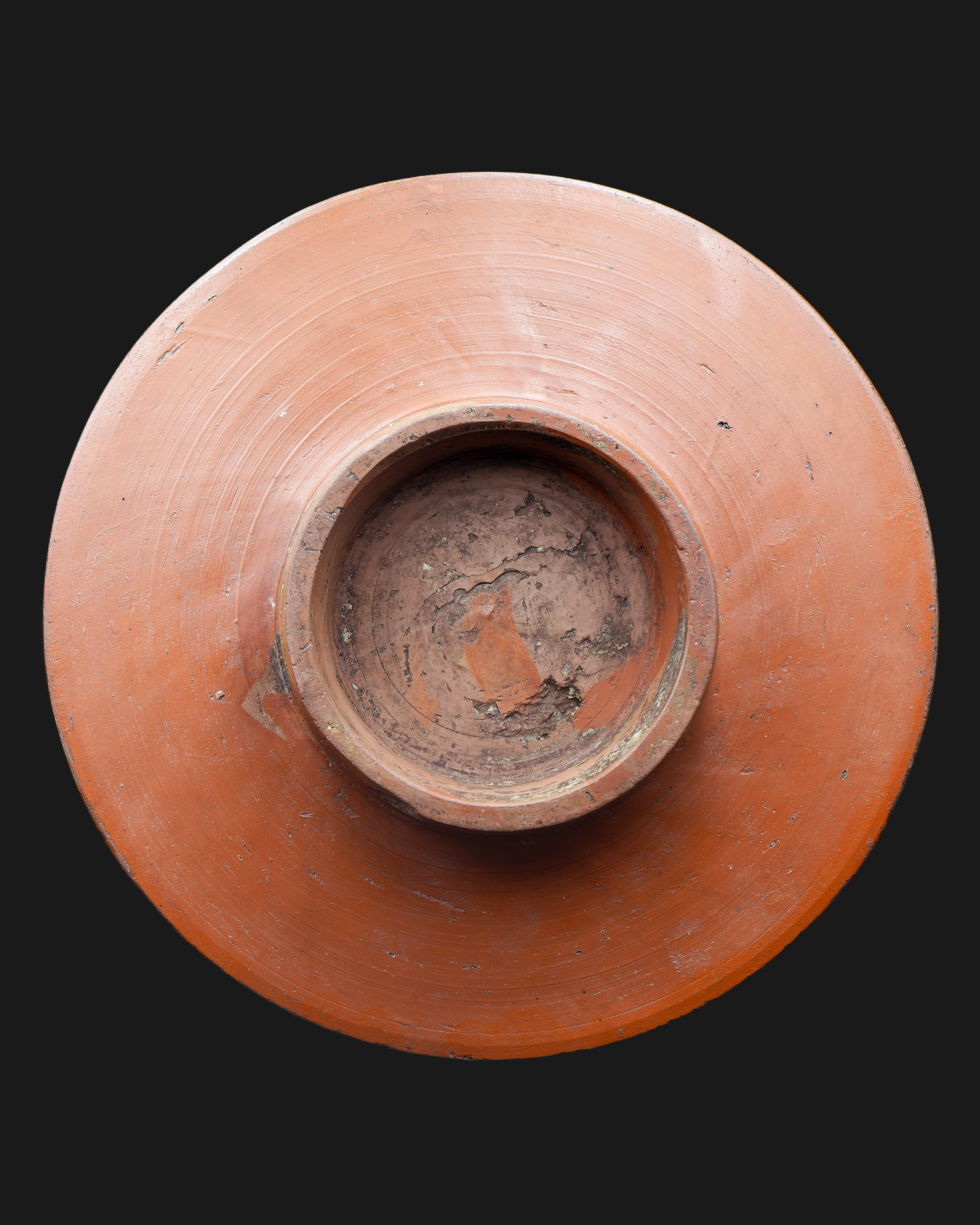
On the underside of the vessel, traces of its ancient production process on a fast-spinning potter's wheel are perfectly visible. The massive annular foot with distinctly thickened walls forms a stable foundation for the vessel, exhibiting delicate, natural wear-related smoothing on its lower edge, resulting from centuries of friction against hard surfaces such as tables or shelves. The interior of the foot ring, which is the actual underside of the vessel's base, is characterized by a thinner and more matte layer of slip, revealing the original structure of the body with roughness and minor, ancient technological cracks that formed during the cooling process of the pottery kiln.
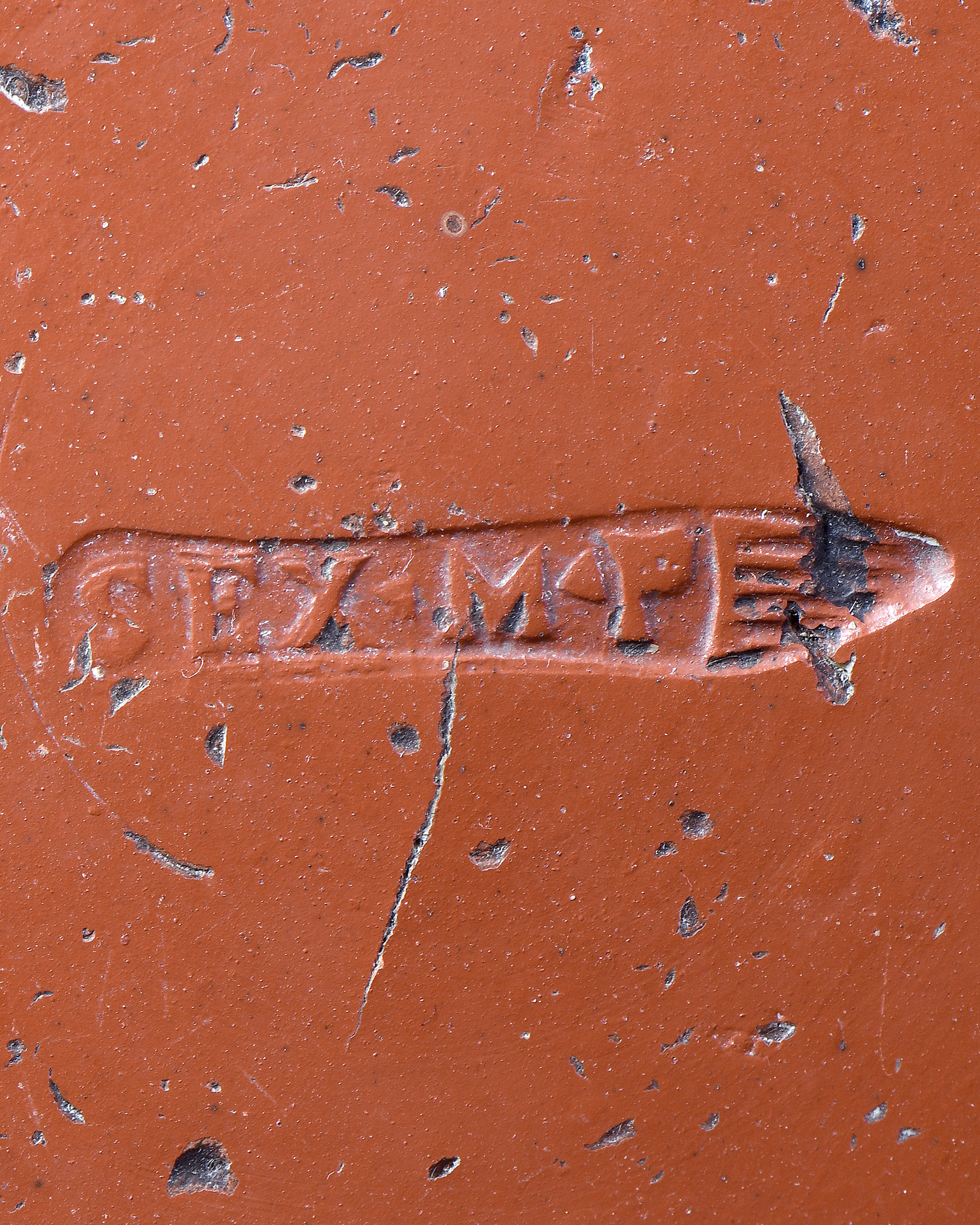
What does SEX·M·FE mean?
At the center of the patera's interior, a very well-preserved, clearly impressed workshop signature is enclosed within a human foot-shaped frame, known in Roman archaeology as a planta pedis. The inscription within the foot contains a legible, dot-separated record SEX·M·FE, in which the last letters form a precise, textbook Roman ligature sharing a common vertical stem. The epigraphic expansion of the abbreviation reads Sextus Murrius fecit, which translates to "Sextus Murrius made it." Sextus Murrius Festus was one of the most esteemed Pisan masters of that era, and the presence of a full signature within the prestigious planta pedis frame unequivocally confirms the highest quality of craftsmanship and the object's unique collector's status. The vessel has survived intact, without any structural cracks, losses (apart from minor damage to one of the "roosters"), or modern reconstructions, representing the highest historical, scientific, and market value.