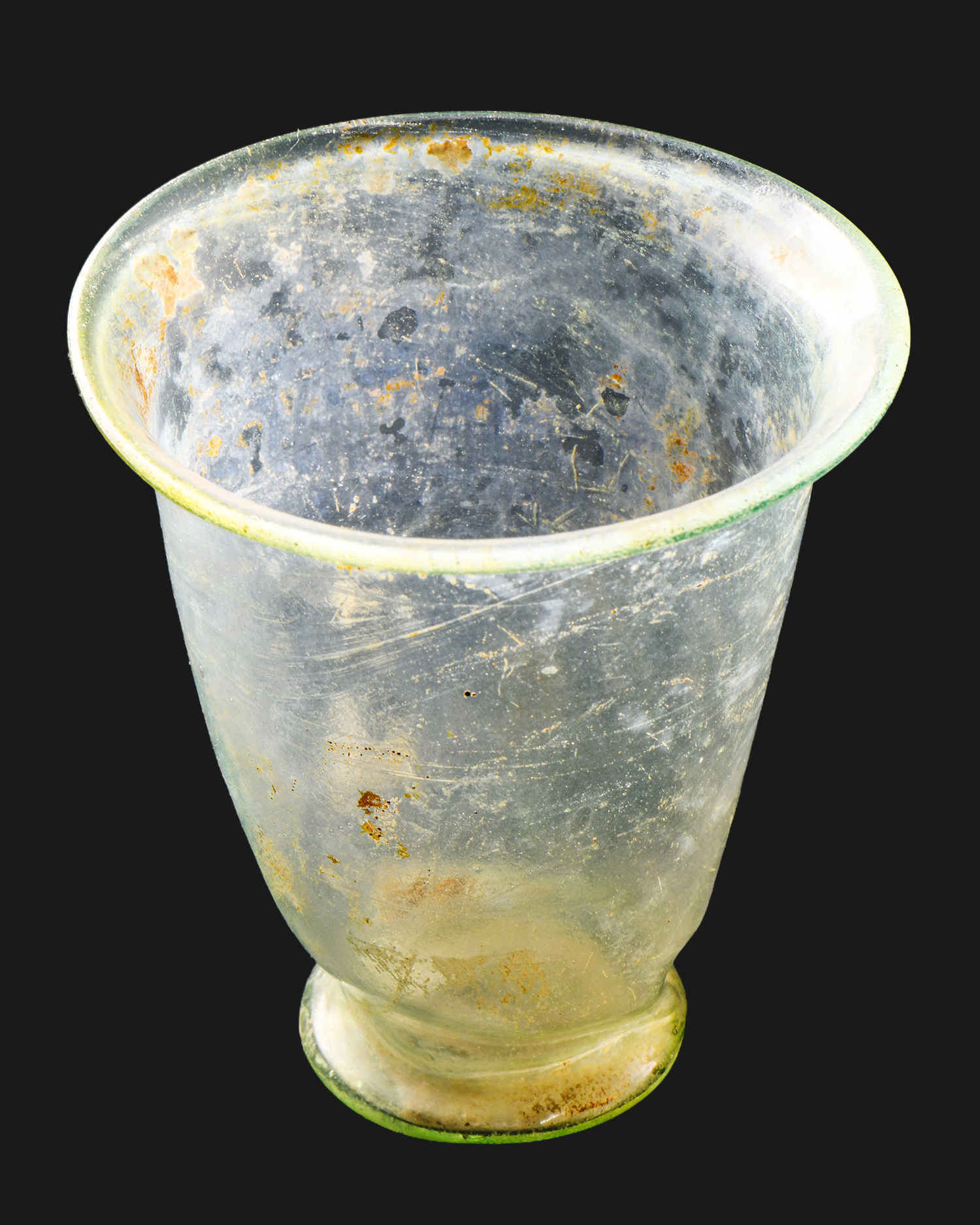
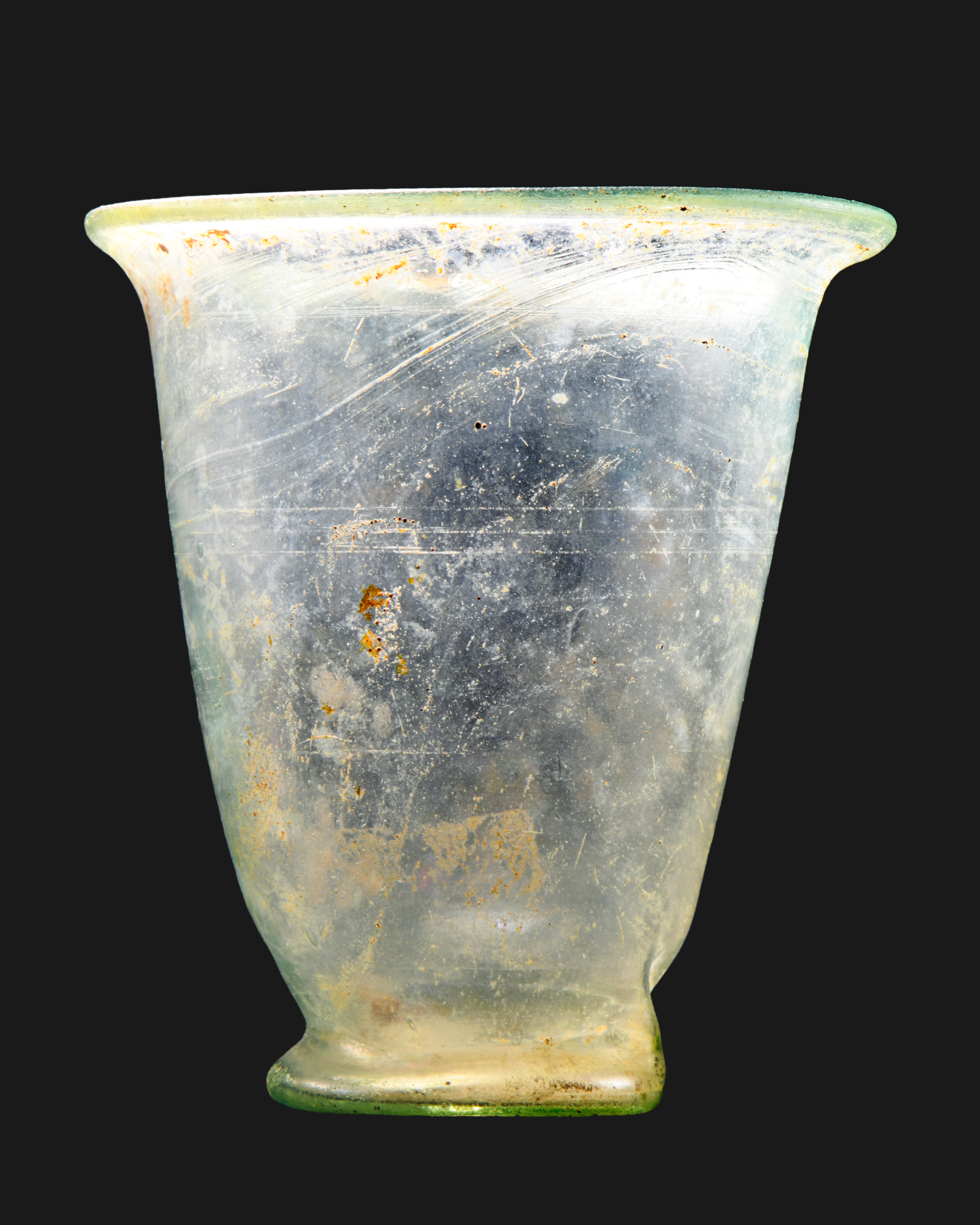
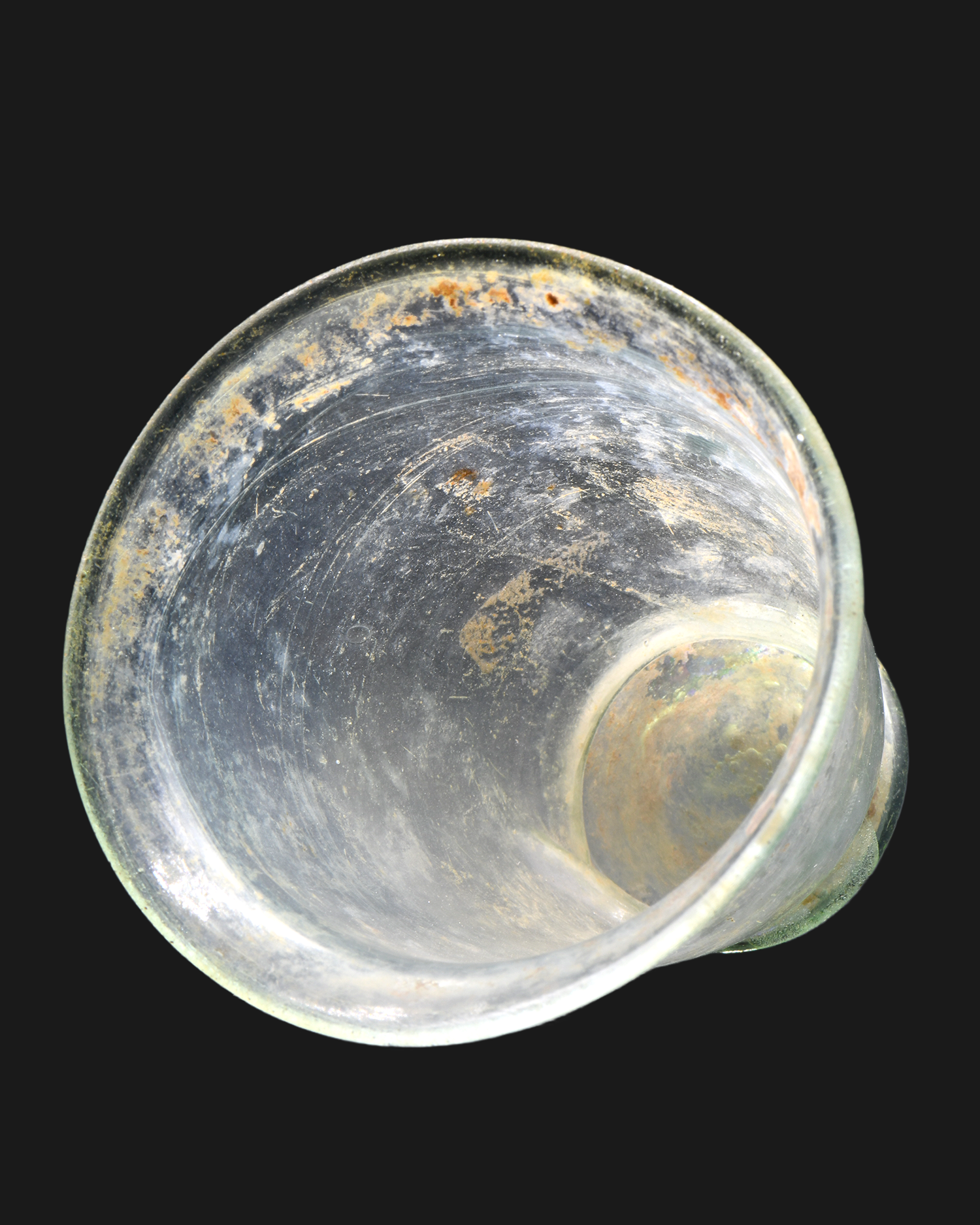
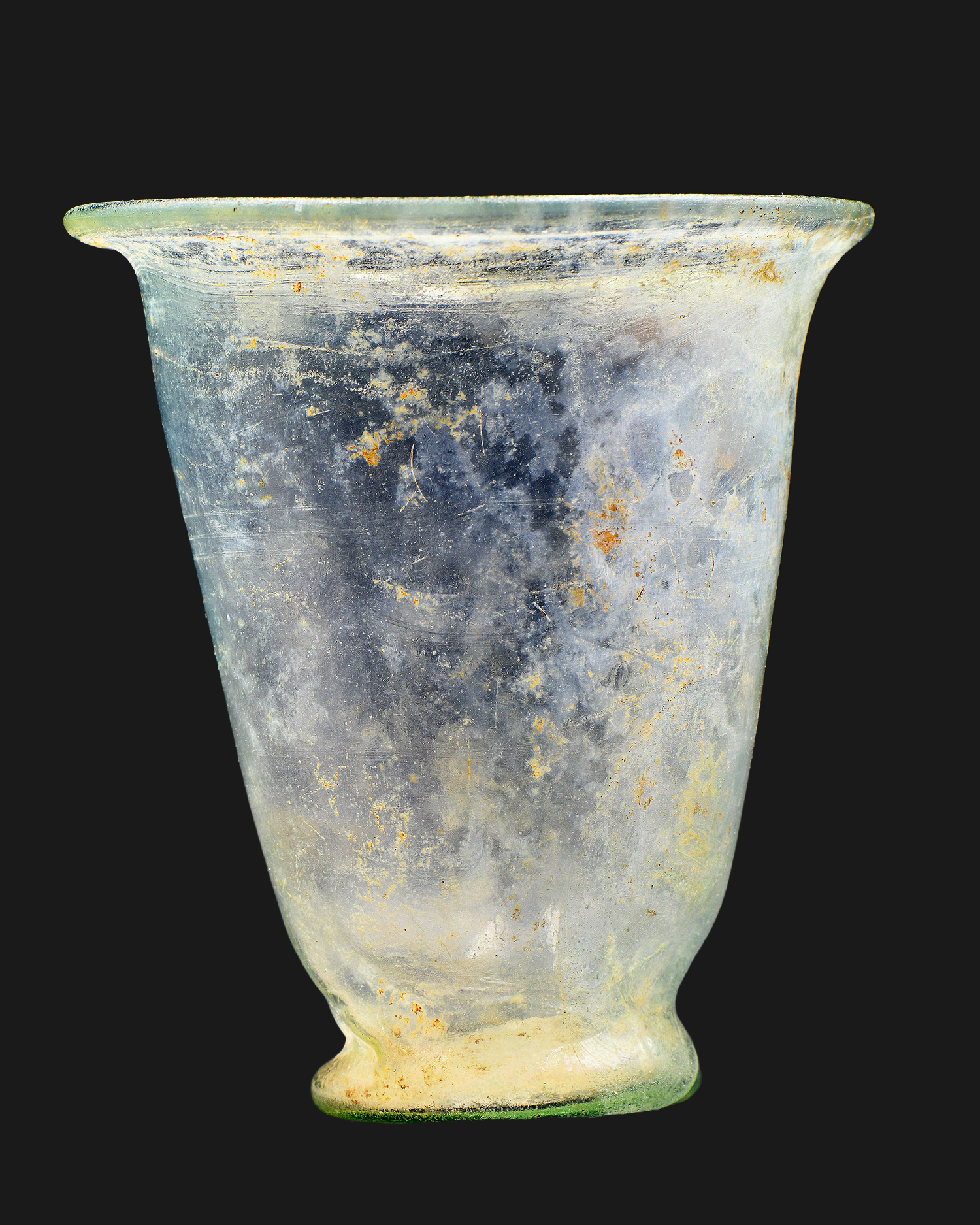
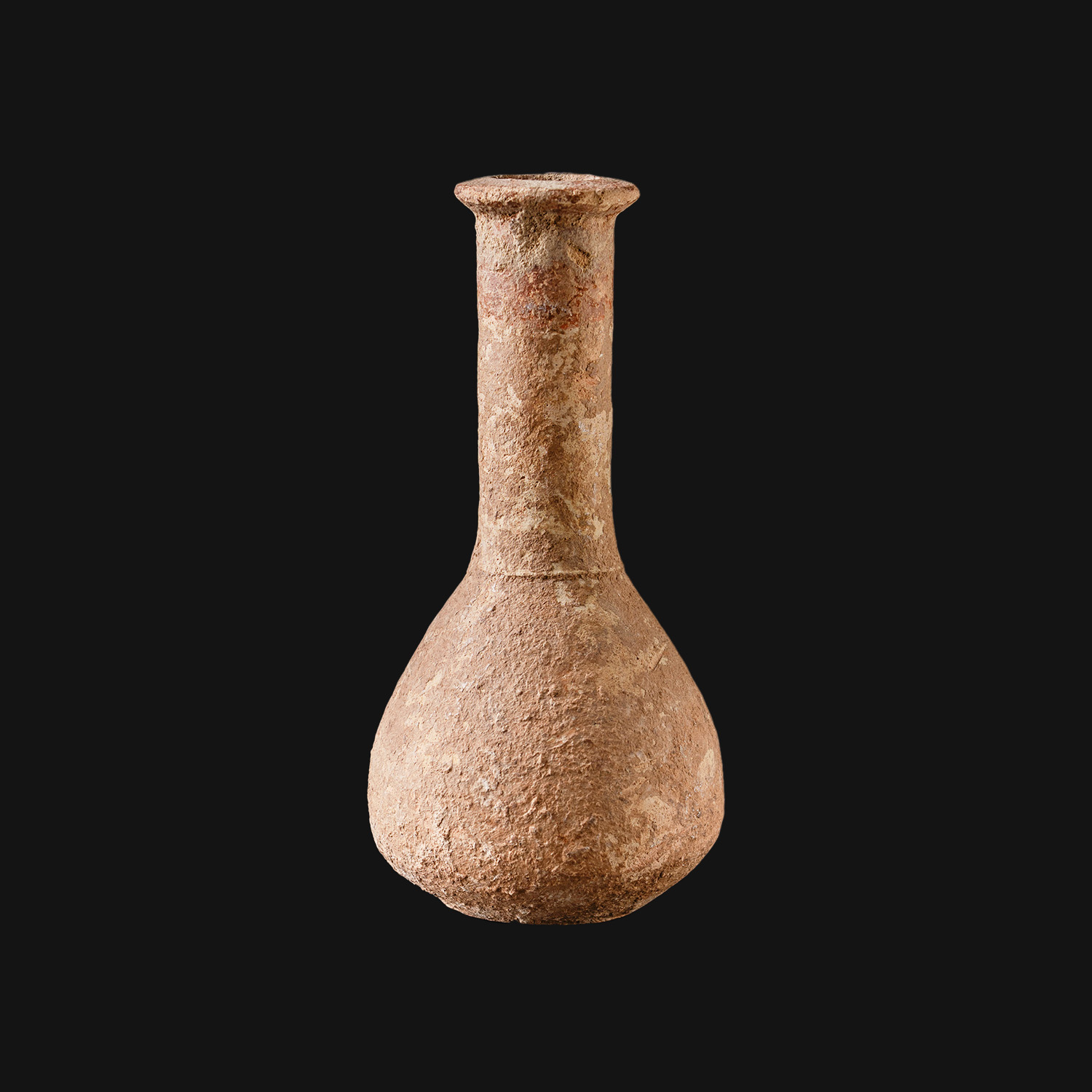
Roman tableware, conical beaker (drinking cup), Isings Form 106. Late Roman Empire, 4th century AD.
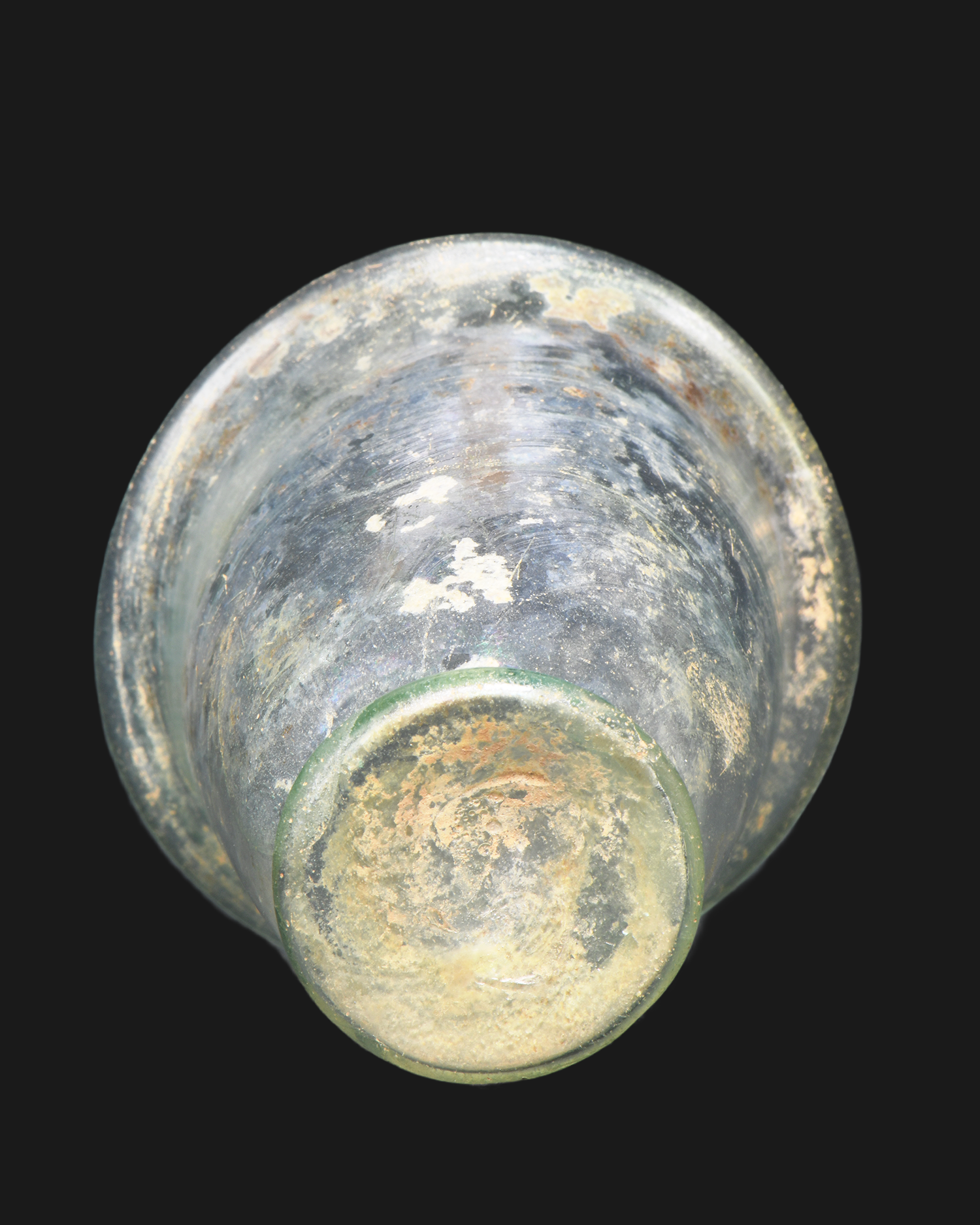
A Roman tableware vessel representing the form of a conical beaker (drinking cup), classified in the Isings typology as Form 106. Dated to the 4th century AD, corresponding to the Late Empire period. The vessel was free-blown from soda-lime glass in one of the Roman glassmaking centers located in the Rhineland (e.g., Cologne) or the Syro-Palestinian provinces, from where such items were distributed to markets across the entire empire and exported to Barbaricum.
The morphology of the vessel features an inverted, slightly rounded conical body that transitions in its upper part into a distinctly flaring, bell-shaped rim with a defined and thickened edge. The lower portion of the body tapers into a low, hollow ring base with a folded outer edge, formed by pushing in and folding over the bottom. The glass exhibits a natural, delicate olive-greenish tint, resulting from iron oxide impurities present in the sand used for the glass melt.
The state of surface preservation shows advanced, natural corrosion processes resulting from soil exposure. Surface iridescence and partial dulling of the silica structure are visible on the walls, accompanied by numerous use-related micro-scratches. Rusty mineral deposits (iron and calcium compounds) strongly bonded to the substrate are present in the depression of the base and on the side walls. The glass fabric contains sparse, elongated air bubbles arranged concentrically, confirming the hand-blown manufacturing technique of the vessel. The beaker is preserved complete, without any losses or mechanical damage, which is a rarity for such delicate and fragile artifacts.
The vessel’s form consists of a body with the profile of an inverted, slightly rounded cone, which, in its upper section, transitions into a distinctly outward-flaring, bell-shaped spout with a distinct, thickened rim. The lower part of the body tapers, transitioning into a low, hollow, ring-shaped foot with an upturned outer rim, formed by pressing and curling the bottom. The glass is characterized by a natural, delicate olive-greenish tint resulting from the presence of iron oxide impurities in the sand used to melt the glass mass.
The condition of the surface shows advanced, natural corrosion processes occurring in the soil environment. The walls display surface iridescence (rainbow-like sheen) and partial matting of the silica structure, combined with numerous micro-scratches from use. Rusty mineral deposits (iron and calcium compounds) strongly bonded to the substrate are visible in the base recess and on the side walls. The glass mass contains a few elongated air bubbles arranged concentrically, which confirms that the body was hand-blown. The cup is preserved in its entirety, with no losses or mechanical damage, which is rare for such delicate and fragile artifacts.