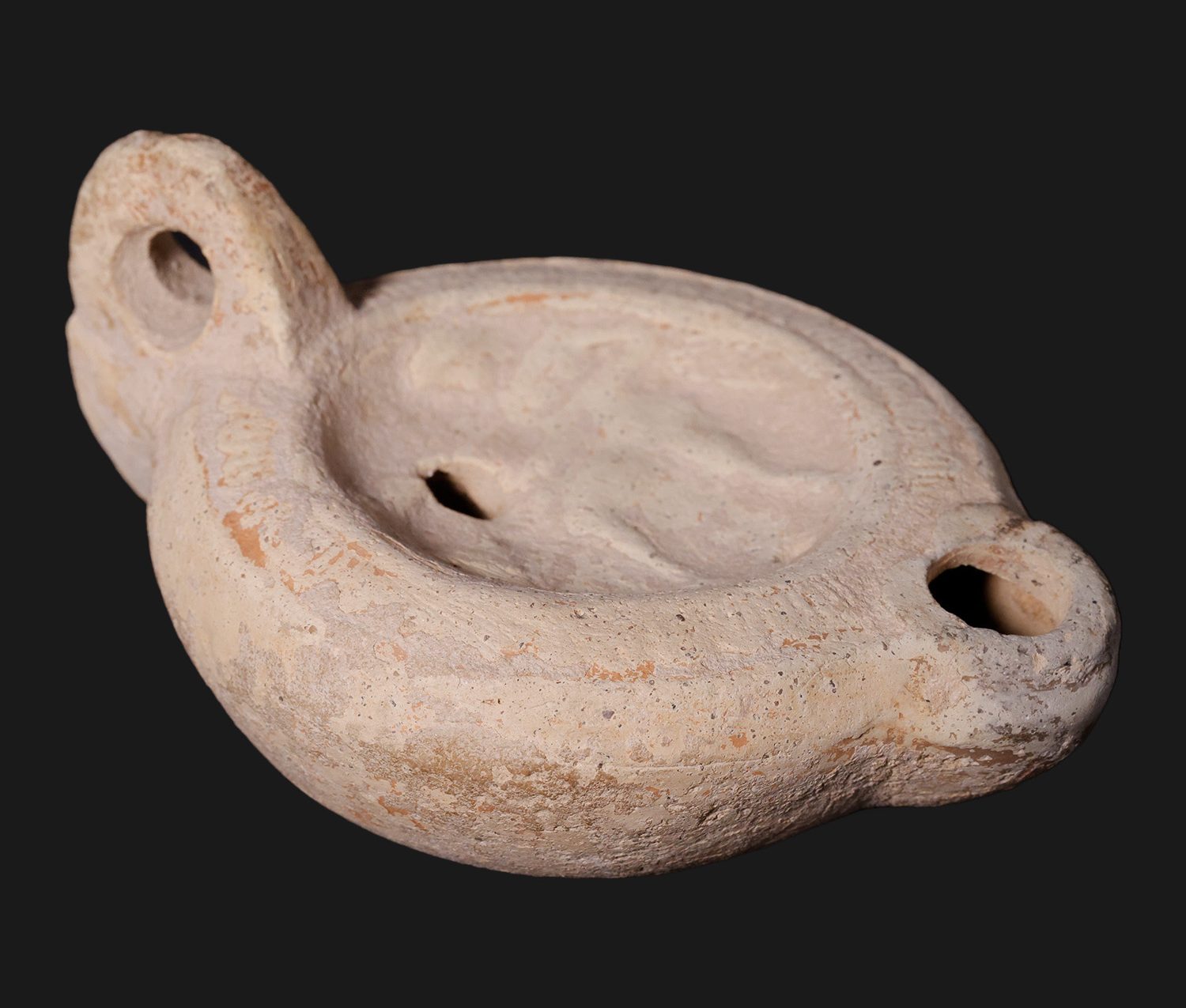
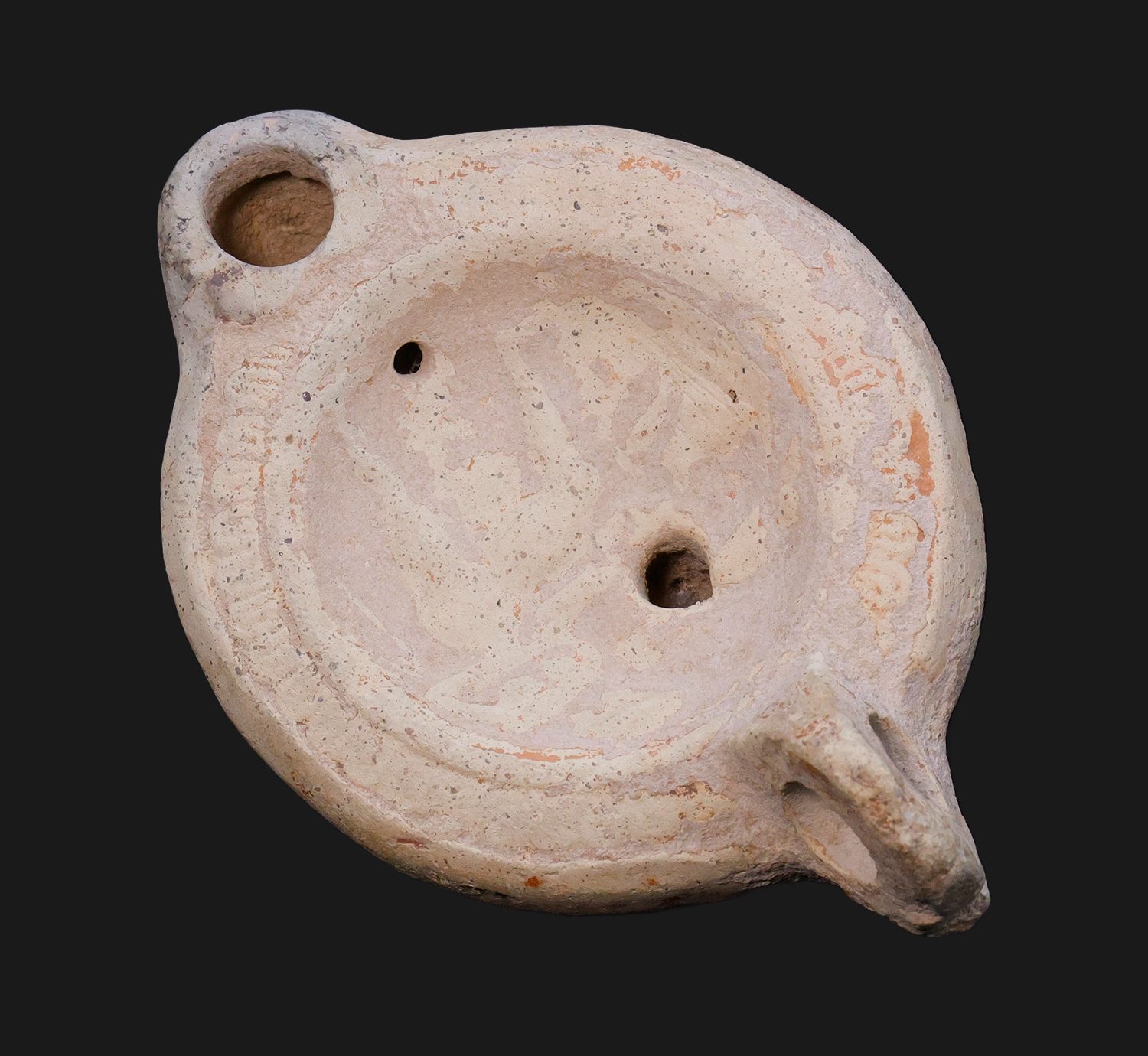
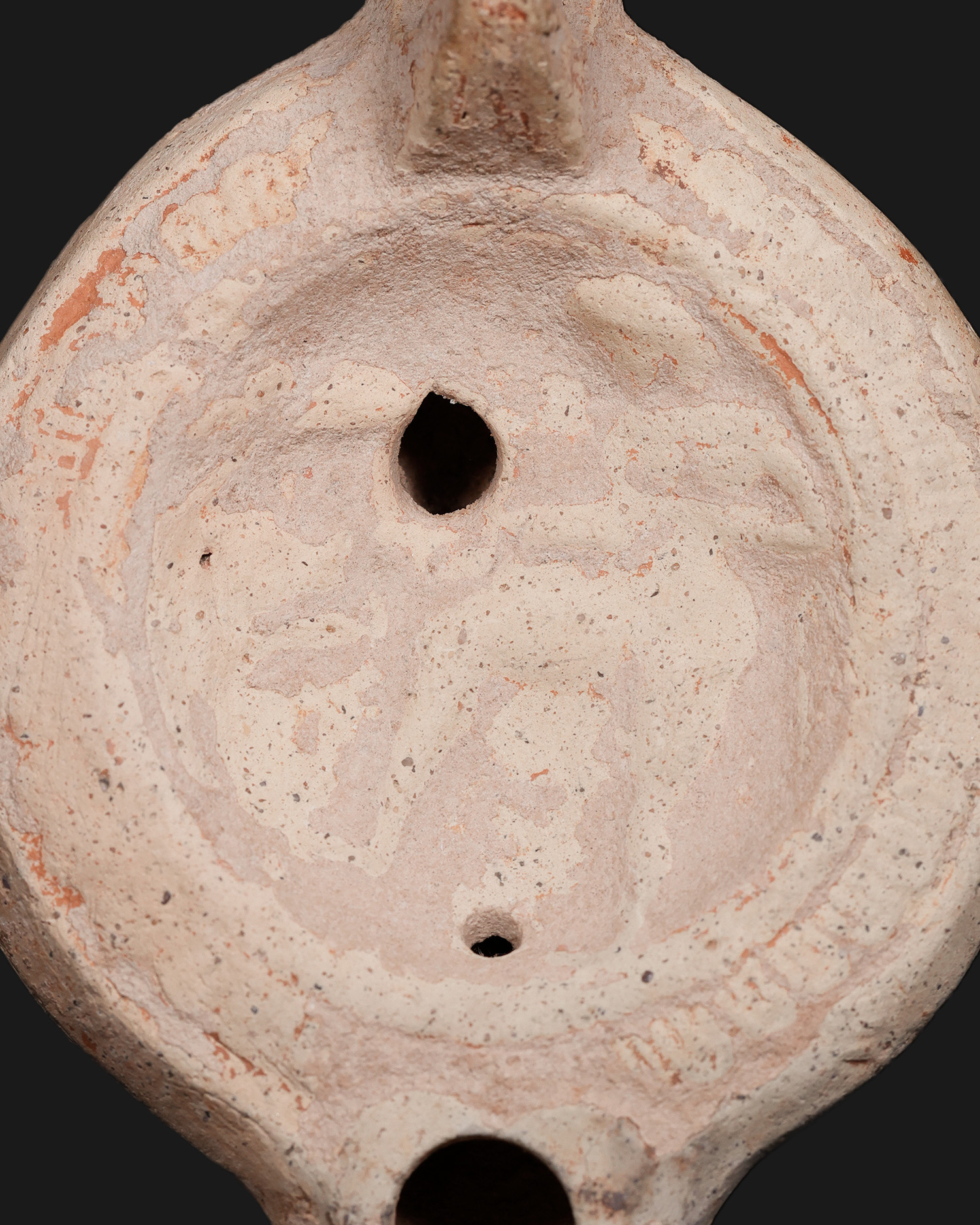
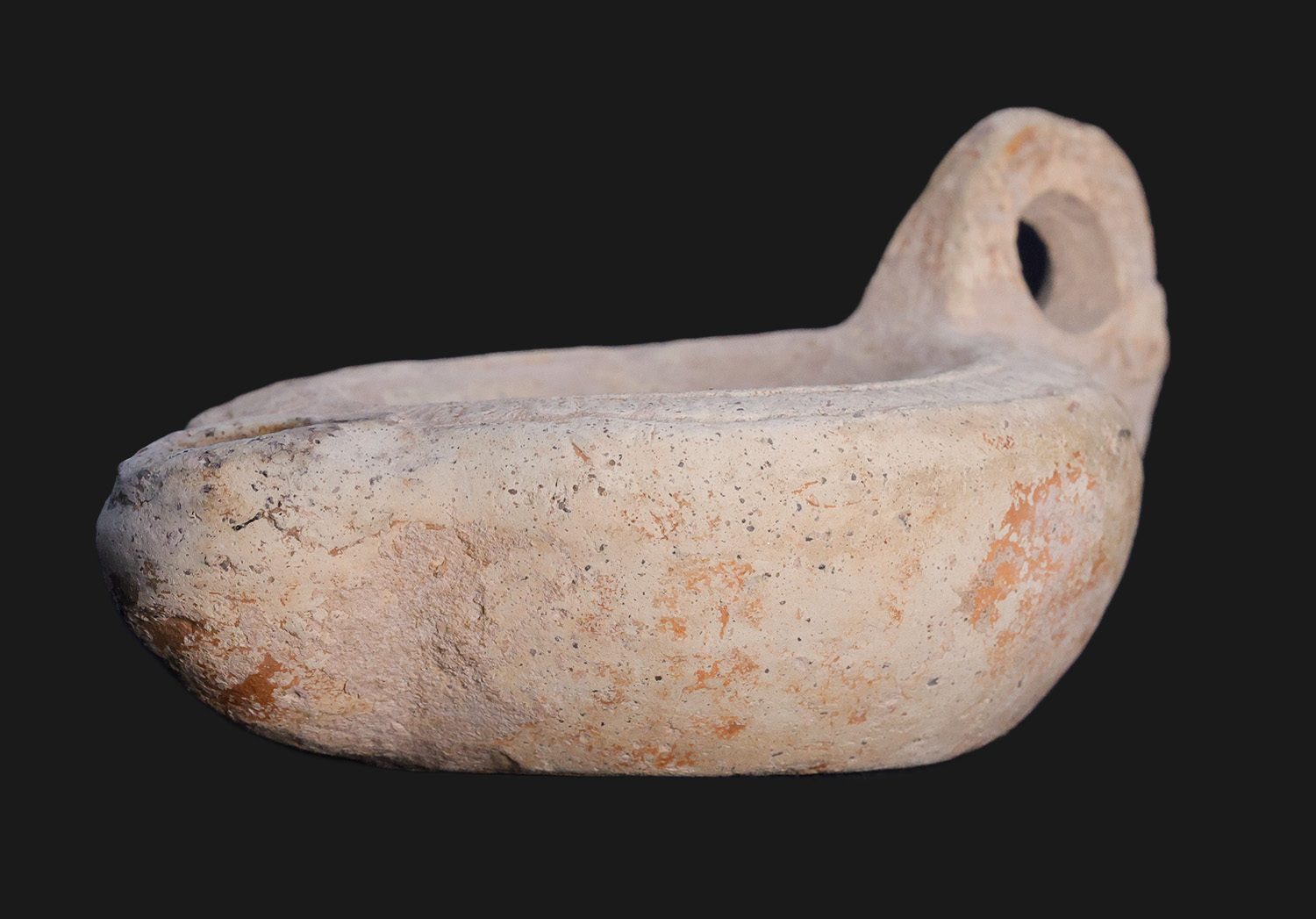
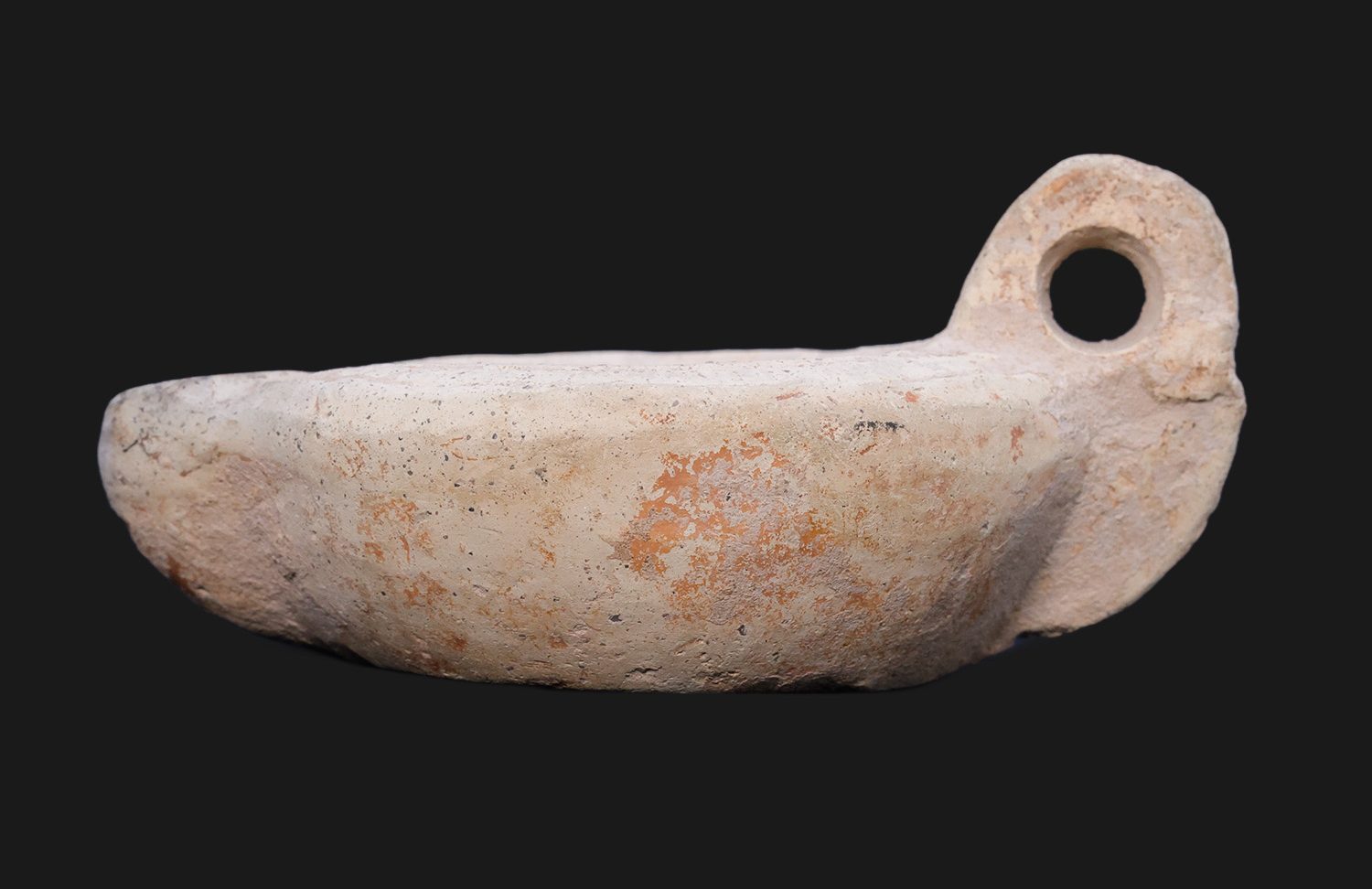
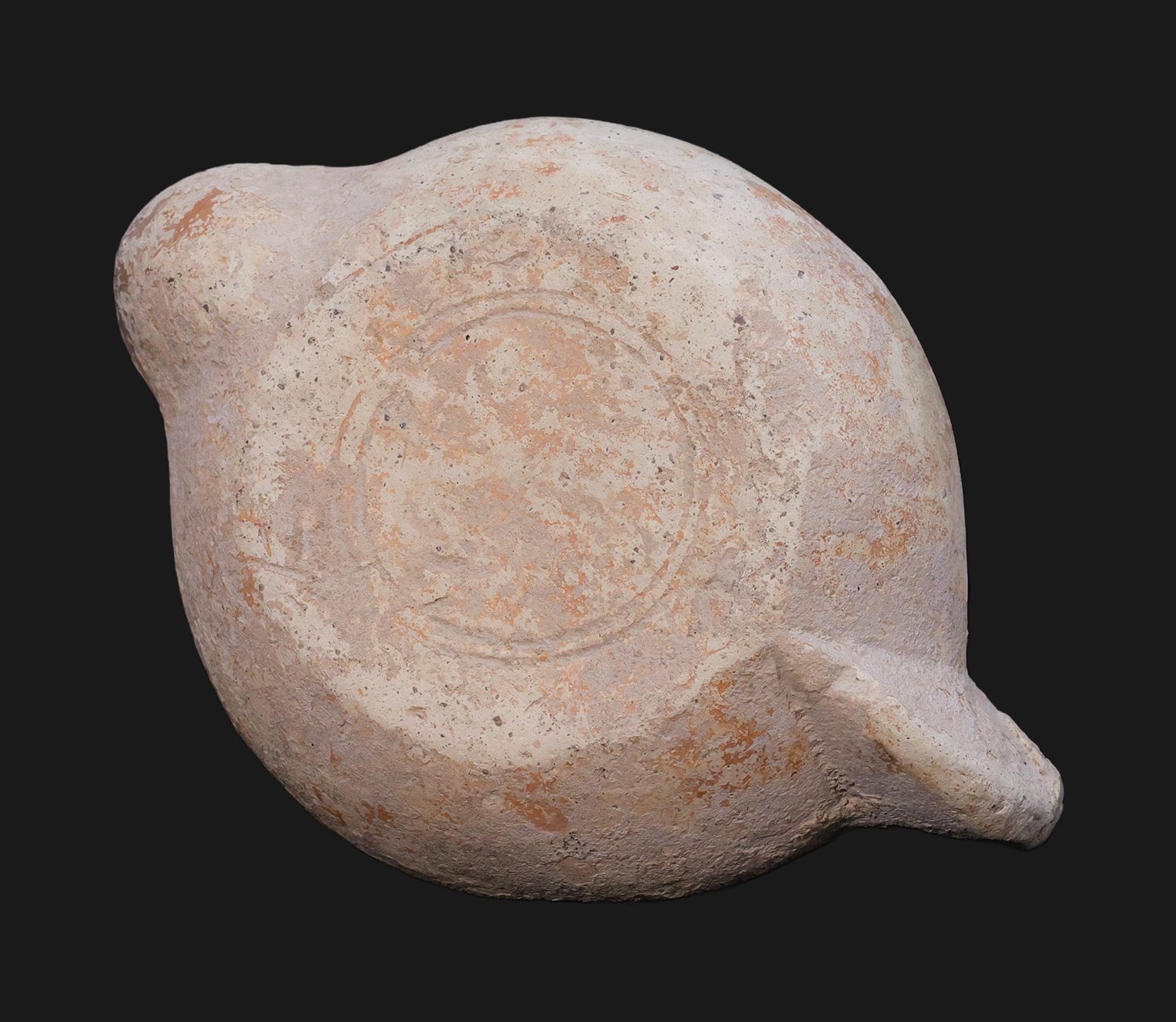
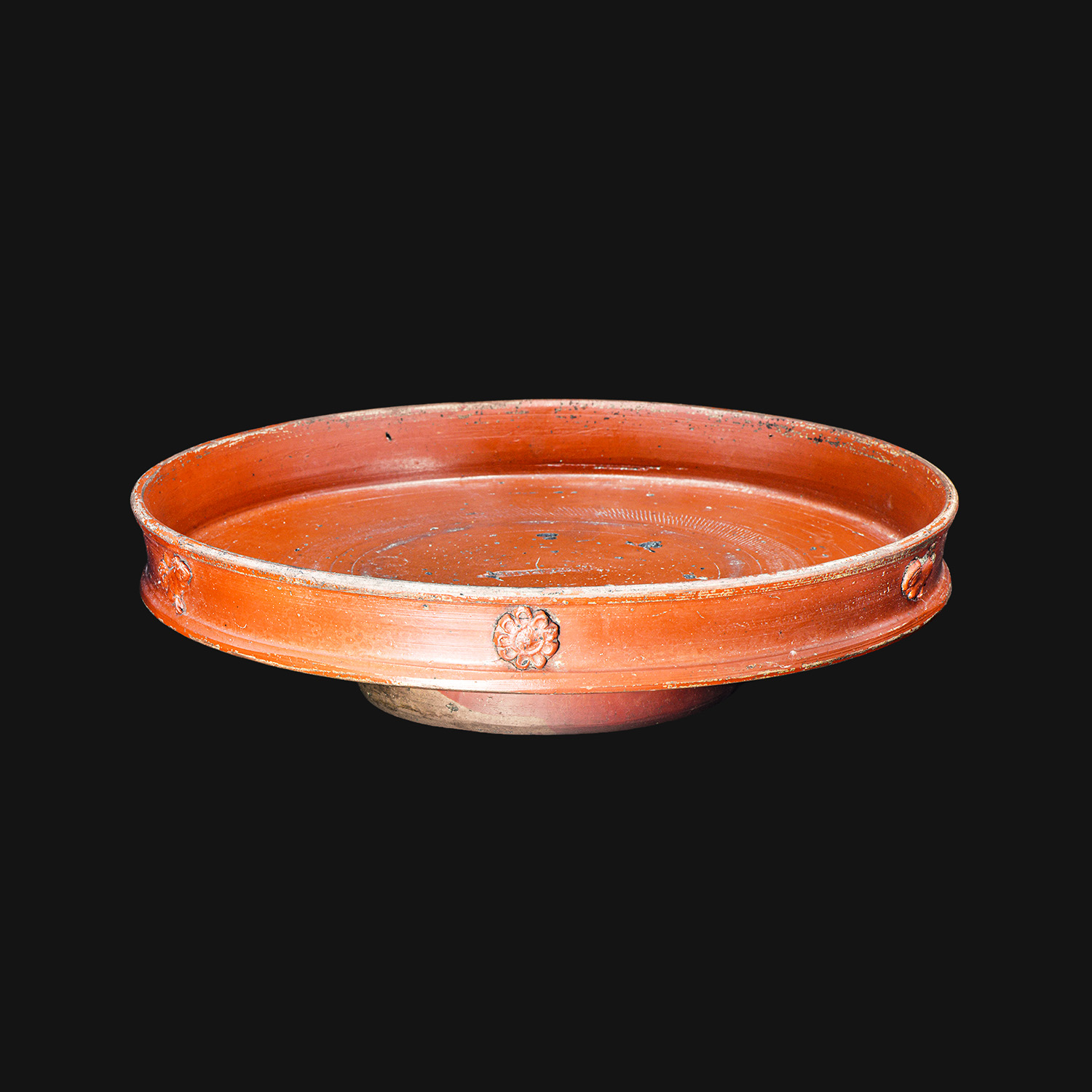
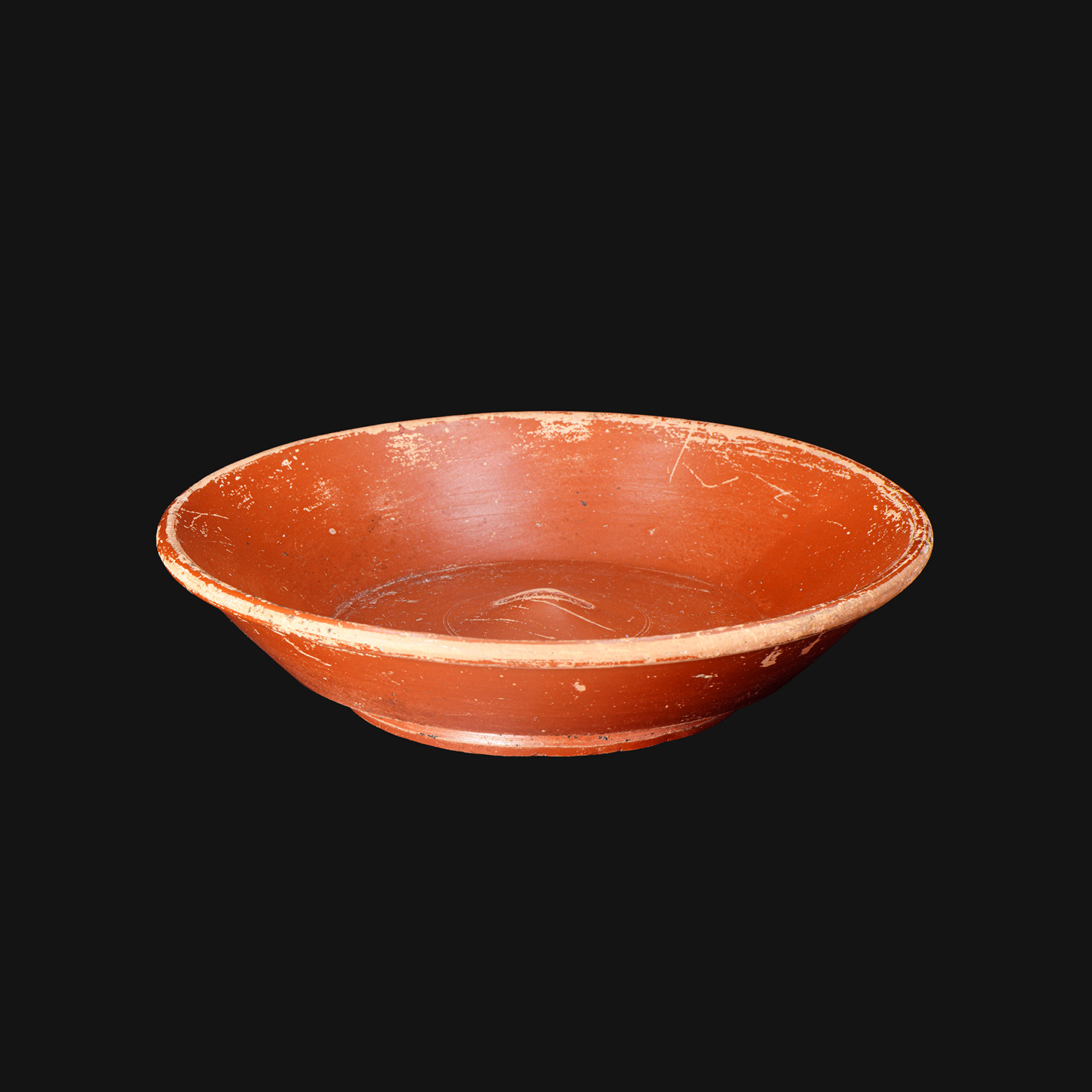
This Roman oil lamp (lucerna), crafted from kaolinite clay, exhibits a characteristic light, creamy-beige hue and is dated to the Imperial period. The object features a flattened, oval body and a concave disc with a shallow relief depicting a nude female figure with splayed legs. Adjacent to the woman is a heavily worn, illegible representation of a second figure or animal - most likely a mythological scene portraying Leda and the Swan. The rim surrounding the disc is adorned with an ornamental pattern. The decorated panel includes two openings: a larger filling hole for oil and a smaller ventilation hole. The front of the lamp features a protruding nozzle with a large wick opening, while the back has a handle for holding and carrying the vessel. Traces of an orange-red engobe, a thin coating of fatty clay applied before firing for aesthetic purposes and to reduce oil absorption - are clearly visible on the surface of the vessel.