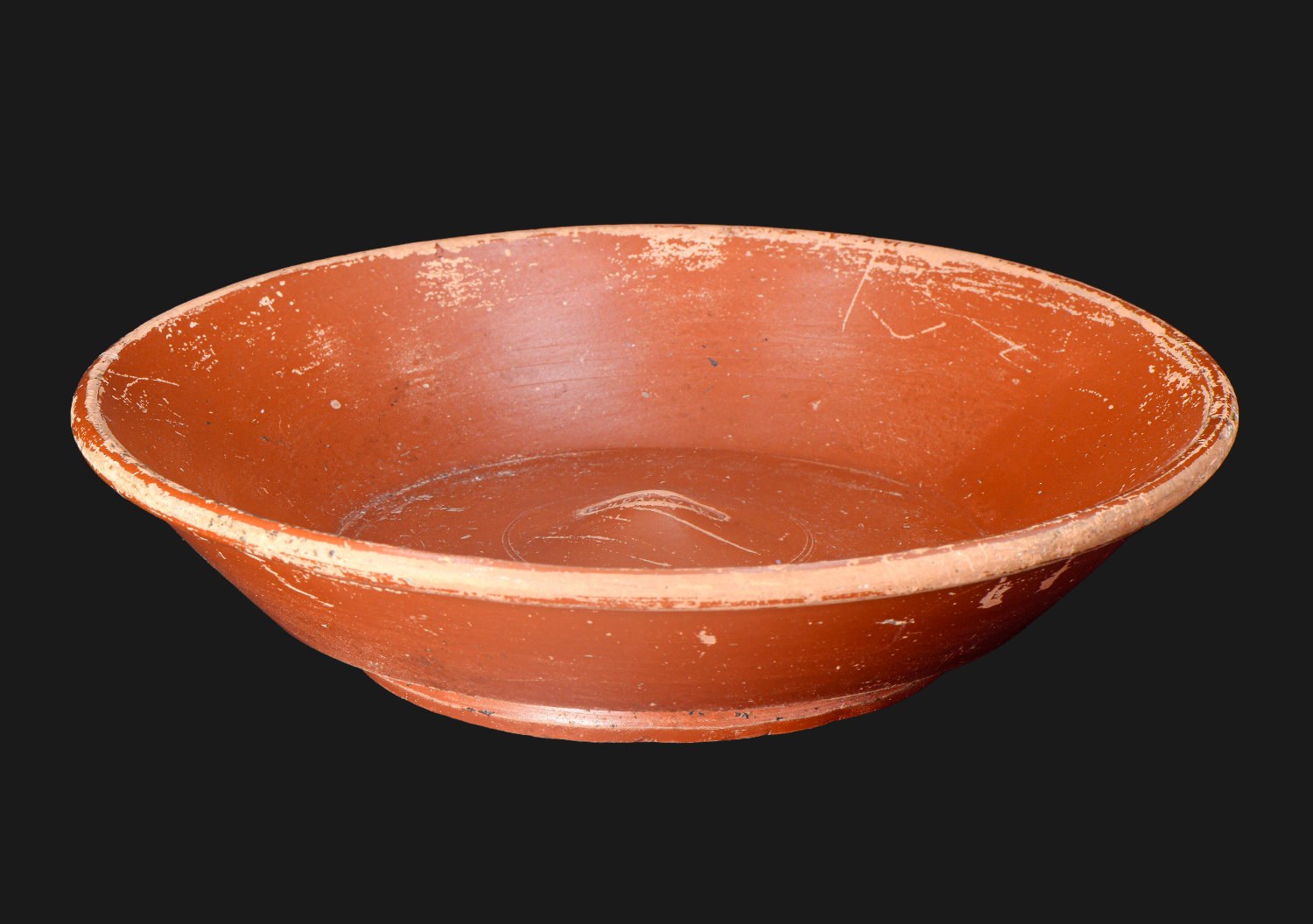
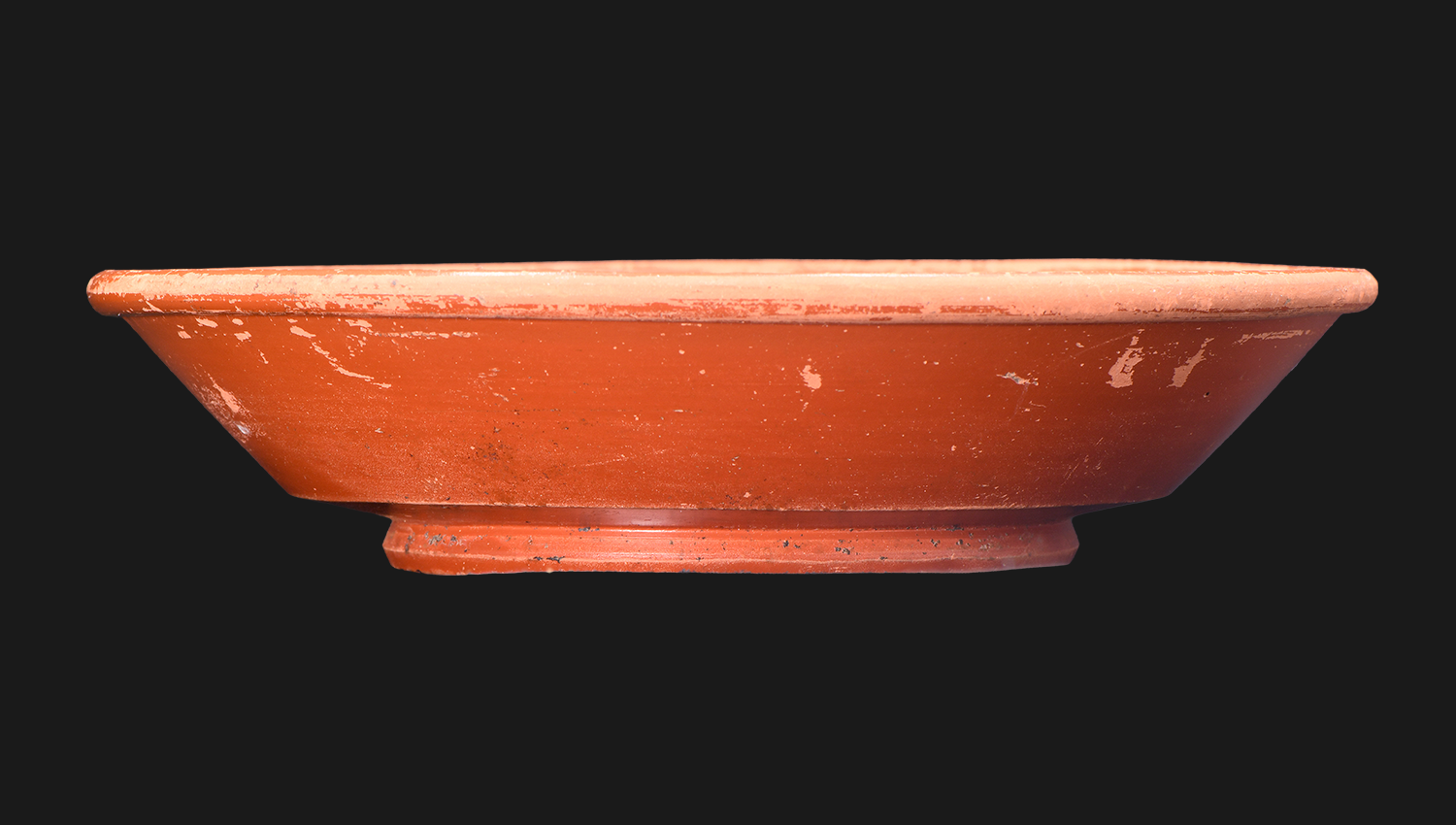
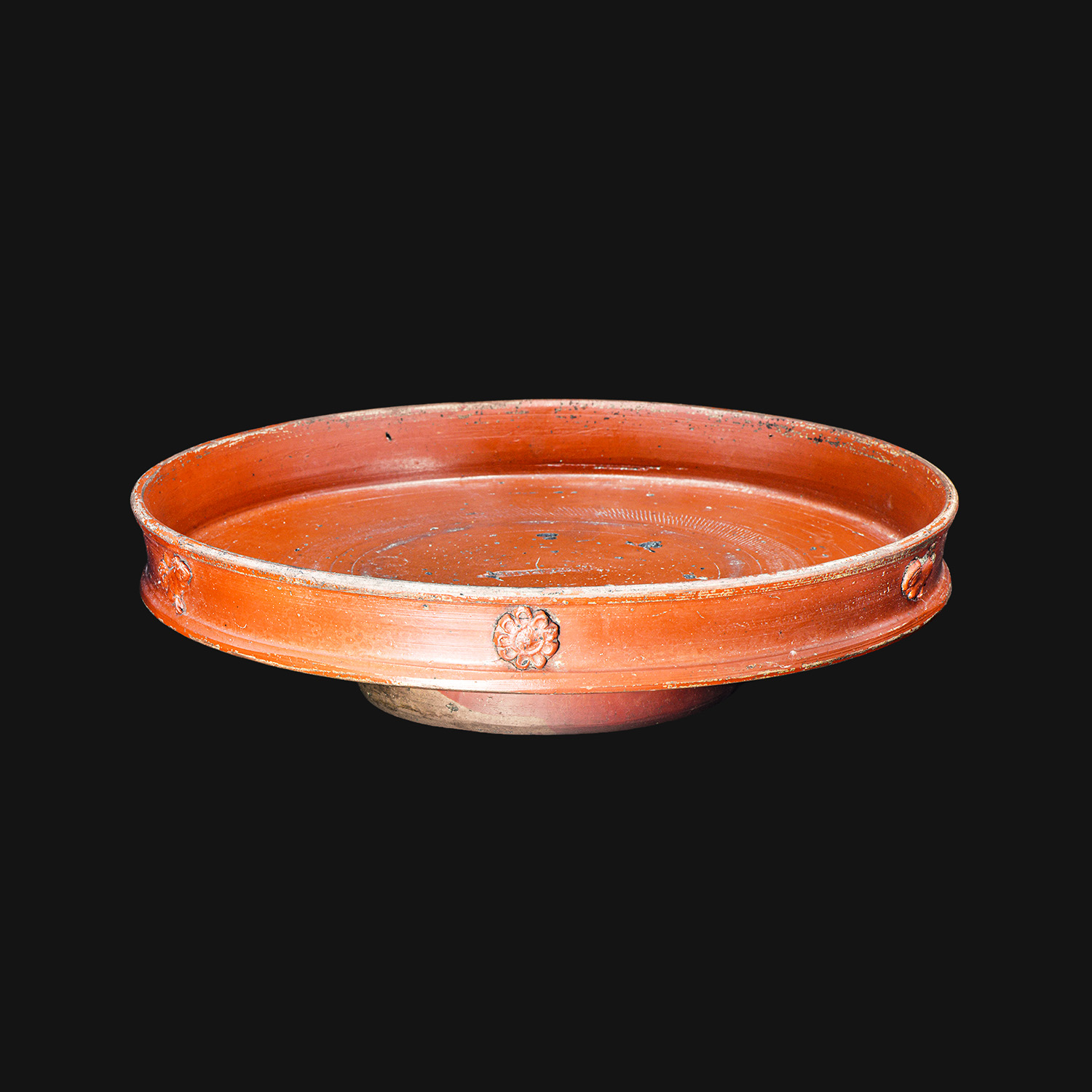
A Roman vessel (bowl) of the terra sigillata type representing the Dragendorff 18/31 form, being a smooth, undecorated transitional variant between a flat plate and a deep bowl. The artifact dates from the turn of the 2nd and 3rd centuries AD (the times of Septimius Severus or Caracalla) and was produced in the thriving provincial Roman pottery center in Trier, in the Roman province of Gallia Belgica.
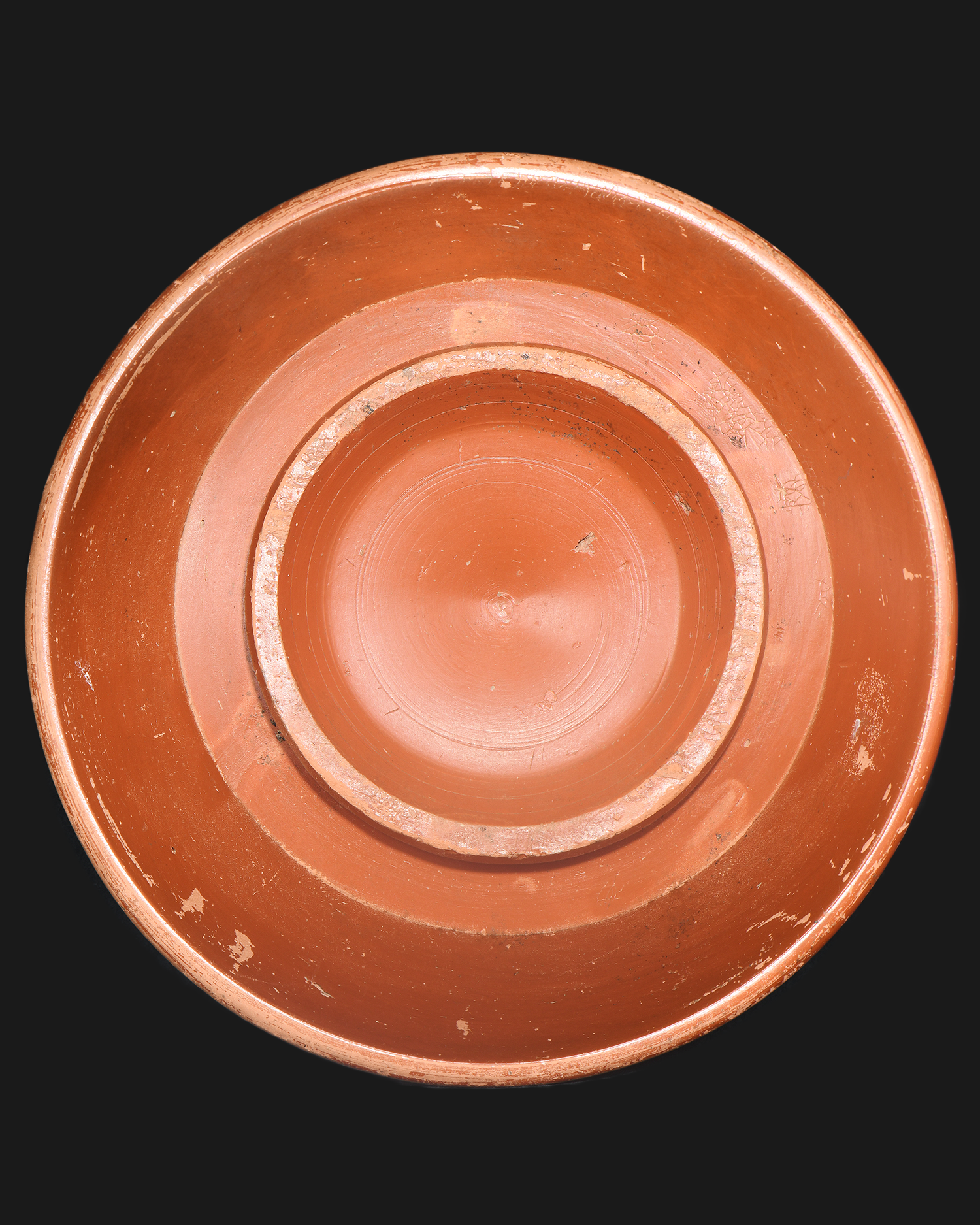
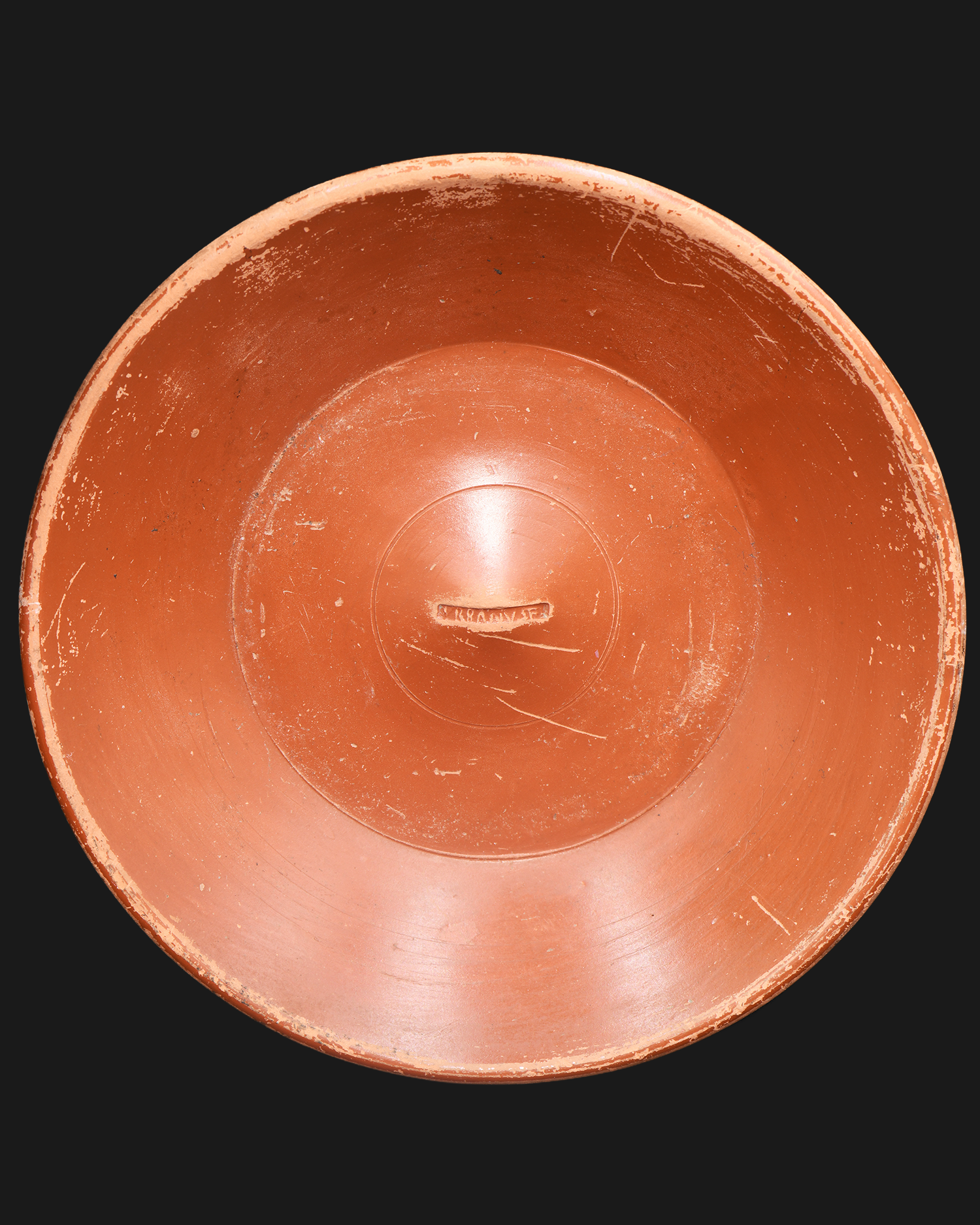
The bowl was crafted from very well-sorted ferruginous clay, which, after firing, achieved a uniform, bright red color. The surface of the vessel is covered with a slip exhibiting a characteristic silky sheen. Natural traces of ancient use are visible on its structure, manifesting as fine scratches within the interior and superficial abrasions on the rim and the underside of the footring, resulting from repeated placement of the vessel on hard surfaces. The vessel's profile is formed by straight, conically flaring side walls that gently curve into a deepened base in the lower section. The central part of the interior features a regular, conical elevation, known as an omphalos, which is further encircled by a distinct ring incised into the clay before firing.
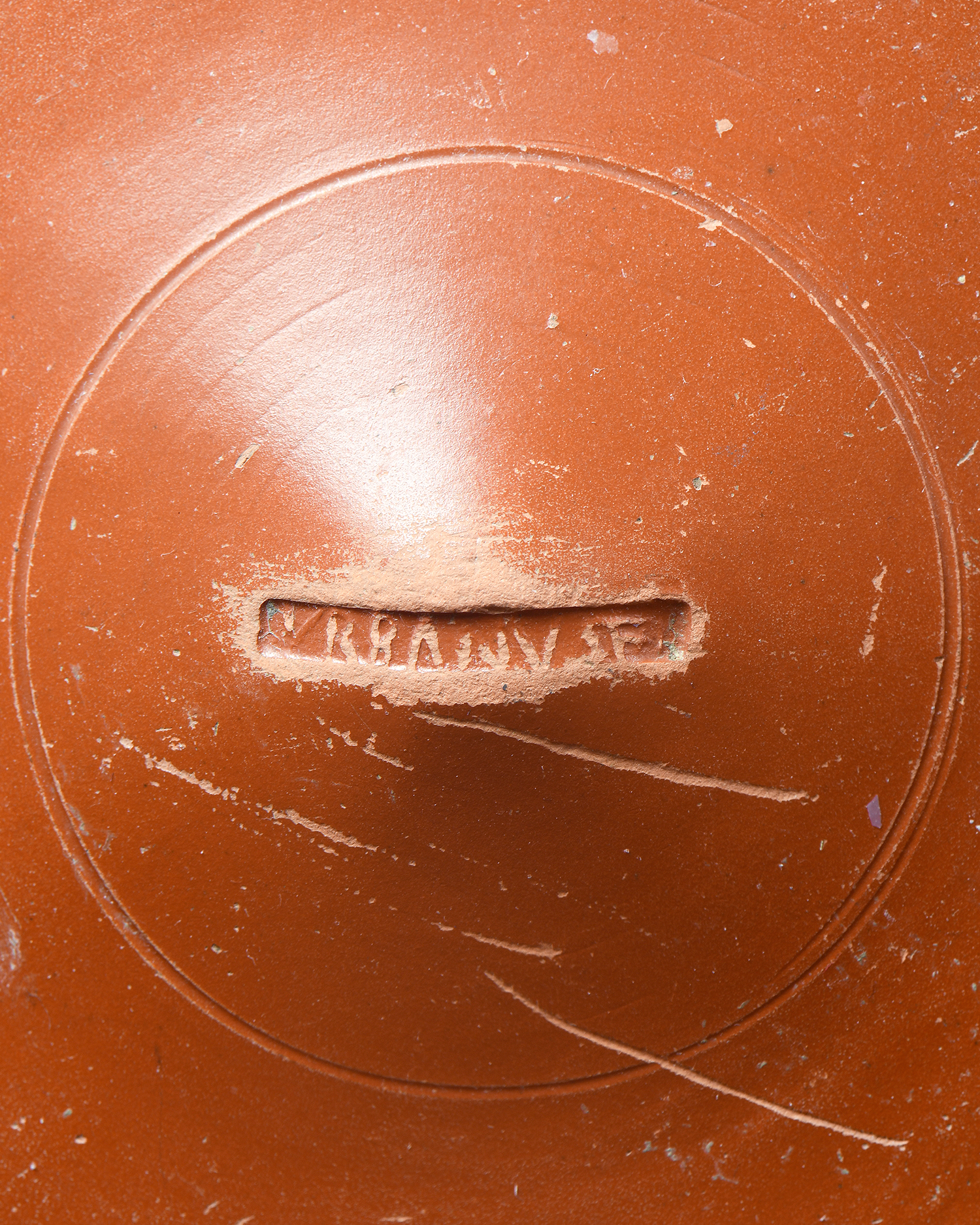
At the very top of the internal elevation, a perfectly preserved workshop stamp in the form of an elongated, rectangular impression is visible. The inscription reads VRBANVS F, an abbreviation of the Latin phrase Urbanus fecit, meaning "Urbanus made it." Urbanus was a renowned Roman master potter and workshop owner whose activity dates to approximately 190–240 AD. His branded products reached both Roman garrisons and, through trade, distant regions beyond the Empire's borders. The state of preservation of this example is exceptional, as the vessel has survived intact without any cracks, structural losses, or modern repairs, making it an outstanding and complete document of Roman artistic craftsmanship.
An analogous vessel was part of a grave assemblage discovered in 1926 at the famous Wielbark culture barrow cemetery in Gronowo, Złocieniec municipality, Pomerania. A Roman imported service, including a vessel with an analogous Dragendorff 18/31 profile, identical structural dimensions, and a similarly excellent state of preservation, was found in one of the skeletal burials there. Although this artifact (currently in the collection of the National Museum in Szczecin) bears the stamp of another North Gallic potter named Coocus, both objects represent the same chronological horizon and identical long-distance luxury trade circulation between Roman workshops on the Moselle and the elites of Barbaricum. The existence of such a close and complete analogy among domestic finds enhances the scientific and cognitive value of the offered vessel.