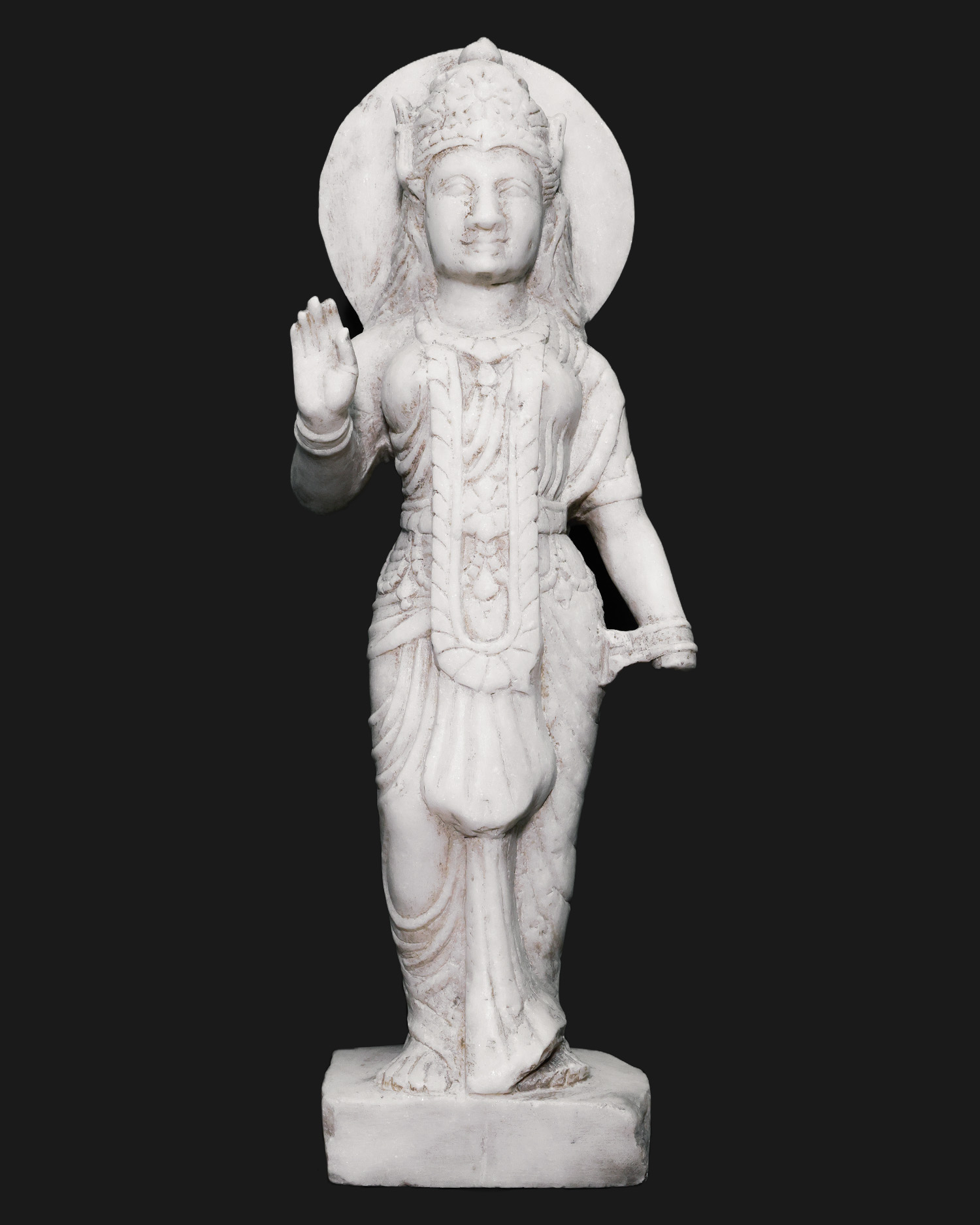
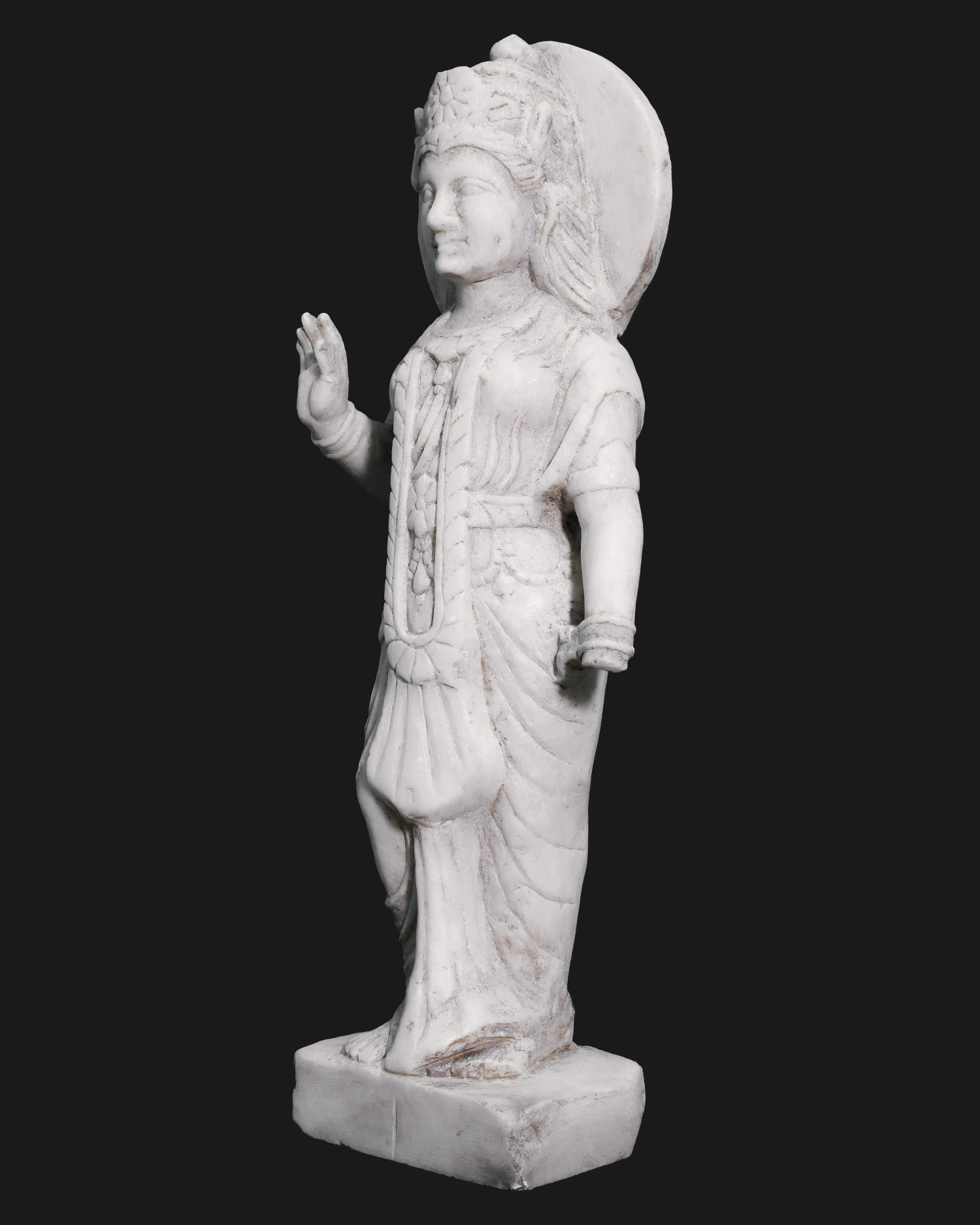
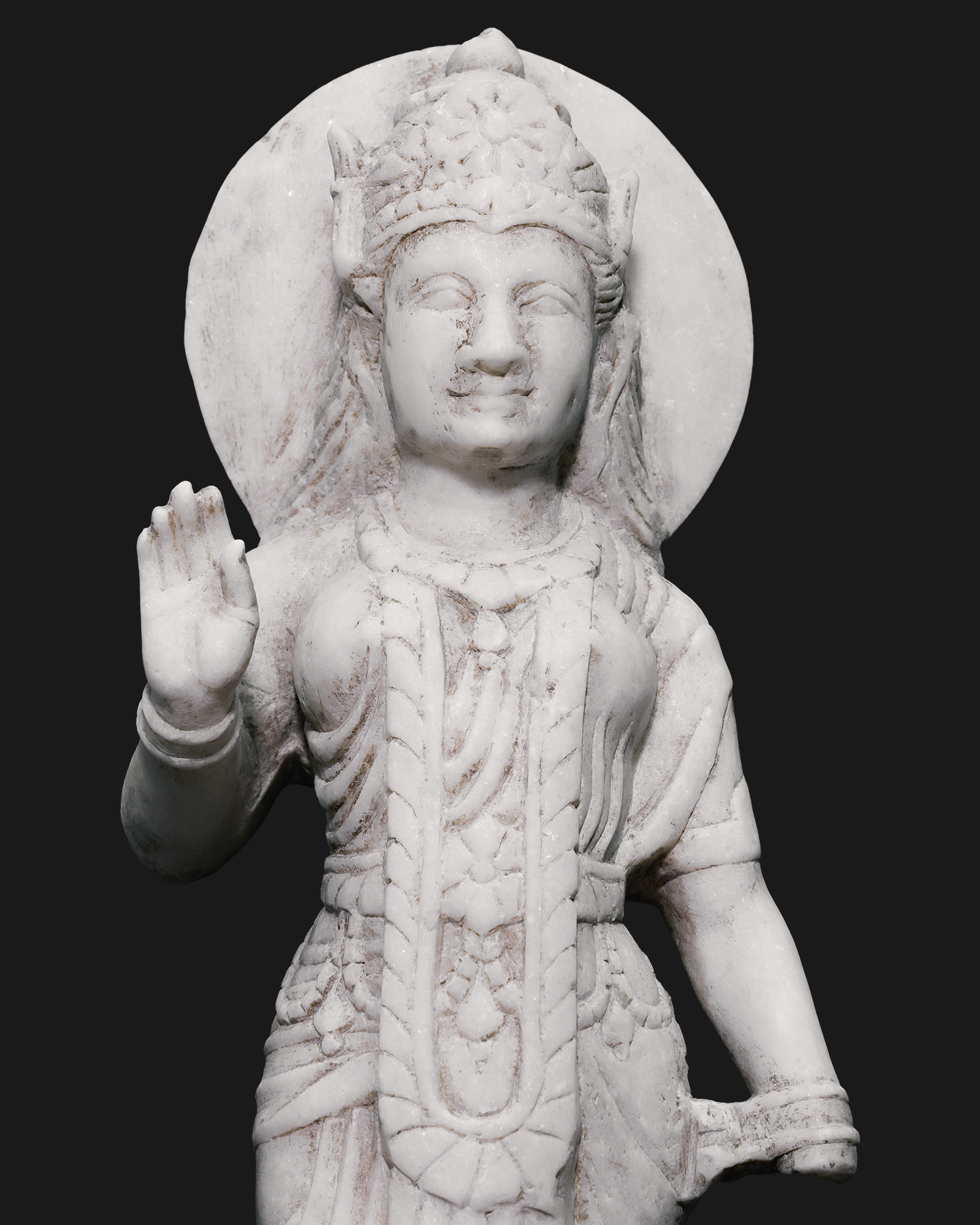
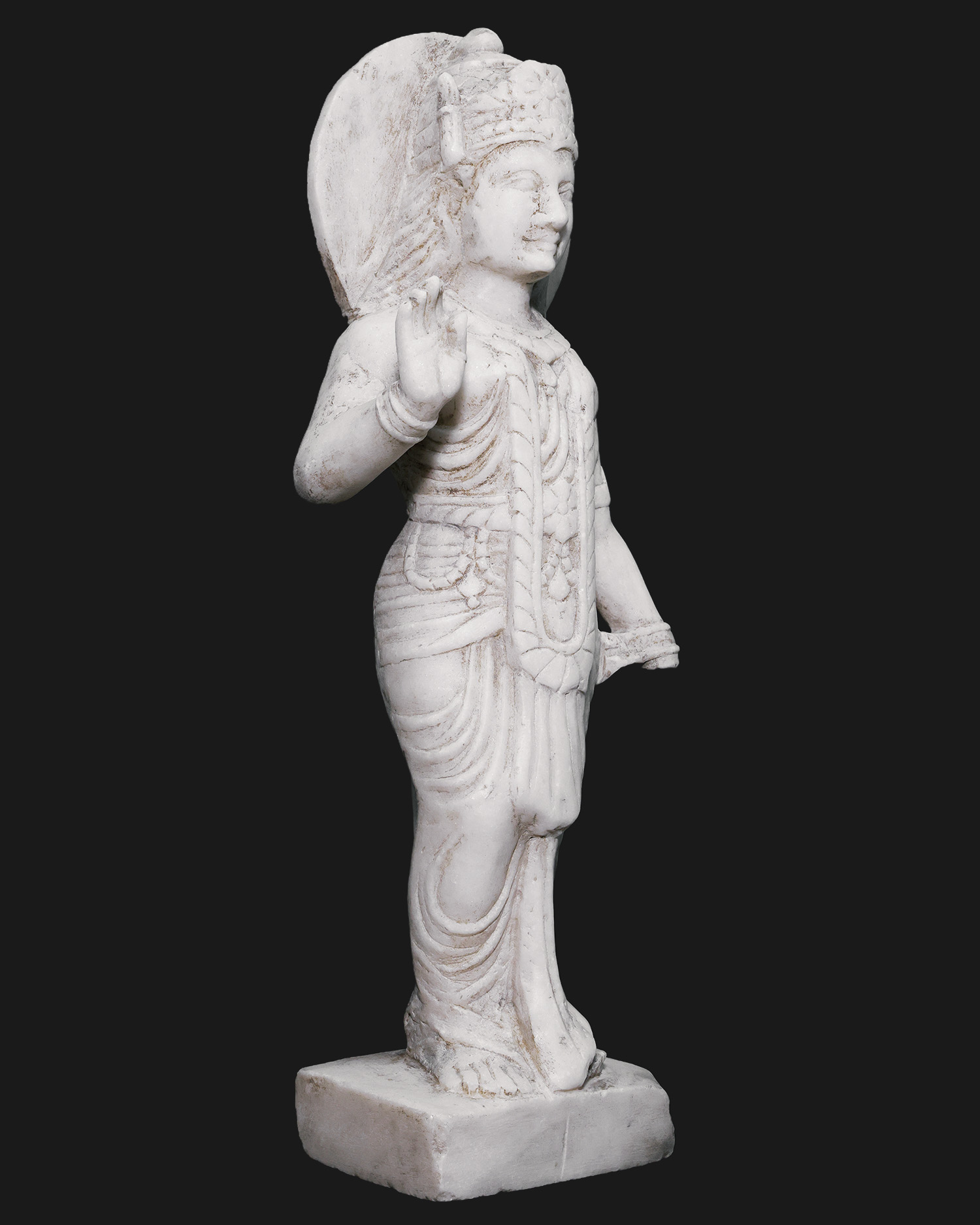
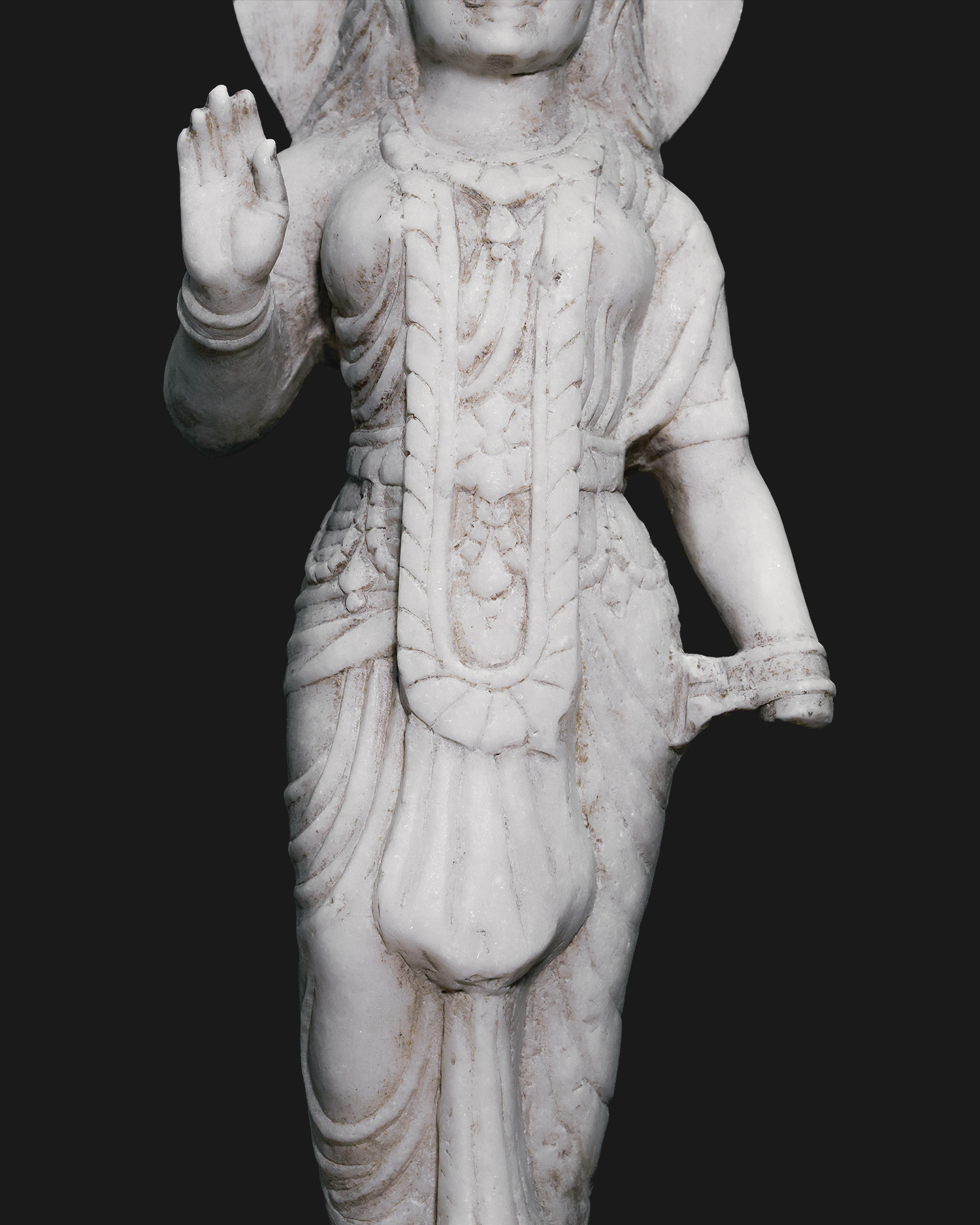
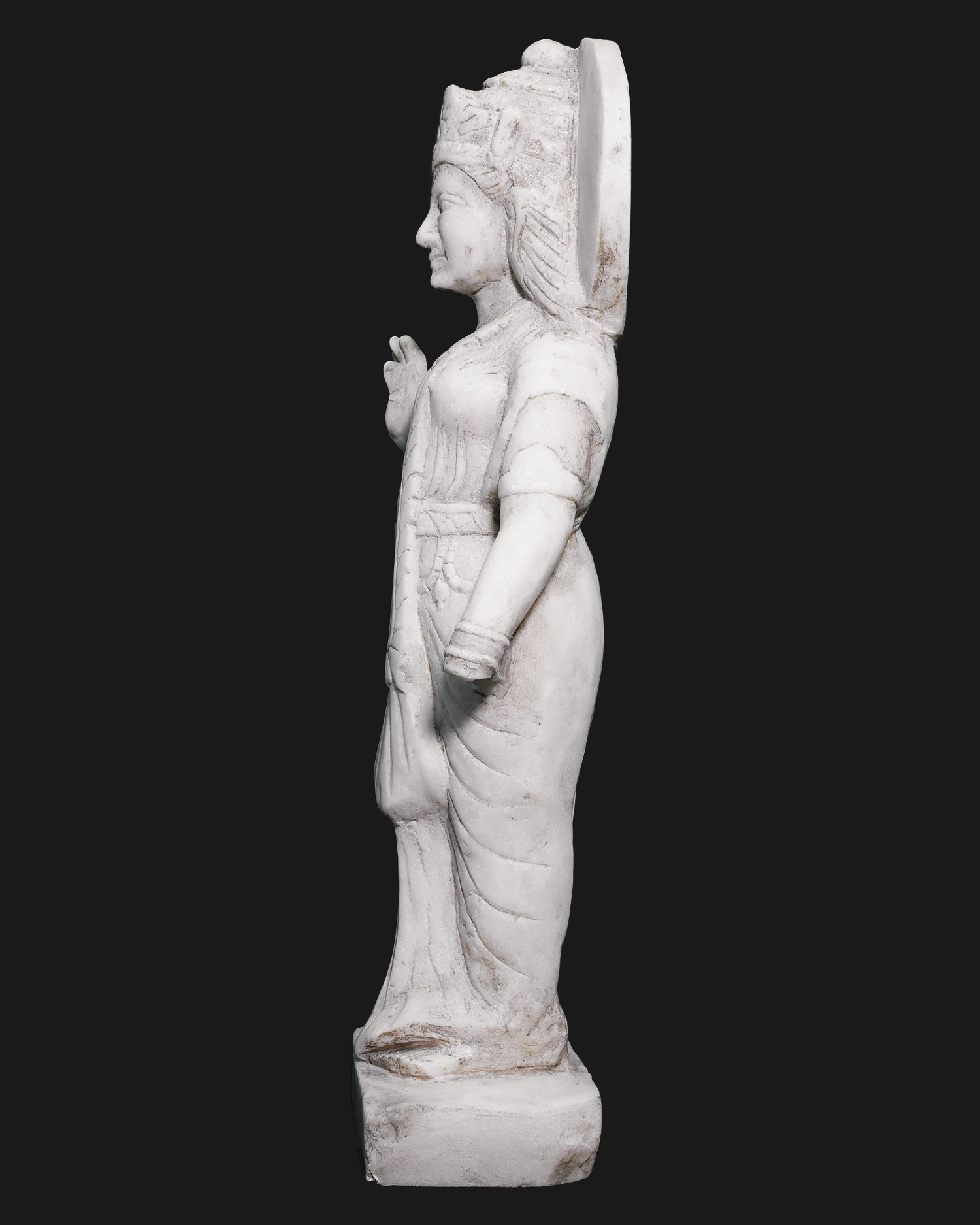
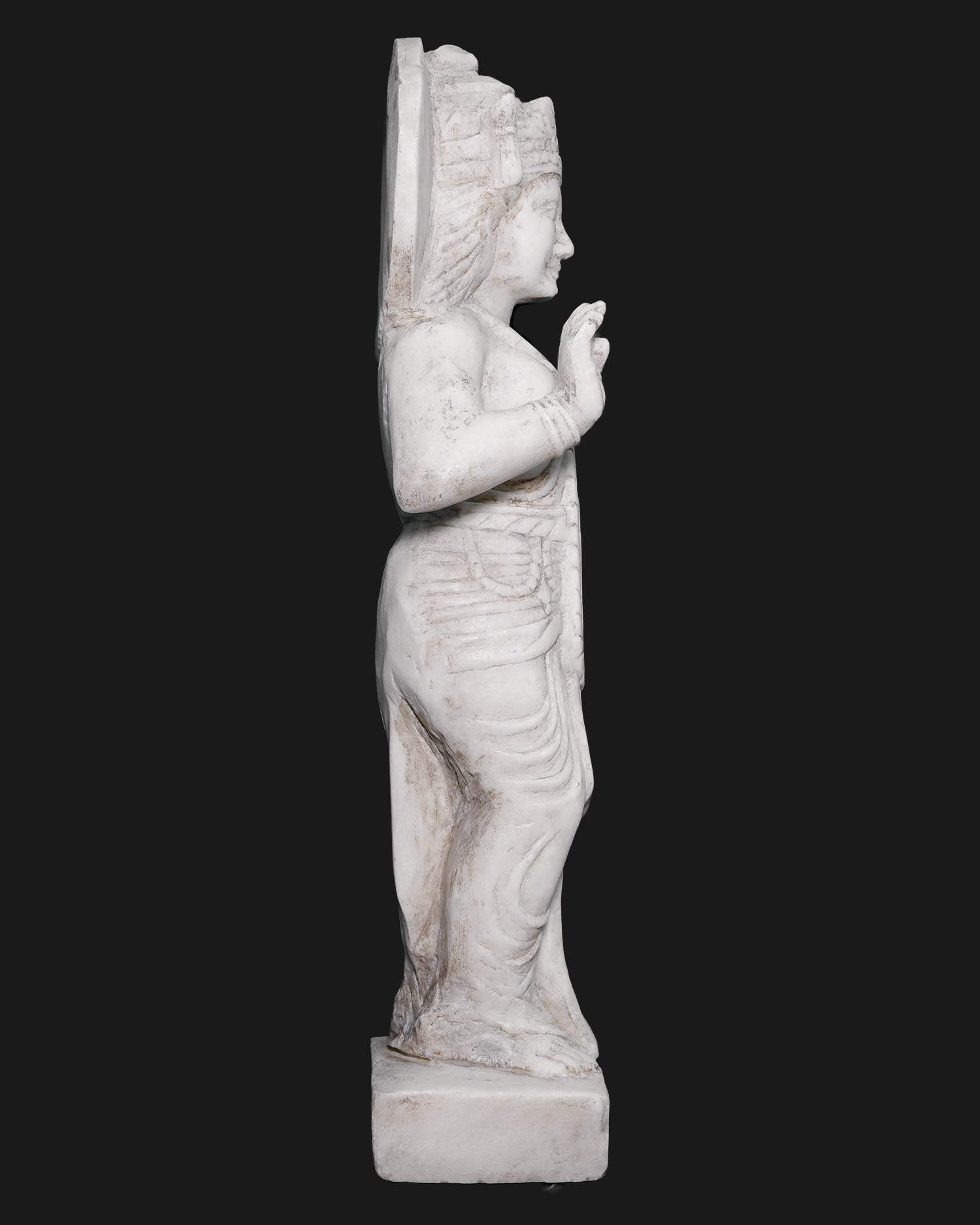
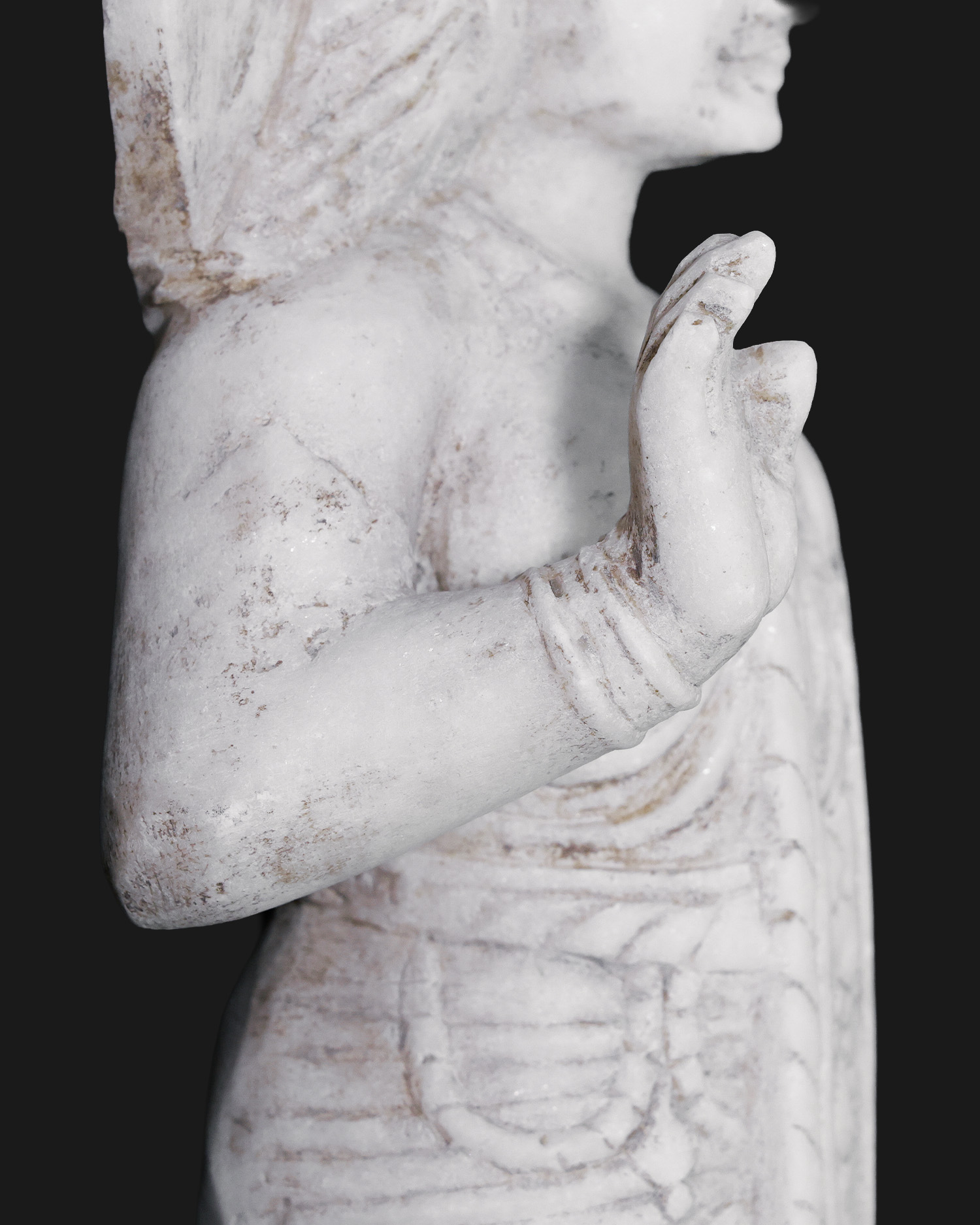
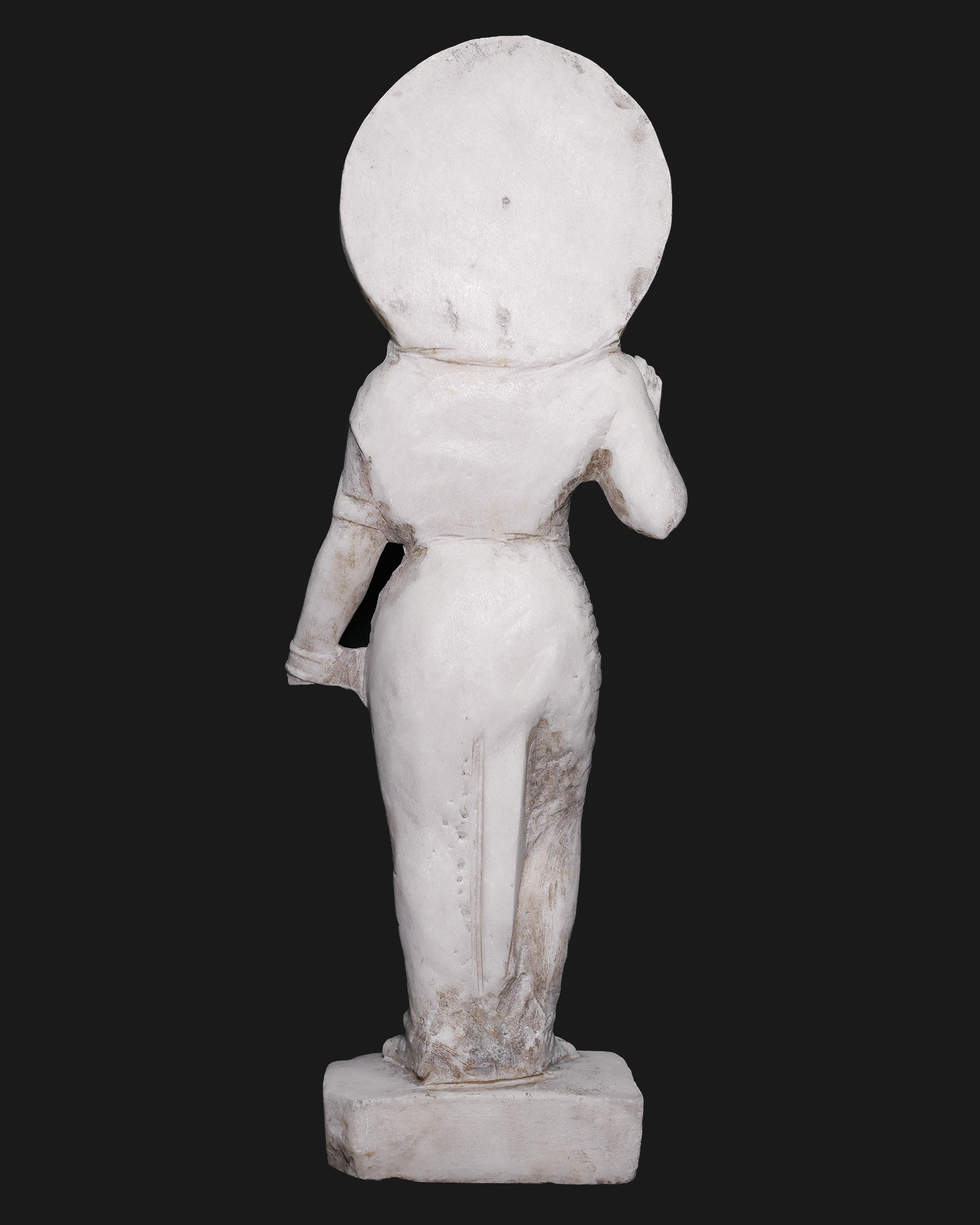
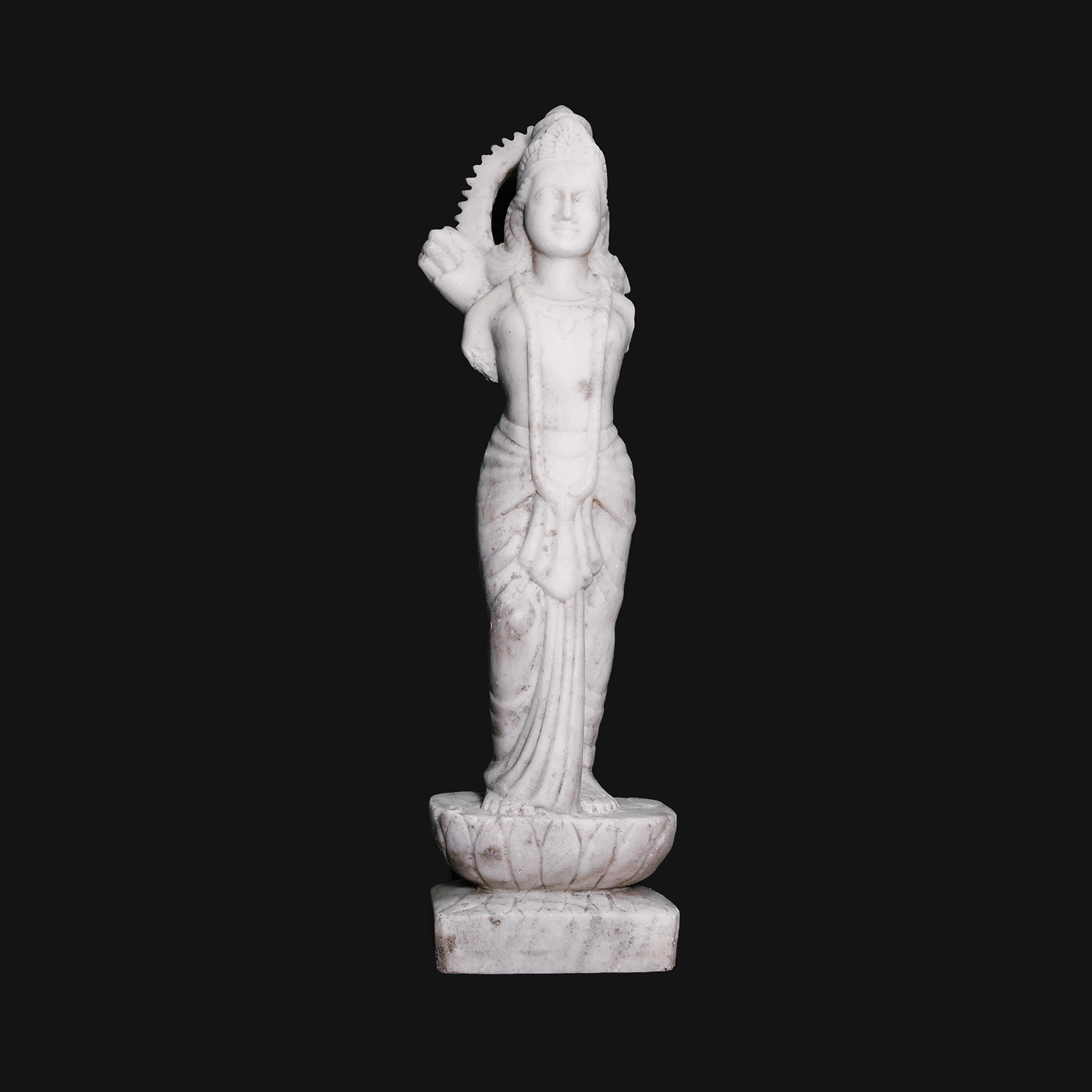
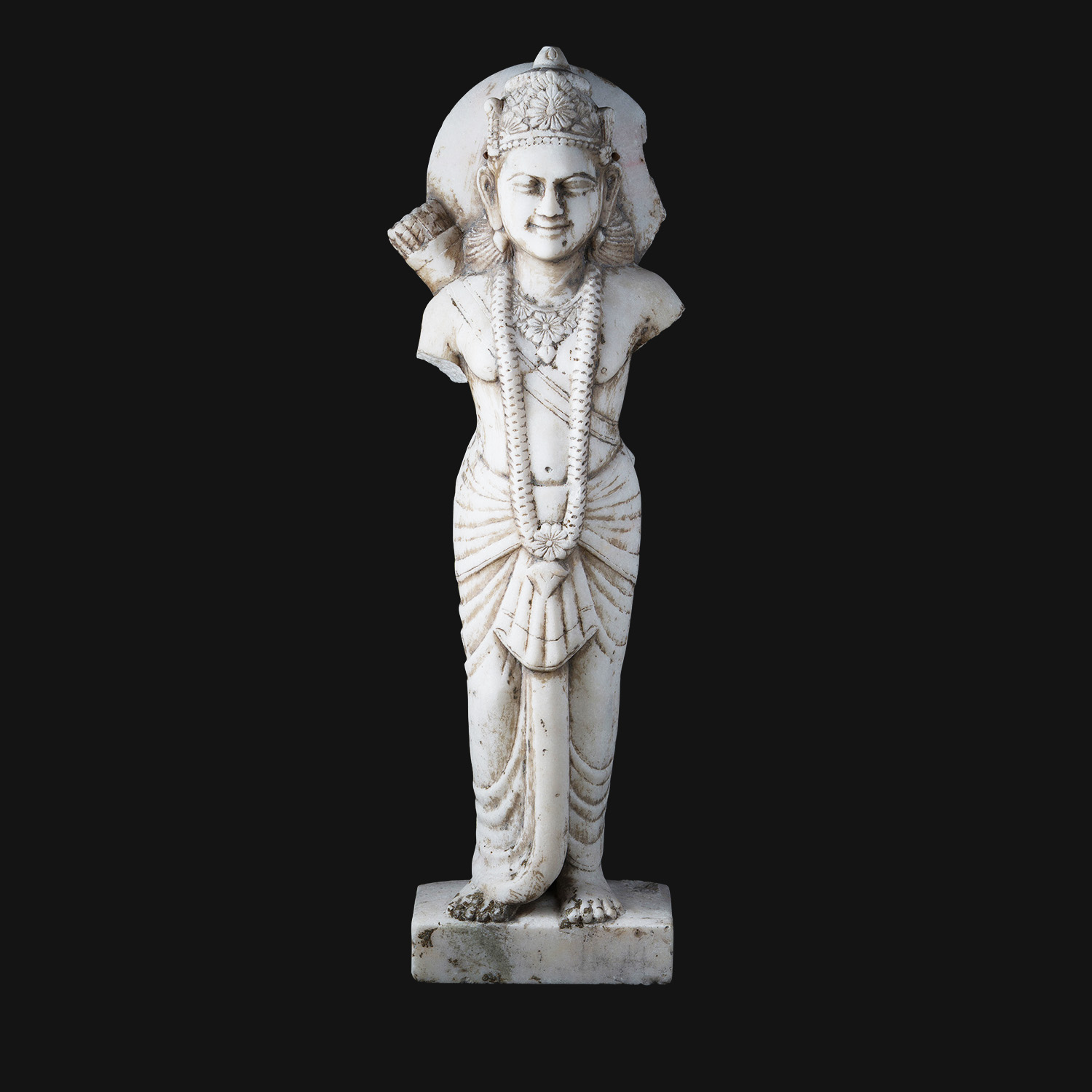
Full-plastic sacred sculpture intended for display in an altar niche, made of marble. It depicts a standing female deity from the Hindu pantheon - identified as Mata Sita (Rama's spouse) - framed in a hieratic, frontal stance with delicate counterpoint. The figure raises her right hand at breast level in a symbolic gesture of abhaya mudra (a gesture of care and dispelling of fear). The left hand is lowered along the torso; the palm is not preserved, probably holding a lotus flower. The deity's head is crowned with a high, crown, and a large, smooth nimbus is visible at the back. The face, with full features, has a calm expression, and the eyes have a characteristic almond shape. The figure is dressed in a long gown and wears a wide necklace-collar and a heavy garland, flowing down along the thighs below the knee line.
The back of the sculpture was deliberately executed in a simplified manner, as this side was placed directly against the wall of the altar niche.
The presented object is an example of the 19th-century revival of marble carving in northern India, with a particular emphasis on the craft centers of Rajasthan (Jaipur region).